
Fotos
Resenhas

Esta resenha pode conter spoilers
Lonely silence here / And I'm not the one / Make your house a home
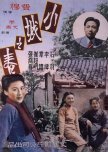
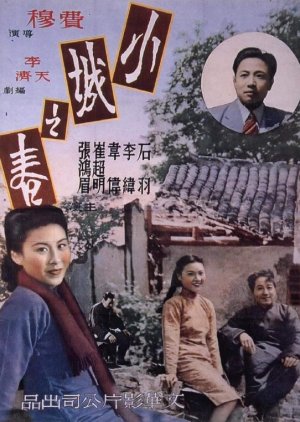
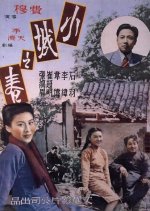
A work poised between two eras, Spring in a Small Town (1948) by Fei Mu stands as one of the most lucid portrayals of a world coming to an end — and of the lingering inability to imagine what might replace it.From its very first moments, the film unfolds with the precision of a theatrical composition: a small group of characters, almost archetypal in nature, arranged within a confined space that seems to suspend time itself. The ailing, withdrawn husband; the wife trapped in a life drained of desire; the younger sister, still open to the possibility of a future; the silent, devoted servant; and the returning doctor from the past — each figure enters the scene already charged with tension, as if part of a fragile balance destined to fracture.
Yet beneath this seemingly classical structure lies a striking modernity. The emotions that shape these characters — desire, frustration, fear of change — do not belong solely to their time, but resonate deeply with our own. Within this suspended microcosm, dominated by a decaying house that emerges as a living narrative organism, Fei Mu crafts a film in which space does not merely contain the action, but reflects and confines it, becoming the silent custodian of a world slowly fading away.
At the heart of the movie lies a love triangle that deliberately avoids conventional melodrama, embracing instead the quieter, more painful path of inaction. The return of the doctor — tied to the woman by a long-suppressed emotional bond — introduces the possibility of change, yet that possibility remains suspended, never fully pursued. Desire is present, unmistakable, but it never finds the strength to become action.
Within this fragile equilibrium stands the husband, unaware of the previous liaison between the two, whose illness — ambiguous, never entirely defined but more than self-harm — takes on a meaning far beyond the personal. His passive presence becomes the silent axis around which all unfulfilled choices revolve. He is not an antagonist, but a condition: the embodiment of a world unable to react, unable to transform itself.
The triangle remains unresolved, and it is precisely in this lack of resolution that its tragic force resides. This is not a film about desire, but about the impossibility of acting upon it.
The title itself suggests a promise the film continuously evokes without ever fulfilling. Spring — traditionally a symbol of renewal — takes on an ambiguous, almost ironic meaning here: nature signals change, yet the characters remain incapable of embodying it. Time passes, seasons shift, but nothing truly transforms, as made clear in the ‘moral’ resolution of the finale.
In this tension between natural movement and human immobility, the film’s allegorical dimension emerges. Without ever explicitly invoking historical context, Fei Mu constructs a microcosm that reflects a broader condition: a society suspended between the end of one order and the inability to define the next. The decaying house, restrained bodies, and unfulfilled desires become visible traces of a transformation that has yet to take shape, dictated by a future that remains unclear.
Like many movies born in times of political tension or cultural constraint, the narrative operates on a lateral plane, where the personal becomes a vehicle for the political, and intimacy turns into allegory. The film does not depict History — it allows it to seep through gestures, silences, and spaces.
There is no hesitation in saying it: Spring in a Small Town is an absolute masterpiece, a true swan song from a director who was forced to emigrate to Hong Kong shortly afterwards; Not only one of the highest achievements of Chinese cinema, but a work that transcends time, style, and historical context without losing any of its emotional urgency.
In an era often dominated by excess, Fei Mu demonstrates how the greatest intensity can emerge through restraint, transforming silence, space, and minimal gestures into living cinematic matter.
Decades later, what remains most striking is not only its formal perfection, compared to a structure that could not be more minimalist, but its enduring relevance — because the hesitations, suppressed desires, and quiet fears that inhabit its characters are still our own.
That we can rediscover a film like this today is part of its quiet miracle (although the DVD release for the Italian market doesn’t do it full justice): a work once at risk of fading into obscurity now returns, intact, to remind us that great cinema never truly belongs to the past.
10/10
Esta resenha foi útil para você?
Recomendações
There have been no recommendations submitted. Be the first and add one.