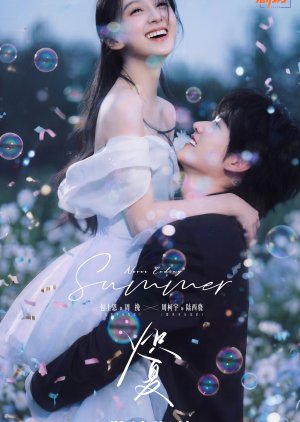
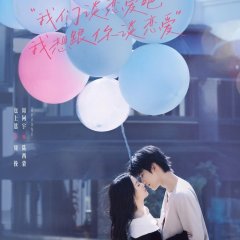
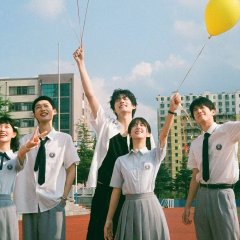
Pour sauver sa grand-mère, Zhou Wan se tourne vers Lu Xi Xiao. Une histoire d'amour naît devenant l'un pour l'autre un véritable pilier, mais la réalité les sépare. Dix ans plus tard, ils se retrouvent et ravivent leur amour sous le prétexte vengeance. (Source : Anglais = iQIYI || Traduction = MyDramaList) ~~ Adapté du roman "Zhui Luo" (坠落) de Tian Cu Yu (甜醋鱼). Modifier la traduction
- Français
- Русский
- Español
- English
- Titre original: 炽夏
- Aussi connu sous le nom de: Chi Xia , Fall , The West Wind Blows Toward the Evening , Xi Feng Xiang Wan , Zhui Luo , 坠落 , 墜落 , 熾夏 , 西风向晚
- Réalisateur: Hsu Chao Jen
- Scénariste: Gao Jia Qi, Tong Shuang Shuang
- Genres: Romance, Jeunesse
Où regarder Never-Ending Summer



Distribution et équipes
-
") Bao Shang EnZhou WanRôle principal
Bao Shang EnZhou WanRôle principal -
") Daniel ZhouLu Xi XiaoRôle principal
Daniel ZhouLu Xi XiaoRôle principal -
") Zhao Ying BoJiang Yan [Xi Xiao's half-brother]Rôle Secondaire
Zhao Ying BoJiang Yan [Xi Xiao's half-brother]Rôle Secondaire -
") Xu Yuan Li NaGu Meng [Zhou Wan's classmate]Rôle Secondaire
Xu Yuan Li NaGu Meng [Zhou Wan's classmate]Rôle Secondaire -
") Ke ChunLuo He [Hooligan]Rôle Secondaire
Ke ChunLuo He [Hooligan]Rôle Secondaire -
") Fu Wei LunJiang Fan [Xi Xiao's friend]Rôle Secondaire
Fu Wei LunJiang Fan [Xi Xiao's friend]Rôle Secondaire






Critiques

amazing !!!
This drama is simply incredible!! One of the best I've watched, having watched about fifteen C-dramas, this one is in my top 5. Firstly, the acting is amazing, the cast itself is incredible, but ESPECIALLY the chemistry between the two main actors, both in and out of the series, they are so perfect together!!! And the OSTs, I have rarely, if ever, seen a drama with such great OSTs, especially "Sunburn" or others whose names I don't remember. The story is also amazing; they are willing to put themselves in danger for each other, and I think that's the foundation of a romance drama. There isn't a single boring episode. I highly recommend watching this drama; you won't regret it.Cet avis était-il utile?

 1
1Cette critique peut contenir des spoilers
Never-Ending Summer, Never-Ending MisunderstandingI finally finished Never-Ending Summer, and after reading so many comments, I honestly feel like a lot of people completely misunderstood the story.
Everyone keeps asking, "Why did Zhou Wan leave?" "Why didn't she chase after Lu Xixiao?" "The plot doesn't make sense."
But I don't think the problem is the writing.
I think people expect every romance to have simple answers and happy endings. This drama was never trying to be that. It was about trauma, guilt, impossible choices, and how love alone can't magically fix everything.
Let's start with Zhou Wan.
People judge her for the choices she made, but very few people stop to think about why she made them.
When she was only ten years old, her father died after his business failed. Then her own mother abandoned her and even took the insurance money that should have gone to Zhou Wan and her grandmother. Her grandmother became the only family she had left, and a few years later, she became seriously ill.
Imagine being fifteen or sixteen years old and realising the only person who has ever truly loved you might die because you can't afford surgery.
No teenager should have to carry that responsibility.
Zhou Wan was one of the smartest students in school. She always ranked near the top of her class, but she never really got to be a child. Her childhood ended the day her father died, and her mother walked away.
So yes, she became desperate.
When she discovered the connection between her mother and Lu Xixiao's father, she didn't immediately think, "Great, I'll use this."
She resisted it.
She kept telling herself she didn't want to become a bad person. She felt guilty before she even approached Lu Xixiao. She knew what she was considering wasn't right, but she also believed it was the only chance she had to save her grandmother.
Was it morally right?
No.
Was it understandable?
Absolutely.
Now let's talk about Lu Xixiao because people act like Zhou Wan ruined his life, when the drama itself tells us that isn't true.
His trauma didn't begin with Zhou Wan.
It began the day he watched his mother die by suicide right in front of him.
No child should ever witness something like that.
On top of that, the adults around him failed him completely. His father cheated on his mother, and instead of protecting her, the family cared more about maintaining appearances than her happiness. Their household never really felt like a family. It felt like a business empire where emotions always came second.
Of course, that would leave scars.
Then Zhou Wan entered his life.
For the first time since losing his mother, he slowly started smiling again. He trusted someone. He allowed himself to love someone. She became a place where he finally felt safe.
She didn't create his healing overnight, but she became a huge part of it.
Then came the stabbing incident.
People forget how much guilt Zhou Wan was already carrying before that happened. She blamed herself for approaching Lu Xixiao under false pretences, even if her reasons came from desperation rather than malice.
The stabbing only made that guilt worse.
Then his grandfather threatened her and made it very clear that she should leave Lu Xixiao alone.
At that point, Zhou Wan genuinely believed everyone's life would be better without her.
She looked at Lu Xixiao and saw someone who had money, status, opportunities, and a powerful family. She couldn't see that emotionally, he was just as broken as she was.
So she left.
Not because she stopped loving him.
Because she loved him enough to believe he'd be happier without her.
Was she wrong?
Yes.
But she didn't know she was wrong.
That's what makes the story tragic.
Then people ask why she didn't chase him after the 10-year reunion?
Honestly...why would she?
She was the one who walked away because she believed she was protecting him. If she suddenly came back acting as if nothing had happened, it would completely contradict everything her character believed.
One of my favourite moments in the drama is when Lu Xixiao finally tells Zhou Wan the truth.
He tells her that she was never the reason for his nightmares, his insomnia, or his emotional struggles.
Those began the day his mother died.
If anything, she was the one person who made those nightmares quieter. She wasn't the cause of his pain.
She was his healing.
When she disappeared, those old wounds simply reopened.
That's a huge difference, and I think a lot of viewers overlook it.
I also don't understand why some people insist on comparing this drama to other romances where the female lead spends years chasing the male lead. These are completely different characters in completely different situations. Zhou Wan leaving because of guilt and then refusing to come back because she still believed it was better for him is perfectly consistent with who she is.
Not every love story needs grand gestures.
Sometimes the biggest act of love is letting someone go because you truly believe they'll have a better life without you, even if you're completely wrong.
That's why the ending worked for me.
Love didn't magically erase ten years of pain.
It gave them the chance to finally understand each other.
Lu Xixiao understood why Zhou Wan left.
Zhou Wan finally understood that she had never been his burden.
She had always been his comfort.
Neither of them was perfect.
Both of them made mistakes.
Both of them hurt each other.
But that's exactly why they felt real.
This drama never asked me to agree with every decision the characters made.
It asked me to understand them.
And to me, that's what made Never-Ending Summer so unforgettable.
⭐ Rating: 10/10.
Sometimes the best stories aren't the ones where everyone makes the right choices.
They're the ones where every choice, even the wrong ones, makes perfect sense once you understand the people making them.
Cet avis était-il utile?