- Español
- Русский
- Français
- English
Dónde ver 731



Reparto y créditos
-
") Jiang A-Joe Papel principal
Jiang A-Joe Papel principal -
") Zhang Yu Papel principal
Zhang Yu Papel principal -
") Yin Andrew Papel principal
Yin Andrew Papel principal -
") Lancia Lan Papel principal
Lancia Lan Papel principal -
") Han Jing Papel principal
Han Jing Papel principal -
") Jiang Qi Ming Papel secundario
Jiang Qi Ming Papel secundario







Reseñas

 1
1A monster called Unit 731
Mans Inhumanity to Man is a 2025 series that portrays the atrocities committed by Unit 731, a division of the Imperial Japanese Army during World War II. More than just a historical drama, it's a psychological and moral exploration of how violence corrupts everyone it touches.The show is filmed like the first ten minutes of Resident Evil stretched across an entire season, constantly building the feeling that something inhuman is lurking just around the corner. The tension, fear, and horror never let up, made even more disturbing by how normal the perpetrators act while carrying out unimaginable crimes. You feel this show in your gut from the very first episode.
We follow three main characters, each offering a different perspective as they slowly uncover what's really happening inside the facility.
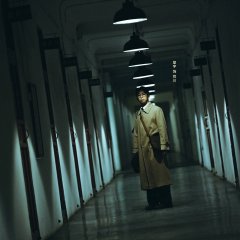
Arakawa is a Japanese art professor who arrives at the complex without knowing he has been hired to sketch the bodies used in the experiments. The first glimpses of what is actually happening inside are just as shocking to him as they are to the audience.
Kojima is a Japanese documentary filmmaker who gradually discovers the horrors behind Japan's colonization of Manchuria. Through the footage he records, his imperial indoctrination slowly begins to crack, although his survival instinct often wins out.
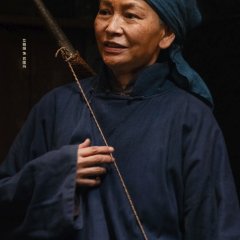
Then there's Chang Fu, a humble Chinese cart driver who suffers the consequences of the war firsthand and slowly realizes who is truly responsible for the misery surrounding him. Through his daily life, we witness the constant oppression and fear experienced by ordinary Chinese civilians living in Harbin under Japanese occupation during the 1940s.
The story does an incredible job of making it feel impossible to live safely anywhere near Unit 731. The facility is portrayed almost like a living creature, a monster that doesn't confine its evil to the walls of the laboratory but poisons everything around it. Its mere existence destroys lives, families, communities, and consciences.
"They're not human like us. They're maruta, experiment materials."
It's a phrase repeated constantly by the Japanese soldiers to dehumanize the prisoners used as human test subjects. The most disturbing part is that the show didn't invent this. Maruta was the actual term used by Unit 731 personnel to refer to prisoners, reducing people to nothing more than "logs." That single word perfectly captures the level of dehumanization required for these atrocities to happen. Babies, children, pregnant women, and the elderly are treated as experimental material instead of human beings.
One of the production's greatest strengths is how it contrasts different perspectives. Kojima initially falls back on Imperial Japanese ideology to justify everything he witnesses. Arakawa never questions that what's happening is evil, but his tragedy lies in how powerless he is to stop it. Chang Fu simply accepts life as it is at first and tries to survive one day at a time. The narrative is remarkably good at moving between these characters, showing how their lives unexpectedly intersect throughout its 20 episodes.
The tension works so well because the characters are written with so much depth that eventually you begin to feel exactly what they feel, even when you disagree with their decisions. You fear Chang Fu becoming a maruta. You fear Arakawa being exposed. You fear Kojima betraying everyone just to save himself. Sometimes all it takes is a Japanese officer walking into a room for your anxiety to spike, especially when that officer is the man running the whole nightmare, Shiro Ishii. An absolutely despicable villain, made even worse by the fact that he was a real person. Quite simply, the biggest bastard in the entire story.
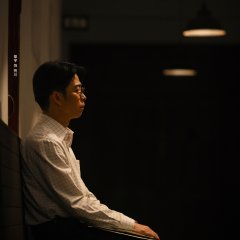
The show also features a second timeline set during the 1990s and 2000s, following a museum curator gathering evidence of these crimes. He meets other Japanese citizens trying to expose the truth about Unit 731 while facing resistance from parts of Japanese society. One of the people he interviews is Narita, a former member of Unit 731 whose gradual indoctrination we witnessed throughout the 1940s timeline, now an old man whose apparent remorse feels more like an attempt to protect his own legacy than genuine regret. The group fights for recognition and compensation for the victims, something we already know will never truly happen. The story also reminds viewers that before Japan's surrender, those responsible for Unit 731 destroyed much of the facility, murdered the remaining prisoners, and tried to erase as much evidence of their crimes as possible.
The way both timelines connect is technically impressive and emotionally devastating. We watch the legal battles, the attempts to erase history, and Japan's ongoing struggle to fully acknowledge responsibility for these events.
But hey, for everyone who loves dismissing every Chinese production about this subject as propaganda, the story delivers one unavoidable historical irony. The men responsible for Unit 731 didn't escape because of luck or some miracle. They were protected by the United States, our very own White Savior, which granted immunity to people like Shiro Ishii in exchange for access to the data gathered through their human experiments. Most of those involved with Unit 731 were never prosecuted. Many returned to Japan, practiced medicine, and lived out the rest of their lives in freedom, dying peacefully of old age, all courtesy of our beloved, completely propaganda-free Western democracy.
It's a conclusion as infuriating as it is fitting for a work whose central theme is humanity's endless ability to justify any atrocity when it serves a financial, scientific, or ideological purpose.
¿Te ha parecido útil esta reseña?
I love anti fascist drama
This is the best cdrama of 2025. Technically? Directing, cinematography, acting are all top tier. Writing is great too (tho Tong Yulan's plot armor lowkey bothered me lol). And the SOUND DESIGN 👏👏👏👏👏 this might actually be the best sound design in any cdrama hands down.I love how this drama actually respects the victims. It doesn't glorify their suffering or torture for shock value. The pain stays in your imagination as the viewer. This drama also shows how fascism turns ordinary people into killing machines for "the emperor" and how it destroys the humanity of both victims AND perpetrators.
I usually don't like films or dramas with this kind of theme bc most of them fall into that narrow nationalistic narrative. So yeah, it's refreshing to watch an anti fascist drama, especially right now when fascism is literally rising again all over the world.
I understand Arakawa's feelings. Frustrated with the system he is a part of, alienated for not fully belonging to any group, tired of watching cruelty normalized while people act like it's normal, unsure whether his small acts of decency even matter in the grand scheme of things.
¿Te ha parecido útil esta reseña?