- Italiano
- Русский
- English
- Español
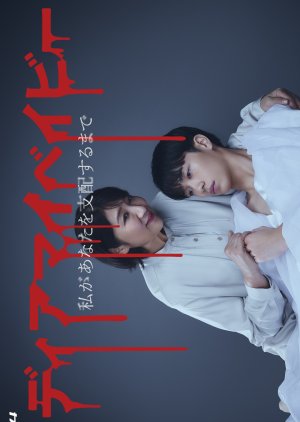
- Titolo Originale: ディアマイベイビー~私があなたを支配するまで~
- Conosciuto Anche Come: Dear My Baby: Until I Control You , Дорогой мой малыш: Пока я не буду тебя контролировать
- Sceneggiatore: Ayuka Kishimoto
- Regista: Kawahara Yo, Matsumaru Hirotaka
- Generi: Thriller, Psicologico, Romantico, Drama
Dove Guardare Dear My Baby: Watashi ga Anata wo Shihai suru made

Subscription
Cast & Ringraziamenti
-
") Matsushita YukiYoshikawa KeikoRuolo Principale
Matsushita YukiYoshikawa KeikoRuolo Principale -
") Nomura KoutaMoriyama Takuto / "Babu-chan"Ruolo Principale
Nomura KoutaMoriyama Takuto / "Babu-chan"Ruolo Principale -
") Yamaguchi SayakaMoriyama YukinoRuolo di Supporto
Yamaguchi SayakaMoriyama YukinoRuolo di Supporto -
") Nakamura YurikaNagumo MiyuRuolo di Supporto
Nakamura YurikaNagumo MiyuRuolo di Supporto -
") Nagatsuma ReoYamabe KatsumiRuolo di Supporto
Nagatsuma ReoYamabe KatsumiRuolo di Supporto -
") Iwatani KenjiOkumura SusumuRuolo di Supporto
Iwatani KenjiOkumura SusumuRuolo di Supporto






Foto


Recensioni
Questa recensione può contenere spoiler
Review of a Twisted Relationship
It's full of spoilers, so read at your own discretion.Wow, just wow.
This is a dark story of obsession and codependency. At the beginning, Keiko-san, a manager in the entertainment industry, is betrayed by someone she had worked with for years. Then she finds herself in despair, as if her world were collapsing; this is well portrayed in the following scene, with her lifeless walk and then her singing; you could really feel that she was sinking into despair. It felt like the point where she broke, but then Takuto (Babu-chan) appears as a ray of hope. It was a beautiful portrayal of the beginning of this ill-fated and passionate relationship.
At first, Keiko-san treated Takuto-kun like a precious person she cared about; their interaction could still be considered fairly normal, but then, over the course of each episode, Keiko-san began to slowly change to the point of obsession. I think what triggered all of this was the jealousy she felt toward Miyo-san. So...
Keiko-san was obsessed with Takuto-kun, controlling his every move, exceeding the limits of her role as an manager, but Takuto-kun was so happy with the suffocating affection and attention that he didn’t even bother to notice how strange Keiko-san’s controlling and possessive requests and actions were.
The one who couldn’t help but become the heroine of our naive, love-starved Babu-chan was our dear Miyo-san, and that’s how Keiko-san began her journey of hatred toward Miyo-san (I kinda think Miyo dug her own grave…).
Under Miyo-san’s influence, Babu-chan stopped wanting to be a baby and rebelled against Keiko-san’s restrictive rules. Basically, from there on, everything goes downhill: Keiko-san does everything she can to regain control over Takuto-kun and, at the same time, warns(or rather, threatens) Miyo-san. As for Takuto-kun, well, he realizes how strange Keiko-san’s behavior is; I felt that he rebelled, but not with much conviction.
Finally, we see a shift in the relationship between the two when the long-awaited scene takes place, of the “murder” of Keiko-san, or so we all belived. Keiko-san was alive—a hope that had lingered in Takuto-kun’s heart ever since he returned to the “crime scene”; we then see how everyone tries to cover for Takuto-kun, fabricating a fantastical tale of how he was a hero saving the damsel in distress. Then a reporter shows up wanting to verify the facts with Takuto-kun about the events of the “stabbing”; Takuto-kun hears then, the childhood story of how Keiko-san tried to save her mother only to be rewarded in the end with indifferent hostility(is that even a thing?), and he then identifies with her because, after all, they were “the same.”
After that we learn, to give more meaning to the story that was fabricated — intentionally or not —, the hero and the heroine(Miyo-san) end up moving in together.
And now we can really see the changes with Keiko: Keiko-san didn’t try to separate them or interfere in their relationship, that is a huge improvement; compared to before, this is a freedom Takuto wanted, but—let’s be honest—he no longer desired that freedom.
And then, finally, news came from Keiko-san, and Takuto-kun felt relieved? Happy? I don’t know how to describe the feeling of thinking you’ve lost someone, that you almost killed that person, and that this person is the only one you felt that understands you.
In the following scenes, Takuto thinks about all the little things Keiko does for him and misses those small gestures of affection (back when Keiko wasn’t completely crazy🙃), and later seeks comfort in those memories at Keiko’s house.
And for the ending, well, it left me in pieces; they gave us hope for a life where happiness was possible, only to have it taken away from us(in this, Keiko wanted to set Takuto-kun free, and the only way she could imagine was through extreme measures, because her life had always been about extremes). After that we have a time-skip, we now see how Takuto couldn’t live without Keiko; we see how he emulates her, perhaps to feel closer to her; in the final scene, there’s the supposedly unsettling laughter, but what I perceived was a broken heart trying to connect with the only person he believed understood him and loved him unconditionally and selflessy.
Questa recensione ti è stata utile?