




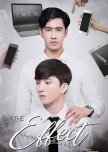
A Worthwhile Story
It is the rare BL (although I'm not sure this could be called a BL drama) that tackles head-on serious issues and then doesn't resolve them neatly at the end of the show's run.This show hits hard with its subject matter and the camera does not flinch for a moment in capturing the physical, emotional, and psychological pain these characters experience. There are some very bold choices made by the director, and those choices may not be safe or comfortable for all viewers.
What begins as (what we assume ) will be another trope-filled college drama actually drops very subtle hints that all is not what it appears. It would be very difficult to say more without giving spoilers so I will leave it at this. A devastating and traumatizing incident and the emotional and psychological aftermath of this incident are handled with maturity, honesty, and an unflinching camera. This is not a "comfort watch" but a watch that will take you down a very raw path.
It is absolutely worth watching once but is not a journey I would take again- not because it is not done well, but precisely because it is done very well.
Was this review helpful to you?
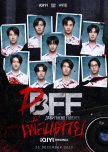
Scream+The Glory+Incidental BL
Headline says it all. If you took the movie Scream, added The Glory with a peppering of Thai BL, DFF would be the result.what starts as a love letter to American 90s slasher films quickly plants its roots in Thai culture. The result might have been messier in less capable hands (definitely not perfect by any stretch of the imagination). The director was able to get some really decent performances from a very young and inexperienced cast (Jin, Phee, Non, Tee) and there was nothing gratuitous about the NCs- in fact, I felt they served narrative purpose you don’t often find in Thai BLs.
For fans of smartish slasher films, I strongly recommend. For fans looking for a morally ambiguous romp, I highly recommend.
Was this review helpful to you?
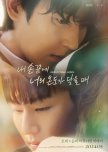
Honest and Authentic
I have yet to see a narrative that so respectfully and lovingly expresses the joys, pain, longing, and frustration of queer and queer questioning youth finding their way in an unforgiving and unknowable world.This narrative serves as a prequel to Unintentional Love Story and frankly, it is the far superior and genuine story. You do not necessarily need to watch the first to appreciate this story, but if you do, you will notice the stark difference in the two tales.
The acting is sublime and each of the leads offers such warmth to their respective roles that you will long to spend more time with them.
Was this review helpful to you?
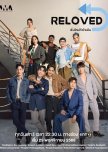
Plot Is Sometimes Bonkers But Performances On Point
There are many warranted and unwarranted criticisms here on Reloved's MDL page and if you're looking to figure out whether or not to watch, hopefully the preponderance of the evidence will help you decide. I truly enjoyed the small story they told, even if the narrative itself was sometimes outlandish and uneven. I would highly recommend it for its performances and its commitment to showing a segment of queer life not often represented on screen.First and foremost, kudos to the writers and production team for giving a glimpse of queer love that mirrors more the daily lived experience of many queer men outside of the falling in love arc. We rarely if ever see gay men raising children, trying and sometimes failing to "launch" adult lives, all while the giant roulette wheel of life throws unexpected triumphs and tragedies in willy nilly. We sometimes forget that life truly is luck- both good and bad- and life will throw both at us whether we deserve the type we get or not.
Far too often queer representation wallows in the (very real) tragedies and neglects to tell other stories. P'Than has loving, solidly middle-class parents who embrace the totality of who he is, as well as embracing (without forced villainy for conflict's sake) the truth of people and their situations. They respond to life and their children's lives as thinking, rational adults and are supportive. These are not parents who neglect grandchildren simply because they are unhappy about the choices and mistakes the adult's who made them have committed. They reflect the kind of parent I hope I am to my queer child.
I will thoroughly concede that the "mystery" behind why our MLs broke up in the past drags on for far too many episodes. However, I understand Akin's commitment to that secret. He is not keeping this secret simply for himself or to exacerbate the story's conflict. In fact, to break the promise he made to Meya and reveal the secret would have long-lasting and potentially detrimental consequences for not only Meya, but for Mawin as well. He is silent because he has chosen to be a father. Though not explicitly stated in the script, the performance attests to the internal conflict Akin feels. He wants to be done with the secrecy for his own selfish reason, but that is balanced heavily by the commitment he made to be in Mawin's life. To reveal the mystery is to potentially put Mawin at risk emotionally and psychologically. Perhaps this was too underwritten to be made clear to the audience, but I certainly saw that tension in his arc. As a single mother I may have overly-identified with the need to put your own wants and desires on the back burner and make choices for your child that protect his emotional and psychological well-being. But the production team certainly laid out that internal conflict within the five axis of film, whether it was in the juxtaposition of scene and flashback, or the way the camera stayed with Akin as the conflict played out on his face when looking at Mawin and P'Than.
And the Don situation. While others find it a weakness of the series, I find it is one of its strengths and reinforces the team's commitment to tell a "real story." Sometimes, no matter how hard we commit to growth and understanding, the aforementioned roulette wheel lands on a number you didn't deserve. You can do everything right- every choice, every introspection, grab every opportunity to be a better version of yourself- and still be dealt an illogical and cruel blow by life. This isn't just reflected in Don's arc, but in the gym's struggle are as well. This too is often neglected on screen and is a shame. Sometimes I'm tired of the happy ending because who hasn't at some point sat at night and lamented, "I've done everything right- so why does so much of my life feel unfair?".
So with all of its weaknesses, why did I love it? Authenticity. In the midst of the sometimes outlandish script, the actors made me care deeply about the characters and forgive the plot's shortcomings. The authenticity of performance, the glimpse into a segment of the queer community not often represented, and the obvious love of the production staff to tell this story won out over the flaws. Yes, so many of us turn to dramas for escapism, but sometimes that escapism- ironically- has the opposite effect; it makes us lament the unfairness that life sometimes throws our way. In its bid for authenticity, this drama dared to show that we are not always in control of the outcomes in our lives. Sometimes there is a car accident. Sometimes one success doesn't automatically breed another and we fail even though we did everything "right." Sometimes we have to make choices against our own self-interest because the roles we chose to assume have to take precedence. It was very comforting to see a drama that dared to say, "the happy ending doesn't always come in the package you expect or even at all- and it's not always your fault."
Was this review helpful to you?

Mature and Heartfelt
Do not let the high school setting fool you- this is a very mature examination of connection, loss, grief, and navigating your burgeoning sexual awakening.This Coming of Age tale wraps itself in a very grounded fantastical element while delivering the narrative with both a humorous and deeply existential deft hand.
The actors are perfectly cast and seemed to melt into their characters. The fantastical element could have been played very broadly (which Japanese dramas tend to do, I'm looking at you, Cherry Magic) but the actors' choices kept the fantastical firmly rooted in reality. What I particularly loved about their chemistry was the achievement of what I thought was impossible in standard BL fare: balancing the sweet and romantic with animal need.
A common complaint regarding Japanese BLs usually rests with endings. The refrain is that the oftentimes pessimistic, open-ended (bordering on nihilistic) endings leave the audience unsatisfied. I don't know how others will feel about the conclusion of this love story, but I was profoundly satisfied in its courage and honesty.
And don't get me wrong- this is a love story and not a romance, which should be evident from the synopsis.
If you are looking for a love story whose journey will warm, touch, and try your heart in all the satisfying ways, I highly recommend this drama.
Was this review helpful to you?

Standing Ovation
First and foremost, I have to state my utmost respect to Mile and Apo. They leveraged their clout, brand, and fan base to not only bring a stellar work to fruition, but to hand over the spotlight to other actors and cast themselves as supporting characters. The humility and commitment to their acting community, authentic and damn good storytelling, and the audience's experience should be loudly noted. This type of generosity should be resoundingly applauded and acknowledged.This should not be billed as a BL- not because it is lacking in BL romance and spice (oh, it brings it all) but because the representation of gay and bisexual love is incidental representation- gay and bisexual humans have existed throughout history, lived that history, and had to find ways to love and survive in that history. The history and the lived experience is what SHINES in this production. The human experience- gay, straight, and bi, young, old... human- is represented beautifully.
The storytelling does not paint villains and heroes easily. Instead, it leans into the moral ambiguity that often exists when fighting for what you believe. Living the consequences of your choices is a major theme to the piece, and instead of moralizing by assigning "happy endings" or "just desserts" to characters, the storytelling firmly takes the position that making the choice is what is important; to do nothing, to not choose, is the greatest sin we commit. This is a thematic statement that feels incredibly poignant to me as an American at this time and place in my nation's history.
The acting and delivery is truly next level, the production values are top notch including the sound engineering (a particular pet peeve of mine with regards to many Thai productions), and no budget was spared in recreating this indelible moment in Thai history. The script, directing, and execution are award-winning worthy.
Early in its run (as episodes were dropping) a great deal of negative reaction was popping up on social media. For some, I think they were expecting a redux of the Kinn Porsche aesthetic and storytelling. For others, I think they expected to be spoon fed important histocultural details that makes the viewing experience a little easier. It doesn't take much time to hop on Google and get some context to this period in Thai history so you can understand the sociopolitical implications as you watch. If we are going to embrace the art of a culture, don't we have a little bit of an obligation to do our homework and meet the storytelling halfway when we are lacking prior knowledge to enhance our understanding? I firmly believe the answer to that question is, "yes." For every 20 BLs that require no effort on the part of the international audience in order to understand and enjoy, you will find that beautiful treasure- like Shine- that requires a little more effort to participate. Take five minutes to gather some prior knowledge as it will truly make this viewing experience better.
I will rewatch this someday. But for now, I just want to sit with it in my heart and in my brain and give myself some time with it before I rewatch.
Was this review helpful to you?
Overcoming Intergenerational Traum
what a heartbreaking, bittersweet, human story of the long reach childhood abuse and neglect can have. Like Love in the Big City, I don’t feel this romance is center stage- the human pain and drama will sear into your memory.The acting is stellar. Tje awkwardness of first physical love is handled with honesty and dignity, all while forcing the viewer to remember their own unsure first steps into a romantic relationship.
Tjere is a significant time jump that is jarring, but by the end, I truly understood why the writers made this choice.
Solidly number one in my favorite BLs of the year.
Was this review helpful to you?
This review may contain spoilers
Knowing the Multiverse Makes It Even Better
As a film teacher, I taught Christopher Nolan's "Memento" for years. What most people don't know about this seminal film is that his brother, Jonathon, wrote a companion short story to the film. Both the film and the short story act as standalone pieces, but when placed in juxtaposition, a third narrative appears that has you questioning your interpretations of the film and short story.ChermChey, while obviously nowhere near the cinematic and literary masterpieces of both Nolans' works, may act in just the same way: taken out of the universe it lives in, the series seems to be a rather "pointless" slice-of-life narrative piece that is kind of a "love it" or "leave it" situation. But ChermChey is connected to Love Upon a Time and Khemjira, and when you have that knowledge, ChermChey is a ten episode long "happily ever after" for two seemingly "throw away" characters from Love Upon a Time. I am loathe to say more than that as I don't want to spoil either show. For anyone interested, I can make the case for the three dramas existing in the same universe.
Even without putting ChermChey firmly where it belongs in the "LUAT/Khemjira" universe, I thoroughly enjoyed the chemistry and interplay between the two male leads. This show was definitely "conflict-lite" and redemption arcs for the only conflict that did appear were unearned. ChermChey was an overall "pointless" story- which I think is the point. It was a little underwritten, so I don't think that Erng's central internal conflict really had defined moments that built towards a personal epiphany (i.e. obvious character growth that was shown, celebrated, and earned). But even with its flaws, I enjoyed what was there- showing how two characters crash into each other with abandon (thinking it's a one night stand so no need to filter oneself) only to have to pull back when they realize this connection may actually have a shot of enduring after the sun has come up.
I can see this becoming a comfort drama, owing to its "conflict-lite" nature. Sometimes it's comforting to watch the evolution of a quirky relationship- to feel the warmth the actors brought to their characters and how that warmth seeped towards the other person. Much is lost in translation (I fear) with their bantering, which I think may be why the international audience is missing some of the witticism of the show.
Overall, I enjoyed it for what it was (both as a standalone piece and as part of a larger narrative universe). In fact, once I made the connection to Love Upon a Time, my appreciation for the small details in ChermChey increased. If you like slice-of-life, give this one a shot.
Was this review helpful to you?
Interesting Approach
With only one episode aired, I'm already impressed with some of the production team's innovative choices. Dramas set in the world of esports are plentiful, and a major challenge facing the writers, directors (et. al.) is how to make the gaming feel like it has narrative consequence; and you most likely are not going to accomplish that by simply showing segments of game play. Gamers might find it thrilling to watch game play, but your average viewer isn't going to necessarily connect game play with characterization, plot progression, and emotional investment. Be My Player Two has found an interesting approach- to intercut animated game play with live action scenes of the actors mimicking gameplay (in a fantastical way). It's an interesting approach and I'm invested to see if it truly helps with our emotional investment , our ability to understand the consequence of gamer choice during game play, and to solidify audience allegiance. Bas, in particular, seems to have undertaken this challenge in his acting choices, and in these "fantasy" sequences, he even attempts to mimic the staccato movements of gaming characters in his gait, his stiff body movements, and his pace.It's nice to see Maxky doing the broad, heavy-lifting in this piece. In Fourever You, his character was more grounded, laid back, and observant- the character didn't require a broad range of physicality or emoting in every scene because he was the "zen" grounding for the chaotic elements around him. This time around, he is the chaos, but he offsets it neatly with a maturity that prevents his grandiosity from becoming cloying.
Solid start to a very hyped drama.
Was this review helpful to you?
Interesting Approach
With only one episode aired, I'm already impressed with some of the production team's innovative choices. Dramas set in the world of esports are plentiful, and a major challenge facing the writers, directors (et. al.) is how to make the gaming feel like it has narrative consequence; and you most likely are not going to accomplish that by simply showing segments of game play. Gamers might find it thrilling to watch game play, but your average viewer isn't going to necessarily connect game play with characterization, plot progression, and emotional investment. Be My Player Two has found an interesting approach- to intercut animated game play with live action scenes of the actors mimicking gameplay (in a fantastical way). It's an interesting approach and I'm invested to see if it truly helps with our emotional investment , our ability to understand the consequence of gamer choice during game play, and to solidify audience allegiance. Bas, in particular, seems to have undertaken this challenge in his acting choices, and in these "fantasy" sequences, he even attempts to mimic the staccato movements of gaming characters in his gait, his stiff body movements, and his pace.It's nice to see Maxky doing the broad, heavy-lifting in this piece. In Fourever You, his character was more grounded, laid back, and observant- the character didn't require a broad range of physicality or emoting in every scene because he was the "zen" grounding for the chaotic elements around him. This time around, he is the chaos, but he offsets it neatly with a maturity that prevents his grandiosity from becoming cloying.
Solid start to a very hyped drama.
Was this review helpful to you?


