

 1
1 1
1 1
1


Mesmerising
This drama is absolutely worth watching, with two great leads - Wang Yibo and Zhao Liying. The two of them demonstrate the best onscreen chemistry I had ever seen in Chinese dramas. Their acting was very natural. I think this drama is underrated on Mydramalist.Yibo continued to mesmerise with his good looks and excellent acting. He is very versatile and did equally well in this drama as a playful and mischievous young man as he did in The Untamed as a cold stern stony face. I am impressed with his acting skills - his facial expression is remarkable - he can talk without saying anything - just like the way he did in The Untamed. In this drama, his face would lit up whenever he saw Fei (acted by Liying). His jealous reaction when a love rival appeared on this scene is likely to make you crack up.
Liying has this amazing ability to develop this onscreen chemistry with her male counterparts in all the dramas I had seen her in.
The drama was not so emotionally intense and there were humour scattered throughout. But as a drama, it would keep you captivated as you wonder who was Xie Yun, what was going to happen next, the mystery behind the 'Hai tian yi ser' and the various dramatic events. The pace was good until about episode 38 when there were a few scenes when the story was not making much progress - seemed to me like time fillers. However, I do not think they account for more than an episode put together.
I watched the drama a second time and liked it even better the second time. Not caught up with wondering where the story was going, I could focus on the acting and appreciate it even more.
However, I must suggest that translators stop using 'legend of' as drama titles - they are so overused, they cheapen the value of the drama, and sound so cliche. This drama could be simply called 'Fei' or 'Shrouded Myth' or 'Love Beyond'.
Was this review helpful to you?
Both the opening and ending theme songs were beautiful - melodious tune and lovely lyrics.
It is unfortunate the audio track was muted at various spots in the MGTV YouTube uploads and the English subtitles are really painful to read. The subtitles on the MGTV version was a mix bag - seemingly alright but with some contextual wrong use of words. It looked like it was done through a digital translator but was not edited by a human. In the rewatch, I found the Hotspot uploads which seem to have better audio and subtitles and less inserted ads.
The entire drama is well-paced except for a few episodes when it got a little boring and dry. There were a couple of lost opportunities to build some suspense and tension but the director/scriptwriter/editor had let it past.
For example, when Lu Yi and Xie Xiao were missing, the editor could have delayed showing what happened to them and let them re-appeared unexpectedly at the battle. That could have left the viewers on edge - worried that the battle would be lost as no help was on the way and the two guys might be missing.
Another incidence was when Yang Yue fell off the cliff and re-appeared under a veil. Again what happened between these incidence could have been kept under wrap - possibly making it a mystery who was this person under the veil - the knowledge that he was saved made it easy to guess who that was. The explanations of what happened to them could have been left until after they re-appear as a flashback explanation. The drama at these points became rather boring run-of-the-mill repeats of things going wrong instead of interesting plots.
Also, a couple of the characters were a little boring. XieXiao was always impetuous and goofy, and YangYue was always a bit thick-headed. And they did not seem to develop through the drama.
I like the ending - playing up the emotions and not quite a tragedy.
Was this review helpful to you?
I would have given it a perfect 10 if...
This drama could have been rated in the same league as Ten Mile Peach Blossom or Nirvana in Fire and I would have given it a perfect 10 if...The drama would keep you chasing episode after episode. Story was intriguing. And the entire cast is first class - the main actors Kenny Lin, Zhao Liying, Li Qin and Shawn Duo were outstanding and though Allen Deng only appeared for a brief moment, his cheeky and comical acting brightened up the sombre drama. The chemistry between Liying and Kenny were amazing. Kenny acted this cold personality YuWen Yue who was softened by Xing'er acted by Liying. When the two were together, you could feel YuWen Yue's cold personality struggling to hide his growing affection for his slave girl, and left you wishing something would happen between the two of them.
There were times when I wanted to give Xing'er and Chun'er a slap in the face. Xing'er is an extremely stubborn character driven by her sense of righteousness. She might be a person of principle but her insistence in a crucial situation had indeed jeopardised Yun Xun's chance of a probable victory. Chun'er was this spoilt princess who wanted to get her way all the time and when things went wrong because of her willfulness, she blamed others for it.
Although this is fiction, the story is as complicated as the world's politics and indeed of China's politics. The emperor's narcissism and selfishness remind me of Donald Trump lol. The theme of a selfish emperor who is wary of his sons and ministers and purges them when suspicious of their motives is very common among contemporary Chinese dramas. I could see a shadow of Mao and the purges of his comrades before and during the cultural revolution. I hope I am not getting anyone in trouble here (the drama was already in a lot of trouble with copyrights.) What goes into fiction often is the influence of real life situations. This makes the story more believable and realistic.
With my eye for details and perfection, I cannot help but noticed that some Chinese actresses in period dramas dyed their hair but left the ends to grow, and Liying did that in this drama. This may be alright in modern settings but appears rather odd in period dramas when such fancy colour hair dye may not exist.
A rating of 8.3 on mydramalist.com is rather low for this drama. I think it was affected by two factors. It had a bad ending which deliberately left a door open for a sequel. Bad endings always leave a bad taste and a feeling of being letdown among the audience. Nirvana in Fire was an exception - unless you have that kind of emotional scenes displayed by Hu Ge and Liu Tao, and the intense story to match, it sets the rating back.
The second is some episodes were heavily and clumsily trimmed on some of the Asian drama websites, leaving the story rather disjointed and some important events poorly explained. Managing the duration seem to be a problem with Chinese dramas - this needs to start with the script. This series could have been split in two with a convenient ending at Yun Xun's escape to Yanbei. However, there is a recent addition to YouTube on the full untrimmed version - for this one, there is trade-offs, all the draggy bits are in it. Guess there is no win.
Look at what the Ten Mile Peach Blossom has done - it staged a comeback before the ending. That won it the applause - yes, you cry and then you brighten up and give it an excellent rating. This drama tried that too, but the effect was not strong enough to give a clear indication of that.
Heard that they are preparing a season 2. Hope they know how to end it properly.
So, if the ending has been better managed and the episodes were properly trimmed, it would be a perfect 10.
Was this review helpful to you?
This review may contain spoilers
Plenty of fighting scenes and amazingly well produced
This is an amazingly well produced fantasy drama. I am surprised it did not get better rating on mydramalist. Story was original and difficult to predict - there were some resemblance to the style in Games of Throne or Lord of the Rings (not quite in that league yet but very good). I would say it is as good as Nirvana in Fire 2 but fighting scenes were more intense and with the same lead actor. Battle and fighting scenes were well filmed - for this I think it would appeal to the male viewers - plus actresses were all very pretty. Acting was very good as well.The opening theme song was eerie; I watched it at night and had to skip it, although the ending theme song was good. There were a lot of gloomy night scenes. So you know what mood it is set in.
Some parts were abrupt - there was some trimming down of the length of the drama it seems. These might have affected the rating.
Although the romance of Ji Ye, Asule, Yu Ran and Xiao Zhou were well acted out but the romance between Xi Yan and Su Shun Qin were more memorable - these two more mature actors showed more intensity in the demonstration of emotions. However few could match the heart rending scenes between Hu Ge and his female counterpart in Nirvana in Fire 1.
At the end all were victorious in their political ends but not in their love life. If you are a romantic, you may not accept this ending.
Was this review helpful to you?
You laugh and you cry
This is one of the best dramas (both English and Chinese productions) I have watched. It is wuxia, fantasy, romance, bromance rolled into one - with a rich mix of serious, suspense, comic and heart-wrenching moments. Of course, two dashingly handsome lead actors, and good looking support actors and actresses helped. Wallace Huo was outstanding in his expression of emotions - this is the first drama I watched of him and I am very impressed. I was hoping for a good ending to ChangQing's rather tragic love life.If I am to nitpick, I would say I do not like the silly and rowdy XueJian character, the depressive LongKui when she was normal or the forlorn ZiXuan. They seems to me very chauvinistic depictions of women. I much prefer characters like Fu Yao or BaiQian in Ten Mile Blossom - they have much more interesting characters and more fighting spirits.
It is rare that a sequel would beat its predecessor in quality - but that is exactly what happen in this drama. It is far better than Chinese Paladin 1. The emotions it invoked was more intense, and the story was more intriguing.
Was this review helpful to you?
Mesmerised
It had been some months since I watched this drama. At that point, it was the first Chinese drama that I watched after years. I was so mesmerised by it that I rewatched it twice and recaptured some of the scenes a number of times. I had not given Chinese drama production much credit in the past - I thought of them as sterile, politically influenced and boring. But this got me hooked onto Chinese dramas ever since.I have given it perfect scores for everything. The chemistry between the actor and actress was amazing. Costumes and scene setting was beautiful. Actors and actresses are good looking and acted their part well. The story moved from one life to another; each was intriguing. It held me in suspense wondering what the villain might do next to make life miserable for the hero and heroine of the story. It was an interesting development showing how the heroine of the story developed from a 'teenage girl' hurt by her first love to a 'mature woman' who moved on with her life. There are comic relief at various points.
Besides the actors and actresses, I gave the director, script writer and editor a lot of credit for putting together the plot so nicely.
Was this review helpful to you?
This review may contain spoilers
The night god will steal your heart
If you like the Ten Mile Peach Blossom, you may like this. Two good looking lead actors (and good looking actresses for the guys) certainly help. Mesmerizing theme songs, excellent acting, nice special effects, lovely costumes and interesting story plots makes it overall an outstanding production. I would have given it a perfect rating of 10 if some tightening of the plots had happened.There are however a lot of apologizing, voicing of regrets, negative talks and lecturing. This may be a cultural thing as I noticed a lot of it in Chinese dramas. However, viewers from English speaking countries may find a little unappealing as it appears like this is a bunch of self-pitying or self-righteous characters. A little less of it may help or convert it to thoughts rather than speech may help.
In the later part of the drama, it starts to get a little draggy due to side stories of secondary characters and slow moving scenes. The script writer could have trimmed off 5 episodes and tightened the plot - that would have been better. Alternatively split it into 2 series with a sequel could have helped too - there was opportunity to do this at episode 46 when the Runyu successfully seized the throne.
Although this is fiction, some realism may make it more convincing. For a girl who enjoys the attention of a young handsome emperor totally devoted to her, it is highly unlikely she would not fall in love with him and switched affection. Especially at moments when the rival was behaving like a jerk, it would have so easily to fall into the new young emperor's arms. If I were a young woman in that situation I certainly would. I guess most Chinese directors and script writers are too conservative to make the heroine looks unfaithful. Both the heroines in this story are unrealistically faithful to their first love.
Also, stabbing a love one with a knife is a nasty thing, much worse if it has killed him. Even with lots of apologies and good reasons, it is unlikely a relationship could be mended. Something more is needed to explain why Xufeng would still love and forgive her - some twist in the story is required.
For these reasons, I took away only 0.5 in the rating as I still like the series a lot.
I am much more attracted to the Runyu's character than Xufeng as Runyu earned sympathy and Luo Yun Xi acted it well. Hope to see more of him in future lead roles.
Was this review helpful to you?
Suspenseful, Sinister and Fatalistic: A Bloody Vendetta
The Vendetta of An is not a drama for anyone looking for romance, light-hearted moments, or a comforting happy ending. This is a dark and often brutal tale of revenge, political ambition, betrayal, and bloodshed, in which almost no one seems safe. From the beginning, the drama makes it clear that power is won and maintained not by virtue, but by cunning, loyalty, manipulation, and a willingness to sacrifice others.I have to give the English title, The Vendetta of An, full marks for capturing the essence of the drama. This is, at its heart, a vendetta — a long, bloody, and deeply personal campaign for revenge, played out against a backdrop of political intrigue, shifting loyalties, and ruthless ambition.
At the centre of the story is Xie Huai An, the son of a prince and a capable general, whose life is destroyed as a child. He witnesses the betrayal of his father's army by his deputy, Yan Feng Shan, the massacre of his family, and his father's murder. Yan Feng Shan seizes power and places the young Xiao Wen Jing on the throne as his puppet. Growing up with this trauma and a burning desire for revenge, Huai An vows to destroy everyone responsible.
Years later, Prince Wu Yang recaptures Chang'an, the capital, and summons Huai An back to court to assist him. However, the political situation is far from stable. Wu Zhong Heng, leader of the Northern Tiemo Tribe, is waiting to exploit the chaos, stir up internal conflicts and seize the kingdom.
The drama's greatest strength is its suspense. Rather than simply presenting Huai An as a powerful hero who can overcome every obstacle, it places him constantly at a disadvantage. Surrounded by enemies, political rivals, traitors, and hidden infiltrators, he has to rely on intelligence, deception, and an increasingly elaborate network of spies and former loyalists to his father. The various subplots are woven effectively into the main story, keeping viewers guessing not only about how Huai An will achieve his objectives, but sometimes what his real objective is in the first place.
It is particularly gripping to watch Huai An's tactics and strategies unfold. He is not a conventional righteous hero. His childhood trauma has clearly left its mark on him, making him seem at times almost half-psychopathic. He is masochistic and fatalistic, repeatedly choosing the most dangerous path, even when one wrong move could lead to death or horrific torture. This makes the drama constantly tense because Huai An never seems to take the safe option. There is something immensely satisfying about watching how he goes about achieving his ends - although at times it does backfire as the young emperor can be an unhelpful baggage.
Cheng Yi is excellent as Xie Huai An. With his dark eye makeup and sinister appearance, he brings an unsettling quality to the character that suits the role perfectly. Huai An is a deeply damaged man, and Cheng Yi successfully conveys both his intelligence and his emotional detachment, while allowing glimpses of the pain beneath his calculated exterior. He looks rather fuller in the face than I remember from some of his earlier dramas, but this does not detract from his performance.
Be warned, however: this drama is extremely bloody. The writer appears to have a particular fascination with burning people alive, and there are scenes that can be genuinely disturbing. There is little attempt to soften the consequences of ambition and war. Innocent people die, loyal people are sacrificed, and sometimes those who deserve to survive are killed while the truly wicked continue to prosper.
That is also what makes the drama emotionally effective. Beneath all the plotting and bloodshed is a painful reflection on the human cost of individual ambition and obsession. Yan Feng Shan's ambition for power and Wu Zhong Heng's determination to bring his people south to kinder weather and more fertile land leave a trail of destruction behind them. The drama repeatedly reminds us that when powerful people pursue their ambitions, it is often ordinary and innocent people who pay the price.
There are also some interesting observations about power and human nature:
Even villains can inspire unwavering loyalty from their followers.
Bringing down one tyrant does not necessarily mean freedom; another tyrant may simply take his place.
The person who eventually sits on the throne may be an absolute fool, elevated there by circumstance rather than merit.
I rank The Vendetta of An highly for its suspense, political intrigue, and emotional intensity. It is an emotional roller coaster, full of moments that make you sigh in anguish when an innocent person falls or when someone you hoped would survive is killed. The constant sense of danger keeps the drama compelling, while Huai An's unpredictable and self-destructive nature makes him a fascinating central character.
Do not expect romance. Do not expect a gentle love story. Expect betrayal, political manoeuvring, revenge, torture, death, and an absolute bloodbath.
And if that sounds like your kind of historical drama, The Vendetta of An is well worth watching.
Was this review helpful to you?
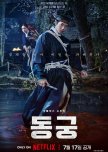
A Dark Supernatural Mystery of Royal Secrets
The East Palace begins with a chilling royal curse. Thirty years ago, crown princes died one after another under mysterious circumstances, while the future King Ju Sang was still a young prince. History now appears to be repeating itself. The king has already lost three crown princes, and his youngest son seems destined to become the next victim.Whispers throughout the palace blame the deaths on the spirit of a haunted pond. Decades earlier, a favoured consort of the late king was accused of infidelity and bearing an illegitimate child. She was condemned and drowned in that very pond, leaving behind a legacy of resentment that refuses to rest.
With his dynasty on the brink, King Ju Sang summons two unlikely allies. Gu-Cheon, an orphan raised in a temple, possesses the rare ability to cross into the spirit world. Saeng-Gang, a princess cast out from the palace because she can hear voices from the other realm, joins him in investigating the curse.
Their search uncovers secrets buried long before King Ju Sang ascended the throne—secrets involving the most powerful figures in the kingdom. The closer they come to the truth, the more dangerous their mission becomes, for there are those who will kill to ensure the past remains hidden.
The drama is steeped in darkness and violence. Much of the story follows Gu-Cheon as he ventures into a haunting spirit realm filled with vengeful ghosts and terrifying monsters born from the resentment of those who suffered wrongful deaths. Yet the supernatural is only half the danger. Human greed, ambition, and the determination to conceal deadly truths prove every bit as lethal as the spirits themselves.
At first, it seems that the selfishness of the Queen Dowager and King Ju Sang lies at the heart of the tragedy. As the story unfolds, however, it becomes clear that the truth is far more complex than it first appears.
When it comes to supernatural storytelling, Korean dramas continue to be among the best. They are free to explore folklore, ghosts, and the spirit world in imaginative ways, whereas Chinese productions have long faced restrictions on portraying supernatural themes - I can fully empathise with the need for a society to avoid promoting superstition. The East Palace is another fine example of Korea's ability to blend palace intrigue with compelling supernatural mystery.
A small historical note: in both Korean and Chinese royal courts, the Crown Prince's residence was traditionally known as the East Palace, as it was commonly situated on the eastern side of the royal compound, where the sun rises—symbolising the future ruler.
I thoroughly enjoyed this drama. The tension comes not from jump scares but from wondering what Gu-Cheon and Saeng-Gang will uncover next—and whether either of them will survive the journey. Although it explores ghosts and monsters, I did not find it particularly frightening. It is more atmospheric and unsettling than genuinely scary.
The production values are excellent. The cast delivers strong performances, the chemistry between the two leads is convincing, and the costumes, sets, and palace architecture beautifully capture the elegance of the Joseon era.
At only eight episodes, The East Palace is a compact supernatural mystery that never overstays its welcome. If you enjoy palace conspiracies, ancient curses, and ghostly folklore wrapped in a dark, fast-paced story, this is well worth your time.
Was this review helpful to you?
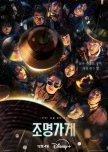
An eerie dark alley and a light shop which might lead you home
The opening episodes of are genuinely unsettling. For a while, I was convinced I was watching a full-blown horror series and wonder whether I could endure it to the end as I was watching it late at night by myself.Almost every scene is drenched in an eerie sense of dread. The story revolves around a narrow, dimly lit alley that seems trapped in perpetual night. At the very end stands a strangely bright light shop, its warm glow the only source of comfort in an otherwise oppressive darkness. The shop is run by a handsome but enigmatic owner whose presence raises more questions than answers.
As different characters pass through the alley, the atmosphere becomes increasingly disturbing.
There is a woman trapped inside a haunted house along the alley she cannot escape from, wandering its rooms like a prisoner in a nightmare.
A teenage boy desperately tries to leave the alley, only to find himself returning to the same spot over and over again, as though reality itself is bending around him. When he finally suffers a horrific injury that twists his leg into an unnatural position, the scene becomes even more disturbing.
A mysterious woman endlessly drags a large suitcase through the darkness. What is inside it? The drama keeps you wondering, and fearing, the answer.
A detective pursues a man with unsettling cat-like eyes who seems more creature than human.
A teenage girl repeatedly returns to buy light bulbs for her mother, despite the growing sense that something is terribly wrong.
And then there is a man who picks up a young woman at a bus stop, despite having no idea who she is or why she keeps appearing in his life.
The strangest part is that nobody seems to question the alley itself. Why must they keep walking through this terrifying place? Why not take another route? Why does dawn never come? Why does the darkness feel so alive? Why do all these strange people from different walks of life gather in this alley?
The deeper the story goes, the more you realise that the alley is not merely a location. It is a place that exists between answers and questions, life and death, memory and oblivion. The light shop itself seems to serve a purpose that only the truly dead understand, while the living stumble through it in confusion.
What makes the drama so effective is that it relies less on jump scares and more on an overwhelming sense of unease. Every character feels haunted. Every encounter feels wrong. Every shadow seems to conceal a secret waiting to emerge.
With only eight episodes, the mystery unfolds quickly, and before long you begin to uncover the truth behind the alley, the light shop, and the strange souls who wander through its endless night.
If you enjoy eerie mysteries filled with ghostly encounters, unsettling imagery, and a creeping sense of dread that lingers long after the episode ends, this drama is well worth watching.
Was this review helpful to you?
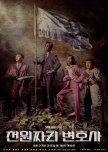
He is worth way more than a dollar
One Dollar Lawyer is worth watching for one key reason: Namkoong Min. Charismatic, strikingly handsome, and armed with impeccable comic timing, he completely owns the screen as Cheon Ji-hun, a lawyer who charges the outrageous fee of just 1,000 won (about one US dollar) per case, in spite of being outstanding in his job.Cheon Ji-hun is the kind of character who can walk into a room looking like a trendy fashion model, act like a complete lunatic, and somehow still be the smartest person there. Cocky, confident, eccentric, and utterly unpredictable, he turns every courtroom appearance into a performance.
A large part of the fun comes from the mystery surrounding him. One moment, he appears completely broke, with his landlord relentlessly chasing him for unpaid rent. The next, he is casually bidding huge sums of money at auctions as though he owns half of Seoul. Is he rich? Is he poor? Is he secretly both? And more importantly, how does a lawyer charging only 1,000 won per client manage to keep his office open?
As the story unfolds, Ji-hun and his two loyal sidekicks take on a variety of cases, usually fighting for people who have neither money nor influence. Watching this unconventional trio work is half the entertainment. Whether it is clearing a man falsely accused of murdering his parents, helping a petty thief escape the shadow of his criminal past, or taking down an abusive corporate executive who treats his staff like punching bags, Ji-hun always finds a way to turn the tables.
The drama does occasionally suffer from pacing issues, especially the first episode - I was wondering I would want to watch on as it felt quite boring. However, if you can make it through the first couple of episodes, the series gradually finds its rhythm and becomes much more engaging.
What elevates the drama beyond simple comedy is the tragedy hidden beneath Ji-hun's clownish exterior. Behind the jokes, outrageous outfits, and constant wisecracks lies a man carrying enormous emotional scars. His fiancée was stabbed to death on a train. His father, a presidential candidate, allegedly took his own life by jumping from a building. Yet Ji-hun remains unconvinced by the official explanations and continues to pursue the truth.
As the pieces slowly come together, it becomes clear that powerful figures with even more powerful political connections are involved. The deeper Ji-hun digs, the more danger he places himself in. Suddenly, the goofy lawyer charging one dollar is no longer just fighting legal battles — he is confronting people capable of destroying lives.
What makes the drama work so well is its balance. It can make you laugh one minute and then hit you with a surprisingly emotional revelation the next. Although I suspect that much of the humour might be lost in translation relying on the English dubbing as I don't understand Korean.
Overall, One Dollar Lawyer is a highly entertaining blend of comedy, legal drama, mystery, and underdog justice. It starts quietly, but once it finds its footing, it becomes difficult to stop watching. And at the centre of it all is Namkoong Min, delivering a performance so charming and energetic that he could probably charge 1,000 won for legal advice and still convince everyone they got a bargain.
Was this review helpful to you?
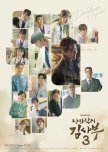
Blood, Egos, and Ideals
Dr. Romantic may sound like a romance drama from its title, but across all three seasons, romance is really secondary. At its core, the series is about Master Kim Sabu and his uncompromising belief that patients should be saved at all costs — regardless of hospital politics, personal sacrifice, or financial reward.Season 3 turns the intensity up another level. The surgical and trauma scenes are relentless, graphic, and surprisingly convincing. On the occasions I looked up the medical terms and procedures mentioned in the drama, they matched the conditions being portrayed remarkably well. The production clearly had an excellent trauma or surgical consultant behind the scenes. Some operations are so bloody and visceral that viewers who are squeamish about surgery may struggle to get through them.
What keeps the drama from becoming emotionally exhausting is its humour. Amid the chaos are genuinely funny moments: mistaken assumptions about a homosexual relationship, confusion over fatherhood, and one hilarious scene where a hopeful suitor asks a colleague who the woman he likes is dating — only for the colleague to calmly reply, ''You are looking at him.” Then there is the unforgettable entrance of the resident clown of the series walking through the doors while everyone is lined up to solemnly welcome the new Trauma Centre head.
The child actors also deserve praise. Dr In-su’s daughter is not merely there to look adorable — she is expressive, natural, and memorable enough to steal scenes from the adults.
One of the drama’s strengths is how sharply it portrays personalities within the medical profession. There is the arrogant young doctor desperate to prove himself while terrified of appearing incompetent — something very believable among inexperienced professionals still learning the ropes. There are senior doctors too proud to admit weakness, and endless clashes between stubborn, strong-willed personalities and the guilt of a doctor when a healthy young patient dies. Master Kim and Dr Seo are both brilliant but impossibly obstinate. The power struggles between the Trauma Centre leadership, senior doctors, and nurses even escalate into boycotts and stand-offs.
Of course, the drama has its share of melodramatic nonsense. If phone calls fail, surely someone could send a text. And scenes like Dr Seo and Nurse Park entering the basement of a collapsing building are pure drama logic — saving patients should not mean recklessly creating more victims. The trapped surgeon storyline was clearly designed for suspense because everyone knows a surgeon’s hands are their career.
There are moments where the melodrama becomes excessive. Kim hearing the imagined voice of a woman during a fire evacuation and wandering off — triggering a search operation while the hospital is under threat — feels absurd for someone normally so rational. And when Nurse Oh finally finds him, the two pause to reminisce instead of evacuating immediately. Likewise, the relationship crisis between Dr Yoon and Nurse Park is prolonged by some spectacularly bad advice from people around them.
One amusing distraction throughout the drama is the hairstyle choice for some characters — especially Seo and Jang — with thick fringes hanging heavily over their eyes like teenage-era Prince Harry. It constantly gives the impression of people trying to hide from the world while performing life-saving surgery.
Still, beneath all the theatrics lies a sincere moral core. The drama repeatedly asks what medicine should really stand for: prestige and power, or patients. Dr Kang Dong Ju’s aspiration that no patient should ever be turned away because of lack of care made me wish the New Zealand health system could uphold the same uncompromising vision, especially given the long waiting times many patients face for treatment. Of course, reality is far more complicated — in a publicly funded healthcare system, the unavoidable question is always: where will the money come from, especially when a country’s coffers are already stretched thin?
Three seasons of surgeries, blood, shouting, collapsing buildings, and hospital politics can admittedly feel overwhelming at times. Yet the series remains highly entertaining because it combines adrenaline-filled medical drama with genuine ethical questions about what makes a good doctor. We have all encountered doctors more interested in prestige and money than patients — but this drama is a tribute to those who still practise medicine with humanity, compassion, and conviction, like Master Kim.
Was this review helpful to you?
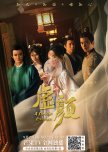
What impressed me most was how tightly written the story is. There are no unnecessary side plots, no endless misunderstandings dragged out for filler, and no secondary romances competing for attention. Everything moves quickly and purposefully, making it dangerously easy to binge in one sitting.
The drama does use familiar Chinese drama tropes — face-swapping (think 'In Blossom') and politically forced marriages — but it executes them with enough intensity and momentum to keep things engaging.
Shen Qin is secretly involved with Prince Ning and is even pregnant with his child. However, political schemes and espionage force her into an imperial marriage decree with General Xiao HanSheng. Desperate to escape her fate, Shen Qin manipulates Shi Qi into exchanging faces with her in return for saving her sister's life.
When Shi Qi awakens, she finds herself wearing Shen Qin's face and standing in the General's residence on the very day of the wedding. The irony? General Xiao HanSheng is actually the man who once saved her life — the man she has quietly loved ever since.
Things quickly spiral from there. The General begins to suspect that his new bride is not really Shen Qin and is strangely similar to the woman he once loved. Meanwhile, Prince Ning starts obsessively pursuing the fake Shen Qin, believing she is still the woman with whom he had the illicit affair.
Naturally, nothing unfolds as simply as it first appears. Secrets pile upon secrets, loyalties shift, and several twists emerge along the way. The beauty of the short format is that the drama does not linger too long on any revelation — the story keeps moving at full speed.
I originally picked this drama purely out of convenience. I only had a couple of days left on my streaming subscription and wanted something short to squeeze in before jumping to another platform to continue my ever-growing watch list. I expected a quick filler watch — nothing more.
Instead, I found myself unexpectedly hooked. What began as a “just something short to pass the time” drama gradually drew me deeper into its twists and intrigue. Compact, fast-paced, and surprisingly addictive, this mini drama proves you do not need 40 episodes stuffed with filler to tell an engaging story.
Was this review helpful to you?
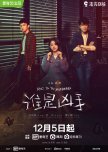
The Cost of One Hesitant Moment
Tipped off by a mysterious caller that a murder was about to take place, two police officers rushed to an old residential building. Splitting up to search the area, rookie cop Leng Xiao Bing stumbled onto the scene just as the crime was unfolding. Face to face with the killer, fear and hesitation paralysed him. Before he could pull the trigger, he was knocked unconscious.The consequences were devastating. Xia Mu's beloved teacher and guardian, Xia JinLan, was brutally murdered. Hidden in the attic, young Xia Mu witnessed the horrifying aftermath — the policeman entering the apartment, followed by the exit of the psychopathic serial killer. In the chaos, the second officer also lost his life.
Seventeen years later, Xia Mu graduates top of his class from the police academy and joins the very department investigating the unsolved serial murders. Still haunted by the tragedy, he confronts Leng Xiao Bing, demanding to know why he failed to act that night and save the woman Xia Mu regarded as a mother. The trauma of the past, combined with a more recent event, has pushed Xia Mu dangerously close to the edge.
Enter Shen Yu, an intelligent and enigmatic psychologist assisting with a case. She is the daughter of Shen Haiyang, a doctor who mysteriously disappeared around the time of Xia JinLan's murder. Shen Yu's suspicious behaviour leads Xia Mu to believe she is protecting her father, who is now a suspect and may still be in hiding. Determined to clear his name, Shen Yu takes increasingly reckless risks, gradually entangling herself in deception and making herself appear complicit.
After seventeen years of silence, a new murder emerges bearing chilling similarities to the old cases. Even more disturbing, a set of skeletons estimated to be 15–20 years old is discovered, opening an entirely new line of investigation. The revelation confirms one terrifying truth — the serial killer has never stopped lurking in the shadows.
Zhao Liying delivers an outstanding performance as Shen Yu. Intelligent, manipulative, and morally ruthless. Shen Yu is not an easy character to like, yet Zhao Liying portrays her with such conviction that I found myself simultaneously fascinated and frustrated by her desperate determination to protect her father. It is another reminder of why she remains one of the strongest actresses in Chinese drama today.
I came across comments complaining that the drama lacked romance. Interestingly, I heard similar criticism directed at Whispers of Fate. That made me wonder why some viewers consider romance essential in every story. Romance can certainly add flavour, but it is not a requirement for a compelling drama. Who Is the Murderer thrives on psychological tension, guilt, trauma, and moral ambiguity rather than romantic distraction.
Modern Chinese thrillers are not usually my preferred genre. Many tend to feel overly cautious, restrained, and somewhat sterile, often sacrificing realism in the process. This drama still carries some of those traits, but its layered mystery and intriguing twists kept me thoroughly engaged. The story constantly shifts your suspicions, and just when you think you have pieced everything together, it quietly unsettles you again.
It may not be perfect, but I found it gripping, emotionally heavy, and surprisingly addictive. A highly recommended watch for viewers who enjoy dark psychological mysteries rather than romance-driven storytelling.
Was this review helpful to you?
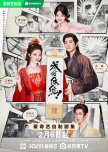
Hilarious comedy
Wang CuiHua transmigrates into a drama she was tasked to improve, only to find herself cast as the villain in a Xia kingdom palace. Worse still, her character does not have a happy ending. Deeply in love with Prince Duan, she is instead offered to the emperor by her ambitious father, who hopes to climb the ranks through her.The emperor is known to be a ruthless tyrant who does not hesitate to kill his consorts. Brought before him to serve, CuiHua is nearly cast aside and buried until she begs for her life. To her surprise, she discovers that he is also a transmigrator.
Armed with only a skimpy knowledge of the drama—having rushed through the script—she must now not only save herself, but also the emperor, who was assassinated in the original story. They begin to suspect that there may be other transmigrators as well. It is a precarious situation: both of them were villains in the original plot, surrounded by enemies. If others know the story, they would likely try to eliminate them. Worse still, as they plot their course, the story begins to change and deviate from the original, leaving them uncertain about what lies ahead.
This drama appears to be a remake of a similar 2025 production, which was rated much lower at 7.5 on MyDramaList. I nearly skipped it on iQIYI, as I usually avoid dramas rated below 8. Fortunately, a second search led me to this newer, better-rated version. Having not watched the earlier one, I cannot make a comparison. Also, the trope of being drawn into a play and becoming a character is all too familiar—another reason I almost passed on this drama. As it turns out, it is well worth watching.
The drama is both hilarious and comical, yet at the same time intense. At its core is a three-way power struggle among Prince Duan, the Empress Dowager, and the Emperor. The Emperor begins as the underdog. Transmigrated at a young age, he was raised by the Dowager as a puppet, with no real authority or military backing. In contrast, Prince Duan controls the military, while the Dowager dominates the court. The arrival of CuiHua, however, shifts the balance. With a capable strategist by his side, the Emperor finds himself in a more advantageous position. How it all unfolds keeps the tension high.
Wang Chu Ran's and Ryan Cheng's on-screen chemistry is excellent and carries the story effectively. While the second leads also perform well, Una Jingru You, a support lead, deserves special mention for convincingly portraying both male and female personas. She plays in one of the most heart-rending moments - the death of a comrade, who, longing to see better days for the kingdom, succumbs to illness on a snowy winter day before that hope can be realised.
The music, however, feels somewhat monotonous. Many tracks share the same sweet, sentimental tone and are not particularly memorable, though a couple do stand out does stand out a little more.
Overall, this is a well-produced drama—with lovely costumes especially for the main leads, realistic CGI, excellent acting, and an engaging power struggle. It is certainly worth the time: entertaining, intense, and filled with moments of genuine laughter.
I debated between an 8.5 and a 9, but ultimately decided on a 9.
Was this review helpful to you?


