



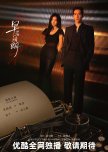
A beautiful fish in an empty tank: the loneliness at the heart of Early Spring
I wouldn't normally give a drama like Early Spring 10/10. On paper, it is far too tropey and potentially far too vacuous: the powerful, emotionally distant male boss; the softer female underling; the secret relationship; the enormous disparity in wealth and status. We've been here before.And yet, somehow, it works extraordinarily well.
First, we have to talk about the female gaze.
Western film and television have spent decades teaching us what the male gaze looks like: the open shirt, the short skirt, the camera lingering over the woman's body. Early Spring cheerfully reverses this. Here, it is the man who is dressed to be looked at.
Those silk shirts don't just fit him; they cling. His entire wardrobe is incredibly sensual and body-conscious, but in a very soft way. It tells us that he is rich, fashionable and powerful, certainly, but it also undermines the hardness of his public persona. Tough on the outside, soft underneath.
And then there is the shower scene.
Ladies, this is for you.
It is completely unnecessary. It adds absolutely nothing to the plot. He simply needs to take his shirt off and have a shower because apparently we, the female audience, have suffered enough.
Then there is the gym scene, complete with an entirely gratuitous and remarkably unabashed trap flex. She accidentally walks in on him exercising, allowing the drama to pretend that she is covertly checking him out. Because female desire must apparently remain a little covert.
The camera, however, is having none of this coyness.
And then there is sex.
One thing I appreciate about C-dramas like this is that they can be considerably less coy about adult sexual desire than many K-dramas. When these two kiss, they actually kiss. We see her removing his shirt. Clothes come off. The scene remains soft and sensual rather than explicit, but there is no real ambiguity about what is happening.
Admittedly, the following morning produces one of those delightful pieces of drama logic. She wakes up apparently wearing every item of clothing in which she arrived, suggesting some extraordinarily conscientious post-coital redressing. He, on the other hand, wanders around in a silk dressing gown that keeps falling open to the waist and makes it abundantly clear that underneath it he is naked.
So apparently somebody's clothes came off and stayed off.
And once again, notice who the camera wants us to look at.
This is what I enjoy about the female gaze in Early Spring.. Her desire is narratively coy — the furtive look in the gym, the reluctance to admit how much she wants him — but the drama itself is anything but. The silk shirts, the shower, the gym scene, the entirely gratuitous trap flex, the dressing gown: the camera repeatedly presents his body for female visual pleasure.
She may have to pretend she's not looking. We don't.
And this isn't entirely frivolous, because the drama's preoccupation with looking at him connects with something much more interesting about the way it tells his story.
We are given an omniscient perspective. We see her experience, but we also see his. That means we can see him falling for her long before she can.
And she has actually read him remarkably accurately.
Very early on, she identifies that he is lonely. He is. She also understands that he dislikes women clinging to him. He does. So she very deliberately doesn't cling.
The problem is that the two of them understand the meaning of her behaviour completely differently.
From his perspective, she is ambitious. She wants the connection and the opportunities it brings, but she doesn't particularly seem to want him. From her perspective, she is protecting herself and, importantly, her job. He is her boss. Their relationship is secret. He has made it clear that clingy women repel him. Why on earth would she risk behaving like one?
And this is where Early Spring does something much cleverer than the average tropey romance. It doesn't need to keep throwing ridiculous obstacles into their path. It doesn't particularly need a scheming rival or endless contrived misunderstandings. The situation itself contains everything necessary to keep them apart.
The secrecy creates distance. The power imbalance creates distance. Their different assumptions about what the relationship means create distance. And because they are hiding their relationship from everyone else, they also become remarkably good at hiding themselves from each other.
There is also something fascinating about the heroine. She combines low self-confidence with high ambition, which initially looks contradictory but actually makes perfect sense. She comes from an ordinary hometown, an ordinary university and an ordinary background. He has wealth, lineage, status and male privilege. She can simultaneously be ambitious enough to reach towards the world he represents and insecure enough to think: *Why would a man like that actually want me? We're not a match. I'm not good enough. I can't measure up.*
She isn't exactly Lady Macbeth. But her attraction to power and her ambition matter. They help explain why she moves towards him while emotionally holding herself back.
The irony is that he is actually the more vulnerable of the two. She has friends. She forms connections relatively easily. She has a world outside him. He has friends too, technically — drinking companions, people whose commercial interests he supports, people who are very happy to let him buy things — but emotionally he is profoundly alone.
And the drama gives us a beautiful visual metaphor for this in his house. There is that enormous illuminated fish tank: a beautiful, glossy fish with elaborate fins, endlessly swimming backwards and forwards by itself. The landscape around it is almost barren. Rocks. Water. No lush plants, no seaweed, nothing soft or abundant.
Just one spectacular creature, beautifully displayed under the lights.
Alone.
That's him.
Beautiful, wealthy, privileged, conspicuous — and living in an emotional landscape that has been stripped almost bare. And perhaps that's the cleverest reversal in the drama. On the surface, this is a fantasy about an ordinary woman gaining access to an extraordinarily powerful man. But emotionally, it is almost the opposite. It is the story of a profoundly lonely man gaining access to a woman who already possesses the thing he lacks: human connection in the form of caring family and friends.
Which is why, underneath all the wealth and clothes and gorgeous people and familiar romantic tropes, Early Spring becomes a surprisingly tender story. These are two people drawn towards each other because they are looking for warmth. The tragedy — and the romance — is that they don't yet know how to give each other what they are looking for.
She thinks she is the vulnerable one because she has less power. We can see that emotionally, he is. And so what could have been a fairly empty fantasy about a rich, handsome boss and his female employee becomes something much more human: two people reaching for intimacy across a barren landscape, repeatedly getting close and then missing each other because neither has yet learned how to bridge the distance.
They don't really need another villain. The distance between them is enough.
And perhaps that's why I'm giving this deeply tropey, occasionally ridiculous, silk-shirted, trap-flexing drama 10/10. It understands something very simple about intimacy: wanting warmth and knowing how to create it are not the same thing.
Was this review helpful to you?

Slow and smokin'
There's a moment in the film where Mu Bi reflects on her father's film making career: his films were really boring and she wasn't quite sure with his story telling exactly what he wanted to say.I feel this summed up this drama quite well. I wasn't quite sure what it wanted to say and at times I lost interest and stopped watching it. It had enough going for it for me to see it through but by end of it all, I still wasn't sure what it was that I had just watched.
I guess it's roughly themed around second chances, those that work out, those that don't, and those that are taken from you. I'm guessing the overall theme was something like , life is a journey and each person must live it their own way. Actually, I think one of the characters says something like that and it becomes a poignant moment of realisation that we are not responsible for everything that happens to other people.
I love the actors, they all did a great job. The chemistry between the second leads feels sparky, the main leads, it feels a little flat, I wasn't convinced despite both being great actors.
My big pet peeve of this drama though has to be the product placement. There was a lot of vaping, a lot of smoking. I was really shocked, in my country you can't portray young people smoking to look cool - it's considered really inappropriate. Same with the drinking - there's a couple of times where the beer label is really obviously flicked to the camera so we can notice the brand.
I guess I'm a bit old fashioned in that I don't like the alcohol or smoking industry trying to subtly influence young people to drink or smoke.
Overall, it's a pleasant enough way to spend the evening and enjoy some well known faces. Go in with low expectations and you might find yourself enjoying some of the slower and sweeter moments as well as the overall relaxed vibe.
Was this review helpful to you?
To My Star Season 2: Our Untold Stories
0 people found this review helpful
What it means to be human beautifully captured
Easy to watch, easy to become engrossed in, easy to relate to. That's why I enjoyed this K-Drama so much.All of us are hurt at some point in our lives, all of us know the feeling of needing to protect ourselves from pain and the vulnerability that comes from our longing for connection and the fear of its loss. This story beautifully weaves threads around this most basic human need into a rich tapestry of human experience.
We know from the very outset that the happy ever after from season 1 did not stay that way. What follows is an exploration of vulnerability. Past losses and rejections, trauma, all leave their mark and condition the way the leads relate to their lives and each other. The drama unfolds as a dance, as each character steps forwards and then retreats, not sure how to be together.
It has it all, great chemistry between the leads, tender moments, pain and heart break, frustration at the lead for being his own worst enemy and a generous amount of affection to leave the ending fully resolved.
Was this review helpful to you?


