
 Editorials
 2
2 1
1 1
1 1
1


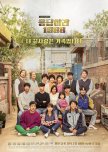
Nostalgia, Warmth, and Perfection: A Must-Watch Drama
What can I say? At the moment, this is the best drama I've watched among K-dramas (along with *Twinkling Watermelon*). I've seen quite a few, and while I like many of them, I almost always find flaws.The nostalgic atmosphere is incredible. Even if it's not our culture, we can either discover it or relive our own era and childhood (I find many similarities with the culture of that time). The drama is full of positive moments and human values that modern society is gradually losing.
Deok-seon is an incredibly endearing character, and her actress, Lee Hye-ri, perfectly portrays her growth—from a slightly naive and immature girl who always cares for others to a responsible and charming young woman.
Bo Gum is perfect in this role, and his transformation from a gifted teenager into a man who knows exactly what he wants and goes for it without hesitation is impressive.
This drama has no villains—only kind-hearted people! The entire cast is amazing, and each character’s story is touching and beautiful. Despite its slow pacing, The entire cast plays wonderfully, transporting you into their neighborhood. the characters are well-developed, and the cinematography is simply stunning.
Overall, if I have two perfect dramas, this is one of them.
Warning: there are a lot of food scenes—some might find it a bit too much! 😆
And of course, Park Bo Gum in this role is simply flawless.
If you enjoy nostalgic, warm, and slow-paced dramas, this is exactly what you need!
Was this review helpful to you?
This review may contain spoilers
slice-of-life drama: Like novels such as Before the Coffee Gets Cold
slice-of-life drama: Like novels such as Before the Coffee Gets Cold and The Miracles of the Namiya General Store...I’m really enjoying watching this series little by little in the evenings — it’s perfect to breathe, relax, and fall asleep to. A true slice-of-life drama, almost literary in the way its dialogues and ideas unfold.
Here, there isn’t really one central character, but rather a whole atmosphere that feels incredibly cohesive and human. There’s no huge dramatic goal driving the story. The beginning (ep1) was actually quite hard for me because I usually don’t enjoy this kind of subject matter, but as the series progresses, it feels like we go through therapy alongside the characters, slowly changing our thoughts and moving away from sadness little by little.
The male lead feels very natural and not idealized at all — which is rare for male characters in dramas, since they’re often written like perfect princes. The relationships also feel realistic and grounded.
This is exactly the kind of drama China knows how to do so well — one of its real specialties and unique strengths, alongside wuxia and xianxia.
Was this review helpful to you?
A hugely popular series
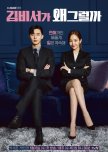
A hugely popular series, loved by many for the couple’s chemistry and the funny moments. I Think this is a Korean adaptation of the movie "Two Weeks Notice" with Sandra Bullock and Hugh Grant. The couple in this series is quite amusing, and the chemistry between them is perfect—which is the main ingredient for this genre. But towards the end, as it seemed to me, everything started to slide into kitsch: too much marshmallow and chocolate cream on bread—it just felt over the top.Was this review helpful to you?
My Inner Student and the Perfect Gumiho
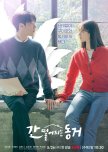
I watched this series with great pleasure. The actors are excellent, and the chemistry of the main couple works beautifully.Jang Ki-yong appears strikingly different from his previous roles. Here, he is gentle and tender, almost ethereal. He transforms himself with each project — even his manner of walking and his facial expressions change. His performance is subtle and refined. Romance is strongly present and brings a warm glow to the story. The couple truly works, which is essential for this kind of series.
Lee Hyeri is bright and full of energy, faithful to what she does best. She plays naturally, without visible transformation, an endearing character with whom many can identify: honest, friendly, sometimes a little clumsy, yet carrying the fresh innocence of a carefree student — neither exceptionally brilliant nor lacking. The idea of the series seems to be that the “student within us” can still dream of a perfect gumiho.
Jang Ki-yong’s character almost embodies perfection, perhaps too much — but as he is a mythical being, this excess is forgivable. He rarely shows anger, which only emphasizes a very human trait he has yet to acquire — something he still needs to learn.
The secondary characters are also charming, and their storylines are engaging. I found the interactions between Jang Ki-yong and Kang Han-na particularly captivating. Their more mature, less “student-like” dynamic created an oddly unsettling contrast when placed next to Lee Hyeri’s character, and there was a hint of flirtation that made me feel slightly uncomfortable.
This is a positive and light-hearted series, one that does not aim to explore profound themes, yet perfectly fulfills its role as pleasant entertainment, free of pretension and poor taste
Was this review helpful to you?
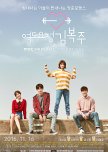
The series is light and romantic
The series is based on the real stories of athletes—the lives of champions, their struggles, and doubts. It also explores the topic of female athletes, femininity, authenticity, self-acceptance, and the desire to be both a woman and a dedicated athlete, as well as how society perceives all of this.At the same time, it contrasts with a sport often considered more "feminine"—gymnastics. It’s a very interesting and refreshing subject, touching on sensitive issues but without delving too deeply. The storyline lacks boldness and feels somewhat watered down to appeal to a broader audience. It's a shame, but in terms of popularity, it works.
The female lead acts well—I think she managed to portray an interesting character despite not fitting the role perfectly. The male lead is likable, with moments of strong acting and others that are less convincing. Their love story is enjoyable.
The biggest flaw is the choice of the main actress, who does not fit the role. She is very pretty and not "big" at all, yet the script repeatedly insists that she is, which really bothered and annoyed me. They should have either acknowledged that she is attractive but simply less conventionally feminine or fully committed to the idea by casting a more convincing actress for this concept.
Secondly, the constant eating does not add much value to the story. If it was meant as a critique or had a deeper meaning, they should have explored it further.
Thirdly, the friendship dynamic between the FL and ML is unbalanced (at least until episode 15). The FL constantly shares her struggles, but the ML also has problems, and she never asks how he is doing. Even at the end, she encourages him to win so he can join her, but in a way, it’s still about her. Yet, at the beginning, the ML criticizes his ex-girlfriend for being selfish.
The series is light, romantic, and overall pleasant to watch, especially for younger audiences.
Was this review helpful to you?
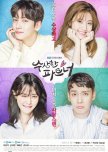
Suspicious Partner: Entertaining Cast, But a Flawed Investigation Drama
At first, I watched *Suspicious Partner* seriously, but eventually, the storyline came off as childish, with numerous unrealistic and illogical details—especially when it came to the so-called investigations and crimes. It was clear that the writer seemed to lack knowledge in this field. For instance, what kind of criminal lawyer would set up an office at home, inviting clients and even criminals to share meals with him? It was absurd!Throughout the show, characters constantly learn about new developments from the TV, as if there's no connection between police, prosecutors, and investigators. It's almost as if criminal investigations are being conducted by attorneys. This depiction doesn’t align with real criminal justice systems, where investigations are based on strict hierarchy and defined roles. Typically, the police handle on-site investigations, gather evidence, and conduct initial questioning following established procedures. Specialized investigators take charge of particular cases such as homicides or organized crime, often coordinating with various agencies.
The attorneys, on the other hand, have a different role. They represent parties in court but are not directly involved in gathering evidence. Here, however, these roles are blurred, creating a portrayal that feels disconnected from how investigations truly work.
And the romantic storyline lacks depth and fails to captivate.
All in all, two stars for *Suspicious Partner*—and only because of Ji Chang Wook and Ji Eun Hyuk, as well as Byun Young Hee and Jung Hyun Soo, who kept the show engaging despite the script's flaws.
Was this review helpful to you?
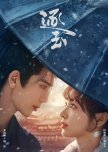
The Anatomy of a purely commercial BIG production
The beginning was truly fantastic, I must admit. Humor, originality, and a clear chemistry between the actors. The heroine is energetic, kind, and genuinely acts very well. She is beautiful and has that kind of gaze that immediately captivates attention. As for Ling He, he is absolutely breathtakingly handsome. The editing is dynamic, the cinematography is beautiful, and even the supporting cast seems carefully chosen for their charm. Attractive faces everywhere — men and women alike. What better way to dream?From the start, one can sense a production that has been carefully crafted, designed to attract a large audience and generate impressive numbers from the very first episodes.
I am almost certain that I belong to the minority here. It seems that most viewers are simply enjoying this visual spectacle — and I sincerely hope you enjoy it.
However, while respecting everyone’s tastes and expectations, I wanted to share my personal feelings about projects like this one. Because what I see here almost resembles the anatomy of a purely commercial production, whose main goal is to consolidate an already active fanbase and give the audience exactly what it wants.
And I realize that I sometimes struggle with works that are created primarily within this logic.
At the moment I am on episode 12, and I fully intend to continue watching the series. It is not a bad production — not at all. But almost every minute I can sense the scent of commercial calculation, and that makes it difficult for me to fully believe in what is happening on screen.
Let me explain.
I appreciate Ling He for his screen presence and, of course, for his beauty. He is among the actors I enjoy watching, although with certain reservations. I feel that in several of his recent projects he tends to reproduce what works best with his female audience. And in a way, why try to reinvent things when you already have an enormous fanbase ready to follow every new project?
He seems capable of carrying a series almost entirely with those naïvely romantic looks that have become part of his image. Yet this is precisely where, for me, it sometimes becomes difficult to fully believe in the emotion. Perhaps because I sense a form of repetition, as if the actor relies more on his visual aura and charm than on a deeper emotional transformation.
After the first episodes, the series also begins to revolve increasingly around his character. The other characters constantly repeat how handsome he is, how remarkable he is, how talented he is.
This reveals an interesting narrative device: the story validates the audience’s fantasy. In other words, what the viewers already admire about the actor is continuously confirmed within the narrative itself by the characters. The script becomes, in a way, a mirror reflecting the expectations of the audience.
And we know that repetition is one of the most effective ways to influence the collective unconscious: repeating certain “truths” again and again until they appear natural.
In that sense, the series also functions as a showcase for the image of its main actor. Gradually, one may even feel that certain elements of the story exist mainly to serve that purpose.
The romance itself sometimes becomes very accentuated: slow-motion gazes, passionate kisses, emotions heightened by the staging. At times it can feel exaggerated or lacking spontaneity. Yet the formula is repeated again and again — because this is exactly what the majority of the audience seems to desire.
As for the supporting characters, there are also moments of exaggeration in the acting. The second male lead nevertheless has a certain charisma. It almost feels like a test for him: can he carry a full series? Placing him in a very popular production allows him to be discovered by a wide audience while remaining in a safe environment thanks to the presence of the main lead.
The music also contributes to this emotional construction. Almost every gesture and intention seems accompanied by its own musical cue, as if the viewer is gently guided toward the expected emotion. The music is omnipresent and becomes aggressive.
On the other hand, I must say that I find the female casting particularly successful.
I am writing all this after watching twelve episodes, and I should mention that I had not expressed any criticism before this point. Despite my reservations, I intend to watch the series until the end. Perhaps I am wrong, and perhaps the final episodes will change my opinion.
Or perhaps I will remain with this persistent impression: that behind this very beautiful spectacle, the emotions still feel a little too constructed to become truly authentic for me.
Was this review helpful to you?
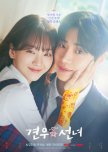
Made for a Teenage Audience
Already after the first episode, it becomes clear the series is obviously aimed primarily at a teenage audience.Apparently, there was no real synopsis at all; it seems to me that it was being made up on the fly during filming—otherwise. Compared to a theme like shamanism, one could say that "The Book of Our Destiny" with Ro Woon etc... actually looks like great . At least there was a simple but quite charming plot and a likable main couple—Ro Woon and Cho Bo-a. Here, they cast young, still-rising actors (the guy, yes, has some interesting projects, but he looks thirty, while the girl looks eighteen; the combination is completely unconvincing).
This shamanic storytelling, aimed primarily at teenagers, offers nothing truly worthwhile. Two excellent actresses—Kim Mi-kyung and Chu Ja-hyun—seem to have participated only for the paycheck. On top of that, the school setting is already pretty tiresome. They clearly released this project right after "Hunted Palace" to capture the same “vibes” . From a popularity standpoint, it may have worked, but definitely not for me.
Was this review helpful to you?
young audience drama
The series is originally aimed at a young audience, roughly 18–25 years old. While this demographic focus could work, the script itself is rather flat and features some problematic or irritating character mindsets. The primary emphasis is on aesthetically appealing characters rather than narrative depth and emotionally flat.In contrast, in another project, Jun Young proved to be far more compelling, demonstrating how the choices of a director and screenwriter can significantly shape a series’ quality. The same applies to Lee Chae Min
: there is a clear distinction between his two most recent projects, highlighting how thoughtful direction and strong casting can make a substantial difference. And Roh Jeong Eui the same thing.
Was this review helpful to you?
Funny Superheroes Done Right
Good drama. It has action, humor, great chemistry between the characters, and interesting personalities. I think it’s the perfect kind of project for a franchise (I’m almost sure there will be a season 2). The concept itself is also quite original. In short, it’s definitely the kind of drama you can watch as a couple to spend a pleasant evening together. The superheroes are genuinely very funny, and Eun Woo, as always, is charming and incredibly likable.Of course, Park Eun Bin carries much of the project on her shoulders as a talented actress, thanks to her natural and energetic acting. And Eun Woo brings glamour and charm to the drama… The other characters also deserve recognition, although some of them are a bit too stereotypical, which is probably the only downside. On the other hand, the special effects are well done, and the cinematography is good too.
The director also did a solid job — he managed to make everything work convincingly and bring all these elements together successfully. The two other superheroes are incredibly cute and funny. In fact, the humor revolves around these three characters (3 Comic relief characters) , while the others remain serious, and it’s precisely this contrast in tone that makes the drama so entertaining.
As for the casting, the heroine has some similarities to the character type from "True Beauty". They clearly didn’t want to take risks and chose a formula that already works. Apparently, this kind of casting matches very well with Eun Woo
Was this review helpful to you?
if one wishes to explore the artistry of South Korean cinema, this series is a must-watch!
So, what can be said about this magnificent series, one of the masterpieces of Korean cinematography? Let's start with the incredible Lee Eung-bok, such a brilliant screenwriter! I am absolutely a fan of her work. The script is the heart of any film or series—if the foundation is weak, what can be built upon it? Here, the plot is breathtaking, and the character development is masterfully handled with precision and depth.We grow attached to all the protagonists, and despite the dramatic and often tragic themes, the series beautifully portrays love and sacrifice. It shows to what extent true love can give up everything for the survival of the beloved—whether it's a child, a soulmate, or even one’s homeland. Sacrifice is at the very core of this story.
Through three male characters from different social backgrounds, we see contrasting paths:
One, a former slave who became an officer—a righteous man, yet one who denies his cultural roots and struggles with his identity.
Another, born into poverty, who took a harsh road and became hardened—a mercenary, valuing neither his own life nor that of others.
And the third, a noble-born, a wealthy libertine who seems carefree at first but rebels against his family in his own way and lacks true purpose in life.
All three are tied by a red thread to a courageous, idealistic young woman who fights for her country’s independence.There is also a metaphor through the heroine, who represents Korea and its people (rather the ideal): educated, fighting, loved by all, and for whom people are willing to die. As the series unfolds, we watch her grow, losing some of her naïveté while inspiring change in these three men.
The entire cast is phenomenal, with even the supporting actors leaving a strong impression. The dialogues are well-crafted, and, of course, a special mention must go to the highly talented director, who masterfully balances emotional moments with lighthearted and touching scenes. The cinematography is stunning—the colors, the transitions, the framing—all beautifully executed.
And finally, the music! Absolutely breathtaking. The instrumental pieces, the piano moments, the songs—all perfectly harmonized with the story.
In short, if one wishes to explore the artistry of South Korean cinema, to understand what they excel at, and to discover a historical drama with a feminist touch, this series is a must-watch!
Was this review helpful to you?
For me, the real problem lies in the visual choices. There is simply too much glamour, too many beauty filters, and too much emphasis on creating polished images, while underneath it all, there is very little substance in terms of character writing and development. The series does not really create a rich, immersive visual world; instead, it often feels like a collection of beautiful costumes and Instagrammable shots — something that has unfortunately become increasingly common in contemporary Chinese dramas that look gorgeous but lack depth.
The biggest problem, however, is the "overdose of drama". Perhaps "Overdose" would have been a more appropriate title than "Overdo". There is nothing wrong with melodrama when it is well handled. In fact, I would much rather see one or two strong dramatic threads explored properly throughout the series than have a new layer of tragedy added to every episode without ever really going beneath the surface. Here, the constant escalation eventually becomes exhausting rather than moving.
There is actually an interesting historical subject at the heart of the story: a period in which women and the sex trade could be treated as commodities and part of an established social and economic system. Unfortunately, the way this subject is handled never feels particularly believable. Everything becomes so exaggerated that the historical setting starts to feel more like Disneyland than a credible world. At some point, I simply became tired of it and lost interest halfway through the series.
The love story itself also left me rather perplexed.
And then there is the hero, who seems to spend the entire series being tortured in every possible way. Did the screenwriter have a personal grudge against him? Or were they trying to make all of Linghe's haters happy? I have no idea — I'm joking, of course. But seriously, the character goes through so much suffering that it eventually becomes almost comical.
Yet somehow, he remains the person holding the whole boat together.
Because the heroine, despite having almost all the keys and power within the story, is presented more as a glamorous figure than as a genuinely complex and dramatically developed character. She is absolutely beautiful — just like the male lead, who is exceptionally handsome — and she certainly knows how to look stunning on camera. We even get repeated close-ups of her feet while she walks — easily 20 times throughout the series, if not more. And, when the production calls for it, she can certainly deliver a beautiful, convincing tear.
So, in the end, "Overdo" is a series with a gorgeous cast, attractive costumes (It creates historical inaccuracies by featuring contemporary luxury brands) and plenty of visually polished moments, but far too little depth beneath the surface. It had the ingredients to become something much stronger, but the constant glamour, excessive melodrama and lack of meaningful character development ultimately made me disconnect from it halfway through.
Was this review helpful to you?
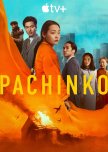
Stunning work that immerses the viewer in the destiny of a Korean family
Pachinko is a moving and visually stunning work that immerses the viewer in the destiny of a Korean family across several generations, from the 1910s to the 1980s, against the backdrop of tensions between Korea and Japan. The series explores themes of identity, resilience, sacrifice, and the fractures left by colonial history.One of the series’ greatest strengths is its writing: every character is carefully developed, with narrative arcs that captivate and move the audience. The cast is outstanding. Youn Yuh-jung, Jin Ha, Kim Min-ha, and Lee Min Ho deliver powerful performances, embodying both the strength and vulnerability of their characters. The series goes beyond portraying suffering, also exploring moments of tenderness, courage, and hope that span generations.
Visually, Pachinko is breathtaking. The cinematography captures both the raw beauty of Korean landscapes and the urban life of Japan, with remarkable attention to historical detail. The soundtrack, subtle and emotive, perfectly complements the narrative rhythm, enhancing the impact of key scenes without ever being overpowering.
Was this review helpful to you?
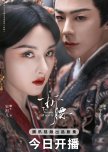
Beyond Cunning: The Hidden Burden of the Chinese Heroine
I can see that around this drama—one of the most-watched in 2025 and perhaps the most beloved—an extraordinarily intense discussion has unfolded. As for me, I wanted to look at the female heroine through different lenses: Chinese cultural tradition, historical context, and modern perception.After all, the central theme here is “Female wisdom as a stratagem in the struggle against enemies.” This is an ancient legacy of Chinese culture, where feminine cunning was understood as an indirect strategy: in China’s literary traditions, the intelligent, resourceful heroine appears constantly, and there is nothing new about it. Once again, we see an old motif—the indirect path, ‘salvation through a detour.’
But why is this scheme fully justified in a historical context, yet far more problematic in a modern one?
Because in that era, social structures severely restricted women’s capacity for direct action; cunning then became a parallel form of power, an expression of intellect, and sometimes an ideal of a heroine capable of seeing deeper than others. It was not cunning for the sake of vice, but a way to restore a disturbed balance of forces.
From a feminist point of view, one could put it differently: cunning is not celebrated for the manipulation itself, but because historically it was the only domain of action left to women. When the direct path was closed, strategic thinking became a mode of political existence, a soft form of resistance, a subtle counter-movement against power.
This trope is still alive in contemporary dramas—extremely often. The problem is that the context is almost never articulated.
Hence my main question regarding the heroine’s interpretation: the actress had to embody a character rooted in deep emotional and intellectual layers. Yet, unfortunately, I did not see in her the emotional competence required for such a role: her diction is pale, and her gaze lacks the necessary inner intensity.
However, the entire success of the drama rests on something else: the romantic storyline and the chemistry she creates with the male lead. The scenes are sensual, the visual aesthetic is dizzyingly lavish, the costumes magnificent, the budget impressive—all of this forms its resounding success.
Add to this the incredibly charismatic Liu Yu Ning, who changes the energy of a scene with a single calm yet piercing look—and popular adoration is guaranteed. Liu Yu Ning’s transition from singer to actor is remarkably successful, and the soundtracks work flawlessly.
So, I have noted both the strengths and the weaknesses. The main challenge—the profound interpretation of the female stratagem—remains unresolved for the actress. Everything else is accomplished.
I would like to add one more thought: the theme of cunning and manipulation is glorified extremely often in Chinese dramas. But it is important not to allow it to become a cliché. One must remember the historical context and the real conditions in which women lived.
The question is: whom does her cunning serve, and at what moral cost—to herself and to those around her?
Cunning can be a virtue of survival, but it should not be thoughtlessly normalized for audiences who watch dramas at 2× speed or “just to relax.”
In another mode of perception, this trope changes radically: what was historically the only available path of action for women can, in modern contexts, be interpreted as an endorsement of everyday manipulativeness, as a justification for emotional pressure, as a banal ‘effective strategy’ in relationships
Was this review helpful to you?
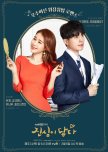
drama you put on to relax or have in the background while doing something else
Okay, this drama feels a bit outdated to me. It’s funny at the beginning, and the introduction and development are quite enjoyable to watch. The second couple is actually much more entertaining and endearing (the lawyer who falls in love way too often is hilarious!).Now, back to the main couple… A shy lawyer in his 30s who doesn’t dare to do anything? Honestly, I don’t find his character believable at all. But in the end, we like the actors, so we keep watching.
This is the kind of drama you put on to relax or have in the background while doing something else.
As for the plot and the female lead, it really feels like it was written to glorify and idealize an actress: she’s smart, learns quickly, cooks well, has never been in a relationship before, doesn’t even know what love is (even though she has acted in romantic comedies!), and so on… Not to mention how they portray the agents, producers, and entertainment industry in such a sweet and innocent way. Ah, of course, they never forget to remind us that the audience is way too harsh with their comments! And let’s not forget the golden rule: everything we read about actors is just baseless rumors, pure fiction, completely made up! How could we ever doubt the absolute perfection of the entertainment industry?
That said, the actress plays this role very well! But I highly doubt that the film industry is as pure and harmless as they make it seem 😉.
Anyway, it’s a nice little drama to unwind with!
Was this review helpful to you?


