This review may contain spoilers
A Button Worth a Treasure
At the turn of the 1990s and the new millennium, South Korea was still coming to terms with the aftermath of the Asian financial crisis. Against a backdrop of economic uncertainty and profound social change, works such as “Tomato” offered the public something precious: not an escape from reality, but a reassuring confirmation that hard work, honesty and perseverance could still be rewarded.Through a modern fairy-tale structure, the drama constructs a narrative universe in which injustices are gradually rectified, love overcomes social barriers, and even the most bitter conflicts find a possible reconciliation.
The whole story unfolds within a narrative framework that is surprisingly modern for its time, managing to go beyond what might be a predictable or seemingly conservative portrayal. "Tomato" constructs a world that is strongly centred on female characters, who are free to take on leading decision-making and professional roles without being reduced to mere stereotypes.
A telling example is the comparison between the two female CEOs of rival companies (Park Woon Sook and Jang Jung Hee, absolutely priceless in their roles)– influential and determined leaders who drive the narrative just as much as the younger protagonists, helping to paint a picture in which economic and entrepreneurial power is predominantly in female hands.
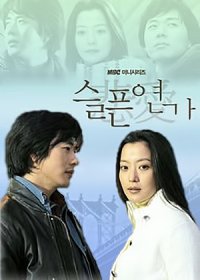
Similarly, the protagonist Han-yi (Kim Hee Soon, stunning and perfectly cast in her characterisation) is not merely the classic romantic heroine. Whilst she may bring to mind certain characteristics of a modern-day ‘Cinderella’, the character stands out above all for her work ethic, her perseverance and a moral integrity that never translates into passivity.
The successes she achieves throughout the story are not gifted to her by fate or through the intervention of saviour-like figures: rather, they are the result of experience, sacrifice and professional growth, in a narrative that ultimately rewards merit just as much as it does emotions.
In this sense, the drama seems to reflect a cultural climate in which individual commitment, integrity and the ability to bounce back from adversity continue to represent core values, offering the audience an optimistic yet not entirely naïve narrative about the possibilities of personal redemption.
The beating heart of “Tomato” lies above all in the interaction between four complementary characters, who together define the story’s virtues, limitations and contradictions. Whilst Han-yi embodies instinctive honesty and the perseverance honed through hard work, the young and brilliant lawyer Seung-jun (Kim Suk Hoon, with an image of the perfect, well-behaved lad that couldn’t be more genuine) serves as her natural male counterpart, driven by a deep sense of justice and an almost disarming trust in others.
Far removed from contemporary stereotypes linked to unbridled ambition, money or tormenting personal traumas – which, in his case, are limited to a difficult relationship with his mother, the energetic Chairwoman of Hyesung – Seung-jun embodies an almost reassuring figure, the classic ‘boy next door’ who is always willing to help others, including through his professional commitment and numerous pro bono causes. It is, however, his very trust that ultimately leaves him vulnerable to a long series of misunderstandings and manipulations that affect his romantic life.
In stark contrast stands Se-ra (Kim Ji Young, perfectly suited to the job), an antagonist modelled on an almost ‘classic’ conception of the melodramatic villain. Driven by ambition, resentment and a desire for social recognition, the young woman does not act out of necessity or trauma, but out of a clear determination to secure a position she believes is rightfully hers. Her constant scheming fuels much of the series’ conflict, yet the character never loses that almost archetypal quality that makes her instantly recognisable to the viewer.
Rounding out the picture is Cha Ki Jun (Kim Sang Joon, a decidedly enigmatic character), arguably the most multifaceted figure in the entire narrative. In love with Se-ra yet fully aware of her true nature, a loyal executive at Hyesung yet capable of navigating with remarkable skill through strategies, omissions and subtle psychological manoeuvres, the character gradually becomes the main driving force behind the events. Ambiguous without ever truly becoming villainous, Ki Jun observes and influences the events from a privileged position, often assuming the role of the story’s true deus ex machina.
Adding to the mix are the two female chairwomen of the rival companies, figures who help to give the drama a surprising focus on women. Seong Young-sook, at the helm of Hyesung Shoes, embodies a rigorous, almost military style of leadership: short hair, rather masculine clothing and an unyielding character that leads her to judge colleagues and family members according to criteria of discipline and efficiency.
On the opposite side is Na Hye-yeon, chairwoman of Terra Shoes, a woman who is equally determined but characterised by a greater sense of humour and a sharp wit that animates much of her exchanges with her long-standing rival. The verbal sparring between the two provides some of the series’ most entertaining moments, whilst at the same time helping to define a context in which economic and decision-making power lies firmly in the hands of women.
Although caught up against their will in the web of misunderstandings and manipulation orchestrated by Se-ra, both women end up embodying another central theme of the classic melodrama: the conflict between social status and personal feelings. In particular, Young-sook views the relationship between her son Seung-jun and Han-yi with growing suspicion, perceiving her as a girl lacking the appropriate social standing to join her family.
It is a dynamic that echoes the traditional class conflicts typical of the genre, though it never develops into an absolute dichotomy, leaving room instead for a gradual evolution of their relationships and mutual perceptions.
Less prominent, but just as entertaining, are the characters of Yun-ah (Kim Yu-ri, utterly adorable and deliberately naive), Han-yi’s best friend, an aspiring singer and the unwitting catalyst for the chain of events that will unfold in the drama, and Yoon Ho Tae (Kim Jin, decidedly comical), Se-ra’s brother, a likeable layabout with managerial ambitions that are always doomed to failure.
Viewed today, “Tomato” is also striking for its numerous narrative and iconographic elements that would become familiar to drama enthusiasts in the years that followed. The forced cohabitation of the protagonists – set, moreover, in a characteristic rooftop house – foreshadows dynamics that would later be developed and made famous by works such as “Full House” or “Attic Cat”; likewise, dates at the amusement park, bike rides, encounters in the rain sheltered by a yellow umbrella, the glass slipper – very Disney-esque – and a long series of romantic misunderstandings all help to shape a visual world that would become an integral part of the romantic language of Korean television.
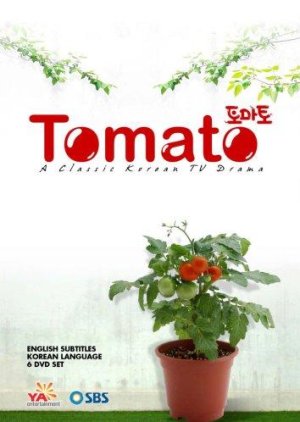
Alongside these more recognisable elements, the drama demonstrates a particular sensitivity in its use of small, recurring objects and symbols. The tomato seedlings that grow alongside the protagonists metaphorically accompany the evolution of their relationship, whilst a simple button picked up by Han-yi after she rescued Seung-jun gradually becomes an emotional memento capable of holding memories, feelings and truths that have long remained hidden. It is a narrative that attaches great importance to small gestures, everyday acts of kindness and seemingly insignificant objects, recognising in them an evocative power that is often greater than that of words.
Maybe the most authentic aspect of the work is revealed in this constant attention to detail: an almost disarming faith in people’s ability to recognise, understand and reconnect with one another despite mistakes, social differences and misunderstandings. A sincere optimism that permeates the entire series and which, even today, helps to make it a small but significant testament to the early days of the Hallyu wave.
In keeping with the tone that runs through the entire narrative, the ending too eschews overly punitive or melodramatic resolutions, opting instead for a conclusion centred on reconciliation and personal growth. The protagonists are naturally rewarded for their perseverance, but the drama takes great care to avoid turning the antagonists into mere scapegoats. Se-ra, after her manipulations have gradually been exposed, is neither destroyed nor unduly humiliated; on the contrary, she is given the chance to reflect on her choices and embark on a new path alongside Ki Jun, the only character who has truly understood her limitations and fragility without ever idealising her.
Adults, too, are called upon to re-examine their own beliefs. The two mothers, who for a long time were intent on projecting their personal ambitions and corporate logic onto their children’s lives, eventually come to accept their children’s independence and freedom of choice, gradually stepping away from the role of obstacle that traditional melodrama would have assigned them. What emerges is a sort of ensemble parable in which each character, in their own way, is called upon to confront their mistakes, prejudices and expectations, ultimately finding a form of balance.
It is a conclusion that prioritises understanding over punishment, maturity over revenge, and hope over resentment; a choice that may be predictable, but one that is perfectly consistent with the spirit of a series which, from start to finish, has made optimism and faith in people its defining feature.
7/10
Was this review helpful to you?