This review may contain spoilers
Kamen Rider 1971 - An Aged Titan
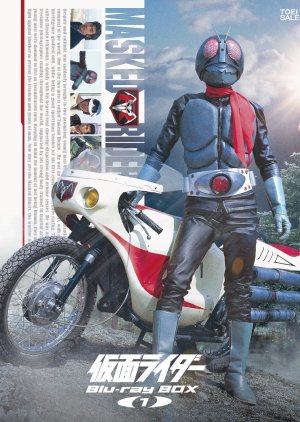
The original Kamen Rider 1971 cannot be understated as an incredibly important pillar of pop culture in Japan and beyond. The series that truly started it all. With its iconic design of the original Kamen Rider (referred to as Ichigo) and the subsequent second Rider (referred to as Nigo), it paved the way for a founding father in the tokusatsu genre. However, it's a difficult beast to talk about, because while charming, it is incredibly flawed. The series starts very strongly, with a lean towards horror. It was always monster-of-the-week, but what made it interesting early on was how it leaned into the fear of everyone involved. Even the main character, Ichigo, has internal fears that are set up early on. However, as the series progresses, in order to stay on the air it had to be changed to be more lighthearted. Unfortunately this drops a lot of the overt story of Kamen Rider 1971 and ends up making it an incredibly repetitive watch, as plot only truly progresses about once every thirty episodes or so, and with it being the longest Kamen Rider series on its own (not including sequel shows like Black & Black RX or Kuuga & Agito) it can sometimes be a gauntlet. Make no mistake, this show is NOT made to be binged AT ALL. And while it feels unfair of me to review a show made 52 years ago as if it was made in the modern era, we have to concede that our perception of these things, including the very way in which it is viewed, has fundamentally changed since its creation. We have to acknowledge the way that these things change, and that includes the franchise itself as it progresses. At this point, while this is the originator of all Kamen Riders, I would in no way say it is a good first show to watch for inquisitive minds interested in the franchise due to its inability to be enjoyably be watched in succession like some others. It is an entertaining watch in short bursts, but mind-numbing when watched too quickly. If you do watch it, try not to binge it to get through it. Take sips, don't chug. Enjoy the fun and crunchy practical effects and the inventive ways they get around having zero budget. The camp can be fun, the designs can be silly, and it can be a series that gets a good laugh or two, even if unintentionally. But if you are tempted to watch it quickly to get to some of the other stuff in the franchise, it will become a difficult watch as the formulaic nature of the series turns your brain into putty.Was this review helpful to you?

Rider Jump! Rider Kick!
Giving birth to one of the most endearing pieces of tokusatsu media on the planet, the influence of the original Kamen Rider is impossible to overstate. Its themes of identity, sacrifice and resistance against oppressive power still resonate even today, giving rise to the idea of the tragic, masked hero in one of its most enduring forms. Despite initially starting as a more mature option for tokusatsu fans, the show truly finds its stride when it stops taking itself too seriously and starts having fun with its pulpy premise, treating it with a surprising earnestness. Granted, some pretty notable factors have unfortunately dated the show in its accessibility, being an excruatingly 98-episodes long, it's very easy to get burnt out with how repetitive it can be, with some episodes showing their age more than others. While the show's adamant refusal to explain itself and sudden shift in tone due to Hiroshi Fujioka's injuries is jarring, the overall look and stylings of the show are so endearingly charming, visually rich and all around exciting. Rarely does it feel like the budgetary limitations get in the way of telling a good story. The fights are dynamic, the motorcycle action is aplenty, and the sound of the opening theme is more than enough to get the blood pumping as the Riders face off against a swarm of Shocker grunts or in a showdown against the monster. While certainly rough around the edges, everything about Kamen Rider is done with such infectious enthusiasm; throughout its ups and downs, its message never falters. Human life is more important than even peace and justice, and your humanity is not defined by your body alone.Was this review helpful to you?

This review may contain spoilers
Flawed but iconic
The original 1971 Kamen Rider has been dear to me for some time, but I only finished it completely as of today.The series arcs all have different flavor, and different strengths. It feels like several different pilot projects put together, while they got their footing. A lot of the imagery we know as gospel today does not appear til later. The original Hongo arc has a horror vibe to it, while the Ichimonji arc is more properly a super hero show. Before that we have iconic moments like "Hitlers Treasure" and the first two part training episode, which paved the way for future training arcs to come in other anime and toku. Ichimonji was charming, but the show settled into a repetitive rhythm that was only broken up once Hongo briefly returned, sporting his Sakurajima outfit, real ones know.
Many companions appear and disappear as the series goes on, featuring many sword wielding vixens and surprisingly helpful children, but no temporary companion was more endearing than the trio of Emi, Mika, and Goro, who routinely showed bravery and character throughout the series. Replacing them later on with Yoko and Chokko fell extremely flat, but it is true that the iconic Kamen Rider Shounen Club was introduced a long with them, so I give them some credit for helping with that.
Each general had their own iconic way of dealing with Kamen Rider. Colonel Zol was nothing too special, perhaps using the most repetitive monster of the week strategies, but Dr. Shinigami had a few surprises. Things kick into high gear with Jigoku Taishi, who seemed to have a thing for harming children which made him particularly terrifying.
Gel Shockers introduction to the show is extremely exciting, and many of the series most iconic elements actually come from this era, despite their combatmen and name not surviving the test of time in our memories. The double riders, shocker riders, and aforementioned kids club all appear in this section of the series, where it begins to know what it is has, know what works, and doesn't fumble the pacing. Black Shogun's fused monsters, featuring the abilities of two animals combined, were also notable.
I do think the ending had good and bad moments. It was exciting with an incredibly unique fight location all the way until the actual unmasking of Shockers Leader. I feel like he kind of just collapses after being roughed up a tiny bit, and I feel like there is no sense of dramatic pacing going from him firing psychic explosions at them and nearly killing the riders one moment and them being fine the next. I feel like V3 somewhat legitimizes this by having Shocker continue in a new form as Destron. Maybe because the leader knew it was his time, with what I assume was a fake body, he tried to blow up himself and his base in one hail mary. But on its own, it doesnt work and feels somewhat weak after 98 episodes and no guarantee at the time of a sequel. But Kamen Riders success was undeniable, and the series was followed up immediately with V3. All I'm saying is, is that how you would have wrapped it up if you didnt know you were continuing again right away with a new rider? The series ends on Taki going home, leading to the last time the characters we ended off on would be seen together for this particular series. The narrator, who normally has a harrowing explanation of the Riders continuous fight against evil, is finally able to tell us that the world is at peace, which I find satisfying. That peace would only seemingly last a week however, as the Kamen Riders would continuously fight every single week until a brief break in the 90s, only to resume indefinitely in the year 2000. Fight on, Kamen Rider, protect the peace of the world.
Was this review helpful to you?

O Herói Máscara que Redefiniu o Gênero Tokusatsu
"Kamen Rider," transmitido pela TV Asahi em 1971, é um dorama icônico que marcou o início de uma das franquias mais duradouras e influentes do gênero tokusatsu (filmes ou séries japonesas com efeitos especiais). A série segue a história de Takeshi Hongo, um jovem motociclista que é transformado em um ciborgue pelo malvado grupo Shocker, mas consegue escapar antes de ser completamente controlado por eles. Usando sua nova identidade como Kamen Rider, Hongo dedica sua vida a combater Shocker e proteger a humanidade.O dorama é uma combinação envolvente de ação, drama e ficção científica, com uma narrativa que aborda temas de justiça, sacrifício e a luta incessante contra o mal. Cada episódio apresenta novos desafios e vilões, com Kamen Rider enfrentando uma variedade de monstros criados por Shocker, sempre superando as adversidades com sua força, inteligência e senso de justiça.
Visualmente, "Kamen Rider" é caracterizado por suas cenas de ação emocionantes e coreografias de combate bem executadas, muitas vezes em cenários urbanos ou naturais que amplificam o senso de perigo e aventura. A icônica motocicleta de Kamen Rider e seu design de traje – uma mistura de inseto e motociclista – tornaram-se símbolos duradouros da cultura pop japonesa.
Além de suas qualidades técnicas, "Kamen Rider" também se destaca pela profundidade de seu protagonista. Takeshi Hongo não é apenas um herói invencível; ele é um personagem complexo que lida com a dor de sua transformação forçada e a responsabilidade de seu poder, tornando-se um exemplo de força moral e determinação.
"Kamen Rider" é uma série que não apenas definiu o gênero tokusatsu, mas também influenciou uma geração inteira de espectadores. Com uma história emocionante e uma mensagem de esperança e justiça, este dorama continua a ser uma pedra angular da televisão japonesa, com um legado que perdura até os dias atuais.
Was this review helpful to you?