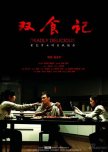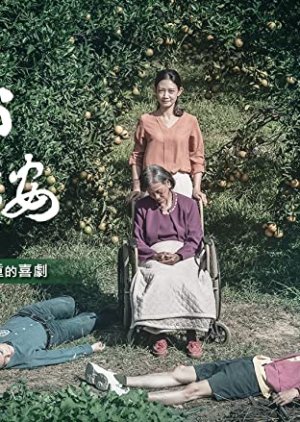
What Mei wants is a simple relationship with someone who loves her dearly. However, fate decides otherwise. After a failed marriage and an immoral affair with a married man, she gives up on life because of one setback after another. For the past decade, she has barely survived with her mentally disabled son, Diku, and her dementia mother. But when she bumps again into her ex-husband, Zhi Yuan, her life is no longer quiet. His glove puppetry saves her show. She feels as if she is about to get the happiness that she wants. However, the success of her show has incurred her rival's displeasure. The show is forced to be canceled. In the meantime, an accident kills Zhi Yuan, which makes her so depressed that she intends to end her miserable life. While standing by the sea, Mei finally realizes that she has in fact got what she has been searching for. Therefore, she runs back home to try to prevent an imminent tragedy from happening. (Source: IMDb) Edit Translation
- English
- 中文(台灣)
- magyar / magyar nyelv
- עברית / עִבְרִית
- Native Title: 大桔大利 闔家平安
- Also Known As: Da Ju Dali He Jia Ping'an , 大桔大利 阖家平安 , 大桔大利,闔家平安
- Screenwriter & Director: Lin Chih Ju
- Genres: Drama

Photos
Reviews

A movie that refuses to comfort
I would start with a few warnings. First, this is a film for a mature audience. Second, it contains morally ambiguous, even disturbing, sexual scenes and situations that may put some viewers off. Finally, I think it’s important to look into the tags before watching it.Mei is many things at once: a mother, a daughter, a caregiver the one who holds everything together. She moves from one burden to another ; a job slipping away from her, a son living with a disability, a mother slowly fading into dementia, and an ex-husband who is falling apart. Her life feels dense, almost airless. There is no space where the weight lifts. Nothing is spared.
I thought I would be drawn into a story that invites empathy, something that gently pulls at emotion. But Dear Orange goes in a different direction. It doesn't try to soften itself, nor does it offer the viewer a safe distance from which to judge. I couldn't step into Mei’s place, nor could I measure her choices. What it presents is something raw, closed, without exit, no space for “what would I do?”
What stands out is the complete lack of relief in the story. The story doesn't breathe. We see what she endures, what she carries, what she accepts. And instead of anger, something quieter settles in: the recognition of a life that presses down. It feels almost deliberate, this refusal of comfort as if the film denies us even the smallest consolation.
Slowly, it becomes clear that this is not only a story of suffering. It is the portrait of a woman who has made room for inevitability, who has absorbed it into herself. And perhaps it is within that acceptance, troubling, difficult to face, that the film finds its true meaning.
The ending stayed with me deeply. Looking back, I feel that Mei may have experienced a kind of happiness, fragile, almost invisible without ever truly realizing it.
A harsh, disturbing film, in the same vein as The Child of Light.


![Nominated - Best Television Film [GBA]](https://i.mydramalist.com/d7oQK_4t.jpg)
![Nominated - Best Television Film [GBA]](https://i.mydramalist.com/d02WEe_4t.jpg)
![Nominated - Best Television Film [GBA]](https://i.mydramalist.com/vXdgpX_4t.jpg)
![Nominated - Best Television Film [GBA]](https://i.mydramalist.com/jQXNlz_4t.jpg)
![Nominated - Best Television Film [GBA]](https://i.mydramalist.com/pd0rZr_4t.jpg)