Good Story & Plot, but Bad Acting FL ML
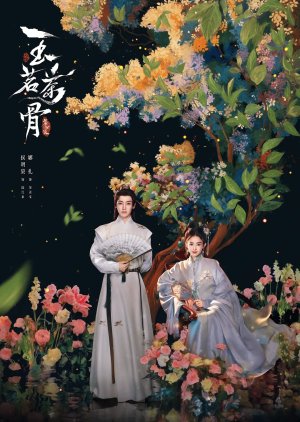
I'm a bit disappointed with Neo Hou's acting, it seems a bit stiff and not like usual. Honestly, I expected more, the makeup and style don't suit her.. hmm for the plot, I'm trying to force myself to watch it, but seeing the acting of the two casts, I can't continue even though there are many other casts, I feel like I already know how the ending will be, so I stop watching it.. if people think it's good, honestly, I think it's a bit boring and there are already a lot of plots like this, (I'm not hating, just giving criticism) sorry sorry sorry I can't continue anymore..Was this review helpful to you?

This review may contain spoilers
One of the Best Costume Dramas in a Long Time!!
It’s always nice to watch a drama with a fierce matrilineal theme!“Glory” doesn’t shy away from portraying its women in a courageous manner, as against men who are expected to be docile and submissive. What happens when a fierce tigress meets a fox? Their worlds collide as they adjust to each other and build a world together. Starring Gulnezer Bextiyar & Hou Ming Hao as the main leads, it is only right to say that the show belongs to Gulnezer. Her “Rong Shanbao” is daring, perspective, intelligent, bold and a staunch feminist. In an era of patriarchal society, women from the Rong family rule the city of Linji. They have been leading the tea farms in the mountains, are rich and run a business that grants them incomparable power and wealth. The storyline is crisp, gripping and addictive. If you are into shows with strong female portrayals, then this one should be high on your watchlist!!!
Read the complete article here-
https://kcdramamusings.wordpress.com/2026/01/16/glory-series-review/
Was this review helpful to you?
This review may contain spoilers
You don't want to miss!
Glory was so intense that although I started it after The Unclouded Soul, I found myself watching Glory far more consistently with each new release. There was something about its scheming and ongoing chemistry that I felt I had been missing, and once I started, I couldn’t stop. I’m only about twenty-something episodes in, and while everything has been great so far, I can’t shake this sense of dread. I’m worried about the direction the story might take, and I fear I could end up dropping it despite being so invested. For now, I’ll definitely keep going for a few more episodes before deciding.Glory follows the male lead, an imperial court inspector tasked with investigating and solving cases. After being betrayed by one of his subordinates, he is left at death’s door and crosses paths with the female lead again. Having lost his memory, he ends up working for the Rong family at their tea plantation, slowly climbing the ranks from a servant to the female lead’s most trusted companion.
The first half of the series is fast-paced and intense, filled with backstabbing, murders, and morally corrupt characters whose actions keep the story moving at a gripping pace. Eventually, the male lead rises to the point where he is set to become the Rong family’s future son-in-law. However, I’m currently at the part where he exposes his identity by taking in Madam Jiang as a witness to a murder, and I feel like I may have missed something. Did the female lead already know his true identity at this point? So much happens so quickly that it can be hard to keep track of every detail.
What I Love About Glory
The storyline and the intense political maneuvering within the family dynamics are easily my favorite aspects. Every character has their own schemes and hidden agendas, all working to serve their personal interests. This kind of layered plotting is completely up my alley, and it’s what kept me glued to the screen.
The cast is another highlight. Zhao Yi Qin was a welcome sight—I’ve missed seeing him on screen. Cheng Xiao, whom I last saw in Fangs of Fortune, did well in this role, and I’d love to see her continue taking on scheming characters (just preferably not the angry ones). I was also excited to see Richard Li in a major project playing a villain, and he absolutely nailed it—he was that good. Seeing Asher Ma again was also nice; although his character annoyed me half the time, that just means he played the role well. The last time I saw him was in Word of Honor, and his death scene during the wedding left such a strong impression on me.
The screenwriter is the same one behind Story of Yanxi Palace and Perfect Match, and it definitely shows. No wonder I was so captivated—I really love her work.
Overall, the pacing has been strong so far, with one scheme unfolding after another, keeping things engaging and addictive. I’m hooked, but that lingering sense of dread remains. Maybe it’s just me, but I have a feeling something frustrating might happen later on that could sour the final episodes.
This will be an ongoing review as the series continues to air.
Current rating: 8/10
Was this review helpful to you?

Highly Recommended
Wow, this is my first review in MDL, don't be too hard on me or my (average) english, hahaha. Since I started watching cdramas, about 2 years ago, this is the plot with the more powerful female characters i have seen. I have a lot of good vibrations while watching this drama, but there are also some little flaws that I want to mention, too.Pros;
The acting. I find some of the actresses wonderful, but specially I want to praise 2FL Zhang Nan performance as the blind and somewhat ruthless fifth sister. The contrast between her cute appareance and her ruthless behavior is wonderfully performed by her, and her relationship with Cheng Ruoxuan. I praise another characters, like the spoiled-mean Fourth sister, Zhao Jiamin, who also did a very good performance. Cheng Xiao is wonderful in whatever she does, and the other sisters and the cousin were good. Gulnezar? Well, I don't like her acting very much, but in this case I can bear it. Neo Hou is wonderful, but it's the only ML who had some importance in the story, the other male characters actually are not that important but someone who challenge the FL and, of course, succumb. It is a women's history, with women's struggle of power among them, and of course this is wonderful, this is a story where there are no damsel in distress, hahaha.
The setting and scenery are wonderful, exquisite, some of the better i have seen in a chinese drama. Every detail is carefully attended, the attires, the furniture, etc. It is a high budget drama, of course, but I specially like all the scenes in the tea plantations. Are really beautiful to watch and get an idea of what they were in the past, how workers doing, etc.
Whatever thing about tea. I am not an expert in tea, but i like it a lot, and to learn things about it while enjoying the drama is somewhat adds an extra plus to the simple fact of watching this drama. The post credits in every episode are really enjoyable, with many characters giving explanations about history, tea pastries, etc.
Cons:
The FL Gulnezar slaps hard on everybody, and his power is ofted demonstrated by humiliation of another characters. This is something not necessary to demonstrate power, of course. I don't like, for example, the case of the fourth miss. Its not logic to banish someone like that, while other characters are doing far worse things and remains in the house...
The final plot, no need to make spoilers; the last 5 o 6 episodes in the capital were good, but I think this has set aside the main theme of the drama, the tea plantations and their management. It would have been better to include a little epilogue at the end, explaining a bit about the other Rong sisters. What they are going to do, and something like that.
Anyway, despite the minor flaws, this is a very worth watching drama, amusing, and I like it very much and I recommend everyone to give it a chance.
Thumbs up!
Was this review helpful to you?

This review may contain spoilers
Don't watch if you like vaguely fair or healthy relationships.
I came into this drama expecting a beautiful, funny and touching political romance story about a powerful, icy female lead and a green tea, pretend-weak male lead.On the surface, this is true. The four praises I have for this drama are as follows:
1. The acting, especially from Hou Minghao, is incredible. Gulinazha does a great job as well with her dominant, elegant persona, but Hou Minghao is just on another level in my opinion. He expresses every emotion so beautifully, perfectly balancing subtlety and clarity. To be honest, he is the only reason why I wanted to watch this drama, and why I pulled through to the end.
2. The OST in this drama is beautiful, this might be one of the only dramas where I watched the intro fully each time, partly because I just love Hou Minghao's voice and partly because I didn't care about the actual story enough to be motivated to skip through. I also love the use of different instruments. The music in powerful scenes reminded me of war scenes in other dramas, which I really liked.
3. The cinematography and visuals of this drama are absolutely gorgeous, all of the bright colours, sweeping shots and breathtaking landscapes took my breath away at times. I especially loved the setting of the tea plantation.
4. This was an unexpected one, but the little information section at the end of some of the episodes were really unique and enjoyable. I loved how they included information about different aspects of tea and of Chinese culture.
Now, those are perhaps the only four enjoyable aspects of the drama for me. Other than that, this drama quickly became a chore to get through.
The first part, with Rong Shanbao saving Lu Jianglai's life, him losing his memory, and the husband selection, was the strongest part of my story. The characters were bright and vivid, and I felt that Rong Shanbao and Lu Jianglai had the most chemistry, and it is perhaps the only time when they are wholeheartedly working together, although obviously Rong Shanbao is taking advantage of Lu Jianglai's lack of memory.
After Lu Jianglai regains his memory, the story quickly goes downhill.
1. The story fails to properly explore the abusive family dynamic presented, instead continuing to idealise and praise the abusive matriarch after a glorified slap on the wrist. The only character that has a realistic, valid attitude towards her is also a villain who has done horrible things, and she's presented as a villain partly because she doesn't have sufficient empathy for her abuser, which she of course gains in the end.
2. Every single villainous sister is redeemed in the end, no matter how many horrible things they have done. Only exception to this rule is the fourth sister, who actually had a fulfilling and natural redemption arc.
3. Rong Shanbao is abusive and manipulative towards Lu Jianglai, and this is portrayed as of love. She constantly disrespects him, treats him like dirt underneath her feet, uses him as a tool to achieve her goals, lies to him to put his livelihood in danger for no reason, is frustratingly hypocritical in putting everything else before him, and allows everyone around her to disrespect him. This is never ever addressed by the story as Rong Shanbao has no flaws.
4. The story is ultimately boring, childish, mundane and cowardly. It refuses to show Rong Shanbao in any difficult situation and does logical gymnastics to make every hard scenario that she's in actually just a phase of her genius masterplan. The only entertainment you can get towards the end of the story is trying to guess what her plan this time is.
5. The ending of the story is horrible, feels like a completely different drama that was squished into 6 episodes and smashed onto the end of this one without any regard for the preexisting characters, all because the story realises that it has spent so long focusing on Rong Shanbao and neglecting Lu Jianglai despite him being the more sympathetic and likeable character.
Please don't waste your time on this drama, the political and melodramatic elements are cardboard-like and lacking any consequences, villainous characters either take too long to receive punishment or are undeservingly redeemed, and the romantic storyline is glorified manipulation and abuse.
Was this review helpful to you?

This review may contain spoilers
Dress to impress
Glory is one of those dramas where you quickly realize that the core concept is strong. Very strong, actually. The series dares to do something that is still not self-evident in Chinese historical dramas: women are not only placed at the center of the story, they are not expected to sacrifice themselves or step back for the sake of others. On the contrary, the drama clearly asks why women should always be the ones to compromise. Reversing this power dynamic feels refreshing, modern, and even a little bold.From a storytelling perspective, Glory also does several things right. Instead of relying on one single, overstretched plotline, the drama integrates multiple criminal cases that follow one another. This structure keeps the pacing steady and makes the drama easy to binge-watch without feeling dragged out.
One of the strongest aspects of the series is its visual presentation. The costumes are absolutely stunning. More than once, the drama looks like a moving Chinese painting. The final scenes in the capital, especially with the elaborate fur collars, are visually striking and elegant, regardless of whether one likes the symbolism behind them.
Where Glory falls short
Despite its strong concept and beautiful visuals, the drama struggles with its emotional core, especially when it comes to the main couple.
Neo Hou, while undeniably good-looking, delivers a performance that often feels cold and overly polished. His emotional expressions come across as acted rather than genuinely felt. This becomes a major issue in a story that is supposed to revolve around loyalty, inner conflict, and love.
The female lead is written with strength and authority, but emotionally she remains distant. The audience is told that she loves him, but it is rarely felt. There are occasional small gestures or brief moments of closeness, but overall her priorities remain work, duty, and family. Emotional intimacy is largely missing.
His eventual role as someone who simply follows her, almost submissively, is also problematic. Reversing traditional gender roles should not mean stripping one character of emotional presence or personal agency.
The late plot twist revealing his noble heritage and potential inheritance feels unnecessary and poorly integrated. It appears too late in the story to have real emotional impact and comes across as a forced dramatic device rather than a meaningful development.
Relationships without consequences
Another major weakness of Glory is its lack of consequences. Extremely cruel characters, including siblings, commit serious crimes and betrayals, yet are ultimately forgiven or reintegrated under the familiar “family above all” narrative. This undermines both realism and emotional credibility.
Not every blood relationship deserves forgiveness, and the drama fails to draw clear moral boundaries. As a result, none of the romantic relationships feel truly satisfying or emotionally complete. Most endings are predictable and strangely hollow.
Additionally, there is a noticeable lack of romantic intimacy. Meaningful love scenes, physical closeness, and moments of tenderness are largely absent. For a drama of this length, this absence is very noticeable.
Final thoughts
Glory is visually beautiful, intellectually ambitious, and thematically progressive, but emotionally distant. It is an enjoyable watch, yet often frustrating, because it never fully commits to emotional honesty or relational depth.
Personally, Neo Hou’s performance in Back from the Brink remains far more memorable. As the dragon character, he showed more charm, warmth, and emotional presence than he does here.
Glory is a drama that impresses the eye and the mind, but rarely the heart.
Was this review helpful to you?

This drama simply wasn’t the kind of storytelling that kept me completely hooked.
I started Glory (2025) because of the interesting premise, the mystery surrounding the characters, and of course… Hou Ming Hao. After seeing many positive reviews and TikTok recommendations, I expected this to become one of my next favorites.The drama definitely has its strengths. I appreciated the beautiful visuals, especially the tea mountain plantation setting, the cinematography, and the elegant costumes. The overall atmosphere was refreshing and different from the usual historical dramas. The cast also delivered solid performances, and Hou Ming Hao was definitely one of the reasons I stayed until the end.
However, despite having an intriguing concept involving business, hidden identities, revenge, and investigation, I struggled to become fully invested in the story. The biggest challenge for me was the pacing. The plot felt like it revolved around one major case for a long time, with slow progress in uncovering the truth. Instead of feeling eager to know what would happen next, I found myself checking my phone during some episodes.
I usually enjoy mystery dramas, especially those with clever strategies and investigations, but I think I personally prefer stories where each episode gives a stronger sense of progress, new discoveries, or changing dynamics between characters.
That being said, I still appreciate the effort put into the production. The visuals, tea mountain scenery, costumes, and overall concept were beautiful. This drama simply wasn’t the kind of storytelling that kept me completely hooked.
Final thoughts:
A beautifully made drama with an interesting premise and great visuals, but the slow pacing prevented me from forming a stronger emotional connection with the story and characters.
Was this review helpful to you?
Everyone is Duplicitous, Trust No One
All caught up to episode 21 and I've just about had enough of this dramaTRUST NO ONE. The evil sisters are clearly evil and the good sisters may also be evil. The suitors who are sweet and protective in the beginning will be conniving and spiteful later on if they are not chosen to be the FL's lover. The ML and FL clearly do not trust each other at all, they are constantly doing things behind each other's back and spying on each other, as if both of them doubt that they will stand on the side of justice and the greater good in the end, so they intentionally mislead and deceive each other.
TOO MANY CHARACTERS. There are way too many characters. Too many suitors, too many sisters, too many aids and confidants and enemies. How can one survive in a world where you don't have just a couple of enemies that you have to watch out for, but over a dozen? And they are all slowly becoming more villainous and dangerous to you over time. Just as you pacify/silence one threat, 3 more appear, each with distinct motives for why thy want to oppose you. Like you are in the tea making business, life does not need to be this dramatic. And the cast list is like a balloon waiting to burst. So many characters get introduced, and then you look at the cast list and they are like #15 on the list. So I am supposed to pay attention to these scenes that are all focused on your conflict/betrayal/scheme, knowing that there are at least a dozen other more important character arcs that I need to remember? This screenwriter was all over the place, too many distracting side characters that should have been left out for cohesion and storytelling (I'm looking at you, Mr. Song, a character I'm sure most people will forget about by episode 10).
THE MEN ARE TOO OBSESSED WITH ROMANTIC PURSUITS. I was really misled the MDL synopsis of this drama. I saw the words "magistrate", "murder case", and "battle of wits" and thought there would be some great court justice and power plays. But instead, it is a story about a single matrilocal family trying to play match maker for the eldest daughter, while every other sister is running 100 schemes to dethrone her. Constant petty fights, schemes that are malicious at their core (and sometimes even murderous), adult men growing crazed and betraying their conscience because they've "fallen in love", and grown-up women whining and pouting and throwing tantrums like they are 5 years old (and I'm not even referring to the mentally handicapped sister).
And the "search for a son-in-law" really dragggggged along. Such an uninteresting plotline about testing all these non-main/barely supporting character suitors that just kept going around in circles, and that almost exclusively takes places inside of a single household for many, many episodes. All this for the sake of one woman trying to pick a suitor amongst a handful of suitors that NEVER LEAVE HER HOUSE, even after she picks (and then picks again).
EVERYONE IS A BAD PERSON. Why would a writer create a world in which 90% of the characters at a certain point do something that is unforgivable? Whether it be murder, framing, betraying family members, abandoning children, scheming in a way that ruins someone's future, or scheming in a way that only benefits oneself regardless of whoever suffers because of it. Being an unjust and cruel boss, being a gossip who sows seeds of distrust, division, and resentment in others. There were way too many people for whom I saw there actions and thought "okay, I am no longer tracking with how evil and inhumane you can be. Unless you are designed to a pure villain whose motivations are past all understanding and purely written to dramatize the plot, there's no reason for you to behave this way." Thinking this was about one character is fine, I guess (although the signs of a really well written script is when even the main adversary is understandable, you don't agree with what they are doing but you can understand all of the circumstances that led up to this person choosing to behave in such a way.) But multiple characters making you feel this way is very unrealistic and just takes me out of the show entirely.
Even the FL is pretty flawed. How she handled the court case at the midpoint of the series was pretty underhanded. It seemed like she committed perjury and only stood on the side of justice in the end because she was put in a corner (although maybe we are supposed to believe that was her plan all along). I don't really like any character at this point, so why should I care to see how your story unfolds? The entire Rong family is pretty rotten to the core and deserves to fall into ruin, even though they aren't necessarily producing any evil in their society, just look at the ruthless, selfish, sinister daughters that they have produced? The ML may be the only good guy, but he alone cannot shoulder the entire drama. And the drama is firmly hinting that any other redeemable character you still see at the midway point will soon devolve into villainy as well.
TL/DR; Everyone is a villain at some point. Too many narcissistic, mal-intended characters left unchecked. Too many sisters from hell and jealous SMLs out to destroy the main CP. And there is an unnecessary web of characters that should have been thinned out and can be attributed to sloppy writing. I felt more moments of frustration than peace while watching. so I don't want to continue.
Was this review helpful to you?

Female dominance
I watched it from beginning to end with great enjoyment and curiosity. It was one of the best series I've seen recently. However, from what you might call episode 20, or maybe episode 25, the series deteriorated again. Whether they added something after the story ended or something else, they ruined this beautiful series. The integrity of the series was broken. I was going to give it a 9, but I've reduced it to an 8. I liked it so much that I was going to say it was one of the best series of recent times. The usual thing happened, and unfortunately, Chinese screenwriters ruin series towards the end. They don't know how to end them. Or they start to become nonsensical towards the end. They get caught up in the panic of how to end it, how to tie up the story. Or they just don't care. They say, "Watch it or not, that's it for me."Cinematically, in terms of direction, acting, costumes, makeup, everything is very good, the story is also good, but in the final episodes, it's like they didn't realize how they were going to finish these 36 episodes; it's like the series was only 26 episodes long. I couldn't understand why they deviated from the main story and shifted to other things. I couldn't reconcile the series with the final episodes. I mean, I couldn't connect it to the story. Otherwise, you can drag it out endlessly, and it loses its appeal. That's exactly what happened.
Especially the pardon of the main culprit in the final episodes was unbelievable. It didn't suit the series. It wasn't a good ending.
It was a series where female dominance was very noticeable. These days, Chinese dramas are focusing on themes highlighting women's dominance and success in social life. This was one of them. There was a lot of praise for women's achievements. It was very noticeable.
I liked the chemistry between the lead actors. All the actors were harmonious and good. I recommend everyone watch it.
Was this review helpful to you?
Power, Desire, and Deception
Gulnezar (Guli Nezha) absolutely commands the screen in this drama. The role feels tailor-made for her. She embodies Rong ShanBao with effortless authority: haughty yet intelligent, calculating yet dignified, breathtakingly beautiful and fully aware of her own power. As the heiress to the formidable Rong clan, she glides through every scene surrounded by attendants and relatives, radiating the confidence of a woman born to rule. She convincingly portrays an untouchable beauty relentlessly pursued by suitors, while remaining emotionally distant and in control. Notably, there are no tearful breakdowns here, which suits her icy, regal persona perfectly. Her chemistry with Hou Ming Hao works precisely because of this contrast: she is the cold, unattainable prize, while he spirals into near madness over her indifference.The Rong clan itself is a fascinating backdrop. Descended from a fallen matrilineal kingdom, they migrated north into the territory of the Han race after the kingdom’s collapse but fiercely preserved their customs. Women are the heads of families, love is free, divorce and remarriage are accepted, and social norms stand in stark opposition to the conservative Han traditions surrounding them. Their autonomy is safeguarded by an imperial seal granted by the founding northern emperor, making the Rong both untouchable and immensely influential. Add to this a vast tea empire, and you have a clan that is wealthy, powerful, and politically dangerous to cross, and also dares to complicate morality.
The story ignites with the grand event of selecting a matrilocal husband for ShanBao. Suitors flood in, each ready to endure a series of elaborate trials designed to test intellect, character, and ambition. They come from every corner of society: heirs of rival tea clans, a conveniently placed cousin, a poor but brilliant scholar backed by a powerful tutor, and Lu JiangLai, a mysterious man once rescued by ShanBao herself. Beneath his humble exterior lies a dangerous secret: he is an undercover investigator sent to probe an old case tied to the Rong clan, only to lose his memory in the process. What follows is a ruthless battle of wits, where public tests of skill are matched by secret schemes, sabotage, and psychological warfare.
For much of the drama, the suitor selection unfolds like a high-stakes chess match. Each move tightens the tension as personal ambitions, hidden motives, and buried crimes surface. An unresolved old case weaves itself into the competition, implicating one of the suitors and raising the stakes even further. At the same time, ShanBao is surrounded by internal threats. Sisters and cousins circle her like predators, eager to seize the heiress position the moment she falters. Every wrong decision becomes a potential downfall, and the suspense builds relentlessly from all sides.
There is a particular satisfaction in watching villains unmasked and crimes exposed, and this drama delivers on that front. My second-favourite suitor, whom I had genuinely hoped might become ShanBao’s alternative should she and Lu fail to reconcile their conflicting duties, is revealed as a villain in disguise. While ruthless, he is also deeply tragic, shaped by circumstances that make him as much a victim as a perpetrator. It is difficult not to feel sympathy for him, even while acknowledging that two wrongs do not make a right.
The final arc turns its focus fully on Lu JiangLai and the revelation of his true identity. His storyline delivers not one but two twists, reshaping everything you thought you understood about his role, his loyalties, and his connection to ShanBao.
As always, I have a bone to pick with the English title 'Glory'. The word has been overused across dramas where the Chinese title has little or nothing to do with it, and the connection to the story is often tenuous at best. It feels like a lazy attempt to copy the branding of earlier successes. Searching for this drama becomes an exercise in filtering through multiple unrelated titles. A drama should stand on its own merits, not hide behind a recycled English name. The translation clearly needed far more thought and care. I would favour something like 'The Tea Heiress' - it's all centred around Rong ShanBao.
Overall, this drama is highly recommended. It offers far more than a simple romance. You get cutthroat rivalry among suitors, intricate crime investigations, the exposure of internal traitors, and a love story forged under immense pressure. Woven throughout is well-timed humour that keeps the narrative lively and prevents the tension from becoming oppressive. It is a richly layered drama that rewards patience and keeps you hooked until the very end.
Was this review helpful to you?

This review may contain spoilers
Girlboss spills the tea on the final third
In my view, this is not, by any means, one of those "more pros that cons" type of drama. It is quite the opposite, but I'll start with the good.PROS
High production value and great visuals. One of the things I love about cdramas is how they let us peer into cultures and the many interesting trades. Whether it is Chinese Traditional Medicine (in 2025's "The Best Thing"), Bai culture in rural China ("Meet Yourself"), or aerospace engineering ("You Are my Glory"), I love series where I also learn more about the world that anchors the characters' lives. It reminds me of Western shows like CSI (forensics) or House (medical diagnosis) that are now few and far in between amidst the glop of detective-cop shows and courtroom dramas. Glory, on the the hand, delves into the world of tea farming and the care that must be taken to produce excellent crops.
Other good points about this drama are the costume sets and cinematography. The casting and acting throughout is solid, although I feel the ice queen vibe of the FL was a bit too much.
**** The next paragraphs contain a few spoilers. There are not that many, but there are indeed a several ****
CONS
Note that I am offering my perspective as a male viewer and that I fast-forwarded through many scenes, specially in the final third out of sheer boredom at the decline in quality. As you may already know, the drama centers around Rong Shang Bao, the headstrong lead of her powerful tea-farming, all women-leading, clan. The clan lives in in Lijin while the ML hails from the capital. In the last episode, around the 30-minute mark, Shang Bao speaks with another woman from the capital. She tells Shang Bao that "not everyone has the luck to be born in the Rong family. Also, not everyone has the freedom to live as they please." This conversation encapsulates the drama for me, coming across as the main point the authors wanted to drive home.
Yet it also defines what is so frustrating about this drama.
Lucky to be born in the Rong family? Are you kidding me? The FL expressed some platitudes about equality and mutual respect between men and women. However, throughout the series the Rong family never ceased to represent a turbo-charged reverse harem at its worst. The family essentially disregards men as mere laborers and replaceable pawns who have no room for leadership. At one point Shang Bao tells the ML, Jiang Lai, that throughout generations the Rong women only looked for meek, pliable men and that Jian Lai was anything but, hence why he is not a good fit for her. Even after the end of series I didn't feel that she changed her standpoint at all.
At first, I thought that the Rong would ultimately be depicted as a clear warning about the perils of an unbalanced harmony between the sexes where one side holds all the levels of power. It would ridicule the times when men trampled over women and deprived them of opportunities to vote, go to college and seek leadership positions. But no, this drama did not venture into any significant criticism of Rong's practices outside of showcasing the family matriarch as a stubborn elder bent only accepting men of high social status. In the end, the Rong sisters, FL included, had their differences against the matriarch but did not step away from all these family principles. The Rong clan makes Wonder Woman's Amazonian island look tame by comparison. I know dramaland caters to its audience, but this is one of those dramas where they lay it down too thick.
To add salt to the wound, Jian Lai changes from a levelheaded, witty ML that could go toe to toe against the FL (what I felt was the best part of the series), to a simp who is always after her despite her cold shoulders, which happened too many times, especially during the final third of the drama. She is pushing him away and he runs after her like a puppy begging to be back together. At one point, Shang Bao was to offer an explanation for keeping her distance but then never does until the Jian Lai comes to her for an explanation, which in the end didn't feel heartfelt.
There was also one scene where Jian Lai was bawling and shaken telling her about his family trauma. But through it all, Shang Bao kept her ice queen persona, just way too collected and didn't offer him a hug. Only when he rested his head on her shoulder in anguish did she put a hand over his shoulder. I know that she's supposed to be a battle-hardened, steely ice queen but it felt overdone and did not register to me that she deeply loved him. No wonder men don't want to make themselves vulnerable. It's even dangerous to do so in fiction.
That's not all. Before Shang Bao goes to marry another man, she seduces Jian Lai and sleeps with him. Only to then lock him up to make sure he doesn't ruin the wedding. Later we learn that she was suspicious of the man she was about to marry, but she was still going through the nuptials while her investigation on the guy was ongoing. By that point, she might have taken from Jian Lai what he might have been saving for another woman. Even if Jian Lai wasn't a virgin, to go from intimacy to locking him up before she goes to marry some other dude is as cold-veined and as asymmetrical of a relationship as it gets. Jian Lai deceived her at first too, but he wasn't a character that would have done all the things that she did to him.
Part of the reason I like cdramas is because Western media unabashedly rams the girl-boss archetypes down everyone's throat. This drama sadly brought the same negative repulsion I was escaping from. There is a scene where the subtitles stumbles through a translation using a very obscure or highbrow word. I always chuckle when I see them, and in this case it was the word impudent. How many people are going around calling others impudent?
In the finale, in front of several people, Jian Lai romantically lifts Shang Rong to take her to her boat. At first embarrassed at this PDA, she says "when we reach Lijin (Rong's headquarters) I won't allow you to be so impudent again." His response? Like a cute lap dog, he beams "then I'll listen to you, Lady Shanbao!" I mean, really? Might as well just throw a stick and ask him to fetch. And I'm sure Shang Bao she wasn't joking. If by impudent, she meant Jian Lai could no longer be bold or assertive, the drama as a whole made a good point that this is seriously what she expects from him. After all, she did say, that Rong women prefer mild mannered, obedient males.
To be honest, there was one sister that somewhat bucked the trend and finally decided to be with a man of lower status. She even had a daughter with him. However, this "reconciliation" scene was so rushed and abrupt that it carried very little emotional weight for me. Besides, she didn't explicitly say she wanted to marry him, only that she wanted him to live in the Rong estate.
Honestly, the guy was so meek, spineless, and submissive that they looked like a gross mismatch. I don't see what a strong Rong woman would see in him in the first place, and the drama made no effort to explain. It was the chemistry of an iceberg. If there was one plot line that should've been explored further, it was this one. They would have been great as a secondary couple, but in the end, it was a wasted opportunity.
As if this wasn't enough, the same woman who said she wasn't lucky to be born a Rong, also said this: "I don't have the Founding Emperor's jade seal. Nor do I have a powerful natal family, willing to support me. I don't even have a husband worth relying on. In this world, there isn't a single person who truly loves me. But I must love myself. I must protect myself. And above all, I must protect my children."
I'm sure this is one of the character's the embodies the author's voice and I have to disagree to an extent. Not having a capable man by your side is tragic. But I don't think anyone can say that there is a single person who truly loves them. If not a parent, there is a relative. If no relative, there are a lot of charitable men and women out there. So love yourself? Yes. Protect your children? Why sure. But one does not need some jade seal or Rong family to be blessed.
I wouldn't one to be associated with a Rong family for the reasons I explained above. Also, that Jade seal that she mentions worked well as an indestructible (and overused) plot armor, but it is what it is . A work of fiction. To me the real jade are those people who, though imperfect, truly care as well as the spouse who is, or can grow to be, that capable partner in life we all would be blessed to have at our side.
Was this review helpful to you?
Jane Austin's novel in a Chinese imperial setting
If you are looking for lots of fighting scenes - this drama is not for you. If you are looking for passionate love - this drama is not for you. But if you like well written scripts, consistent, logical, without plot holes, depicting complex relationships and full of interesting, engaging characters - you'll love it.For me this drama has the vibe of 19th century novels, like Jane Austin's ones, where the background got as much attention in weaving as the main romantic story. All the secondary and tertiary characters are very well written, their actions are motivated and logical, understandable even if not justified. And most of them are not black or white but multifaceted and realistic. Even the righteous main characters are not cristalline: they are cunning and may be ruthless.
I love the pacing of the episodes 1-30: it is not fast, but very even. There are no boring streches you may find in many c-dramas (with, for example, the whole episodes of cooking and eating) and there are no avalaches of events either. The narrative develops in a steady rythm keeping you engaged the whole time.
I would've given this drama 10/10 if it ended on the episode 30. Unfortunately the producers decided to glue other six episodes with a whole new set of characters - much less engaging and "underwritten". Frankly, this whole part would be better off as the season 2 with 20 episodes that would've given them space to really develop the stories of those people.
The acting is fantastic. All the actors really delivered, portraying this little society full of realistic characters and their complex relationships.
It goes without saying that Hou Minghao's playing was - as always - impeccable. With his incredible versatility he is able to play convincingly a lowly scheming servant, and a proud ruthless official. Gulinazha was outstanding in portraying a cool-headed, intelligent and just leader of the family.
The whole cast was great, but I'd like to mention especially Zhang Nan in the masterfully played role of the blind sister, Zhao Yiqin who very convincingly portrayed his character with the unexpected twist and brilliant Li Fei (Richard Li) in the role of a villain.
Was this review helpful to you?