


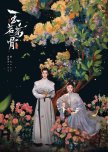
This drama simply wasn’t the kind of storytelling that kept me completely hooked.
I started Glory (2025) because of the interesting premise, the mystery surrounding the characters, and of course… Hou Ming Hao. After seeing many positive reviews and TikTok recommendations, I expected this to become one of my next favorites.The drama definitely has its strengths. I appreciated the beautiful visuals, especially the tea mountain plantation setting, the cinematography, and the elegant costumes. The overall atmosphere was refreshing and different from the usual historical dramas. The cast also delivered solid performances, and Hou Ming Hao was definitely one of the reasons I stayed until the end.
However, despite having an intriguing concept involving business, hidden identities, revenge, and investigation, I struggled to become fully invested in the story. The biggest challenge for me was the pacing. The plot felt like it revolved around one major case for a long time, with slow progress in uncovering the truth. Instead of feeling eager to know what would happen next, I found myself checking my phone during some episodes.
I usually enjoy mystery dramas, especially those with clever strategies and investigations, but I think I personally prefer stories where each episode gives a stronger sense of progress, new discoveries, or changing dynamics between characters.
That being said, I still appreciate the effort put into the production. The visuals, tea mountain scenery, costumes, and overall concept were beautiful. This drama simply wasn’t the kind of storytelling that kept me completely hooked.
Final thoughts:
A beautifully made drama with an interesting premise and great visuals, but the slow pacing prevented me from forming a stronger emotional connection with the story and characters.
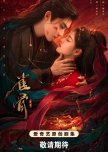
Not Just Another Political Drama—A Story Where Every Sacrifice Matters
When I first started Key to the Phoenix Heart, I expected another historical romance with political intrigue—a cold general, an arranged marriage, power struggles, and perhaps a predictable revenge story.I couldn't have been more wrong.
This drama continuously challenged my expectations. Every time I thought I had figured out who the real villain was, the story completely shifted my perspective. More importantly, it never relied on cheap shock value. Every twist was carefully planted, making earlier scenes gain entirely new meaning once the truth was revealed.
That, for me, is the greatest strength of this drama.
A Story That Never Stops Moving
One thing I immediately appreciated was the pacing.
This is one of the rare historical dramas where I honestly cannot think of a single filler episode.
Every episode contributes something important.
Every investigation uncovers another layer.
Every political conversation matters.
Every battle changes the story.
Many historical dramas spend several episodes repeating misunderstandings or dragging political conflicts. Here, each episode introduces new information that completely changes your understanding of previous events.
The writers trust the audience.
They don't overexplain.
They reward viewers who pay attention.
A Political Mystery Disguised as a Romance
At first, I thought the story revolved around revenge for the tragedy twenty years ago.
Then I thought Prince Jing An was hiding the biggest secret.
Then I believed Grand Tutor Xie Huai Gui was the mastermind.
Later I became convinced Li Mao had become the ultimate villain.
Every single time...
I was wrong.
What impressed me wasn't that the writers constantly surprised me.
It was that every reveal actually made perfect sense.
The drama never uses random twists simply to shock viewers.
Instead, each revelation forces you to reinterpret everything that came before.
That is incredibly difficult writing to achieve.
Xiao Wu Yi — One of the Best Historical Male Leads of Recent Years
Xiao Wu Yi immediately establishes himself as someone dangerous.
Cold.
Ruthless.
Feared across the battlefield.
Yet the longer the story progresses, the more you realize...
he is probably the kindest person in the entire drama.
He willingly allows everyone to misunderstand him.
He carries accusations.
He sacrifices his own reputation.
He accepts being called cruel if it means protecting the country.
One line perfectly summarizes his character:
He never wanted the throne.
His greatest dream was never power.
His dream was peace.
Unlike many historical male leads whose goal is ultimately becoming emperor, Xiao Wu Yi spends the entire series trying to create a future where someone else can rule peacefully while he quietly walks away.
That alone already makes him incredibly refreshing.
Hou Minghao absolutely delivers one of his strongest performances.
His emotions rarely explode through dialogue.
Instead...
they appear through his eyes.
There are scenes where he barely speaks, yet you can clearly see exhaustion, regret, love, loneliness, and determination simply through his expressions.
His restrained acting suits Xiao Wu Yi perfectly.
Xie Jia Yu — More Than Just the Female Lead
One of my favorite things about this drama is that Xie Jia Yu never becomes a passive heroine.
She is intelligent.
Inventive.
Independent.
Her engineering talent remains relevant from beginning until the finale.
She contributes to investigations.
She develops inventions.
She helps win battles.
She isn't simply someone waiting to be rescued.
She becomes Xiao Wu Yi's equal.
Watching her emotional growth was equally satisfying.
She begins as someone chasing her youthful first love.
By the end...
she becomes someone capable of standing beside the greatest general in the kingdom—not because she became stronger physically, but because she matured emotionally.
A Romance Built on Trust
This drama understands something many romance dramas forget.
Love doesn't begin with attraction.
It begins with trust.
Their relationship develops naturally.
Political marriage.
Mutual suspicion.
Partnership.
Friendship.
Respect.
Understanding.
Then finally...
love.
One of my favorite moments remains the blindfold archery competition.
Xiao Wu Yi temporarily loses his sight.
Xie Jia Yu becomes his eyes through the drumbeats.
That scene perfectly symbolizes their entire relationship.
He trusts her completely.
She believes in him completely.
Even before either of them openly confessed.
That is beautiful storytelling.
Every Character Has Layers
One thing I deeply appreciated was how no important character exists simply to be "good" or "evil."
Li Mao is probably the best example.
There were moments where I genuinely hated him.
Then the story revealed another side.
Then another.
Eventually I realized...
he wasn't a villain.
He was simply another tragic person carrying responsibilities far beyond his abilities.
The same applies to Prince Jing An.
Xie Huai Gui.
Li Le Jun.
Even the supporting cast receive understandable motivations.
Everyone believes they are doing what is necessary.
That moral complexity makes the political conflict much more engaging.
The Final Strategy Was Brilliant
One of my favorite reveals came near the end.
When Xiao Wu Yi deliberately arranged events so he could be captured by the Black Eagle Troop.
Initially I misunderstood everything.
I believed others were controlling him.
Then the truth emerged.
Everything had been planned by Xiao Wu Yi himself.
Not because he wanted revenge.
Because he knew the only way to end decades of war was to eliminate its source.
This wasn't simply winning another battle.
It was ending the cycle itself.
That reveal completely elevated the final arc.
The Battle Scenes
The final war deserves special praise.
This isn't just visual spectacle.
Every military movement reflects strategies established much earlier.
Every character contributes.
Every sacrifice matters.
The battles feel earned because the drama spends time developing the political and military foundations behind them.
Xie Jia Yu's inventions becoming part of the victory made the ending even more satisfying.
She wasn't watching from behind.
She helped create victory.
The OST
Absolutely beautiful.
I never skipped the opening.
Not once.
The music perfectly captures the emotional atmosphere of the drama.
Whether during political confrontations, heartbreaking sacrifices, or quiet romantic moments, the soundtrack consistently elevates every scene.
Few dramas make me willingly watch the opening every episode.
This one did.
The Ending
I loved it.
Could the reunion have been longer?
Of course.
Would I have wanted more scenes of Xiao Wu Yi and Xie Jia Yu living peacefully together?
Absolutely.
But unlike many historical dramas, this ending felt earned.
The memory loss wasn't simply inserted for unnecessary drama.
It reflected the consequences of everything Xiao Wu Yi endured.
What made the ending especially touching was Li Mao's final act.
He quietly arranged Xiao Wu Yi's treatment without forcing a reunion with Xie Jia Yu.
There was never any guarantee Xiao Wu Yi would survive.
He simply did everything he could.
When Xiao Wu Yi eventually remembered everything because of the red ribbon...
it became one of the most emotional moments in the entire series.
Simple.
Quiet.
Beautiful.
Final Thoughts
Key to the Phoenix Heart isn't perfect.
Some political developments happen very quickly due to its shorter runtime.
Certain emotional moments could have benefited from another episode or two.
But these are minor criticisms compared to everything the drama accomplishes.
This series proves that historical dramas don't need sixty episodes to tell a layered political story.
With intelligent writing...
carefully developed characters...
consistent pacing...
strong performances...
excellent action choreography...
and a romance built on genuine trust...
Key to the Phoenix Heart became one of my favorite historical dramas of 2026.
It's a story about responsibility.
About sacrifice.
About choosing peace over power.
About trusting someone enough to become their eyes when they can no longer see.
And perhaps most importantly...
it's a reminder that true heroes are often the ones willing to let history misunderstand them if it means protecting the people they love.
Highly recommended.
I honestly didn't expect this drama to climb this high on my personal list.
But by the end, I completely understood why so many viewers praised its writing. It's one of those rare series where every episode matters, every twist is earned, and every sacrifice leaves a lasting emotional impact. It isn't just entertaining—it respects the audience's attention from beginning to end.
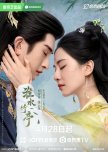
A Beautiful Tragedy That Frustrated Me More Than It Broke Me
I really wanted to love Love in Pavilion more than I ultimately did.There is so much to admire here: the cast, the production, the costumes, the scenery, the CGI, the music, the multiple relationships, the friendship among the Masked Group, and especially the restrained romance between Dongfang Huaizhu and Wangquan Hongye.
For most of the drama, I was genuinely invested.
But by the time I reached the final few episodes, my frustration became stronger than my sadness.
And that is unfortunate, because this could have been a much more satisfying tragic story.
🌿 A promising story with a genuinely interesting premise
One thing I really liked about Love in Pavilion is that the story isn't simply about defeating a villain.
At its heart, it is about the conflict between humans and demons, the resentment created by generations of hatred, and whether people can actually break the cycle that keeps producing more hatred.
The Black Fox works very well within that theme because she isn't simply an evil character who wants to destroy the world for no reason. She feeds on resentment, hatred and grief—the very emotions produced by the conflict between humans and demons.
That is why the concept of the Black Fox manipulating people into killing one another is actually brilliant.
Unfortunately, the execution of the final battle doesn't live up to that premise.
💔 Hongye × Huaizhu — The romance I actually enjoyed
I genuinely liked Dongfang Huaizhu and Wangquan Hongye.
Their relationship isn't the typical xianxia romance where the leads spend half the drama misunderstanding each other, breaking up, getting jealous, and repeating the same cycle.
Their romance is quieter and more mature.
They gradually learn to trust one another. They fight together. They support each other's decisions. They communicate. Even when they disagree, their relationship feels based on partnership rather than childish romantic drama.
I especially enjoyed the little moments between them—the hand-holding, the quiet conversations, the fireworks, the marriage proposal, and the way they gradually became each other's emotional refuge.
Their romance worked precisely because it wasn't excessively dramatic.
And that's why Huaizhu's eventual death hurts.
But it also made me ask:
Was all of this development really worth it if the final resolution barely gave them a chance to live the life they fought for?
Hongye survives.
They get married.
They have a child.
And then Huaizhu dies anyway.
I understand the thematic intention. Their love was never meant to erase the cost of the world they were trying to change.
But emotionally, I still felt cheated.
Not because I demand a happy ending, but because I wanted their sacrifices to produce a more meaningful change.
⚔️ The Masked Group deserved so much better
This is probably my biggest complaint about the entire drama.
I became attached to the Masked Group.
The drama spent so much time establishing them as a powerful and loyal group. We learned about their abilities, their relationships, their masks and their bonds.
So naturally, I expected the final battle to be the ultimate showcase of their teamwork.
Instead...
They were wiped out in essentially one battle.
And that battle wasn't even a satisfying display of their abilities.
The Black Fox manipulated them.
They turned against each other.
They killed the people they were supposed to protect.
One by one, they fell.
And suddenly, the legendary Masked Group that the story spent so much time building was practically gone.
I wasn't angry because they died.
I was angry because they died without getting the battle they deserved.
Give me one great battle where every member uses the ability we've been introduced to.
Let their formation actually matter.
Let them strategize.
Let their sacrifices weaken the Black Fox.
Let each death feel like the culmination of that character's journey.
Instead, their deaths mostly became fuel for the Black Fox's power and emotional trauma for Hongye.
That is such a wasted opportunity.
😭 And the 20-year future made this even more frustrating
This is where the story lost me.
They had something most dramas would kill for:
They already knew the future.
They literally traveled to a future twenty years later and saw what would happen.
They knew the Masked Group would be destroyed.
They knew people would die.
They knew Yang Yitan would lose control.
They knew the final battle would end in tragedy.
So what did they do with this information?
They still walked into almost the same fate.
This should have been the most strategic part of the story.
Instead, I kept thinking:
“You guys had twenty years of spoilers. HOW DID YOU STILL NOT PREPARE PROPERLY?”
😭
I understand the argument that fate cannot simply be changed.
But there is a huge difference between:
“We tried everything and fate still defeated us.”
and
“We knew what was coming but somehow made almost the same decisions anyway.”
The second one is simply frustrating.
🤦♀️ Why did the Masked Group even follow Hongye?
This is another decision I couldn't accept.
Hongye himself understood that they shouldn't all enter the Beyond the Boundary.
He tried to go alone.
The others followed him anyway.
And what happened?
Exactly what the future had shown them.
They were manipulated.
They killed each other.
They died.
Their deaths didn't meaningfully weaken the Black Fox.
In fact, their deaths and the hatred and grief they generated only contributed to the Black Fox's power.
So I kept thinking:
Why did they even follow him?
If the original plan was for Hongye to confront the Black Fox alone, then perhaps the smartest thing the Masked Group could have done was stay behind and protect the others.
Their decision to follow him feels heroic on the surface, but strategically it makes very little sense.
And that is a problem because these characters were supposed to be intelligent and capable.
🗡️ And then... the formation was basically useless?
YES.
This one really bothered me.
The story spent so much time preparing us for the Masked Group's formation.
Their abilities.
Their teamwork.
Their coordination.
Their masks.
Their preparation.
And when the actual final battle arrived, it felt like:
Black Fox: “I can manipulate you.”
Everyone: “Okay.” 😭
The formation that should have been one of the biggest payoffs of the entire story barely mattered.
Ultimately, it was Hongye's sword, together with Huaizhu's help, that became decisive in defeating the Black Fox.
So what exactly was the point of the Masked Group's elaborate preparation?
I don't mind if the formation fails.
But if it fails, the story needs to explain why it failed and make that failure meaningful.
Instead, it simply feels wasted.
🦊 Black Fox was actually a good villain
Ironically, I think the Black Fox is one of the better-written aspects of the story.
Her greatest weapon isn't brute strength.
It's manipulation.
She understands people's weaknesses and turns their love, guilt, grief and resentment against them.
That is exactly why watching the Masked Group destroy themselves was so painful.
But then we reach the biggest problem with the ending.
🙄 Black Fox is finally defeated... and then the senior disciple?
This was where I felt the story took a downgrade.
Not necessarily because the senior disciple is objectively weaker than the Black Fox.
The downgrade is dramatic, not necessarily power-scaling.
Black Fox is connected to the central mythology of the entire story.
She represents centuries of accumulated hatred between humans and demons.
She is connected to Jia Lan, Jiu Huo, resentment, the Grief Tree, the Beyond the Boundary and the larger conflict.
She is the villain the entire story has been building toward.
Then she is defeated...
And suddenly, the senior disciple becomes another major antagonist.
Except we've spent most of the drama seeing him as an irritating side character whose primary motivation is his obsession with Huaizhu.
So instead of:
Black Fox → culmination of the entire human-demon conflict
we suddenly get:
Black Fox defeated → surprise, THIS GUY is still a problem.
It felt less like a satisfying final escalation and more like the story needed one more villain before it could end.
His role isn't inherently bad.
The problem is the lack of buildup relative to the importance he suddenly receives.
He simply doesn't carry the same thematic weight as the Black Fox.
So yes, personally, I felt it was a downgrade in the final stretch.
😭 The deaths were tragic—but were they meaningful?
This is where I differ from some of the more positive MDL reviews.
I understand why some viewers appreciated the tragic ending.
I understand the argument that the deaths emphasize the inevitability of fate.
I understand that the source material itself is known for tragedy.
But knowing that the ending is supposed to be tragic doesn't automatically make every tragic event good writing.
For me, the question isn't:
“Why didn't they all survive?”
The question is:
“Why did they have to die this way?”
Zhang Zheng and Qingmu Yuan's story is heartbreaking.
The Li brothers' sacrifice is heartbreaking.
Yang Yitan and Wangquan Zui are heartbreaking.
The Masked Group's destruction is heartbreaking.
Huaizhu's death is heartbreaking.
But when almost everyone dies in such a short span, tragedy can stop feeling profound and start feeling mechanical.
At some point I wasn't thinking:
“Oh no, they're dying.”
I was thinking:
“Okay, who's next?” 😭
And that's not the emotional response the drama should have wanted from me.
🥀 Zhang Zheng and Qingmu Yuan deserved more
Their story is one of the more interesting side romances because of the identity issue.
The real Zhang Zheng dies, while Anran assumes his identity because of their resemblance.
Yuan eventually falls in love with the person living under Zhang Zheng's identity, while Anran himself develops genuine feelings for her.
That is actually a fascinating premise.
It raises questions about identity:
Do we love someone's name and face, or the person they have become?
Their tragedy could have been one of the strongest emotional arcs in the drama.
And then their ending is rushed too.
Again, the problem isn't that they die.
It's that the story doesn't give their tragedy enough room to breathe.
💀 The tragedy became repetitive
This is ultimately why I couldn't give Love in Pavilion the high rating some viewers gave it.
Almost every relationship eventually follows the same emotional pattern:
They love each other → they try to protect each other → something manipulates them → sacrifice → death.
Once you notice the pattern, the later deaths lose some of their impact.
The drama keeps telling us:
“Look how tragic love is.”
But sometimes I wanted the story to show me something beyond tragedy.
Give me consequences.
Give me strategic victories.
Give me characters learning from what happened.
Give me a meaningful alteration of fate.
Give me proof that their sacrifices changed something.
🌸 The ending with Hongye and Huaizhu's child
I did appreciate that Hongye survived and that they had a child.
That at least proves that something changed from the future they originally witnessed.
Hongye surviving is important.
Their child represents hope.
And the continuation of the human-demon conflict gives the ending a sense that the story is part of a larger world.
But then Huaizhu dies.
And because she dies so soon after they finally obtain their family, the happiness feels painfully temporary.
I understand the symbolism.
They couldn't save the world without paying a price.
But I still wanted the drama to make that price feel more connected to their choices.
Instead, it felt like the tragedy was predetermined and the plot simply rearranged who would die.
Acting, visuals and production —undeniably strong
Now, I have to give credit where it's due.
The production is beautiful.
The costumes are gorgeous.
The scenery is gorgeous.
The CGI is generally impressive.
The action sequences are visually appealing.
And the cast is one of the show's strongest assets.
Liu Shishi carries Huaizhu with that restrained elegance that suits the character perfectly. Her ability to express emotion through small changes in her eyes and expressions works particularly well for Huaizhu.
Zhang Yunlong also impressed me, particularly during Hongye's emotional breakdown after losing the people around him.
The supporting cast is strong too.
Wu Xuanyi and Zhai Xiaowen had a very sweet dynamic as Wangquan Zui and Yang Yitan.
Ryan Ding and Meng Ziyi had one of the more interesting and tragic arcs.
The Li brothers' relationship was another highlight.
And the Masked Group, despite how poorly their final battle was handled, had enough chemistry that I genuinely cared when they died.
And then there's Hou Minghao's guest appearance.
I wasn't expecting to see him: “WAIT—IS THAT HOU MINGHAO?!”
The music fits the drama beautifully.
The melancholic OSTs work especially well during the emotional scenes.
There are moments where the music almost makes the tragedy feel bigger than the writing itself.
And that's a compliment to the production.
⭐ Final thoughts
Love in Pavilion is a frustrating drama because I can see the excellent drama hiding inside it.
It has:
✔️ A strong cast
✔️ Beautiful visuals
✔️ Great costumes
✔️ Impressive CGI
✔️ A mature main romance
✔️ Interesting side couples
✔️ A compelling central conflict
✔️ A genuinely threatening manipulative villain
✔️ A strong friendship/brotherhood element
But it also has:
❌ A painfully rushed final act
❌ A wasted Masked Group
❌ A future-knowledge plot that wasn't utilized strategically
❌ Too many deaths compressed into one battle
❌ Sacrifices that often feel avoidable
❌ An underdeveloped late-stage villain
❌ A senior disciple storyline that feels tacked on
❌ A climax that doesn't fully utilize the abilities and formation built throughout the drama
And that's why my biggest takeaway isn't:
“I hate this drama because everyone died.”
It's:
“I hate that the drama made me care about these characters so much, only to waste them in a climax that didn't feel worthy of them.”
I don't need every character to survive.
I don't even need a happy ending.
But if you're going to spend 30+ episodes building the Masked Group as an elite team, showing us their abilities, their relationships and their determination to change the future, then their final battle should feel like the culmination of everything we've watched.
Instead, they were eliminated one after another, largely through manipulation, in essentially one battle.
And after all that...
Hongye survived. Huaizhu died. They had a child. Black Fox was defeated.
So what actually changed?
A little.
But not enough to justify how much the story promised us about changing fate.
Beautiful? Absolutely.
Emotional? Definitely.
Memorable? Yes.
Satisfying? For me, unfortunately, no.
Love in Pavilion made me cry—but more importantly, it made me frustrated.
And honestly, I think that's a bigger disappointment than simply making me sad.
A gorgeous, emotionally ambitious tragedy that had all the ingredients for something exceptional—but lost me in its final act by sacrificing narrative payoff for tragedy.
"The Legends wasn't ruined by its ending—it simply deserved a better one."
I started The Legends because of Bai Lu and Xu Kai. After watching several of their newer dramas, I wanted to see the series that made them one of the most beloved on-screen pairings in C-drama.The first twenty episodes completely lived up to the hype.
Lu Zhaoyao instantly became one of the most unforgettable female leads I've watched. She wasn't introduced as the typical kind-hearted heroine waiting to be protected. She was bold, arrogant, fearless, ridiculously overpowered, and charismatic enough to make every scene feel alive. Bai Lu absolutely owned the role. From the moment she appeared, she truly felt like the Demon Queen everyone feared.
Then there was Li Chenlan.
At first, he seemed quiet, timid, and almost invisible beside Lu Zhaoyao's overwhelming personality. But somewhere along the way, he quietly became the emotional heart of the entire drama.
Xu Kai deserves tremendous credit for his performance.
Li Chenlan isn't the type of male lead who constantly declares his love through grand speeches. Instead, he expresses it through actions. Every sacrifice, every silent decision, every painful choice he made for Lu Zhaoyao felt sincere. Without trying to dominate the screen, Xu Kai gradually turned Li Chenlan into one of the most memorable male leads I've watched.
The chemistry between Bai Lu and Xu Kai was effortless.
Their relationship wasn't built through endless romantic scenes or physical affection. It grew through trust, misunderstandings, forgiveness, and sacrifice. Their love story felt mature because it wasn't about who loved more—it was about two people continuously choosing each other despite everything standing in their way.
Visually, The Legends has aged remarkably well.
The costumes, soundtrack, cinematography, and action choreography still hold up beautifully despite being released in 2019. The world felt immersive, and the darker atmosphere suited the story perfectly.
Another thing I genuinely appreciated was how the drama blurred the line between good and evil.
Rather than portraying immortals as automatically righteous and demons as naturally evil, it constantly questioned those labels. Some of the cruelest people wore the title of "righteous cultivator," while several demons displayed more humanity than those supposedly protecting the world.
Luo Mingxuan perfectly represented that irony.
He wasn't terrifying because of his strength.
He was terrifying because he genuinely believed every terrible thing he did was justified.
His obsession with righteousness slowly transformed him into the very monster he claimed to fight.
Jiang Wu was another pleasant surprise.
For most of the drama, I saw him as an obsessive antagonist whose unhealthy love for Lu Zhaoyao caused nothing but destruction. Yet by the end, the writers revealed a tragic loneliness beneath all that madness.
His final sacrifice...
"I lived because of you... and died because of you."
...became one of the most heartbreaking moments in the entire series.
It didn't erase his sins.
But it made him unforgettable.
Unfortunately...
This is where my praise begins to fade.
My biggest disappointment wasn't the story itself.
It was the execution of the second half.
After Lu Zhaoyao's resurrection, the drama never fully recaptured the excitement of its opening episodes. One of its greatest strengths was introducing an incredibly powerful female lead, yet a significant portion of the story was spent watching her weakened. While I understood the narrative reason behind it, I constantly found myself missing the unstoppable Demon Queen from the beginning of the series.
Qin Zhiyan's storyline also overstayed its welcome.
I kept hoping her character would grow into someone stronger after everything she experienced, but she remained one of the least engaging parts of the drama. Instead of increasing the emotional weight, her arc often slowed the story's momentum.
The pacing became an even bigger issue during the final arc.
Ironically, it wasn't because nothing happened.
It was because too much time was spent delaying what everyone was already waiting for.
Every episode teased the final battle.
Every episode made it feel like the climax was finally about to begin.
Yet another conversation...
another flashback...
another emotional pause...
another subplot...
would immediately interrupt the momentum.
By Episode 50, I wasn't bored.
I was simply asking the drama...
"Can we finally get to the ending?"
Then the final battle actually arrived...
...and it felt surprisingly short.
After spending more than fifteen episodes preparing for the ultimate confrontation, I expected a large-scale, emotionally devastating climax.
Instead, the battle ended much faster than I anticipated, while the drama continued to devote more time to dialogue and repeated flashbacks than to the actual conflict itself.
The imbalance between build-up and payoff became impossible to ignore.
Another issue that frustrated me was Li Chenlan's inner demon.
For nearly the entire drama, it was treated as the central conflict.
We were repeatedly told there was no cure.
Huang Gu spent his life searching for a solution.
Li Chenlan constantly lived under the shadow of eventually losing himself.
Yet the actual resolution came almost at the very end—with very little explanation.
After investing fifty-five episodes into that storyline, I honestly expected a clearer and more emotionally satisfying resolution.
Instead, it almost felt like...
"It's gone now."
That was it.
Even the five-year time skip left me wanting more.
Rather than allowing viewers to enjoy the happiness the characters had fought so hard to earn, the ending rushed through its emotional payoff.
And then...
the final scene.
Instead of giving us a simple glimpse of Li Chenlan and Lu Zhaoyao happily living together, the drama introduced children portrayed by Bai Lu and Xu Kai themselves.
While I understand the symbolic intention, it honestly left me more confused than emotional.
For a moment, I even questioned whether I was watching reincarnations, siblings, or their children.
After fifty-five episodes, I wished the ending had simply allowed the original characters to enjoy the peace they had sacrificed everything to achieve.
Despite all these frustrations...
I never once thought about dropping the drama.
One thing about me is that I'm still relatively new to C-dramas. Just over three months ago, I spent most of my free time cycling, hiking, and chasing outdoor adventures. C-dramas started as something I casually watched during work breaks until The Untamed completely changed everything. Since then, I've built a watchlist of more than 160 dramas and finished over forty titles.
Among all of them...
The Legends became one of my biggest "what could have been" dramas.
Not because it was bad.
Quite the opposite.
Because it had all the ingredients to become one of my all-time favorites.
It had unforgettable leads.
Outstanding performances.
Beautiful music.
Great cinematography.
Meaningful themes.
A fascinating moral conflict.
And one of Xu Kai's finest performances.
Unfortunately, its uneven pacing and underwhelming finale prevented it from reaching the masterpiece it had every opportunity to become.
I will always remember The Legends for Li Chenlan's quiet devotion, Lu Zhaoyao's unforgettable charisma, and the incredible chemistry between Bai Lu and Xu Kai.
I just wish the ending had rewarded those characters—and the viewers—with the same care that the beginning of the story did.
A Healing Fantasy Where Love Wins Without Endless Suffering
After months of emotionally devastating xianxia and historical dramas where love is measured by sacrifice, death, and endless misunderstandings, Love Game in Eastern Fantasy felt like a refreshing reminder that a compelling romance does not need to be built on relentless suffering to leave a lasting impact.At first glance, the drama presents itself as a lighthearted fantasy romance inside a game world. However, beneath its playful premise lies a carefully written story about healing, forgiveness, family, identity, and the courage to choose love over fear.
The greatest strength of this drama is its pacing. Unlike many fantasy dramas that spend too much time establishing the world before rewarding viewers emotionally, this series understands exactly when to introduce comedy, mystery, romance, and emotional conflict. Every arc naturally builds upon the previous one without feeling repetitive. Even the frustrating bracelet arc—which admittedly tested my patience—ultimately served a meaningful purpose by reinforcing one of the drama's central themes: genuine love cannot be erased by external control. One of my favorite symbolic moments was when Miaomiao, despite being manipulated by the bracelet, unconsciously wrote that she wanted to marry Ziqi instead of Zhao Ruoshi. It beautifully suggested that while the mind may be deceived, the heart always remembers.
The romance between Ling Miaomiao and Mu Sheng is undoubtedly the heart of the series. Rather than relying on exaggerated misunderstandings or dramatic sacrifices every few episodes, their relationship grows through trust, vulnerability, and gradual emotional healing. Their chemistry feels effortless because every confession, every protective gesture, and every quiet conversation is earned. Watching Mu Sheng slowly lower the emotional walls he built around himself became one of the most satisfying character journeys I've seen in recent fantasy dramas.
Mu Sheng easily stands among the strongest male leads in recent years. His strength never comes from overwhelming power alone, but from his emotional restraint, quiet devotion, intelligence, and unwavering loyalty. He carries unimaginable guilt throughout the story yet never allows bitterness to define him. Instead of seeking revenge, he constantly chooses compassion, even when it demands personal sacrifice. His love language is protection, but more importantly, he learns that allowing himself to be loved is just as important as protecting others. That emotional evolution is what makes him unforgettable.
Ling Miaomiao is equally impressive. She never remains the typical transported heroine who simply reacts to events around her. As the story progresses, she becomes emotionally mature, courageous, and willing to face difficult truths instead of avoiding them. Her love for Mu Sheng gradually transforms from curiosity into complete understanding. She does not merely save him emotionally—she helps him rediscover the life he deserves.
The supporting cast deserves equal recognition. Mu Yao, Liu Fuyi, Zhao Ruoshi, and even the antagonists all contribute meaningfully to the narrative instead of existing solely to support the main romance. Each character reflects a different response to grief, guilt, responsibility, and forgiveness, making the world feel emotionally complete. Their relationships create a genuine sense of found family, one of the drama's most touching qualities.
Perhaps what impressed me most is how the story balances emotional weight with optimism. It never ignores tragedy or trauma, yet it refuses to romanticize suffering. Instead, it argues that healing is possible, forgiveness is powerful, and love should inspire growth rather than endless pain. In a genre often dominated by repeated sacrifices and tragic separations, this perspective feels surprisingly refreshing.
My only real criticism concerns the ending. While emotionally satisfying, the modern-world epilogue felt far too brief. After investing so deeply in the characters and their journey, I wished the reunion outside the fantasy world had been explored more thoroughly. A few additional scenes showing their lives together would have elevated an already excellent conclusion into a truly unforgettable one.
Overall, Love Game in Eastern Fantasy is more than just a romantic fantasy. It is a story about breaking cycles of hatred, embracing vulnerability, and proving that the deepest love is not measured by how much people suffer for each other, but by how they help each other heal.
It is the perfect palate cleanser after countless heavy-angst dramas—and ironically, that very choice makes it stand out among them.
I admired its mysteries, loved its OST, and respected its cast more than I loved the story itself.
Some mystery dramas make you obsessed with solving the case.Others make you emotionally attached to the people solving it.
For me, Unveil: Jadewind leaned much more toward the first.
That doesn't mean it wasn't a good drama.
In fact, I genuinely enjoyed watching it from beginning to end.
I simply never reached the point where I became emotionally attached to its characters the way I did with dramas like Coroner's Diary, Blossom, A Journey to Love, or Youthful Glory.
Perhaps that's why my overall experience felt more like admiration than emotional attachment.
Going into this drama, I was immediately drawn by the casting.
Bai Lu and Wang Xing Yue are already two of the actors I deeply respect, so dropping this drama was never an option for me.
Even during the slower stretches, I genuinely enjoyed watching both of them bring their characters to life.
One of the drama's biggest strengths is Bai Lu's portrayal of Li Pei Yi.
She isn't written as an overpowered heroine driven solely by revenge.
Instead, she carries years of grief with quiet restraint.
Every investigation, every clue, and every step she takes is rooted in one purpose—finding justice for the brutal massacre of her family.
Bai Lu portrayed that determination beautifully.
She never relied on exaggerated emotional breakdowns to make the audience sympathize with her.
Instead, she expressed Li Pei Yi's pain through subtle expressions, quiet moments, and unwavering resolve.
Watching her reminded me once again why she continues to be one of my favorite actresses in historical dramas.
I was equally impressed by Wang Xing Yue as Xiao Huai Jin.
Coming from roles where he often portrays intimidating, dominant, and physically powerful characters, this role felt surprisingly refreshing.
At first, I actually found myself frustrated.
I'm so used to loving male leads who are both brilliant strategists and terrifying martial artists that watching Xiao Huai Jin rely almost entirely on intelligence instead of combat felt unusual.
There were countless moments when I wanted him to simply draw his sword and fight beside Li Pei Yi.
Instead, he remained calm.
Observant.
Patient.
His greatest weapon wasn't martial arts.
It was wisdom.
As the story progressed, I realized that was exactly what made his character unique.
Not every hero has to save people through strength.
Some save them through truth.
That quiet confidence eventually became one of the things I appreciated most about him.
The chemistry between Bai Lu and Wang Xing Yue was natural and believable.
I liked them together.
I rooted for them.
But if I'm being completely honest, I never became deeply emotionally invested in their romance.
Their relationship quietly complemented the investigations rather than becoming the emotional center of the story.
The biggest reason for that, at least for me, was the structure of the narrative.
The drama follows a procedural format.
One case.
Another investigation.
Another mystery.
Another clue.
Each individual case was interesting enough to keep me watching.
But throughout much of the series, I often found myself asking the same question:
"How does this connect to Li Pei Yi's family massacre?"
Sometimes the connection was obvious.
Other times, it felt distant enough that I temporarily lost sight of the emotional core of the story.
I understood that each investigation was gradually building toward the truth, but emotionally, I occasionally felt disconnected from Li Pei Yi's revenge journey.
Episode 22 finally changed that feeling.
The brutal murder of Li Pei Yi's master genuinely shocked me.
His throat being slit before being stabbed through the heart was one of the most brutal scenes in the drama.
It wasn't simply another character death.
It was the moment when the conspiracy suddenly felt real.
The danger became personal.
The cost of uncovering the truth became painfully clear.
I honestly thought Episode 30 marked the climax after the mastermind behind the massacre was finally revealed.
But I was wrong.
The revelation wasn't the ending.
It was only the beginning of the final revenge arc.
Because exposing the mastermind wasn't enough.
As the powerful Right Chancellor, his position allowed him to hide behind authority and political influence.
The final four episodes shifted away from simply uncovering the truth and focused instead on finally delivering justice.
Looking back, I actually appreciated those final episodes much more than I expected.
They completed Li Pei Yi's revenge in a satisfying way while reminding viewers that revealing the truth and achieving justice are two very different battles.
If there is one aspect of the drama that completely won me over, it would be the soundtrack.
I absolutely loved the opening theme.
Netflix gives you the option to skip the intro after a few seconds.
I never did.
Not once.
Every episode, I let the opening play from beginning to end because the music perfectly captured the elegant, mysterious, and melancholic atmosphere of the story.
It became part of the experience rather than something to skip.
Visually, the drama remained consistently beautiful.
The cinematography, costumes, lighting, and historical aesthetics were all well executed and helped maintain the elegant tone throughout the series.
Looking back after finishing all 34 episodes, I realized something.
I never once considered dropping this drama.
I genuinely enjoyed every episode.
I admired the intelligent investigations.
I respected Bai Lu's restrained yet powerful performance.
I appreciated Wang Xing Yue's calm, thoughtful interpretation of Xiao Huai Jin.
I loved the soundtrack.
And I found the final revenge arc satisfying.
Yet despite all of those strengths...
I never fell in love with the drama emotionally.
I admired it far more than I loved it.
And sometimes, that's perfectly okay.
Not every historical drama has to become one of my all-time favorites.
Some deserve recognition simply for telling a well-written mystery with strong performances and a satisfying conclusion.
A Journey to Love: I Came for the Romance, Stayed for the Family, and Left in Pieces
Some dramas make you smile.Some dramas make you cry.
And then there are those rare stories that quietly become part of you.
For me, A Journey to Love is one of them.
When I started this drama, I expected another historical action romance filled with missions, political conflicts, assassins, and a dangerous journey.
I thought I knew exactly what I was getting into.
I couldn't have been more wrong.
Because somewhere along the way, I realized this wasn't simply a story about completing a mission.
It was a story about love in all its forms.
Romantic love.
Love between friends.
Love between brothers.
Love for family—both the family we're born into and the family we choose.
Love for one's country.
And ultimately, the kind of love that makes people willing to sacrifice everything for something greater than themselves.
Ren Ruyi — A Female Lead Who Never Needed Saving
From the very beginning, I was drawn to Ren Ruyi.
She's everything I love in a female lead—calm, intelligent, highly skilled, strategic, emotionally mature, and completely confident in who she is.
But what I appreciated most is that the drama never had to make everyone around her incompetent just to prove that she's strong.
Ruyi is strong because she genuinely is.
She doesn't need to constantly announce it.
You see it in the way she observes people.
The way she calculates risk.
The way she fights.
The way she handles pain.
The way she knows exactly when to speak—and when silence is more powerful.
Even her fighting style reflects her character. Her movements are precise, light, controlled, almost effortless.
And underneath all that competence is a woman carrying years of trauma, loss, and survival.
Liu Shishi portrayed her beautifully.
There was no need for exaggerated expressions or unnecessary emotional outbursts.
Her restraint was the performance.
Sometimes a slight change in her eyes said more than an entire monologue could.
Ruyi isn't written as a woman who needs to be softened in order to become lovable.
She is allowed to remain dangerous, complicated, independent, and emotionally guarded—and still be deeply loved.
That mattered to me.
Ning Yuanzhou — The Green Flag That Ruined My Standards
Then came Ning Yuanzhou.
This man completely ruined my standards.
He's probably one of the biggest green flags I've encountered in a historical drama.
But what makes him special isn't simply that he's kind.
It's how he loves Ruyi.
He never tries to control her.
He never questions her abilities because she's a woman.
He doesn't need to be stronger than her in every situation.
He trusts her.
Respects her.
Listens to her.
Challenges her when necessary.
Protects her when she needs protection...
and knows when the best thing he can do is simply stand beside her.
That distinction is everything.
Ruyi can save herself.
Yuanzhou knows that.
And instead of feeling threatened by her strength, he admires it.
He doesn't need her to become smaller so he can feel bigger.
He loves her as an equal.
That's what makes their relationship so refreshing.
Ruyi × Yuanzhou — Love Built on Trust
Watching two emotionally mature adults fall in love without endless misunderstandings was honestly refreshing.
Their romance wasn't loud.
It wasn't built around possessiveness, jealousy, or one misunderstanding after another.
It was built through trust.
And because of that, the smallest gestures carried enormous weight.
A look.
A pause.
A quiet conversation.
The way they stood beside each other.
The way Yuanzhou understood what Ruyi wasn't saying.
The way Ruyi gradually allowed herself to trust someone enough to imagine a life beyond survival.
Their relationship also never made either character lose their identity.
Even after falling in love, Ruyi remained Ruyi.
Yuanzhou remained Yuanzhou.
Their responsibilities didn't disappear simply because they found each other.
They continued to have a mission.
They continued to have people depending on them.
And they continued to make difficult choices.
Their love existed within their lives rather than replacing them.
That is why their romance worked for me.
They weren't two incomplete people looking for someone to complete them.
They were two complete, wounded people who found someone capable of understanding them.
And perhaps that's why their love hurts so much.
Because it feels earned.
But Then… The Family Happened
Somewhere along the journey, I realized I wasn't watching this drama just for the main couple anymore.
I was watching it for everyone.
Yu Shisan.
Qian Zhao.
Sun Lang.
Yuan Lu.
Princess Yang Ying.
Every member of the delegation slowly stopped feeling like a supporting character.
They became a family.
And this is where I think A Journey to Love quietly becomes something much bigger than its romance.
The Liudao Hall brothers aren't simply comic relief surrounding the main couple.
Their personalities, arguments, teasing, meals, missions, frustrations, and moments of genuine concern slowly create the emotional foundation of the story.
The comedy matters.
The ordinary conversations matter.
The ridiculous moments matter.
Because those are the moments that make them feel alive.
They aren't just warriors waiting for their next heroic scene.
They're people laughing together.
Eating together.
Annoying each other.
Protecting one another.
And slowly becoming a family.
That is exactly why the second half of this drama hurts so much.
Yuan Lu — The Smile That Broke Me
Yuan Lu probably broke my heart the most.
There's something especially painful about watching someone so young continue smiling despite knowing exactly what awaits him.
He never felt like a conventional tragic character.
He was bright.
Playful.
Young.
And yet, underneath that youthful energy was an incredible willingness to sacrifice himself for the people he loved.
One of the most heartbreaking things about his character is that he doesn't need to make a grand speech about bravery.
He simply keeps moving forward.
And that makes his fate even more devastating.
His relationship with Yang Ying also becomes one of the unexpectedly tender parts of the journey. Their shared growth and the way they encourage each other show that courage doesn't always look like fearlessness.
Sometimes courage is simply continuing despite being terrified.
Yang Ying — From Princess to Leader
Princess Yang Ying surprised me.
She began as someone timid and heavily dependent on the people around her.
At first, it was easy to understand why everyone wanted to protect her.
But gradually, the question changed from:
“Who will protect Yang Ying?”
to:
“Can Yang Ying become someone who can protect others?”
And she did.
Watching her grow into someone capable of carrying responsibility was one of the most satisfying character arcs in the drama.
Her transformation wasn't instantaneous.
She stumbled.
She was frightened.
She doubted herself.
But she learned.
And eventually, she became someone worthy of leading.
That kind of growth is much more satisfying than simply giving a character sudden confidence.
The Brotherhood — The Soul of the Journey
If Ruyi and Yuanzhou are the heart of the story, then the Liudao Hall brotherhood is its soul.
Yu Shisan brings humor and charm.
Qian Zhao carries a quieter steadiness.
Sun Lang has that dependable warrior presence.
Yuan Lu brings youth and warmth.
And Yuanzhou holds them together as their leader.
What makes their bond so effective is that the drama gives us enough time to simply watch them exist together.
They joke.
They fight.
They eat.
They tease each other.
They worry about each other.
They make mistakes.
And because we are allowed to see those ordinary moments, their later sacrifices never feel like random plot devices.
We understand exactly what is being lost.
Then Came the Sacrifices
Every time I convinced myself:
“Okay... surely no one else is going to die now.”
The drama proved me wrong.
Again.
And again.
And again.
Eventually, I wasn't even worried about whether the mission would succeed anymore.
I was just praying:
“Please... let everyone survive.”
Unfortunately...
this drama doesn't make promises it can't keep.
What I admired most is that the story never treats sacrifice as something glamorous.
It shows the cost.
Duty demands sacrifice.
Love demands sacrifice.
Friendship demands sacrifice.
Loyalty demands sacrifice.
Even doing what you believe is right can demand sacrifice.
No victory comes for free.
And that's why the deaths hurt.
They don't simply happen because the writers need to shock the audience.
They happen because these characters have spent the entire story choosing something greater than their own survival.
That doesn't make the pain easier.
It makes it meaningful.
By the final stretch, I realized that the journey had stopped being about whether everyone would make it home.
It became about what they were willing to give up so that the people they loved could.
And that is a much crueler question.
The Best Part: It Was Never Just a Romance
One of the most beautiful things about A Journey to Love is that it doesn't limit the meaning of love to Ruyi and Yuanzhou.
It asks us to look at love differently.
Love can mean choosing someone.
It can mean protecting someone.
It can mean believing in someone.
It can mean standing beside someone even when you know you may not survive the journey together.
It can mean sacrificing yourself for your brothers.
It can mean fulfilling your duty to your country.
It can mean giving someone the courage to become the person they were always capable of becoming.
That is why the title feels so appropriate.
This isn't simply a journey toward romantic love.
It is a journey through all kinds of love.
The Action & Visuals
Visually, the production remained consistently impressive.
The fight choreography was one of the strongest elements of the drama.
And I particularly loved that Ruyi and Yuanzhou didn't fight exactly the same way.
Ruyi's movements were lighter, more precise and fluid.
Yuanzhou's were heavier, stronger, and more forceful.
Their fighting styles reflected their personalities.
The cinematography also captured two sides of their journey beautifully—the grandeur of the landscapes and the loneliness of the road ahead.
There is beauty everywhere in this drama.
But there is also an underlying feeling that this beauty is temporary.
That these people are travelling toward something they may never return from.
That atmosphere becomes increasingly powerful as the story progresses.
And Then There's the OST…
I have one confession about this drama:
I never skip the intro.
Ever.
The opening song, 《奉上》 (“Feng Shang” / “Offer”) by Liu Yuning, became part of my watching ritual. It is officially the opening theme of A Journey to Love, and somehow, hearing Liu Yuning's voice before every episode made the entire journey feel even more personal.
And now?
I've finished the drama.
But I still play it.
Over and over.
It's literally saved on my phone.
There is something about Liu Yuning's voice that carries a particular kind of weariness and longing—something that fits this drama almost too perfectly.
And knowing that the same person singing the opening is also playing Ning Yuanzhou makes it even more meaningful.
After watching Yuanzhou's entire journey, the song doesn't sound like just an OST anymore.
It sounds like a memory of the character.
Of the journey.
Of everything they endured.
And Liu Yuning also lends his voice to 《别梦寒》, another song from the drama's OST, which adds another emotional layer to his connection with Yuanzhou and the series.
There are dramas where I skip the intro because I want to get to the episode.
This is one of the rare ones where the intro became part of the experience.
And even now, long after finishing the drama, I still find myself pressing replay.
If I Have One Criticism...
It's that I desperately wanted more time.
Not necessarily more episodes.
Just...
more time with them.
More laughter before the next mission.
More meals together.
More conversations around the campfire.
More ridiculous arguments.
More moments where they could simply exist together without another impossible task waiting ahead.
Because once the final missions began, I already knew what kind of ending this story was preparing me for.
I just wasn't emotionally ready for it.
And yes, I understand why some viewers found the final stretch too brutal or felt that certain parts of the ending were rushed.
I can understand that criticism.
But emotionally?
For me, the tragedy worked because the drama had already spent so much time convincing me that these people mattered.
The pain wasn't created by the ending.
The ending simply collected everything the story had built before it.
Why This Drama Stayed With Me
Unlike many dramas that rely on shocking twists or manufactured tragedy, A Journey to Love earned every emotion it asked from me.
Nothing felt painful simply because the drama wanted me to cry.
The pain came naturally because I had already laughed with these people.
I had watched them eat together.
Fight together.
Travel together.
Tease each other.
Protect each other.
Grow together.
And somewhere along the way...
I became attached.
That's why losing them hurt.
Not because they were fictional characters who happened to die.
But because the drama had made them feel like people I had spent a journey with.
My Own Journey With C-Dramas
One thing about me is that I'm still relatively new to C-dramas.
Only a few months before discovering this world, I spent most of my free time cycling, hiking, and chasing outdoor adventures.
C-dramas were simply something I watched during work breaks.
Then I found The Untamed.
That drama opened the door.
But A Journey to Love reminded me why I chose to stay.
It reminded me that the best stories aren't always the happiest ones.
Sometimes, they're the ones that leave you sitting in silence long after the credits roll.
The ones where you keep replaying every sacrifice.
Every smile.
Every goodbye.
Every moment when these characters were simply happy together, unaware of how precious that moment would eventually become.
And somehow...
despite knowing how much it hurt...
I would willingly experience all of it again.
Because for a little while...
those characters truly felt like family.
And maybe that's the greatest achievement of A Journey to Love.
It didn't simply give me a couple to root for.
It didn't simply give me a story to finish.
It gave me people to care about.
It gave me a journey I didn't want to end.
And then it taught me how painful it is to say goodbye.
Final Thought
Some dramas give you unforgettable characters.
A Journey to Love gave me a family...
and then taught me how painful it is to say goodbye.
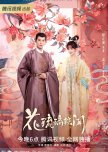
I expected a light comedy. I didn't expect it to leave me emotional by the final battle.
Sometimes, the best dramas are the ones you never expected to love.I started Royal Rumours simply because I wanted something light after finishing heavier dramas. I wasn't looking for political intrigue, emotional sacrifices, or heartbreaking losses. I just wanted an easy, entertaining watch with a little romance and comedy.
That's exactly what the drama gave me...
At least in the beginning.
From the first few episodes, Royal Rumours felt charming, funny, and effortlessly enjoyable. The playful banter between Hua Liuli and Crown Prince Ji Yuansu immediately became one of the biggest highlights of the series.
Meng Ziyi was absolutely delightful as Hua Liuli.
Behind her fragile and sickly reputation was a clever, confident, and incredibly lovable woman who understood how to survive a court full of schemes. Rather than relying on brute strength, she relied on intelligence, wit, and the ability to make everyone underestimate her. Watching her outsmart people while pretending to be weak never got old.
Jeremy Tsui perfectly complemented her performance.
Ji Yuansu could have easily become another cold and distant Crown Prince, but Jeremy gave him warmth, humor, and quiet maturity. His trust in Hua Liuli developed naturally, making their relationship one of the healthiest romances I've watched in historical C-dramas.
What I appreciated most was how comfortable their relationship felt.
There were no unnecessary misunderstandings stretched over multiple episodes.
No toxic push-and-pull.
No frustrating love triangle dominating the story.
Instead, the romance was built on mutual respect, trust, and genuine partnership. Watching them work together instead of constantly working against each other made the entire drama feel refreshing.
The production also deserves recognition.
The costumes were elegant, the cinematography was colorful without feeling overly artificial, and the soundtrack perfectly matched both the lighthearted comedy and the emotional moments later in the story.
One thing I genuinely didn't expect was how much the tone would change during the final episodes.
I thought I was watching a purely lighthearted romantic comedy.
Instead, the drama slowly reminded me that behind every smiling general's family lies the reality of war.
The final battle wasn't simply another obstacle for the main couple.
It came with real consequences.
Among the moments that affected me the most was the death of Song Guang.
His story quietly broke my heart.
A retired soldier whose military career had already been taken away by injury, he never truly stopped protecting the Hua family. After leaving the camp, he wandered aimlessly until Hua Liuli welcomed him into her home, treating him as family rather than just another forgotten veteran.
When he sacrificed himself to protect Hua Liuli, it reminded me that loyalty isn't measured by rank or status.
Sometimes, the people who have already given everything still choose to give even more.
That scene genuinely hurt.
Another character I unexpectedly grew attached to was Yun Han.
For most of the story, I saw him as someone trapped between duty and manipulation. Being planted beside Ji Yuansu placed him in an impossible position. Yet when the moment of truth arrived, he chose conscience over orders.
I honestly thought the drama was going to kill him.
When I realized he survived, I was genuinely relieved.
His decision proved that redemption isn't about where you come from—it's about the choices you make when they matter most.
What impressed me most about Royal Rumours was its balance.
It knew when to make me laugh.
It knew when to slow down for romance.
And when the story finally demanded emotional weight, it delivered without abandoning the lighthearted charm that made the drama so enjoyable in the first place.
If I have one minor criticism, it's that the transition from comedy to the final conflict felt slightly abrupt. Because the drama spent so much time embracing its playful atmosphere, I wished the military conflict had been given just a little more room to breathe.
Still, that never overshadowed my overall enjoyment.
One thing about me is that I'm still relatively new to C-dramas. Just a few months ago, I spent most of my free time cycling, hiking, and chasing outdoor adventures before discovering this world of historical dramas.
Ironically, I've learned something while building my watchlist.
The dramas I enter with the highest expectations often become the ones I scrutinize the most.
But the ones I watch with no expectations...
often become the biggest surprises.
Royal Rumours became one of those surprises.
It wasn't trying to be the grandest political epic.
It wasn't trying to be the darkest historical masterpiece.
It simply told an entertaining story with lovable characters, healthy romance, genuine humor, and just enough emotional weight to remind you that even the brightest stories can leave a mark on your heart.
I came for something light.
I left caring far more about these characters than I ever expected.
Sometimes, that's all a drama needs to do.
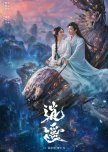
A Beautiful Love Story Trapped Between Time, Desire, and Fate
I started The Unclouded Soul because of Hou Minghao. After watching Fangs and Fortune, I wasn't quite ready to let go of Neo Hou, so naturally, this became my next drama. 😂What I didn't expect was to actually become invested in Xiao Yao and Hong Ye's story.
At first, The Unclouded Soul felt surprisingly light for a fantasy drama. There was humor, mystery, demon cases, chaotic side characters, and a romance that slowly became the heart of the story. But underneath all that was a much darker theme: desire, obsession, sacrifice, and the consequences of wanting something so badly that you lose yourself in the process.
And that's what made the story more meaningful to me as it progressed.
❤️ Xiao Yao & Hong Ye
For me, the strongest part of the drama was the relationship between Xiao Yao and Hong Ye.
Xiao Yao wasn't simply the usual helpless female lead waiting to be protected. She was clever, stubborn, compassionate, and eventually incredibly powerful. Her journey from the seemingly carefree girl in Demon Valley to the Dragon Lord was one of the most satisfying parts of the story.
Hong Ye, meanwhile, carried the weight of centuries of pain and disappointment. He looked like the powerful Demon King, but underneath that image was someone who had already seen how desire could destroy people.
And somehow, Xiao Yao became the person who reminded him that there could still be something pure in this world.
Their romance worked for me because it wasn't only about attraction. They changed each other.
Hong Ye learned to trust and love again.
Xiao Yao learned that loving someone doesn't always mean being able to save them.
🪞 The Story Behind the Fantasy
I also liked how the Kunlun Mirror and Yuli Spring weren't just random fantasy devices.
The story repeatedly showed how desire could corrupt people.
The Emperor wanted immortality.
Others wanted power.
Bing Zhu became consumed by grief and his desire to bring Pianpian back.
And eventually, Hong Ye understood that the Kunlun Mirror itself represented that endless human and demon desire.
That's also why the title The Unclouded Soul makes more sense after finishing the drama.
Xiao Yao's greatest strength wasn't simply her spiritual power.
It was her heart.
While almost everyone around her became consumed by desire, revenge, grief, or obsession, Xiao Yao remained remarkably true to herself.
That is what made her "unclouded."
⚔️ The Second Half
This is where I have mixed feelings.
I enjoyed the story overall, but the latter part became much more complicated than it needed to be.
There were moments when the plot felt rushed, especially with some of the side characters and conflicts. Some developments had enormous potential but were resolved much faster than I expected.
Bing Zhu's descent was interesting because it wasn't simply a case of someone suddenly becoming evil. His grief, Pianpian's death, and his obsession with bringing her back gradually pushed him over the edge.
But I still wished some of these arcs had been given more time.
The three great demons also felt like they deserved more development before everything came to a head.
💔 And Then Came The Ending...
This is probably the most controversial part of the drama for me.
Hong Ye sacrificing himself to seal the Kunlun Mirror was heartbreaking.
But what really stayed with me was Xiao Yao's final choice.
After everything—the lifetimes, the misunderstandings, the suffering, the battles, the memories—she uses the Time-Reversal Array again.
And instead of taking us back to the powerful Dragon Lord Xiao Yao, we see her return to the much weaker Xiao Yao living in Demon Valley, in that quiet moment when Hong Ye is taking care of her.
That scene completely changes the feeling of the ending.
Is it a memory?
Is it a reset?
Is it another timeline?
Does Hong Ye remember everything?
The drama refuses to give us a definitive answer.
And honestly, I both love and hate that. 😂😭
I love that it leaves room for hope.
But after investing 40 episodes in their story, I also wanted the drama to give us just a little more certainty.
Still, iQIYI's own finale confirms Hong Ye's sacrifice and the sealing of the Kunlun Mirror, while the broader ending deliberately leaves the final reunion open to interpretation.
🌸 Final Thoughts
The Unclouded Soul isn't a perfect drama.
There are pacing issues. Some storylines could have been developed better, and the finale will definitely divide viewers.
But despite those flaws, I genuinely enjoyed watching it.
It gave me a story that could be funny and warm one moment, then suddenly heartbreaking the next.
Most importantly, I loved the idea at the center of it:
In a world where everyone is consumed by desire, the purest form of love may be the one that doesn't try to possess.
Xiao Yao and Hong Ye's story may have crossed lifetimes, identities, memories, and even time itself.
And perhaps that's exactly why the ending doesn't give us a simple goodbye.
Maybe their story was never meant to end.
Maybe it was meant to begin again.
A beautiful, bittersweet fantasy romance that wasn't perfect—but stayed with me long after the final episode.
Rating: 9.0/10 ❤️
Would I recommend it? Absolutely—especially if you enjoy fantasy romance, time-travel elements, strong female leads, and a love story that doesn't take the easy route.
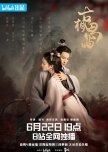
An Ancient Love Song — Beautifully Complicated, But Not Easy to Follow
Some love stories begin with a meeting.This one begins with an ending.
An Ancient Love Song follows Shen Buyan, a modern historical novelist who unexpectedly travels through time and encounters Lu Yuan, a woman remembered by history as a notorious “Enchantress.” What makes their story different is that their timelines move in opposite directions. The more Shen Buyan falls in love with her, the less she knows him—and the moments when Lu Yuan loves him deeply are moments when he has yet to understand who she is.
And that is where the drama gets both beautiful and confusing.
I actually liked the story.
The concept was clever, especially the way the drama slowly makes you realize that what you're watching isn't a conventional time-travel romance. The story deliberately presents their encounters out of chronological order, making you piece together their relationship from different points in their lives.
But for me, this was also the biggest challenge.
While watching, there were moments when it felt like the story was resetting itself every time Shen Buyan returned to the past. The characters would meet again, circumstances would change, and I had to constantly recalibrate where we were in the timeline. Eventually, I understood what the drama was trying to do, but I wouldn't say I always enjoyed the process of figuring it out.
The shorter format definitely helped. With only 14 episodes of roughly 30 minutes each, the story doesn't drag and wastes very little time.
What I appreciated most was Lu Yuan.
She isn't simply a tragic woman waiting to be saved. She has her own convictions, responsibilities, and understanding of what she has to do—even when Shen Buyan desperately wants to change the fate he has learned from history.
And that makes their romance particularly heartbreaking.
This isn't a love story about two people simply trying to be together.
It's about two people who keep reaching for each other at the wrong point in time.
The drama also does something interesting with the idea of fate versus narrative. We know Lu Yuan's historical reputation from the beginning, but as Shen Buyan discovers what actually happened, the difference between history and truth becomes increasingly important. Several reviewers also praised the drama for turning a seemingly familiar time-travel premise into a reverse-timeline love story.
What worked for me:
• Unique reverse-timeline concept
• Short and tightly paced
• A strong and memorable female lead
• Romance that feels tragic without relying entirely on melodrama
• The mystery of Lu Yuan's true history keeps the story moving
• The ending gives the earlier episodes a different meaning
What didn't work as well for me:
• The timeline can be genuinely confusing
• Some transitions feel like you're watching another “reset”
• It requires paying close attention to understand the chronology
• The emotional impact didn't completely hit me the way it seems to have affected other viewers
And perhaps that's the biggest difference between appreciating this drama and completely falling in love with it.
I can recognize what makes An Ancient Love Song special.
I can appreciate how carefully the story is constructed.
But personally, I wasn't as emotionally devastated by it as some viewers were.
Still, for a 14-episode mini drama, it manages to tell a surprisingly ambitious story with very little room to waste.
It's not a perfect watch for me, but it's definitely one of those dramas where the concept stays with you after the ending.
Final verdict:
An Ancient Love Song is a beautifully constructed reverse-timeline romance that asks you to experience a love story backwards. It may leave you confused along the way, but once the pieces begin falling into place, you understand why the story had to be told this way.
A love that keeps moving through time—
even when the two people in it never seem to arrive at the same moment.
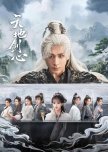
Cheng Yi Deserved a Better Story?
I started Sword and Beloved because of Cheng Yi, but I stayed because I wanted to understand Wangquan Fugui—not simply as the strongest swordsman, but as the son of Hongye and Dongfang Huaizhu from Love in Pavilion, a child born from sacrifice and raised to become a weapon.And that premise had so much potential.
Fugui inherits the extraordinary power of both his parents, but instead of being given the freedom his mother wished for him, he is raised by his father to become the strongest possible weapon against their enemies. His entire identity is built around strength, duty, emotional restraint, and sacrifice.
That is exactly the kind of internally conflicted character Cheng Yi can play beautifully.
And he does.
🎭 Cheng Yi Was NOT the Problem
If anything, Cheng Yi was the reason I remained invested as long as I did.
His Fugui is deliberately restrained. He isn't supposed to be openly emotional at the beginning. He has been conditioned to suppress attachment and prioritize strength, so much of Cheng Yi's performance happens through his expressions, silence, body language, and the subtle moments when Fugui begins questioning the life that was chosen for him.
But this also made me compare him with two of Cheng Yi's strongest roles:
Si Feng in Love and Redemption and Li Lianhua/Li Xiangyi in Mysterious Lotus Casebook.
And that comparison is where Sword and Beloved unfortunately loses.
In Love and Redemption, Cheng Yi was given a story that constantly challenged Si Feng emotionally. His love, suffering, sacrifice, misunderstandings and relationship with Xuanji were central to the narrative.
In Mysterious Lotus Casebook, Li Lianhua was practically inseparable from the story itself. His identity, his past, the mysteries, his relationships and his physical decline were all woven into the central plot.
Cheng Yi wasn't merely acting those stories.
He was at the center of them.
Fugui had the potential to become another unforgettable Cheng Yi character. But Sword and Beloved doesn't consistently give him enough space to be one.
There is a point where I found myself wondering:
“Where is Fugui? Why does it feel like the protagonist has become nothing more than a side character?”
And unfortunately, other viewers had the same complaint about the middle portion of the drama.
That is why I cannot blame Cheng Yi for the drama's low reception.
The actor was better than the material he was given.
🕷️ And Then There Was Qingtong
This is probably my biggest personal problem with the drama.
I simply did not connect with Qingtong the way I wanted to.
The idea of a spider demon becoming the person who challenges Fugui's worldview is actually interesting. But the execution of her character and the prolonged spider-related storyline made it increasingly difficult for me to remain emotionally invested.
And because Fugui and Qingtong are supposed to be at the heart of the story, their relationship needed to remain the emotional anchor.
Instead, after the major Thousand Swords turning point around Episode 17, the story increasingly separates the two leads and gives more attention to supporting characters and their relationships.
For me, that was the point where the story began losing its center.
⚔️ The Turning Point
The Thousand Swords sequence is one of the strongest early turning points because Fugui is finally forced out of the life that has defined him.
But after that, the drama becomes increasingly fragmented.
There are important plot developments, revelations and character arcs, but the main romance becomes less prominent, while side stories receive more attention.
This is especially frustrating because the central premise is actually strong:
A son raised to be a weapon finally has to decide whether he wants to remain a weapon—or become a person who chooses his own life.
That should have been the emotional spine of the entire drama.
💔 The Love in Pavilion Connection Makes It Even More Tragic
Having watched Love in Pavilion first, Fugui's story carries an additional layer of sadness.
Huaizhu dies giving birth to Fugui because she believes her son can help end the threat that destroyed their generation.
But she also leaves behind a very important wish:
If Fugui ever wants to walk away and choose peace for himself, he should be allowed to do so.
And this is where Hongye tragically fails her.
He protects Fugui's life, but he doesn't protect his freedom.
Instead, he raises his son to become the strongest weapon possible.
That contradiction is one of the most compelling aspects of Fugui's character.
And Sword and Beloved eventually makes Hongye confront that mistake.
So I don't think the deaths in Love in Pavilion were meaningless.
The tragedy was supposed to become the wound inherited by the next generation.
But here's where I struggled:
We already went through this.
The Masked Group was devastated.
Huaizhu died.
Hongye survived.
Fugui inherited the consequences.
And then in Sword and Beloved, we return to the same overarching enemy and another cycle of sacrifice and death.
At some point, I couldn't help asking:
“Was the tragedy of the previous generation meant to be resolved—or are we simply watching the same tragedy happen again?”
Thematically, the idea of breaking that cycle is powerful.
Emotionally, however, the repetition became exhausting.
📉 Why the Ratings Fell
This is also why I understand the surprisingly low reception.
The problem isn't simply that the drama is tragic.
Tragedy can be beautiful when the story earns it.
The bigger issue is execution:
• uneven pacing
• an increasingly fragmented storyline
• prolonged side arcs
• the main romance losing focus
• inconsistent use of the leads
• Qingtong becoming difficult for some viewers to connect with
• Fugui feeling strangely sidelined despite being the protagonist
• and an ending built around sacrifice after the audience has already endured so much loss
There are viewers who genuinely loved the drama, particularly its early episodes, Cheng Yi's performance, the visual presentation and its themes.
But the mixed-to-negative reception across multiple platforms shows that the problems weren't limited to one site's rating.
And personally, I understand why.
🎬 Did I Finish All 36 Episodes?
No.
And I'm actually okay with that.
I watched the early portion properly because I wanted to experience Fugui's development and the relationship between Fugui and Qingtong for myself.
After the story began losing focus, I chose to watch the important Fugui/Qingtong scenes, major revelations and key plot developments while fast-forwarding through portions that no longer held my interest.
I also followed the later story closely enough to understand how Fugui's journey and the major conflicts conclude.
I don't regret making that choice.
Because watching 36 episodes simply so I could say “I finished it” would not have changed my opinion of the writing.
And honestly?
Cheng Yi already gave me enough reason to stay until the point where I felt the story was no longer rewarding my investment.
⭐ Final Thoughts
There is a genuinely good story hidden inside Sword and Beloved.
Fugui is a fascinating character.
His relationship with his father is compelling.
His inheritance from Hongye and Huaizhu gives his journey emotional weight.
The idea of breaking away from a life built entirely around hatred, duty and strength is meaningful.
And Cheng Yi understands Fugui.
That's why it hurts to see the story gradually lose focus.
Compared with Si Feng in Love and Redemption and Li Lianhua/Li Xiangyi in Mysterious Lotus Casebook, Fugui had the potential to become another defining Cheng Yi performance.
But those dramas knew how to build the story around their central character.
Sword and Beloved increasingly struggled to do that.
So my biggest criticism isn't:
“Cheng Yi couldn't carry the drama.”
It is the opposite.
Cheng Yi carried the drama farther than the story could carry itself.
And perhaps the saddest conclusion I can give is this:
I didn't stop watching because Cheng Yi wasn't worth watching.
I stopped because Cheng Yi was worth watching in a story that knew what to do with him.
Cheng Yi: 9/10
Fugui as a character: 8.5/10
Premise: 8/10
Visuals/Action: 8/10
Romance: 6/10
FL Characterization: 5/10
Story Execution: 5/10
Pacing: 4.5/10
Overall: 6/10
A strong premise, a compelling protagonist and a very good Cheng Yi performance—unfortunately trapped inside a story that became increasingly messy, unfocused and emotionally exhausting.
My official breather drama before preparing myself for another wave of emotional damage.
Please Don't Spoil Me (Season 1–5) — ReviewSometimes, all you need is a drama that doesn't try to emotionally destroy you.
After finishing several heavy historical and xianxia dramas filled with heartbreaking sacrifices, tragic destinies, and emotional damage, Please Don't Spoil Me became my perfect breather drama.
The story follows Yan Yiyi, a novelist who suddenly finds herself inside the world of her own novel. Believing she already knows how everything will unfold, she tries to follow the original script so she can safely return to the real world. However, things quickly spiral out of control when the characters—especially Qin Yu—begin making choices that no longer match the story she originally wrote. Instead of controlling the plot, she slowly realizes that fate isn't as easy to rewrite as she imagined.
What I enjoyed the most was how self-aware the drama is. It constantly pokes fun at common romance and transmigration tropes while still delivering an entertaining love story. Since each episode only lasts a few minutes, the pacing stays fast, and there is hardly any filler. Before I knew it, I had already finished one season and immediately clicked the next.
Yan Yiyi is a fun female lead. She's clever, expressive, and often relies too much on the "script" she believes is still unfolding. Watching her slowly accept that the story has changed was one of the most satisfying parts of the series. Meanwhile, Qin Yu is exactly the kind of male lead who gradually grows on you. Beneath his composed and authoritative exterior is someone who genuinely cares, making their relationship both sweet and enjoyable to watch.
Of course, this isn't a high-budget production, and there are moments where the story feels simple compared to full-length historical dramas. But I don't think that's the point. The drama knows exactly what it wants to be—light, funny, romantic, and easy to binge. It never pretends to be something bigger, and that's part of its charm.
What surprised me the most was that even after five seasons, I never felt exhausted. Instead, it felt like watching one complete story that was simply divided into shorter chapters. Every season added something new while keeping the same fun energy that made me start the series in the first place.
Overall, Please Don't Spoil Me won't replace the grand historical epics or emotionally devastating xianxia dramas on my favorites list, but it gave me exactly what I needed at the right time—a relaxing, entertaining, and feel-good watch before diving back into another round of heartbreak.
If you've been emotionally wrecked by heavy angst dramas and need something fun without turning your brain completely off, this is definitely worth adding to your watchlist.
I came for Xu Kai. I stayed for the imperial cuisine that became the real star of the drama.
Sometimes, a drama doesn't need grand battles, heartbreaking sacrifices, or earth-shattering plot twists to be enjoyable.Sometimes...
it simply needs to know exactly what kind of story it wants to tell.
That was Royal Feast for me.
I started this drama knowing it had mixed reviews. Many viewers compared it to Story of Yanxi Palace simply because it reunited Xu Kai and Wu Jinyan. Others criticized the slow pacing, limited romance, and heavy focus on palace life rather than the relationship between the leads.
So I adjusted my expectations before pressing play.
And I'm glad I did.
From the very beginning, Royal Feast made it clear that this wasn't a romance disguised as a palace drama.
It was a palace drama told through food.
As someone who genuinely enjoys cooking, I found myself paying as much attention to every dish as I did to the dialogue.
Each banquet wasn't simply about beautiful presentation.
Every ingredient, cooking technique, and imperial meal carried purpose—whether to celebrate, heal, persuade, or reflect the emotions of the people eating it.
I honestly found myself looking forward to every cooking sequence.
The food cinematography alone deserves recognition.
Every dish looked like a work of art.
The preparation, the colors, the close-up shots, and the attention to historical detail made every imperial banquet feel immersive.
There were moments when I forgot I was watching a historical drama because I became completely invested in the cooking itself.
Visually, Royal Feast is elegant.
The costumes beautifully captured the refinement of the Ming Dynasty without feeling excessively extravagant.
The palace interiors, lighting, and cinematography created an atmosphere that felt calm rather than overwhelming.
The soundtrack complemented the story well.
It never stood out as unforgettable, but it quietly supported the emotions without distracting from them.
Xu Kai once again reminded me why I enjoy watching his dramas.
This role couldn't be more different from characters like Li Chenlan or Mo Qing.
There were no battlefields.
No world-ending enemies.
No dramatic sacrifices every few episodes.
Instead, he portrayed Zhu Zhanji with remarkable restraint.
What impressed me most was the layered progression of his performance.
As the story moved from Grand Imperial Grandson, to Crown Prince, and eventually to Emperor, Xu Kai subtly adjusted the character's demeanor.
Without relying on exaggerated emotional scenes, you could gradually feel the increasing weight of responsibility resting on his shoulders.
His expressions became more restrained.
His decisions became more calculated.
His quiet moments carried more emotional weight than many dramatic speeches could have.
It wasn't an explosive performance.
It was a controlled one.
And I appreciated that.
Wu Jinyan also fit Yao Zijin perfectly.
Rather than portraying another loud or overly ambitious heroine, she gave us someone calm, patient, intelligent, and deeply devoted to her craft.
Her greatest strength wasn't political manipulation.
It was her ability to communicate through food.
Together, Xu Kai and Wu Jinyan shared a gentle chemistry.
However...
I completely understand why many viewers felt disappointed with the romance.
Personally, I never watched Royal Feast expecting an intense love story.
Even so, I couldn't help wishing the leads had been given more time together.
There were long stretches where palace affairs, imperial succession, kitchen rivalries, and political conflicts dominated the narrative while the romance quietly waited in the background.
If you're looking for constant romantic progression, this drama will probably feel lacking. That was one of the most common criticisms I came across from other viewers as well.
The palace intrigue itself was enjoyable without becoming overly exhausting.
Rather than relying entirely on endless betrayals or harem warfare, the story focused more on imperial succession, family responsibilities, court politics, and the burden of leadership.
It wasn't as intense as Story of Yanxi Palace.
It also wasn't trying to be.
That worked in its favor.
One thing I appreciated was that the drama never rushed to become something it wasn't.
It remained consistent with its identity from beginning to end.
If I had one criticism, it would be the pacing.
At forty episodes, there were moments when the story lingered longer than necessary.
Some political conflicts and kitchen rivalries could have been tightened, and I do agree with many viewers that the romance deserved more development.
Still...
I never found myself wanting to drop the drama.
Perhaps because I entered it with the right expectations.
I wasn't waiting for epic battlefields.
I wasn't waiting for tragic sacrifices.
I wasn't waiting for passionate romance every episode.
I was simply enjoying the experience.
One thing about me is that I'm still relatively new to C-dramas.
Only a few months ago, my free time was spent outdoors—cycling, hiking, and chasing adventures.
Now, after watching more than forty historical dramas, I've realized something.
Not every drama needs to emotionally destroy me to leave a good impression.
Sometimes...
watching beautifully prepared imperial cuisine while palace politics quietly unfold is exactly the kind of experience I need.
Royal Feast may never become one of my all-time favorites.
But it became one of my most relaxing watches.
And as someone who genuinely enjoys cooking...
I probably appreciated it far more than I expected.
Expected: fantasy angst. Got: handsome men losing their seriousness and making me laugh.
At first, I wasn’t sure what to expect from A Dream Within a Dream. The concept of a transmigrator entering a drama world and trying to survive based on a script she already knows sounded familiar, but what made this drama interesting is how it plays with the idea that once characters start having their own choices, the original story is no longer something you can fully control.The story follows Song Yi Meng / Song Xiao Yu (Li Yi Tong), a modern woman who enters the world of a historical drama she knows by heart. Armed with the script, she believes she can predict every danger and avoid her tragic ending — especially her fear of Nan Heng (Liu Yu Ning), the powerful male lead who, according to the original plot, is someone she should stay away from. But as the story progresses, she slowly realizes that the characters are no longer following the script she knows, and the “villain” she feared may not be exactly who she thought he was.
What I enjoyed most about this drama is the chemistry between Song Yi Meng and Nan Heng. Nan Heng looks intimidating and untouchable at first — the typical cold and powerful male lead — but Liu Yu Ning really surprised me with how well he balanced that strong image with unexpected comedy. 🤣 He can look like someone who can destroy everyone in the room, then suddenly become awkward, funny, and surprisingly cute in certain scenes. That contrast made Nan Heng much more charming.
Song Yi Meng is also an interesting FL because her biggest struggle is not just surviving the drama world, but letting go of the idea that the script is always right. Sometimes her decisions are frustrating because she relies too much on what she already knows instead of seeing the changes happening in front of her. But that is also what makes her character realistic — she is someone trying to survive in a world where she thinks she already knows the ending.
One character who really tested my patience though was Chu Gui Hong. As Nan Heng’s former best friend turned rival, I understand that his actions come from his own pain and personal reasons, but there were moments when his accusations toward Nan Heng felt too driven by resentment rather than actual evidence. 😅 Sometimes I was genuinely thinking, “Can we check the facts first before blaming him?” He was frustrating, but at the same time, his character added more conflict and made the story more engaging.
Overall, I was surprised because this drama gave me more laughs than stress. Despite the fantasy setting, conflicts, and misunderstandings, the comedy balanced the heavier moments. The biggest charm of A Dream Within a Dream is not just the plot twist of changing fate, but watching characters break away from the roles they were originally written to play.
It may not be a perfect drama, but it has a unique charm. With a fun concept, entertaining characters, and Liu Yu Ning’s hilarious portrayal of Nan Heng, this became a surprisingly enjoyable watch.
The Romance Was Worth the 40-Episode Struggle ❤️
I went into this mainly because of Deng Wei, but I ended up staying for Su Yishui and Xue Ranran/Mu Qingge. And honestly, I didn't expect to get this attached to them.
What I liked most about this drama is the relationship between the leads. It wasn't just the usual “we meet, misunderstand each other, suffer, then fall in love” xianxia formula. Their relationship had so much history behind it—master and disciple, past and present lives, guilt, sacrifice, identity, and all the things they never got to say to each other. Watching Su Yishui grow from that rebellious, emotional disciple into the mature sect leader he became was probably one of my favorite parts of the drama.
And Deng Wei really impressed me here. Su Yishui could have easily become the typical tragic, tortured xianxia ML, but Deng Wei gave him so much personality. The younger Su Yishui was impulsive and almost feral 😂, while the older version carried so much restraint and regret. You could actually feel how much losing Mu Qingge changed him.
I also really liked Ranran/Mu Qingge as a character. Mu Qingge had that strong FL energy I always look for—powerful, confident, and not someone who just waits around for the ML to save her. I especially enjoyed seeing the difference between Mu Qingge and Ranran while still feeling that they were the same person underneath. Julia Xiang did a good job making the two sides feel distinct without making one completely disappear.
The chemistry between the leads was another big win for me. There was a lot of emotional weight to their scenes, and when they finally got their moments together, they actually felt earned. Even the memory-loss arc, which I normally would have been rolling my eyes at by that point 😂, ended up working for me because of how much Su Yishui's feelings still came through even when he couldn't remember her.
And THANK GOD for the ending. 😂❤️
After everything these two went through, I needed an actual happy ending. Not “they'll meet again in another lifetime,” not “their souls remain together,” not some open-ended nonsense. An actual happy ending. That alone made me forgive quite a few things this drama put me through.
Now, the problems.
The pacing. This absolutely did not need to be 40 episodes.
There were stretches where I was fully invested, then suddenly the story would slow down and I'd find myself thinking, okay, we get it already. Some of the explanations and political/conspiracy parts felt unnecessarily long, and the final arcs could have been tighter.
And then there's Mu Ranwu. 😭
Girl, I was SO tired of this woman.
I don't mind a complicated antagonist, but her storyline went on for so long that there were moments when I just wanted the drama to move on. Every time I thought, okay, surely we're done with this now, she'd come back with another scheme, another power-grabbing attempt, another reason to make me annoyed. 😂
I also wish the drama had spent a little more time developing some of the other characters and conflicts instead of repeatedly circling back to her.
That said, I never reached the point of wanting to drop the drama. Even when the pacing tested my patience, Su Yishui and Ranran kept me watching. And once the bigger pieces of their story started coming together, I was glad I stayed.
This isn't going into my absolute top-tier xianxia list, and I definitely wouldn't call it perfect. But it's one of those dramas where, after finishing it, I can genuinely say:
“Yeah, I'm glad I watched this.”
Beautiful leads, great chemistry, a ML who actually grows, a strong FL, plenty of angst, and—most importantly—an ending that doesn't punish me for investing 40 episodes of my life. 😂
Would I recommend it?
Yes, especially if you like xianxia with a strong romance, reincarnation/past-life elements, devoted MLs, powerful FLs, and a story that actually gives its main couple a proper happy ending.
Just be prepared to occasionally whisper:
“PLEASE. MOVE. ON.” 😭


