9.Ranked 4th in World Population

Indonesia is a highly diverse country, both ethnically and linguistically. The country's population reached 270.20 million according to the 2020 national census, up from 237.64 million in 2010.[3][4] As of mid-2025, the official estimate stood at 284.44 million, reflecting an annual growth rate of 1.11%.[5][6][7] It remains the fourth most populous country in the world. Java, excluding Madura, is home to approximately 54.4% of the national population, making it the most densely populated island globally. Source, Source 2

List of countries and territories by total population

Location

Population

% of
world

Date

Source (official or from
the United Nations)

Notes

World

8,232,000,000

100%

13 Jun 2025

UN projection[1][3]

India

1,429,404,000

17.3%

1 Jul 2026

Official projection[4]

[b]

China

1,404,890,000

17.0%

31 Dec 2025

Official estimate[5]

[c]

United States

341,784,857

4.1%

1 Jul 2025

Official estimate[6]

[d]

Indonesia

288,315,089

3.5%

31 Dec 2025

National annual projection[7]

10 ― Nusa Penida

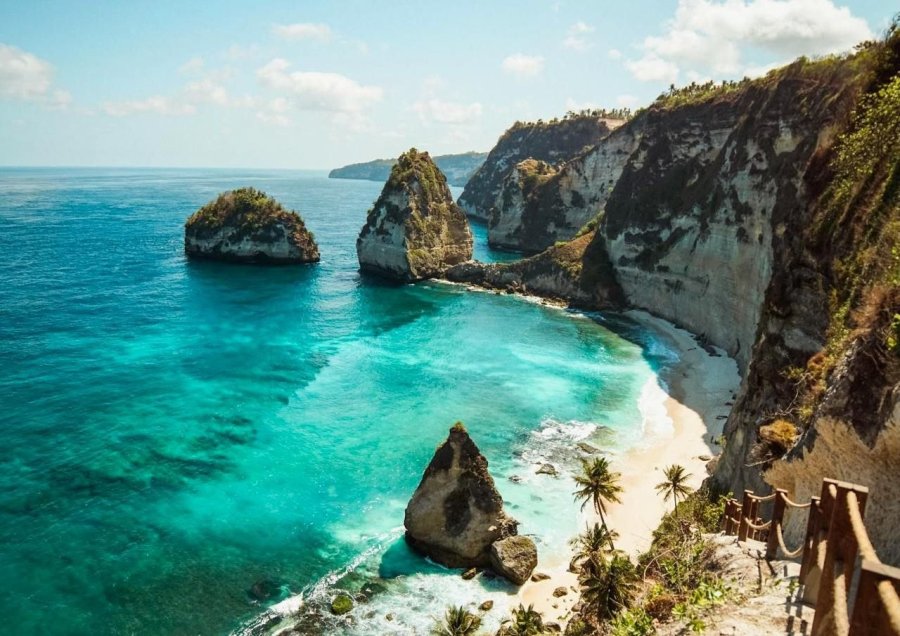
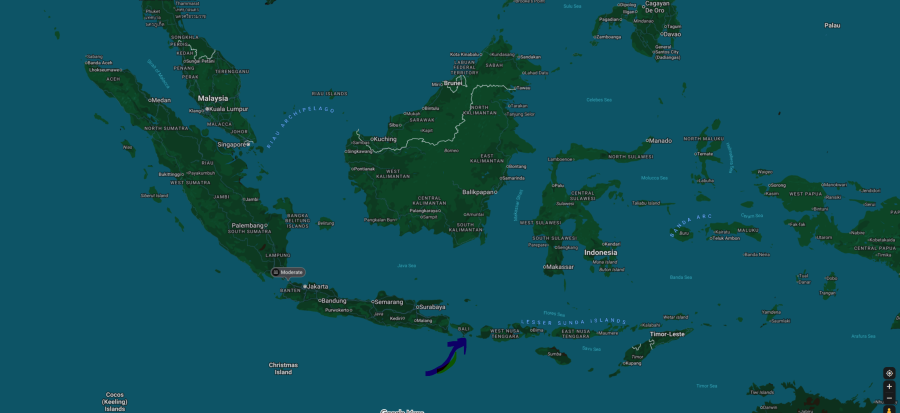
Just a 40-minute fast boat from Bali's Sanur Beach lies Nusa Penida, an island that feels worlds apart from its bustling neighbor . This is a place for adventurers, not those seeking a lazy beach holiday. Its landscape is rugged and untamed, defined by dramatic, towering limestone cliffs that plunge into the impossibly blue waters of the Indian Ocean .

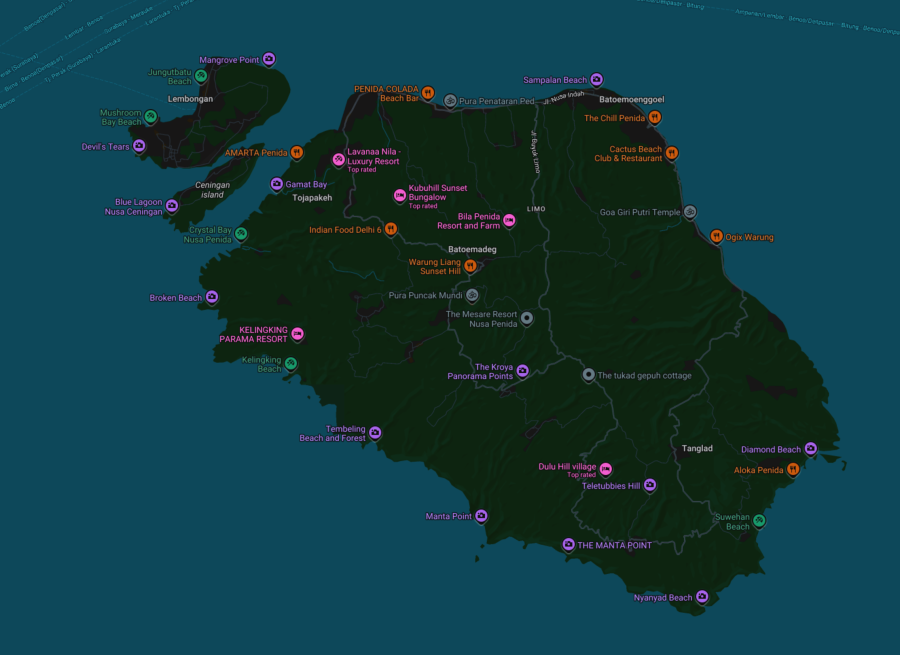
The island’s main draw is its collection of breathtaking natural attractions. The iconic Kelingking Beach is a must-see, with its cliff shaped like a Tyrannosaurus Rex offering one of the most photographed views in Southeast Asia . Nearby, you can witness the unique natural arch of Broken Beach and the crystal-clear tidal pool of Angel's Billabong, a perfect spot for photos during low tide . For a change of scenery, the stunning white sands of Diamond Beach, accessible via a steep staircase carved into the cliff, are equally unforgettable .

Beyond the mainland views, Nusa Penida is a premier snorkeling and diving destination. At Manta Point, you can swim alongside majestic manta rays, while Crystal Bay offers calm, clear waters perfect for spotting tropical fish .

However, it's important to be prepared. The island's roads are notoriously challenging—narrow, steep, and often unpaved . Distances between sights can be long, so a day trip often feels like a whirlwind tour . For a more relaxed experience, I strongly recommend hiring a private car with a driver rather than a scooter, and staying overnight for 2-3 days . This allows you to explore at your own pace and appreciate the island’s raw beauty without the rush. Nusa Penida is not a place for comfort-seekers, but for its dramatic, wild landscapes, it is absolutely worth the journey.
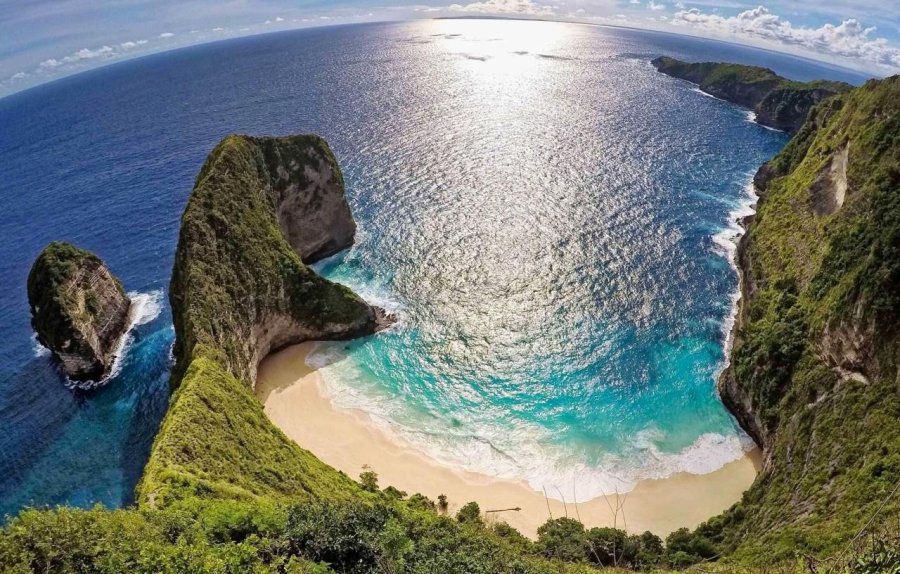
photo_5192694767895128130_y.jpgphoto_5192694767895128129_y.jpgCapture d'écran 2026-08-18 155112.png
AlfatogodeQFBere helped by an AI


Belize!!!

1) Great Blue Hole

The Great Blue Hole is a massive underwater sinkhole located roughly 70 kilometers off the coast of Belize in the center of Lighthouse Reef Atoll. Originally formed as a limestone cave system during the ice ages, the cavern flooded and its roof collapsed as sea levels rose thousands of years ago, creating a near-perfect circular shaft over 300 meters wide and 124 meters deep.

It achieved global fame in 1971 when oceanographer Jacques Cousteau brought his research vessel to map its depths and declared it one of the world's premier scuba diving locations. Deep within the sinkhole, suspended past 30 meters, lie massive submerged stalactites and stalagmites that formed when the cave was above sea level, preserving its ancient geological history.

Today, it is a protected UNESCO World Heritage Site and a major attraction for divers and tourists worldwide. While the dark, low-oxygen depths harbor few fish, the shallow clear waters around its rim thrive with coral reefs, nurse sharks, Caribbean reef sharks, and diverse marine life.


2 ― Caracol and the defeat of Tikal (AD 562)

Around AD 562, Caracol — a Maya polity in western Belize's Vaca Plateau — defeated Tikal, the superpower of the southern lowlands, in a war recorded on hieroglyphic stairways and altars. The victory was orchestrated by Kan Ajaw K'an II ("Lord Water"), who captured and likely sacrificed Tikal's ruler Wak Chan K'awiil. The consequence was drastic: Tikal entered a ~130-year "hiatus" with virtually no monuments erected, while Caracol flourished — expanding its water-engineering systems (reservoirs, terraces, causeways) into a city of perhaps 100,000 people, larger than any modern Belizean town. This event reshaped Classic Maya geopolitics and remains one of archaeology's clearest recorded power reversals.

Heritage. Caracol's legacy is twofold: its hieroglyphic texts, which give Belize its longest written history; and its hydrological engineering, still studied as a model of ancient urban resilience in a karst landscape without rivers. Belize's currency and national identity lean heavily on this inheritance.

Vestiges. The city now lies reclaimed by jungle inside the Chiquibul Forest Reserve. The great pyramid Caana ("Sky Palace"), ~43 meters tall, remains Belize's tallest structure, climbable today.

3.Nohoch Che'en Caves Branch Archaeological Reserve

2.6mi Length

495ft Elevation gain

1–1.5hr Estimated time Out & Back

Explore Nohoch Che'en ("The Great Cave"), Belize's most famous archaeological reserve. Your adventure begins with a flat hike of about 45 minutes through the dense rainforest. Observe the trees and listen for howler monkeys before reaching the Caves Branch River. Get ready for "cave tubing": you'll glide on a tire through the mystical darkness of the subway river. The ancient Maya believed that these caverns were the entrance to Xibalba, the underworld, so they used them for rituals. Search for crystalline formations and learn about this fascinating history as you navigate quietly with your flashlight.

4) No Fast-Food Chains

The absence of major fast-food chains like McDonald's, KFC, or Burger King in Belize is driven by a mix of market dynamics, cultural preferences, and economic barriers rather than an explicit, written law banning international corporations.

High franchise fees, corporate trademark requirements, and strict supply chain rules make opening multinational fast-food locations financially impractical in a country with a small population of around 400,000. Major chains require high sales volumes and centralized shipping networks, whereas importing standardized ingredients and packaging into Belize incurs steep tariffs and complex logistics.

Economic policies prioritizing local businesses also play a significant role. Belize maintains strict regulations regarding foreign investment, foreign exchange, and business licensing, making it challenging for foreign corporations to extract profits easily or undercut local vendors.

Additionally, Belizeans favor a strong culture of fresh, locally prepared food, ranging from roadside stalls to family-owned restaurants selling staples like rice and beans, meat pies, and fry jacks. The market is already saturated with affordable, fast local options, creating fierce competition that leaves little demand for imported fast-food operations.