
 Editorials


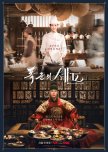
It may not serve the perfect ending, but still a dish worth tasting at least once
Bon Appetit, Your Majesty is a drama that left me with mixed but memorable feelings. At its core, it’s an enjoyable story with beautifully presented cooking scenes that are both aesthetically pleasing and emotionally engaging. The way characters respond to food in the beginning was one of the highlights for me—fun, warm, and very entertaining.The pacing of the story starts off well, making it easy to follow and enjoyable, but somewhere past the halfway point it begins to feel rushed. While the plot was intriguing, something seemed missing, especially in the romance. The female lead’s feelings toward the male lead never felt fully convincing or deeply developed, which made their sudden love story less impactful. Instead, the drama often felt more like a slice-of-life journey through the Joseon dynasty, with romance added in a way that didn’t fully bloom.
The biggest letdown for me was the ending. Rather than giving a satisfying or emotional conclusion, it leaned toward an avoidant type of closure. Since this is a time-travel drama, I expected at least a clearer explanation or emotional closure of how the male lead could reunite with the female lead. Instead, the finale felt incomplete, leaving me wishing for either a truly happy ending or even a bittersweet, sad ending—anything more conclusive than what we got.
Despite its flaws, Bon Appetit, Your Majesty is still worth watching if you enjoy historical settings with a touch of fantasy and food-centered storytelling. It’s a good drama with beautiful visuals and charming moments, though you might find yourself craving a more satisfying conclusion.
Was this review helpful to you?
This review may contain spoilers
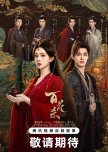
Beautiful enough to distract me from the plot holes
Before I say anything about the writing, I need to give the production team a standing ovation because this drama is absolutely gorgeous. Every single frame looks like a painting. The warm autumn palette, the maple leaves gently falling from every direction, the elegant camera work, the composition... everything is simply breathtaking. It has that cozy yet melancholic atmosphere that makes you want to pause every few minutes just to admire the scenery. And don't even get me started on the sound arrangement. The OST blends beautifully with every emotional scene, while the background sound effects make the palace feel alive instead of hollow. Production-wise, Blossoms of Power is genuinely one of the prettiest costume dramas I've watched this year. They absolutely cooked with the visuals.Now... let's talk about the plot.
Honestly, beneath all those gorgeous visuals, this is still a pretty typical heavy-idol romance with a writing quality that doesn't quite match its production value. The premise immediately hooked me. In the very first episode, Gu Qingzhi ends her own life, and her soul possesses Shen Xihe's body. From then on, she continues living as Shen Xihe, carrying Gu Qingzhi's memories and regrets while staying in the same timeline. That setup alone was enough to make me press "next episode." Unfortunately, the more I watched, the more the plot started making me raise my eyebrows. Xiao Huayong, the Crown Prince, literally gives away his most precious medicine—the one keeping his incurable illness under control—to a complete stranger simply because he was captivated by her beauty. I'm sorry... WHAT? Shen Shen Xihe arrives in the capital for what is basically a giant husband-hunting event among the princes, and suddenly everyone becomes obsessed with her despite barely interacting with her. I understand she's beautiful and intelligent, but the relationship building happens way too quickly. Xiao Huayong is probably one of the most down bad male leads I've ever seen. Half of this drama is literally this man chasing Shen Xihe, flirting with her, teasing her, helping her, supporting her, and practically begging for her attention. Meanwhile, Shen Xihe remains cold, distant, emotionally unreadable, and almost impossible to approach for over twenty episodes. I understand that's supposed to be her personality, but the drama never gives us enough of Gu Qingzhi's previous life to explain why she became this emotionally closed-off. We desperately needed more backstory instead of simply being told, "She's just like that." As a result, I found it difficult to connect with her during the first half of the drama. We spend almost twenty-five episodes waiting for them to finally become the sweet married couple everyone was anticipating. That's... a very long wait for a romance-heavy drama.
Ironically, Xiao Huayong became the emotional heart of the entire story for me. This man had one of the most miserable lives imaginable. Poisoned since childhood, forced to grow up far away from the capital under the guise of recuperating in a temple, knowing he would never live a long life, while secretly investigating who had poisoned him all those years ago. Yet despite his fragile appearance, he was far from weak. He excelled in martial arts, quietly built an extensive intelligence network throughout the capital and imperial court, and stayed several steps ahead of almost everyone. While the palace viewed him as a harmless, sickly prince with no interest in the throne, he had already woven an invisible web around the entire court. He wasn't just smart—he was terrifyingly prepared. But what made me love Xiao Huayong the most wasn't his intelligence or his martial arts. It was the way he loved Shen Xihe. This man was completely, hopelessly, ridiculously in love with her, yet he never tried to force her hand. As the Crown Prince, he could have easily issued an imperial edict and made her his Crown Princess, but he never did. He pursued her relentlessly, flirted shamelessly, and yes... his down badism deserves academic research. But he always understood one thing: Shen Xihe was never a prize to be won. She wasn't a political trophy, nor was she something to possess. She was her own person, with her own choices, and her life belonged entirely to herself. He competed with the other princes, but he never competed for ownership of her. He simply hoped that one day she would willingly choose him after all her own considerations, negotiations, and terms. And when she finally did, it felt genuinely earned.
What makes him even more lovable is that all his power was never used to control Shen Xihe—it was used to protect her. From the very beginning, he tried to understand her instead of changing her. He quietly cleared obstacles from her path, supported every decision she made, and when he realized his own life was running out, he spent his remaining days arranging everything for her future. He made sure the people around him would continue protecting her. He told those he trusted to be good to her after he was gone. He paved the road so Shen Xihe wouldn't have to walk through thorns alone. That's the kind of down bad husband I wholeheartedly support. Not the possessive kind. The kind that says, "Even if I can't stay beside you, I'll make sure your future is peaceful." Xiao Huayong wasn't just in love with Shen Xihe—he loved her enough to prepare a life beyond his own existence.
Which is exactly why his death hurt so much. The scene that completely shattered me wasn't even his death itself, but when he carefully prepared lesson plans for his unborn child all the way until the age of fifteen because he knew he probably wouldn't live long enough to raise them. That scene genuinely caught me off guard. It was heartbreaking in the quietest way possible. ...And then the ending happened. We still had four episodes left after Xiao Huayong died, so I kept thinking, "Surely there's something bigger coming." Instead, we watched the palace settle into its new order, Shen Xihe became the Empress Dowager, their unborn child ascended the throne as emperor... and then, during the final two minutes, Xiao Huayong suddenly came back to life. Excuse me??? No explanation. No buildup. No logic. Nothing. I haven't read the novel, so I genuinely sat there wondering if I had accidentally skipped an episode. Thankfully, there's an extra episode, but if you only watch the main drama, that resurrection feels completely random.
The biggest disappointment, however, was the poison mystery. The Crown Prince spent his entire life searching for the person who poisoned him, yet the truth is only revealed in the very last episode, and the aftermath feels incredibly underwhelming. After spending thirty-six episodes building up that mystery, I expected a much stronger payoff and proper retaliation. Instead... it was just over. I do have to give a shoutout to Prince Xin, though. My opinion of him did a complete 180. At first I found him incredibly annoying, but by the end I genuinely appreciated his role in the story and thought his character added one of the more interesting twists.
As for the acting, Meng Ziyi felt a little flat during the first half of the drama. Maybe that was simply Shen Xihe's reserved personality, but once the character finally started showing more emotion later on, her performance became much more engaging. And finally... can we please give He Yu's stylist a gold plaque? Because WHAT ON EARTH. I genuinely didn't expect him to look THAT ridiculously handsome in historical costume. Somebody please lock this man inside Hengdian and cast him in costume dramas for the next ten years. I am begging. As a whole, Blossoms of Power is a drama carried more by its atmosphere, visuals, chemistry, and Xiao Huayong than by its writing. Story-wise, there's nothing particularly fresh, and the script leaves behind quite a few frustrating plot holes. But the chemistry between He Yu and Meng Ziyi is absolutely delicious, the production quality is stunning, and Xiao Huayong easily became one of my favorite green-flag male leads in costume dramas.
Was this review helpful to you?
This review may contain spoilers
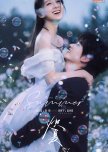
Perhaps the longest journey is the one back to someone you never truly left
Despite its title, don't expect a bright, fluffy summer romance. This drama is wrapped in golden sunlight, colorful skies, laughter, and first love, but underneath that warm summer glow lies grief, betrayal, trauma, guilt, and heartbreak. It feels like watching the most beautiful sunset—you know it's breathtaking, yet you also know darkness is quietly waiting on the other side. Every sweet moment between Zhou Wan and Lu Xi Xiao made me smile, but it also made me anxious because I kept wondering, "Okay... what tragedy is coming for them this time?" Somehow, that's exactly what made this drama so beautiful. It reminds us that even the brightest summers don't last forever, but the memories they leave behind can stay with us for a lifetime.What makes this drama so special isn't just the romance—it's the people. Zhou Wan and Lu Xi Xiao are two beautifully broken souls trying to survive life in their own ways. Zhou Wan has always carried more burdens than someone her age ever should. After losing her father, being abandoned by her own mother, struggling with debt, secretly tutoring just to survive, and eventually losing the only family she had left, life kept forcing her to choose survival over happiness. That's why I could never fully blame her for the choices she made. Meanwhile, Lu Xi Xiao looks like the perfect rich heir—handsome, carefree, rebellious—but he's just as shattered inside after witnessing his mother's death and growing up surrounded by adults who constantly failed him. When these two met, they didn't magically fix each other. They simply became the first place where the other person could finally breathe. My favorite line in the entire drama was when Lu Xi Xiao told Zhou Wan, "Let's grow together" after her grandmother passed away. Imagine hearing that from someone who was practically a stranger. That scene completely melted me.
The drama is divided into two emotional phases that worked so well. The first follows Zhou Wan trying to reclaim her late father's insurance money while getting tangled with the Lu family (yes... they were this close to becoming step-siblings!!). The second half completely wrecked me. Just when autumn arrived, the first snow fell, and it finally felt like these two deserved a little happiness, fate pulled them apart again. Zhou Wan chose to leave because she genuinely believed Lu Xi Xiao deserved a future untouched by her endless tragedies. She loved him so much that she convinced herself letting him go was the kindest thing she could do. Watching Lu Xi Xiao cry, beg her to come back, and promise he would forgive everything if she only admitted she still loved him... yeah, emotional damage. I know we all wanted to scream, "JUST COMMUNICATE!" because ten years is a ridiculously long time to spend playing emotional hide-and-seek. But I understood Zhou Wan.
And that ending... I absolutely loved it. It was bittersweet in the most beautiful way. After ten years apart, they finally stopped protecting each other with lies and started healing each other with honesty. I loved how Zhou Wan admitted she thought making Lu Xi Xiao hate her would help him move on, only to realize she had been completely wrong. Meanwhile, Lu Xi Xiao telling her that she was never the cause of his trauma—that she had actually become the beginning of his healing—completely broke me. And then came my favorite part: his paintings. Even after all those years, every painting he created was still inspired by his memories with Zhou Wan—the happiest pieces of his life, his own never-ending summer. That's why I adored the proposal. It wasn't just a fun reverse-gender moment. It was her finally stopping the endless game of hide-and-seek and choosing him with certainty. OH, and can we please talk about that final plot twist?? The entire drama convinced us that Lu Xi Xiao was the one who fell first and fell harder. I mean... the man loved Zhou Wan with every fiber of his being. But then the finale completely flipped everything. Through Zhou Wan's perspective, we learned she had actually fallen for him three years before they ever spoke to each other. She loved him long before he even knew she existed.
Lastly, I have to give a huge shout-out to Bao Shang En and Zhou Keyu. They completely disappeared into their characters and delivered every emotion so naturally that I never questioned a single tear or smile. The cinematography is absolutely gorgeous—soft lighting, dreamy camera work, colorful palettes, bubbles floating through the frame, and golden sunsets that make every scene feel like a nostalgic memory you'd keep revisiting. The OST is another highlight (and yes, hearing Zhou Keyu's voice made it even more special). Never Ending Summer isn't really about summer at all. It's about that one person who quietly becomes your brightest season, the place your heart always returns to no matter how many years pass. Sometimes, summer isn't a time of year. Sometimes, summer is a person. And for Zhou Wan and Lu Xi Xiao, they were always each other's never-ending summer.
Was this review helpful to you?
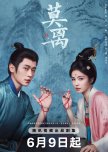
Every petal carried another wound
The First Jasmine has been on my most anticipated list ever since the cast announcement. Bai Lu and Cheng Lei are two actors whose works I genuinely enjoy, so seeing them paired together already felt like a dream. Thankfully, they completely lived up to the hype. Their chemistry is honestly the biggest reason I stayed invested until the end. Both of them are incredible at micro-expressions—the silent yearning, the restrained tears, the heartbreak, the quiet comfort. Sometimes they don't even need dialogue because their eyes are already doing all the acting. Bai Lu especially surprised me with Ye Li. Compared to her previous roles, her eyes here always carried a lingering sadness, perfectly portraying someone who looks healthy on the outside but is quietly battling years of trauma. I also adored Ye Li and Mo Xiuyao's relationship. Instead of the usual over-the-top romance, we got two broken people healing each other. Ye Li slowly heals Mo Xiuyao's leg, while Mo Xiuyao patiently helps Ye Li face the scars left by the destruction of Lishan Academy. He isn't a perfect green-flag husband either—he gets disappointed, says things he regrets, and makes mistakes—but that's exactly what makes him feel so human. He never lets his pride win for long, and watching him choose his wife over his ego every single time made their relationship one of the healthiest I've seen in a historical drama.The first twenty episodes were genuinely my favorite. Ye Li's revenge unfolded like a carefully planned chess match, and I loved watching her quietly outsmart everyone from behind the scenes. That's why I was a little disappointed once the story shifted gears. I kept waiting for Ye Li and Mo Xiuyao to truly combine their intelligence and bring down the villains together, but somehow that payoff never fully arrived. The pacing also became noticeably slower, making the second half feel less engaging. Still, one thing I really appreciate is how this drama refuses to create purely evil characters. Even the Empress Dowager, the mastermind behind almost every tragedy, isn't written as a one-dimensional villain. She was ambitious, intelligent, and probably capable of ruling the nation, but she was trapped in an era where women were never allowed that position. Her lack of empathy ultimately turned her into someone willing to sacrifice innocent lives for power. Prince Li is another example. He's still a villain, but after losing his entire family and being forced to live like a puppet under the Empress Dowager, it's impossible not to understand how he became that way. This drama constantly reminds us that understanding someone's pain doesn't excuse the evil they commit, and I think that's one of its strongest qualities.
Ironically, my biggest disappointment is also the emotional core of the story: the Lishan Academy massacre. We, as viewers, already knew from the beginning that the Empress Dowager massacred nearly fifty innocent people without mercy. That tragedy shaped Ye Li's entire life, so I kept waiting for a massive public reveal where the whole kingdom would finally learn the truth. Instead, it was simply brushed aside as an epidemic. That's it? After building this mystery for dozens of episodes, the payoff felt incredibly underwhelming. The Empress Dowager's ending also felt far too easy considering everything she had done. Then there are plot holes that become harder to ignore toward the end, especially Princess Changbei's arc. The writing definitely isn't perfect, and the soundtrack never left much of an impression on me either. Thankfully, the beautiful directing, strong performances, and emotional chemistry between Bai Lu and Cheng Lei carried the drama through its weaker moments. Despite its flaws, this is still a touching story about grief, healing, and people trying to find light after unimaginable loss. It may not have delivered every payoff I hoped for, but I'll definitely remember it for its heartfelt performances.
Was this review helpful to you?
This review may contain spoilers
A dream worth living, even if it doesn't last forever
Just me accidentally starting this and ending up this emotionally invested till episode 36, this drama really feels like a dream from start to finish. Xia Xiaolan’s journey from a betrayed 2026 corporate woman to rebuilding her life in 1983 was so satisfying to watch. She didn’t just survive, she thrived—fixing her past, building her career from scratch, and finally giving justice to herself and the original Xiaolan. And honestly, one of the best things about this drama? No unnecessary misunderstandings, no overly dragged villain arcs! everything feels purposeful, and every character gets an ending that matches their actions. What I love most is her hard work—yes, she has future knowledge, but she still puts in the effort every step of the way. From small hustles to building a business and moving toward real estate, her success never feels handed to her. Beyond her individual journey, the family and friendship dynamics are what truly give this drama its heart. After escaping her father’s neglectful and toxic household (honestly still one of the most frustrating parts), Xiaolan finally finds warmth—especially through her mother and the people who genuinely support her. Watching her mom eventually find love again with someone who respects her was incredibly healing. The New Year gathering scenes, the sense of community, the friendships she builds along the way—it all creates this feeling of “home” that Xiaolan never had before. It’s not just about success, it’s about finally belonging somewhere.Zhou Cheng??? still top tier. A gentleman through and through, emotionally stable, respectful, and with a strong moral compass. The way he loved Xiaolan, accepted her truth, and stood by her without making things complicated?? yeah that’s the standard. Their relationship stayed consistent till the end: soft, supportive, and mature. Even the side dynamics, like Du Zhaohui, felt refreshing instead of messy, which made the whole story more enjoyable without unnecessary drama.
BUT… let’s talk about the ending. Xiaolan returning to 2026 makes sense, but it also feels a bit… empty? Like she went through all that in 1983, changed so many lives, built everything—and somehow 2026 doesn’t reflect those changes much. We do get that moment where she meets Zhou Cheng again (thank GOD), but it lacks proper closure. It feels more like a hint than a conclusion, and I was just sitting there like “wait… explain more???”
That’s why the theories actually make it more interesting. The idea that Zhou Cheng might be a time traveler himself—the blurry man appearing in the 2026 scenes, looping through time just to find the timeline where they finally meet—lowkey makes everything hit deeper. It would explain why he was so instantly drawn to her in 1983, like he already knew her somehow. And that final moment where he calls her softly, almost like testing fate?? yeah that theory kinda saved the ending for me. There’s also the idea that they might return to the 90s timeline to live their life fully together, which honestly feels more emotionally satisfying, especially since Xiaolan already closed her chapter in 2026. Overall, the ending may feel a bit open and slightly underwhelming in terms of closure, but the journey itself? Still worth it. This drama is warm, healing, and addictive, with strong characters and meaningful relationships. Even with its imperfect ending, I still genuinely love it and maybe that lingering “what if” feeling is part of its charm. Honestly a 9/10… but the ending really said ‘figure it out yourself,’ so yeah—8.5/10 it is.
Was this review helpful to you?

so THIS is why they’re called the wonderfools
we almost got robbed because of cha eun woo’s cases, but gladly netflix still chose to drop this fun-awesome-silly-chaotic banger. well done. the WONDERfools was honestly one of the most unexpected dramas on my watchlist this year. i literally only found out about it because it suddenly appeared on netflix and then my tiktok fyp started calling it “korean stranger things” and well… of course i was gonna be curious because stranger things is one of my favorite series ever. then i saw park eun bin in the cast too and let’s be real, that woman rarely misses, so i gave it a try. and wow… why was this actually so fun?what i really enjoyed about this drama is how refreshing and low-stress it feels. like there’s drama, obviously, but not the exhausting kind that makes your brain work overtime. the storyline is pretty neat, not overly complicated, and everything feels well executed. honestly at first i was a little hesitant because the whole “superpower kdrama” thing usually doesn’t work for me. most of them either take themselves too seriously or just end up messy. but the WONDERfools somehow managed to balance everything really well. also this drama is so unserious please. where else are you gonna find superheroes acting this goofy, chaotic, silly, and straight up yolo-coded? these people have powers and still behave like a bunch of random neighborhood losers trying to survive life together, and somehow that’s exactly what makes it so lovable. and can we please talk about cha eun woo because he genuinely shocked me here. maybe people were right when they said his previous roles just didn’t give him much to work with because with good writing and directing… oh he can act act. meanwhile park eun bin once again reminded everyone why she’s one of the most versatile actresses out there. her microexpressions are insane. she just slips into every character so naturally.
also netflix explain that ending right now because what do you mean the villain came back alive at the very last second because the research apparently succeeded? hello? are we getting season 2 or was that just to mess with us emotionally? because lowkey i actually would love another season. i’d come back immediately for more chaos, more unserious superheroes, and more fun character dynamics. to sum it up, the WONDERfools is genuinely such a good pick if you want something funny, refreshing, easy to binge, and not emotionally draining. this is the type of drama you watch to relax and have fun without needing a whole conspiracy board beside you. and thank god it’s a netflix original because dropping all episodes at once was the best decision ever. this drama was literally made for binge watching.
Was this review helpful to you?
This review may contain spoilers
It had everything going for it, except follow-through.
Starring Hou Ming Hao and Gulnezer, started out as one of those dramas that instantly grabs your attention. For the first half of the series (roughly up to episode 25), it was genuinely interesting, creative, and refreshing in a way that’s rare for historical dramas. The story revolves around the Rong Family, owners of a massive tea plantation that operates almost like a kingdom. What makes this drama stand out is its reverse-gender worldbuilding. In this society, women hold power while men take on roles traditionally assigned to women. The Rong Family is led by women, all major business affairs are handled by women, and the family heir is always the eldest granddaughter.The plot opens with the heir, Rong Shan Bao (The first, eldest granddaughter), searching for a husband. Men from all over the country compete to marry into this powerful family through contests of martial arts, intelligence, and knowledge. Watching men fight for a marriage position — something usually reserved for female characters — was clever, fun, and surprisingly engaging. The drama constantly flips traditional gender norms, and honestly, I loved that about it. It felt fresh and bold. Another aspect I genuinely enjoyed was the internal dynamic of the Rong Family itself. The sisterhood power struggles were interesting to watch — women scheming against each other, setting traps, and fighting for influence felt fitting within this matriarchal setup. Those conflicts added tension and depth to the story and, for the most part, worked well.
That said, the grandmother’s storyline was a completely different experience for me — and not in a good way. She was frustrating, selfish, and honestly nerve-wracking to watch. At one point, she was almost marry her own granddaughter off to a villain. I understand that, as the head of the family, she was making cold, strategic decisions, but that didn’t make her actions any easier to tolerate. Her character crossed a line for me, and I found myself genuinely hating that entire arc.
Unfortunately, things start to fall apart in the second half. Around episode 25, the story loses its momentum and gradually becomes bland, awkward, and uncomfortable to watch. The introduction of Lu Jiang Lai, a highly capable and promising official who loses his memory and ends up in the Rong household, initially worked well. His playful behavior, sincerity, and growing feelings for the cold and reserved Rong Shan Bao felt natural enough. Even their interrupted marriage due to his sudden imperial assignment made sense. But once Lu Jiang Lai regains his memory, his character takes a strange turn. Despite being established as smart, strategic, and competent, he remains stuck in a lovestruck, almost foolish mode. Loving Rong Shan Bao is fine — his feelings are sincere and consistent — but the problem is that Rong Shan Bao gives him very little in return.
Although the story wants us to believe she loves him, she rarely shows it. She hides important information, avoids honest communication, and keeps him emotionally at arm’s length. To be fair, I understand both perspectives. Lu Jiang Lai leaving abruptly before their wedding without explanation was deeply hurtful, and Rong Shan Bao’s anger makes sense. That said, their communication is clearly poor — and ultimately, Rong Shan Bao handles it worse. There are moments when she physically slaps Lu Jiang Lai after he says something out of line, and while I understand the emotions behind those actions, I wasn’t comfortable with how often physical punishment was used instead of conversation. It only deepens the imbalance in their relationship and makes their dynamic harder to sympathize with. The final arc only adds to the disappointment. The Lu Jiang Lai we were first introduced to — brilliant, confident, and capable — never fully returns. Instead, he repeatedly relies on the Rong Family to solve major cases, which directly contradicts his earlier characterization. The drama ends up feeling like a female-centric story that sacrifices logic and balance to push its narrative forward.
To be clear, this isn’t a criticism of the female lead or Gulnezer’s performance. The issue lies entirely with the scriptwriting. A female-centric drama can be powerful and compelling, but it still needs internal logic and emotionally believable character dynamics. Hou Ming Hao, especially, deserved a much stronger and more consistent script. That said, Glory does shine in terms of production. The cinematography is beautiful, with visually pleasing, well-composed shots throughout. The OST is excellent, the acting across the board is solid, and the chemistry between the leads is decent. Almost everything works — except the story’s direction in the second half and its unsatisfying ending.
In the end, Glory feels like a drama with huge wasted potential. What started as a bold, imaginative, and refreshing story slowly turned into a frustrating experience. With such a strong concept, great visuals, and capable actors, it’s disappointing that the writing ultimately couldn’t deliver. On a quieter note, I’m genuinely grateful that this drama took the time to highlight traditional Chinese tea culture. From cultivation and farming to planting, processing, distribution, and finally serving the tea, the story lingers on each step with care. It’s a gentle reminder of how much history, patience, and craftsmanship are poured into something we often take for granted. Watching these scenes felt like a moment of pause — an appreciation of traditions that are still being nurtured and preserved, even as they slip past our everyday attention. It made me admire, once again, how rich and enduring Chinese culture truly is.
Was this review helpful to you?

A story of finding color within the quietest corners of your own heart.
Spirit Fingers is the kind of drama you enter without expectation, only to find that somewhere along the way, it has quietly painted itself across your heart. Light, warm, and surprisingly tender, it feels like a story told in soft colors, a gentle palette that lingers long after the final scene. Adapted from a beloved webtoon, the drama stands well on its own. I haven’t read the original, yet I never felt lost. Many say it’s a faithful adaptation; all I know is that the journey is easy to embrace, even for someone stepping in with an untouched canvas.At its center is Song U Yeon, a girl who has spent her life shrinking herself. Convinced she lacks beauty, talent, and anything worth admiring, U Yeon moves through her world like someone afraid to disturb the air around her. It isn’t hard to understand why, home, the place meant to soften you, has always been a ground of comparison for her.
With an older brother who shines effortlessly and a younger brother nearly treated as a prodigy, U Yeon walks on thin ice, striving to be good enough for a mother whose affection seems to lean elsewhere. When she confesses that her mother plays favorites (and she is not the favorite) the ache settles deeply. It explains the way she curls inward, the way she doubts the small beauty in herself. But life stirs the moment she steps into the Spirit Fingers drawing club, a place bursting with color, eccentricity, and souls who wear their hearts openly. There, in that mismatched group of dreamers, U Yeon begins to breathe a little deeper. Her growth isn’t grand or dramatic; it’s gentle, like watercolor spreading slowly across paper. And perhaps that is what makes it so real.
And then there is Nam Gi Jeong. Tall, radiant, a little foolish, and unreasonably charming. A boy who looks at U Yeon like she is the only color in a black-and-white world. A boy whose confidence could easily overwhelm, yet whose heart is disarmingly sincere. Standing beside someone like him, it’s only natural that U Yeon feels small. Their push-and-pull is slow at times, but it mirrors her own internal battle: she does not believe she deserves someone as bright as he is. But Gi Jeong has a magic of his own, the ability to win everyone’s heart without even trying. The way he warms U Yeon’s brilliant younger brother, the ease with which he fits into her life, the unshakable honesty he offers… it all feels like sunlight quietly finding a corner that hasn’t seen warmth. Even when U Yeon envies him, envies the clarity with which he has found his dream. Gi Jeong handles her fragility with a kind of childish maturity that is both funny and deeply touching. He never lets her drift too far into self-doubt. He reminds her, again and again, that she is beautiful, unique, and worthy. I adore the chaos-laced love between Gi Jeong and his sister Geu Rin, all physical attacks and noisy affection, a sibling language that only they understand. I love how Gi Jeong turns cold to the world but softens instantly at the sight of U Yeon, how he leaves no room for misunderstandings… except the ones U Yeon creates in her own anxious heart. Thankfully, even that arc resolves like a sigh, brief and quickly soothed.
The drama’s strength lies in its ensemble of colorful souls; Geu Rin and Seon Ho, whose clumsy push-and-pull becomes sweet once their hearts catch up to their actions; Black Finger and Khaki Finger, a bold storm meeting a quiet sky; Pink and Brown Finger, the warmth of a shared laugh. And the unexpected spark between Sera and Tae Seon, a duo whose chemistry deserved a story of its own. Their friendships so sincere, supportive, unwavering, wrap around the drama like a soft scarf on a cold day.
Watching them made me long for a place like the Spirit Fingers club, a safe corner where you can show up once a week and be someone a little braver, a little freer, a little more yourself. A place where strangers hold out a brush and help you rediscover color. In the end, Spirit Fingers is heartwarming not because it’s grand, but because it mirrors the quiet struggles many of us have known: the ache of self-doubt, the weight of comparison, the slow search for who we truly are. It portrays these moments not with heaviness, but with softness, as if assuring us that growth doesn’t need to be loud to be real.
If you’re looking for a drama that feels like a gentle sketch turning into a painting, warm, tender, and quietly meaningful, Spirit Fingers might slip into your heart the way it slipped into mine.
Was this review helpful to you?
This review may contain spoilers
Reply 1988 reminds us how love and family can turn ordinary days into timeless memories
I watched Reply 1988 a long time ago, but it remains one of the most beautiful dramas I’ve ever seen. Set in the late 1980s to early 1990s, this series truly makes you feel like you’re growing up alongside the characters. The way it captures family, friendship, and love feels so real — maybe that’s why it resonates deeply with me as a 90s kid. I could relate to so many moments — the neighborhood vibes, childhood friends, and that strong sense of togetherness we used to have.One scene that always stays with me is when everyone shares food with their neighbors. It’s such a simple moment, yet it reminded me so much of my own childhood — when people genuinely cared for one another. It made me a little emotional every time I watched it.
As the story moves forward and the kids grow from high schoolers into adults, you can really feel that transition. Puberty, first love, dreams, and eventually going separate ways — we’ve all been there. The saddest part for me was when everyone finally moved out of Ssangmundong. I cried so hard watching that scene. It felt like saying goodbye to a piece of my own youth.
For the romance, the love triangle between Deoksun, Junghwan, and Choi Taek kept me wondering until the very end. Deoksun first falls for the cold and aloof Junghwan — that classic tsundere type — and then suddenly, there’s Choi Taek, who surprises everyone with his quiet gentleness. I loved watching how Deoksun slowly begins to fall for Taek and learns to move on from Junghwan.
Still, I felt more pity than sadness for Junghwan — that’s what happens when you hesitate to reach for something right in front of you. At first, he wasn’t sure about his feelings for her, but eventually, it became clear to everyone that he had fallen deeply. Sadly, his hesitation and poor timing cost him his chance.
Meanwhile, Choi Taek was the definition of a true gentleman — always honest about his feelings, never leaving Deoksun confused, and showing his affection through quiet yet sincere actions. That’s what every woman wants: clarity and real emotions, not endless guessing games or mixed signals.
Deoksun’s story as the middle child touched so many hearts — especially for those who know what it feels like to be “in between.” But as the eldest daughter myself, I found myself relating more to Bora (minus her fiery temper, haha). Her sense of responsibility and quiet love really hit home for me.
When I finished this drama, I felt that familiar emptiness — the kind only a truly special show can leave behind. The OST is absolutely top-notch, and even now, I still listen to it from time to time. The setting, costumes, and every little detail perfectly capture the 80s vibe.
In my opinion, Reply 1988 is the best among the Reply series. It’s not just about romance or youth — it’s about family. The people of Ssangmundong share a bond so strong and pure that it makes you miss something you might never have experienced firsthand. It’s a heartwarming drama that reminds us of the warmth of family and community — something that feels rare in this 21st century.
Reply 1988 is more than just a drama — it’s a memory, a feeling, and a reflection of growing up and cherishing the people around us. A true masterpiece of nostalgia and love.
Was this review helpful to you?
The Prisoner of Beauty reminds us: even in captivity, love can rule a kingdom.
The Prisoner of Beauty is, without a doubt, one of the strongest dramas of 2025 so far. From the very first episode, the story hooks its audience with a perfect blend of tension, elegance, and heart. The enemy-to-lovers trope is executed brilliantly, layered with political intrigue and power struggles that keep you invested until the very end.What makes this drama stand out is not just its romance, but its balance between love and ambition. The characters aren’t reduced to simple archetypes; instead, they feel alive, constantly torn between personal emotions and the greater stakes of survival and power. This complexity elevates the story beyond a typical historical romance—it feels both grand and intimate at once.
The pacing is another strength. Every arc feels purposeful, building toward an ending that is both satisfying and memorable. So many costume C-dramas fall short in the finale with rushed resolutions or unreasonable twists, but The Prisoner of Beauty delivers what fans have long hoped for: a well-written, emotionally resonant conclusion that honors the story and its characters. Impressively, the drama’s storytelling is even more beautifully executed than the original novel itself—something rare and worth praising.
A huge part of the drama’s success comes from the cast. Song Zuer and Liu Yu Ning deliver their best performances yet—the intensity and vulnerability they bring to their roles elevate the entire drama. Their chemistry is beyond saving: raw, magnetic, and utterly convincing, it makes every shared glance and confrontation pulse with emotion. It’s the kind of pairing that lingers with you long after the credits roll.
It’s a drama that leaves you empty in the best way—because you’ve lived and felt so much with its characters that saying goodbye feels bittersweet. With its careful storytelling, standout performances, and powerful ending, The Prisoner of Beauty sets a high standard for 2025 dramas and beyond.
Was this review helpful to you?

let me step inside to another version of yours -kwon tae seong
honestly, this drama was such a pleasant surprise because i went in with basically zero expectations. looking at the cast, there are way more seasoned actors here than the usual flower-boy, everyone’s-favorite pretty faces, so i wasn't expecting this to be the drama that would have me this invested. but then gong hyo-jin was in it, and i generally trust her drama picks when it comes to a good script, so i gave it a try. and yeah… this one absolutely delivered. solid writing, good acting, great chemistry, and a premise that actually knows what it wants to be.the story follows yoo bona, a mother who secretly lives another life as “kingfisher,” a nationally wanted sniper who hunts down criminals, while her husband kwon tae-song is a reporter who has spent years trying to uncover kingfisher’s identity. and can we PLEASE talk about tae-song??? this man is such a green flag, green forest. he’s a loving husband, a good father, and somehow handles the biggest secret of his wife’s life with so much maturity. instead, he basically says, “let me know another side of yours.” SIR??? that's not just acceptance, that's i love you, and i want to know every version of you. he's such a loving husband and father, and i love how maturely he handles bona's secret without turning their relationship into an endless misunderstanding festival. meanwhile, bona has always had clear lines about who deserves to be targeted, while doing everything she can to protect the family she built. and this is probably the part that got me the most. bona grew up in an orphanage and never really had a family of her own, so watching her pour everything into creating and protecting her little family hits different. she even keeps trying to win over her mother-in-law because she genuinely wants to belong. underneath all the sniper missions and criminal hunting, this is ultimately a woman who finally found a home and will do absolutely anything to keep it. like??? suddenly the assassin drama became my family drama
i also really loved bona’s team. she doesn’t work alone—their whole operation is disguised as a sales team that somehow always ranks dead last every month, while secretly carrying out missions to eliminate criminals. PLEASE give me more of this organization in season 2. i want more missions, more of the team, more about how this whole thing operates, and especially what happened when they crossed paths with another team. i genuinely thought we were about to get a bigger glimpse into the organization, but sadly we never really got there. still, the story remained engaging enough that i wasn't sitting there demanding answers every five minutes. the side story involving kwon seah, assistant manager ki, and her best friend also added another layer and made the world feel more alive.
overall, this is such a hidden gem. it came in with absolutely no business making me expect this much and left me genuinely satisfied. the premise is interesting, the execution is surprisingly solid, the characters have chemistry, and most importantly, the drama never loses sight of what makes its story work. i wouldn't say no to another season—especially if we get another team, a joint mission, or even just more of this organization. but for now, i'm happy with the ending because bona finally gets what she has been fighting for all along: a family, a home, and a happy life. and honestly? after everything, let the woman have her peace
Was this review helpful to you?

The shop survived. barely.
A Shop for Killers 2 is not a bad drama by any means. The action is still solid, the cast does a great job, and there are enough twists, deaths, and tense moments to keep things moving. But after waiting this long for a continuation of that unfinished S1 ending, I came in with pretty high expectations—and honestly, S2 just couldn’t surpass its predecessor for me. I think what I miss most is the freshness and urgency of S1. The first season was so much fun because we were discovering everything alongside Ji-an: Jeong Jin-man’s insane murthehelp, the weapons, guns, bombs, assassins, and this whole hidden life her uncle had been living. Watching this girl suddenly get thrown into a world of killing was such a wild ride. S2 already has that foundation, so the story feels less exciting by comparison. And the pacing really tested my patience. I understand that Ji-an is traumatized and wants to break free from her uncle and everything he represents. I understand how heartbreaking it was for her to see her first love—the person she thought finally loved her—become part of this nightmare. But did we really need almost 2–3 episodes to process it when we only had eight??? Sometimes I was just begging the drama to MOVE.Still, Kim Hye-jun remains the emotional anchor, and I really liked seeing Ji-an become more confident and capable without completely losing the vulnerability that made her compelling in S1. Lee Dong-wook also continues to have that effortless presence as Jin-man. And weirdly, I still found myself feeling sorry for Jin-man at times. He’s obviously far from innocent, but I don’t think his intentions were ever simply malicious. His entire goal was to protect the one family he had left—Ji-an. The tragedy is that the life he built to protect her is also the exact life she now desperately wants to escape. Their whole relationship is basically one giant “you were trying to protect me but you accidentally ruined me” situation.
And whenever the action kicks in, this drama still KNOWS how to deliver. Also, can we talk about the Purple Code??? They are literally the definition of a spy: work underneath, keep it clean, and when it’s over, you just leave. No unnecessary mess, no attachments, just disappear. I LOVE that whole concept. But then that ending??? WHY DID SO MANY PEOPLE HAVE TO DIE??? Their team is losing people left and right, and now I’m genuinely hesitant to ask for S3 because what if everyone fucking dies??? I am NOT ready. Overall, this is still a good action thriller and I absolutely enjoyed watching it. But if I have to choose, I’m choosing S1 without hesitation. S2 feels more like a decent continuation than a follow-up that can recreate the same magic. Not disappointing enough to hate, but not impressive enough to leave the same impression either. S1 had the mystery, the urgency, and the sheer fun of discovering this crazy world for the first time—and unfortunately, S2 never quite got that magic back.
Was this review helpful to you?
This review may contain spoilers
We have everything in the end, just not each other
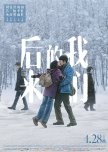
Us and Them is such a gem, and honestly… what the hell was the director thinking when making something this raw??? This movie feels like a reality check disguised as a love story. It follows Xiaoxiao and Jiang Qing, two young people leaving their hometown for Beijing to chase a better life, basically starting with nothing but their dreams and each other. And the movie doesn’t romanticize their struggle at all. Poverty, being looked down on because of their education, money problems, love scams, doing shady things just to survive, the pressure to look successful in front of people back home… life keeps hitting them like an old friend who never runs out of problems. Yet through all of it, they have each other. They are together at their absolute lowest, and that’s what makes everything later hurt like hell.High five to the director because the rawness here is insane. The camera direction, cinematography, changing seasons, crowded buildings, tiny rented rooms, cold streets—it all feels so lived-in. Even the way the seasons change makes you feel how much time has passed and how their relationship slowly changes with it. The poverty doesn’t feel like some aesthetic tragedy; it feels genuinely uncomfortable and real. And Jing Boran + Zhou Dongyu??? A FEAST. This is truly the kind of acting where you finally understand why movie actors are treated as the top chain of the entertainment industry. They barely need words. Their expressions, silence, little gestures and the way they look at each other already tell you everything. They genuinely feel like two people who have loved, fought, struggled and grown up together.
But then everything starts falling apart. After New Year’s Eve, their arguments become more frequent, and honestly I understood Jiang Qing’s insecurity. They left home to make money, so he desperately didn’t want to return looking like a failure. He pretends he’s successful, pretends he has his own place and even an address, while he’s actually still living in a building packed with tenants. And the more he tries to prove that he’s not a failure, the more frustrated and insecure he becomes. Xiaoxiao, meanwhile, is just tired. She loves him, but love cannot pay the rent, fix their future or magically make survival easier. Eventually she leaves—not because she doesn’t love him anymore, but because she’s exhausted from living like this. Then Jiang Qing finally succeeds. His game gets released, his career takes off, he gets money, a house, an actual address… everything he thought Xiaoxiao wanted. And THIS is where the misunderstanding kills me. She wanted a home. He thought she wanted a house. He worked his ass off thinking, “I finally got everything you wanted, so why won’t you come back?” But she wanted the feeling of belonging, not four walls. By the time he understood, it was already too late.
And then the plane scene??? I was genuinely stupid enough to think, okay maybe they’ll finally get another chance. Ten years later, Jiang Qing is in business class while Xiaoxiao is in economy, basically showing us that he finally became the successful man he always wanted to be. They sit together, talk about the past, and for a second it feels like maybe the universe is finally giving them another chance. THEN HIS PHONE RINGS. A VIDEO CALL FROM HIS SON. EXCUSE ME???? I actually wanted to throw something. He has a wife. A son. A whole life. And suddenly Xiaoxiao says that she could have been his wife, but now she would only look like a homewrecker. THAT HURTS. Because you can tell they still love each other, but what are they supposed to do with that love now? They finally have the money, house, career and stability they were fighting for back then… just not each other. And honestly, I watched their conversation with a guilty feeling too, because no matter how obvious it is that something between them never really died, he has a family now. Love doesn’t erase consequences.
And that stupidly cruel line kept coming back to me: maybe a man only truly loves someone once, and everything after that is just surviving. WHAT A VILLAIN SENTENCE. I don’t even know if I believe it. I really don’t want to. People can love again. People can build happy families again. But watching Jiang Qing and Xiaoxiao made me understand why that sentence feels believable. Jiang Qing moved on with his life—married, had a son, became successful—but when he sees Xiaoxiao again, you can still feel that old love underneath everything. Meanwhile, Xiaoxiao still hasn’t found someone she loves enough to build another life with, and she still doesn’t have the home she was longing for all those years ago. Maybe Jiang Qing learned how to survive without her, while Xiaoxiao never really found another place that felt like home. And then his dad’s letter absolutely finished me. His father loved Xiaoxiao so much, already knew these two might not end up together, but still considered her his daughter. Even he couldn’t completely let her go. I WAS BAWLING.
What frustrates me most is that I still wanted them together. Even after everything. Even knowing it probably shouldn’t happen. Because what if Jiang Qing had gotten on that train and chased her? What if Xiaoxiao stayed? What if they had met at a different time, when they were more mature and financially stable? Maybe they would’ve been happy. Or maybe they would’ve stayed poor and miserable and eventually broken up anyway. That’s the cruel part—we will never know. Maybe if they had stayed together, Jiang Qing would never have become the man he is now. Maybe Xiaoxiao would have found her home with him, but they would have lost everything else they eventually achieved. Life basically forced them to choose, and neither of them knew what they were choosing at the time.
That’s why this movie hurts so fucking much. There’s no real villain. No cheating. No huge betrayal. No one simply stopped loving the other. It was poverty, insecurity, timing, circumstances and two people who were just too tired and too young to understand what they actually needed. They were each other’s home when they had nothing, but somehow couldn’t stay together after they finally had everything. Sometimes you can love someone deeply, be perfect for each other at one point in your life, and still not be meant to stay. And honestly? That is such a horrible reality check. I finished this movie thinking about all the "what ifs" instead of the ending, and maybe that’s exactly why it hurts. They finally got the life they dreamed of. They just didn’t get to live it together.
Was this review helpful to you?

This review may contain spoilers
A stunning romance draped in armor — but the “legend” never truly rises.
As someone who adored the original novel, the announcement of The Legend of the Female General adaptation brought me mixed emotions. On one hand, I was thrilled to finally see my favorite story brought to life. But on the other, I was afraid it wouldn’t stay true to the book — and sadly, my fears came true.He Yan has always been one of my favorite heroines — strong, intelligent, calm, and capable. She’s the kind of woman who inspires you with her leadership and heart. But the drama version didn’t quite capture that essence. Maybe my expectations were too high, but this He Yan felt softer, less commanding than the one in my imagination.
However, Zhou Ye was still a great casting choice — she suits He Yan so well, both in grace and presence. And Cheng Lei as Xiao Jue? Absolutely perfect! He’s exactly how I imagined Xiao Jue would be — proud, sharp, and quietly affectionate. His portrayal truly lived up to my vision of the character. It’s just a pity that, because of production troubles, we didn’t get to see more of the grand war scenes they filmed.
The chemistry between Zhou Ye and Cheng Lei carried the drama beautifully, but the writing leaned too heavily into romance, losing much of the "legendary" tone the title promised. The focus on love over leadership made it feel less like a tale of a general’s rise and more like a romantic historical drama.
Chu Zhao’s storyline also went off track. His obsessive love, while intense, became almost illogical by the end — a big deviation from the novel’s version. Still, I loved Song Tao Tao and Cheng Lisu’s subplot; even though it differed a lot from the book, their chemistry was heartwarming and naturally portrayed.
It was also disappointing how He Yan’s comrade’s death was handled. She grieved, but the emotional weight and strong bond they shared in the novel weren’t fully conveyed on screen. The Academy arc too could’ve been executed more smoothly — it had great potential but felt rushed.
Special shoutout to Li Qing as Cheng Lisu — he did a wonderful job, especially knowing he had to re-record and reshoot parts without the original set. Even though the AI face replacement felt awkward at times, his performance stayed solid and genuine.
Despite its flaws, The Legend of the Female General is still visually stunning — from the costumes to the cinematography and soundtrack. It’s a feast for the eyes and a soft romance for the heart. But as a book fan, I can’t help but feel it lost the soul and grandeur that made the original story legendary.
Overall: A beautifully made drama with strong performances and breathtaking visuals — but stripped of the fire, depth, and spirit that once made He Yan’s story unforgettable.
Was this review helpful to you?
This review may contain spoilers
Revenge Served with Style
I started The Double quite casually, without any expectations — but from the very first episode, I was hooked. The opening gave me goosebumps! The story of Xue Fang Fei (XFF), who rises from death after being betrayed and killed by her husband, sets up a powerful and thrilling start. It immediately made me wonder what would happen next.The plot revolves around XFF’s revenge against her treacherous husband, and every episode unfolds her plan step by step in such a satisfying way. The identity swap between the real and fake Xue Fang Fei is written cleverly — logical and believable, especially since the drama avoids the “rebirth” trope that’s often restricted in recent productions.
What I love most is how Duke Xiao, the male lead, supports XFF. His protectiveness feels genuine yet respectful — he trusts her strength, doesn’t interfere with her revenge, and always lends a hand when she needs it. Their relationship feels mature, balanced, and empowering. You can truly feel that XFF can face anything, especially knowing that Duke Xiao has her back.
There was, however, one scene that felt a bit over the top — when XFF played the qin in the middle hall, and the CGI effects suddenly went wild. It felt unnecessary for a historical drama (more fitting for a fantasy one). And while I loved almost everything about this series, the ending left me a bit disappointed. It ended on a cliffhanger, and I couldn’t help but wish for a more episodes.
A special mention goes to Princess Wanning, one of the most complex characters in the show. Despite her tragic past and misfortune, her obsession with Shen Yu Rong (XFF’s ex-husband) leads her down a dark path. While I understood where her pain came from, it still didn’t justify the harm she caused others. Actress Li Meng portrayed her with such depth — you could feel her sorrow, anger, and desperation all at once. Truly an impressive performance!
Overall, The Double is a stunning production. The costumes, set design, lighting, and cinematography are absolutely top-notch, giving the drama a refined and elegant aesthetic. The chemistry between the leads is well-executed, and the age gap between them never feels awkward.
Despite its slightly rushed ending, this drama truly lives up to its reputation — a beautifully crafted revenge story filled with passion, grace, and unforgettable performances.
Was this review helpful to you?


