



This review may contain spoilers
Court Intrigue, Healing but Lukewarm Romance, Good Portrayal of Disability & Trauma
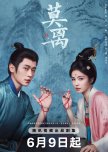
The First Jasmine is a gripping blend of court intrigue and deep healing romance that stands out for its raw, meaningful portrayal of disability. The story centers on an unlikely power couple: Mo Xiu Yao, a bitter prince physically confined to a wheelchair, and Ye Li, a brilliantly calculating woman whose sharp mind masks her own deeply hidden mental health struggles while she meets out revenge.
First Impression
As someone who has been waiting a very long time to see Bai Lu and Ryan Cheng on screen together, my anticipation for this drama was high. For the most part, The First Jasmine absolutely delivered, living up to about 80% of my high expectations. While there were frustrating moments where precious screen time felt wasted on unnecessary subplots or underwhelming character development and utilization, the overall production quality is undeniable. You can genuinely feel the immense effort and care that went into creating this world; nothing feels cheap or artificial. The costumes were great, the fight scenes, however rare, were well choreographed. Unlike a great deal of traditional C-dramas that rely heavily on embellished, over-the-top tropes and their delivery, everything on screen feels toned down, remarkably natural and subtly realistic. The chemistry between the main leads is absolutely electric, and they are backed by an extremely talented supporting cast that grounds the entire story. Additionally, the music plays an extremely important part in this drama. It adds another layer to the story. The background score is not the typical depressing historical C-drama type that start giving you headache by the end of episode 25. It’s different and it really elevate the scenes and the actor’s performance.
Things I Enjoyed
One of my absolute favorite things about The First Jasmine is that it doesn’t just gloss over physical and mental disability for the sake of convenience to your characters into their healthiest selves. In many C-dramas, if a main character starts out disabled, they are miraculously cured by the end of the second episode just so they can jump into the action.
This drama takes a refreshingly different route: Prince Ding stays in his wheelchair for a good half of the series, which I truly appreciated. While he does eventually heal—which does feel a bit unrealistic after eight years of confinement—I understood the writers' choice of getting him up to his feet, because the narrative demanded it. Even then, he doesn't just bounce back to 100%; he only participates in two or three fight scenes and seemingly remains deeply aware of his physical limits and the need to take care of his body. I appreciated writers not overdoing it with his character after the recovery.
As for our female lead, Ye Li comes off as ruthless, charming, and calculating at first with mild psychotic tendencies, but if you pay close attention from the very first episode, it’s clear that something is wrong with her. The mystery surrounding her mental state builds beautifully over the course of 30 episodes and isn't fully unraveled until the final stretch of the drama. While improvement in her mental state, felt a little rushed toward the end—which pissed me off a bit—the last two episodes clearly show that she hasn't magically conquered her personal demons. She is still not 100%.
There’s a raw, honest portrayal of depression, and I deeply appreciated watching her grow and continue her healing journey throughout the entire show. The creators deserve massive credit for handling both physical and mental struggles with this level of care. I think this is a big achievement for C-drama in general. Usually disabled characters are always side characters. Was it perfect? Of course not. Was the portrayal very accurate? Probably not. But compared to everything that I have seen in the past, it’s still a bold step forward.
I also liked many of the supporting characters and their standalone stories. The subplot featuring Feng Zhi Yao—who was secretly in love with a foreign woman without realizing she was Princess Ling Yun—was deeply meaningful and sad. My only critique is that I wish the writers had expanded on their relationship a bit more. Instead of dumping their entire story in a span of two episodes, they should have sprinkled it across multiple episodes, which would have made her tragic death hit the audience much harder. Additionally, Han Ming Xi was a standout character for me. I previously saw Lin Mu Ran in The Pursuit of Jade, where he played one of the antagonists, and his charming, cute performance here proves he has a very bright future if he keeps landing the right projects. While I have some critiques regarding where his character arc ultimately went, his talent is undeniable.
Qin Cang’s character and his character arc started and developed great, but there were definitely things to improve about his story in the later, half of the drama, but I will talk about this in a bit.
Things that Definitely Needed Improvement
While there’s a lot to love about The First Jasmine, the drama is not without its flaws. The biggest issue was the pacing and the highly uneven distribution of various story arcs, especially the antagonists.
First and foremost, Mo Jing Li was severely underutilized. As the main antagonist, he was an incredibly important character at the start, and the writers could have deeply explored his personality and his trauma better than they did. Instead, he completely disappeared for a third of the show, only to resurface later. We are given reasons to pity him early on, but his character becomes largely unredeemable and flat by the end, save for one quality: letting his wife go so she wouldn't be dragged into his rebellion.
This issue of dropped potential extends to several other supporting characters. Qin Cang had a fascinating setup, transforming from a loyal henchman-servant desperate for his father’s approval into someone who finally saw his father’s true nature and decided to do the right thing. There was a compelling romantic story brewing between him and one of the supporting female characters. The writers set up their potential future reunion once he is on the way to exile, but we never even got a scene of them meeting up to start over. It’s a very open ending for them, like use your imagination. I truly didn’t appreciate it. It felt incomplete almost like these characters weren’t even necessary.
Basically, the writers spent so much time setting up Qin Cang’s arc but failed to deliver a proper conclusion, leaving us hanging.
Similarly, Han Ming Xi started strong with a great transformation arc, but the writers essentially erased his ending. They want us to use our imagination too to pretend that we know he gets his wish for a quiet life somewhere out there. The lack of a final scene between him and Ye Li is baffling. She was the primary influence behind his choices throughout the series and quite obviously his crush, and omitting their closure felt like the writers just forgot about him. Giving them at least one brief scene would be very satisfactory.
Conversely, the Empress Dowager was given far too much screen time. She should have stayed in the background. While her character serves a purpose—the final episode makes it clear that despite her noble intentions, she chose a bloody route—the narrative wasted massive amounts of time on her and general palace personnel only to drag the drama down. Yes, yes, I understand why we needed her character, but I think the amount of scenes she received was just going overboard. It’s not necessary to spend that much time on one uninteresting character to get the point across. That precious screen time should have been reduced and redirected to the far more interesting character arcs that were left incomplete.
Pacing
Let me expand a bit on the pacing of the drama and the issue with it. The pacing itself was a strange mix; the show would give us beautifully paced action scenes, then would slow down, then we would get more action only to grind to a halt with lengthy dialogues at the end where absolutely nothing actually happened. Those stagnant stretches were very boring to watch, and I think a lot of viewers share this sentiment. The general feeling about the pacing is that the drama keeps building up to something grand that actually never comes to fruition.
The pacing in the final five episodes, in particular, desperately needed adjustment. I think the pacing went downhill in general after the revelation of what happened at the Mountain. Since Prince Li was the main antagonist, giving more screen time to his troops invading the capital should have set up an epic, high-stakes ending with more action and more involvement from various characters. Instead, it literally took the characters a mere 15 minutes to subdue him. After that rushed climax, the show dragged out a lot, just slow-paced scenes toward the end for another episode and 3/4 of an episode with the Empress and her son once again receiving way too much unnecessary screen time.
Let’s Ralk about Romance
When it comes to the romance, the relationship between the main characters is incredibly well-done, healthy, but you need to manage your expectations. Both Bai Lu and Ryan Cheng are well-known for their insane on-screen chemistry and great skinship scenes with other partners, but expecting that same level of passion here is not a wise decision.
While there are a couple of on-screen kisses, it is a much more calm, down-to-earth romance between two people who don't go physically crazy over each other. The chemistry between them is absolutely there—there is no doubt about that—but the execution triggered one of my pet peeves when it comes to romantic storylines in general.
The romance builds up beautifully and slowly throughout the first half with a lot of great teasing scenes, and the marriage finally becomes real in the second half. Yet, once they are officially together, there is barely any kissing or physical intimacy—just a couple of hugs and that's it. After watching the entire thing, I am still wondering if they ever consumed their marriage, haha. All the cute parts are put in the first half of romantic storyline development. Later on, even when they’re sleeping together in one bed, there are very strange choices from the production team and the director where it’s clear that there’s yearning and the scene is seemingly leading up to a kiss, but it just goes nowhere, leaving viewers hanging.
But again, this is just my personal take. Obviously, the reason why the romance ended up being so toned-down toward the end is that the writers chose to strictly concentrate on the female lead healing from her trauma. But to me this seems like some kind of a backward writing. I’d much preferred the producers to move the kiss scenes from the first half of the show to the second to make the romance more well-rounded and fulfilling. My opinion remains the same for all the dramas that do that: if you include a romantic storyline that runs throughout the entire drama, romance needs to be done according to the rules of romance writing. Especially if this is the romance between main lead. So definitely keep your expectations low if you are looking for anything steamy or hot.
Another reason for this choice to keep romance lukewarm is because this is not a heavy romance drama. This is a political drama with the romance as one of the subplots. They just needed to make some adjustments to certain scenes. On the other hand, others may like this type of clean romance. To each their own.
No matter the drawbacks in the way, the romance is executed here, The First Jasmine is still absolutely worth watching because it’s a very healing story about two broken people, who get there well deserved happy ending, even if they don’t kiss at the end.
Final Thoughts
While The First Jasmine definitely has its flaws, particularly with uneven pacing and the underutilization of several key supporting characters, it is still a drama that I would recommend. It’s one of the better historicals out there, especially if you don’t like anything fast pasted and want to take it slow. The stellar acting, the mature and steady healing romance, the realistic, portrayal of physical and mental disabilities, and the meaningful overall story that teaches you a thing or two about life make it a standout project that stays with you despite its shortcomings.
First Impression
As someone who has been waiting a very long time to see Bai Lu and Ryan Cheng on screen together, my anticipation for this drama was high. For the most part, The First Jasmine absolutely delivered, living up to about 80% of my high expectations. While there were frustrating moments where precious screen time felt wasted on unnecessary subplots or underwhelming character development and utilization, the overall production quality is undeniable. You can genuinely feel the immense effort and care that went into creating this world; nothing feels cheap or artificial. The costumes were great, the fight scenes, however rare, were well choreographed. Unlike a great deal of traditional C-dramas that rely heavily on embellished, over-the-top tropes and their delivery, everything on screen feels toned down, remarkably natural and subtly realistic. The chemistry between the main leads is absolutely electric, and they are backed by an extremely talented supporting cast that grounds the entire story. Additionally, the music plays an extremely important part in this drama. It adds another layer to the story. The background score is not the typical depressing historical C-drama type that start giving you headache by the end of episode 25. It’s different and it really elevate the scenes and the actor’s performance.
Things I Enjoyed
One of my absolute favorite things about The First Jasmine is that it doesn’t just gloss over physical and mental disability for the sake of convenience to your characters into their healthiest selves. In many C-dramas, if a main character starts out disabled, they are miraculously cured by the end of the second episode just so they can jump into the action.
This drama takes a refreshingly different route: Prince Ding stays in his wheelchair for a good half of the series, which I truly appreciated. While he does eventually heal—which does feel a bit unrealistic after eight years of confinement—I understood the writers' choice of getting him up to his feet, because the narrative demanded it. Even then, he doesn't just bounce back to 100%; he only participates in two or three fight scenes and seemingly remains deeply aware of his physical limits and the need to take care of his body. I appreciated writers not overdoing it with his character after the recovery.
As for our female lead, Ye Li comes off as ruthless, charming, and calculating at first with mild psychotic tendencies, but if you pay close attention from the very first episode, it’s clear that something is wrong with her. The mystery surrounding her mental state builds beautifully over the course of 30 episodes and isn't fully unraveled until the final stretch of the drama. While improvement in her mental state, felt a little rushed toward the end—which pissed me off a bit—the last two episodes clearly show that she hasn't magically conquered her personal demons. She is still not 100%.
There’s a raw, honest portrayal of depression, and I deeply appreciated watching her grow and continue her healing journey throughout the entire show. The creators deserve massive credit for handling both physical and mental struggles with this level of care. I think this is a big achievement for C-drama in general. Usually disabled characters are always side characters. Was it perfect? Of course not. Was the portrayal very accurate? Probably not. But compared to everything that I have seen in the past, it’s still a bold step forward.
I also liked many of the supporting characters and their standalone stories. The subplot featuring Feng Zhi Yao—who was secretly in love with a foreign woman without realizing she was Princess Ling Yun—was deeply meaningful and sad. My only critique is that I wish the writers had expanded on their relationship a bit more. Instead of dumping their entire story in a span of two episodes, they should have sprinkled it across multiple episodes, which would have made her tragic death hit the audience much harder. Additionally, Han Ming Xi was a standout character for me. I previously saw Lin Mu Ran in The Pursuit of Jade, where he played one of the antagonists, and his charming, cute performance here proves he has a very bright future if he keeps landing the right projects. While I have some critiques regarding where his character arc ultimately went, his talent is undeniable.
Qin Cang’s character and his character arc started and developed great, but there were definitely things to improve about his story in the later, half of the drama, but I will talk about this in a bit.
Things that Definitely Needed Improvement
While there’s a lot to love about The First Jasmine, the drama is not without its flaws. The biggest issue was the pacing and the highly uneven distribution of various story arcs, especially the antagonists.
First and foremost, Mo Jing Li was severely underutilized. As the main antagonist, he was an incredibly important character at the start, and the writers could have deeply explored his personality and his trauma better than they did. Instead, he completely disappeared for a third of the show, only to resurface later. We are given reasons to pity him early on, but his character becomes largely unredeemable and flat by the end, save for one quality: letting his wife go so she wouldn't be dragged into his rebellion.
This issue of dropped potential extends to several other supporting characters. Qin Cang had a fascinating setup, transforming from a loyal henchman-servant desperate for his father’s approval into someone who finally saw his father’s true nature and decided to do the right thing. There was a compelling romantic story brewing between him and one of the supporting female characters. The writers set up their potential future reunion once he is on the way to exile, but we never even got a scene of them meeting up to start over. It’s a very open ending for them, like use your imagination. I truly didn’t appreciate it. It felt incomplete almost like these characters weren’t even necessary.
Basically, the writers spent so much time setting up Qin Cang’s arc but failed to deliver a proper conclusion, leaving us hanging.
Similarly, Han Ming Xi started strong with a great transformation arc, but the writers essentially erased his ending. They want us to use our imagination too to pretend that we know he gets his wish for a quiet life somewhere out there. The lack of a final scene between him and Ye Li is baffling. She was the primary influence behind his choices throughout the series and quite obviously his crush, and omitting their closure felt like the writers just forgot about him. Giving them at least one brief scene would be very satisfactory.
Conversely, the Empress Dowager was given far too much screen time. She should have stayed in the background. While her character serves a purpose—the final episode makes it clear that despite her noble intentions, she chose a bloody route—the narrative wasted massive amounts of time on her and general palace personnel only to drag the drama down. Yes, yes, I understand why we needed her character, but I think the amount of scenes she received was just going overboard. It’s not necessary to spend that much time on one uninteresting character to get the point across. That precious screen time should have been reduced and redirected to the far more interesting character arcs that were left incomplete.
Pacing
Let me expand a bit on the pacing of the drama and the issue with it. The pacing itself was a strange mix; the show would give us beautifully paced action scenes, then would slow down, then we would get more action only to grind to a halt with lengthy dialogues at the end where absolutely nothing actually happened. Those stagnant stretches were very boring to watch, and I think a lot of viewers share this sentiment. The general feeling about the pacing is that the drama keeps building up to something grand that actually never comes to fruition.
The pacing in the final five episodes, in particular, desperately needed adjustment. I think the pacing went downhill in general after the revelation of what happened at the Mountain. Since Prince Li was the main antagonist, giving more screen time to his troops invading the capital should have set up an epic, high-stakes ending with more action and more involvement from various characters. Instead, it literally took the characters a mere 15 minutes to subdue him. After that rushed climax, the show dragged out a lot, just slow-paced scenes toward the end for another episode and 3/4 of an episode with the Empress and her son once again receiving way too much unnecessary screen time.
Let’s Ralk about Romance
When it comes to the romance, the relationship between the main characters is incredibly well-done, healthy, but you need to manage your expectations. Both Bai Lu and Ryan Cheng are well-known for their insane on-screen chemistry and great skinship scenes with other partners, but expecting that same level of passion here is not a wise decision.
While there are a couple of on-screen kisses, it is a much more calm, down-to-earth romance between two people who don't go physically crazy over each other. The chemistry between them is absolutely there—there is no doubt about that—but the execution triggered one of my pet peeves when it comes to romantic storylines in general.
The romance builds up beautifully and slowly throughout the first half with a lot of great teasing scenes, and the marriage finally becomes real in the second half. Yet, once they are officially together, there is barely any kissing or physical intimacy—just a couple of hugs and that's it. After watching the entire thing, I am still wondering if they ever consumed their marriage, haha. All the cute parts are put in the first half of romantic storyline development. Later on, even when they’re sleeping together in one bed, there are very strange choices from the production team and the director where it’s clear that there’s yearning and the scene is seemingly leading up to a kiss, but it just goes nowhere, leaving viewers hanging.
But again, this is just my personal take. Obviously, the reason why the romance ended up being so toned-down toward the end is that the writers chose to strictly concentrate on the female lead healing from her trauma. But to me this seems like some kind of a backward writing. I’d much preferred the producers to move the kiss scenes from the first half of the show to the second to make the romance more well-rounded and fulfilling. My opinion remains the same for all the dramas that do that: if you include a romantic storyline that runs throughout the entire drama, romance needs to be done according to the rules of romance writing. Especially if this is the romance between main lead. So definitely keep your expectations low if you are looking for anything steamy or hot.
Another reason for this choice to keep romance lukewarm is because this is not a heavy romance drama. This is a political drama with the romance as one of the subplots. They just needed to make some adjustments to certain scenes. On the other hand, others may like this type of clean romance. To each their own.
No matter the drawbacks in the way, the romance is executed here, The First Jasmine is still absolutely worth watching because it’s a very healing story about two broken people, who get there well deserved happy ending, even if they don’t kiss at the end.
Final Thoughts
While The First Jasmine definitely has its flaws, particularly with uneven pacing and the underutilization of several key supporting characters, it is still a drama that I would recommend. It’s one of the better historicals out there, especially if you don’t like anything fast pasted and want to take it slow. The stellar acting, the mature and steady healing romance, the realistic, portrayal of physical and mental disabilities, and the meaningful overall story that teaches you a thing or two about life make it a standout project that stays with you despite its shortcomings.
Was this review helpful to you?


