


This review may contain spoilers
When Obsession Becomes Self-Destruction
Notes from the Last Row is much more than a psychological thriller. It is a story about envy, ambition, identity, and the terrifying consequences of becoming consumed by another person's talent.
What makes the drama brilliant is that Lee Kang is never reduced to a simple victim or villain. His silence constantly forces both Heo Mun-oh and the audience to question what is real and what is manipulation. Even when he says very little, he completely dominates every room he enters.
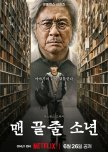
The most fascinating part of the story is Heo Mun-oh's psychological collapse. He begins as a professor convinced he can control his student, but little by little he becomes obsessed with Lee Kang's writing. By the end, it is impossible to tell whether he is trying to destroy Lee Kang or become him. His envy slowly destroys his marriage, his career, and ultimately his own identity.
One of the most debated moments is the implication that Lee Kang slept with Mun-oh's wife. The drama never gives an explicit confession or undeniable proof. Instead, it deliberately leaves enough ambiguity that both Mun-oh and the audience remain trapped in uncertainty. That uncertainty hurts Mun-oh far more than a clear answer ever could, and it perfectly represents the show's central theme: imagination can be more destructive than reality.
The ending refuses to provide simple closure, which is exactly why it works. Instead of rewarding the audience with easy answers, it forces us to question whether the real tragedy was Lee Kang's manipulation—or Mun-oh's inability to escape his own insecurities. The final scenes suggest that the greatest prison was never another person, but Mun-oh's obsession itself.
Choi Min-sik delivers one of the finest performances of his career, portraying a man whose pride slowly transforms into paranoia and self-destruction. Choi Hyun-wook is equally impressive, creating a character who remains impossible to fully understand until the very end.
This is not a drama about solving a mystery. It's about watching someone lose themselves while desperately trying to understand another person. Every unanswered question serves that purpose.
Many viewers may be frustrated by the ambiguity, but I believe the uncertainty is exactly what elevates Notes from the Last Row above a typical psychological thriller. Some stories end by revealing the truth. This one ends by showing that the search for the truth can destroy a person.
What makes the drama brilliant is that Lee Kang is never reduced to a simple victim or villain. His silence constantly forces both Heo Mun-oh and the audience to question what is real and what is manipulation. Even when he says very little, he completely dominates every room he enters.
The most fascinating part of the story is Heo Mun-oh's psychological collapse. He begins as a professor convinced he can control his student, but little by little he becomes obsessed with Lee Kang's writing. By the end, it is impossible to tell whether he is trying to destroy Lee Kang or become him. His envy slowly destroys his marriage, his career, and ultimately his own identity.
One of the most debated moments is the implication that Lee Kang slept with Mun-oh's wife. The drama never gives an explicit confession or undeniable proof. Instead, it deliberately leaves enough ambiguity that both Mun-oh and the audience remain trapped in uncertainty. That uncertainty hurts Mun-oh far more than a clear answer ever could, and it perfectly represents the show's central theme: imagination can be more destructive than reality.
The ending refuses to provide simple closure, which is exactly why it works. Instead of rewarding the audience with easy answers, it forces us to question whether the real tragedy was Lee Kang's manipulation—or Mun-oh's inability to escape his own insecurities. The final scenes suggest that the greatest prison was never another person, but Mun-oh's obsession itself.
Choi Min-sik delivers one of the finest performances of his career, portraying a man whose pride slowly transforms into paranoia and self-destruction. Choi Hyun-wook is equally impressive, creating a character who remains impossible to fully understand until the very end.
This is not a drama about solving a mystery. It's about watching someone lose themselves while desperately trying to understand another person. Every unanswered question serves that purpose.
Many viewers may be frustrated by the ambiguity, but I believe the uncertainty is exactly what elevates Notes from the Last Row above a typical psychological thriller. Some stories end by revealing the truth. This one ends by showing that the search for the truth can destroy a person.
Was this review helpful to you?


