



This review may contain spoilers
Deceiving Everyone – Even the Viewers
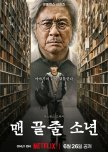
Notes from the Last Row is a tense psychological drama that explores obsession, creativity, envy, and the blurry boundary between mentorship and manipulation. Adapted from the Spanish play The Boy in the Last Row, the series follows literature professor Heo Mun-oh, a failed novelist who becomes fascinated by the extraordinary writing talent of a student sitting in the back row of his class.
The show's greatest strength is its atmosphere. Instead of a traditional thriller style with murders and constant cliffhangers, the series creates dread through observation. Libraries, classrooms, apartments, and writing sessions become unsettling because every new chapter Lee Kang submits seems to reveal another private secret. The audience begins to feel the same obsession as Mun-oh: you want to know what happens next even though you suspect the answer will be terrible.One thing I particularly liked is how reality and fiction slowly merge. Every time Lee Kang hands over a new piece of writing, you're forced to wonder whether you're reading a story, a confession, a prediction, or a trap.
The ending lands because the biggest mystery is not what Lee Kang knows but why he knows it.
The final revelation suggests that Lee Kang has been manipulating far more than just Mun-oh's curiosity. His novel isn't merely inspired by the professor's circle; it becomes clear that he has intentionally inserted himself into people's lives, gathering information, provoking reactions, and shaping events so that reality begins to resemble his fiction. What Mun-oh believed was mentorship was actually participation in a narrative controlled by Lee Kang.The final scenes leave open whether Lee Kang is a genius observer, a master manipulator, or something in between. That's why the ending lingers. The twist isn't just "the student was behind it all." It's the realization that the professor's obsession made the manipulation possible. Without Mun-oh's ego and hunger for literary greatness, Lee Kang's game could never have succeeded.
Choi Hyun-wook gives the more difficult performance. Lee Kang is intentionally unreadable. Sometimes he appears shy, sometimes manipulative, sometimes genuinely vulnerable. The tension comes from never being sure whether he's a gifted young writer stumbling into trouble or someone orchestrating everything from the beginning. Netflix itself described the relationship as a psychological push-and-pull between an emotional professor and an unreadable student. However, I dislike Mun-Oh as he spends the entire series analyzing the student while failing to analyze himself.
Overall, it's definitely a recommendation to anyone who loves shows where you can not predict anything and are manipulated by the main character each second.
The show's greatest strength is its atmosphere. Instead of a traditional thriller style with murders and constant cliffhangers, the series creates dread through observation. Libraries, classrooms, apartments, and writing sessions become unsettling because every new chapter Lee Kang submits seems to reveal another private secret. The audience begins to feel the same obsession as Mun-oh: you want to know what happens next even though you suspect the answer will be terrible.One thing I particularly liked is how reality and fiction slowly merge. Every time Lee Kang hands over a new piece of writing, you're forced to wonder whether you're reading a story, a confession, a prediction, or a trap.
The ending lands because the biggest mystery is not what Lee Kang knows but why he knows it.
The final revelation suggests that Lee Kang has been manipulating far more than just Mun-oh's curiosity. His novel isn't merely inspired by the professor's circle; it becomes clear that he has intentionally inserted himself into people's lives, gathering information, provoking reactions, and shaping events so that reality begins to resemble his fiction. What Mun-oh believed was mentorship was actually participation in a narrative controlled by Lee Kang.The final scenes leave open whether Lee Kang is a genius observer, a master manipulator, or something in between. That's why the ending lingers. The twist isn't just "the student was behind it all." It's the realization that the professor's obsession made the manipulation possible. Without Mun-oh's ego and hunger for literary greatness, Lee Kang's game could never have succeeded.
Choi Hyun-wook gives the more difficult performance. Lee Kang is intentionally unreadable. Sometimes he appears shy, sometimes manipulative, sometimes genuinely vulnerable. The tension comes from never being sure whether he's a gifted young writer stumbling into trouble or someone orchestrating everything from the beginning. Netflix itself described the relationship as a psychological push-and-pull between an emotional professor and an unreadable student. However, I dislike Mun-Oh as he spends the entire series analyzing the student while failing to analyze himself.
Overall, it's definitely a recommendation to anyone who loves shows where you can not predict anything and are manipulated by the main character each second.
Was this review helpful to you?


