
 Editorials


This review may contain spoilers
Dramatic with Dark Comedy undertones
Review Date 6/8/2026I truly enjoyed watching Doctor Stranger. 8/10
While the story felt heavy at times, a number of scenes and plot twists were so over-the-top that, viewed as a whole, they gave the drama unexpected and enjoyable dark-comedy undertones. For example:
1. Wait… what? She’s alive after being shot, dangling from a ledge for what feels like forever, somehow managing to pry which should by now be Park Hun’s slippery hand off hers so she can fall to her death, right? into the river below? never mind the bridge’s side wall was too high to begin with.
2. This is Episode 14+…, is she or isn’t she Song Jae Hee?
3. How does Song Jae Hee end up with no gunshot scar on her right shoulder, and why does she suddenly have two kidneys when she’s supposed to have only one?
4. The Prime Minister’s (comedic style) expressions of disgust at being “Number Two.” Every time he had to bow, show respect, or answer to the President, his facial expressions were priceless, or how he laughed or snickered at his stupidity.
5. The scene where the Prime Minister convinces himself the President is in a coma, confidently unleashes his pent-up resentment, and then watches in horror as the President’s eyes suddenly open.
6. Cha Jin Soo somehow manages to spy on PH and SJH everywhere. He’s disguised as a hospital employee, part of the Prime Minister’s security detail, or lurking nearby—and no one ever notices him.
7. Cha Jin Soo’s resurrection from the dead in Episode 18, and shoots PH and the both fall of over the edge into, wait for it, the river - and a year later there were still no bodies.
8. The endless back-and-forth from different angles over who would operate on the Prime Minister - who wasn’t even sick.
9. Dr. Oh (“Quack”) and Han Seung Hee lovingly debating which woman Park Hun should end up with.
There were more moments like these that cracked me up, but I’ll stop there.
Park Hun’s emotional scene describing what he was forced to do as a doctor in NK was gripping. I could feel his absolute feelings of shame, anger, and horror at what he did, mixed with inescapable grief. The story shows us how much he valued life at any cost he could give.
The story’s crazy momentum kept me fully engaged, and I found myself rooting for Park Hun to reunite with his first love. Dr. Han Jae Joon wasn’t truly evil, and one of the drama’s strongest moments was when he realized that revenge did not bring the satisfaction or closure he had expected.
There was no look-alike after all—it was Song Jae Hee the entire time. While the mystery surrounding her identity created effective suspense early on, I think the drama would have benefited from revealing sooner that Han Seung Hee was, in fact, Song Jae Hee. Some of the many flashback scenes could have been used to tell her story: what happened after she was taken away, how she became a North Korean operative, and how she convinced North Korea that she was not Song Jae Hee. That would have added much-needed depth to her character. As presented, it was often difficult to understand her true agenda and motivations. As it was it was difficult trusting her; whoever she was, was she there as a spy to destroy Park Hun or was she his true love whom she came to protect?
I liked Cha Jin Soo as Jae Hee’s North Korean partner. he just had the look of a comedic villain. However, as mentioned earlier, bringing him back during the final episodes stretched credibility too far for me. For a true drama, I think it would have been more convincing to introduce a new North Korean operative to take his place. The Prime Minister’s “lollipop” bodyguard certainly should have known better than to leave a body unrecovered after shooting someone and dumping them into a river. But then again, it’s a K-drama.
I liked the bodyguard.
I didn’t mind the various political and personal agendas surrounding whether Park Hun or Han Jae Joon should operate on the Prime Minister, but the decision changed so many times that it became exhausting (a dark comedy effect).
I also liked Dr. Oh. She was a sensitive soul and quite sweet. Park Hun sent her so many mixed signals that it was no surprise she began developing feelings for him. Han Jae Joon, on the other hand, provided mature stability, who was honest with her about himself and his mistakes with her. He knew her, and could see what was happening with PH. Although he didn’t like their banter, (and it was refreshing to see this) he gave her space to sort out her feelings without pressuring or dismissing her. He genuinely loved her. As she finally realized, he was a better match for her than Park Hun.
As for her father and brother, they deserved a good Korean slap several times throughout the series.
At times, it felt as though the writers threw absolutely everything at Park Hun except the kitchen sink—another source of the drama’s accidental dark-comedy vibe.
Park Hun endured an extraordinary amount of trauma throughout his life, yet he remained fundamentally optimistic. That resilience was essential to his survival. His father was a remarkable man who taught him how to live despite his circumstances rather than be defined by them.
I feel most everyone did a great job in this drama. The three standout performances for me were from Lee Jong-suk (Park Hun), Cheon Ho-jin (Prime Minister - dark comedy villain), and Kim Sang-joong (Park Cheol).
The soundtrack was good, though not great. At times the music was mixed so loudly that it became distracting during emotional scenes.
Overall, Doctor Stranger was an entertaining watch. if I hadn’t pick up the dark comedy vibe from the occasional descents into outright absurdity, I wouldn’t have enjoyed it so much. It truly kept me invested from beginning to end. I can see myself revisiting some episodes in the future.
8/10
Was this review helpful to you?

was it worth it? yes
I wasn’t interested in this drama for a long time. the graphics of the cast for the title picture said to me ‘this one isn’t my cup of tea’. BUT one day Itaewon Class OST #6 came up on my Apple Music feed and I fell in love with that song. I don’t speak Korean but without knowing the words, that song grabbed me like few other songs have. I sensed it wasn’t love song but couldn’t find the words anywhere because I don’t know the actual song’s title. this is what made me watch it, to find out if it was a love song or not.I liked the first 2 episodes but the vibe didn’t grab me - just as I had suspected. I stopped watching around episode 11. A couple months later I decided to finish it and am glad I did.
PSJ as PSY was great.
I know this sounds silly, but the ML and FL hairstyles were a turnoff for me. I was okay with PSJ’s hair cut as a youth and early years out of prison, but I think it would have been more realistic if his character’s aging arc to 2020 included a change of hair style. I’ll just leave it at that.
I was touched throughout the drama by PSY’s sensitive but determined spirit. the chemistry between PSY and JYS was realistic to their characters. PSY had zero romantic skills and PSJ played that well.
the music was excellent, especially #6 which I found out is entitled Someday Boy / with great lyrics - and no, it is not a love song. the ‘boy’ is yearning for something better for his life. it seems he is pleading for time and hope. Kim Feel sings this song so beautifully, he is one my favorite Korean singers.
I probably will watch select scenes again but not the entire drama again.
Was this review helpful to you?
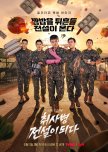
You will want to watch it again
To me, this lighthearted comedy K-drama is a perfect 10 from the beginning quite literally through the last episode’s end credits. It was so clever and so much fun to watch that, even if I tried, I couldn’t come up with a single criticism. I honestly believe there are very few people who wouldn’t enjoy The Legend of Kitchen Soldier, regardless of their preferred genres or favorite tropes.Park Ji Hoon, as Private First Class Kang Seong Jae (shouting here with a salute), was absolutely perfect for this role. He nailed every scene. I haven’t read the webtoon, but judging from the images I’ve seen, Park Ji Hoon looks remarkably similar to Seong Jae’s original character design. For those in America who remember—or still enjoy watching—The Andy Griffith Show from the 1960s, the scripting of The Legend of Kitchen Soldier feels surprisingly similar in its construction. The humor is warm, character-driven, and genuinely hysterical, often reaching that same timeless level of comedy.
Bravo to the screen writer(s) and director of this most enjoyable drama!!
WARNING: Spoilers from this point forward.
I especially enjoyed watching Seong Jae’s character arc evolve. He shows up at Kanglim Outpost as a lost, depressed, fearful young man, an outcast of sorts. But he gradually blossoms into someone far more confident, eager to serve his platoon, eager to learn, and determined to accomplish more. His sensitivity toward his peers, his immediate obedience to his leaders, his earnest desire to please Sgt. Yun in the kitchen, and his uncompromising loyalty to his responsibilities as a soldier first and kitchen assistant second all make him deeply endearing. Unlike many others in his platoon, he doesn’t have it in himself to complain about his circumstances. He has no choice but to accept where he is and make the most of it.
His sudden introduction to the Army Cook Quest voice—and later its screen interface—was an absolute delight to watch. Park Ji Hoon was completely convincing as he pantomimed his interactions while navigating the system. And whenever Seong Jae achieved a goal, earned points, or added another comrade to his cache, his smile practically lit up my screen. I couldn’t help but smile right along with him every single time.
Seeing him deflate, nearly reverting back to his old self at the cooking competition was heartbreaking. But then watching him realize he had not lost his skills and he could still do his best even if he didn’t win the one-on-one round was actually inspiring. I think it was one of the central themes of TLOKS; your mentors and teachers can take you only so far. If you have prepared well, trust yourself - your knowledge and your skills even if the circumstances seem to be against you. Do your best with no regrets.
I think we were all rooting for Seong Jae when military reporter intern and hometown ?girl?friend Jun Min (Jeon So Young) came running into his arms in front of both his peers and his superiors. Even though he was mortified by the attention, he needed that moment, not only for himself, but for everyone else to see that he was more than what they had assumed him to be: not a loser, but worthy of some level of respect. What a pleasant and fitting surprise to see them together in the end.
The rest of the cast was equally perfect in their roles, making this a truly unforgettable first watch. Lee Hong Nae’s lazy, incompetent, intimidating, yet ultimately loyal Sgt. Yun Dong Hyeon; Han Dong Hee’s deadpan, serious, but generously warm Platoon Leader Cho Ye Rin; Lee Sang Yi’s serious-but-maybe-not-quite trustworthy Company Commander Hwang Seok Ho who had his very funny moments; and Yoon Kyung Ho’s brash yet loving Major Sgt. Park Jae Yeong all delivered outstanding performances. Along with a stellar supporting cast, they created an ensemble that was impossible not to love. It was especially hilarious to watch these talented actors fully commit to the over-the-top music video sequences.
I enjoyed a fully satisfying ending including all the suspenseful buildup from episode 11 into 12. Everybody got their just reward, if you know what I mean, including the Outpost itself. I’m excited they left TLOKS open for a second season to find out what’s in store for Kang Seong Jae next.
I liked the Quest’s voice and felt the voice actress was perfectly cast. OST was just right for this drama and complemented every scene beautifully. This drama has already earned a permanent spot on my rewatch list.
Was this review helpful to you?
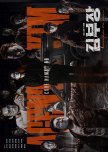
Watch if you promise yourself not to take it seriously.
A ridiculously fun watch with a great cast. If I named you all, this would be really along review. Each character was well executed and added to the plot. Were there holes? A few. But taken as a whole, and not seriously, this was a great KDrama.Congratulations Seo Su Min on your debut. You were great!
[Not sure why but the movies True Lies and Lethal Weapon 1 came to mind a couple times when watching this. ]
Was this review helpful to you?
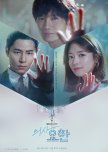
This review may contain spoilers
Three Years Later!?!?!?
For the most part, this was a nicely executed drama. The medical part gives you a lot to think about. The romance was slow and depicted realistically. Ji Sung (one of my favorite actors) and Lee Se Young had very good chemistry. I did enjoy watching their relationship develop.I was disappointed in the “3-years later” direction the story took in the last episode. So much time was spent in this drama telling quality stories of each person’s pain or end of life issues. The writer failed to fairly deal with 1) the real struggles Yo Han was facing at the Cleveland clinic and 2) the emotional consequences Yo Han should have faced from So Young. Shutting her out for 3.5 years didn’t protect her. He robbed her of her desire to be by his side (to love him) through the difficulties he was going through. He robbed himself of the healing power of her love and presence during that time. Yo Han was the one who said without pain there is no life. The writer made this honorable, mature, reasonably realistic man out to be a liar. As much Si Young loved him, he gave her every reason not to trust him with her heart after that. I was pretty angry after investing 15.5 hours of a pretty great drama for the last 35 minutes to do this to me! I was going to give this drama a 9.5 but, frankly, the last 35 minutes were an insult to my intelligence not to mention my emotions.
The OST complimented the drama very well. I added Way Back and Look At to my playlist I liked them so much.
I will recommend this drama to anyone who likes medical dramas.
Was this review helpful to you?
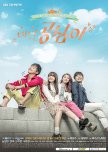
This review may contain spoilers
Were was the attraction, exactly?
I watched this 2016 drama in June 2026. In many ways, it felt like two separate seasons rather than one continuous story. With that in mind, I don’t necessarily agree with reviewers who felt the first half was significantly better than the second. Instead, I saw it as two fairly distinct stories connected by the ADT/GS/SJS love triangle.We meet Gong Shim at around age twenty-five, and I have to admit that I wasn’t immediately drawn to her character. At the beginning, nothing about her projects confidence. From her wig, which covers a temporary bald spot, to her wardrobe, which feels stuck in her high school years, to her overall physical posture, she comes across as someone who has never truly found her footing. These traits are supposedly the result of a stifling upbringing: parents who failed to nurture either her life skills or her genuine artistic talent. On top of that, she has an older sister who is outwardly beautiful but inwardly insecure, and who dominates and gaslights Gong Shim at every turn. Although Gong Shim wants to become independent, she lacks the guidance and confidence needed to navigate adulthood. She dreams of learning Italian and moving to Italy to pursue art, but as we see, that goal is easily derailed by life’s circumstances.
What disappointed me most was that I saw very little growth in Bong Shim's character throughout the drama. Her arc should have become more noticeable from around Episode 8 onward. Incremental changes to her wardrobe alone could have visually reflected growing confidence and maturity. Even if the wig remained, a different style could have symbolized development. Neither An Dan Tae nor Jun Su contributed much to her personal growth, which made her journey feel frustratingly static.
An Dan Tae, in his early thirties, is a happy-go-lucky, street-smart lawyer by day and driver-for-hire by night. Despite enduring his share of hardship, he has risen above it and dedicated himself to helping marginalized people, often for little or no compensation. He isn’t concerned with what others think of him—at least not until later in the story. He possesses a unique gift that allows him to perceive certain events in slow motion, enabling him to react to threats with remarkable precision. Regardless of his difficult past, he has made a conscious decision to embrace life and treat people with kindness—unless circumstances force his hand otherwise. I truly loved this character. This was my first time watching Namkoong Min, and I immediately found myself looking for more of his dramas and films.
Jun Su, twenty-seven, is the presumptive heir to Star Group, a large conglomerate chaired by his aging grandmother. He is a kind and introspective soul whose life path was determined for him from birth. Although he is loved by his parents, he was never given the freedom to explore his own interests or define his own future. Even though he constantly strives to earn his grandmother’s approval, he never truly receives her affection. Through no fault of his own, he recognizes the writing on the wall: he may never become Star Group’s successor. I appreciated that he sought independence by pursuing the possibility of building something of his own. I liked his character very much.
Fun fact: Ohn Joo-wan (Jun Su) and the adorable Bang Min-ah (Gong Shim) married in 2025.
As I watched the drama unfold, however, I began to view Gong Shim as something of a red flag. Comparing her to An Dan Tae, I simply didn’t see them as equals. We learn that they are only four years apart in age, yet their levels of maturity, emotional intelligence, and overall competence seem worlds apart. I honestly never understood the romantic attraction between them. Where exactly was it?
Their dynamic often felt like the classic “knight in shining armor rescues the pitiful damsel in distress” trope. They shared a wonderful friendship, but I never sensed strong romantic chemistry. Likewise, I didn’t detect much physical attraction from Jun Su toward Gong Shim either. In other words, the writer and director never convinced me why either An Dan Tae or Jun Su would become romantically interested in someone portrayed as almost juvenile in comparison. Nevertheless, if I had to choose, I actually thought Gong Shim and Jun Su were the better match.
Beyond my affection for An Dan Tae, the real reason I stayed invested in this drama was the relationship between Dan Tae and Jun Su. I loved watching their friendship develop. It felt natural and sincere. They respected one another, got along easily, and remained honest with each other until the Jun Pyo mystery took center stage. Even then, neither man truly wanted to oppose the other. Once Dan Tae’s true identity was revealed, I found it genuinely heartwarming when he expressed his desire for their relationship to return to what it had originally been. I ultimately became invested in Dan Tae’s efforts to uncover the truth behind Jun Pyo’s abduction and the revelation that he was, in fact, Seok Jun Pyo. I enjoy a good mystery, but if I’m being critical, the drama revealed too much too early to sustain genuine suspense.
The ending, unfortunately, was a major disappointment.
Sending Jun Pyo to the United States almost immediately after his identity was revealed felt abrupt and emotionally unsatisfying. If I were Grandmother, I would have wanted him nearby for quite some time. Surely there could have been a way for this highly resourceful lawyer-grandson to study business management in Seoul while reconnecting with his family.
Then came the final fifteen minutes and the “one year later” time jump. For me, it undermined much of the emotional investment I had built over the course of the series. In real life, there is simply no excuse for An Dan Tae and Gong Shim to have had absolutely no communication for an entire year. None. Likewise, there is no believable reason for Dan Tae and Jun Su to have had zero contact. Unless Dan Tae had been in a coma or had died, it made no sense.
Hiding an engagement ring inside a plant and never checking to see whether she found it—or how she felt about it—was just absurd. It’s late as I write this review, and I’ve run out of descriptors. I also couldn’t take Gong Mi’s last-minute confession to Jun Su seriously. Sorry.
The music, however, was quite good. I’ll definitely be revisiting the OST to add a few favorites to my playlist.
Overall, I don’t think I would rewatch this drama, nor would I recommend it.
Rating: 7/10
Was this review helpful to you?
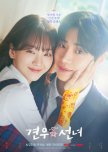
hard to take seriously
I tried to like this drama but had a hard time taking anything about it seriously. To be fair to other viewers who liked it, dramas that are about shamans do not appeal to me. I guess I don’t fully understand the whole shaman ‘lore’ - whenever I watch a drama that heavily relies on shamans, their meaning and purpose have very weak roots to begin with. I know it involves the spirit world, but it seems to me that, depending on the writer, anything goes in this genre, that’s why I can’t take shaman genre’s story line seriously.I watched Head over Heels because of the very talented Choo Young Woo. This is the 5th drama of his I’ve watched and it very nicely showcases his wide range and I was not disappointed with his acting here. He was able to shift characters smoothly making it easy to know when he was Gueyon U (with a depressed flat affect) or Bong Su (who was mean, murderous, and abrasive for most of his arc).
My favorite character CYW has played so far is the carefree storyteller, Chen Seung Hwi, in The Tale of Lady Ok, followed by Dr Yang Jae Won in Trauma Code - both excellent dramas…, but I digress.
Back to HOH -
Cho Yi-hyun’s Sung-ah as a High Schooler by day - Shaman by night was very likable and truly well acted. Cha Kang Yoon’s Ju Hu, the loyal friend (with a late and misplaced confession to Sung-ah) to both Sung-ah and Gueyon U was great even if a little cringy a time or two.
The other Shamans - I can’t critique them because I was confused half the time.
I do agree with another reviewer, the lack of accountability for grevious acts was disappointing. Maybe that’s part of the Shaman ‘lore’.
I try my best to take a story as it’s presented and rarely rate a drama poorly just because I didn’t like it. I’m writing a review this time because, beyond the shaman theme, I just could not follow the story. I wonder how many other viewers felt the same way. It seemed there were too many elements and motives of the various characters to follow that the story of the two main leads kept getting lost- so much so that it made the drama was too long.
I did like the budding romance, and I’m aware they needed to figure out issues but, again, a lot of the sub-stories at times were unnecessary interruptions to its progression.
I’m neutral on the music, it neither added or subtracted from the story itself. Nothing stood out to me. 75% of the time I’ll download and listen to OSTs at least once, but don’t feel compelled this time.
I personally would not recommend this drama.
Was this review helpful to you?
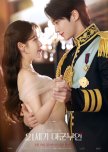
Do you recall the story of how William and Kate got together?
I’m not disappointed in this drama but so far it’s difficult to rate it beyond an 8. We need more plot structure. Also their Chsracter arcs have yet to be developed. it’s a fairytale romance for sure and if the story is strong and the acting supports the story I will have watched a very satisfying drama.Constitutional Monarchies do still exist. But for Korea, this is just fun fiction. As I started watching it, for some reason I was reminded of Willuam and Kate’s real-life romance - starting with their college days. Just like in a good K-drama, they each have their own interesting backstory, especially Will. IMO, their’s has been nothing short of a fairytale - and 15 +/- years later, in spite of all the palace intrigue, they are still madly in love. With that in mind I look forward to watching Perfect Crown unfold.
Correction: this review was written after the first 2 episodes (not 12). the edit feature will not let me correct the number of episodes watched.
Was this review helpful to you?
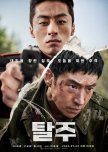
You may turn your head a time or two but you will not be bored.
Escape is not for the faint hearted, I barely made it through myself. It tares at your heart all the way through.Lee Ji Hoon as Im Kyu-Nam gives us a glimpse of what it must be like for someone in NK to want freedom at any cost, even their very life.
Koo Kyo-Hwan as Ri Hyeon-Sang gives us the very opposite view of someone in the same country, possibly once desperate to live free, who made compromises to just live.
For LJH’s and KKH’s excellent performances alone I highly recommend this movie. The were perfectly paired for their roles.
Hong Xa-Bin as Kim Dong-Hyeon gives us the heart wrenching portrait of one of the many desperate for freedom who, for whatever reason, could not see their dream through to reality.
I highly recommend this film. In spite of its flaws (some implausibility) it is told with raw intensity. You may turn your head a time or two but you will not be bored. In many aspects, is probably not far from what happens, to one degree or another, daily in the Hermit Kingdom.
Was this review helpful to you?
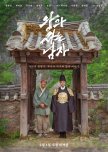
This review may contain spoilers
What a well executed, beautifully sad story!
What a well executed, beautifully sad story!The love between Heung Do and Dan Jong was mutual, beautiful, and full of trust.
Yoo Hai Jin was remarkably real. With the excellent support of the entire cast, he made you believe he was Warden Um Heung Do, Village Chief. I loved him from the very beginning of this film. His emotional range was nothing short of perfect. I could feel his anguish as he was forced into impossible situations many times over. I shared his anger when he scolded the king. I shared in his desperation over his son’s life. I laughed at his repeated comments of how he caught the snails for the king’s soup that morning.
Park Ji Hoon turned down the role of King Dan Jong 3 times before agreeing to do it, at which point he lost in excess of 20 pounds to achieve the look of a gaunt, wasting away young, overthrown king waiting for his death. Like YHJ, he made you feel what he felt, enjoy those few select moments with him, and discover, along with him, true meaning to his life. His eyes told much of King Dan Jong’s story. Whst a powerful actor you are!
Many thanks to you both for portraying these two important figures from Korea’s history with heartfelt care and honesty.
Was this review helpful to you?
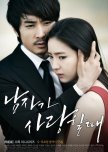
This review may contain spoilers
When a girl misinterprets love
Mild Spoilers begin 2nd paragraphI came for Song Seong Heon but stayed for the whole story. SSH, Shin Sae Kyeong, and Yeon Woo Jin were excellent portraying Tae Sang, Mi Do, and Jae Hui. The supporting cast were equally great. They all made me stay through the end. Even though it is dated by 2026 standards, this was a well acted drama.
Now to the story -
I will say if people felt that Tae Sang was manipulative, the story itself was actually manipulative. You can’t pull on a viewer’s heartstrings to justify Tae Sang’s overall behavior toward Mi Do. Yes, he had a sensitive side and he truly liked her, but he was also obsessive, controlling, manipulative, and explosive. It was all about him. This is not love. He was immature about so much. He was desperate in trying to fill a void in his life and found that opportunity with Mi Do. While the viewer can maybe understand why he acts the way he does, none of what we learn about him justifies his harshness towards Mi Do. Another reviewer said his actions were nothing short of domestic violence.
While Jae Hui had his own backstory, he presents as an emotionally balanced, well educated young man. Any girl would be attracted to his warmth and kindness, not to mention his good looks.
Mi Do was her true self with him. She literally blossomed when she was with him. Jae Hui’s feelings for her were pure and beautiful. He was fully committed in his love for her. With Tae Sang she was guarded most of the time. Over the duration of their relationship he never really brought out the true Mi Do the way Jae Hui did.
Mi Do and Lee Jae Hui belonged together.
Tae Sang needed serious counseling to confront and overcome his issues before looking for a lady friend…., as did Mi Do. She needed to understand the difference between being loved and being manipulated, even abused
The scriptwriter(s) surgarcoated the domestic manipulation/violence.
Having said all that, I looked at the ending of this story as presented as the beginning of the rest of their lives. If not much changes, where will they be in the next 5 or 10 years. I don’t see them together.
Jae Hui, on the other hand, was the kind of person who could come to grips with the painful loss of Mi Do and eventually find true love again.
That’s my take.
Was this review helpful to you?
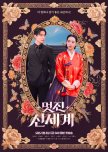
Second watch is even better than the first
Been watching over Labor Day weekend - this is the second time since it first aired. I’m finding it funnier and more enjoyable this time around- probably because I watched it 2 episodes per week when it first aired. - and maybe I lost the momentum of the story’s flow. This time I’m binging it. Plus, since I do know what’s going to happen, this time I’m trying to catch things I missed - and find my self appreciating all of it more.Im Ji Yeon as Shim Seo-ri and Heo Nam Jun as Cha Se-gye are great together, with excellent chemistry. IJY acting is nothing short of petfect in this role. She gave me all the feels. HNJ is Cha Se-gye perfectly imperfect and very lovable at the same time. Both actors command the screen individually. Together they own it.
This Rom-Com has a lot going on and does mix in mystery suspense and family dynamics which could be messy. This second watch did help clear up initial confusions. But it stays true to SSR & CSG’s relationship. I felt the pacing was very good as the story moves along well. 14 episodes is the right length for this story. 12 episodes would have been too short to developed the plot and character arcs sufficiently. I loved the Ep 14 end credit visuals.
While the current story had a complete ending, there’s definitely room for either a prequel or sequel. I just like Cha Se-gye’s personality much better than the Grand Prince’s.
Watch it if you want to watch the antics of two bold, fearless strong willed people as they fall hopelessly in love.
Was this review helpful to you?
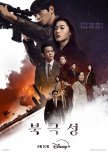
I would watch a second season
IMO Tempest was actually a pretty good political thriller. The writer(s) incorporated a lot of (international and domestic) intertwined elements to create a complex world of espionage. It must have been a challenge for the director to juggle them all to keep us guessing who was really pulling the strings. I admit to some confusion over the various connections at times - and I feel like I was paying close attention.I, frankly, didn’t see much difference between Tempest’s world of espionage and a similar world in one of the Mission Impossible films - which, by the way, is a compliment. Many of the action scenes were over the top (just like MI) but we’re in dramaland not real life. We want the MLs to survive, right? We look forward to the adrenaline rush watching how they survive each extreme situation.
The cast:
The Main Leads did an excellent job.
This is my first Kang Dong Won drama. I would hire SanHo any day!!! I’ll be watching more of KDW. Jun Ji Hyun is a great actress and she did not disappoint as Munju. They had excellent chemistry together. The romance was nicely done for the type of story and I didn’t think it took away from it - especially for SanHo. His feelings for MunJu were the reason he protected her the way he did. Hats off to the full supporting cast. It was refreshing to see a non/cheesy international cast. John Cho was well cast as Anderson Miller.
The OST blended perfectly with the story. The cinematography was top notch!
I would recommend Tempest to anybody interested in an intriguing political thriller.
I would definitely watch a second season - they set the stage for a new and what could be an even more interesting story. And bring back John Cho!
Was this review helpful to you?
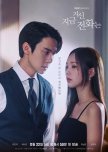
Heavy, gripping, suspenseful, and touching
I was fully imersed in this drama. Our ML, Sa-eon, and FL, Hee-joo, were amazing together. The story concept was a very clever way for these two to literally get to know each other. It was heavy, gripping, suspenseful, and touching all at the same time.I enjoy a good mystery and appreciated the suspense of not knowing what was really happening until the appropriate time.
The OST was excellent. i have watched this drama twice and will eventually watch it again in another year or so.
- Potential spoiler -
In real life, though, I’d be furious at Sae-on for being so cold and indifferent every day for three years while secretly loving me. He may have thought he was creating a safe place for Hee-Joo but it was the same prison, different location for her. Unexpressed love is not love, it’s something else. But that was the story. What was it going to take for both of them to surrender to their love?
Was this review helpful to you?
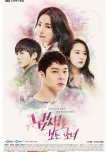
Light but engaging.
The actual title, The Girl Who Sees Smells, didn’t appeal to me so I bypassed it for a long time. But then I started enjoying Namkoong Min’s dramas and decided to watch this one for him. I stayed for all the main leads.Having recently finished some much more complicated, heavy dramas, TGWSS was an inviting, imaginative, enjoyable watch for me. A good drama to balance out my watch history lately, if you know what I mean. I found myself interested the entire time even binging a few too many episodes at a time.
Park Yoo Chun (Detective Choi) Shin Sae Kyeong (Oh Cho Rim) Nam-koong Min (Chef Kwon) and Yoon Jin-Seo (Lt. Yeom) all delivered very good performances. I was most impressed by PYC (my first drama with him) whom I believe stood out above the rest and I also felt he carried the whole drama. PYC and SSK had great chemistry - they had several truly funny and serious/tender moments together. SSK has a great acting range, delivering a fun and engaging Oh Cho Rim. It’s not my favorite role of his but NKM was a great sinister villain. He acts with his eyes so well. YJS was a no-nonsense but endearing Lt. Yeom, the kind of boss you want to do your best for.
I was somewhat disappointed in the supporting cast, their acting was not terribly convincing - I don’t think their humor always fit the story - comedy/drama detectives can and should be funny where the story needs it but also need to be on their (detective) game where it counts and I didn’t feel they ever truly delivered on the latter. That part gave me a dissatisfied feeling many times. Some of this criticism is on the writing and directing, too.
The OST fit the scenes and was not loud or overpowering.
I definitely recommend TGWSS for someone who is looking for a light but still intriguing Rom-Com/Mystery. However it’s not a drama would feel the need to rewatch.
8/10
Was this review helpful to you?


