
 Editorials



This review may contain spoilers
heartwarming
The drama follows Qing Ye and Xing Wu from their high school years into adulthood, allowing viewers to witness not only the evolution of their relationship but also their personal growth. Rather than focusing solely on romance, the story explores dreams, family struggles, friendships, and the difficult process of discovering who you want to become.What Dazzling offers is a warm, heartfelt, and refreshing journey filled with growth, friendship, first love, and the feeling of finding your place in the world.
Without a doubt, my favorite aspect of the series was Zhazhating. More than just a setting, the town becomes the soul of the drama. Its streets, its people, and its strong sense of community create an atmosphere that feels incredibly authentic and comforting. The coastal scenery and small-town charm give the drama a unique identity and contribute greatly to its nostalgic and healing atmosphere.
The romance itself is sweet and easy to root for. Qing Ye and Xing Wu complement each other beautifully, and their relationship develops naturally over time. I particularly appreciated that the drama allows them to influence each other's lives in meaningful ways. Their story is not built on endless misunderstandings or unnecessary drama, but on mutual support and shared experiences. Guan Xiaotong and Li Yunrui also have a very comfortable chemistry that makes the romance feel genuine and effortless.
What surprised me most was how relaxing the drama felt. There is a lightness to Dazzling that makes it incredibly easy to watch. It captures the emotions of youth, summer, and small-town life without becoming overly sentimental. The story has a gentle pace that allows viewers to simply enjoy spending time with the characters and their world.
That said, I do think the final part of the drama was weaker than the rest. Some developments felt rushed, and a few storylines could have benefited from more time and attention before reaching their conclusion. After such a carefully built journey, the ending occasionally seemed eager to tie everything together too quickly. However, while I was not completely satisfied with every narrative choice near the end, I still found the conclusion emotionally satisfying and consistent with the overall tone of the drama.
Overall, the charm of Zhazhating, the warmth of its people, and the gradual growth of the characters created a world that was easy to become attached to. It felt like spending time in a place you wouldn't mind visiting again.
Was this review helpful to you?
This review may contain spoilers
Mission Failed: I Got Attached
Some romance dramas make you fall in love with the story. Love for You makes you fall in love with its characters.From the very first episodes, it's clear that this isn't your typical modern romance. Yes, there are familiar tropes—childhood acquaintances, years of separation, emotional misunderstandings—but the drama approaches them with far more emotional maturity than I expected. Instead of focusing solely on romance, it tells a story about survival, abandonment, healing, and finding comfort in the one person who truly understands your pain.
What impressed me the most is how naturally the relationship between Chen Yi and Miao Jing develops. Their bond isn't built overnight, nor does it rely on dramatic confessions or constant romantic moments. It's something that quietly grows over the years as they experience loss, loneliness, and hardship together. The romance feels earned because their connection is rooted in genuine trust. Long before they become lovers, they become each other's safe place. Both characters carry emotional scars left by the adults who were supposed to protect them. Rather than turning those experiences into melodrama, the series explores how trauma shapes the way people love, trust, and communicate. Watching them slowly learn to rely on each other became far more rewarding than any grand romantic gesture could have been.
The leads manage to convey so much through subtle expressions and quiet moments that the emotional scenes rarely need excessive dialogue. Their chemistry feels effortless, making it easy to believe that these two people have spent years carrying each other through life's darkest moments. Even during the more painful parts of the story, their connection never feels forced.
What stayed with me most after finishing Love for You is the feeling that this is, above all, a story about finding home in another person. Not because love magically fixes every wound, but because sometimes having someone willing to stay beside you is enough to make life a little less frightening. Overall, I enjoyed this drama far more than I expected.
Was this review helpful to you?
This review may contain spoilers
Can someone explain the hate?
From the very first episodes, I found myself completely invested in the story. The plot moves at a steady pace, revealing just enough information to keep the suspense alive without becoming unnecessarily complicated. There are plenty of twists, shifting alliances, and emotional confrontations, but what kept me watching wasn't simply the revenge itself. It was watching how far the protagonist was willing to go in order to achieve it.We're so used to female leads who always make the morally correct decision, even when they're supposed to be seeking revenge. Here, that's simply not the case.
Ren Susu / Fang Mulan is intelligent, manipulative, determined, and, above all, deeply flawed and I absolutely loved that. There were many moments where I completely disagreed with her choices, yet I never wanted the drama to change her. he's someone you're meant to question, sometimes even criticize. Her obsession often takes precedence over the people who genuinely care about her, and the drama never pretends otherwise.
The best example of this is her relationship with Murong Qing Yi.
I honestly lost count of how many times I wanted to reach through the screen and tell her to stop hurting him.
Poor Murong Qing Yi spends so much of the drama paying the price for decisions that aren't even his own. Again and again, he becomes collateral damage in a revenge that was never his to fight. He remains loyal, patient, and willing to stand beside her even when she gives him every reason to walk away. While I understand why she keeps making those decisions—because revenge has completely consumed her—there were several moments where the pain she inflicted on him felt almost unnecessary. It wasn't the kind of suffering that naturally came from the circumstances; it was suffering created by her inability to trust, to let go, or simply to be honest.
And yet... that's also what made their relationship so compelling.
Visually, the drama is a bit of a mixed bag.
There are scenes that look absolutely stunning, with beautiful costumes, strong cinematography, and emotional framing that elevates key moments. Then, out of nowhere, the CGI reminds you that the budget clearly had its limits. Some effects look surprisingly rough and occasionally pull you out of otherwise powerful scenes.
One thing I know I'll probably be in the minority about is the opening sequence.
I actually preferred the original AI-generated opening. I know it sparked a lot of criticism when the drama aired, but personally, I thought it fit the atmosphere much better than the replacement version. More importantly, it didn't spoil the story. The new opening uses actual scenes from later episodes, and I've never been a fan of openings that reveal moments I'm supposed to discover naturally while watching. I much preferred the original version because it created intrigue without giving anything away.
Overall, Overdo was a very enjoyable surprise. A gripping revenge plot, engaging twists, emotionally layered relationships, and, most importantly, a female lead who isn't afraid to be selfish, stubborn, and morally questionable made this a refreshing watch from beginning to end.
Was this review helpful to you?
This review may contain spoilers
An office romance done right.
A warm, relatable office romance that understands exactly what it wants to be—and for the most part, succeeds. I enjoyed it from beginning to end, but it never quite reached the point where I completely fell in love with it.The biggest strength of the drama is how relatable it feels. Cha Ji Yoon isn't portrayed as an extraordinary heroine destined to change the world. She's simply... exhausted. She's been working for years, she's stuck in a career slump, her love life isn't going anywhere, and every Monday feels exactly like the last. I think that's why she's so easy to connect with. She's the kind of protagonist many office workers will immediately recognize in themselves.
Kang Si Woo initially appears to be the classic cold, intimidating boss, but thankfully the drama doesn't keep him trapped inside that stereotype for long. Underneath his blunt personality is someone who's surprisingly considerate, and watching Ji Yoon slowly discover that side of him is one of the most enjoyable parts of the series. Their relationship develops at a comfortable pace, and while it follows familiar office-romance beats, it rarely feels frustrating or overly dramatic.
What I appreciated most is that the romance never tries too hard.
There's no excessive melodrama, no unnecessary love triangles constantly interrupting the story, and no misunderstandings dragged out for several episodes. Instead, the relationship grows naturally through everyday interactions, shared responsibilities, and simply spending time together. It feels mature, refreshingly low-key, and perfectly suited to the overall tone of the drama.
The office setting also deserves some praise.
Rather than existing merely as a backdrop for romance, work actually matters. Deadlines, difficult colleagues, demanding supervisors, career anxiety, burnout, and the pressure of corporate life all play an important role throughout the story. Anyone who's ever counted the hours until clocking out will probably find at least one situation painfully relatable.
he office feels lived-in because the coworkers have their own personalities instead of existing purely to support the main couple. The small comedic moments between colleagues help balance the heavier themes of workplace stress and prevent the drama from becoming emotionally draining.
Still, not every drama needs to leave you emotionally devastated to be worth watching.
Sometimes you simply want something relaxing after a long day at work—ironically, a drama about going back to work the next day.
Was this review helpful to you?

This review may contain spoilers
I came for Xiao Wuyi... Then Xie Jiayu happened.
What impressed me the most is how effortlessly the drama balances so many different genres. It has everything: political strategy, warfare, romance, friendship, family relationships, comedy, suspense, and emotional character growth. Normally, when a drama tries to do too much, something inevitably gets lost along the way. Here, however, everything feels surprisingly well-balanced. The political scenes never overshadow the romance, the comedy never feels out of place, and even during the quieter moments, the story never loses its momentum.The romance is one of my favorite aspects of the drama because it develops so naturally. Xiao Wuyi and Xie Jiayu don't fall in love overnight, nor is their relationship built on endless misunderstandings or unnecessary drama. Instead, they slowly become each other's source of comfort, support, and strength. Watching them grow together felt incredibly rewarding, and by the time they finally reached certain emotional milestones, I was completely rooting for them.
I also have to talk about Hou Minghao because... what can I even say at this point?
He's impeccable, as always.
His acting never feels exaggerated, yet he somehow manages to make every emotional scene incredibly powerful. Sometimes he doesn't even need dialogue. A single look, a slight change in expression, or just the way he carries himself is enough to tell you exactly what Xiao Wuyi is feeling. There are actors who perform a scene, and then there are actors who completely become their characters. Hou Minghao belongs to the second category.
As much as I loved Xiao Wuyi, the character who surprised me the most was Xie Jiayu.
Her character development is honestly one of the best parts of the entire drama. She starts off as a sheltered, innocent young girl who can barely distinguish romantic love from simple friendship. Watching her gradually mature into a strong, intelligent, and resilient woman without ever losing her kindness was such a satisfying journey.
very hardship she faces changes her little by little, allowing her to become stronger while still remaining true to herself. She never loses the warmth that defines her character, and that's exactly what makes her evolution feel so believable.
More importantly, she becomes Xiao Wuyi's light.
While he constantly carries the burden of responsibility, duty, and impossible choices, Xie Jiayu reminds him that there is still hope, warmth, and happiness worth protecting.
The supporting cast is another pleasant surprise. Everyone has a purpose within the story, and even characters who initially seem secondary end up contributing something meaningful to the overall narrative. Friendships feel genuine, family relationships have emotional weight, and the political conflicts rarely feel repetitive.
Overall, Key to the Phoenix Heart is one of those dramas that reminded me why I love historical C-dramas in the first place. It has romance that feels earned, political intrigue that stays interesting, characters who actually grow throughout the story, and enough emotional moments to keep you invested until the very end.
Was this review helpful to you?
This review may contain spoilers
At its core, the story follows Fu Tingyun, a noblewoman whose life is suddenly destroyed after she is falsely accused of an affair, and Zhao Ling, a sharp and ambitious salt smuggler who comes from a completely different world. When circumstances force them to make a deal and flee together, two people who initially have very little reason to trust each other slowly become partners, allies and, eventually, something much more. And I really enjoyed this setup. What makes the drama particularly interesting is that it doesn't simply throw the leads together and immediately turn everything into romance. Their relationship develops through necessity first. They have to rely on each other, learn each other's strengths and weaknesses, and figure out how to survive everything that keeps being thrown at them.
Fu Tingyun was one of my favorite parts of the drama.
She starts from an incredibly difficult position. She's a noblewoman, but her status offers her very little protection once her family decides that her reputation matters more than she does. After being framed, she is essentially pushed into a corner and forced to find a way out of a situation she didn't create. What I liked is that she doesn't simply spend the entire drama waiting for someone to save her.
She's clever.
She's observant.
She's capable of adapting.
And, most importantly, she learns. She may come from a privileged background, but once she's forced outside that world, she has to understand very quickly that the rules she grew up with don't necessarily apply anymore.
Watching her gradually become more independent was one of the most satisfying aspects of the story. I especially appreciated that the drama doesn't reduce her to simply being "the clever female lead."
She has vulnerabilities.
She makes mistakes.
She can be emotional.
But she keeps moving forward.
That made her character arc feel earned.
And then we have Zhao Ling.
Thank you.
Seriously.
It was refreshing to have a male lead who isn't a prince, duke, general or some ridiculously powerful nobleman who can solve every problem by waving his hand. He comes from a humble background, operates in an illegal trade and knows exactly how to survive in a world where people with money and power can crush people like him without thinking twice.
He's rough around the edges, street-smart and ambitious. But he also has principles. He knows where his limits are, and despite the questionable nature of his profession, he isn't simply a selfish criminal. His ambitions are tied to his desire to improve his life and protect the people around him.
Another thing I really appreciated is that The Road to Splendor doesn't allow the romance to completely swallow the plot.
The story begins with a personal crisis, but it gradually expands into something much larger.
We get family conflict, power struggles, the salt trade, corruption, political intrigue and questions of social class. The escape storyline gives the drama a feeling of constant movement, and instead of keeping the characters trapped inside one household for dozens of episodes, the story actually takes them on a journey.
The drama doesn't feel like a world populated exclusively by the leads and a bunch of disposable villains. Several of the secondary characters have their own motivations, loyalties and agendas, and even the antagonistic characters can be genuinely infuriating in the best possible way.
The family dynamics in particular add a lot to the story because they show how differently people react when survival, reputation and power are involved.
There aren't many characters here who are simply evil for no reason.
People want things.
They make choices.
They protect themselves.
Sometimes they hurt others in the process.
That makes the conflict much more interesting.
It's not a perfect drama.
There are moments where certain plot developments could have been handled more smoothly, and some of the political and family storylines can become a little dense.
But none of that changed the fact that I genuinely enjoyed watching it.
The story kept me interested, the leads had fantastic chemistry, the characters had room to grow, and the production looked beautiful.
Most importantly, it didn't feel like I was watching the same historical romance I've already watched twenty times.
Beautiful, entertaining and surprisingly addictive.
Was this review helpful to you?

By the end, I realized that this series is much more than a simple crime investigation drama. It is a story about memory, trauma, guilt, obsession, and the way the past continues to haunt people long after they believe everything has been buried.
What impressed me the most — and what, in my opinion, truly makes this drama special — is the structure of the three timelines. The transitions between 1997, 2002, and 2015 are handled with incredible precision, and instead of confusing they slowly build a complete emotional and narrative puzzle. Every timeline adds something essential to the mystery, and each revelation changes the meaning of scenes that came before it. The drama constantly forces the viewer to rethink previous assumptions, but without ever making the story feel messy.
One of the drama’s greatest strengths is its atmosphere. From the very first episode, there is this constant feeling of discomfort hanging over the entire series. The old apartment buildings, the cold lighting, the rain-soaked streets, the abandoned hallways, and the eerie soundtrack all create a suffocating sense of tension. Even quiet scenes feel unsettling, as if something terrible could happen at any moment.
I also appreciated that the drama never became overly sensationalist. Despite involving serial crimes, disappearances, and shocking revelations, the series remains emotionally grounded. The focus is always on the people affected by the tragedy rather than on violence for the sake of entertainment. That emotional restraint gives the story much more maturity.
Was this review helpful to you?
This review may contain spoilers
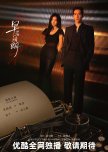
I Knew It Was Too Good to Be True
There are dramas that take a few episodes to win you over, and then there are dramas like The Early Spring that grab you by the collar from the very beginning and make you think: “Oh, this is going to be GOOD.”Unfortunately, this is also one of those dramas that makes you wonder halfway through: “Wait… where did all that momentum go?”
Let's start with the good stuff, because there is a lot of it.
The opening episodes are fantastic. The story immediately creates an interesting dynamic between Shang Zhitao and Luan Nian, and instead of spending forever waiting for something to happen, the drama gives us tension, attraction, awkwardness and conflict almost immediately.
And then there are Jing Boran and Sun Qian.
These two have chemistry. Not the kind of chemistry where the script tells you, “Look! They like each other!” and you are supposed to believe it. I'm talking about the kind where they can simply stand in the same room and you can feel that something is happening.
A look.
A pause.
A change in tone.
The distance between them.
Sometimes they don't even need dialogue.
Jing Boran is particularly good at playing Luan Nian's complicated personality. He can be arrogant, difficult, controlling and occasionally incredibly frustrating, but he never makes the character boring. There is always something underneath the surface, and Jing Boran knows exactly how much to show and how much to leave unsaid.
Sun Qian is equally important to this chemistry.
I've seen quite a few discussions where most of the praise goes to Jing Boran, and I actually think that's unfair to Sun Qian. She is an essential part of why this pairing works. Shang Zhitao may sometimes come across as passive or uncertain, but Sun Qian gives her enough warmth and sincerity to make the attraction believable.
Another thing I appreciated is that The Early Spring doesn't feel like a typical fluffy office romance.
These are adults with careers, ambitions, insecurities and responsibilities.
Shang Zhitao isn't simply introduced as “the girl who will eventually get the handsome boss.” She has her own professional journey, and watching her find her place in a competitive environment is an important part of the story.
I also liked the contrast between her and Luan Nian.
She is more straightforward and tends to take things literally, while he is much more complicated and often communicates through implications, half-truths and carefully controlled emotions.
The workplace setting also works surprisingly well. The office isn't simply there so the leads can bump into each other every five minutes. Their careers and professional choices actually influence their relationship, which gives the romance a more mature atmosphere.
Unfortunately, somewhere before the halfway point, I started feeling the drama losing itself.
Not all at once.
That's what makes it worse. Instead, you start noticing that the story isn't really moving anymore.
The romance becomes repetitive.
At first, the push-and-pull between Luan Nian and Shang Zhitao is exciting. You want to know whether they're going to take that next step.
Then they get closer.
Something happens.
They pull away.
You think: Okay, NOW they're finally going to talk about it.
Nope.
They go backwards again.
Then the story gives you another moment that makes you think they're finally going somewhere.
And once again… back to square one.
At some point I started feeling like I was watching the same emotional conversation in different outfits.
And this is where the drama lost me a little.
Meanwhile, the final episodes suddenly have to carry all the emotional development that the middle section could have been building gradually. Things that deserved time to breathe are suddenly happening one after another.
I also think the drama could have done more with its characters.
Luan Nian is fascinating because he is flawed. I actually prefer complicated male leads to perfectly polished green flags, so his personality didn't bother me as much as it might bother other viewers. What bothered me more was seeing how often the same emotional patterns repeated.
He has his issues.
She has her insecurities.
They clearly care about each other.
They clearly understand that something is happening between them.
And yet they keep making things unnecessarily complicated.
Sometimes it works because that's who they are.
Sometimes it just feels like the plot needs them to misunderstand each other for another episode.
I don't dislike Shang Zhitao, and I actually like that she has her own professional aspirations. But I wish the drama had given her more consistent development instead of allowing so much of her emotional journey to revolve around Luan Nian.
I wish the writers had trusted the relationship enough to let it develop naturally instead of repeatedly resetting it. I wish some of the middle episodes had been used to actually deepen the characters rather than prolonging the same conflict. And most of all, I wish the final developments hadn't been squeezed into the last couple of episodes.
Still, I can't deny the appeal.
Because whenever Luan Nian and Shang Zhitao are actually together, talking, looking at each other, fighting, teasing each other or simply existing in the same space… the drama comes alive again. And that chemistry is impossible to ignore.
So my final feeling is basically: Amazing beginning. Incredible chemistry. Beautiful atmosphere. Frustrating middle. Rushed ending. The Early Spring gave me a taste of how good it could be, and unfortunately, it never quite managed to live up to that first impression.
Was this review helpful to you?
This review may contain spoilers
The summer they never truly left behind
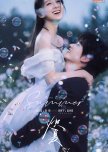
At its heart, Never-Ending Summer is not just a romance. It's a story about trauma, grief, guilt, family, and the impossible choices people make when they believe they are protecting the ones they love.But I think there's a lof of misunderstanding, so let's analyse it all:
Zhou Wan is, without question, one of the strongest aspects of the drama. She's not strong because she's fearless or because she always makes the right decisions. She's strong because life forces her to grow up far too early. After losing her father, being abandoned by her mother, and watching her grandmother become the only family she has left, Zhou Wan never really gets the chance to experience a normal childhood. By the time she's a teenager, she's already carrying responsibilities that no sixteen-year-old should ever have to face. When her grandmother becomes seriously ill, desperation replaces innocence.
This is exactly why I never saw her as manipulative.
Yes, approaching Lu Xixiao because of the connection between their families was morally questionable. The drama never pretends otherwise. But it also makes it painfully clear that Zhou Wan hated herself for even considering it. She wasn't driven by greed or revenge—she was driven by fear. Fear of losing the only person who had never abandoned her.
That doesn't excuse her decisions. But it makes them completely understandable.
Lu Xixiao is another character I found incredibly well written. I think many viewers reduce him to "the guy who got his heart broken," but his emotional wounds began long before Zhou Wan entered his life. Watching his mother die by suicide as a child is a trauma that shaped every part of who he became. Add to that an emotionally distant father and a family that valued reputation over love, and it's easy to understand why he struggled to trust people.
Then Zhou Wan appeared. She didn't magically heal him, but she gave him something he hadn't experienced in years: peace.
For the first time since his mother's death, he smiled again. He allowed himself to imagine a future that wasn't defined by loneliness.
That's why their relationship feels so meaningful.
The turning point of the story—the stabbing incident—is where I think many viewers misunderstand Zhou Wan the most. By that point, she was already drowning in guilt. She blamed herself for entering Lu Xixiao's life under false pretenses, even if her intentions had changed long before. From Zhou Wan's perspective, leaving wasn't an act of selfishness.
It was an act of sacrifice. She genuinely believed Lu Xixiao would have a happier, easier life without her. That's what makes her decision so heartbreaking. She wasn't right.
But she truly believed she was.
The chemistry between the two leads also deserves a lot of praise. Their relationship never feels overly dramatic or exaggerated. Instead, it's carried by quiet emotions, lingering glances, and conversations that say far more than dramatic declarations ever could. Their performances make it easy to believe that these two people spent ten years loving each other even while living separate lives.
Visually, the drama is equally beautiful. The cinematography captures both the warmth of youth and the melancholy of adulthood with remarkable sensitivity. The soundtrack fits the emotional tone perfectly, enhancing rather than overwhelming the quieter moments. Everything about the production feels soft, intimate, and nostalgic, which perfectly complements the story being told.
What I appreciated most about Never-Ending Summer is that it refuses to offer easy answers.
Love doesn't erase trauma.
Apologies don't undo years of pain.
And sometimes, people make terrible decisions because they genuinely believe they're doing the right thing.
The reunion after ten years isn't satisfying because it magically fixes everything. It's satisfying because, for the first time, both characters finally understand each other. Lu Xixiao understands why Zhou Wan left, while Zhou Wan finally realizes that she was never the burden she believed herself to be.
In the end, Never-Ending Summer isn't a story about perfect people making perfect choices. It's about two broken individuals trying to survive the weight of their past while slowly finding the courage to forgive—not only each other, but also themselves.
This drama never asked me to agree with every decision its characters made.
It simply asked me to see the world through their eyes.
And that's exactly why it stayed with me long after the final episode.
Was this review helpful to you?

This review may contain spoilers
I admit I had very high expectations for this drama, especially because it was heavily promoted and received a lot of praise. I decided to wait until it had finished airing before watching it, and honestly, I think that was the right choice, because otherwise I probably would not have continued it.The story itself is not bad, but unfortunately there are several aspects that simply do not work very well. First of all, I really enjoyed the beginning of the drama, especially the part set in the village of Li’an. The main couple truly shines there, although, in forty episodes, the amount of time they actually spend together without arguing is surprisingly limited.
Chang Yu is a very likable character, but as the story progresses, he becomes a bit too stereotypical and less believable. As for Xie Zheng, I have to admit that I did not enjoy his character very much. At certain moments, his behavior was so frustrating that I almost wanted to slap him. I also would have liked to see more fight scenes, particularly considering that he is supposed to be a marquis and a general.
On the other hand, the villains are definitely the highlight of the drama. They are extremely well written and much more interesting from a character-development perspective.
The secondary couple, Qi Min and Director Yu, works far better than the main couple, even though Director Yu is an enormous red flag. Their relationship simply feels more natural and engaging.
Overall, I would still recommend this drama to people who enjoy the genre or who are fans of the actors. It is light, entertaining, and easy to watch, but in my opinion it is far from the “masterpiece” that so many people claim it to be.
Was this review helpful to you?
This review may contain spoilers
Smart, ambitious and just chaotic enough
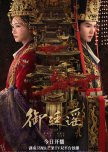
Meng Tinghui is an orphan who refuses to accept the life society has decided for her. Her goal is to enter officialdom through the imperial examinations and prove that a woman can stand among the most educated and powerful men in the court. Along the way, she crosses paths with Ying Gua, the young emperor travelling incognito. What begins as an unusual encounter gradually develops into a relationship built on mutual respect, political cooperation, friendship and, eventually, something much more personal.The premise itself isn't revolutionary, but I really enjoyed the way the drama approached it.
Meng Tinghui isn't waiting around for someone to change her life. She is already determined to change it herself.
And that's probably what I liked most about her. She's intelligent, ambitious, stubborn and occasionally so confident in her own plans. She knows what she wants and, more importantly, she knows exactly how difficult it will be for a woman to achieve it in the world she's living in.
She doesn't suddenly become powerful because the male lead decides to help her. She earns her position through her intelligence, persistence and ability to solve problems. The fact that she becomes one of the first women to enter the Hanlin Academy gives her journey an additional layer, because her ambition isn't simply about personal success. She genuinely wants to challenge a system that has never been designed with women like her in mind.
I also enjoyed how the drama mixed different types of conflicts. We get court politics, investigations, corruption, power struggles, questions surrounding the imperial examination, criminal organizations and eventually a much larger conspiracy.
The relationship between Meng Tinghui and Ying Gua was another major highlight. I particularly liked that their relationship didn't immediately become a typical romance. They first develop an understanding as two people who recognize each other's intelligence. Ying Gua sees that Meng Tinghui is capable of much more than the position society would normally allow her, while she gradually realizes that the apparently carefree young man she met is hiding something considerably more important. Their dynamic works because neither of them completely dominates the other.
They're both stubborn.
They're both clever.
And they're both very used to having their own way.
Which, naturally, means watching them interact can be hilarious.
One of the relationships I unexpectedly enjoyed was Yan Fuzhi and Shen Zhishu. Their interactions brought some much-needed lighter moments to the drama, and I found myself looking forward to their scenes. The secondary characters in general help make the world feel more populated, rather than existing solely to move Meng Tinghui and Ying Gua's story forward.
For a large part of the drama, I was very invested in the political storyline and especially in Meng Tinghui's journey as a female scholar and official. Then the story introduces larger revelations surrounding her identity and the Blood Moon Society, and while I understand why those twists were included, I wasn't always convinced that they were the strongest direction for the story.
The drama sometimes feels like it has too much story and not quite enough time to properly explore all of it. Several conflicts take a long time to develop, only for the final resolution to happen much faster than expected. The last part especially feels like it could have benefited from more breathing room.
It's one of those dramas where I can recognize the flaws while still having a very good time watching it. The first half in particular had me completely invested, and even when the story became less consistent toward the end, I never reached the point where I wanted to abandon it. Not a new historical-drama masterpiece, but a genuinely entertaining watch with a smart and ambitious female lead, an interesting emperor, plenty of court intrigue and a romance that takes its time developing.
Was this review helpful to you?

This review may contain spoilers
What makes you you when every piece of proof says otherwise?
There are thrillers that rely on serial killers, conspiracies and endless plot twists to keep viewers hooked. And then there is Mousetrap. A drama built around a question that is somehow even more terrifying:What would happen if one day nobody could prove you were you?
The premise immediately grabbed me. Je Moon-jae, a reclusive novelist who has spent years isolated from society, suddenly discovers that someone has stolen his identity. Not just his name, but his money, his property, his legal existence and even the trust of the people around him. As his life slowly slips through his fingers, he is forced into an uneasy partnership with No-ja, a ruthless loan shark who has his own reasons for tracking him down. Together, they begin hunting the mysterious figure known only as "The Rat."
What starts as an identity theft story quickly becomes something much bigger. And occasionally, something that feels almost like a nightmare. The idea of losing your identity isn't scary because it's violent.
It's scary because it's plausible.
Watching Moon-jae slowly realize that he can no longer access his own life creates a kind of anxiety that feels surprisingly real. Every episode builds on that sense of helplessness. The more he tries to prove who he is, the more impossible the task becomes.
The drama constantly asks: If everyone believes you're an impostor, how do you prove otherwise?
And honestly? That question stayed in my head long after I finished watching.
Ryu Jun-yeol is phenomenal here.
Moon-jae spends most of the drama exhausted, confused and increasingly desperate, but Ryu Jun-yeol never lets those emotions become repetitive. Instead, every breakdown feels slightly different.
Sometimes it's fear.
Sometimes it's anger.
Sometimes it's complete disbelief.
Watching him slowly question his own memories is honestly painful.
The relationship between Moon-jae and No-ja became one of my favorite parts of the series. They're forced together by circumstances, neither of them fully trusts the other, and yet they gradually become one of the most entertaining unlikely partnerships I've seen in a thriller. Their chemistry completely changes the energy of the drama.
Mousetrap isn't a drama that holds your hand. It expects you to pay attention. It expects you to question what you're seeing.
And sometimes it deliberately makes you uncomfortable.
The premise is fresh, the psychological tension rarely disappears, the performances are outstanding—especially Ryu Jun-yeol and Sul Kyung-gu—and the noir atmosphere elevates almost every scene.
More than anything, I loved that this isn't just a thriller about catching a criminal.
It's a thriller about identity itself.
What makes you you when every piece of proof says otherwise?
Was this review helpful to you?

This review may contain spoilers
Payback was served hot.
Payback follows Sun, a young man whose life is destroyed by a tragedy involving his family. Years later, he discovers that the people responsible are still living their lives as if nothing happened. One of them, in particular, has become a successful actor. So Sun decides to enter the entertainment industry himself, with one goal in mind: revenge.And this is where things get interesting.
The entertainment industry isn't exactly presented as a glamorous dreamland. Behind the cameras, fame and money are mixed with manipulation, debts, power games and people who are perfectly willing to use each other to get what they want. Sun enters this world carrying years of anger and guilt, and watching him slowly navigate it while trying to figure out who he can actually trust was one of my favorite parts of the drama.
The revenge plot kept me curious throughout. There are secrets being uncovered, old connections resurfacing, and characters whose motivations aren't always immediately obvious. I especially liked that Sun's revenge isn't simply about finding one villain and destroying him. The further he gets into the mess, the more complicated everything becomes.
But, let's be honest about one thing: Jay / Arthur.
He's intimidating, confident, calculating and very much aware of the power he holds. He doesn't come across as the stereotypical sweet BL love interest who exists solely to support the protagonist. Jay has his own agenda, his own wounds and his own reasons for getting involved with Sun. There's always a sense that he knows more than he's saying, which makes his interactions with Sun particularly fun to watch.
And then we have Sun and Jay together.
The chemistry between Min Thanakorn and Toptap Jarukit is absolutely insane.
I'm not talking about the kind of chemistry where two actors simply look good standing next to each other. These two have that dangerous kind of chemistry where even a completely normal conversation feels like it could turn into something else at any moment.
The looks.
The tension.
The way they stand around each other.
The little changes in expression.
Everything works.
There is a constant push and pull between Sun and Jay that makes their scenes impossible to ignore. Even when they're not being openly romantic, there is this underlying tension that makes you wonder what they're thinking and, more importantly, what they're going to do next.
And when the drama actually decides to turn up the heat... Oh.
Their intimate scenes work because they don't feel disconnected from the rest of their relationship. The attraction is there, but so are the power struggles, uncertainty and emotional vulnerability. Jay can be incredibly dominant and intimidating one moment and unexpectedly gentle the next, while Sun isn't simply sitting around waiting to be rescued. Their dynamic constantly shifts, which makes it much more interesting to watch.
What I also appreciated is that the romance doesn't completely swallow the revenge storyline. There is still a plot happening around them. Sun's personal mission remains important, and Jay's involvement isn't simply an excuse to create romantic scenes. Their relationship becomes part of the larger story rather than replacing it.
If I had to mention a weakness, I'd say that the revenge plot occasionally feels like it has to hurry toward its next major development.
Overall, Payback was a very pleasant surprise for me. It manages to combine revenge, crime, showbiz politics, romance and emotional drama without losing sight of what makes the central relationship so addictive.
But let's not pretend I'm going to be completely objective here.
The revenge plot got me interested. Sun and Jay's chemistry made me stay.
Was this review helpful to you?

This review may contain spoilers
The first half shines, the second ... struggles.
From the very first episodes, it felt like the drama had all the ingredients needed to become memorable historical dramas of the year. A heroine reborn with revenge in her heart, political conspiracies, shifting alliances, family betrayals, and a cast capable of carrying emotionally complex characters. On paper, it sounded like something I would absolutely adore. And for a while, I did.The first half of the drama is genuinely engaging. Chu Zhao's journey is compelling, and there is a real sense of purpose behind her actions. Every move feels calculated, every victory earned, and every political maneuver carries weight.
Unfortunately, somewhere around the middle of the drama, things start to unravel.
It's not that the story suddenly becomes bad. Rather, it feels as though the drama loses confidence in itself.
The aesthetic of the drama is one of its strongest assets and gives the series a distinctive identity. The deep crimson palace interiors, the elegant costumes, and some of the visual compositions are genuinely stunning.
Let's talk about battles .... Several battle scenes feel surprisingly lifeless, especially considering how important warfare is to the overall narrative. There are moments that should feel epic and emotionally charged but instead come across as strangely empty. Some of Fu Jiu's action sequences are genuinely exciting and demonstrate how effective the series can be when everything comes together. Unfortunately, those moments become increasingly rare as the story progresses. After the midpoint, Fu Jiu begins to fade into the background. Despite being the male lead, he receives surprisingly little focus during crucial stages of the story. Considering the ongoing military conflicts and his importance to the narrative, it feels like a missed opportunity. More battlefield scenes, more strategic moments, and more development for his personal journey could have added much-needed energy to the second half.
The first half promises something exceptional. It hints at a story capable of balancing revenge, romance, political intrigue, and character growth in a meaningful way. Instead, the second half settles for something merely good when it had the potential to be great.
It remains an enjoyable watch, particularly for fans of historical revenge dramas. But it is also a drama that left me wondering what might have been if the same level of care present in the opening episodes had been maintained until the very end.
Was this review helpful to you?
This review may contain spoilers
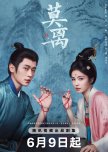
When I started The First Jasmine, I expected a beautiful historical romance with a slow-burn relationship and plenty of emotional moments. While the drama certainly delivers all of that, what surprised me the most was how much depth it gave its characters. The biggest strength of the drama is undoubtedly A'Li. She is one of the strongest female leads I've watched this year—not because she is fearless or invincible, but because she feels incredibly human. Her past has left deep emotional scars, and the drama never tries to "fix" her overnight. Instead, it allows her healing to happen gradually, making every small step forward feel earned. Watching her slowly regain confidence, learn to trust again, and refuse to let her trauma define her was one of the most rewarding parts of the series. A'Yao complements her perfectly. I really appreciated that his role wasn't simply to become her love interest. Yes, A'Li helps heal his injured leg, but in many ways, he is the one who helps heal her heart. He never tries to force her to move on or push her beyond her limits. Instead, he stays by her side with endless patience, quiet understanding, and unwavering support. Their relationship is built on trust rather than dramatic declarations of love, and I found that much more meaningful than many romances that rely on constant misunderstandings or exaggerated emotional scenes.
The chemistry between Bai Lu and Cheng Lei is simply wonderful. They don't need grand romantic gestures to convince you that these two characters belong together. A simple glance, a quiet conversation, or a shared moment of silence says more than pages of dialogue ever could. Their performances make the relationship feel natural, mature, and deeply comforting.
The supporting cast also deserves a lot of praise. While not every storyline received the ending I was hoping for, each character brought something meaningful to the overall narrative.
A'Ying, in particular, broke my heart. More than anything, I wished the drama had allowed her to find happiness through her own independence instead of tying so much of her journey to Mo Jingli. She had all the qualities needed to become an incredibly strong woman in her own right, which makes her story feel bittersweet.
Then there's Mo Jingli... probably one of the most frustrating yet fascinating characters in the drama. Mo Jingli never felt completely irredeemable. His obsession with Ye Li after marrying Ye Ying was undeniably unfair and often difficult to watch, but the drama also gives him enough emotional complexity to understand why he became the person he is. I didn't agree with many of his choices, but I could never bring myself to hate him completely. If I had to point out one weakness, it would be the final battle. After all the build-up leading to Mo Jingli's arrival in the capital, I expected a much larger and more impactful confrontation. Instead, the fighting sequences were surprisingly short, lasting less than a full episode. Considering how much tension had been built throughout the story, I would have loved to see more large-scale battle scenes and military strategy before the conflict was resolved. It felt like a missed opportunity, especially because the drama had done such a great job raising the stakes beforehand.
What I appreciated most, however, is that the drama never forgets its emotional core. Yes, there are political conspiracies, revenge plots, and palace intrigue, but at its heart, this is a story about healing. It reminds us that surviving trauma doesn't mean forgetting the past. Healing isn't about becoming the person you were before—it is about learning how to move forward while carrying your scars with you.
In conclusion , The First Jasmine is much more than a historical romance. It is a beautifully acted, emotionally rich drama filled with memorable characters, meaningful relationships, and one of the most mature love stories I've seen in a long time.
Was this review helpful to you?


