
 Editorials

 2
2 1
1 1
1


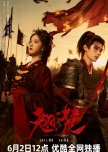
Much Ado About Power
Ashes to Crown began with all the ingredients of a gripping political revenge drama, but unfortunately it struggled to maintain the momentum.
The story opens with Chu Zhao, the headstrong daughter of a powerful general, determined to marry Prince Xiao Xun despite her father's objections. Against all expectations, she gets her wish and eventually becomes Empress when Xiao Xun ascends the throne. It initially looks like the familiar tale of lovers overcoming parental opposition—but that happiness is brutally short-lived. Xiao Xun murders her father's trusted deputy, has her father killed to seize control of the army, and finally strangles Chu Zhao.
She awakens in the past, standing before the tolling bell of a temple, with every memory of her previous life intact.
This time, she resists the marriage. Armed with knowledge of the future, she takes a completely different path. During the rebellion that claims the Crown Prince's life, she allies herself with Xie Yan Lai and fights her way to becoming the guardian of the young emperor, the Crown Prince's son, and the Grand Princess.
From there, the court becomes a battlefield of political intrigue, with four major players vying for power: Xiao Xun, Chu Zhao, Xie Yanfang (the young emperor's uncle), and Deng Yi, the emperor's mentor. Later, after Xiao Xun escapes the capital to his father's feudal territory, the struggle narrows to a three-way contest for a short period.
The strongest aspect of the drama is undoubtedly the verbal sparring. Court debates and private confrontations are packed with clever arguments, half-truths, distortions and outright lies. Watching each faction justify its actions while tearing down its rivals was often more engaging than the political schemes themselves.
Unfortunately, the actual political manoeuvring never felt particularly convincing. The strategies employed by the various factions seemed surprisingly shallow, and despite all the plotting, it often felt as though very little was actually happening. Ironically, that sometimes resembles real-world politics—plenty of scheming and endless arguments, but very little progress.
Beyond the political debates, there are the obligatory fight scenes, a few battles and the expected romantic moments, but none are especially memorable. Familiar tropes also make regular appearances—the "only one bed" situation, characters hanging perilously over cliffs, and other scenes we've seen countless times before. Contrary to some reviews, I also found the pacing rather slow.
There are, however, several positives.
Chen Duling delivers an excellent performance, effortlessly balancing kindness with a hint of darkness that keeps you wondering whether Chu Zhao herself might eventually cross the line. The rest of the cast also perform well.
One unexpected strength is that even some of the villains evoke sympathy. Several are intelligent and capable people who could have achieved great things had they not become consumed by ambition, greed or their own twisted beliefs. Their downfalls are surprisingly moving, while the eventual triumph of justice is genuinely satisfying.
The overall premise is intriguing, but as the story branches into its numerous subplots, much of the intrigue dissipates. By the end, it feels like a great deal of plotting with relatively little payoff.
One final mystery remains: I still have no idea how the English title Ashes to Crown relates to the story.
Overall, this is a decent political drama with strong performances and an interesting premise, but one that does not quite lives up to its potential. If you have a quiet weekend and have run out of dramas to watch, it is worth a look—but I would not put it near the top of my recommendation list.
The story opens with Chu Zhao, the headstrong daughter of a powerful general, determined to marry Prince Xiao Xun despite her father's objections. Against all expectations, she gets her wish and eventually becomes Empress when Xiao Xun ascends the throne. It initially looks like the familiar tale of lovers overcoming parental opposition—but that happiness is brutally short-lived. Xiao Xun murders her father's trusted deputy, has her father killed to seize control of the army, and finally strangles Chu Zhao.
She awakens in the past, standing before the tolling bell of a temple, with every memory of her previous life intact.
This time, she resists the marriage. Armed with knowledge of the future, she takes a completely different path. During the rebellion that claims the Crown Prince's life, she allies herself with Xie Yan Lai and fights her way to becoming the guardian of the young emperor, the Crown Prince's son, and the Grand Princess.
From there, the court becomes a battlefield of political intrigue, with four major players vying for power: Xiao Xun, Chu Zhao, Xie Yanfang (the young emperor's uncle), and Deng Yi, the emperor's mentor. Later, after Xiao Xun escapes the capital to his father's feudal territory, the struggle narrows to a three-way contest for a short period.
The strongest aspect of the drama is undoubtedly the verbal sparring. Court debates and private confrontations are packed with clever arguments, half-truths, distortions and outright lies. Watching each faction justify its actions while tearing down its rivals was often more engaging than the political schemes themselves.
Unfortunately, the actual political manoeuvring never felt particularly convincing. The strategies employed by the various factions seemed surprisingly shallow, and despite all the plotting, it often felt as though very little was actually happening. Ironically, that sometimes resembles real-world politics—plenty of scheming and endless arguments, but very little progress.
Beyond the political debates, there are the obligatory fight scenes, a few battles and the expected romantic moments, but none are especially memorable. Familiar tropes also make regular appearances—the "only one bed" situation, characters hanging perilously over cliffs, and other scenes we've seen countless times before. Contrary to some reviews, I also found the pacing rather slow.
There are, however, several positives.
Chen Duling delivers an excellent performance, effortlessly balancing kindness with a hint of darkness that keeps you wondering whether Chu Zhao herself might eventually cross the line. The rest of the cast also perform well.
One unexpected strength is that even some of the villains evoke sympathy. Several are intelligent and capable people who could have achieved great things had they not become consumed by ambition, greed or their own twisted beliefs. Their downfalls are surprisingly moving, while the eventual triumph of justice is genuinely satisfying.
The overall premise is intriguing, but as the story branches into its numerous subplots, much of the intrigue dissipates. By the end, it feels like a great deal of plotting with relatively little payoff.
One final mystery remains: I still have no idea how the English title Ashes to Crown relates to the story.
Overall, this is a decent political drama with strong performances and an interesting premise, but one that does not quite lives up to its potential. If you have a quiet weekend and have run out of dramas to watch, it is worth a look—but I would not put it near the top of my recommendation list.
Was this review helpful to you?


