

 1
1 1
1 1
1


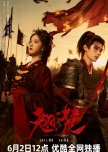
Much Ado About Power
Ashes to Crown began with all the ingredients of a gripping political revenge drama, but unfortunately it struggled to maintain the momentum.The story opens with Chu Zhao, the headstrong daughter of a powerful general, determined to marry Prince Xiao Xun despite her father's objections. Against all expectations, she gets her wish and eventually becomes Empress when Xiao Xun ascends the throne. It initially looks like the familiar tale of lovers overcoming parental opposition—but that happiness is brutally short-lived. Xiao Xun murders her father's trusted deputy, has her father killed to seize control of the army, and finally strangles Chu Zhao.
She awakens in the past, standing before the tolling bell of a temple, with every memory of her previous life intact.
This time, she resists the marriage. Armed with knowledge of the future, she takes a completely different path. During the rebellion that claims the Crown Prince's life, she allies herself with Xie Yan Lai and fights her way to becoming the guardian of the young emperor, the Crown Prince's son, and the Grand Princess.
From there, the court becomes a battlefield of political intrigue, with four major players vying for power: Xiao Xun, Chu Zhao, Xie Yanfang (the young emperor's uncle), and Deng Yi, the emperor's mentor. Later, after Xiao Xun escapes the capital to his father's feudal territory, the struggle narrows to a three-way contest.
The strongest aspect of the drama is undoubtedly the verbal sparring. Court debates and private confrontations are packed with clever arguments, half-truths, distortions and outright lies. Watching each faction justify its actions while tearing down its rivals was often more engaging than the political schemes themselves.
Unfortunately, the actual political manoeuvring never felt particularly convincing. The strategies employed by the various factions seemed surprisingly shallow, and despite all the plotting, it often felt as though very little was actually happening. Ironically, that sometimes resembles real-world politics—plenty of scheming and endless arguments, but very little progress.
Beyond the political debates, there are the obligatory fight scenes, a few battles and the expected romantic moments, but none are especially memorable. Familiar tropes also make regular appearances—the "only one bed" situation, characters hanging perilously over cliffs, and other scenes we've seen countless times before. Contrary to some reviews, I also found the pacing rather slow.
There are, however, several positives.
Chen Duling delivers an excellent performance, effortlessly balancing kindness with a hint of darkness that keeps you wondering whether Chu Zhao herself might eventually cross the line. The rest of the cast also perform well.
One unexpected strength is that even some of the villains evoke sympathy. Several are intelligent and capable people who could have achieved great things had they not become consumed by ambition, greed or their own twisted beliefs. Their downfalls are surprisingly moving, while the eventual triumph of justice is genuinely satisfying.
The overall premise is intriguing, but as the story branches into its numerous subplots, much of the intrigue dissipates. By the end, it feels like a great deal of plotting with relatively little payoff.
One final mystery remains: I still have no idea how the English title Ashes to Crown relates to the story.
Overall, this is a decent political drama with strong performances and an interesting premise, but one that does not quite lives up to its potential. If you have a quiet weekend and have run out of dramas to watch, it is worth a look—but I would not put it near the top of my recommendation list.
Was this review helpful to you?
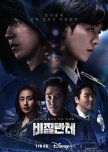
Kim Ji-yong's life is shattered when his mother is brutally murdered. The killer receives a sentence of only three and a half years. Worse still, when released from prison, he shows no remorse whatsoever and continues to assault and terrorise others. For Ji-yong, the message is clear: the law may have punished the crime, but it has not delivered justice.
As a student at the police academy, he finds himself caught between two worlds. By weekday, he studies to uphold the law. By weekends, he becomes a vigilante, hunting down violent criminals who have escaped with lenient sentences and making them face consequences the courts never imposed.
It is a dangerous path, but one that many viewers may secretly find themselves sympathising with. How many times have we read news reports of horrific crimes followed by punishments that seem woefully inadequate? The drama constantly forces us to confront the uncomfortable gap between legality and justice.
What begins as personal revenge soon grows into something much larger. Ji-yong finds himself uncovering a network of corruption involving powerful figures who hide behind wealth, influence, and respectability. Senior police officers, politicians, chaebols, serial killers, and even a church pastor all become entangled in a web of crime and deception. Some wear expensive suits. Some stand behind podiums. Some don the uniform of authority. Some preach morality. Yet beneath their respectable facades lie individuals capable of extraordinary cruelty.
As the body count rises and public support for the Vigilante grows, the pressure intensifies. A determined investigator begins hunting him. A journalist seeks to tempt him into more killings to elevate the broadcasting station following. Admirers and copycats emerge, eager to join his crusade, often creating as many problems as they solve.
The tension is relentless because you constantly find yourself torn. Part of you wants Ji-yong to succeed. Part of you fears that every step he takes brings him closer to arrest, exposure, or death. You find yourself walking a moral tightrope alongside him, questioning whether the law should always be obeyed when it appears incapable of protecting the innocent.
The emotional impact becomes even stronger when innocent people become caught in the crossfire. One of Ji-yong's allies pays the ultimate price, and some of the drama's most powerful moments come from watching his grief and anger. Particularly frustrating is the case of a corrupt individual who receives praise and promotion after death, when his crimes should have been exposed and judged. Those moments remind us that injustice is not always committed by criminals alone; sometimes it is enabled by institutions that choose convenience or public image over truth.
The drama leaves many questions hanging in the air. While justice is ultimately served on several key villains, some of the biggest and most powerful players manage to evade full accountability. The ending is deliberately open-ended, suggesting that the fight against corruption is never truly over. Given the scale of the unresolved storylines, I would welcome a sequel. It is hard not to feel disappointed when some of the biggest fish still swim free.
What makes Vigilante compelling is not only its action or suspense, but the ethical dilemma at its heart. Most viewers will agree that dangerous criminals should face consequences. The harder question is whether an individual has the right to decide what those consequences should be. The drama never allows that question to become comfortable. Ji-yong's actions may satisfy a desire for justice, but they also place him, and those around him, in grave danger. In pursuing criminals, he risks becoming one himself.
I finished watching this drama shortly after visiting a friend whose son is addicted to drugs. The family are decent, caring people, and his siblings have all turned out well. Yet he became involved with drugs after dealers targeted students near his school. The addiction has devastated his life and even driven him to attempt suicide. It makes me start to admire countries with capital sentence for hardcore drug traffickers who destroy lives.
Stories like that make dramas such as Vigilante resonate more deeply. They remind us that crime is not an abstract concept. Behind every statistic is a victim, a family, and a life altered forever. While no society can function if everyone takes the law into their own hands, it is impossible not to understand the anger that fuels Ji-yong's crusade.
Ultimately, Vigilante asks a question that lingers long after the final episode: when justice fails, who is left to protect the victim? And perhaps even more troubling—what happens when the people entrusted to uphold justice become part of the problem?
For viewers with a strong sense of justice, this drama is difficult to resist. It is tense, morally complex, emotionally charged, and guaranteed to leave you debating its central question long after the credits roll.
Was this review helpful to you?

Worth mentioning too is Dai Yu in a supporting role, who does very well portraying a character shifting between arrogance and disappointment. I remember him as the villain in The Legends, and in every major drama where I have seen him as a second lead or in support, he has delivered. I have yet to see him headline a highly rated blockbuster, but I hope that opportunity comes soon.
I would also give credit to Fu Jia as Hu Xiu’s father. I have often seen him cast as despicable yet comical mandarins—he has the perfect expressive eyes for those roles—but here he reveals a different side as a protective, loving father, showing impressive versatility as an actor.
Why does this drama have such appeal?
It opens with Hu Xiu being abandoned by her fiancé at their engagement party—he simply does not show up. From there, she crosses paths with Xiao Zhiyu, a highly successful architect with his own design firm, and Pei Zhen, heir to a major construction empire. Both handsome, accomplished, and deeply drawn to her. There is something undeniably satisfying in watching a woman who has been walked out on find herself pursued by two exceptional men, while the awful ex-fiancé eventually receives his karma. That sense of vindication is sweet.
There is also a relatable underdog arc. Hu Xiu leaves a dreadful assistant job, struggles to break into architecture, disappointed in offer of similar roles, and only later gets the opportunity she wants. Many of us know how one unexpected event can alter the course of life. The drama plays well with that idea—had she landed the first job she interviewed for, even her romantic path might have been entirely different.
As with many romance dramas, there are plenty of “save the damsel in distress” moments from both suitors—ha! Much of the humour comes from their rivalry and jealous sparring. Watching Hu Xiu caught between two determined lovers is genuinely entertaining.
There is a thread of mystery running through the story, though not in who Xiao Zhiyu is pursuing—that much is clear. The deeper intrigue lies in what truly happened, and the hidden reasons why it unfolded as it did. The tension lies less in mystery and more in the rivalry between Pei Zhen and Xiao Zhiyu—played out on both the commercial battlefield and in matters of the heart. In a fiercely competitive commercial world like China’s, both open rivalry and underhanded tactics feel entirely believable.
For Chinese dramas, I usually gravitate toward historical or fantasy genres. The costumes and CGI are beautiful, but they also ask less realism of the viewer—who can say how deities or ancient courts ought to behave? Modern dramas are different. I often feel Chinese modern dramas can be overly cautious and less realistic, and there are a few things here I did question:
- In reality, architects are not usually blamed when buildings collapse; that tends to fall more on structural engineering (the civil engineers) or construction failures (the contractors or builders).
- Some of the public displays of affection felt less believable in a Chinese setting. Why does no one comes along and make some nasty comments?
- The parents' reaction to the couple sleeping together felt far milder than one might expect in a conservative society.
- And yes, those short skirts belong on date nights, not in the office—the costume designer needed a reality check. Professional dress is still very much alive, even in the West. Standards may have relaxed, but not that far up the thigh.
- Finally, there are familiar tropes—the classic “we fell in love, but something tragic happened between our families /clans a generation ago.” Overused? A little.
Those are my nitpicks. For modern dramas, I still tend to prefer Korean dramas, which I find bolder and often more realistic, rather than leaning as heavily on proven formulas and accepted tropes, trying to please the audience at the same time get accepted by the authorities.
That said, as you can see, I still gave this a 9.
And that tells you something—I do recommend watching this drama.
Was this review helpful to you?
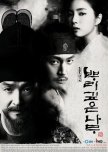
Power, Language and the Cost of Change
Tree with Deep Roots is a richly layered and compelling historical drama that is both intellectually engaging and emotionally resonant. Centred on King Sejong—the monarch credited with the creation of Hangul—it offers not only a gripping narrative but also a fascinating gateway into the origins of the modern Korean writing system. For viewers unfamiliar with the language, the drama does an excellent job of sparking genuine curiosity about how Hangul transformed literacy in Korea. While the Minbon secret society is fictional, it is woven into the story in a way that feels plausible and thought-provoking.The story opens with the tragic childhood of Ddol Bok and Dam Yi, whose lives are shattered by a political conspiracy. A tampered royal message leads to accusations of treason, resulting in the execution of their families. Believing that King Sejong is responsible, Ddol Bok grows up consumed by a desire for revenge. The separation of the two children—once deeply connected—sets up one of the drama’s most compelling emotional threads. As they grow into adults on opposing sides, the tension builds beautifully. Viewers are left in constant anticipation: when will they meet again, will they recognise each other, how will they convince each other and what will they do when faced with the truth?
At the heart of the drama lies the ideological battle surrounding the Minbon society. Claiming to uphold the teachings of Jeong Do-jeon, they advocate for a state governed by Neo-Confucian scholars, reducing the king to a symbolic figurehead. This philosophy stands in stark contrast to the royal authority upheld by King Taejong and later challenged by Sejong’s own vision of leadership. The drama uses this conflict to explore deeper questions about power, governance, and who should hold the right to shape a nation’s future.
Parallel to this political struggle is King Sejong’s revolutionary mission: to create a writing system based on Korean phonetics rather than borrowed Chinese characters. The significance of this cannot be overstated. By making literacy accessible to common people, he was effectively redistributing power—something the elite class perceived as deeply threatening. The drama captures this tension brilliantly, illustrating how knowledge itself can become a battleground.
One of the most striking character arcs is that of Jeong Ki-joon. What begins as a principled commitment to preserving his uncle’s ideology gradually descends into obsession and moral corruption. His fear of losing intellectual and social dominance drives him to increasingly extreme actions. In his eyes, Hangul is not a tool of empowerment but a dangerous equaliser. His descent into fanaticism is chilling and, at times, disturbingly relatable.
The Minbon society’s actions—ranging from manipulation to outright violence, including planned assassinations—highlight how ideology can be twisted to justify cruelty. The drama also subtly exposes the fragility of such movements. Beneath their philosophical rhetoric lies ambition, insecurity, and a hunger for control. When tested, their unity fractures, revealing that their convictions are not as steadfast as they claim.
Watching this in a modern context, it is difficult not to draw parallels with contemporary extremism. The way individuals become radicalised, convinced of their moral superiority while committing acts of violence, feels all too familiar. This adds an additional layer of relevance to the story.
The drama builds to a poignant conclusion, marked by the loss of remarkable individuals whose integrity and talent make their sacrifices all the more painful. These moments linger, reminding viewers of the cost of progress and conviction.
The performances are outstanding across the board. Shin Se-kyung delivers a particularly memorable performance, especially in her final scenes, where her physical portrayal of suffering is both convincing and heartbreaking. The three leads anchor the drama with depth and emotional intensity, bringing complexity to their roles.
Overall, Tree with Deep Roots is a well-crafted and deeply satisfying drama that combines historical insight with compelling storytelling. It is certainly worth watching, especially for those who appreciate narratives that challenge both the mind and the heart.
If there is one minor drawback, it is that the repeated scheming of the Minbon society can at times feel frustrating, particularly when set against the nobility of Sejong’s vision. However, even this serves to reinforce the central theme: that meaningful change is rarely achieved without resistance, often from those most invested in preserving the status quo.
If this story captivates you, I would highly recommend Six Flying Dragons, which serves as a prequel to Tree with Deep Roots. It delves deeper into the political foundations and key figures that shaped the world you see in this drama. In my view, it is an exceptional production—one I would confidently rate a perfect 10.
Was this review helpful to you?
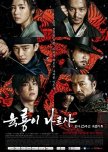
When Comrades Become Enemies
The historical drama Six Flying Dragons tells the gripping story of the collapse of the Goryeo dynasty and the turbulent birth of the Joseon dynasty. Although this drama is nearly a decade old, truly great storytelling never ages. If you enjoy historical Korean epics filled with political intrigue, strategy, and breathtaking sword fights, this is an absolute must-watch.The story opens with the decaying final years of the Goryeo court, where the ruling elites have long forgotten the people they are meant to serve. The royal court has become a den of corruption. Greedy nobles compete ruthlessly for power, filling their coffers while crushing the peasants with unbearable taxes. Ordinary people are treated as little more than disposable tools in a brutal political game.
Out of this chaos emerges a group of passionate young visionaries determined to tear down the rotten system and rebuild a new nation. Led by the brilliant strategist Jeong Do-jeon (Sambong), they dream of a radically different society. Their bold plan includes land reform, returning land to the peasants and dismantling the entrenched privileges of the aristocracy.
Yet revolution is never simple.
Even those who recognise the corruption of Goryeo hesitate to support the overthrow of the dynasty. Many loyal scholars and ministers, deeply rooted in Confucian ideals, believe reform should happen within the existing system, not through rebellion. Their vision is not a new dynasty, but a renewed Goryeo.
Adding another layer of mystery is the shadowy Nameless organisation. Operating silently in the background, this secret network of spies and elite fighters monitors every move of the major political players. Kings rise and fall like puppets on strings as this unseen force manipulates events from the shadows. The question constantly lingers: who truly holds the power?
What follows is a high-stakes battle of intelligence, loyalty, and survival. Assassinations, political smears, and ruthless power plays become everyday tools in the struggle for dominance. Weak kings are replaced with puppet rulers. Alliances shift overnight. Exceptional warriors emerge from unexpected places, and the action sequences are electrifying.
Yi Seong Gye (the First king of Joseon) himself is portrayed as a deeply conflicted ruler. He hesitates constantly, worried about how history and the people will judge him for betraying the Goryeo dynasty. His indecision nearly derails the revolution more than once.
History tells us that Goryeo eventually falls. But the birth of Joseon does not immediately bring the peace many hoped for. Instead, the new dynasty quickly fractures into three powerful factions.
The Nameless organisation fights fiercely against the proposed land reforms. Sambong pushes forward with his vision of a powerful bureaucratic state led by scholars rather than royalty. Meanwhile, the ambitious prince Yi Bang-won, fifth son of the new king Yi Seong-gye, believes the royal family must retain strong authority.
Once comrades who fought shoulder-to-shoulder for a shared dream now become bitter rivals. In this dangerous world, one person's survival often means another's death.
After the revolution, the new court reveals another uncomfortable truth: power still breeds politics. Important positions are distributed not by merit, but by political allegiance. Despite his immense contributions, Yi Bang Won is quickly sidelined. But he is not a man who accepts being pushed aside quietly.
This drama fascinates me because its themes feel strikingly modern. The corruption in the Goryeo court mirrors the dysfunction we sometimes see in modern parliaments and congresses. Even in workplace politics, the same patterns appear: once success is achieved, everyone scrambles for recognition and influence.
When the common enemy disappears, personal ambition takes centre stage.
Sambong's dream of conquering Liaodong reflects the dangerous pull of personal vision overriding practical reality. Yi Bang Won's anger at seeing his teenage brother elevated ahead of him reflects both wounded pride and the brutal nature of power.
But what truly stayed with me is the tragic fate of many brilliant and capable characters. Many of them die not because they are evil, but simply because they stood on the wrong side of history or became casualties of the power struggle.
The drama is powerful on the emotional front. Beyond the thrill of revolution and the clash of ideals, it captures the quiet emptiness that follows victory. When the battles are over and the dream has finally been realised, what remains is not triumph alone, but a profound sense of loss.
The excitement of the struggle fades, leaving behind loneliness, grief, and the haunting memories of loved ones lost along the way. Bonds that were once forged in loyalty and shared ideals slowly dissolve, and the comrades who once fought side by side are gone — some fallen, others turned into enemies.
In the end, the drama reminds us that even when the goal is achieved, the price of victory can be heartbreakingly high.
Of course, I could also nitpick a few trivial moments. One scene shows the warrior Moo Hyul falling off a cliff with Cheok Sa Gwang, landing on rocks and then recovering almost immediately. Perhaps a grassy hillside would have made that moment more believable.
Before ending this review, I must mention something rare in Korean dramas: the beautifully composed theme music. The soundtrack carries a powerful traditional Korean tone that perfectly complements the historical atmosphere of the story.
And finally, the drama does not disappoint visually either. The lead actresses and the charismatic fighter Ddang Sae certainly add their own charm to the screen.
In short, Six Flying Dragons is an epic tale of revolution, ideology, ambition, and betrayal. It reminds us that the fall of one system and the birth of another rarely bring immediate justice. Instead, it simply opens the door to a new struggle for power.
Was this review helpful to you?
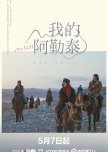
Under the Vast Sky of Altai
I was utterly spellbound by the ending theme song. It is the kind of melody that seeps quietly into your heart and refuses to leave. Beautiful, lyrical, sentimental, romantic and richly ethnic, it carries the vastness of the land within its notes. As it plays, you can almost imagine yourself lying in the endless grasslands of Altai, gazing up at the open sky, breathing in freedom itself. For those curious, you can listen to it here: https://www.youtube.com/watch?v=LiUbJKGKiP4.I first heard about this drama while travelling in Xinjiang, when our tour guide mentioned it almost in passing. At the time, it felt like one of those fleeting travel anecdotes you tuck away and forget. Yet it lingered somewhere in my mind, and over a year later, I finally tracked it down on iQIYI. Its Chinese title is My Altai. Set in the Altai region of Xinjiang, the drama is a rare linguistic tapestry, with much of the dialogue in Kazakh, interwoven with Mandarin spoken by Han Chinese characters, all supported by English subtitles. This alone gives the series an authenticity that immediately sets it apart.
Xinjiang is a multilingual, multicultural land, and Altai is among its most breathtaking regions, often described as the Switzerland of China. Watching this drama felt less like viewing a story and more like revisiting a place. The sweeping landscapes, roaming herds, and quiet rhythms of nomadic life stirred memories of the people and the raw beauty of the region.
At the heart of the story is Li Wenxiu, a Han Chinese girl with dreams of becoming a writer. Her life in Urumqi, however, proves deeply unsatisfying. Burdened by failure and grief, she travels to Altai to join her mother, who is mourning the loss of her husband and has retreated to this remote land to survive and heal. There, Wenxiu befriends the locals and helps her mother run a small shop to make ends meet. It is in this rugged yet gentle world that she meets Batay, a free-spirited nomadic young man who dreams of becoming a horse trainer. Their bond grows quietly but deeply, shaped by shared moments under wide skies. Love blossoms, only to be tested by a sudden accident and the pull of diverging ambitions. Fate drives them apart, leaving the lingering question: will their paths cross again?
In this short drama, you are confronted with a heart-rending moment when a man is forced to shoot the horse he loves and has nursed back to health in order to save the woman he loves. In that instant, the audience grieves alongside them both, sharing their unbearable loss and sacrifice.
The setting is raw and rugged, reflected in the landscape and the people who inhabit it. Most of the cast appear naturally sun-tanned, as though shaped by wind and weather. The male lead (Chinese name: Yu Shi), of Mongolian descent, embodies this environment perfectly, ruggedly handsome with a presence that feels both grounded and authentic. I hope to see more of him in future dramas.
Beyond romance, the drama paints a moving portrait of nomadic life and the cultural tensions beneath its surface. It explores cross-cultural relationships, generational conflict, and the painful choices faced by the young. Modern life beckons with promises of stability and opportunity, tempting them to abandon the wandering traditions of their ancestors. Meanwhile, the older generation clings fiercely to the old ways, holding on for as long as their bodies and spirits allow.
This is not the kind of drama I usually gravitate towards. I confess that I am easily drawn to glittering costumes, poetic dialogue, and visually polished casts. At first, this drama felt slow, understated, and even a little dull to me. Yet, almost without realizing it, I found myself completely absorbed. What began as mild curiosity turned into deep affection. By the end, it had quietly claimed a place in my heart.
For its sincerity, its cultural richness, and its haunting sense of place, I would highly recommend this drama. It does not shout for attention, but if you let it, it will stay with you long after the final note fades.
Was this review helpful to you?
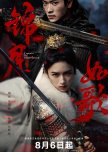
When the splendid moon sings
He Yan dons a mask and assumes the identity of the eldest son of the He family, taking the place of her frail and seemingly dying stepbrother, He Rufei, to safeguard the family’s inheritable noble title. Trapped in this false identity and desperate to escape an arranged marriage to another woman, she chooses the battlefield instead. Years later, she returns as a celebrated war hero and is personally rewarded by the Emperor with the title of General Feihong. Glory, however, proves short-lived. Her stepbrother recovers, covets her achievements, and conspires with their father to steal her title and rewards, leaving her blinded and presumed dead.Against all odds, He Yan survives. With the help of her former tutor, she gradually recovers her sight and reinvents herself once again, this time joining the Xiao Army under an assumed name. The army is led by Xiao Jue, her former classmate, who fails to recognise her without the mask. Still, he quickly grows suspicious. Her military skills far exceed those of a new recruit, and his doubts deepen when he discovers that she is a woman. Yet, ability speaks louder than gender, and He Yan proves her worth repeatedly on the battlefield.
In Yezhou, she befriends Chu Zhao, a gentle and refined scholar who is also a student of the Chancellor, a political adversary of Xiao Jue. Friend or foe, Chu Zhao occupies a precarious position in the larger struggle. As life-and-death experiences bind the trio together, both Xiao Jue and Chu Zhao fall in love with He Yan. The question then becomes not only who will win her heart, but who will survive the ruthless game of power surrounding them.
Despite the generally positive reviews, it took me a long time before I finally started watching this drama. The English drama title initially reminded me too strongly of Mulan, a name that has become almost synonymous with the trope of a woman disguising herself as a man to go to war. Mulan herself is a fictional figure, and I have little interest in yet another retelling of that story; I have watched more than enough variations already.
Ancient Chinese history offers few documented examples of outstanding female generals and none had disguised as a man. For a delicate woman to pass off as a man for prolong period, it needs her comrades to have vision problem and the premise stretches realism. Furthermore, cross-dressing heroines are an extremely overused trope in historical dramas.
That said, once I finally began watching, I found the drama surprisingly entertaining. It ticks all the essential boxes: attractive leads, strong performances, exquisite costumes, evocative theme music, polished cinematography, and impressive CGI. The story itself is engaging and filled with suspense. There is little mystery regarding the villains, as their identities are obvious from the outset. Instead, the appeal lies in watching the battle of wits unfold and holding one’s breath to see which side key characters will ultimately choose.
What truly stood out for me was the second male lead, portrayed by Zhang Kang Le. Although he has appeared in dramas I have watched before, this was the first time he truly caught my attention. He delivers a convincing performance as a pivotal character whose choices can tip the balance between victory and defeat. Torn between following the corrupt path of his tutor or adhering to his own moral compass, his internal struggle adds considerable depth to the narrative. I do, however, lament how harshly the drama treats him in the end. After all his efforts to live an upright and principled life, he deserved a more compassionate resolution. While he does make a grave mistake later in the story, he already pays dearly through emotional loss and a deeply fractured love life. The emperor should not blame him for his own error in decision which is the consequence of his own suspicion and mistrust of his generals.
In most dramas built around a love triangle, the suspense is often squandered far too early. The endgame pairing is telegraphed either through the narrative itself or, worse, through trailers and promotional material. What could have been a delicious source of tension instead becomes a foregone conclusion. Sadly, this drama falls into the same trap. The writers could easily have made He Yan’s choice far less obvious, allowing viewers to genuinely speculate about where her heart would land. After all, Xiao Jue treats her abysmally for much of the story, while Chu Zhao makes no secret of his efforts to court her with patience, warmth, and respect. A little narrative misdirection here would have elevated the emotional stakes considerably and made the romantic arc far more compelling.
Finally, I must comment on the English translation of the drama’s title. It is uninspired, unimaginative, and painfully mundane. In fact, it was the main reason I delayed watching the series in the first place. A more poetic title, something along the lines of 'When the Splendid Moon Sings', much nearer to the Chinese title, would have better captured the spirit of the story and perhaps enticed viewers sooner.
Was this review helpful to you?
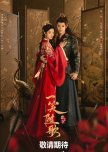
Thrones, Treachery, and Women Caught Between Two Princes
Fu YiXiao, the formidable red cloaked female commander of JinXiu Kingdom, turns the tide of battle at Pingling by shooting Feng SuiGe, the Eldest Prince and Army General of enemy state Susha. Yet victory comes at a cruel price. Betrayed by her own side, YiXiao is shot, falls off a cliff, and loses her memory. Rescued by a physician from ZhengNian Villa, she crosses paths once more with the injured SuiGe, seeking remedy. She was held captive, setting the stage for fate to intervene again.Enter Xia JingShi (Chen HeYi), JinXiu’s Eldest Prince and YiXiao’s former lover, who has never stopped searching for her. The mystery unfolds early: who betrayed YiXiao, and why? Will she return to the man she once loved, or find her heart drawn to the enemy prince she was meant to kill?
Both princes face treacherous courts. JinXiu is ruled by a cruel and insecure emperor who mistreats his elder brother, Xia JingShi. While SuiGe battles palace intrigue led by a scheming stepmother empress who wants the throne for her own son, Feng ChengYang (Ding Jia Wen) as well as the the unresolved mystery of his own mother’s death. Love, loyalty, and ambition collide as each man struggles between duty and desire.
The situation grows even more tangled as the naive Susha princess becomes infatuated with JinXiu’s eldest prince. Ignoring her brother’s warnings, she agrees to the JinXiu's proposed alliance marriage meant to secure peace but instead ignites further chaos. SuiGe demands a matrilocal marriage, a condition the JinXiu emperor eagerly accepts, seeing it as a convenient way to dispose of his own brother. On the wedding night, however, the princess sabotages the arrangement by helping her husband escape. Her romantic gamble backfires spectacularly. Returning to JinXiu, she finds herself isolated and betrayed, and in desperation turns to the emperor for protection—only to entangle herself further when he develops feelings for her, pushing the political and emotional stakes even higher.
The drama embraces familiar tropes—enemies-to-lovers, shared trials, and repeated save the damsel-in-distress rescues—but strong performances elevate the story. The male lead delivers a compelling portrayal, his slightly asymmetrical features lending depth to a character torn between gentleness and ruthlessness. Supporting actors Chen HeYi and Ding Jia Wen stand out, both bringing emotional weight to their roles, especially Chen HeYi as the dashingly handsome, tragic, restrained lover he excels at portraying.
Beyond romance and intrigue, the drama offers surprisingly relevant lessons: poor leadership breeds enemies, emotional decisions cloud judgment, domineering parental control breeds resentment, and rigid ideals can lead to devastating consequences. The villain’s downfall is not one mistake, but two fatal choices—betraying the woman he loved and refusing to walk away when victory was already his.
There are flaws worth noting, including questionable political decisions, overly convenient plot devices, and some unsettlingly violent scenes. Still, these do not overshadow the strengths.
Overall, this is a visually rich and emotionally charged production with strong acting, good looking leads, impressive cinematography and CGI, elegant costumes, and a memorable ending theme song. Despite some imperfections, it is an engaging watch and easy to recommend.
Was this review helpful to you?
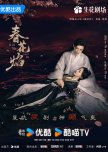
A Tale of Three Princes: Betrayal, War, and the Cost of Love
This drama delivers a captivating blend of political intrigue, emotional depth, and standout performances—particularly from Liu Xue Yi and Wu Jin Yan. Their onscreen chemistry anchors the story. Liu Xue Yi truly mesmerises with his extraordinary range. He shifts effortlessly between personas: the unhinged lunatic, the earnest and devoted lover, the proud and calculating prince, and the authoritative general. He looks perfectly cast in every role he embodies, even when flashing a chillingly elegant evil smile. Their interesting performance is backed by a stellar supporting cast that delivers nuance, energy, and emotional depth.The first two-thirds of the drama are its strongest, driven by the fierce and relentless battle between the first and third princes. The third prince fights to expose his brother’s sinister schemes, but the first prince proves to be a formidable force—brilliant, ruthless, and consistently one step ahead with the help of cunning subordinates. These early episodes are charged with tension, strategy, and psychological warfare, making them thoroughly gripping.
After the downfall of the primary villain, the narrative temporarily loses its sharp edge as it shifts into a love triangle involving Jing He (Liu Xue Yi) and the prince of Xiyan. While still emotionally engaging, this middle arc lacks the intensity and high stakes that defined the earlier political conflict.
Fortunately, the momentum returns when war looms between Xiyan and the Yan dynasty. Jing He steps into the role of general, defending a vulnerable border town with only a small, under-equipped defence team against an overwhelming invading force. This part of the drama restores its urgency and strategic depth, showcasing Jing He’s resilience, intelligence, and quiet heroism.
The story as a whole blends tension with poignant, bittersweet moments, especially as characters mourn lost loved ones or grapple with unreciprocated emotions. And the soundtrack ties it all together, a gentle, lingering melody wrapped in lyrics that tug at the heart, echoing every tender moment on screen. Nearly every song is a hit with me.
Like many historical-fantasy dramas, it is not free from quirks—mystical fake-death techniques, impossible poisons, and the occasional head-scratching decision, such as a brilliant character offering himself as a test subject for an antidote on the eve of war. Yet these tropes, while noticeable, do not overshadow the strengths of the narrative.
Overall, this is a drama that is gripping, emotional, and elevated by outstanding acting. Its official rating of 7.9 on Mydramalist.com feels too low. In truth, it deserves a solid **8.5 to 9** on MyDramaList. A highly recommended watch.
I actually return to change my rating from a 9 to a 9.5.
Was this review helpful to you?
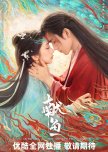
A Stunning Drama with Predictable Twists
This drama checks all the right boxes: a stellar cast, excellent chemistry between the leads, an engaging storyline, a beautifully crafted backdrop, strong suspense, artistic cinematography, and impressive special effects. Even the pacing and writing hold up well. My only gripe? The overused trope of a modern person being drawn into another world — I have honestly lost count of how many dramas use this premise.Arthur FeiYu Chen is outstanding as Grandmaster Sima Jiao, delivering a perfectly nuanced performance as the cold, arrogant, and distrustful leader. Wang Ying Lu plays Liao Ting Yan, a modern girl who wakes up in the body of an assassin destined to kill Sima Jiao. Unfortunately, her portrayal of a clueless, slightly silly heroine does not quite win me over — I have never been fond of the “silly girl” archetype as the heroine of the story.
Of course, as expected in dramas of this genre, the cold and intimidating Grandmaster eventually falls for the naïve heroine. Their dynamic follows the familiar but effective “enemies-to-lovers” arc: boy meets girl, they clash, they grow, they fall in love. Yes, it is cliché — but it works. The push-and-pull between them keeps you on edge, rooting for them even as they “fight” each other.
The twist? They fall in love not once but three times — first in the original timeline, then after Liao loses her memory, and finally after Sima is reborn. This three-lifetime love story gives the drama an almost mythic quality, deepening the emotional resonance - although it is yet another of those tropes used too often.
The ending, however, feels slightly disconnected from the main story. It abruptly shifts back to modern times, falling into the familiar “reunion in the present day” trope — one of those endings where the characters meet again, this time in the modern world.
Despite my quibbles about the unoriginal premises, this drama is wonderfully produced, visually stunning, and thoroughly enjoyable. If you love fantasy romance with high stakes, great chemistry, and a touch of destiny, I highly recommend giving this one a watch.
Was this review helpful to you?

When an Uncle's Secrets Turn Fatal
Ji An’s life has been a storm of secrets since childhood. Orphaned after her parents’ mysterious deaths, she was raised by an uncle who became her only family—until the day he took his own life without warning. That single act shatters her fragile world and thrusts her into chaos.From that moment on, danger becomes her shadow. Assassins strike from the dark, drones hunt her down, gunfire rains without mercy. Strangers emerge—some to protect, others to betray. Even familiar faces wear masks of deception. Who can she trust? Who is pulling the strings? And why is she the target?
As the attacks escalate, Ji An discovers something unexpected—the bizarre training her uncle drilled into her was no random exercise. It is the key to her survival. Each move, each lesson, begins to make sense as she unravels the truth behind a deadly conspiracy. And just when you think you have the answers, the drama hurls you into a final twist that will leave you breathless.
Mystery hangs heavy in every scene. Why did her uncle die? Who slaughtered her family? Who are these relentless killers? Is her uncle a villain or a savior in disguise? And what kind of business was he truly running behind the scenes? Question after question will keep you hooked till the very end.
This drama is not for the faint-hearted—bullets fly, missiles explode, and brutal hand-to-hand combat leaves you wincing. Yes, the resilience of the characters may seem exaggerated (after all, nobody survives that many beatings in real life), but that is part of the adrenaline rush that makes it so thrilling.
In the end, your heart aches for the loyal underdog—the one who is neither handsome, nor brilliant, nor charming—yet sacrifices everything for her, only to fade into the shadows when the right hero steps in.
At just eight episodes, this drama wastes no time. Every moment is gripping, every twist worth the ride. Highly recommended for those who crave mystery, action, and a story that keeps you guessing until the very last frame.
Was this review helpful to you?
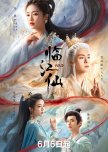
A Supreme Love, a Flawed Finale
When I breezed through the first 31 episodes of this drama, I could not understand why the rating on MyDramaList.com was only 8.2. To me, it felt worthy of a solid 8.7 or even 8.9—and I was convinced I would personally give it a perfect 10. (My ratings usually run more generous than the site’s average.)The cast is an absolute visual feast. The radiant He Rui Xian commands the screen as a spirited, almost petulant Goddess—her large, expressive eyes and pouty lips paired with a magnetic performance has captivated me since the first drama I saw her in. Joseph Zeng brings gravitas as the Supreme God, his handsome features framed in an air of stern dignity and quiet sorrow. Bai Lu, ever versatile, shifts seamlessly between the sweetness of an innocent girl and the fiery resolve of a vengeful Goddess. And then there is Hong Yao, the dashing villain you cannot look away from. These are names I hope to see leading many more dramas in the future.
The story opens with the Supreme God Bai Jiu Si rescuing a humble young woman, Li Qing Yue, and unexpectedly accepting her rather absurd betrothal gift. It is a romantic and visually stunning beginning—power meets humility against a backdrop of lush scenery and exquisite music. Yet, as the narrative deepens, it becomes clear this is no simple “powerful man loves lowly girl” trope. Bai Jiu Si is convinced A’Yue is the great love from his past life, yet her identity—and the truth behind their tangled history—remain shrouded in mystery. Glimpses of the past reveal both deep affection and bitter enmity, culminating in acts of devastating betrayal.
You are left questioning what could have sparked such intense hatred in the face of such unwavering love. As in any well-woven tale, there are hidden motives and a concealed puppet master whose identity may surprise you. And of course, a lack of communication between the couple and consultation with each other are much to be blamed for opening up opportunities for the villian to take advantage of. Assumptions are made of each other and a fundamental distrust between them sow the seeds of discord.
Up to episode 31, the drama flows beautifully—balancing romance, intrigue, and emotional stakes. Then, unfortunately, the narrative stumbles. Perhaps wary of delivering a tragic finale in an age where happy endings are in vogue, the writer appears to rush a turnaround, introducing a time-altering device that abruptly reshapes events. Yet the mechanics and consequences of this twist are never fully explained. Questions linger: How exactly did the changes affect the past and present? What truly became of the hero and heroine? The lack of clarity undermines the emotional weight built so carefully earlier on.
In the end, my initial 10 was scaled back to a 9, and I came to see why MyDramaList’s 8.2 rating might be fair. This could have been a near-masterpiece had it embraced its darker, more poignant ending, leaving room for a sequel to set things right. Instead, the rushed resolution dulled the final impact of what was otherwise an engrossing and beautifully performed drama.
However, if you are not as particular as I am about airtight endings and flawless logic, this remains a thoroughly enjoyable drama—rich in romance, intrigue, and gorgeous performances, and well worth your time.
Was this review helpful to you?
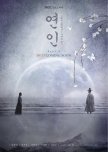
A Nation in Turmoil, A Love Torn Apart: A Gripping, Heart-Wrenching Sequel
This sequel dives headfirst into heavier, more melodramatic waters—and justifiably so. Set against the bleak backdrop of war, humiliation, and captivity following Joseon’s defeat by the Qing, the story takes a darker, more intense turn. The Crown Prince now lives as a hostage in Shenyang, the Qing capital, while the scars of national disgrace run deep.At the end of the first series, Gil-Chae, misled by Ryang-Eum, believes Jang-Hyun is dead. Her grief clouds her judgment further when she mistakenly credits another man as her rescuer during a near-tragic moment and, in a hasty bid for security, accepts his proposal. Just as Jang-Hyun reappears, alive and willing to risk everything for her, she abandon him again—choosing duty to her family and stability over love.
Now married, Gil-Chae continues her metalware trade among the elite, until she is captured and sent to Shenyang. Proud and unyielding, she refuses to seek help from Jang-Hyun, despite knowing he is near. Her silence costs her dearly.
This sequel is a full-blown emotional rollercoaster. It stirs not only heartache but outrage:
- I wanted to shake Gil-Chae for her maddening pride. If only she had called for Jang-Hyun, he would have moved mountains to save her. Instead, she endures brutal treatment—and later wounds him further with lies and distance. It is infuriating. How an intelligent woman can fall victim to her own pride and stubbornness.
- The misplaced honour of Joseon society made my blood boil. Women who endured hell to return home were greeted not with compassion, but with accusations of impurity for having been touched by “barbarians.” They deserved better.
- When Gil-Chae’s husband hesitated to rescue her because of possible lost chastity, I could not help but mourn her mistaken choice of husband. His bigotry disguised as honour is no honour at all. He should at least think of getting her out of misery as priority above all else.
- The King and Lady Jo are nearly unbearable to watch. Not only do they abandon their people, but they kill returning captives? It is gut-wrenching. The drama makes you despise their moral bankruptcy. When a nation falls under the rule of a leader with twisted values and misplaced judgement, it is not merely misfortune—it is a slow unraveling of its soul.
- And then there is the once-noble scholar with high ideals, who folds under the threat of family disgrace. He chooses reputation over lives—while uneducated men risk everything to save others. His collapse of character is a powerful critique of hypocrisy in high places.
- Yes, there are moments of frustration—battle scenes that defy logic, unnecessary impersonations, and the tired use of amnesia not once but twice. With two concussion to the head so severe, what's the chance of surviving. Why have your back to the enemies in a battle situation?
But in spite of all that, the series still captivates. The storytelling remains strong, the emotional stakes high, and the ending surprisingly tender. The romance, though painful, is deeply moving.
Namkoong Min is stunningly charismatic, and the cast overall is dazzling—both in looks and performance. The cinematography is breathtaking, and the tension never lets up.
Some minor flaws aside, this sequel is a gripping continuation filled with passion, betrayal, sacrifice, and redemption. Highly recommended—though be prepared to yell at your screen. Don't sit too near, in case you punch it. 😂
Was this review helpful to you?

Chasing Dreams, Facing War: A Love Story Forged
A sweeping romantic saga set against the backdrop of war, this drama captivates with charm, conflict, and character growth that defies first impressions.Flirtatious, pretty, and radiantly confident, Yoo Gil-Chae is the kind of noblewoman who turns heads—and stirs envy. Known in her hometown of Neunggun-ri as the “99-tailed fox,” she is adored by the local men and quietly resented by the women. Yet behind her coquettish façade lies a recurring dream: chasing a red thread across the land to a man whose face she cannot see. Convinced it is Nam Yeon-Jun—the scholarly gentleman she has long admired and the student of her father’s academy—Gil-Chae is certain her romantic future is with him.
Enter Lee Jang-Hyun, a dashing yet enigmatic merchant whose origins are shrouded in rumour. To some, he is a nobleman. To others, a charming rogue with a lover in every province. Charming and witty, he claims he has no interest in marriage—but his curiosity is piqued by the spirited Gil-Chae. Their flirtation is laced with tension, humour, and an undeniable attraction that neither is willing to admit.
What begins as a light-hearted romantic comedy quickly shifts tone when the Qing invasion plunges their world into chaos. As the war escalates, Gil-Chae is separated from her fleeing family—only to be saved, more than once, by the elusive Jang-Hyun. Yet one fateful secret he withholds becomes the seed of misunderstanding, leading to a wrong choice later.
But it is in these moments that the characters reveal their true selves. The frivolous prove strong. The self-righteous collapse. Gil-Chae, once dismissed as a spoiled beauty, emerges as a fierce leader. And Jang-Hyun, who vowed never to fight or love, becomes a wartime strategist and a man transformed.
The emotional weight of the story lies in how love is tested under pressure. Misguided acts of protection, lies told “for your own good,” and the tragic consequences of miscommunication play out in heart-wrenching ways.
Namkoong Min and Ahn Eun-Jin, playing the lead couple, absolutely light up the screen—their chemistry crackles with intensity, tenderness, and everything in between. Every glance, every silence between them is charged with unspoken emotion. The supporting cast is just as compelling: the idealistic scholar, the gracious best friend, the bitter rival, and the quietly tormented closeted lover—all portrayed with surprising depth and complexity. And yes, it must be said—Namkoong Min is not only magnetic in presence but also irresistibly handsome. Total eye candy, no doubt about it.
And the music? Sublime. Especially the haunting track sung by Ryang Eum—it lingers long after the credits roll.
What keeps you watching is not just the scale of history or the suspense of battle, but the burning question: Will Gil-Chae and Jang-Hyun find their way back to each other?
This drama is beautifully layered, emotionally rich, and packed with surprises. I give it a strong recommendation—and a high rating.
Was this review helpful to you?
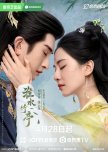
A Time Paradox Not Fully Explained - Tragic but Fascinating Story
If you are looking for a drama packed with first-tier good-lookers, this one delivers—big time. With a star-studded cast including Liu Shi Shi, Zhang Yun Long, Ding Yu Xi, and Meng Zi Yi, the screen practically glows. Even the guest roles are top-tier, featuring fan-favourites like Peng Xiao Ran, Hou Ming Hao, and Chen Yi Qi.At the heart of the story is Dongfang Huaizhu, who falls for a mysterious masked vigilante—leader of the Mask Gang, a group fighting for justice in the shadows. She does not know his face, but love blossoms. When she discovers that her masked hero is actually Wangquan Hongye, head of the YiQi Alliance and the powerful WangQuan clan - someone she deeply mistrusts, she is devastated—and abruptly ends the relationship.
Things take a darker turn when Huaizhu is captured by the Demon Lord Jiu Huo, transported 20 years into the future, stripped of her memory, and turned into a demon. Hongye and the Mask Gang must time-travel to rescue her, but standing in their way are formidable foes—Jiu Huo and his lover Jia Lan, who seek to plunge the world into eternal darkness.
But here is the twist: according to the history they learn in their time-travel, 18 years ago which is two years after their time-travel, they perished in a devastating war against Jiu Huo and Jia Lan. The YiQi Alliance collapsed, and the noble families were destroyed. This war happens after their time-travel, which means they go into war with full knowledge of who they are against.
If they return to the past, they are essentially walking into the very war they already lost.
Can they win this time? It introduces a classic time-loop paradox that is never fully explained. Logically, if they return, nothing would change as history has reflected the full outcome of that return.
Yet somehow, some things change—and some things do not. How is that possible? The drama does not offer a satisfying answer. In the end, the time-loop logic is left unresolved, relying more on emotion than coherence.
Despite all the loss and sacrifice, I am not easily moved—but I will admit, seeing the team fall apart under demonic manipulation tugged at something. And the ending? Quietly tragic in a way that lingers.
On a brighter note, the OST is excellent, with a lovely closing theme that captures the emotional tone beautifully.
All in all, despite a few narrative stumbles, I still rate this highly. A solid 9/10 for its strong cast, visual appeal, emotional beats, and unforgettable moments.
Was this review helpful to you?


