
 Editorials


This review may contain spoilers
Frustrating Yet Relatable: A Deep Dive into Toxic Asian Parenting and Child Resilience
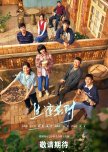
This drama tells the story of two families, the Cao and Qi families, whose fates are inextricably intertwined—a bond that stems from a major tragedy in their lives.
While the main themes of family and growing up are quite common, what sets this drama apart is the character of Qi Shi, played by Guan Xiaotong, who is an albino. I have never encountered an albino character in any drama or movie before. Through this show, I gained a deep understanding of the struggles they face.
The drama maintains a steady pace. Conflicts are resolved directly and to the point without dragging on, and every issue is well-explored. If you're looking for romance, this might not be the right choice for you. As listed on MyDramaList, its genres are Drama and Family, so the emphasis is strictly on family dynamics.
Honestly, I really appreciate how this drama challenges us to stop romanticizing poverty and hardship. It portrays them as real obstacles that genuinely hold people back, rather than romanticized experiences that magically make you stronger, as many clichés suggest.
That said, Qi Shi's character is a true fighter, and there’s a lot we can learn from her. On the other hand, Cao Xin—who suffers the most from his parents' reckless decisions—turns out to be the most understanding and mature character of all.
I was thoroughly frustrated by Qi Shi’s parents, who embody typical toxic Asian parenting: a dominant mother and a passive father. The father constantly allows his wife to express her love in toxic ways. Yelling at your child when you should be praising them is never the right approach. Their parents, especially the mother, are incredibly self-centered and lack self-awareness. She firmly believes she made the best decisions at the time and expects everyone to understand and appreciate her efforts.
I genuinely disliked the mother. Even though the story keeps reminding us that she has a soft heart deep down, what good is that if she can’t express it and ends up hurting everyone with her harsh words and sky-high ego?
At first, I also disliked Cao Xin’s passive father. However, by the end, I grew to respect him. Out of all the adults, he was the only one who genuinely felt guilty and was willing to apologize to his child. He swallowed his pride completely just to ask for his child's forgiveness.
This drama is frustrating yet compelling to watch. It irritated me because it reflects how many real-life parents still don't know how to communicate with their children—often guilt-tripping them just to avoid admitting their own mistakes.
Ultimately, this show made me realize even more that children are truly the most forgiving beings.
However, I have to say that the chemistry between Guan Xiaotong and Wang Ziqi is absolutely top-tier. It's such a shame that their romantic screentime was so limited. Every single interaction between them felt heartwarming and gave me butterflies, even though their relationship was never officially made explicit. Given that the drama doesn't focus on romance, I tried to be understanding. But honestly, if their romance had been explored just a bit further, I definitely would have given this drama a higher rating. It feels like a missed opportunity to not fully leverage such overpowered chemistry.
While the main themes of family and growing up are quite common, what sets this drama apart is the character of Qi Shi, played by Guan Xiaotong, who is an albino. I have never encountered an albino character in any drama or movie before. Through this show, I gained a deep understanding of the struggles they face.
The drama maintains a steady pace. Conflicts are resolved directly and to the point without dragging on, and every issue is well-explored. If you're looking for romance, this might not be the right choice for you. As listed on MyDramaList, its genres are Drama and Family, so the emphasis is strictly on family dynamics.
Honestly, I really appreciate how this drama challenges us to stop romanticizing poverty and hardship. It portrays them as real obstacles that genuinely hold people back, rather than romanticized experiences that magically make you stronger, as many clichés suggest.
That said, Qi Shi's character is a true fighter, and there’s a lot we can learn from her. On the other hand, Cao Xin—who suffers the most from his parents' reckless decisions—turns out to be the most understanding and mature character of all.
I was thoroughly frustrated by Qi Shi’s parents, who embody typical toxic Asian parenting: a dominant mother and a passive father. The father constantly allows his wife to express her love in toxic ways. Yelling at your child when you should be praising them is never the right approach. Their parents, especially the mother, are incredibly self-centered and lack self-awareness. She firmly believes she made the best decisions at the time and expects everyone to understand and appreciate her efforts.
I genuinely disliked the mother. Even though the story keeps reminding us that she has a soft heart deep down, what good is that if she can’t express it and ends up hurting everyone with her harsh words and sky-high ego?
At first, I also disliked Cao Xin’s passive father. However, by the end, I grew to respect him. Out of all the adults, he was the only one who genuinely felt guilty and was willing to apologize to his child. He swallowed his pride completely just to ask for his child's forgiveness.
This drama is frustrating yet compelling to watch. It irritated me because it reflects how many real-life parents still don't know how to communicate with their children—often guilt-tripping them just to avoid admitting their own mistakes.
Ultimately, this show made me realize even more that children are truly the most forgiving beings.
However, I have to say that the chemistry between Guan Xiaotong and Wang Ziqi is absolutely top-tier. It's such a shame that their romantic screentime was so limited. Every single interaction between them felt heartwarming and gave me butterflies, even though their relationship was never officially made explicit. Given that the drama doesn't focus on romance, I tried to be understanding. But honestly, if their romance had been explored just a bit further, I definitely would have given this drama a higher rating. It feels like a missed opportunity to not fully leverage such overpowered chemistry.
Was this review helpful to you?


