

 1
1



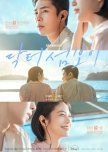
Doctor on the Edge and Summer Strike are similar because both are healing slice-of-life romances centered on characters who leave behind stressful lives and find a fresh start in a quiet coastal community. In Doctor on the Edge, Do Ji-ui relocates to a remote island after a personal setback, while in Summer Strike, Lee Yeo-reum abandons her exhausting city life in search of peace. Both dramas focus on slowing down, reconnecting with oneself, and learning to appreciate the simple moments of everyday life.
Another similarity is their gentle, character-driven romance. Rather than focusing on dramatic conflicts, both stories emphasize emotional healing, personal growth, and the supportive relationships that help the characters move forward. The calm seaside settings, close-knit communities, and comforting atmosphere make both dramas feel warm, reflective, and uplifting as the leads gradually find happiness, purpose, and love.
Another similarity is their gentle, character-driven romance. Rather than focusing on dramatic conflicts, both stories emphasize emotional healing, personal growth, and the supportive relationships that help the characters move forward. The calm seaside settings, close-knit communities, and comforting atmosphere make both dramas feel warm, reflective, and uplifting as the leads gradually find happiness, purpose, and love.


Miss Ripley and Eve are similar because both center on women who hide their true selves in order to achieve their goals. In Miss Ripley, Jang Mi-ri fabricates her background and credentials to climb the social ladder, while in Eve, Lee Ra-el conceals her true intentions as she infiltrates the lives of powerful people to carry out a long-planned revenge. In both dramas, the protagonists carefully manipulate those around them and maintain convincing false personas.
Another similarity is that both women are driven by trauma. Mi-ri’s difficult childhood and experiences with exploitation push her toward deception as a means of survival, while Ra-el’s quest for revenge stems from the destruction of her family. Their painful pasts shape their actions and make them more complex than simple villains or heroines.
Both dramas also feature themes of ambition, power, and the consequences of manipulation. The protagonists become entangled with wealthy and influential people, using charm, intelligence, and emotional influence to get what they want. As their schemes grow more complicated, the risk of exposure increases, creating much of the tension in both stories.
The main difference is that Miss Ripley is a social-climbing melodrama focused on fraud and personal ambition, whereas Eve is a revenge thriller. Mi-ri lies to build a better life for herself, while Ra-el uses deception primarily as a weapon against those she believes ruined her life. Despite this difference, both dramas explore how trauma, obsession, and deceit can consume a person and affect everyone around them.
Another similarity is that both women are driven by trauma. Mi-ri’s difficult childhood and experiences with exploitation push her toward deception as a means of survival, while Ra-el’s quest for revenge stems from the destruction of her family. Their painful pasts shape their actions and make them more complex than simple villains or heroines.
Both dramas also feature themes of ambition, power, and the consequences of manipulation. The protagonists become entangled with wealthy and influential people, using charm, intelligence, and emotional influence to get what they want. As their schemes grow more complicated, the risk of exposure increases, creating much of the tension in both stories.
The main difference is that Miss Ripley is a social-climbing melodrama focused on fraud and personal ambition, whereas Eve is a revenge thriller. Mi-ri lies to build a better life for herself, while Ra-el uses deception primarily as a weapon against those she believes ruined her life. Despite this difference, both dramas explore how trauma, obsession, and deceit can consume a person and affect everyone around them.

Miss Ripley and The Art of Sarah are similar because both center on women who reinvent themselves through deception to escape difficult pasts and achieve wealth, status, and success. Jang Mi-ri in Miss Ripley fabricates her background and qualifications, while Sarah Kim in The Art of Sarah creates an entirely new identity to gain entry into elite social circles.
Both stories explore social climbing, ambition, and the consequences of living a lie. The protagonists come from troubled backgrounds and become increasingly dependent on their false identities as they rise in society. Their actions often hurt the people around them, but their struggles and motivations make them more tragic anti-heroines than outright villains.
The main difference is that Miss Ripley is a melodrama focused on romance and personal downfall, while The Art of Sarah is a mystery thriller that places greater emphasis on identity, manipulation, and suspense. Overall, both stories examine how far someone is willing to go to escape their past and create a better life for themselves.
Both stories explore social climbing, ambition, and the consequences of living a lie. The protagonists come from troubled backgrounds and become increasingly dependent on their false identities as they rise in society. Their actions often hurt the people around them, but their struggles and motivations make them more tragic anti-heroines than outright villains.
The main difference is that Miss Ripley is a melodrama focused on romance and personal downfall, while The Art of Sarah is a mystery thriller that places greater emphasis on identity, manipulation, and suspense. Overall, both stories examine how far someone is willing to go to escape their past and create a better life for themselves.

Miss Ripley and Dear X are similar because both focus on ambitious women who reinvent themselves through lies and manipulation to escape painful pasts. Jang Mi-ri in Miss Ripley fabricates her background and qualifications to gain wealth and status, while Baek Ah-jin in Dear X carefully crafts false personas and manipulates others to achieve fame and success. Both protagonists are driven by a desire to leave behind lives marked by trauma, neglect, and insecurity.
Another key similarity is that their traumatic childhoods shape many of their decisions. Rather than trusting others, both women learn to rely on deception as a survival tool. As they rise in society, they become increasingly trapped by the very lies that helped them succeed, causing harm to the people around them and damaging genuine relationships.
Both stories also feature men who fall in love with the protagonists, often seeing them as kind or vulnerable women. However, Mi-ri and Ah-jin frequently use these relationships to further their goals, making love secondary to ambition. This creates emotional conflict as their personal and professional lives become more entangled.
Ultimately, both Miss Ripley and Dear X explore the consequences of building a life on deception. The main difference is that Miss Ripley is a melodrama centered on fraud and social climbing, while Dear X is a darker psychological thriller that examines manipulation, fame, and emotional detachment in greater depth.
Another key similarity is that their traumatic childhoods shape many of their decisions. Rather than trusting others, both women learn to rely on deception as a survival tool. As they rise in society, they become increasingly trapped by the very lies that helped them succeed, causing harm to the people around them and damaging genuine relationships.
Both stories also feature men who fall in love with the protagonists, often seeing them as kind or vulnerable women. However, Mi-ri and Ah-jin frequently use these relationships to further their goals, making love secondary to ambition. This creates emotional conflict as their personal and professional lives become more entangled.
Ultimately, both Miss Ripley and Dear X explore the consequences of building a life on deception. The main difference is that Miss Ripley is a melodrama centered on fraud and social climbing, while Dear X is a darker psychological thriller that examines manipulation, fame, and emotional detachment in greater depth.

Doctor on the Edge shares similarities with Love 911 because both blend romance with medicine and emergency care. In Love 911, Dr. Mi-soo and firefighter Kang-il are brought together through life-and-death situations and gradually help each other heal from their emotional scars. Similarly, Doctor on the Edge follows Do Ji-ui as he dedicates himself to caring for island residents, where his growing relationship with nurse Yook Ha-ri becomes an important part of his personal growth.
Both stories focus on people who spend their lives helping others while struggling with their own emotional burdens. Through their work and their relationships, the leads learn to heal, trust, and move forward. While Love 911 is a more intense romantic drama centered on emergency rescues and tragedy, Doctor on the Edge takes a warmer, seaside healing-drama approach. However, both share themes of compassion, emotional recovery, and romance blossoming through caring for others.
Both stories focus on people who spend their lives helping others while struggling with their own emotional burdens. Through their work and their relationships, the leads learn to heal, trust, and move forward. While Love 911 is a more intense romantic drama centered on emergency rescues and tragedy, Doctor on the Edge takes a warmer, seaside healing-drama approach. However, both share themes of compassion, emotional recovery, and romance blossoming through caring for others.

Doctor on the Edge is also very similar to Welcome to Samdal-ri because both are healing seaside romances set in close-knit island communities where the setting becomes a character in its own right. Welcome to Samdal-ri takes place on Jeju Island, where Sam-dal returns home after her career collapses in Seoul and reconnects with her first love, Yong-pil. Meanwhile, Doctor on the Edge follows a city doctor who arrives on a remote island and gradually becomes involved in the lives of its residents while finding romance there.
What makes them feel especially alike is the emphasis on community. In both dramas, the story isn’t just about the main couple; the island residents, their friendships, family relationships, and everyday lives are equally important. The leads slowly heal through their interactions with the people around them, and the romance develops naturally within that warm, supportive environment.
They also share a strong theme of rediscovering what truly matters in life. Sam-dal returns to Jeju after losing her place in the city and finds healing through her hometown and the people she left behind. Likewise, Ji-ui’s move to the island in Doctor on the Edge forces him to step away from the fast-paced medical world and reconnect with people on a more personal level.
Overall, Doctor on the Edge feels like it belongs in the same family as Welcome to Samdal-ri and Hometown Cha-Cha-Cha: a heartfelt seaside romance filled with beautiful coastal scenery, lovable residents, emotional healing, community spirit, and a protagonist whose life is transformed by an island they never expected to call home.
What makes them feel especially alike is the emphasis on community. In both dramas, the story isn’t just about the main couple; the island residents, their friendships, family relationships, and everyday lives are equally important. The leads slowly heal through their interactions with the people around them, and the romance develops naturally within that warm, supportive environment.
They also share a strong theme of rediscovering what truly matters in life. Sam-dal returns to Jeju after losing her place in the city and finds healing through her hometown and the people she left behind. Likewise, Ji-ui’s move to the island in Doctor on the Edge forces him to step away from the fast-paced medical world and reconnect with people on a more personal level.
Overall, Doctor on the Edge feels like it belongs in the same family as Welcome to Samdal-ri and Hometown Cha-Cha-Cha: a heartfelt seaside romance filled with beautiful coastal scenery, lovable residents, emotional healing, community spirit, and a protagonist whose life is transformed by an island they never expected to call home.

Romance 101 and Cheese in the Trap are both acclaimed university webtoon adaptations centered around hyper-organized, fiercely independent female leads. Rather than passive rom-com heroines, Hong Seol and Jung Ba-reum are academically driven model students who govern their lives with meticulous schedules and color-coded planners. For both women, entering the dating world represents a chaotic, unscheduled disruption to their highly structured routines.The narrative in both dramas progresses through the realistic lens of a specific campus group—highlighting the friction of group projects, senior-junior dynamics, and navigating friendships under academic pressure. While Cheese in the Trap leans into psychological mystery and dark manipulation, Romance 101 strips away the dread. It takes those exact same hardworking student archetypes and places them in a fundamentally wholesome, emotionally safe environment.

Romance 101 closely mirrors My ID Is Gangnam Beauty by fully immersing viewers in a relatable, slice-of-life university campus setting built around a specific academic and social circle. Both dramas are adapted from mega-hit digital webtoons and share a narrative focus on a socially inexperienced female lead trying to navigate the daunting world of college. While Gangnam Beauty's Mi-rae struggles with severe self-doubt after altering her appearance through plastic surgery, Romance 101's Ba-reum struggles with romantic insecurity because her life is rigidly governed by planners and strict routines.The core romantic dynamic is also deeply similar. In both series, the female lead joins a tight-knit campus group—a chemistry department in Gangnam Beauty and a programming club in Romance 101—where she encounters a tsundere-style male lead. Just like Cha Eun-woo’s character Do Kyung-seok, who is famously blunt, observant, and fiercely protective of the female lead despite his quiet exterior, Hwang In-yeop's character Na Yu-yeon acts as a reliable, direct, and incredibly wholesome "green flag" love interest. Ultimately, both dramas steer clear of heavy, dark melodrama, choosing instead to focus on a slow-burn romance that emphasizes personal growth, modern youth culture, and learning how to step out of your comfort zone.

Romance 101 (also known as The Right Love Guide) shares a strong structural and stylistic DNA with True Beauty, beginning with the fact that both are live-action adaptations of widely popular, brightly colored Naver webtoons centered around youth culture. Narratively, both dramas follow an endearing, somewhat socially naive female lead who is fiercely trying to navigate a new chapter of her life—while Ju-kyung in True Beauty is overcoming severe insecurity through the art of makeup, Ba-reum in Romance 101 is trying to overcome her clinical lack of romantic experience by treating dating like a hyper-organized academic club project. This setup naturally plunges both protagonists into classic romance-comedy territory, complete with a high-stakes, heart-fluttering love triangle that pairs them up with two distinct, captivating male leads. Most notably, the connection is cemented by actor Hwang In-yeop, who famously brought a captivating, effortlessly cool charm to True Beauty as Han Seo-jun. In Romance 101, he steps right back into that familiar webtoon-heartthrob dynamic as Na Yu-yeon, once again playing a strikingly handsome campus crush who balances a seemingly cool or distant exterior with a supportive, protective green-flag energy.

I Decided to Die and Lovely Runner are deeply intertwined through their shared use of the "save me" time-travel subgenre, where both narratives feature a protagonist trapped in a time loop desperately trying to alter the past to prevent the tragic death of the person they love. In a striking parallel of character backstories, both dramas center on high school athletes whose life trajectories are shattered by physical trauma; Lovely Runner follows a gifted swimmer sidelined by a shoulder injury, while I Decided to Die centers on a promising Taekwondo player whose national team dreams are crushed by a severe leg injury. Their romances are defined by asymmetrical memories, as only one lead carries the harrowing weight of past timelines while the other is left entirely in the dark, experiencing past lives only through fragmented, confusing dreams. Both stories also utilize a dual-timeline structure that effortlessly bridges the innocence of high school youth with the complex, darker realities of their adult lives a decade later. Finally, the stakes in both series are amplified by a volatile butterfly effect, where every attempt to rewrite history inadvertently triggers a dangerous domino effect, placing the couple directly in the crosshairs of ruthless, violent criminals.

Hometown Cha-Cha-Cha and Doctor on the Edge are similar because both are seaside healing romances that follow highly skilled medical professionals from the city who find themselves in a small coastal community and gradually become attached to the people there. In Hometown Cha-Cha-Cha, Yoon Hye-jin leaves Seoul to run a dental clinic in the seaside village of Gongjin, while in Doctor on the Edge, Do Ji-ui is sent to work as a public health doctor on a remote island. In both stories, the oceanfront setting isn’t just a backdrop—it shapes the atmosphere, creating a warm, peaceful, and emotionally healing environment where the leads connect with the locals and rediscover what really matters in life.
Both dramas also blend romance with community-centered storytelling. The protagonists start out somewhat distant from the people around them but slowly form meaningful relationships, and their love stories develop alongside their growing bond with the town. The appeal of both shows comes from the mix of beautiful seaside scenery, quirky and lovable residents, emotional healing, and a romance that feels grounded in everyday life. The main difference is that Hometown Cha-Cha-Cha leans more toward slice-of-life romantic comedy, whereas Doctor on the Edge incorporates more medical-drama elements and a greater sense of mystery. Even so, if someone enjoys the coastal charm, healing atmosphere, and heartfelt romance of Hometown Cha-Cha-Cha, they’ll likely find a lot familiar in Doctor on the Edge.
Both dramas also blend romance with community-centered storytelling. The protagonists start out somewhat distant from the people around them but slowly form meaningful relationships, and their love stories develop alongside their growing bond with the town. The appeal of both shows comes from the mix of beautiful seaside scenery, quirky and lovable residents, emotional healing, and a romance that feels grounded in everyday life. The main difference is that Hometown Cha-Cha-Cha leans more toward slice-of-life romantic comedy, whereas Doctor on the Edge incorporates more medical-drama elements and a greater sense of mystery. Even so, if someone enjoys the coastal charm, healing atmosphere, and heartfelt romance of Hometown Cha-Cha-Cha, they’ll likely find a lot familiar in Doctor on the Edge.

Doctor on the Edge and Descendants of the Sun are similar because both dramas focus on romance developing in difficult and emotionally intense environments. In both stories, the male leads are burdened by responsibility and emotional scars, while the female leads are compassionate and emotionally grounding figures who slowly help them heal.
The chemistry between Do Ji-ui and Yook Ha-ri in Doctor on the Edge feels very similar to the chemistry between Yoo Si-jin and Kang Mo-yeon in Descendants of the Sun. Both couples have a mature and emotional relationship built through shared hardships, dangerous situations, and caring for other people. Instead of relying on exaggerated romance, both dramas focus on quiet emotional moments, lingering eye contact, playful teasing, and emotional support.
Do Ji-ui is similar to Yoo Si-jin because both men hide emotional pain behind calm and capable personalities. They are devoted to their duties even when it damages their personal lives. Yook Ha-ri is similar to Kang Mo-yeon because both women are strong medical professionals who challenge the male leads emotionally while also becoming their source of comfort and warmth.
Another similarity is the setting. In Descendants of the Sun, the characters work in dangerous disaster and military zones, while in Doctor on the Edge, the characters work on an isolated island with limited medical resources. These harsh environments force the characters to rely on each other emotionally and physically, which naturally deepens the romance.
The biggest difference is the tone. Descendants of the Sun is more cinematic and action-heavy with military missions and large-scale disasters, while Doctor on the Edge is quieter, more intimate, and focused on emotional healing within a small community. Even so, both dramas create the same feeling of romance growing through sacrifice, duty, and emotional vulnerability.
The chemistry between Do Ji-ui and Yook Ha-ri in Doctor on the Edge feels very similar to the chemistry between Yoo Si-jin and Kang Mo-yeon in Descendants of the Sun. Both couples have a mature and emotional relationship built through shared hardships, dangerous situations, and caring for other people. Instead of relying on exaggerated romance, both dramas focus on quiet emotional moments, lingering eye contact, playful teasing, and emotional support.
Do Ji-ui is similar to Yoo Si-jin because both men hide emotional pain behind calm and capable personalities. They are devoted to their duties even when it damages their personal lives. Yook Ha-ri is similar to Kang Mo-yeon because both women are strong medical professionals who challenge the male leads emotionally while also becoming their source of comfort and warmth.
Another similarity is the setting. In Descendants of the Sun, the characters work in dangerous disaster and military zones, while in Doctor on the Edge, the characters work on an isolated island with limited medical resources. These harsh environments force the characters to rely on each other emotionally and physically, which naturally deepens the romance.
The biggest difference is the tone. Descendants of the Sun is more cinematic and action-heavy with military missions and large-scale disasters, while Doctor on the Edge is quieter, more intimate, and focused on emotional healing within a small community. Even so, both dramas create the same feeling of romance growing through sacrifice, duty, and emotional vulnerability.


