

 1
1


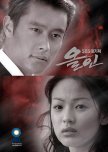
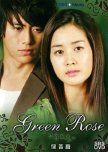
Both dramas center on protagonists whose lives are turned upside down by violent, life-changing events and who must fight against powerful forces and injustice as they claw their way back into the world.
In All In, Kim In-ha rises from a rough, vindictive act and prison to become a formidable figure in the high-stakes gambling underworld, facing rivalry, betrayal, and life-or-death struggles for success and love. Similarly, Green Rose’s Lee Jung-hyun is wrongfully framed for murder, endures hardship and near death, survives in a harsh foreign land, then returns with a new identity to navigate a brutal world of crime, corporate corruption, and revenge while trying to clear his name and reclaim his life.
Both series feature gritty, character-driven journeys where the leads endure betrayal, moral ambiguity, and relentless conflict in worlds where survival and redemption are earned the hard way — blending suspense, action, and intense emotional stakes rather than simple melodrama.
In All In, Kim In-ha rises from a rough, vindictive act and prison to become a formidable figure in the high-stakes gambling underworld, facing rivalry, betrayal, and life-or-death struggles for success and love. Similarly, Green Rose’s Lee Jung-hyun is wrongfully framed for murder, endures hardship and near death, survives in a harsh foreign land, then returns with a new identity to navigate a brutal world of crime, corporate corruption, and revenge while trying to clear his name and reclaim his life.
Both series feature gritty, character-driven journeys where the leads endure betrayal, moral ambiguity, and relentless conflict in worlds where survival and redemption are earned the hard way — blending suspense, action, and intense emotional stakes rather than simple melodrama.
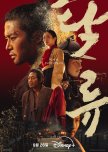
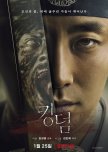
Kingdom and Takryu (The Murky Stream) are similar in that both are set in a harsh Joseon-era world shaped by corruption and class inequality, focus on character-driven development where protagonists are forced to grow under extreme pressure, and center on morally complex characters who confront systemic rot, survival, and responsibility, with the series prioritizing social critique, tension, and human cost over romance or idealized heroism.
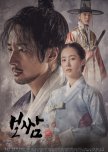
Bossam: Steal the Fate is similar to Takryu (The Murky Stream) in that both are Joseon-era stories centered on marginalized men surviving within a corrupt, rigid social system, following protagonists who live outside official power structures and are forced into morally gray choices, with narratives driven by class injustice, personal loss, and resistance to entrenched authority rather than idealized heroism, blending grounded action and emotional depth to show how ordinary lives are shaped—and often broken—by an unforgiving historical reality.
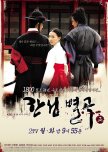
Conspiracy in the Court is similar to Takryu (The Murky Stream) in that both are Joseon-era dramas driven by corruption, systemic injustice, and moral ambiguity rather than romance or palace spectacle, focusing on characters who operate in the shadows of power—investigators, outsiders, or men with compromised pasts—whose personal survival and sense of justice collide with entrenched political rot, secret networks, and conspiracies, creating a dark, grounded tone where truth is dangerous, loyalty is fragile, and justice is pursued at great personal cost.
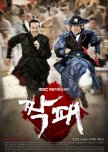
Both The Duo and The Murky Stream (Takryu) are Joseon-era historical dramas that focus on the lives of people shaped by harsh social realities rather than palace intrigue, dealing with class injustice, corruption, and survival in a morally complex world — The Duo follows two men switched at birth who grow up on opposite sides of society and confront systemic corruption and inequality as a bandit and a police chief, while Takryu centers on characters like a former gangster, a righteous merchant, and an honest official struggling against the corrupt structures of late Joseon society — giving each series a gritty, character-driven look at societal struggle, fate, and the fight for justice in a turbulent historical setting.
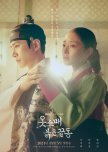
Both The Red Sleeve and The Murky Stream (Takryu) are Joseon-era historical dramas that center on protagonists whose lives are shaped by rigid social structures and personal conflicts within a hierarchical society, with The Red Sleeve following a court lady, Sung Deok-im, who must balance duty, personal desire, and societal expectations while deeply connected to Crown Prince Yi San (later King Jeongjo), and Takryu focusing on Jang Si-yul, a man with a troubled past navigating a corrupt world and fighting for survival and justice — both series highlight characters striving to maintain their identity and moral choices amid pressure from powerful forces in a harsh historical setting rather than purely romantic or escapist narratives.
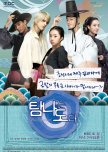
Both Tamra, the Island and The Murky Stream (Takryu) are Korean historical dramas set in the Joseon era, featuring characters who must navigate harsh and challenging social environments shaped by rigid rules, survival struggles, and cultural conflict — Takryu focuses on a former gangster, a righteous official, and others trying to survive and challenge corruption in a lawless setting, while Tamra follows villagers and outsiders dealing with isolationist policies, societal pressures, and personal growth amid hardship, blending historical conflict with character-driven stories of resilience and adaptation even if the tone and genre elements (romance and comedy) differ
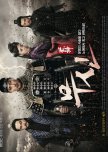
Both God of War (also known as Mooshin) and The Murky Stream (Takryu) are gritty historical Korean dramas that center on protagonists who rise from humble, oppressed beginnings amid chaotic, corrupt times — in God of War a former slave fights and survives through warfare to become a powerful military leader during the Goryeo Dynasty, and in Takryu a gangster with a troubled past struggles to survive and seek justice in a lawless late Joseon world — giving each series a raw, character-driven story of survival, societal conflict, and moral ambiguity in harsh historical settings rather than romantic palace intrigue.
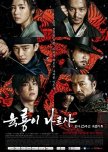
Both Six Flying Dragons and The Murky Stream (Takryu) are Joseon-era historical dramas that explore deep political and social upheaval, moral struggle, and the impact of corruption and ambition on individuals and society, featuring large casts of complex characters shaped by historical conflict, personal hardship, and shifting power structures, blending action, strategic rivalry, and emotionally driven storytelling rather than focusing solely on romance or light-hearted plots.
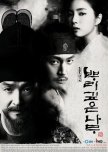
Deep Rooted Tree is similar to The Murky Stream (Takryu) because both are Joseon-era historical dramas that dive into grim political and societal struggles, featuring protagonists shaped by harsh pasts and moral complexity as they confront corruption, power struggles, and personal quests for justice in a turbulent world, blending action, intrigue, and emotional storytelling rather than light romance or simple historical settings.
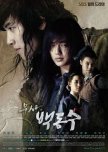
Both dramas are set in the Joseon era and grounded in historical action that explores how individuals navigate a world shaped by corruption, social struggle, and survival, with Warrior Baek Dong-soo following the coming-of-age and martial challenges of a swordsman amidst political factionalism and moral dilemmas, and Takryu (The Murky Stream) centering on a former gangster, a righteous merchant, and an honest official confronting systemic corruption and lawlessness — giving each narrative a gritty, character-driven portrayal of lives shaped by hardship and the fight for justice in a turbulent society.
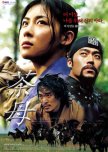
Six Flying Dragons is similar to Damo because both are Joseon-era historical dramas that weave political conflict, larger societal change, and deep character journeys together, portraying protagonists and key figures whose personal ambitions, loyalties, and moral struggles play out against turbulent historical backdrops rather than purely romantic plots, with a strong emphasis on action, intrigue, and the impact of history on individuals and relationships.


