
 Editorials

This review may contain spoilers
love story worth fighting for but a script too lazy to let its characters fight for it
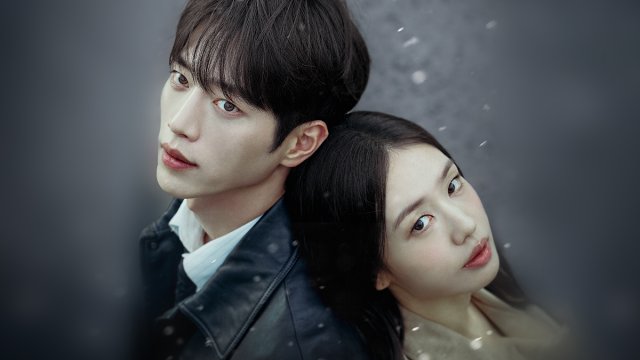
Double Helix opens with something genuinely beautiful. The first two episodes portray Lu Feng and Cheng Yi Chen's student life with real tenderness: two people drawn together despite everything around them telling them not to be. Underneath that romance sits a story with real weight: a world that refuses to accept their love as love. Cheng Yi Chen's own mother treats his sexuality like a disease to be cured rather than a truth to be accepted. That is the show's real subject. It is the story Double Helix should have told.It is not the story Double Helix tells.
Instead of staying with that slow, devastating pressure, showing how rejection from family, society, and institutions can quietly erode two people from the inside, the writers reach for something far blunter. To manufacture the conflict that drives Lu Feng and Cheng Yi Chen apart, the show turns to sexual violence. The choice is jarring against everything established before it: this is a Lu Feng who fought his family, defied social expectation, and gave up his inheritance to be with Cheng Yi Chen. Nothing in that build-up earns the abruptness of what comes next. The show needed the audience to turn on him, and rather than letting that turn arrive through accumulated strain, it manufactured it in a single act.
The same shortcut resurfaces later, in a different shape. Having used violence to break the relationship apart, the writers reach for a psychiatric disorder to explain it after the fact. A diagnosis is not accountability. It re-labels what happened rather than sitting with it, and it lets the show move toward its happy ending without doing the harder work of making Lu Feng actually reckon with what he did.
What makes this doubly frustrating is what the writers had already built and chose to abandon. Cheng Yi Chen is established early as someone capable of real loyalty, caring deeply for the people around him. But that loyalty stops at Lu Feng. When the relationship becomes difficult, he does not fight for it. He walks away with striking ease, and years later, rather than confronting his mother's rejection of who he loves, he marries a woman he has no feelings for simply to keep the peace. It is the same avoidance the show itself is guilty of when things get hard, take the easier path rather than do the difficult work of confrontation. Cheng Yi Chen never matches what Lu Feng sacrificed, and the imbalance is never acknowledged, let alone explored.
Double Helix had a story worth telling about love that society refuses to recognise it, about the quiet cruelty of a mother who sees her son's identity as something to be fixed. Somewhere in its first two episodes, the show knew this. But underneath every choice that follows is the sense that the writer had already decided who each character would be before the story ever earned it. Cheng Yi Chen was cast as the victim, Lu Feng cast as the red flag, both fitted into roles rather than allowed to become them. It chose spectacle over meaning, shock over substance, and predetermined character labels over honest storytelling.
Was this review helpful to you?
This review may contain spoilers
A Crown It Never Earned
Perfect Crown opens with a king who wanted to walk away from his crown. He chose abdication over power and died in a fire shortly after, with the queen mother's hands close enough to the flame to make you wonder. The show looks you in the eye in those opening moments and makes you a promise that what follows will carry the weight of that beginning. It does not.This is a drama that invests everything into its surface and almost nothing into its foundations. The visuals are stunning, the costumes are gorgeous, the music is carefully chosen, and at the center of it all are two actors who deserved a far better story. What Perfect Crown lacks is the courage to be the show it claimed to be in its first episode.
The drama is set in an alternate South Korea with a constitutional monarchy a premise full of political possibility. Power, legacy, class, succession all of it is laid on the table early. But the show is never truly interested in any of it. It uses these elements as decoration while quietly becoming a light romantic comedy, and the transition is so gradual and so unearned that by the finale you are watching a completely different show from the one that began.
Byeon Woo Seok is the drama's greatest asset and its greatest tragedy. His performance is exceptional fear, anger, longing, all of it lives in his eyes before it ever reaches his dialogue. He gives the show an emotional core it did not write for him. Much of the online discourse has criticized his performance as too restrained but that reading misses what he is actually doing. Yi-an is a man who has spent his entire life being told not to outshine the crown. Of course he is contained. The restraint is the performance. IU matches him with her trademark sharp energy, and together their chemistry is genuine. But even the best chemistry cannot make you feel the weight of a romance when the world around it keeps refusing to commit to itself. The actors gave this drama more than it gave them.
The supporting characters suffer most from this lack of commitment. Min Jeong-woo begins the drama as the prince's loyal confidant — trusted, close, essential. His eventual betrayal should be one of the drama's most devastating moments. Instead it lands as absurd, because the writers never did the work to earn it. His feelings for the female lead are gestured at rather than developed. We never watch him fall, never watch him struggle, never watch him reach a breaking point where destroying his closest friendship feels like his only option. He does not become a traitor through pain or desperation. He is simply assigned one, and the difference is everything.
The queen mother is the drama's most damning failure. She is established early as its true villain, a woman whose ambition is so consuming that a king died suspiciously close to her anger. That same king had a sealed royal document stating his wish to pass the throne to Yi-an — a document that should have been the show's most explosive revelation. Yi-an holds it. The audience knows it exists. And then the show simply moves on, leaving its most consequential piece of evidence gathering dust in a drawer. In a monarchy, which is the entire world this show constructs, that document is everything legitimacy, justice, truth. Ignoring it is not an oversight. It is the show abandoning its own story. And when the finale arrives the queen mother faces no real punishment anyway. She hands over some evidence and walks away. The writers built a world where a king's abdication decree was burnt to ash to protect a succession and then allowed the woman responsible for his suspicious death to exit quietly. It is not mercy. It is the show flinching from the consequences of its own story.
The female lead's family undergoes a similarly unconvincing transformation, softening toward her in the final episodes without the emotional groundwork to make it believable. Again and again Perfect Crown reaches the moments it has been building toward and looks away.
Perfect Crown earns a 5 out of 10 and that 5 belongs almost entirely to its performances, its visuals, and the ghost of the show it could have been. Watch it if you want something easy, fast, and light — a binge for an idle weekend with beautiful people in beautiful costumes. Just do not watch it expecting the show it promised to be in its opening minutes. That show never arrived
Was this review helpful to you?

The Ride Is Worth It. The Destination Isn't.
The Art of Negotiation is the kind of show you cannot stop once you start an episode. It is built around cases, each one a self-contained negotiation that the team picks up, works through, and resolves. A construction unit fighting to survive a corporate restructuring. A stock collapse that pulls the team to Japan and slowly unravels a hidden connection between two companies. A failed negotiation Joo-no has to salvage after a teammate's mistake. Each case has a human story underneath the corporate one, and that is what keeps you glued.Running underneath every case is the larger mystery of Joo-no: who he is, where he came from, what shaped him. This is supposed to be the destination the cases are all driving toward. But Joo-no's story is barely threaded through the series and then suddenly crowded into the final episodes, and when it finally arrives, it feels like a first run-through rather than a payoff. There is no particular buildup, no accumulated weight. The show introduces his backstory in the finale the way it should have been slowly earning it from episode one. After twelve episodes of cases that kept you genuinely guessing, the main story lands with a flatness that the show never quite recovers from.
Choi Jin-su is a separate frustration. Throughout the series, the writer plants consistent signals around him — a quietly wealthy air, hints of a past connection to Joo-no that accumulate into the strong impression that he is hiding something significant. He keeps you watching, keeps you guessing. And then nothing comes of it. The signals lead nowhere, and the interest collapses once you realise the answer is never coming.
The Art of Negotiation is a genuinely exciting watch that does not fully stick the landing. The craft is clearly there; the cases are well constructed, the tension is real, and the show respects your intelligence throughout. It just spent more time building the world around Joo-no than building Joo-no himself. Watch it for the ride. Just do not expect the destination to match it.
Was this review helpful to you?
This review may contain spoilers
The Comedy That Knew Itself
Me & Thee is the kind of drama that makes you smile like an idiot on the screen. It is not trying to be anything grand or deep, it is pure, warm, fluffy comedy and that honesty is exactly what makes it a fresh breath of air.What gives the show its charm is how cleverly it builds its comedy and it starts with a simple but smart piece of character writing. Thee grew up watching his mother, a soap opera actress, in lakorn reruns. So when he speaks in grand declarations and dramatic flourishes, it never feels random or forced. It feels inevitable. This is a man who learned what love looks like from soap operas and that makes his every word and action more believable because for him this is how you express your love. He means every word sincerely. That sincerity is what saves the comedy from feeling cheap. Rather than playing its melodramatic dialogue straight, the writers let the characters mock it themselves, as if winking at the audience on their behalf. It is a meta move that could easily fall flat but it works beautifully, because of the three-way dynamic the show builds around it. Pond delivers Thee's most absurd lines with such ease and naturalness that the comedy never feels constructed. Est, playing Thee's secretary, responds to Thee's puppy love moments with facial expressions alone, his reactions capturing exactly the secondhand cringe the audience feels watching Thee turn soft. Peach takes a different role, verbally calling out Thee's lakorn-style dramatic dialogue, telling him plainly to get it together, giving the show's theatrical excess an in-universe critique. Together these three create a comedic system with two distinct frequencies, and the show rides both with confidence.
It is when we look closer at the characters that the cracks begin to show. Peach as the other half of the central romance is where the show stumbles most and what makes it frustrating is how much potential he carries. His backstory is quietly devastating: an abusive childhood, a sister he had to raise alone, a boy who was forced to grow up before he ever got to simply be a child. There is one moment in the hospital where Peach tells Thee that he makes him feel like a child again and in that single line the show reveals everything it could have been. A man that guarded, learning to rely on someone for the first time, is a romance worth watching. But the writers never return to it. His past is hinted at and abandoned, and the actor struggles to fill the silence the writing leaves behind. What Peach needed was not more screen time — he needed the writers to trust the story they had already started telling. A single moment of jealousy, possessiveness, or visible longing would have made his love for Thee feel earned. Without it the romance leans entirely on Thee's shoulders and never quite balances.
The mafia backstory woven into Thee's family history has the same problem: it is all suggestion and no substance. In a light comedy this does not ruin anything, but it is a missed opportunity. A character as charming as Thee deserved a past that added genuine depth rather than just a label others fear.
Despite these gaps, Me & Thee earns a solid 8 out of 10. It is fresh, it is warm, and it has two performances that take the show further than the writing alone deserves. Watch it when you need something light that makes you feel good and smile like crazy. It delivers exactly that, and sometimes that is enough.
Was this review helpful to you?


