



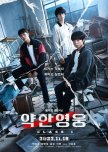
The Symphony of Silence and Concrete: Why Weak Hero Class 1 Is a Tragic Masterpiece.
Most high school dramas treat youth as a vibrant canvas of possibility, but Weak Hero Class 1 paints it as an oppressive, concrete cage. While casual viewers praise the series for its visceral action sequences, the show’s true brilliance lies in its quieter moments—the suffocating silences, the hollow gazes, and the devastating psychological warfare that exists long before a single punch is thrown.Structurally, the eight-episode format functions as a masterclass in tight, economic storytelling. It completely avoids the narrative bloat typical of the genre by focusing intensely on the micro-shifts within its central trio. The story doesn't rely on massive plot twists; instead, it uses meticulous foreshadowing and tragic narrative parallels. The writing treats violence not as cheap shock value, but as an inescapable language forced upon teenagers who have been utterly abandoned by the adult world.
This thematic weight succeeds entirely because of the staggering nuance in the performances. As Yeon Shi-eun, Park Ji-hoon delivers a masterfully understated performance. In a role that could easily have become a one-note caricature of a cold genius, Park uses his remarkably expressive eyes to convey a volcanic reservoir of repressed trauma and quiet desperation. He is brilliantly balanced by Choi Hyun-wook, who injects a necessary, organic levity into the bleakness, and Hong Kyung, whose slow, agonizing descent into moral corruption is the most compelling character study of the year. Together, they expose the raw, fragile vulnerability of boyhood—capturing the desperate desire to belong that can easily twist into malice when met with isolation.
Every technical element reinforces this emotional paralysis. The brilliant, moody cinematography favors cold, washed-out tones that make the classrooms feel like prison cells, while the exceptional soundtrack evokes a profound sense of teenage listlessness. The music doesn't just score the scenes; it captures the internal despair of characters drowning in a broken system.
Ultimately, Weak Hero Class 1 is a rare, devastating triumph. It rejects clean moral compasses and easy closures, delivering instead an honest, haunting exploration of how violence inevitably begets violence. By prioritizing profound psychological depth over superficial action tropes, it doesn't just entertain—it leaves an indelible bruise on the viewer’s psyche.
Was this review helpful to you?

Nostalgia, Noise, and Growth: Why The WONDERfools Rewards the Repeat Viewer.
Having watched The WONDERfools five times now, my relationship with the series has evolved drastically. On a first watch, the opening stretch feels like a chaotic hurdle. Director Yoo In-shik and the writing team deliver an initial tonal whiplash; the comedy is deafeningly loud, the pacing in the first two episodes drags, and Eun Chae-ni’s (Park Eun-bin) initial introduction leans dangerously close to an exhausting caricature. For casual viewers, this messy worldbuilding is a barrier.However, multiple viewings reveal the brilliant method behind this madness. Those overwhelming early episodes are deliberate, laying a heavy emotional foundation so that when the narrative gears click in Episode 3, the payoff hits like a freight train. The true magic of this drama lies in its structural progression and unmatched ensemble chemistry.
The greatest triumph of the series is undoubtedly Cha Eun-woo. Playing the restrained, traumatized Lee Un-jeong, his deadpan, exasperated reactions act as the audience’s proxy during the early chaos. By Episodes 5 and 6, he shifts seamlessly into the show's emotional anchor, delivering a disciplined, breathtaking performance through micro-expressions and controlled vulnerability that completely shatters his past acting tropes. Combined with Park Eun-bin’s eventual heart-wrenching depth and Choi Dae-hoon’s masterful comedic timing (the giant onion sequence remains iconic), the misfit squad becomes deeply endearing.
Visually, the 1999 millennium-dread aesthetic is beautifully woven into the script, using clean action and a vibrant, retro soundtrack to reinforce the characters’ internal isolation.
The show isn't flawless—the veteran cast members are slightly underutilized, and the final villain arc wraps up far too neatly compared to its excellent buildup. Yet, The WONDERfools understands its identity perfectly. It is a warm, ridiculous, and poignant celebration of found family that gets richer with every single rewatch.
Was this review helpful to you?
Code-66: When a Lethal Black-Ops Asset Fails Basic Parenting 101
The premiere of Agent Kim Reactivated doesn’t just give us a standard high-octane revenge thriller; it exposes a brilliant, deeply ironic root conflict. We have So Ji-sub playing an absolute powerhouse of a covert operative—a literal human weapon—who is completely, utterly incompetent when it comes to the simple domestic laws of survival: understanding his own daughter.While many will inevitably look at this adaptation through a pure genre lens and expect a relentless, Taken-style action-fest, the real genius of the opening episodes lies in its depiction of the devastating consequences of the "strong, silent" archetype. Agent Kim’s stoic, emotionally unavailable approach isn't just a character quirk—it is a foundational parenting failure. By substituting deep, vulnerability-driven communication with superficial provision, he leaves his daughter completely unequipped for the brutal social hierarchies of school bullying. The real tragedy of Episode 1 isn't that his dark past caught up with him; it’s that his emotional absence might have driven his daughter into harm's way long before the syndicate ever did.
The series now stands at a critical narrative crossroads. It can easily sink into an empty, stylized cycle of endless combat choreography, or it can swim to greatness by treating the violence as a secondary catalyst. For Agent Kim Reactivated to achieve masterpiece status, the ultimate tactical mission cannot just be a rescue; it must be a reformation. The real victory won’t be Agent Kim taking down an empire with his bare hands—it will be him learning how to look his daughter in the eye and finally become a real father.
So Ji-sub’s phenomenal, micro-expressive acting gives us hope that this character has the emotional depth to pull it off. Let’s just hope the writing chooses to prioritize family restoration over empty political tropes and cheap shock value.
Initial Rating: 8.5/10 — A masterclass start with a brilliant emotional core. It has the blueprint to be something profoundly human if it doesn't lose its soul to the bullets.
Was this review helpful to you?
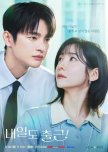
The Perfect Midsummer Corporate Retreat—Grounded, Smitten, and Relatable
The first two episodes of See You at Work Tomorrow! have set an incredible, authentic foundation. Far from throwing over-the-top meet-cutes at us, it breathes life into the heavy, exhaustive reality of corporate burnout through Cha Ji-yoon, making her professional exhaustion instantly relatable.Then enters Kang Si-woo. A serious, meticulous, and completely smitten Seo In-guk commands the screen with delicate, understated expressions that give you major butterflies. The chemistry between him and Park Ji-hyun is already alit—evolving from a tense workplace rivalry into an appreciative, resisting-yet-accepting dynamic that gives off heavy I Need Romance x Misaeng vibes.
What makes this premiere truly stand out, though, is its maturity. It subtly holds up a mirror to the gritty realities of modern corporate life—where some of us are literally swimming through the rain because rigid, anti-WFH bosses prioritize real estate interests over employee health.
Coupled with a brilliantly joyful, mood-lifting OST that you’ll want to replay immediately, this drama is the perfect escape for anyone looking for a mature, grounded office romance. My only real gripe? Two episodes a week is simply a crime for intense bingers. I need the next episode ASAP!😊
Was this review helpful to you?


