Long Review of Overdo: Calling It Just a Romance Is Far Too Narrow
1. The Story Is the Drama’s Greatest Strength The drama explores several important themes.
1) Human Trafficking, Fake Charity, and Women Helping Women The drama shows human trafficking, fake charity in an orphanage, child abuse, and the selling of young girls.
In this part of the story, it exposes the ugly faces of so-called charity workers and wealthy people. It also shows the resistance of the children and girls who were abused, as well as the power of women helping and protecting one another.
2) The Lasting Scars Left by Family Trauma The male and female leads both had tragic childhoods. Their past strongly affected their personalities, reasons for doing things, beliefs, values, and romantic relationships.
The effects of their emotional trauma are so complicated that I previously had to write a separate article analysing them from a psychological point of view. Anyone interested can read it on my Substack.
Some people say they cannot understand the male and female leads.
Yes, without enough life experience or a similar family background, it can be difficult to fully understand why they behave this way. This is also one of the reasons why so many people misunderstand this drama.
The drama handles the subject of family trauma very well. Unlike many dramas, it does not forgive people who do not deserve to be called parents simply for the sake of a happy ending.
At the same time, the ML does not allow this family trauma to continue into the next generation. He successfully completes his own journey of healing.
He truly frees himself from the psychological control of both his adoptive father and his biological mother. He is finally able to begin a new life.
3) The Power of Goodness and Beautiful Human Feelings The drama shows many beautiful kinds of love and care.
These include women helping one another, love and sacrifice between romantic partners, trust and support between brothers, the soldiers who are willing to risk their lives for their country, and help between strangers.
Each kind of relationship is portrayed in a very moving way.
4) Love for the Country During a Time of War This is a drama set in Republican-era China, probably around the early years of Japan’s invasion of China.
The final part of the drama is about biological warfare. Biological warfare in real history was extremely cruel. The drama has already reduced the amount of graphic content to make it easier for audiences to watch. Even so, we can still imagine the desperate situation China faced at that time.
In the drama, the second brother, Li Boze, becomes an undercover agent to destroy the “Red Pill.” He is even willing to be seen as a traitor.
One soldier after another gives up his life for the country, putting life and death aside.
The eldest brother’s lover, the female pilot Ye Zhi Hong, firmly chooses to fly her plane into the factory to destroy the red pills.
The male lead also fights the villain to the death to stop his plan.
During that time of war, countless people gave their lives in exchange for the peace we have today.
So, calling this drama nothing more than a soap opera is far too narrow and does not recognise the depth of its story.
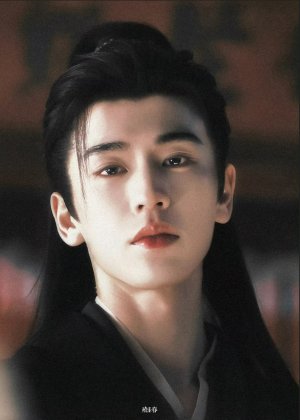
2. All the Actors Deserve Praise 1) Zhang Linghe This is definitely the most complicated role Zhang Linghe has played since his debut. It is also the drama in which he has had the most screen time. This drama gave him the chance to fully show his excellent acting skills.
In this drama, he has to show many different emotional states.
He shows sadness, weakness, self-mockery, and rebellion when facing his mother’s hatred.
When facing the abuse of his adoptive father, he shows obedience, fear, and a complicated emotional attachment.
He depends on and deeply respects his eldest brother.
He loves the female lead, while sometimes believing that his feelings are hatred. He still holds on to love like a moth flying into a flame.
He is also gentle with his son, and saving his son becomes a way of saving the wounded child inside himself.
This character has a sharp tongue but a soft heart. He is sensitive, intelligent, and quick and firm when taking action. He is proud, bold, and unwilling to follow social rules or powerful people.
At the same time, he feels sympathy for weaker people and chooses to help them.
He sees the world clearly and never spends his life feeling sorry for himself. Instead, he rebuilds an independent soul from the ruins of his past.
2) Wang Churan Many people dislike the FL. They believe she is selfish and that she does not truly love the male lead. But the opposite is true. She is not selfish, and she loves him deeply.
Because of her tragic past, she is afraid to express her love. In order to protect the ML, she would rather put herself in danger. That is why she hides many things from him.
From a psychological point of view, she shows a typical ‘Avoidant Attachment Style’.
People with this attachment style are not without feelings. However, when a relationship becomes too close or requires too much emotional involvement, they may feel stressed. They then create distance in order to feel safe again.
The closer the other person gets and the more they want to confirm the relationship, the more they want to step back. But when the other person truly becomes distant, they may move closer again.
They may avoid commitment, keep the relationship unclear, or delay talking about the future.
Instead of directly saying, “I miss you” or “I need you,” they are more likely to show care by doing things or solving problems.
Once we understand this psychology, we can understand the female lead’s behaviour.
She also seems to have a very negative view of fate.
She believes that happiness will not last and that she is meant to be unhappy. That is why she pushes the ML away again and again.
The ML, however, is very sensitive and good at reading other people. He probably notices her unusual emotional state and her conflicting behaviour. That is why he keeps holding on to her at the edge of fate, refusing to let her fall into a deep darkness.
3) The ML’s Mother This role is played by veteran actress Myolie Wu, and her acting is truly excellent.
At first, the character is extremely hateful. Later, she slowly becomes mentally unstable.
She is a hateful but also tragic character. Her twisted way of thinking originally came from the male lead’s biological father.
He did not love her and instead fell in love with another woman. Because of this, she became extremely obsessed. Even after his death, she continued to wear a piece of his bone, forcing him to remain with her in this disturbing way.
When the ML was only twelve years old, he risked his life to warn them about the danger.
However, his mother refused to believe him. As a result, his father did not change his travel plans the next day and was killed in an explosion.
Her huge regret, guilt, and other complicated emotions made it impossible for her to accept what had happened. She also could not admit that she had made such a serious mistake.
Therefore, for all these years, she has continued lying to herself and blaming the ML. As long as she believes it was his fault, she can continue living as the poor victim.
The ML’s existence constantly reminds her of two things.
First, he reminds her of the mistake she made in the past.
Second, he reminds her that she has never fulfilled her responsibility as a mother.
Because of this, the ML gradually becomes a forbidden subject for her. Whenever he appears in front of her, she immediately becomes hysterical.
She also shows strong narcissistic personality traits. This can be seen in the way she treats both her eldest son and her adopted son. She expects them to completely obey her and live according to her wishes.
Therefore, the ML’s decision to live in his own way becomes a serious challenge to her authority. She cannot accept his resistance, so she constantly looks down on him and even physically abuses him.
The Supporting Cast The other supporting actors, including the adoptive father, the two brothers, and the female supporting characters, also give excellent performances.
Every actor fully becomes their character. It sometimes feels as though they truly are the people they are playing.
The casting of this drama is genuinely very suitable.
3. The Most Debated Parts: The Director and Editing Finally, I want to discuss the most debated parts of the drama: the directing and editing.
I have watched Chinese dramas for twenty years. Objectively speaking, the directing and editing of Overdo are not the best I have ever seen, but they are still better than those of many other dramas.
Overall, I would say the quality is somewhere between average and very good.
Many people feel disappointed because they had already imagined a perfect final result after seeing leaked photos and videos from the filming period.
Another reason may be the success of Pursuit of Jade. Some viewers hoped that Overdo would reach the same level.
Some viewers may also have rarely watched dramas set in Republican-era China, so they are not used to a style that is different from both modern dramas and historical costume dramas.
Dramas set in Republican-era China are often filled with strong love and hatred. The story can feel like a roller coaster, with many unexpected twists, misunderstandings, and cruel turns of fate.
This drama also uses the storytelling style of a mystery drama. Of course, this style of storytelling may also make some viewers feel that the editing is too jumpy.
Many truths, clues, and memories are shown through flashbacks. Almost every episode ends with a new question or mystery, which makes the drama very addictive and makes viewers want to continue watching.
For the visual parts, the lighting in the drama is beautiful, and the costumes are also very detailed. Together, they successfully create the style and atmosphere of Republican-era China. The lighting also shows the actors’ strong facial features very well.
At first, the drama used an AI-generated opening sequence. Because it caused a lot of debate, the production company quickly replaced it with real scenes from the drama.
Ironically, Chinese dramas had already started using AI-generated opening sequences several years ago. Many recent dramas have also used them, but they did not receive the same level of public attack.
There are also two scenes in the drama that use CGI backgrounds. Although these backgrounds do not look completely real, they are still only small problems compared with the overall quality and enjoyment of the drama.
Unfortunately, negative online comments have greatly exaggerated these small problems. This has made many ordinary viewers who have not actually watched the drama believe that it is a cheap and badly made production.
Conclusion In recent years, the stories of many Chinese dramas have become more and more similar.
Against this background, Overdo is a fresh and original drama that is difficult to stop watching once you begin.
It is also a drama that makes people think and leaves a deep impression after it ends.
Of course, everyone has different tastes. If you mainly enjoy light and relaxing romance dramas, I would not recommend a dark and heavy story like this one.
That is why judging Overdo by the standards of an ordinary romance drama is meaningless. The depth and scale of this drama go far beyond just romance.
Based on the concept photo that was released , it does seem like it might be Female Centric....also, nothing against…
Yes. Over the past two days, almost all the entertainment marketing accounts I have come across on Weibo have been praising LYX while blaming Zhang Linghe. It is quite obvious that they were paid to promote her.
In contrast, this agency rarely spends money to suppress negative narratives or malicious attacks against Zhang Linghe. That is also why his dramas are often subjected to large-scale, coordinated attacks while they are airing.
Yi Jun is signed with ZLH and LYX's agency, so it's probably still him.
These discussions are not completely baseless. The information reportedly came from industry insiders, and Zhang Linghe’s fans even questioned his agency through its official Weibo account. The agency did not deny it; instead, it gave vague responses and appeared to be trying to suppress the discussion.
More importantly, this is essentially an issue of workplace bullying. The head of this agency is the same person Zhao Lusi accused of bullying and slapping her when she had just entered the industry. If fans remain silent and allow Zhang Linghe to continue being exploited by his agency, the possible consequences are deeply worrying.
I also hope everything will turn out well. I hope the agency will treat him fairly throughout the filming and post-production of this drama. But judging from the reality of the situation, that seems highly unlikely. Zhang Linghe has barely had any time to rest, and his physical condition has not been good. I simply do not want to see another Zhao Lusi situation happen.
If like this his agency has plan like her next project will be a big female centric drama with a high and good…
One reason this controversy has attracted so much attention is the current state of China's film and television industry. Outside of a handful of top-tier stars who can attract investment on their own, many actors are no longer able to get projects financed independently. According to online discussions, Lu Yuxiao alone would likely not have been able to secure the level of investment this project received. Instead, the project was reportedly able to move forward with a higher budget because it was built around Zhang Linghe.
Many fans believe Zhang Linghe's commercial value is being used to support another actor's career. If the project ultimately shifts from a male-centric drama to a female-centric one, they believe the story will inevitably be centered on her instead.
Some online discussions also claim that Lu Yuxiao has received unusually favorable treatment within the agency. Fans often cite a photo in which she was sitting on a table while several staff members knelt in front of her as a joke. Although it appeared to be playful rather than serious, many fans see it as reflecting the special status she enjoys within the company.
❤️For people wondering what is happening with Zhang Linghe's next historical drama Ci Tang (Revenge), which is reportedly scheduled to begin filming in September, here is a summary based on discussions circulating on Chinese social media:
According to these discussions, the female lead is said to have been largely decided to be Lu Yuxiao. ( Zhang Linghe and Lu Yuxiao are in the same management company, which has reportedly insisted on casting her.)
Zhang Linghe was the only actor attached to the project when it was first launched, and it was pitched to investors as a male-centric drama. It is now reportedly being reworked into a female-centric one.
Many fans also allege that Zhang Linghe's agency has shown a long-term pattern of unfair treatment toward him, including favoring Lu Yuxiao over him, failing to support him, and in some cases even undermining him. They also point to the 2023 broadcast of My Journey to You, when Lu Yuxiao's manager was accused of collaborating with accounts that spread malicious attacks against Zhang Linghe. Fans note that no public apology has ever been issued after those allegations surfaced.
Because of this, many Chinese fans are concerned that the production may ultimately favor the female lead throughout the writing, filming, and post-production process, with the male lead's role potentially being weakened or reduced.
According to the same online discussions, one reason the agency has continued pushing for Lu Yuxiao despite reported opposition from both the production team and many fans—and is even said to have used Zhang Linghe's contract for this drama as leverage—is that his contract with the agency is rumored to expire next year. If true, this would be their last opportunity to maximize his commercial value before his contract ends.
Given Zhang Linghe's past experiences—where fans believe he has faced issues such as reduced screen time, weakened character development, and large-scale organized online attacks during the broadcast of several of his dramas. They would encourage everyone to keep their expectations for this project modest.
If the drama ultimately does not meet expectations, please don't blame Zhang Linghe. He is not the one with the final say over script decisions, casting, or post-production. He do not have complete freedom to choose his projects or co-stars.
i want to know if i should bother watching this one:usually (not always!) don't like republican era dramas due…
Hi! You probably saw me from SOKP page. I highly recommned it to you! This ML is similar to Xie Wei but in a different way. If Xie Wei is a wolf in gentleman’s clothing, this male lead wears his madness on his sleeve.🤣
This male lead is no pushover. He is rebellious, sharp-tongued, possessive, and easily jealous, which gives his romantic scenes incredible tension.
Zhang Linghe said in an interview that this was the most compelling scripts he had ever encountered. After reading just one page, he could not put it down. He has never treated any of his roles half-heartedly, and he even spoke up for this character on Weibo.
Overdo: Character Analysis - Murong Qingyi - Crushed by Fate Again and Again - Yet Never Truly Broken(A Psychological…
(This analysis is based on the character’s development through Episodes 1–20.)
Some people call Murong Qingyi a lovesick fool. Some call him possessive. Some even call him unhinged. But once you really look closely at him, these labels all feel too thin. He isn’t any one “type” — he’s a walking contradiction, woven together from years of overlapping trauma responses.
From a psychological point of view, what makes a character “complex” usually isn’t that he has many different personalities. It’s that he carries many mechanisms that clash with each other, yet are all true at the same time: strong on the outside, shrinking on the inside; clear-headed, yet willing to bet everything; desperate to belong, yet convinced he must walk alone. The five sections below try to peel that contradiction apart, one layer at a time.
1. The Foundation: Three Relationships, Three Beliefs Carved to the Bone Murong Qingyi’s pain wasn’t caused by a single moment. Psychology separates “single-incident trauma” from “relational trauma.” Single-incident trauma (like an accident) injures one point in memory. But long-term trauma — the kind inflicted by the people closest to you, with no way to escape — injures something deeper: a person’s core beliefs about the world, about others, and about himself. What Murong Qingyi carries is the second kind, and it came from three people who were supposed to love him. Each of these three relationships carved one belief into him.
1) His adoptive parents: the one who hurts you and the only one who protects you are the same person
During the twelve years he spent lost with the wrong family, his adoptive father Li Rongzhang subjected him to constant psychological and physical abuse — not simply beatings, but a “taming” designed to crush his dignity and achieve total control. And yet, strangely, to the outside world Li Rongzhang was the only one who ever stood up for him: when he learned that the Huo family had severed the tendons in Qingyi’s hands, he was the only one who ordered the truth to be dug up. His adoptive mother was tangled in the same way — herself a victim of domestic violence, she took all her pain out on him, and then, afterward, would tend to his wounds.
This pattern — harm mixed with occasional kindness, alternating unpredictably — has a specific name in psychology: trauma bonding, driven by intermittent reinforcement. It torments a person far more than pure abuse would. If someone is only ever cruel to you, you can hate them cleanly. But when harm and shelter come from the same hand, your heart is pulled back and forth — you can neither fully hate them nor ever feel safe. What makes it crueler still is that Li Rongzhang’s “protection” wasn’t love at all. It was possessiveness — you belong to me, only I get to hurt you — and he even used Qingyi’s suffering as a bargaining chip to extract profit from other powerful families.
So the first lesson this relationship taught him was: closeness and danger are tied together; the people who love me are also the people who hurt me. This is why, as an adult, he can’t easily trust anyone who gets close.
2) His birth mother: the “scapegoat” for her grief
After surviving so much and finally returning to his birth mother, Cheng Jinzhi, the warmth he hoped for never came. She blamed him for her husband’s death in an explosion — convinced that he had indirectly delayed the military intelligence, that he was a “bad-luck omen” who brought disaster. In psychology, this is called displaced anger and scapegoating: when a person can’t face their own enormous pain (here, the loss of a husband), they redirect it onto a weaker, “safer” target. Murong Qingyi wasn’t the reason for his mother’s hatred — he was simply the container she poured her pain into.
On top of that, in a well-to-do Republican-era family, “swapping the wrong baby” was a shame too embarrassing to admit — keeping up appearances mattered more than reclaiming a blood tie. And she had long since given the “son” spot in her heart to the adopted child she’d raised (Li Boze). All of this made her resist her real son’s return, meeting him with years of cold words, belittling, and slander.
The second belief this relationship carved is the most damaging of all: “My very existence is a mistake, a disaster.” When a child is repeatedly rejected by the one person who should love him unconditionally, it’s almost impossible for him not to absorb that rejection as a verdict on himself. His famous line — “one is born to walk alone” — is rooted right here: having never received real motherly love, he simply cut off his own hope for love before it could hurt him again.
3) Ren Susu: the light he finally grasped, turned into a betrayal
Three years ago, when he had finally handed over his heart completely, he heard that cold word — used. And then, to keep from dragging him down, Susu faked her death right in front of him. Psychology calls this betrayal trauma — harm caused by the person you trust and depend on most does far more damage than harm from a stranger, because it shakes the very foundation of whether you can believe in love at all.
For Murong Qingyi, this blow cut even deeper. Susu had been the one faint light in his dark life, the one exception he’d finally dared to bet on. Her “leaving” confirmed, all over again, the core fear he’d carried since childhood: in the end, I will always be abandoned. This explains his most contradictory behavior later on — he claims his love has turned to hatred, yet he can’t let go, asking her again and again whether she ever loved him. What he’s really after isn’t the answer itself. It’s the need to confirm one thing: whether, just once, he was truly wanted.
These three relationships are, in the end, the source of everything about him that looks “irrational.” He didn’t suddenly become fragile or obsessive. Long ago, these three people each taught him a lesson: closeness is danger, existence is a mistake, sincerity always gets betrayed. Nearly every choice he makes afterward can be traced back to these core beliefs — he is simply trying to survive, using the only method his childhood ever taught him.
2. The “Raw Meat” Scene: Why Would a Strong Man Suddenly Back Down? A man who is decisive and ruthless in the outside world, yet silently swallows raw meat at a single command from his adoptive father — many viewers don’t understand it. But from the standpoint of trauma psychology, this is exactly the most typical response.
When people feel threatened, there are four instinctive reactions: fight, flight, freeze, and fawn. We’re used to treating “resistance” as bravery. But for someone who grew up under constant pressure, compliance itself is a survival program the body has learned — because in his childhood, fighting back usually brought harsher punishment, while giving in kept the damage as low as possible.
There’s an even deeper layer here, a phenomenon called state-dependent regression: the moment he’s placed back inside the oppressive atmosphere his adoptive father creates, his status, his power, everything he gained as an adult instantly falls away, and his nervous system automatically drags him back into the state of a helpless child. So it isn’t a question of whether he wants to resist — his mind stays clear, but his body reacts before his mind can. That gap between awareness and instinct is the most painful thing about this scene: he understands everything, and still lowers all his defenses.
It makes even more sense when we connect it to the trauma bonding from the last section: the person he’s obeying is the very one who both hurt him and was the only one to stand up for him. Inside that obedience is fear — but also a thread of twisted attachment he can’t quite cut. This isn’t weakness. It’s a tamed nervous system choosing the path of least damage.
3. The Deepest Contradiction: Insisting He “Walks Alone,” While Flying Straight Into the Flame Growing up starved of love, abandoned, and unaccepted shapes an anxious way of relating — what psychology calls anxious or disorganized attachment. People like this carry two voices at once: a desperate longing for closeness, and a terror of being abandoned.
The way Murong Qingyi handles this contradiction is to set up a defense first — “one is born to walk alone.” This is really a form of counter-dependency: if I never expect anything from anyone to begin with, then no one can let me down again. The line sounds free and detached, but underneath it hides something else: I don’t dare to gamble anymore.
The moment Ren Susu appears, that defense collapses in an instant. He throws himself toward her, and that moth-to-a-flame obsession is, at its heart, a backlash of the long-suppressed hunger for attachment. Someone who has never been truly cherished, when the first faint light appears, wants to grip it with everything he has — even if it leaves him covered in wounds.
This is where his most moving complexity lies: the defense and the longing exist at the very same time. His words say he doesn’t need it; his actions bet everything on it. This isn’t inconsistency — it’s the real inner structure of someone starved of love. The wall his mind builds can never hold back the instinctive longing to belong.
4. Forging Suffering Into a Moral Compass: Rebuilding the Self After Trauma If the story stopped at “pitiful victim,” he wouldn’t be this compelling. What truly makes this character stand out is that he turned his suffering into a value system of his own.
Three years ago, he chose to become a doctor, to save lives; in the rain-alley standoff, he shouts, “examine yourself, serve the nation and its people”; his measuring stick has always been good versus evil, not the powerful families’ logic of us versus them. Psychology calls this transformation meaning-making and post-traumatic growth — after enormous pain, a person gives that pain meaning and grows a tougher self out of it.
And there’s a clever psychological twist here: precisely because he’s an “outsider” in both the Murong and Li households, he was never tamed by “the existing order.” The people with power habitually dress up their selfishness and blindness as “maturity” and “seeing the bigger picture.” But because he never belonged to any camp, he kept a bystander’s clear sight. His moral sense is both a genuinely pure heart and an identity a rejected man rebuilt for himself — you won’t give me a place, so I’ll define who I am on my own.
The wound of being cast out became, in the end, the very ground he stands on to refuse to be corrupted. It’s one of the most dignified exits a trauma survivor can find.
5. An “Unfinished” Person: Trauma Shaped Him, But Never Fully Defined Him Fate has been almost merciless to him: rejected by his birth mother, his beloved gone missing, three years imprisoned on a false charge, the tendons in his hands severed, and then — just when he’d barely made it out — his supposedly dead love reappears, about to marry his own brother. Again and again, he’s been knocked back to square one.
And yet, through all of it, his real life’s work has never stopped: to notice, and break free from, the reflex of compliance his childhood trained into him — to stop trading his self-respect for a moment of safety. He’s walked part of that road. Even now, after everything he’s been through, he still stands up for Susu and for those innocent girls — proof that the part of him that “fights back and protects” never died.
Because from beginning to end, he never became the kind of person he most despises. This is the character’s deepest complexity, and also his most moving quality: trauma shaped him profoundly, but it never fully defined him. He was crushed over and over, but each time, that heart — the one that knows right from wrong and holds others in mind — was still there.
As Zhang Linghe put it, speaking for this character: someone raised in coldness doesn’t lose the ability to love — he loses the memory of being loved. And what Murong Qingyi proves with his whole life is this: even though no one ever taught him how to be loved, he still chose to love and to protect. That isn’t weakness, and it isn’t being a lovesick fool. It’s the most fierce, most precious clarity of a man who grew up in the ruins.
Closing: The One Who Looks the Most Unhinged Is Actually the Most Clear-Eyed Put these five layers together, and Murong Qingyi may well be the most complex role Zhang Linghe has taken on so far — and the one that best shows what he can do as an actor. What makes this character hard to play isn’t how hard he has to cry in any single scene. It’s holding all those contradictory-yet-true things in one look at once: clarity and brokenness, sharpness and retreat, hatred and the refusal to let go. Play him too shallow, and he’s a lovesick fool; play him too far, and he’s just unhinged. Only someone who truly understands his psychological logic can strike that balance.
And the most solid thing about this character is that his growth arc is complete and his behavior always makes sense: every time he backs down, every time he rushes forward, every time he steps up, it can be explained by his underlying trauma — not a single beat is forced just to “manufacture drama.” His makeup is far more complex than “lovesick.” It’s because he clawed his way up out of the very bottom of suffering that he can truly feel the pain of the trampled, nameless people around him — and that’s why he’s willing to fight a lonely, hopeless battle for orphans, for trafficked girls, for lives lost to injustice.
Set him beside his elder brother, and that clarity stands out even more sharply. The brother is a textbook warlord who puts profit and family above all, who believes in protecting the existing order and seeing the bigger picture. Murong Qingyi, meanwhile, insists on measuring the world by good and evil, which makes him the “clueless” oddball in everyone’s eyes. And yet it’s exactly this man — the one who looks the most unhinged, the most out of step — who is living the most clear-eyed life in the entire drama. He sees straight through the selfishness and blindness wrapped in the word “maturity,” and he refuses to close his eyes just to fit in.
He was crushed by fate again and again, yet he never let himself become the very thing he hated most. That, in the end, is Murong Qingyi.
Overdo: Character Analysis - Murong Qingyi - Crushed by Fate Again and Again - Yet Never Truly Broken (A Psychological Look at the Complexity of Murong Qingyi )


 1
1


The drama explores several important themes.
1) Human Trafficking, Fake Charity, and Women Helping Women
The drama shows human trafficking, fake charity in an orphanage, child abuse, and the selling of young girls.
In this part of the story, it exposes the ugly faces of so-called charity workers and wealthy people. It also shows the resistance of the children and girls who were abused, as well as the power of women helping and protecting one another.
2) The Lasting Scars Left by Family Trauma
The male and female leads both had tragic childhoods. Their past strongly affected their personalities, reasons for doing things, beliefs, values, and romantic relationships.
The effects of their emotional trauma are so complicated that I previously had to write a separate article analysing them from a psychological point of view. Anyone interested can read it on my Substack.
Some people say they cannot understand the male and female leads.
Yes, without enough life experience or a similar family background, it can be difficult to fully understand why they behave this way. This is also one of the reasons why so many people misunderstand this drama.
The drama handles the subject of family trauma very well. Unlike many dramas, it does not forgive people who do not deserve to be called parents simply for the sake of a happy ending.
At the same time, the ML does not allow this family trauma to continue into the next generation. He successfully completes his own journey of healing.
He truly frees himself from the psychological control of both his adoptive father and his biological mother. He is finally able to begin a new life.
3) The Power of Goodness and Beautiful Human Feelings
The drama shows many beautiful kinds of love and care.
These include women helping one another, love and sacrifice between romantic partners, trust and support between brothers, the soldiers who are willing to risk their lives for their country, and help between strangers.
Each kind of relationship is portrayed in a very moving way.
4) Love for the Country During a Time of War
This is a drama set in Republican-era China, probably around the early years of Japan’s invasion of China.
The final part of the drama is about biological warfare. Biological warfare in real history was extremely cruel. The drama has already reduced the amount of graphic content to make it easier for audiences to watch. Even so, we can still imagine the desperate situation China faced at that time.
In the drama, the second brother, Li Boze, becomes an undercover agent to destroy the “Red Pill.” He is even willing to be seen as a traitor.
One soldier after another gives up his life for the country, putting life and death aside.
The eldest brother’s lover, the female pilot Ye Zhi Hong, firmly chooses to fly her plane into the factory to destroy the red pills.
The male lead also fights the villain to the death to stop his plan.
During that time of war, countless people gave their lives in exchange for the peace we have today.
So, calling this drama nothing more than a soap opera is far too narrow and does not recognise the depth of its story.
2. All the Actors Deserve Praise
1) Zhang Linghe
This is definitely the most complicated role Zhang Linghe has played since his debut. It is also the drama in which he has had the most screen time. This drama gave him the chance to fully show his excellent acting skills.
In this drama, he has to show many different emotional states.
He shows sadness, weakness, self-mockery, and rebellion when facing his mother’s hatred.
When facing the abuse of his adoptive father, he shows obedience, fear, and a complicated emotional attachment.
He depends on and deeply respects his eldest brother.
He loves the female lead, while sometimes believing that his feelings are hatred. He still holds on to love like a moth flying into a flame.
He is also gentle with his son, and saving his son becomes a way of saving the wounded child inside himself.
This character has a sharp tongue but a soft heart. He is sensitive, intelligent, and quick and firm when taking action. He is proud, bold, and unwilling to follow social rules or powerful people.
At the same time, he feels sympathy for weaker people and chooses to help them.
He sees the world clearly and never spends his life feeling sorry for himself. Instead, he rebuilds an independent soul from the ruins of his past.
2) Wang Churan
Many people dislike the FL. They believe she is selfish and that she does not truly love the male lead. But the opposite is true. She is not selfish, and she loves him deeply.
Because of her tragic past, she is afraid to express her love. In order to protect the ML, she would rather put herself in danger. That is why she hides many things from him.
From a psychological point of view, she shows a typical ‘Avoidant Attachment Style’.
People with this attachment style are not without feelings. However, when a relationship becomes too close or requires too much emotional involvement, they may feel stressed. They then create distance in order to feel safe again.
The closer the other person gets and the more they want to confirm the relationship, the more they want to step back. But when the other person truly becomes distant, they may move closer again.
They may avoid commitment, keep the relationship unclear, or delay talking about the future.
Instead of directly saying, “I miss you” or “I need you,” they are more likely to show care by doing things or solving problems.
Once we understand this psychology, we can understand the female lead’s behaviour.
She also seems to have a very negative view of fate.
She believes that happiness will not last and that she is meant to be unhappy. That is why she pushes the ML away again and again.
The ML, however, is very sensitive and good at reading other people. He probably notices her unusual emotional state and her conflicting behaviour. That is why he keeps holding on to her at the edge of fate, refusing to let her fall into a deep darkness.
3) The ML’s Mother
This role is played by veteran actress Myolie Wu, and her acting is truly excellent.
At first, the character is extremely hateful. Later, she slowly becomes mentally unstable.
She is a hateful but also tragic character. Her twisted way of thinking originally came from the male lead’s biological father.
He did not love her and instead fell in love with another woman. Because of this, she became extremely obsessed. Even after his death, she continued to wear a piece of his bone, forcing him to remain with her in this disturbing way.
When the ML was only twelve years old, he risked his life to warn them about the danger.
However, his mother refused to believe him. As a result, his father did not change his travel plans the next day and was killed in an explosion.
Her huge regret, guilt, and other complicated emotions made it impossible for her to accept what had happened. She also could not admit that she had made such a serious mistake.
Therefore, for all these years, she has continued lying to herself and blaming the ML. As long as she believes it was his fault, she can continue living as the poor victim.
The ML’s existence constantly reminds her of two things.
First, he reminds her of the mistake she made in the past.
Second, he reminds her that she has never fulfilled her responsibility as a mother.
Because of this, the ML gradually becomes a forbidden subject for her. Whenever he appears in front of her, she immediately becomes hysterical.
She also shows strong narcissistic personality traits. This can be seen in the way she treats both her eldest son and her adopted son. She expects them to completely obey her and live according to her wishes.
Therefore, the ML’s decision to live in his own way becomes a serious challenge to her authority. She cannot accept his resistance, so she constantly looks down on him and even physically abuses him.
The Supporting Cast
The other supporting actors, including the adoptive father, the two brothers, and the female supporting characters, also give excellent performances.
Every actor fully becomes their character. It sometimes feels as though they truly are the people they are playing.
The casting of this drama is genuinely very suitable.
3. The Most Debated Parts: The Director and Editing
Finally, I want to discuss the most debated parts of the drama: the directing and editing.
I have watched Chinese dramas for twenty years. Objectively speaking, the directing and editing of Overdo are not the best I have ever seen, but they are still better than those of many other dramas.
Overall, I would say the quality is somewhere between average and very good.
Many people feel disappointed because they had already imagined a perfect final result after seeing leaked photos and videos from the filming period.
Another reason may be the success of Pursuit of Jade. Some viewers hoped that Overdo would reach the same level.
Some viewers may also have rarely watched dramas set in Republican-era China, so they are not used to a style that is different from both modern dramas and historical costume dramas.
Dramas set in Republican-era China are often filled with strong love and hatred. The story can feel like a roller coaster, with many unexpected twists, misunderstandings, and cruel turns of fate.
This drama also uses the storytelling style of a mystery drama. Of course, this style of storytelling may also make some viewers feel that the editing is too jumpy.
Many truths, clues, and memories are shown through flashbacks. Almost every episode ends with a new question or mystery, which makes the drama very addictive and makes viewers want to continue watching.
For the visual parts, the lighting in the drama is beautiful, and the costumes are also very detailed. Together, they successfully create the style and atmosphere of Republican-era China. The lighting also shows the actors’ strong facial features very well.
At first, the drama used an AI-generated opening sequence. Because it caused a lot of debate, the production company quickly replaced it with real scenes from the drama.
Ironically, Chinese dramas had already started using AI-generated opening sequences several years ago. Many recent dramas have also used them, but they did not receive the same level of public attack.
There are also two scenes in the drama that use CGI backgrounds. Although these backgrounds do not look completely real, they are still only small problems compared with the overall quality and enjoyment of the drama.
Unfortunately, negative online comments have greatly exaggerated these small problems. This has made many ordinary viewers who have not actually watched the drama believe that it is a cheap and badly made production.
Conclusion
In recent years, the stories of many Chinese dramas have become more and more similar.
Against this background, Overdo is a fresh and original drama that is difficult to stop watching once you begin.
It is also a drama that makes people think and leaves a deep impression after it ends.
Of course, everyone has different tastes. If you mainly enjoy light and relaxing romance dramas, I would not recommend a dark and heavy story like this one.
That is why judging Overdo by the standards of an ordinary romance drama is meaningless. The depth and scale of this drama go far beyond just romance.
In contrast, this agency rarely spends money to suppress negative narratives or malicious attacks against Zhang Linghe. That is also why his dramas are often subjected to large-scale, coordinated attacks while they are airing.
More importantly, this is essentially an issue of workplace bullying. The head of this agency is the same person Zhao Lusi accused of bullying and slapping her when she had just entered the industry. If fans remain silent and allow Zhang Linghe to continue being exploited by his agency, the possible consequences are deeply worrying.
I also hope everything will turn out well. I hope the agency will treat him fairly throughout the filming and post-production of this drama. But judging from the reality of the situation, that seems highly unlikely. Zhang Linghe has barely had any time to rest, and his physical condition has not been good. I simply do not want to see another Zhao Lusi situation happen.
Many fans believe Zhang Linghe's commercial value is being used to support another actor's career. If the project ultimately shifts from a male-centric drama to a female-centric one, they believe the story will inevitably be centered on her instead.
Some online discussions also claim that Lu Yuxiao has received unusually favorable treatment within the agency. Fans often cite a photo in which she was sitting on a table while several staff members knelt in front of her as a joke. Although it appeared to be playful rather than serious, many fans see it as reflecting the special status she enjoys within the company.
According to these discussions, the female lead is said to have been largely decided to be Lu Yuxiao. ( Zhang Linghe and Lu Yuxiao are in the same management company, which has reportedly insisted on casting her.)
Zhang Linghe was the only actor attached to the project when it was first launched, and it was pitched to investors as a male-centric drama. It is now reportedly being reworked into a female-centric one.
Many fans also allege that Zhang Linghe's agency has shown a long-term pattern of unfair treatment toward him, including favoring Lu Yuxiao over him, failing to support him, and in some cases even undermining him. They also point to the 2023 broadcast of My Journey to You, when Lu Yuxiao's manager was accused of collaborating with accounts that spread malicious attacks against Zhang Linghe. Fans note that no public apology has ever been issued after those allegations surfaced.
Because of this, many Chinese fans are concerned that the production may ultimately favor the female lead throughout the writing, filming, and post-production process, with the male lead's role potentially being weakened or reduced.
According to the same online discussions, one reason the agency has continued pushing for Lu Yuxiao despite reported opposition from both the production team and many fans—and is even said to have used Zhang Linghe's contract for this drama as leverage—is that his contract with the agency is rumored to expire next year. If true, this would be their last opportunity to maximize his commercial value before his contract ends.
Given Zhang Linghe's past experiences—where fans believe he has faced issues such as reduced screen time, weakened character development, and large-scale organized online attacks during the broadcast of several of his dramas. They would encourage everyone to keep their expectations for this project modest.
If the drama ultimately does not meet expectations, please don't blame Zhang Linghe. He is not the one with the final say over script decisions, casting, or post-production. He do not have complete freedom to choose his projects or co-stars.
This male lead is no pushover. He is rebellious, sharp-tongued, possessive, and easily jealous, which gives his romantic scenes incredible tension.
Zhang Linghe said in an interview that this was the most compelling scripts he had ever encountered. After reading just one page, he could not put it down. He has never treated any of his roles half-heartedly, and he even spoke up for this character on Weibo.
Have a try! Maybe you would like him!😉
Some people call Murong Qingyi a lovesick fool. Some call him possessive. Some even call him unhinged. But once you really look closely at him, these labels all feel too thin. He isn’t any one “type” — he’s a walking contradiction, woven together from years of overlapping trauma responses.
From a psychological point of view, what makes a character “complex” usually isn’t that he has many different personalities. It’s that he carries many mechanisms that clash with each other, yet are all true at the same time: strong on the outside, shrinking on the inside; clear-headed, yet willing to bet everything; desperate to belong, yet convinced he must walk alone. The five sections below try to peel that contradiction apart, one layer at a time.
1. The Foundation: Three Relationships, Three Beliefs Carved to the Bone
Murong Qingyi’s pain wasn’t caused by a single moment. Psychology separates “single-incident trauma” from “relational trauma.” Single-incident trauma (like an accident) injures one point in memory. But long-term trauma — the kind inflicted by the people closest to you, with no way to escape — injures something deeper: a person’s core beliefs about the world, about others, and about himself. What Murong Qingyi carries is the second kind, and it came from three people who were supposed to love him. Each of these three relationships carved one belief into him.
1) His adoptive parents: the one who hurts you and the only one who protects you are the same person
During the twelve years he spent lost with the wrong family, his adoptive father Li Rongzhang subjected him to constant psychological and physical abuse — not simply beatings, but a “taming” designed to crush his dignity and achieve total control. And yet, strangely, to the outside world Li Rongzhang was the only one who ever stood up for him: when he learned that the Huo family had severed the tendons in Qingyi’s hands, he was the only one who ordered the truth to be dug up. His adoptive mother was tangled in the same way — herself a victim of domestic violence, she took all her pain out on him, and then, afterward, would tend to his wounds.
This pattern — harm mixed with occasional kindness, alternating unpredictably — has a specific name in psychology: trauma bonding, driven by intermittent reinforcement. It torments a person far more than pure abuse would. If someone is only ever cruel to you, you can hate them cleanly. But when harm and shelter come from the same hand, your heart is pulled back and forth — you can neither fully hate them nor ever feel safe. What makes it crueler still is that Li Rongzhang’s “protection” wasn’t love at all. It was possessiveness — you belong to me, only I get to hurt you — and he even used Qingyi’s suffering as a bargaining chip to extract profit from other powerful families.
So the first lesson this relationship taught him was: closeness and danger are tied together; the people who love me are also the people who hurt me. This is why, as an adult, he can’t easily trust anyone who gets close.
2) His birth mother: the “scapegoat” for her grief
After surviving so much and finally returning to his birth mother, Cheng Jinzhi, the warmth he hoped for never came. She blamed him for her husband’s death in an explosion — convinced that he had indirectly delayed the military intelligence, that he was a “bad-luck omen” who brought disaster. In psychology, this is called displaced anger and scapegoating: when a person can’t face their own enormous pain (here, the loss of a husband), they redirect it onto a weaker, “safer” target. Murong Qingyi wasn’t the reason for his mother’s hatred — he was simply the container she poured her pain into.
On top of that, in a well-to-do Republican-era family, “swapping the wrong baby” was a shame too embarrassing to admit — keeping up appearances mattered more than reclaiming a blood tie. And she had long since given the “son” spot in her heart to the adopted child she’d raised (Li Boze). All of this made her resist her real son’s return, meeting him with years of cold words, belittling, and slander.
The second belief this relationship carved is the most damaging of all: “My very existence is a mistake, a disaster.” When a child is repeatedly rejected by the one person who should love him unconditionally, it’s almost impossible for him not to absorb that rejection as a verdict on himself. His famous line — “one is born to walk alone” — is rooted right here: having never received real motherly love, he simply cut off his own hope for love before it could hurt him again.
3) Ren Susu: the light he finally grasped, turned into a betrayal
Three years ago, when he had finally handed over his heart completely, he heard that cold word — used. And then, to keep from dragging him down, Susu faked her death right in front of him. Psychology calls this betrayal trauma — harm caused by the person you trust and depend on most does far more damage than harm from a stranger, because it shakes the very foundation of whether you can believe in love at all.
For Murong Qingyi, this blow cut even deeper. Susu had been the one faint light in his dark life, the one exception he’d finally dared to bet on. Her “leaving” confirmed, all over again, the core fear he’d carried since childhood: in the end, I will always be abandoned. This explains his most contradictory behavior later on — he claims his love has turned to hatred, yet he can’t let go, asking her again and again whether she ever loved him. What he’s really after isn’t the answer itself. It’s the need to confirm one thing: whether, just once, he was truly wanted.
These three relationships are, in the end, the source of everything about him that looks “irrational.” He didn’t suddenly become fragile or obsessive. Long ago, these three people each taught him a lesson: closeness is danger, existence is a mistake, sincerity always gets betrayed. Nearly every choice he makes afterward can be traced back to these core beliefs — he is simply trying to survive, using the only method his childhood ever taught him.
2. The “Raw Meat” Scene: Why Would a Strong Man Suddenly Back Down?
A man who is decisive and ruthless in the outside world, yet silently swallows raw meat at a single command from his adoptive father — many viewers don’t understand it. But from the standpoint of trauma psychology, this is exactly the most typical response.
When people feel threatened, there are four instinctive reactions: fight, flight, freeze, and fawn. We’re used to treating “resistance” as bravery. But for someone who grew up under constant pressure, compliance itself is a survival program the body has learned — because in his childhood, fighting back usually brought harsher punishment, while giving in kept the damage as low as possible.
There’s an even deeper layer here, a phenomenon called state-dependent regression: the moment he’s placed back inside the oppressive atmosphere his adoptive father creates, his status, his power, everything he gained as an adult instantly falls away, and his nervous system automatically drags him back into the state of a helpless child. So it isn’t a question of whether he wants to resist — his mind stays clear, but his body reacts before his mind can. That gap between awareness and instinct is the most painful thing about this scene: he understands everything, and still lowers all his defenses.
It makes even more sense when we connect it to the trauma bonding from the last section: the person he’s obeying is the very one who both hurt him and was the only one to stand up for him. Inside that obedience is fear — but also a thread of twisted attachment he can’t quite cut. This isn’t weakness. It’s a tamed nervous system choosing the path of least damage.
3. The Deepest Contradiction: Insisting He “Walks Alone,” While Flying Straight Into the Flame
Growing up starved of love, abandoned, and unaccepted shapes an anxious way of relating — what psychology calls anxious or disorganized attachment. People like this carry two voices at once: a desperate longing for closeness, and a terror of being abandoned.
The way Murong Qingyi handles this contradiction is to set up a defense first — “one is born to walk alone.” This is really a form of counter-dependency: if I never expect anything from anyone to begin with, then no one can let me down again. The line sounds free and detached, but underneath it hides something else: I don’t dare to gamble anymore.
The moment Ren Susu appears, that defense collapses in an instant. He throws himself toward her, and that moth-to-a-flame obsession is, at its heart, a backlash of the long-suppressed hunger for attachment. Someone who has never been truly cherished, when the first faint light appears, wants to grip it with everything he has — even if it leaves him covered in wounds.
This is where his most moving complexity lies: the defense and the longing exist at the very same time. His words say he doesn’t need it; his actions bet everything on it. This isn’t inconsistency — it’s the real inner structure of someone starved of love. The wall his mind builds can never hold back the instinctive longing to belong.
4. Forging Suffering Into a Moral Compass: Rebuilding the Self After Trauma
If the story stopped at “pitiful victim,” he wouldn’t be this compelling. What truly makes this character stand out is that he turned his suffering into a value system of his own.
Three years ago, he chose to become a doctor, to save lives; in the rain-alley standoff, he shouts, “examine yourself, serve the nation and its people”; his measuring stick has always been good versus evil, not the powerful families’ logic of us versus them. Psychology calls this transformation meaning-making and post-traumatic growth — after enormous pain, a person gives that pain meaning and grows a tougher self out of it.
And there’s a clever psychological twist here: precisely because he’s an “outsider” in both the Murong and Li households, he was never tamed by “the existing order.” The people with power habitually dress up their selfishness and blindness as “maturity” and “seeing the bigger picture.” But because he never belonged to any camp, he kept a bystander’s clear sight. His moral sense is both a genuinely pure heart and an identity a rejected man rebuilt for himself — you won’t give me a place, so I’ll define who I am on my own.
The wound of being cast out became, in the end, the very ground he stands on to refuse to be corrupted. It’s one of the most dignified exits a trauma survivor can find.
5. An “Unfinished” Person: Trauma Shaped Him, But Never Fully Defined Him
Fate has been almost merciless to him: rejected by his birth mother, his beloved gone missing, three years imprisoned on a false charge, the tendons in his hands severed, and then — just when he’d barely made it out — his supposedly dead love reappears, about to marry his own brother. Again and again, he’s been knocked back to square one.
And yet, through all of it, his real life’s work has never stopped: to notice, and break free from, the reflex of compliance his childhood trained into him — to stop trading his self-respect for a moment of safety. He’s walked part of that road. Even now, after everything he’s been through, he still stands up for Susu and for those innocent girls — proof that the part of him that “fights back and protects” never died.
Because from beginning to end, he never became the kind of person he most despises. This is the character’s deepest complexity, and also his most moving quality: trauma shaped him profoundly, but it never fully defined him. He was crushed over and over, but each time, that heart — the one that knows right from wrong and holds others in mind — was still there.
As Zhang Linghe put it, speaking for this character: someone raised in coldness doesn’t lose the ability to love — he loses the memory of being loved. And what Murong Qingyi proves with his whole life is this: even though no one ever taught him how to be loved, he still chose to love and to protect. That isn’t weakness, and it isn’t being a lovesick fool. It’s the most fierce, most precious clarity of a man who grew up in the ruins.
Closing: The One Who Looks the Most Unhinged Is Actually the Most Clear-Eyed
Put these five layers together, and Murong Qingyi may well be the most complex role Zhang Linghe has taken on so far — and the one that best shows what he can do as an actor. What makes this character hard to play isn’t how hard he has to cry in any single scene. It’s holding all those contradictory-yet-true things in one look at once: clarity and brokenness, sharpness and retreat, hatred and the refusal to let go. Play him too shallow, and he’s a lovesick fool; play him too far, and he’s just unhinged. Only someone who truly understands his psychological logic can strike that balance.
And the most solid thing about this character is that his growth arc is complete and his behavior always makes sense: every time he backs down, every time he rushes forward, every time he steps up, it can be explained by his underlying trauma — not a single beat is forced just to “manufacture drama.” His makeup is far more complex than “lovesick.” It’s because he clawed his way up out of the very bottom of suffering that he can truly feel the pain of the trampled, nameless people around him — and that’s why he’s willing to fight a lonely, hopeless battle for orphans, for trafficked girls, for lives lost to injustice.
Set him beside his elder brother, and that clarity stands out even more sharply. The brother is a textbook warlord who puts profit and family above all, who believes in protecting the existing order and seeing the bigger picture. Murong Qingyi, meanwhile, insists on measuring the world by good and evil, which makes him the “clueless” oddball in everyone’s eyes. And yet it’s exactly this man — the one who looks the most unhinged, the most out of step — who is living the most clear-eyed life in the entire drama. He sees straight through the selfishness and blindness wrapped in the word “maturity,” and he refuses to close his eyes just to fit in.
He was crushed by fate again and again, yet he never let himself become the very thing he hated most. That, in the end, is Murong Qingyi.
(A Psychological Look at the Complexity of Murong Qingyi )