
 Editorials

 1
1 4
4 1
1


This review may contain spoilers
A convoluted story which couldn't commit to its complex themes
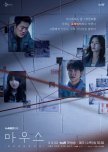
Mouse is a kdrama I constantly saw people recommend and as a psychological thrillers lover, I decided to give it a try. I watched the first episode last year and I was conflicted. I didn't dislike it but I wasn't impressed either. The premise seemed complex and it indicated a complicated story, one which I didn't feel like committing my time to. Therefore, I put it on hold.
Having completed Mouse after re-picking it, my feelings couldn't been more different than the vocal majority. There were many issues and they outweighed whatever positive aspects the drama offered.
Mouse was too convoluted. While I didn't struggle keeping up with the different timelines, characters and plot points, I didn't understand why it was necessary for the writer, Choi Ran, to stretch the story so much. The brain transplant plot and Ba Reum's vigilantism were almost unbearable to watch. One does not need to be a descendant of Sherlock Holmes in order to grasp the intentional misguide. This would have been an interesting route for 2 or 3 episodes but the writer decided to add a "monster of the week" arc for multiple episodes, this time with criminals.
A main issue with Mouse is its inability to tackle the already complex themes about the "psychopathy gene" and the discourse around the abortion of babies with this gene. Instead of addressing them, Choi Ran kept beating around the bush. While attempting to add more "depth" and thrill, she threw plot twists left and right, making the story frustrating and tiresome. They made the story drag and most of the time, they were used for shock factor, not development.
Moreover there were issues with the way the reveals were made. Writers usually give hints to the viewers, creating a momentum steadily and once the timing is right, they reveal their cards. What Mouse did is constantly show the one side of the coin through misleading flashbacks and then, debunk the established narrative by showing the real events, which were hidden all this time. This is not how you create impactful plot twists, especially if it happens frequently. Instead of sitting in anticipation, I grew immune to the overwhelming amount of twists and whenever something supposedly important would happen, I was unfazed.
Mouse tried to tackle many different topics but Choi Ran fell victim to her own messy writing. At times, I started wondering if she had a clear vision about the script or if even she had gotten confused while planning the series. Mouse had a big identity crisis, it couldn't focus on one thing at a time. Instead of invoking conversations regarding the psychology of a criminal and psychopathy genes, it kept going from one point to another, disregarding its initial goal, only to return to it towards the end. Some themes were explored superficially while some others weren't explored at all.
As a psychology student, I had mixed feelings about the premise from the get-go since stories which present mental disorders as completely innate are usually lackluster. I tried to bat an eye to the pseudo-science but there is only so much that I could turn a blind eye.
I was more than willing to be open-minded about a fictional work. But Mouse should have never had the psychopathy gene element, since the writer wasn't committed to properly explore it. Even if this is a sci-fi thriller, taking an important topic about mental disorders and utilize it for shock value, for the biggest part of the drama, is unacceptable. I am tired of seeing stories which exploit existing issues by contributing to the stigma of a marginalized group. I expected nuance and sensitivity or at least some research.
Aside from the outdated usage of the term "psychopath", Mouse constantly presented people with mental disorders as some type of animals, who cannot control their instincts and who seek to breed in order to reproduce their genes. Whatever attempt to tackle the "nature vs nurture" debate was thrown out of the window the moment Mouse chose to prioritize shock value instead of presenting a compelling message.
By the time I had reached the final episodes, I wanted to give the benefit of doubt. I believed the story's conclusion would highlight the difference in Yo Han and Ba Reum's upbringings and the effects of their treatment as children. I hoped for an ending where society would realise that Daniel Lee's research about psychopathy genes had many eugenics undertones ("I want to find good genes. I want to find a way to tell genes for good-heartedness from the bad ones to create a peaceful world without war or crimes". His own words on episode 9). I hoped that people would realise that a "psychopath" can still gain emotions with the right guidance and that no one is born as a monster, therefore making the abortion bill for "psychopath" babies unethical.
Apparently I was asking for something that was beyond the writing skills of Mouse's production.
Mouse ended up contradicting its own message throughout its duration. Having "psychopaths" be presented as vile monsters, who are incapable of feeling emotions, only to alter the narrative in a half-baked way towards the end, is not the most efficient method to make your message clear. It's funny that Ba Reum's change of heart came after the brain surgery, when Yo Han's frontal lobe replaced Ba Reum's. So, in order for a "psychopath" to change, the solution is to replace their frontal lobe with one of someone who is capable of experiencing emotions? Yo Han having the psychopathy gene does not make this particular part less peculiar than it already was. As for the ending, it proved nothing. If anything, it highlighted the eugenics undertones in Mouse. The abortion bill still passed which was an extremely tone-deaf decision. But since the whole drama was tone-deaf, at least there was some consistency here, I guess.
I understand what Mouse tried to say. The problem is that its execution was half-baked. And all of that stems from lack of cohesive writing. It didn't know what it wanted to prioritize. By creating a pile of substories, plot twists and different characters, the message got lost in translation and in the end, everything wrapped up in a rushed way. Throughout the watch, my views didn't get challenged. What got challenged was my tolerance towards the writer.
Characterisation was as lackluster as the story. While the characters seemed interesting at first, as the episodes went by, it became more clear how disconnected I felt towards them. I don't expect to like every single character in a drama, nor become attached to them. That being said, in a plot driven story, with so many jumps and twists, there wasn't enough room to properly flesh out the characters - or there was room to do so but once again, the execution fell short.
The first seven episodes did a decent job establishing Ba Reum, Moo Chi, Bong Yi and Hong Ju. I was invested in them and their personal demons, particularly Bong Yi and Moo Chi. The second half ruined the potential of almost everyone. Instead of actual humans, they felt like pieces of a table game. The drama explored the characters' feelings and dynamics superficially, making it hard for me to fully emphasize with them.
Moo Chi started as someone who seemed to be to my liking and he ended up irritating me quite often. I love flawed characters, especially if their flaws stem from their unresolved trauma. But Moo Chi was painfully one-dimensional, for the biggest part. His damaged relationship with Moo Won was the most interesting aspect of his and yet it wasn't explored properly. The rest of the story didn't focus on Moo Chi's trauma, reducing him to a police officer who ran around in circles. While I acknowledge that underneath his cold facade lied a deeply traumatized individual, I wish the series had presented him in different light.
His relationship with Ba Reum was bland. They didn't have many heart-to-heart interactions in order to establish the "brotherly" dynamic the series aimed for and as a result, Moo Chi discovering the truth about Ba Reum didn't leave a strong impact on me. On the contrary, I liked his protective side towards Bong Yi, it showcased how deeply he cared for people.
Both female characters didn't receive much grace when it came to their writing. I didn't like Bong Yi's tsundere attitude towards Ba Reum at first and their romance in general felt so weird. At least there weren't many romantic moments but their dynamic never moved me. Bong Yi had so many layers, I appreciated the bits which had focused on her trauma but for the biggest part of the story, she was reduced to someone who was in love with Ba Reum. I preferred when the series highlighted her own issues and I wish we had gotten more moments between her and Moo Chi.
Hong Ju was the least developed character. At first, it seemed like the series would've explored her dynamic with Moo Chi but they barely got any scenes, let alone many meaningful ones. Her backstory and connection to the Headhunter deserved more attention aside from a few flashbacks. Although her character had potential, she was the least interesting one from the main cast.
Out of the main characters, Ba Reum was by far the most fleshed out. I never fell for his angelic persona and the moment the switch in his personality happened, he became more appealing. Although I still cannot say that I liked him as much as I expected, he was fun to analyse and had he been in the hands of a different writer, his character could have been explored even more.
I found myself pitying Ba Reum more than hate him. According to the script, he was born as a "psychopath" and his tendencies to kill were triggered by OZ. He was a murderer and he deserved punishment but at the same time, he was wronged by everyone. I will give props to Mouse for making me feel sad for Ba Reum. At the same time, however, his death was a dissatisfying conclusion for his character. I believe he could have repented in prison while being alive, instead of following a classic "atonement through death" trope. It would still be a tragic conclusion, considering he would have to live with all this guilt and the main takeaway wouldn't changed.
Yo Han was another character who picked my interest. I didn't buy that he was the real culprit and I was curious to see more of his backstory and connection with the other characters. I wish we had gotten to see more of his childhood, if we had more scenes between him and Ji Eun, the contrast between his treatment as a child compared to Ba Reum would have been more impactful. Just like other characters, he had interesting aspects but he was underutilized.
Usually, I tend to finish my reviews by pinpointing my issues but this time, I left the positive remarks for the end. Mouse had a quite strong beginning. The story was engaging, albeit not flawless and the first part kept my interest. The production was remarkable and the dark tones and lighting added to the bleak atmosphere.
The acting was the drama's strongest card. Seung Gi did a great job portraying the different stages of Ba Reum's character. His performance towards the end conveyed Ba Reum's confusion and inner turmoil perfectly, allowing the audience to witness the change of a character who had been granted emotions after living like a "monster". Lee Hee Joon, whose performance in " The Scarecrow" left a great impression on me, elevated the character of Moo Chi. Had it not been for him, I would have lost my interest forthe character altogether. Hee Joon's depiction of Moo Chi's anger and inner grief made me feel for Moo Chi and it added more layers, despite his treatment from the writing.
Park Ju Hyun as Bong Yi did a good job as well, I liked her fierce performance and I'm looking forward to see her in "Extracurricular". Kyung Soo Jin was the weakest out of the main cast but that is mostly the writer's fault for making Hong Ju less developed. She did her part well enough, I just would have preferred some stronger emotional moments. And of course I couldn't praise enough the child actors involved in this story, all of them did a phenomenal job despite their age.
I understand why Mouse became so beloved. It's a pity I cannot share this sentiment, but my expectations weren't met. There are other stories which tackle the debate around nature vs nurture with more nuance and there are thrillers which excited me much more. The idea was interesting but the execution couldn't match the height of the ambitious and complex script.
Having completed Mouse after re-picking it, my feelings couldn't been more different than the vocal majority. There were many issues and they outweighed whatever positive aspects the drama offered.
Mouse was too convoluted. While I didn't struggle keeping up with the different timelines, characters and plot points, I didn't understand why it was necessary for the writer, Choi Ran, to stretch the story so much. The brain transplant plot and Ba Reum's vigilantism were almost unbearable to watch. One does not need to be a descendant of Sherlock Holmes in order to grasp the intentional misguide. This would have been an interesting route for 2 or 3 episodes but the writer decided to add a "monster of the week" arc for multiple episodes, this time with criminals.
A main issue with Mouse is its inability to tackle the already complex themes about the "psychopathy gene" and the discourse around the abortion of babies with this gene. Instead of addressing them, Choi Ran kept beating around the bush. While attempting to add more "depth" and thrill, she threw plot twists left and right, making the story frustrating and tiresome. They made the story drag and most of the time, they were used for shock factor, not development.
Moreover there were issues with the way the reveals were made. Writers usually give hints to the viewers, creating a momentum steadily and once the timing is right, they reveal their cards. What Mouse did is constantly show the one side of the coin through misleading flashbacks and then, debunk the established narrative by showing the real events, which were hidden all this time. This is not how you create impactful plot twists, especially if it happens frequently. Instead of sitting in anticipation, I grew immune to the overwhelming amount of twists and whenever something supposedly important would happen, I was unfazed.
Mouse tried to tackle many different topics but Choi Ran fell victim to her own messy writing. At times, I started wondering if she had a clear vision about the script or if even she had gotten confused while planning the series. Mouse had a big identity crisis, it couldn't focus on one thing at a time. Instead of invoking conversations regarding the psychology of a criminal and psychopathy genes, it kept going from one point to another, disregarding its initial goal, only to return to it towards the end. Some themes were explored superficially while some others weren't explored at all.
As a psychology student, I had mixed feelings about the premise from the get-go since stories which present mental disorders as completely innate are usually lackluster. I tried to bat an eye to the pseudo-science but there is only so much that I could turn a blind eye.
I was more than willing to be open-minded about a fictional work. But Mouse should have never had the psychopathy gene element, since the writer wasn't committed to properly explore it. Even if this is a sci-fi thriller, taking an important topic about mental disorders and utilize it for shock value, for the biggest part of the drama, is unacceptable. I am tired of seeing stories which exploit existing issues by contributing to the stigma of a marginalized group. I expected nuance and sensitivity or at least some research.
Aside from the outdated usage of the term "psychopath", Mouse constantly presented people with mental disorders as some type of animals, who cannot control their instincts and who seek to breed in order to reproduce their genes. Whatever attempt to tackle the "nature vs nurture" debate was thrown out of the window the moment Mouse chose to prioritize shock value instead of presenting a compelling message.
By the time I had reached the final episodes, I wanted to give the benefit of doubt. I believed the story's conclusion would highlight the difference in Yo Han and Ba Reum's upbringings and the effects of their treatment as children. I hoped for an ending where society would realise that Daniel Lee's research about psychopathy genes had many eugenics undertones ("I want to find good genes. I want to find a way to tell genes for good-heartedness from the bad ones to create a peaceful world without war or crimes". His own words on episode 9). I hoped that people would realise that a "psychopath" can still gain emotions with the right guidance and that no one is born as a monster, therefore making the abortion bill for "psychopath" babies unethical.
Apparently I was asking for something that was beyond the writing skills of Mouse's production.
Mouse ended up contradicting its own message throughout its duration. Having "psychopaths" be presented as vile monsters, who are incapable of feeling emotions, only to alter the narrative in a half-baked way towards the end, is not the most efficient method to make your message clear. It's funny that Ba Reum's change of heart came after the brain surgery, when Yo Han's frontal lobe replaced Ba Reum's. So, in order for a "psychopath" to change, the solution is to replace their frontal lobe with one of someone who is capable of experiencing emotions? Yo Han having the psychopathy gene does not make this particular part less peculiar than it already was. As for the ending, it proved nothing. If anything, it highlighted the eugenics undertones in Mouse. The abortion bill still passed which was an extremely tone-deaf decision. But since the whole drama was tone-deaf, at least there was some consistency here, I guess.
I understand what Mouse tried to say. The problem is that its execution was half-baked. And all of that stems from lack of cohesive writing. It didn't know what it wanted to prioritize. By creating a pile of substories, plot twists and different characters, the message got lost in translation and in the end, everything wrapped up in a rushed way. Throughout the watch, my views didn't get challenged. What got challenged was my tolerance towards the writer.
Characterisation was as lackluster as the story. While the characters seemed interesting at first, as the episodes went by, it became more clear how disconnected I felt towards them. I don't expect to like every single character in a drama, nor become attached to them. That being said, in a plot driven story, with so many jumps and twists, there wasn't enough room to properly flesh out the characters - or there was room to do so but once again, the execution fell short.
The first seven episodes did a decent job establishing Ba Reum, Moo Chi, Bong Yi and Hong Ju. I was invested in them and their personal demons, particularly Bong Yi and Moo Chi. The second half ruined the potential of almost everyone. Instead of actual humans, they felt like pieces of a table game. The drama explored the characters' feelings and dynamics superficially, making it hard for me to fully emphasize with them.
Moo Chi started as someone who seemed to be to my liking and he ended up irritating me quite often. I love flawed characters, especially if their flaws stem from their unresolved trauma. But Moo Chi was painfully one-dimensional, for the biggest part. His damaged relationship with Moo Won was the most interesting aspect of his and yet it wasn't explored properly. The rest of the story didn't focus on Moo Chi's trauma, reducing him to a police officer who ran around in circles. While I acknowledge that underneath his cold facade lied a deeply traumatized individual, I wish the series had presented him in different light.
His relationship with Ba Reum was bland. They didn't have many heart-to-heart interactions in order to establish the "brotherly" dynamic the series aimed for and as a result, Moo Chi discovering the truth about Ba Reum didn't leave a strong impact on me. On the contrary, I liked his protective side towards Bong Yi, it showcased how deeply he cared for people.
Both female characters didn't receive much grace when it came to their writing. I didn't like Bong Yi's tsundere attitude towards Ba Reum at first and their romance in general felt so weird. At least there weren't many romantic moments but their dynamic never moved me. Bong Yi had so many layers, I appreciated the bits which had focused on her trauma but for the biggest part of the story, she was reduced to someone who was in love with Ba Reum. I preferred when the series highlighted her own issues and I wish we had gotten more moments between her and Moo Chi.
Hong Ju was the least developed character. At first, it seemed like the series would've explored her dynamic with Moo Chi but they barely got any scenes, let alone many meaningful ones. Her backstory and connection to the Headhunter deserved more attention aside from a few flashbacks. Although her character had potential, she was the least interesting one from the main cast.
Out of the main characters, Ba Reum was by far the most fleshed out. I never fell for his angelic persona and the moment the switch in his personality happened, he became more appealing. Although I still cannot say that I liked him as much as I expected, he was fun to analyse and had he been in the hands of a different writer, his character could have been explored even more.
I found myself pitying Ba Reum more than hate him. According to the script, he was born as a "psychopath" and his tendencies to kill were triggered by OZ. He was a murderer and he deserved punishment but at the same time, he was wronged by everyone. I will give props to Mouse for making me feel sad for Ba Reum. At the same time, however, his death was a dissatisfying conclusion for his character. I believe he could have repented in prison while being alive, instead of following a classic "atonement through death" trope. It would still be a tragic conclusion, considering he would have to live with all this guilt and the main takeaway wouldn't changed.
Yo Han was another character who picked my interest. I didn't buy that he was the real culprit and I was curious to see more of his backstory and connection with the other characters. I wish we had gotten to see more of his childhood, if we had more scenes between him and Ji Eun, the contrast between his treatment as a child compared to Ba Reum would have been more impactful. Just like other characters, he had interesting aspects but he was underutilized.
Usually, I tend to finish my reviews by pinpointing my issues but this time, I left the positive remarks for the end. Mouse had a quite strong beginning. The story was engaging, albeit not flawless and the first part kept my interest. The production was remarkable and the dark tones and lighting added to the bleak atmosphere.
The acting was the drama's strongest card. Seung Gi did a great job portraying the different stages of Ba Reum's character. His performance towards the end conveyed Ba Reum's confusion and inner turmoil perfectly, allowing the audience to witness the change of a character who had been granted emotions after living like a "monster". Lee Hee Joon, whose performance in " The Scarecrow" left a great impression on me, elevated the character of Moo Chi. Had it not been for him, I would have lost my interest forthe character altogether. Hee Joon's depiction of Moo Chi's anger and inner grief made me feel for Moo Chi and it added more layers, despite his treatment from the writing.
Park Ju Hyun as Bong Yi did a good job as well, I liked her fierce performance and I'm looking forward to see her in "Extracurricular". Kyung Soo Jin was the weakest out of the main cast but that is mostly the writer's fault for making Hong Ju less developed. She did her part well enough, I just would have preferred some stronger emotional moments. And of course I couldn't praise enough the child actors involved in this story, all of them did a phenomenal job despite their age.
I understand why Mouse became so beloved. It's a pity I cannot share this sentiment, but my expectations weren't met. There are other stories which tackle the debate around nature vs nurture with more nuance and there are thrillers which excited me much more. The idea was interesting but the execution couldn't match the height of the ambitious and complex script.
Was this review helpful to you?


