

 1
1 4
4 1
1


Ambitious but poorly written
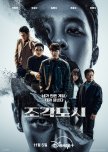
Since the ancient times, people have been engaging in hypothetical ethical dilemmas, challenging their sense of justice and morality. One of the most popular philosophical thoughts experiments is the trolley problem, in which a trolley is about to kill a number of people and the driver has the option to divert it onto a sidetrack with less people. Just how can we measure death and life? How can we dictate who gets to live and who is left to die?Bloody Flower started off as a psychological thriller which centered around the aforementioned dilemma: would you rather kill other people if that meant you would save other lives? Woo Gyeom, an aspiring medical school dropout, gets arrested for the murders of 17 people. According to Woo Gyeom, he was working on a treatment that could cure any type of diseases, not only simple ones but incurable ones too. The prosecutor who is responsible for this case, Cha Yi Yeon, is doing everything in her power to sentence him to the death penalty. And then, a third person gets involved; a lawyer, Park Han Jun, whose daughter suffers from brain tumor and struggles to get treatment.
The drama had a strong start. It established its themes regarding death and life from early on, making the viewers question every decision of the characters. On the one hand, Woo Gyeom wanted to prove that his cure was real while Prosecutor Cha, on the other hand, was adamant about sentencing him to death. As for Han Jun, he became entangled to this case by choosing to defend Woo Gyeom in a desperate attempt to save his ill daughter, if Woo Gyeom's cure would be proven real. These three characters had their own motives and beliefs and it was up to the audience to criticize their actions.
The first half focused more on the moral aspect of the story and the complexity of the situation. While Woo Gyeom had targeted criminals only, the fact he had murdered people couldn't change, therefore he should receive capital punishment. But how can could they sentence him to death while he was claiming to have found a cure for all diseases?
In the second half however, the drama started to lose me. It was as if I was watching a different story and the characterization felt inconsistent. The story delved deeper into Woo Gyeom's past and his connection to Chaeum Medical Group but 8 episodes were far too few in order for the story to breath. In addition, there were some scenes that felt kinda out of place, particularly the ones between reporter Cho and Min Gyeong. I love myself an entertaining duo, especially if they work together efficiently but at times, I felt like their humorous interactions disrupted the flow and tone instead of providing some breath of fresh air.
The villain was very underwhelming, Kwon Soo Hyun did good as Chairman Chae but acting alone is not enough to carry lackluster writing - and the same applies to the other characters too. Hewas painfully underutilized, I understand that through the few flashbacks we got, there were some hidden layers of a complex, abused character, but alas, these layers remained vague, leaving everything to the imagination of the audience.
Ryeoun did a respectable job portraying Woo Gyeom but at times, I felt like the script didn't allow the character to unfold more. Ryeoun's expressions and gestures conveyed Woo Gyeom's attitude convincingly but personally, I would have liked it if the story had delved into the emotional aspect more. At one point, the way Woo Gyeom was portrayed felt too restrained in order to flesh his character out more, which is a pity because Ryeoun is a great actor and he could have easily pulled off something more demanding.
Sung Dong Il delivered a performance that was expected from a veteran actor like him. His acting was subtle yet it carried many emotions while Han Jin's character was dealing with his inner conflict. I found Dong Il to actually be well-written, his developing relationship with Woo Gyeom felt organic and I really wish we could have gotten more scenes between them.
The biggest fumble however was Prosecutor Cha. At first, I tried to understand her point of view. Although her determination to sentence Woo Gyeom to death and her arrogance irritated me at times, I found her rather intriguing and alluring and I expected her to develop more as a character. At the end of the day, she represented the law, therefore the fact someone had committed 17 murders, should have been punished accordingly. She was a necessary force to enhance the moral conflict the drama wanted to address. But the problem wasn't that. The problem was the way the writers treated this character.
The way her character was handled was beyond lackluster. In the second half, her actions and attitude were very inconsistent compared to the first half, which couldn't be explained by her development as a character, simply because the story didn't explore her change of heart in depth. What the writers wanted to do couldn't been handled in eight episodes only. The rest of the main leads got enough scenes to flesh out their motives and development but Yi Yeon was sidelined in my opinion. In an attempt to create a strong yet flawed woman, the writers didn't let her develop properly, which is a pity.
Keum Sae Rok's performance, while good and commanding, took me out at times. I found some of her gestures over dramatic for a cold and calculating character like Prosecutor Cha. It was as if I was watching an entitled teenager, instead of an overconfident prosecutor. While I understand that Yi Year's arrogance is supposed to be an act of immaturity, it came across as too childish at times. I would have preferred something less flashy and more subtle but that's a complaint aimed at the director, not the actress herself.
The ending was both climactic and underwhelming. Some events were emotionally heavy but due to the overall writing, the dramatic moments didn't hit as hard as they should. Many unfinished business was left and instead of wrapping up the story for good, the writers gave an unnecessary nod of the possibility of a second season, which will most likely never come to fruition.
In conclusion, I didn't enjoy Bloody Flower as much as I wanted to. I don't know if the novel which inspired the drama was better but the series felt poorly written for such an ambitious plot. Had it had more episodes, it could have been better developed. I don't think I'd recommend this drama to avid fans of the genre but if you want something quick and challenging, it might be your cup of tea.
Was this review helpful to you?
An interesting action drama which raises questions about justice
Taxi Driver is one of the most recommended kdramas out there. I have seen people talking about it so naturally, I became interested. Since the third season is coming up, I decided to watch the first two in order to prepare for the new one. After watching the first season, I decided to share my thoughts about it.From a technical aspect, Taxi Driver was very good. I don't know how they filmed the taxi scenes, but they were very cool to watch. The camera work was very intense, especially during the driving scenes and the closeups during the characters' dialogues added more tension. The fighting scenes were serviceable, I found the ones in the second hand better choreographed than the ones in the first episodes but they did their job.
The soundtrack was a highlight on its own. Epic and intense, with some emotional undertones at times. It gave me a retro feeling and it matched with the drama's tone. Vivaldi's Four Seasons was a great addition and it always added the required tension, giving an old-school tone. But the song that became integrated into my mind is All Day by Cha Ji Yeon. I had no idea that she was the singer behind it, talk about a talented woman. Every time the song played, I got chills all over my body, even seconds after listening to the instrumental.
Taxi Driver's plot relies on the themes of justice and revenge. The first part focused on individual cases that got resolved in 2 episodes while the second half focused on the Rainbow Taxi team and their own battle with the police and the organ harvesting organization.
The episodic format in the first half worked very well for this type of drama. We witness different cases of people who seek revenge against their abusers and who pin their last remains of hope on the Rainbow company. The drama tackles many serious topics, from school bullying to illegal porn trafficking, therefore if you want to watch it, proceed with caution. The fact that the cases were inspired by real events made the experience sadder. Just how many people who have been wronged didn't get the justice they deserved?
Taxi Driver challenges the morals of viewers by portraying two different sides: vigilantism and law. On the one hand, we have Rainbow Taxi members who help people who are wronged while on the other hand, we have the law, who is supposed to protect the victims and punish the culprits. However, this applies in theory only, for the law is not always righteous. Criminals often do not receive serious sentences or they might not even get caught. Under the weight of fear, helplessness and pain, to whom will the victims rely on? Who will offer them a shoulder to lean on, once they've been consumed by darkness?
It is no secret that the justice system is now flawless. Unfortunately, we have seen many cases of criminals not receiving strict punishments for their crimes - or not being punished at all. It's not hard to exploit the law as long as you have power and real life has proved this many times before. The members of Rainbow Taxi have experienced firsthand the cruelty and ignorance of the system, which instead of providing comfort and help, it held an indifferent position.
That was an interesting food for thought; if these feelings of anger, wrongness and bitterness are being bottled up, what will happen once they'll burst? To what extent are people willing to go, driven by the need for revenge against their abusers? And how can we criticise their choice? I found myself deep in thoughts with each passing case. The answers to these questions are more complex than we think but instead of spoon-feeding us, the series encourages us to give our own interpretation.
The cast was good and the actors did a good job bringing the characters too life. They fit their roles very well and no one felt miscasted. I especially enjoyed the performances by the villains, the actors made sure to make me hate their guts and pray for their downfall. I especially liked Choi Hyun Wook's performance as a school bully. He proved that he can shine in darker roles and I'd love to see him playing a similar character one day.
Lee Je Hoon as Kim Do Ki was certainly a highlight of his own. The way he sifted from Do Ki's stern and closeted character to his cheerful and outgoing personas during the missions was so effortless and natural. Many times I thought that he would be perfect in a comedy series, his charm was contagious and I had a blast watching him fooling around with the criminals. At the same time, he embodied Do Ki's feelings perfectly. I could tell by his expressions what Do Ki felt and thought. He humanised the character a lot and it was as if the role had been written specifically for him.
I'd also like to give a nod to Cha Ji Yeon. Holy moly, if that wasn't a commanding performance, I don't know what it is. She carried herself with such confidence and mirth, I was always unable to take my eyes off the screen every time she appeared. The tone of her voice, her body language, her maneuvers, her expressions, everything was spot on in order to showcase Baek Seong Mi's character. Definitely one of the best female villains I've encountered so far in terms of acting.
I was so shocked when I learned that Ji Yeon comes from a musical background and that she's mostly a musical actress. I'm not exaggerating when I'm saying that her performance can put other professional drama actors to shame. This woman is so talented and I'll watch everything from her (unfortunately short) filmography, just to experience more of her acting. And again, she killed it in the soundtrack!
Until now, I spoke in the best regard about Taxi Driver. It was entertaining and there's no denial about the importance of the topics it addresses. However, I must say that I unfortunately did not connect with it like many people did and in the end, I was left with an indifferent impression.
Before I'll go in detail, I want to clarify this: I'm aware of the fact that the production changed the writers and as a result, the second half is different. As you will see, I didn't like the second part that much but I also had some issues with the first act. Even if the original writer had been involved in the rest of the series, I'd still have some complaints to make.
I started noticing some issues with the writing from the early episodes. Having heard so many praising comments regarding the depiction of the cases and the victims, I expected the drama to delve deeper into these matters and explore the emotional and psychological state of the people more.
Nevertheless, Taxi Driver focused more on the revenge plans, which is not bad but it didn't make me connect with the victims that much. The series shows how devastated they are but it touched their feelings in a rather superficial way. I get it, this is an action packed drama so obviously it wouldn't focus on the victims and their psychological state. But I would have preferred it if we had seen more of them. I understand that this is a me problem, so feel free to not take this criticism too seriously.
While the first half didn't leave me in awe, it was certainly far more engaging compared to the second one. I'm sorry but the drop in quality was beyond noticeable, at least for me. In terms of storytelling, it was a dragging mess. I was tempted to skip many scenes and the conclusion felt both overstretched and rushed at the same time. I totally understand the purpose of the organ harvesting subplot but the payoff was underwhelming. The events that led to it were more exciting than the plot itself and until the very last episode, I was looking forward to be done with the series.
Another aspect I wasn't very fond of was the comedy. There were some good light-hearted scenes, especially the ones between Gyeong Gu and Jin Eon. But some other scenes failed to elicit a reaction from me. While I enjoyed Lee Je Hoon's portrayal of Do Ki's personas, this gimmick became kinda boring after a while. The case about the voice phishing incidents made me cringe in various moments. The jokes were a miss for me and the fake flirting between Do Ki and Madame Li made me want to straightforward their scenes.
Due to the focus on revenge, the emotional impact was lost, especially during the second act. While the series included some emotionally heavy moments, the constant shift in the tone didn't allow me to properly digest them or connect with the characters. One moment, we watched something sad and then the story would return to its epic tone.
The characterisation also left much to be desired. I would have preferred it if we had gotten more exploration about the Rainbow Taxi members. I didn't expect a strong development but it would have been interesting if we had seen the members trying to deal with their inner demons. In addition, while I enjoyed the characters, I didn't feel any strong connection with them. They had some nice interactions nd there were times when it showed how much they cared about each other but I still felt quite distant.
Go Eun's backstory and trauma was handled in the best way. We saw how she struggled psychologically and physically and that she needed time to get back on the case and through her flashbacks, we observed her relationship with her sister and the impact her death had on her. I sympathized with her pain and I rooted for her to get her revenge and finally heal.
Do Ki was also a character whom we got to know more, through the present and past. But while I felt sad for him and his trauma, I wish the series had devoted more attention to his feelings and motives. At one point, he began questioning the whole purpose of the Rainbow Taxi company and going against the law but it was handled in a very rushed way. His inner turmoil could have been utilized more in order to connect with him some more.
The character that disappointed me the most was prosecutor Kang Ha Na. Whatever the writers thought they did sunk harder than the Titanic. I was never annoyed with her character per se, I was annoyed at how underutilized and poorly developed she was. In the first episodes, Ha Na seemed like an interesting force in the series. She was introduced as a potential thread for the Rainbow Taxi team, a competent servant of the law, who wanted to serve justice. I expected her to be a complex character but alas, that didn't happen.
One of the major problems with this character was her inability to do her job right. When you are trying to sell your character as a good prosecutor, who is popular in the force due to her capabilities, you need to make her act in a way that will highlight her competence. Ha Na didn't convince me much. She relied a lot on the Rainbow Taxi company and many of her choices were questionable considering her experience in the field.
About her development...honestly, there wasn't much development. I totally understand the intention with her character but the execution fell flat to say the least. I thought we were going to see more of her inner conflict regarding her duty as a prosecutor to follow the law by the book and her duty as a human to help the victims, no matter what it took. There were some hints that showed her disagreement over the justice system but the writers didn't elaborate any further on that. By the time the shift happened, it was too late to make it believable enough.
All in all, Taxi Driver was a decent series but unfortunately I didn't connect with it like many people did. I can totally understand why it's popular and why many people love it and I wish I could say the same. I'm still going to watch Season 2 (in fact, I've already watched the first 7 episodes) and I'll give season 3 a try too. The drama has many good aspects and it raises some vital questions regarding justice and revenge. My review reflects my own opinion and I by no means want to discourage anyone from giving Taxi Driver a try.
Tighten your belts and enjoy the ride.
Was this review helpful to you?
A MESS
If I'll have to summarize this drama in one word, that would be MESS.When I saw people posting about Twelve, I was initially very intrigued. The concept of the zodiac angels living like humans while trying to regain their powers was very interesting and unique. I love fantasy and mythology so I decided to watch the drama from the day it started airing.
Looking back at it, I almost want to laugh at my excitement and curiosity.
The first two episodes were lukewarm to say the least. The plot didn't seem as interesting as I had expected and the characterisation wasn't engaging enough for me to care about the characters. Still, I decided to remain optimistic. It was only the beginning and the story needed more time to unfold properly. Although Twelve didn't have the strongest beginning, I still had hopes because the story had some interesting traits and I believed that as the series would go by, it would improve.
Alas, the show just went downhill and crashed harder than the Titanic.
The first red flag which indicated that this would be an unpleasant journey was the fighting scenes. Let me tell you that when I watched Tae San fighting these thugs for the first time, I was baffled. Messy choreography. Weird angles. Tacky editing. I felt like I was watching a project made by amateurs and let me tell you that I've seen fanmade videos on YouTube about different franchises that put Twelve to shame.
When you describe your drama as action heavy, one would expect something better than these chops of fighting scenes. There were times when it was so painfully obvious that the actors did not hit each other, it was honestly so laughable how unconvincing it was. And don't get me started on the bad guys getting beaten one by one, waiting for their turn patiently instead of attacking together.
The direction and production added more salt to the wound. There were times when I almost wondered if the showrunners were mocking us and if I was part of a social experiment. At least that would made a more interesting plot than the one we had. I am confident that all the budget went to the actors and the rest received dust. There's no other way to explain what I saw on my screen.
First and foremost, the costumes they showed in the flashbacks were absolutely tragic. For a fantasy series, they didn't even bother try out more effort and creativity in the clothes. I've seen cosplayers with much better attires and with clothes that do not look like cheap Shein products. The armors were so bad, the clothes were so mismatched and the wigs were so comical to look at. During some more serious scenes I just couldn't take the characters seriously because of the way they looked. The most prominent example is the scene where the 8 angels mourn the death of the other four. Aside from the bad editing, I couldn't bring myself to care and instead of focusing on the heaviness of this moment, I had to surpass my laughter every time the camera would focus on one of the Angels in these ridiculous costumes. The CGI, albeit not horrible in some parts, left some things to be desired. O Gwi's wings could have definitely be better, they looked bizarre sometimes, especially when he used them to fight.
The lack of a powerful and epic OST was another element that failed to elevate the emotional impact of Twelve. You need a good soundtrack in order to create emotions and Twelve failed to provide us with anything memorable. I'm currently watching The Untamed so I feel spoiled because every episode cause euphoria in my ears so the discrepancy between this and Twelve is very funny. There is a scene where Tae San opens Hellmouth and the background music is a hip hop track. What are we even trying to do?
When we're talking about fantasy, the visuals play a fundamental role in order to establish your setting and magic system. But I was willing to cut them some slack. Some fantasy series might not have the best effects but at least they offer an interesting script.
In Twelve's case, the story was even worse.
When you're making a drama with 8 episodes, one would expect more straightforward storytelling. With short dramas, you cannot afford to waste time. But it's clear that the budget was cut short because neither the story nor the characters delivered what was promised.
It's a serious crime to create a fantasy universe and put barely any effort to expand it. We are thrusted into this world as if we have any prior knowledge about it. Aside from the small intro from Episode 1 and some information via poor dialogues and awkward flashbacks, we never really get to learn many significant things regarding the Angels and God. And what about the Angel's identities? I had to read the description of the actors from my drama list in order to understand which Angel represented each animal. Aside from the most obvious ones (Tiger, Pig, Monkey, Snake, Dragon) the rest weren't that clear. Had I not read the information, I would be stuck trying to figure out the animals Mal Sook and Jwi Dol were supposed to be.
Aside from the poor world-building, I'm still trying to understand the reason why the series was called Twelve when four angels remained dead for the most part. If you wanted to create a series about the twelve zodiac signs, you should at least give information about all the angels and integrate them into the story. Had we seen more of the four angels and how they contributed to humanity's safety, it would have made more sense and it would have added more depth in the dynamic among the Angels. Such thing never happened and instead we basically got deceived.
The structure of the story killed every remaining possibilities of development. Everything felt so hectic and not in a good way. The pacing was painfully slow, sometimes it was as if time had stopped. I have no problem with slow-paced dramas, some of my most favourite series are actually slow-paced (Beyond Evil, Through The Darkness, Black Out). However, in these shows the pacing was necessary in order to explore the characters and the story and prepare for the built-up. In Twelve, that simply never happened. There was no deeper exploration regarding the characters, the story remained monotonous and the payoff was definitely not worth it.
The editing contributed to the amateur image of the show. Was there even an editor in the first place? I seriously doubt that. They left so many unnecessary moments uncut. Some scenes dragged so much, they felt like they lasted for hours and hours. Give me one reason why it was necessary, according to the director, to show every single Angel's reaction when something significant happened.
The four angels die? Zoom into every Angel's face and show their reactions. One by one.
Tae San arrives during a dangerous situation? Make each Angel exclaim "Tae San". One.by.one.
The Angels are fighting enemies or getting beaten? Show them fighting. ONE.BY.ONE.
ENOUGH IS ENOUGH. WHO THOUGHT THIS WAS A GOOD IDEA!? At one point I started taking guesses about the order of the Angels' appearances! Moments like these are the reason why the pacing was so off. We wasted too much time in insignificant scenes instead of using it for more meaningful storytelling.
The usage of flashbacks killed even the few hyped moments in the series. They were so random and the majority of them did not even contribute anything to the plot. Instead of using them meticulously in order to give further information without ruining the pacing, the writers put them in the most bizarre moments. For example, Episode 3 ends with a flashback which came after.a.supposedly.dramatic.moment. They could have chosen to end the episode then but nope, they had to ruin the mood with this good-for-nothing throwback.
I cringed so hard when the series tried to become comedic. It was so painful to witness all of these attempts to add some funny elements. As if it wasn't enough to sit through this wannabe epic fantasy tale, they tortured me with poorly written humor too. Let me tell you that I laughed harder at the scenes the writers did not intend to make funny. I wasn't like with them, I was laughing AT them.
And now the characters. Oh boy, where to begin? To put it frankly: I gave zero f*cks about them. It appears that the writers would take it for granted that the viewers would sympathize with the Angels simply because they were the good guys who had been wronged by humans. Surprise surprise, this is not enough. When the writers do not bother to put any effort in the characterisation, I am not obligated to side with the heroes. I couldn't bring myself to feel anything about these people. They didn't even have proper personalities. Some of them had interesting traits but they were never utilized. A pity if you ask me, especially since they are supposed to represent the zodiac signs so there were many opportunities to incorporate that in their personalities.
Among the Angels, the one who was highlighted a lot was Tae San, portrayed by Ma Song Seok. Which makes sense considering he was involved in the writing process too. Too bad he couldn't invest in his character. Tae San was supposed to be this sympathetic leader who has fallen into depression after the tragedies he has experienced and yet I couldn't bring myself to care. Not in the slightest. The writing of his character was so messy, instead of coming across as badass and yet vulnerable, he became comedic. Instead of having so many scenes about him or his interactions with the grandma, the screen time should have been shared among the rest of the Angels in order to flesh out their characters just a little bit.
The story tried very hard to convince me that the Angels are a family. I'm sorry but I was never sold. Whether it was the acting or writing, the chemistry among the Angels was bland and barely existant. They never gave me the vibe of a family that tried to stick together and help each other. It was like watching a bunch of coworkers. Instead of showcasing their bond more through actions, the writers tried to sell it via poorly written scenes. The worst part was the scenes with the characters having discussions while eating. They failed so much to capture the domestic feeling.
The only characters which managed to capture my interest even a little were Won Seung, Mirr and O Gwi. Won Seung was fun to look at and I was curious to see if his character would have been explored more considering he was marketed as one of the main ones (spoiler alert: he didn't receive any development). Mirr and O Gwi seemed to have interesting backstories and I wanted to learn more about them. But of course the poor writing had to ruin everything.
Can someone give me one good explanation about why Mirr was written as such a weak Angel? She was supposed to be the only one to retain her powers and yet she struggled more against the bad guys. I swear to God, for the majority of the series she was either sleeping or she was a damsel in distress. Shebarelt had any personality. I feel sad for sounding so harsh but unfortunately this is the plain truth.
O Gwi was one of the biggest letdowns. I tried to remain hopeful and believe that we would see more of him but once again, I was deceived. It's so funny how hard they tried to market him as the main threat for the Angels, only for him to barely have any significant scenes in the first episodes and then be turned into a wannabe misunderstood antihero. There were so many layers that could have been explored but clearly the writers did not care. We learned almost NOTHING regarding his backstory and his motives were presented in such a superficial way.
When the plot is not plotting, what is the best solution in order to make it more interesting? You guessed it: romance. And which characters did the writers decide to pair together? Of course the heroine with the villain, Mirr and O Gwi. The problem is that when you're writing romance, you ought to make it believable. I'm sorry but Mirr and O Gwi gotta be one of the most fraud couples in the history of kdramas. They barely had any meaningful interactions. The one kiss we got cannot even be described as a proper kiss with the way it was filmed. Tell me, why should I care about them and their story when the writers did not bother to explore it? "Oh, but you don't understand, it's a tragic love story and they wanted to be together even though everything was against them and..." AND NOTHING. You cannot write a romance in such a shallow way and expect me to care. You are not writing tropes. You are writing a love story. We never learned how they met each other. We never saw them interacting as a proper couple. We got a shitty montage of some of their happy moments as if it came straight out from a fan made YouTube video from the 2010s. And last but not least regarding this subplot: I apologize, but the actors did not have chemistry. I'm sure that both Park Hyung Sik and Lee Joo Bin are good actors but they were unable to sell the chemistry between them. Their interactions seemed so wooden. I know that this is partially fault of the writing but something was off with the actors too.
I feel so grateful for not being a fan of any of the actors prior watching the series. Had I been a fan, I would have built higher expectations regarding their screen time and characters, whereas I went blindly into the series and spared myself from a bigger disappointment. I am desperate to learn about the actors' paycheck. Did they read the script before signing up for it? Were they happy with the final results? If I were them, I would have stormed out the setting the moment they'd make me wear one of these poor excuses of wigs. It's such a pity that their talent got wasted in this mess of a show.
The acting was not horrible. But it was poor because the writing itself was poor. The actors did not have many opportunities to showcase their range more and their performances came across as awkward. The delivery of some lines was unconvincing, it was as if the actors themselves couldn't feel the characters or the story. The only moment throughout the drama where an actor delivered a performance with some emotional impact was on Episode 6 when Won Seung mourned the death of a particular character. Kudos to Seo In Guk. The rest of the actors were unable to showcase their full potential but that is the fault of the script. Park Hyung Sik carried the character of O Gwi on his shoulders but even he wasn't enough to save this mess of a plot.
At sixth grade, me and two of my friends made a short film for an English project. Our amateur movie, filmed by my dad's phone and edited from a free computer app was more consistent and entertaining than Twelve. Whatever it was supposed to deliver, it simply didn't. I didn't want to drop it because I am the type of person who refuses to give up on series but I am so happy it was 8 episodes only. I am very sad that such an interesting concept got wasted on such a lackluster execution and I hope that none of my favourite actors will get to work with these writers and director.
A message to kdrama producers: good casting does not guarantee good writing and good numbers. Audiences are not as naive as you think. If they realise that what they're watching is poorly made, they will give up. That explains the reason why viewership plummeted after the first two episodes. May this be a lesson to everyone, viewers and creators.
Was this review helpful to you?
This review may contain spoilers
Thrilling, engaging with potential for more
The Manipulated is one of the most engaging thrillers I've watched this year. I got intrigued by the plot and although I wasn't familiar with the movie, I decided to give the drama a try. I am a sucker for a good revenge story so it seemed that this drama appealed to me.The first episodes worked as a set up for Tae Joong's character. Unlike other thrillers that start with the action part right away, The Manipulated took its time in order to establish the main character and his background. I found the first two episodes to be some of the best ones in the whole series. The portrayal of Tae Joong's psychological trauma in the prison and his bond with Yong Sik added more sentimental layers to his character, which made it easier to root for him.
The action scenes were thrilling to say the least. The cinematography and editing added more tension and the soundtrack enhanced the epic vibes. If one enjoys action packed dramas, The Manipulated will certainly not disappoint you. The action aspect was so exciting and my eyes were glued on the screen in order not to miss anything.
The makers did a good job highlighting the different fighting styles of the main leads. Tae Joong's wasn't that polished since he wasn't a trained fighter and had no experience with the crime world prior getting imprisoned. Yo Han, on the other hand, was lethal and yet fascinating. He didn't get involved in fighting all the time but even the few scenes we got showcased how dangerous he truly was. He carried himself with ease and he handled his weapons like it was a second nature for him. Tae Joong relied on his environment and followed a street-like fighting style and unlike Yo Han, he never aimed at killing his opponents, even if he had the chance to do so. These differences made me even more hyped for their final clash.
Tae Joong was an interesting main character, one whom you couldn't help but pity. He had lost everything, from his friends and family to his freedom and yet he remained resilient and kindhearted. Throughout the series, we see him getting involved in more fights and dark activities but his humanity remains intact. I especially appreciated his bond with Yong Sik, who was his rock of support in prison and who helped him once he got out. Their scenes brought a feeling of calmness and their soft interactions made me feel cathartic. They worked as a reminder of Tae Joong's past self: an innocent, kind man who cherished the people he loved.
On the other hand, Yo Han couldn't have been more different. He didn't feel love like Tae Joong or even if he did, he expressed it with cruelty. Yo Han was cunning, charismatic and intelligent. He toyed with people, innocent and guilty ones and fabricated the perfect lie. He cared for no one but himself and the only person who got to experience his love (even in its cruel form) was his nanny. The way he calculated and predicted everything made me feel both captivated and fearful. He was the perfect rival for Tae Joong and an interesting villain in general.
While this type of psychopath villains who are bad for the sake of being bad are a hit or miss for me, Yo Han was a character who I wanted to analyse more, just to grasp even the smallest hint of his philosophy. I liked the moments when his collective and calm persona would crumble and he would succumb to anger outbursts. He always seemed so untouchable and yet he would act like a spoiled kid who didn't receive its Christmas present if things didn't go the way he wanted to. Some people have voiced their dislike for his childlike traits but in my opinion, these traits worked for his character.
I liked how the plot framed the cat-and-mouse game between Tae Joong and Yo Han. Two men who are polar opposites and who are connected in such a cruel way. Yo Han's schemings against Tae Joong intensified their rivalry and had me wondering how Tae Joong would have been able to take him down.
Watching Yo Han manipulating Tae Joong reminded me of how some predators will toy with their prey. For him, Tae Joong became something more than an "avatar" to utilize in order to save his client's life. Tae Joong was a constant enigma. How could he retain his kindness after the hell he had been through? How could he still have the support of many people, even after being labeled as a criminal? For someone like Yo Han, who was incapable of grasping the concert of empathy and kindness, Tae Joong was a puzzle to solve - and shape however he wanted to.
A big chunk of The Manipulated's success derives from the main leads' acting and chemistry. This was my first time watching a Lee Chang Wook drama and it's safe to say it won't be the last. He was perfect for the role of Tae Joong and his performance humanized Tae Joong. His eyes conveyed Tae Joong's sorrow and tiredness, you could tell how exhausted he had been and how much he clung even to the smallest possibility of proving his innocence. He was stern but not bland and he certainly proved his reputation as a capable actor.
I was beyond surprised to learn that Doh Kyung Soo is a member of the kpop group EXO. I am not familiar with their songs but I know them and I didn't expect to see one of their members in a lead role. It goes without saying that Kyung Soo delivered a captivating performance. He carried his character with ease and embodied his troublesome mind and complex emotions convincingly. Kyung Soo made me feel like I was watching a bomb ready to be set off. The tone of his voice, his expressions, his body language, everything highlighted Yo Han's deranged and unpredictable personality.
The rest of the actors also did a good job with what they were given. The prisoners were interesting to watch, especially Deok Su. Yang Dong Eun whom I saw in Squid Game, was great in this dark role. Lee Kwang Soo also did an excellent job as Baek Do Gyung, the person who used Tae Joong in order to avoid prison. I hated his character so much but at the same time, his vendetta against Yo Han was fun to watch.
I wish I could say that I liked the story until the very end. The first episodes were an amazing set up and I expected the rest to follow the same route. But the more the story escalated, the more puzzled I felt about the writing.
The Manipulated tried to differ compared to other revenge kdramas. Instead of making the hero's need for revenge his sole purpose, the writers tried to give Tae Joong more personality. I really appreciated the psychological aspect but as the story went on, it felt like their attempt to explore Tae Joong's personality got neglected. I would have liked to see more flashbacks of his hitherto happy life and I would have liked to see more interactions between him and his friends. We saw them assisting him in the finale but we never got to see them reuniting, even though it was shown in bit parts that they remained loyal to him. There were opportunities to showcase his personality even more and although I'm happy with what we got, they could have been more.
After the fifth or sixth episode, I got the impression that the pacing was inconsistent. While the episodes remained engaging, some scenes felt like fillers. Some subplots were interesting and some others weren't that much. The writers wanted to do many things in just 12 episodes to the point the writing didn't feel as fleshed out as it previously was. Revenge, corruption, kinship, all of these themes were more than interesting but they couldn't be developed properly alongside the main story.
There was an endeavor to include more heartfelt moments between Yong Sik and his daughter but by the time Eun Bi had gotten introduced, it was too late to create a strong emotional relationship between them. Of course I felt for them and I was rooting for their reconciliation but the drama didn't leave much room for their relationship to develop properly. I genuinely wanted to see more of them but their interactions weren't enough in order to get more emotionally invested. The moment when Yong Sik was about to sacrifice his life, sad as it was, failed to move me simply because we hadn't gotten much time with these characters and their past. Even their backstory wasn't presented in the best way.
Speaking of backstories, I really wish we had gotten a few flashbacks from Yo Han's past. This tell-and-don't-show method didn't contribute a lot. I'm not saying that he needed a sob story. But it was underwhelming to see his backstory being given in more dialogues.
The ending left me with a lukewarm reaction. I was happy for Tae Joong but I wasn't thrilled by the way we had reached the conclusion. The last two episodes felt too overpacked, they wanted to cram everything together to the point the story became rushed. Tae Joong and Yo Han's final confrontation could have also been handled better, especially Yo Han's downfall. I totally understand the way it was done but personally, I wanted more. We wasted too much time on secondary villains while the writers could have developed the main leads' clashing ideologies and have them spend more time together in the finale.
All in all, The Manipulated was an entertaining thriller which left some things to be desired. I was happy for getting introduced to these actors and although it didn't become a favourite of mine, it was a drama I do not regret watching and which I recommend to those who seek action and thrill.
Beware for the truth might not be what you see.
Was this review helpful to you?
Laughing through political chaos
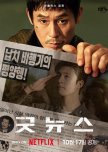
Isn't it fascinating when a movie ends up becoming one of your most favourites, despite having zero expectations prior watching it? That's Good News to me, for it has become one of the best movies I've watched this year.Good News is about a hijacking story from 1970. Members of the the Red Army Faction hijacked a commercial aircraft and demanded that the flight be rerouted to Pyongyang. Japan, South Korea, and the US deploy several strategies in order to hijack a radio signal from the airplane. The main characters, "Nobody", a mysterious man and the South Korean Seo Go Myung, work for South Korea and they're trying to bring the airplane to their country.
Before I watched Good News, I didn't have a lot of expectations. I was interested to watch it after learning that Hong Kyung and Sul Kyung Gu were in it and the story seemed interesting enough. But apart from that, I went blindly into it. I didn't even watch the trailer and I overall had a very vague impression of the story. Looking back at it, I think I made the right decision.
On the surface, Good News might appear to be a typical Korean thriller based on real events. I was aware of the fact that the movie was based on a real hijacking event, therefore I expected it to be a sort of Hijack: 1981 film. But the film quickly proved me wrong in the best way possible.
I didn't foresee that instead of a serious, historical thriller I would watch a satirical political movie, with plenty of humor. The jokes were spot on and the dialogues and interactions between the characters added more layers to the absurd events. The comedy never felt forced and the jokes flew by smoothly. I genuinely did not expect to have as much fun as I did, I laughed so hard during some scenes to the point I could feel my abs burning!
What I really liked with this film is that it poked fun at everyone. No one was excluded from its sharp humor and satire, be it South or North Korea, Japan, US, communists, marxists etc. Instead of taking sides and making fun of a specific country or political ideology, Good News portrays each side in the most bizarre and laughable way. It was a very bold and daring approach but the writers pulled it off magnificently.
Comedy and history were blended together, resulting in an overall light-hearted movie. But the message never got lost in translation (figuratively and metaphorically). Through its excessive and witty humour, Good News' ultimate goal is to show the hypocrisy of politicians and make fun of their thirst for power. While the story is centered around a hijacking event, it's not the hijackers who get framed as the villains. Throughout the whole movie, we observe how agencies in South and North Korea and Japan move their pawns in order to benefit from the hijack. Politicians from both sides claim that the ultimate goal is to save the lives of the passengers. But underneath the surface, it becomes clear that their intentions are not as humanitarian as they seem.
Corruption, greed, lies, manipulation...These are only a few of the defying traits of people in power. We see how men in powerful positions try to infiltrate people's minds for their own benefit. In order to do so, they utilize three aspects, as stated by "Nobody": real events that happened, a little bit of creativity and the willingness to suspend disbelief. Once you give people something to be afraid of, things are bound to escalate rapidly. Fear, anger and mistrust are sufficient tools at the hands of politicians, especially if they want to ensure their power and influence.
Apart from the well-written script, the film had excellent cinematography and editing. There were many great transitions and the way some scenes were filled enhanced the comedic elements. I especially liked the scenes that took place in Go Myeong's imagination, they were so hilarious and I loved how they were made.
Of course a good story needs a good cast to elevate it. Good News is one of this type of movies where every actor nailed their roles. There wasn't a single moment where I thought that an actor had been a miscast, everyone did their part so well. The interactions between the characters never felt forced and all performances managed to leave a lingering impression on me, with one way or another.
I'll start with Sul Kyung Gu, whom I already knew from The Merciless, Kill Bok Soon, Mantis and Memoir of a murderer. Good News is the fourth project with the director Byun Sung Hyun and once again, Kyung Gu didn't disappoint. He was so good as the mysterious and quirky "Nobody". He carried himself with the required type of arrogance and cleverness. "Nobody" followed orders but he also set up his own rules. Despite his comedic parts, Kyung Gu's performance added more depths to his character through his body language and tone, especially after "Nobody" 's backstory became known. It was one of my most favourite Kyung Gu's roles and I always looked forward to see him.
Ryu Seung Bum was amazing as Park Sang Hyeon, the head of KCIA. He was charming, confident and meticulous. A politician who was after power and who didn't hesitate to manipulate other people, like Go Myung, in order to establish his dominance. Even though the character was unlikeable for the most part, both the writing and Seung Bum's performance made it impossible to look away when Sang Hyeon appeared on screen. It was fascinating watching him speak and act all so full of himself, as if he knew that he would eventually have his way around.
Another actor who caught my attention was Show Kasamaru as the leader of the Red Army Faction. He played the comedic parts very naturally and he was very charismatic. Despite his funny scenes, he was equally good in the more dramatic parts too, making the viewers sympathise a little with him or at least try to understand his goal.
Other remarkable performances were Kim Sung Oh's, who has started becoming one of my most favourite actors and Takayuki Yamada's. Both of them nailed their parts and they were very fun to look at. A very unexpected yet welcome surprise was Jeon Do Yeon's cameo, she ate the 10 minutes of screen time she had like a queen.
But the gem of this movie was undoubtedly Hong Kyung. I doubt that I can do justice to his performance by describing it in mere words. He was so versatile in this role. He didn't just portray Go Myung, he transformed into him. He was absolutely captivating in the funny parts but he was also excellent in the more dramatic scenes, especially during the final act. I could feel Go Myung's emotions pour out of Hong Kyung. His confusion andannoyance at "Nobody's" antics, his fear towards his superiors, his empathy towards the passengers and his desperation to save them, his ambition to be recognised. He was a very complex character who underwent a big development and to whom I became attached until the end of the film. All thanks to Hong Kyung's spectacular performance.
Good News is not just a movie that covers a hijacking event. It's a political comedy that reminds us of the hypocrisy of politicians. It's about following orders and taking matters into your own hands. Ambition over ethics. And above all, it's a reminder of all the untold heroes out there who will never get recognised for their contributions. By the end of the movie, I found myself in deep thoughts, thinking about all the "Nobodies" out there who offer their service to powerful people, only to see their names being ignored by history and letting others take the credit. How far are people willing to go in the name of duty and power? And at the end of the day, does it matter if you get recognised for your actions as long as you're helping others unconditionally? These are only some of the questions the film attempts to answer.
The only reason the film doesn't get a 10 is that during the middle part, there were some scenes that felt like fillers or that didn't kept me interested. Additionally, while the combination of humor and political commentary was done masterfully, I think that the film would have benefited even more from some more "serious" scenes, without any comedic interruptions. Nevertheless, the movie never lost its spark and until the last second, it had my undivided attention.
Good News is by far one of the best movies I've watched this year. I did not expect to enjoy it as much as I did and I certainly did not expect it to handle so many important topics regarding politics. I couldn't recommend it enough, even if you're not a fan of this genre allow yourselves to give it a try. You will not forget it.
Was this review helpful to you?
This review may contain spoilers
Hui Su, Eun Su and us
Before I'll start this review, I'd like to present some facts regarding violence against women in South Korea, in order to understand how important it is to have a drama that addresses this topic.According to this article (https://koreajoongangdaily.joins.com/news/2025-04-24/national/socialAffairs/1-in-3-women-a-victim-of-relationship-abuse-Gender-Ministry-survey-finds/2293311) , more than one in three Korean women has experienced violence at least once in their lifetime at the hands of a current or former ppartner. The types of abuse are various and the most common ones are physical and emotional violence. Violence rates in South Korea have surged up, making society dangerous for women. When asked about whether they believed if korean society was safe or not, a total of 51,6% answered that Korean society is not safe from violence - a clear indicator of how common violence against women is in South Korea.
While most people watch kdramas in order to relax and ease up their mind, it's not possible to escape the hard cold reality. Many kdramas tend to glamorize korean society and sugar coat the hardships women have to endure. While it's by no means bad to present something light to your audience, we cannot (and we mustn't) hide behind our fingers. No matter how triggering the topic of domestic abuse might be, more people need to be aware of this problem in order to take more measures.
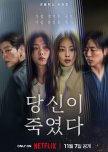
As You Stood By is a drama that deals with the ongoing issue of domestic violence against women. Through Eun Su and Hui Su's story, we observe the horrors that take place behind the closed doors and the trauma that's caused to the victims. The powerful message is presented on the first episodes and the writer's intention to illustrate the cruel reality are crystal clear.
On an interview the director, Lee Jung Min, stated how disturbing it would be to visually depict violent scenes and thus, the team decided to focus on the before and after rather the physical contact. Having watched the series, I could tell how much care and caution had been put in the making of these scenes. I dislike media which exploit violent scenes for shock value, especially if the victims are females. It gets to a point where the emotional impact is lost. When creators overuse violent scenes or present them too graphically, the message is not delivered efficiently.
That wasn't the case with As You Stood By. Obviously there were scenes that portrayed violence. But they were handled very well and instead of relying on the on-screen abuse, they highlighted the psychological distress of thewomen. Instead of showing the beating itself, we see Hui Su's face before and after the damage. Instead of showing Eun Su's father beating their mom, we see a montage of her and her brother hiding in the closet. The editing and sound design during these scenes was phenomenal, it added more tension and made the story even more impactful.
A particular scene that has stayed with me, days after finishing the drama, is the one from the second episode when Jin Pyo beats Hui Su with his shoe. While he kept hitting her on her head, we never see the beating but as he continues, the surrounding noises started to fade. It was as if we, the viewers, were the ones who were getting beaten. The scene felt so realistic and raw, I almost held my breath in fear while I was watching it.
When women like Eun Su and Hui Su are abused by men, what can they do? When society keeps protecting men with power in order not to tarnish their reputation, how can the victims find the courage to expose the truth? When the law fails to do its job and deliver justice, how can women trust it? The repeated cycle of abuse drives the victims to great lengths. In Eun Su and Hui Su's case, the solution is one: murder. Although murder itself is a crime, the drama makes us question the choice of the two women, raising interesting questions regarding morality.
The drama doesn't necessarily try to frame the murder of Jin Pyo as entirely good or bad. What it tries to do instead is showcase that when everyone fail to protect abused women, they will take matters into their own hands. Hui Su did everything in her power to put an end to her torture. She tried to be an obedient wife. She tried to report her husband to the police. She tried to leave. But nothing was achieved. So who are we to moralize her decision?
As You Stood By does an excellent job portraying ignorance towards violence as a serious crime itself. Knowing that a woman is getting abused and doing nothing about it makes us accomplices to the violence. Turning a blind eye only enables the abusers to keep doing what they do. When they are aware of the fact that no one is going to report them and that they cannot be punished, they feel more powerful and confident. This is why bystanders must take actions into their own hands and help the victims however they can. Otherwise, they contribute to the cycle of abuse.
All the actors did an excellent job portraying their characters and their emotions. Jeon So Nee was great as Eun Su. I could see how conflicted she was and how guilty she felt over the fact she hadn't had the courage to report her father or the abusive husband of her client. Eun Su was a very complex character, whose motives were shaped by her abusive household. As a kid, she saw her father hitting her mother and she take it upon herself to become her younger brother's guardian by keeping him oblivious to the violence that surrounded her. As an adult, she learned martial arts in order to find some type of protection against men. She tried to ignore the violence around her and she pretended that her father didn't hit her mom but deep down, she knew that she just wanted to find a way to escape.
Eun Su's fear is not portrayed in a bad light. The drama doesn't try to accuse Eun Su nor put the blame on herself. But Eun Su herself comes to the realization that ignorance is equally lethal. She refuses to remain a bystander who does nothing and the moment she realises that Hui Su is in great danger, she immediately takes action. Her development was powerful and it reminded us that we can always find the strength to help the victims.
Lee Yu Mi delivered an award worthy performance. Hui Su's fear became my own. Her expressions, her body language, the wavering in her voice when she faced her husband. Her portrayal was painfully realistic and it pained me to watch her. I couldn't fathom how many women like Hui Su have to endure this kind of treatment every day, in all places of the world. Hui Su was a prisoner in her own marriage. She wasn't able to meet her friends or perform any activities that brought her joy. She wasn't able to wear different clothes, in fear of exposing her bruises. She was belittled and she was physically, mentally and sexually abused on a daily basis. Just by watching the fear in her eyes every time her behavior wasn't appropriate, according to Jin Pyo, I feared for her life. Lee Yu Mi was spectacular in this role and her performance was extremely powerful and moving.
The relationship between the two women felt like a breath of fresh air. Many kdramas have pitied women against each other for the sake of a man but As You Stood By breaks the norms by having its female leads teaming up against the man. Eun Su and Hui Su's unconditional support and love towards each other was so heartwarming to see. Both of them felt responsible for each other, especially Eun Su who wanted to save her friend from her abusive husband. The scenes between them put a smile on my face, particularly the brief moments of peace. Albeit, short, the moments of happiness and bliss brought a smile to my face. Hui Su felt so secure and happy around Eun Su. She could leave her guard down and enjoy her time, indulging in activities like an excited child. The few flashbacks we got highlighted their bond and the actresses had great chemistry which added to the characters' friendship.
Of course I couldn't forget to praise Jang Seung Jo's double performance as Jin Pyo, Hui Su's husband and Jang Gang, his look-alike. He was terrifying in both roles and he knew how to switch his character. Jin Pyo ignited great fear in me with his sadistic and unpredictable behavior. During the first episodes, there were times when I flinched just from seeing him on the screen. I could feel my survival instincts wake up and I was constantly alert. Seung Jo transformed into the character, although the character was cruel and scary, his performance was so captivating to the point I couldn't take my eyes off the screen, despite my discomfort.
His portrayal of Jang Bang was equally engaging. The contrast between the two characters was so bizarre and yet he switched his roles effortlessly. When Jang Bang revealed his true colours, I was once again terrified by his psychotic actions and outbursts. It felt like I was watching two different actors.
Aside from Jin Pyo, the series presents two other major villains: his mother and his sister. Both of these characters worked as a sad reminder of how some people not only remain ignorant of the abuse on purpose but they side with the abusers too. Both women were aware of Jin Pyo's actions and Hui Su's mistreatment and yet, they did absolutely nothing. Not only did they not hold Jin Pyo accountable for his behavior, but they shifted the blame on Hui Su. "If only people avoided provoking violence and both sides did their part" was one of the things Jin Pyo's mother said to Hui Su and I was shocked when I heard it. What do you mean "provoking violence"? How could the victims provoke it? And how could they do " their part"? It was as if she was implying that the abuse was deserved and that victims asked to be abused. As for the sister, she was only worried about her reputation getting tarnished rather the fact her brother was an abuser. Jin Pyo was sick but his family's behavior was equally bad. All of them were egoistic people, who only cared about themselves and who treated Hui Su as something disposable. Not a moment passed when I didn't wish for their downfall and thankfully, I wasn't disappointed.
As much as I acknowledge the importance of adapting a story like this and even though I have already praises the drama, I must say that while the first episodes were near perfect, the story went downhill during the second half. The first half was focused more on Eun Su and Hui Su. We saw their backstory, the violence they were exposed to and the trauma they had to deal with. The first episodes were emotional depth while the story was very engaging. But once the plot twist with Jang Bang occurred, I found my interest decreasing. If the drama followed the novel's story by the book, I could excuse this shift. Still, the execution could have been better.
After the fifth episode, the message got kinda lost in translation. Instead of focusing on the women and their emotional journey, the focus was put on their attempt to stop Jang Bang. At the same time, Jin Pyo's sister got involved more but instead of feeling worried about our leads, I felt bored. There were times when I was tempted to skip some scenes that didn't involve Hui Su and Eun Su. I understand the purpose of the plot twist and the sister's involvement but it kinda ruined the story for me. I really wish the writers had explored the girls' feelings more or that we had seen more interactions with their families. It would have been nice if we had gotten more moments between Eun Su, her mother and her brother, especially once the brother acknowledged Eun Su's protection when he was little. It would have added more layers to their trauma and bond and it would have been a nice opportunity to showcase how domestic violence affects familial relationships.
Additionally, there weretimes when the script didn't feel that tight. I can still think of some plot holes that didn't get cleared away. How come neither JinPyo's mother nor the sister recognise Eun Su, since she was at Hui Su's wedding? I get that this implies how little they cared about Hui Su and the people she associated herself with but at the same time, I still cannot understand how come they didn't remember her. And what about Jang Bang's family? The CCTV showed him hugging his son once he landed at the airport but we never learned more of his background or if he faked it. Jang Bang's shift in general felt confusing since I really doubt that someone with psychotic tendencies like him would have been able to keep a modest facade for such a long time, let alone years. I really wish the writers had given answers to some of the questions instead of assuming the audience would just fill the gaps.
All in all, As You Stood By remains a vital kdrama. Its message is painfully relevant and it needs to be heard by more people. We cannot keep ignoring what is going on around us and we cannot keep turning a blind eye on those who need help. Let's not allow ourselves to be accomplices in violence. We can and we must put an end to it, if possible. This was not just Eun Su and Hui Su's story. It was about Eun Su, Hui Su and us.
Was this review helpful to you?
An interesting superhero story that sold itself short
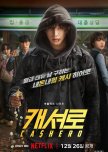
Cashero tells the story of Sang Ung, an ordinary citizen who inherits a peculiar superpower from his father: he is able to access superhuman strength but in order for his power to get activated, he must carry physical cash. Sang Ung finds himself entangled in a complicated situation. On the one hand, he just wants to save money in order to settle with his girlfriend and build his own life. On the other hand, he cannot turn away from people who need help, even at the cost of losing money. And thus, a great question arises: how much does it cost to do good?First and foremost, I want to clarify that I haven't read the webtoon. This review is solely based on what I watched on the adaptation, therefore I'm not aware of any further clarifications or changes that might have happened in the original source.
I dived into Cashero pretty much blindly. Prior watching the series, I wasn't really familiar with the plot and I only knew that it would involve some superheroes. Truth be said, the biggest reason I decided to give the series a try was Lee Jun Ho, whom caught my interest in Typhoon Family. Therefore, I didn't know what to expect, besides an action series with some comedy.
The premise of the story was very interesting and it provided a unique take regarding superheroes. Superheroes stories have been integrated into society from the beginning of times. Be it mythology, history, comics etc, people have always felt the need to create individuals who can play the role of their saviors and role models. Superheroes embody many virtues and they remind us that no matter what, there are people out there who look out for us.
And this is where Cashero differs from the typical superhero stories. The first episodes showed that Sang Ung was reluctant to take up his role a hero, simply because that was never his ambition to begin with. He was a regular citizen who wanted to live comfortably with his girlfriend and in order to do so, he needed to save up money. Inheriting a superpower that was fed from cash was not a blessing. And by receiving this power, he finds himself stuck in a moral dilemma: ignore those who are in need for help and save as much money as he can or start using his power to assist others?
I found Sang Ung's character to be very realistic at the beginning. I couldn't really blame him for thinking the way he did. We live in a capitalistic society where it requires money in order to live a modest life. When it's hard to afford to live, how easy would it be to lose money while helping others? Many times I have thought about this matter. When I bypass fundraisers or beggars, I might consider whether I can afford to donate a small portion or not. How much money should I give? How much money do I need? If I give it, will it be okay later or is there a chance I'll need it? For some people, this might not even be an issue or something to think hard on. But for others who might not be well off, this type of decisions can require more time.
Aside from the money problem, it was very natural for Sang Ung to not rush to play some type of hero. He didn't want to gain fame. He didn't have any ambitions related to power. He just wanted an easy life. Nothing more, nothing else. How could he turn into some type of hero all of a sudden? His approach was very refreshing to see because deep down, I believe that many people would relate with him.
Sang Ung's dynamic with his girlfriend, Min Suk, was rather charming. Compared to Sang Ung's, Min Suk was a more efficient and responsible person when it came to money. I understand that some people found her annoying but in my opinion, she was anything but that. Her reaction to Sang Ung's powers was actually very realistic. I mean, if you wanted to save up money in order to build your future, only to learn that your partner had gained a superpower that needed cash in order to be activated, how would you react? Her initial suggestion to Sang Ung stop using his strength too much was practical and logical. But once she realised that Sang Ung's powers could be used for good, she supported him and didn't push him to not use them.
I was so glad to see that the writers didn't paint Min Suk as the stereotypical girlfriend of a superhero, who doesn't stick with him once she discovers his powers or who wants him to stop helping others and focus on his relationship. Min Suk worried about Sang Ung but she acknowledged that his powers could be used for good. She always expressed her unconditional support, even if sometimes she would have every reason to feel angry at him. When she discovered Sang Ung's debt, her reaction was calmer than I expected and she never tried to blame him for his power, even though it was insufficient. She was one of the people who knew his character and instead of persuading him to stop assisting others, she acknowledged his good nature and supported him in her own way.
The rest of the characters were also fun to watch. Ho In and Eun Mi's superpowers were very creative and the bond they formed with Sang Ung was wholesome, especially between Eun Mi and Sang Ung. The villains were decent and the actors really elevated them. Both Kang Han Na and Lee Chae Min nailed the playful yet dangerous vibes of Anna and Jonathan respectively, their expressions and tone of their voice perfectly encapsulated the characters' thirst for power and ruthless nature.
Another positive aspect was the usage of VFX and CGI. Granted, I understand that it wasn't flawless but the production was good in this aspect. The special effects didn't come across as off-putting compared to other kdramas (Twelve, I'm looking at you) and most of the time, the action scenes looked good and visually entertaining.
While Cashero offers a unique perspective of superhero stories, I'm afraid that the final result was lackluster. What could have been an interesting story that combined action and social issues, ended up being an average drama which didn't have any extraordinary qualities.
From the very first episodes, I could sense that the writers themselves weren't so sure about the direction they would follow. They wanted to mingle action, comedy and social commentary but the execution was very poor. Some scenes didn't need humor and the sudden shift of the tone during some episodes didn't allow me to fully digest the emotional impact. In fact, there was barely any impact at all. In one episode, Sang Ung watched Jonathan manipulate people to their death and after such a horrific scene, the story goes on rather smoothly, without addressing this any further, while adding the usual light-hearted scenes. When the drama itself brushed off moments like this, it's inevitable that viewers wouldn't be able to fully connect with the story.
I understand the intentions of the writers and their attempt to address the issue of trying to live comfortably in a world that demands money but there were many more compelling ways to do it. Having your main character point out here and there, through internal monologues, that life is very hard unless you have money is not impactful, nor thought provoking. It's rather lazy and effortless. Prioritizing the action and comedy while brushing off the darker aspects of your story is not symbolic not exceptional. You cannot eat your cake and have it too, which is why it would have been better if the writers had committed to a stable tone from the get-go.
Because of its short length (8 episodes only), Cashero wasn't as fleshed out as it could be. The pacing was very bizarre, while some scenes moved very fast, some other would drag. The drama wasn't cohesive enough and in addition with the tonal shift, my interest started decreasing. I was bored during some scenes, waiting for something gripping to happen but alas, the drama didn't deliver as much as I anticipated.
The writers could have invested more in the exploration of the power system in this universe. I get it, we're talking about a superhero story, therefore there's no need for a complex world-building a la Tolkien style. Still, it would have been nice if we had learned more about the power system and how come some people came to inherit them.
Another aspect that was handled poorly was the characterisation. While the characters were fun on paper, I never felt any particular connection to them. Which of course cannot be a bad thing. Just because you don't connect with the characters that doesn't mean they're badly written. But in Cashero, the characters weren't written in depth in order for me to care more about them. They were fun to watch, they were inoffensively charming but that was it. There were some attempts in some bits to add more depth in their motives but they simply weren't enough.
The villains were a huge wasted potential. The trope of siblings who antagonize each other for their father's approval could have been so cool if the writers had chosen to flesh out Jonathan and Anna. Yes, not every villain needs a sob story and I'm not saying that Jonathan and Anna should have been treated as misunderstood characters but that doesn't excuse their lackluster writing. I would have enjoyed to see their relationship been explored more in order to properly grasp the depths of their history.
Some scenes between Anna and her father hinted at her being insecure but we never got anything beyond that. Some flashbacks would have provided us with more insight into their motives and relationship and if we had gotten more interactions between Anna and Jonathan, their rivalry would have been more engaging too.
I would have liked to see more of Ho In and Eun Mi's backstories. Their struggles with their powers should have been addressed more. At one point, it was shown that Ho In had developed some health issues because of his drinking habit in order to fuel his power. But the writers never brought this up again. Eun Mi didn't seem to struggle and we only knew that she was connected with another superhero that had been captured by Cho Anna.
Aside from that, both characters felt underutilized in terms of how the series handled their powers. Both of them had very interesting abilities and yet their potential wasn't as explored as it could have been. In fact, in some fight scenes I got the impression that the writers deliberately didn't allow these characters to fully unleash their potential in order to highlight Sang Ung more. Of course they remained useful, which I'm grateful for but I'd like it if they hadn't been sidelined during some scenes. They could have pushed the narrative even further but instead of being treated as part of the main trio, they were reduced to the comic relief characters.
As a result from poor writing, the acting didn't come across as strong as it could have been. While the actors did their part, their performances lacked the required emotional depth and their performances failed to sell the characters at times. But I can excuse this due to the poor writing.
The writing could have been much tighter in general. Superhero series or not, I cannot overlook some bizarre plot holes or writing decisions. The scene with Sang Ung and Min Suk at the church is a great example of a cheesy scene that serves the purpose to add more drama in what could have been resolved logically. Why would they remain inside a collapsing building which was in flames, too? Just so the villain could come, wipe Sang Ung off and leave our couple to be saved by Ho In and Eun Mi? Of course this might not be an issue for viewers who don't care for this type of writing but for me, decisions like this made me question the writing.
It's a pity that a superhero drama with such an interesting premise didn't pick up. While Cashero was overall fun, it certainly had me scratch my head in bewilderment and I wasn't able to engage with the story as much as I wanted to. If one is looking for something fun and action packed, it's a good choice but don't expect a lot.
Was this review helpful to you?
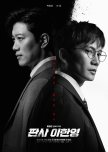
A story with strong themes, which didn't reach its full potential
The Judge Returns was a drama that caught my attention the moment I read its synopsis. I have developed a keen interest to series about law and judicial system so it goes without saying that I decided to give this one a go.The series' start was very strong. The first two episodes were a very good setup for Han Young's backstory and eventual development. From the get-go, we get introduced to a cold judge, who delivers "justice" based on money instead of the law and ethics. We witness him at his lowest in terms of morality and yet, when his eventual death followed, I couldn't help but pity him and wish for his growth in the second chance he got to redeem himself.
This was the first time I watched Ji Sung and I can already tell that he's about to become one of my most favourite actors. He embodied Han Young and he made sure to steal the spotlight every time he appeared on the screen. You could see the fire in Han Young's eyes and his thirst for justice and fair punishment. Han Young's charismatic, charming and yet cunning personality was encapsulated perfectly by Ji Sung. I loved the way he changed his body language and the tone of his voice based on the characters Han Young interacted with, adding more layers to the various dynamics.
Park Hee Son as Kang Sin Jin was an absolute gem, from a visual and acting point. He owned this role and the authority he radiated in his scenes was unmatched. Sin Jin was a multilayered character and Hee Son did a magnificent job portraying his polarizing morality. His micro expressions andsubtle movements made Jin Sin more intimidating and unpredictable and it showed why he had so much influence. His chemistry with Ji Sung was one of the strongest aspects in the drama, emphasizing the ongoing silent battle between Han Young and Sin Jin, their scenes together were so exciting to watch and the build-up to their final confrontation made me eager to watch more.
The rest of the cast was very modest, some performances being more remarkable than others but overall, everyone delivered what was expected of them. I especially loved Tae Won Seok's role as Jeong Ho, Han Young's friend. I watched The Judge Returns before watching Bloodhounds and I couldn't believe that the ruthless bloodhound who made Woo Jin and Gun Woo's lives a hell shared the same actor with a kindhearted and supportive CEO. His versatility was very impressive and although his role wasn't very demanding in terms of emotional delivery, he stole the show whenever he would appear on screen, bringing a breath of fresh air.
The ongoing battle between good vs evil is the most prominent and yet the most complex theme in the drama. Instead of a simplified presentation of the judicial system, the writers highlighted the complexity that lays behind the scenes. There's the famous quote about justice being blind. Everyone is equal before the law and justice is ought to be served regardless of financial power, status or connections. While both sides in the drama strive for this, the means they utilize clash, resulting to a battle of deception.
On the one hand, Han Young, in search of atonment and redemption, is ready to do whatever is possible in order to ensure justice and apply the law fairly. On the other hand, Sin Jin, in pursuit of justice, bended the law and utilized power and money, thus betraying his initial goal for a justice system that will protect everyone equally. Both sides, in theory, fought for the same future, where no one will be treated unfairly. But the methods they used couldn't be any more different and thus, a great dilemma was present. Are we supposed to fight injustice with injustice? Or should we have faith in law?
While I appreciate the drama for its ambitious premise and although I recognise its qualities, unfortunately, once I was done with it, I realized that my feelings weren't as strong compared to my initial reception.
The first half always had me at the edge of my seat, I was looking forward to Han Young's redemption and his confrontation with Sin Jin. At the same time, I enjoyed the domestic moments between him and his friends, which toned down the hectic political aspects and left room for more humane interactions and bonds. The blend between comedy, action and slice-of-life was handled very well in the beginning and kept my interest more than alive.
Alas, in the middle of the road, my feelings for The Judge Returns started to change.
Once the series reached its second half, I noticed that my interest had started declining. I didn't rush to keep up with the released episodes and my attention was deteriorating in some parts. In the end, I decided to put the drama on hold and I put it off for 5 months. Now, putting a drama on hold is by no means an indicator of its quality, but once I resumed it, I understood why it failed to keep my attention.
I love slow paced stories. In fact, the majority of my favourite books, movies and series are slow paced. But while The Judge Return's pacing was not an issue for me at first, in the second half, I found the plot dragging to the point I almost considered skipping some scenes. There were some moments which felt like fillers to me and I wished that instead of them, we would get something that would contribute to the development of the characters and the story. One can handle only so many dialogues between corrupted men. The last two episodes in particular were very hard for me to watch and I almost felt relieved when I reached the end.
Aside from that, the scenes started to feel disjointed, which contributed to the slow pacing. One moment something dramatic would happen and then, the setting would change to something else. Which yes, it can work in terms of narrative but it became predictable and annoying because it ruined the flaw.
A pet peeve of mine regarding the technical aspects was the soundtrack. In thrillers, I prefer it when the soundtrack evokes some emotions and is used to create a suitable atmosphere. But in The Judge Returns, I found the usage of the main theme, particularly the opening, to be used in random moments, thus making the scenes less serious and anticlimactic. I am aware of the fact that soundtracks do not make or break a series but when it fails to deliver the best result, it can affect the viewing experience.
In addition, there were issues with the writing of some characters. Yoo See Hee started off strongly and I was looking forward to see her development both individualy and with Han Young, considering their relationship in their previous life. However, while the character was promising and while Oh Se Young did a good job portraying See Hee, the writing was underwhelming. I found her to be too dependent on Han Young and it would have been nice if the writers had explored her feelings outside of their relationship. There was room for more development and in the end, while I felt proud of her progression, I was left with a lackluster impression. Moreover, the subtle romance between See Hee and Han Young left me unmoved, I was eager to welcome it if done well but in the end, it was done poorly (not that I blame the actors, of course).
But my biggest grip was the way Kim Jina's character was written. Seriously, what was that? You have her being marketed as a main character and yet there were supporting characters which had more screen time than her. And no, I will not listen to any arguments about her being important to the story even with less screen time. A main character is supposed to be a main character and it's a shame she got sidelined. Won Jina was great and I'm sad I didn't get to see her full potential because of the way her character got treated by the script.
Another aspect that could have been handled better was Han Young and Sin Jin's relationship. It would have been interesting if we had seen more of them as "partners" because it would have added more impact to Han Young's betrayal and Sin Jin's broken trust. The scenes we got were definitely magnetic, albeit too few in my opinion. It would have also been nice if they had more exchanges of their different viewpoints (in a subtle way of course, since Han Young couldn't reveal his true beliefs). A bigger debate between them would have added more food for thought compared to what we got in the end.
The Judge Returns doesn't try to offer to the audience a utopian dream of a fair world and a justice system based on equality. Unfortunately, no justice system can be equal and accessible to everyone, at least with the current social standards. But it tries to show that it's still worth fighting for law no matter what. We shouldn't be what we sought to destroy in the name of "justice". What we should do is try to be better humans by helping those who are in need for help.
I definitely recommend The Judge Returns to people who like law series or Jisung's fans. But I don't think it's that profound to not miss it, if it's not under your randar. There are better series in my opinion which tackle similar themes in a better way, such as Pro Bono, a kdrama which became one of my favourites. I definitely do not regret watching The Judge Return but it's a pity it didn't reach its full potential in terms of writing.
Was this review helpful to you?
Creating bonds amidst violence
Bloodhounds was one of the kdramas which had been on my watchlist for some time. While the premise seemed intriguing from a first glance, I was hesitant to get into the series and I postponed it. Having watched other similar action-packed kdramas which left me kinda underwhelmed, I was afraid of Bloodhounds not being able to deliver - a fear which didn't come true.From the get go, we get immersed to the world of Bloodhounds, which is grim, violent and ruthless. Physical violence aside, the writers of Bloodhounds did a good job in establishing the great lengths greedy people go to in order to gain more power and status. The villains relied on their physical and economical advantages in order to exploit the weaker individuals and amid the semi-realistic setting, their schemings highlighted the painful reality of our society - thus, adding more weight to the characters' goal to stop them.
Many people have sung praises of the main duo, Kim Gun Woo and Hong Woo Jin. To be frank, their relationship was one of the main aspects which contributed to my eagerness to get into the series in the first place. I love myself an interesting pair of characters and I was sceptical about whether Gun Woo and Woo Jin would deliver. Well, the boys did not disappoint for a bit.
At first, I expected that Gun Woo and Woo Jin would start as rivals and develop a strong friendship later on, which is the most typical route for most male duos in kdramas. But the series proved me wrong very quickly since they hit it off in the very first episode. I found this to be very refreshing and realistic. They met by chance as rivals on the ring but they quickly became an inseparable duo once they took off their gloves. And yet, this encounter would affect their lives like they would have never imagined before.
I adored the boys' relationship. Their bond was very strong and they treasured it a lot. Both Gun Woo and Woo Jin were willing to move heaven and earth in order to help each other and that was shown multiple times. The writers showcased the influence each one had to the other, especially Gun Woo who managed to make Woo Jin care more about ethics instead of money and power. While Gun Woo and Woo Jin differed in terms of personality, they completed each other like two puzzle pieces and together, they unlocked their true potential not only as kick boxers but as human beings too.
Although Bloodhounds is full of action sequences, the writers put great emphasis on the characters' dynamics too. By providing the drama with a more layered and humane tone and by highlighting the bond between the main characters, Bloodhounds managed to differ from other action packed series which prioritize the action more than the characters.
The quiet and domestic moments between the boys and their friends were a breath of fresh air to an overall hectic and troublesome plot. Mr. Choi, Hyeon Ju, Yang Jeong and Du Yeong, all of them became a second family to Gun Woo and Woo Jin. Mr. Choi's relationships with the other characters in particular, transcended the connections between an employer and his employees and together, they formed a group akin to a family. I especially enjoyed the bond between Gun Woo, Woo Jin and Hyeon Ju, who was always there to help the boys despite her initial reluctance to accept their assistance.
The performances from the actors really elevated the series. I couldn't think of a single miscasting, everyone depicted their character so effortlessly. Woo Do Hwan and Lee Sang Yi were phenomenal as Gun Woo and Woo Jin respectively, their chemistry was off the charts and they conveyed their characters' emotional turmoil perfectly, especially Woo Do Hwan. Kim Sae Ron as Hyeon Ju was alluring to watch, every time she appeared on the screen, I wouldn't take my eyes off her. It was the first time I watched one of her dramas and I'm saddened about not being able to see her in anything new anymore...
The rest of the actors were equally great to watch. The veteran Huh Joon Wo delivered a memorable performance as Mr. Choi and Park Sung Woong embodied Myeong Gil in the most convincing way. He encapsulated the villain's unpredictability perfectly, his body language and the tone of his voice made me feel so uneasy. As for Tae Won Seok, he did so good as Kang In Beom. I got introduced to him from The Judge Returns and the discrepancy between these roles couldn't showcase his versatility more clearly. I could barely believe it was the same person!
As much as I enjoyed Bloodhounds and although I came to really enjoy the series, I must say that I don't find myself getting crazy about it, like many other people did. I understand that compared to other action series, it did some aspects better but for me, some other elements prevented it from earning a bigger reaction from me.
While the pacing was overall very good (it benefits that the episodes were only 8), the last episodes felt like they dragged. I totally understand that due to Kim Sae Ron's DUI controversy the writers had to make some changes to the script but they could have handled it better. After the sixth episode, it was as if the drama had lost its park (which is logical, considering the events that took place) and I wasn't that engaged to the story. The police operation bored me at times and I would have liked to see more of the aftermath after Smile Capital's attack.
Because of the drama's length, some characters and plot points were left unexplored. I would have liked to see more of the characters' past and ordinary life. It would have made an even bigger impact to the story and it would have made the viewers connect better with them. I feel like Woo Jin was sidelined compared to Gun Woo, I wanted to see more of his lifestyle outside of his interactions with Gun Woo. I loved him with Woo Jin but he could have been explored more in some areas.
All in all, I am very happy about watching Bloodhounds at last. I totally understand the fuss around it and it's more than understandable why it gained so much traction. I am excited to watch season 2 as well, this universe is so exciting to watch and I have connected with the characters a lot. I strongly recommend the series to those who are looking for something quick to binge and if you love action packed media, do not miss out!
Was this review helpful to you?
Moving message but lackluster execution
I came across The Closet while doing some digging up in Kim Namjoon Gil's filmography. When I read the blurb and saw that Han Jung Woo, another actor who has caught my interest, was in it, I became interested. I am a big fan of horror movies, especially if they involve children and familial relationships so I naturally decided to give it a try.I liked the setting and the gloom atmosphere that was established from early on. The cold and dark color palette gave me the impression that I was watching a horror film made in late 2000s-early 2010s. The cinematography was overall good, especially during the exorcism and ritual scenes. The soundtrack that accompanied the scenes added a more dramatic tone while in some cases, it highlighted the emotional impact of the story, especially towards the ending.
The story, albeit not groundbreaking, hold my attention forthe most part. The first half focused more on Sang Won's troubled relationship with his daughter, I Na and the events that occurred in their new house before I Na's disappearance. The writers tried to immerse us in their new life and while preparing the ground for the supernatural elements, the film wanted to highlight the father-daughter dynamic and how it contributed to I Na's disappearance.
The relationship between Sang Won and I Na was very complex to say the least and it was one of the aspects I was the most curious about. After the death of his wife, Sang Won and I Na were clearly traumatized and they were still grieving her. Due to his hectic work schedule, Sang Won wasn't able to spend too much time with I Na, leaving his wife looking after her for the most part. As a result, I Na had formed a close bond with her mother, a bond that came to an end after her passing. Due to their limited time together, the father and the daughter are unable to communicate with each other. Sang Won continued to prioritize his work and he tried to win over I Na by gifting her dolls. But even though his intentions were good, it was clear that he wasn't doing enough.
I must say that even though I came for the horror element, I didn't expect the movie to dive deeper into some themes regarding parenthood and child abuse. The second half was heavy in that aspect, especially towards the ending. There was a scene with a montage of the mistreatment some of the dead children had endured from their families that put some tears in my eyes. The mere thought of defenseless creatures like them being abused by the people who are supposed to care for them made my blood boil. While I was obviously rooting for Sang Won to save I Na, I began questioning the motives of the ghosts and I felt for them once the story progressed more.
As much as I overall liked the movie, I must say that compared to what was promised, it was underwhelming and poorly developed. First and foremost, the horror was little to nonexistent. Yes, the atmosphere was there and there were some jumpscares here and there but overall, I wouldn't say that I felt particularly scared. Granted, not every horror movie will be able to cause fear but I expect it to elicit some type of reaction. For the most part, I was quite indifferent. Moreover, I don't mean to insult the filmmakers by saying this but the usage of CGI in order to create the ghosts was...questionable to say the least. It would have been better if they had relied on something more simple because for me, the effects did nothing.
The story and the writing in general felt lackluster. The intentions of the writers were clear but the execution left much to be desired. I appreciate the attempt to add more depth in the story instead of making it a mere horror movie but the film's length didn't leave much room for proper development. The events were rushed and Sang Won's tainted relationship with his daughter was handled in a superficial way. I wish we had seen more of them trying to deal with their trauma and emotional distance. If the film had highlighted more their relationship, the second act would have been more impactful.
The characterisation was also quite poor. Sang Won's character had so much potential but the movie didn't utilize him. It was interesting to see how guilty he felt for his wife's death and how it impacted him but the story didn't elaborate any further. Additionally, as much as I appreciated Han Jung Woo as an actor, I couldn't help but feel that something felt off with his acting in this film. In his previous film, Hijack 1971, he delivered a powerful and emotional performance but in The Closet, his portrayal felt rather flat. Sang Won barely expressed any strong emotions, even when I Na got missing, I barely got the impression that he was worried. I think that the director is mostly at fault for this but nevertheless, Sang Won's character felt shallow for the most part.
I had a blast watching Kim Namjoon Gil as Kyung Hoon, the enigmatic and eccentric exorcist who assisted Sang Won in his search for his daughter. His character immediately caught my attention after his introduction but alas, I'm afraid that like the rest of the movie, the writing fell short pretty quickly. I expected more from this character, especially regarding his connection with the ghost but the movie didn't delve deeper into that part. As for his relationship with Sang Won, while their interactions were fun to watch, their dynamic was criminally underutilized. I wish we had gotten to see more of them bonding and working as a team, there was so much wasted potential.
As for the child actors, I enjoyed both Heo Yool as I Na and Kim Shi Ah as Myung Jin. I was already familiar with the latter one after having watched her in Kill Bok Soon and Walking On Thin Ice but her acting in The Closet impressed me. She pulled off her role very well and her performance in the final act deeply moved me and made me connect with the character more. As for Heo Yool, she was phenomenal. She perfectly portrayed I Na's complex feelings and she switched her emotions once I Na got possessed masterfully!
All in all, The Closet was by no means a bad movie. It just was lackluster due to its short length and poor writing. I would recommend it to someone who's looking for a simple horror movie but do not expect a lot.
Was this review helpful to you?
A gripping gangster noir
Ever since I finished Squid Game, I've been planning to dig into Lee Jung Jae's filmography. New World was a film that I found very intriguing, with a plot that shared some similarities with The Merciless, one of my favourite Korean movies, so I went into it without a second thought.In this movie, we have an undercover cop, Lee Ja Sung, who had been selected as a mole by Kang Hyung-Chul, the captain of National Police Agency. For a decade, Lee Ja Sung had been working with Jung Chung, the second-in-command of the crime organization "Goldmoon". Jung-Chung is very trustful of Lee Ja Sung and the two men have developed a close relationship throughout the years. After the death of the first crime boss for " Goldmoon", Jung-Chung and his rival, Lee Joong-Goo, fight for the position. Captain Kang enacts the operation "New World" in order to stop Jung Chung and Goldmoon and Lee Ja Sung, who's still working for him, finds himself be torn between his job as a police officer and his relationship with Jung Chung.
The first half was intriguing and it put me right into the world of police and crime. Even though there were some things I didn't understand at first concerning the hierarchy among the crime leaders and the operation, the more I watched, the more I understood. The film focuses to establish the politics of the gangster world while highlighting the ethical dilemma of Ja Sung.
The cinematography and production design were memorable and deserve every praise. I liked the usage of close-ups during some of the dialogues, they enhanced the characters' emotion and the tension between them. The moody colours and blue hues added to the grim atmosphere and the rain scenes contributed to the dramatic feeling, without becoming cliche.
The acting was amazing, all actors did a phenomenal job. Lee Jung Jae was excellent as Lee Ja-Sung. He encapsulated the character's inner turmoil perfectly. He literally spoke with his eyes and facial expressions and even when he didn't utter a single word, I could tell what he was thinking. Ja-Sung was exhausted due to having his loyalties constantly be divided and throughout the whole movie, it was clear that he had to choose a side. Jung Jae portrayed Ja-Sung's frustration so convincingly to the point I could put myself in his shoes. He switched from a collected and down-to-earth gangster to a desperate police officer who just wants to put an end to his mission effortlessly and his moral journey had me hooked.
Jung-min was captivating as Jung-Chung, he owned the role of a gangster boss and I even found myself rooting for him. He was carefree, boisterous, calculating and he clearly cared about Ja Sung. Even though he didn't get to have too many dramatic scenes, Jung-min absolutely delivered when it was required. From the tone of his voice to his body language, he expressed Jung Chung's fondness of Ja Sung, leaving no room for question regarding his trust for him.
This was my first time watching Choi Min-sik in any form of media and it certainly won't be my last. He was very good as Kang Hyung-Chul. His character was very morally grey and he portrayed his complexity accurately. Hyung-Chul's intentions were good but his actions were very questionable and by the end of the film, I secretly hoped that his attempt to take down Jung-Chung wouldn't succeed. Yeah, wrong move from me to not support the seemingly good guys, what can I say, I might be a gangster at heart. The thing is, Captain Kang himself acknowledged how questionable his plan was. He was aware of the fact that "New World" endangered the police officers who worked for him and he knew that he had to play dirty in order to put an end to Goldmoon. As it was stated in the film, sacrifices must be made to win the war. But to what extent?
I wish I could find the right words to properly describe the beauty of the soundtrack. Even if you're not planning to watch the movie, do yourself a favor and just go and listen to it. Soothing, moving, with melancholic undertones, the soundtrack made me immerse myself in the characters' emotions. I got lost in the sad piano compositions, trying to guess how I would act if I were in Ja-Sung's position. Would I do my duty as a servant of the law or would I protect the man whom I called brother? The music conveys the hopeless tone of the film and the moral conflict of Ja-Sung and no viewer should feel indifferent about it, no matter if they liked the movie or not.
For a film that centered around the crime world, New World didn't rely on action in order to create climactic and intense scenes. The exploration of politics, the dialogues and the interesting characters were enough to "make up" for the lack of fighting scenes one would expect from a movie like this. Yet violence still made a prominent presence. After all, the underworld is dangerous and dark. There were the usual clash scenes among the gangster groups and some more bloody sequences but overall, the creative team relied more on the psychological aspects in order to create emotions.
New World is certainly a well-made movie, one that deserves its praises. But while I really enjoyed it, some of its flaws outweighed the positive elements and as a result, I didn't forge strong feelings for the film as a whole. While the first part did a good job at introducing the characters and establishing their dynamics and the setting, I found the second half lackluster in terms of pacing and engagement. I do not want to delve into spoilers so I'll settle by saying that there were parts that didn't hold my attention and after a particular death, the third act felt slower.
I mentioned above that the film did not involve many action scenes and to be frank, judging from the few fighting sequences we got, it was for the best. They were too messy and poorly choreographed, especially the elevator scene which had me almost roll my eyes. I know that these are petty comments and obviously I did not judge the quality of the film from these few scenes but as someone who enjoys action scenes, I prefer my fight scenes to make sense and be made with more attention.
One of the most lackluster aspects and the one that left me kinda underwhelmed was the exploration of the relationship between Ja-Sung and Jung-Chung. Although the actors made it clear how close they were and the film tried to highlight it, I must say that even when I was finished with the movie, I had a slight feeling of indifference. I was aware of the emotional bonds that tied them together but at the same time, I wasn't that connected. Obviously I understood the depth of their friendship and how much trust Jung-Chung put in Ja-Sung but I really wish we had gotten more scenes between them to properly establish their bond. I think that we got to see more of Jung-Chung caring for Ja-Sung while Ja-Sung was a little bit sidelined. The post credit scene between them felt (to me) like a poor attempt to give insight into their shared past and closeness that the rest of the film robbed us from. It would have been for the best if they had more scenes together or if the creators had included more flashbacks to empathize their history.
Watching New World made me appreciate The Merciless even more in terms of how it handled the relationship between Jae-Ho and Hyun-Soo. Granted, the films were different in terms of plot. While New World centered around the orchestration of the operation and the events that led to it, The Merciless highlights the history between Jae-Ho and Hyun-Soo, from the moment they met to the end. But I think that New World could have still given more depth into Ja-Sung and Jung-Chung's friendship, especially considering that it lasted for almost a decade and played a crucial part in the operation.
With all things considered, New World was a gripping movie, one that I'm very glad for having watched. The plot might not be groundbreaking but the writing, the cinematography, the score and the acting define it as a magnetic, bold gangster drama. It's the type of movie I might find myself revisiting in the future and, who knows? Maybe a rewatch will make me appreciate it even more than I did now.
Was this review helpful to you?
One of the most profound kdramas out there
D.P. is one of the most praised dramas out there. I've always seen people say positive things about it, so naturally I became curious. The plot caught my attention immediately and since it had only 6 episodes, I decided to give it a try.Needless to say that all of you who praised it were so, so right.
I was familiar with the series' premise before I watched it. I knew it had to do with military and the abuse that happens there. I am aware of the fact that South Korea takes pride in their military and how important its service is for them so it was interesting to see a drama that did not shy away from showing what is going on behind-the-scenes.
From the very first episode, D.P. had my undivided attention. I am the type of person who pays attention to details and from the very start, I could tell that D.P.'s cinematography was stellar. The moody colors added to the grim and heavy atmosphere and the editing added more tension, especially during the most dramatic scenes. The scenes where Seok-Bong snapped highlighted his delirious and desperate state of mind, I felt like I was the one going crazy after all the torment and abuse he had to endure.
The structure of D. P. was very interesting and quite unusual for your typical kdrama. While the show has a clear goal (to raise awareness about the abuse that takes place in the military), there isn't a specific plot. The drama follows an episodic format and each episode focused on a different deserter. I am a big fan of this type of series so I was very excited to see this approach. This format was very suitable for a series like D.P. By focusing on different cases of deserted soldiers, we are allowed to witness different point of views and place ourselves in the soldiers' shoes. I was so eager to continue watching once I was done with each case and I never felt bored.
Despite its short length, D.P. is one of the few kdramas out there that can brag about offering a fleshed out story in just 6 episodes. Although I am sure that the writers could have told even more had they increased the length, the number of the episodes was more than suitable. The story didn't feel repetitive and I never felt like it was dragged. The pacing was perfect, fast enough to keep my interest alive but not fast to point the story and character development felt too rushed and messy. I was constantly at the edge of my sit, waiting to see what would happen next and how Jun-Ho and Ho-Yeol would deal with each situation.
One thing that surprised me and I personally didn't expect was the comedic aspect of D.P. Although the series tackles plenty of dark themes, there were still various funny and light-hearted moments, especially between Jun-Ho and Ho-Yeol. While someone might had expected the comedy to undermine the value and importance of the drama, that never happened. The writers handled the funnier parts with outmost care and responsibility. The comedy never outweighed the serious tone. It certainly helped in lighting up the mood but not at the expense of the series' core point. The contrast between the comedy and drama is almost misleading. The first episodes have some lighter moments
The soundtrack was simple and yet so fitting. The moment I heard the first notes of the intro, I immediately knew that the same composer was involved in Weak Hero Class - and I was right! D.P. soundtrack is mostly calm yet melancholic, with some nice intense moments. It adds to the grim atmosphere and contributed to the emotional impact of the heavier scenes.
I could talk for hours and hours about the acting. Every single cast member gave a stellar performance, especially the main ones. Jung Hae-In was amazing as An Jun-Ho. He perfectly portrayed the calm and empathetic personality of Jun-Ho and he quickly made me connect with the character. His micro-expressions and his body language perfectly captured Jun-Ho's subtle emotions such as fear and anger and his delivery was always flawless. The way he looked was both haunting and captivating, his gaze conveyed Jun-Ho's pent-up sadness and guilt so convincingly to the point I felt he talked to my soul.
Koo Kyo-Hwan was absolutely charming as Han Ho-Yeol. I can totally see why he won the Baeksang Award. He made me fall in love with the character from the get-go and I always looked forward to his scenes. Ho-Yeol was like a breath of fresh air in a drama like D.P. Playful, outgoing, confident, he couldn't be more different compared to the calm and introverted Jun-Ho and yet these two clicked immediately. Although Ho-Yeol worked mostly as the comedic relief character, his role wasn't reduced to just that. There were clearly more layers underneath his carefree facade and sometimes, the mask of a carefree soldier managed to crack.
Jun-Ho and Ho-Yeol's relationship is one of the defining elements of D.P. Hae-In and Kyo-Hwan's chemistry was just excellent. They effortlessly portrayed the friendship between the two D.P.s and they made a dynamic duo. The striking differences between Jun-Ho and Ho-Yeol added more depth to their bond. It was so heartwarming to see how Ho-Yeol became Jun-Ho's first genuine friend and that also applies to Jun-Ho. Both boys were shown to be lonely, each one in a different way. Jun-Ho came from an abusive household. Although his mother and sister cared about him, he was suffocated by the abuse from his father and he felt trapped. Of course he had good relationships with some other soldiers, especially Seok-Bong but no one had managed to break the walls he had built around himself. On the other hand, while Ho-Yeol had a more outgoing persona and he clearly could get along with many people, he didn't form any actual meaningful relationships. It is also implied that his parents do not care a lot about him, which would make him even more lonely.
Jun-Ho and Ho-Yeol influenced each other with one way or another. Ho-Yeol made Jun-Ho have more fun and he contributed to him making amends with his mother. Jun-Ho made Ho-Yeol show his more empathetic side and sympathize more with the deserted soldiers. Both of them felt comfortable around each other and they even found a form of security in their friendship. I really like how the series explored their relationship and they have become one of my favourite kdrama duos of all time.
As for the other characters, they were equally interesting and fleshed out. Kim Sung-Kyun and Son Suk-Ku gave equally exciting performances as Park Beom-Gu and Im Ji-Seop respectively. Watching them bickering was really fun but eventually they managed to understand each other and get their development. Jo Hyun-Chul was excellent as Seok-Bong, the way he portrayed him made me both scared and so sad and angry.
If you can't stomach violence and abuse, D.P. is not the ideal kdrama for you. Violence is presented in every form. Verbal, physical, sexual...It doesn't always gets to be too graphic but it's still there. And it makes you feel disgusted. Disgusted with people who believe they can belittle those who consider weak. Disgusted at the actions themselves. And disgusted at the way nobody did anything to stop this.
Some people might say that the extent of the abuse depicted in D.P. is exaggerating and that these type of actions do not occurr that often in the military. I am happy to see that there are many people who didn't get to experience that in their service but unfortunately, bullying is very common in this field. There are many stories out there which will make you speechless. D.P. itself is based on real events. And this is the most tragic part: we want to believe that this is overdramatized because we don't want to believe it try happens.
One of the key points regarding the bullying in military is the cycle of abuse. D.P. shows that those who get bullied can become the perpetrators themselves. Obviously this is not an excuse. Bullying is wrong, period. Just because you get mistreated, that doesn't mean it's ethically correct to do the same in order to release your pent-up feelings and find a form of salvation. But this is not always possible. People react differently to abuse and some of them will end up becoming the abusers themselves. Jang-Su got mistreated in his work and he abused Seok-Bong in return. Seok-Bong endured the abuse and then he belittled other soldiers. It's an on-going circle that cannot be broken easily.
D.P. calls out toxic masculinity and the abuse of power in military. Whether it's from the perspective of the soldiers (like Jun-Ho and Ho-Yeol) or the generals (like Beom-Gu and Ji-Seop), the series portrays how those who are in higher positions will go to great lengths in order to establish order and power. Ranks play a fundamental role in military and more often than not, they become the cause of violence. Those in higher positions let this go over their heads and those in lower positions feel jealous of the others.
The only minor "complaints" I have is that I would have liked to see more og Ho-Yeol's character being explored. There was potential to showcase his complexity more, especially his relationship with his absent parents. Of course he remained a well-written character, I just would have liked to see more aspects of him. I also think that the writers could have given more insight into Jun-Ho's relationship with his family but overall, I have no bad feelings about the story.
D.P. is one of the most profound series out there. Not only does it expose the abuse that takes place in the military instead of glorifying the military itself but it urges the viewers to take action against bullying in general. "I should do something" Ji-Seop said in the last episodes. And this is what we should tell ourselves to do once we witness abuse. Don't be a mere observer. Do something.
I'm very thankful for watching D.P. It's a drama I'll keep thinking about and never get tired of it. No matter if you watch kdramas or not, everyone should give it a try. I can confidently say it has become one of my most favourite series and I want to rewatch it because I think it's the type of show that will make you learn something new every time you revisit it.
Was this review helpful to you?
This review may contain spoilers
Emotional and wholesome
I decided to watch Navillera in order to take a break from all of the thrillers I've been watching back-to-back and let me tell you that I didn't expect to love it as much as I did! I love stories about old people, found family and dreams so when I read the synopsis I knew right from the spot that this drama would be perfect for me.If someone starts watching this series expecting to learn more about ballet, they might be left disappointed. While ballet remains one of the central forces in the series, the drama doesn't go into technical details. Ballet is only the cherry at the top of the cake. The story is much more complex and its beauty lies in the many layers that unfold as the episodes and the characters progressed.
I knew that Navillera would be emotional but I did not expect to cry in.every.single.episode. Seriously, I cannot recall a single episode that was unable to make me cry or tear up. When I cried at Lee Gyo Seok's death on Episode 1, I just knew that this drama wouldn't give me a break. And I was correct. Navillera was an emotional roller-coaster in the best and worst way possible. I would laugh at one scene and some scenes later I would bawl my eyes out until my eyes became red and my face a mess. Happiness, relief, hope, anguish, anger, fear, anxiety, sadness...These are just a few of the emotions I can name in order to show what I felt while watching Navillera. I find it really hard to properly convey in words the impact this drama had on me and if I sound too dramatic, keep in mind that my words can hardly portray half of the truth.
Deokchul's story touched my heart. Park In Hwan did a phenomenal job in this role, he put his heart and soul into his performance and he conveyed Deokchul's complexity beautifully. I understand that having a 70 years old main lead who wants to learn ballet is not the most interesting premise for some kdrama watchers but the story is much more than that. Deokchul never got the chance to follow his dreams. Having been raised according to the male standards of his times, he couldn't pursue ballet and discouraged by his father, he abandoned his dreams. Throughout his whole life, Deokchul did his best to provide for his family with, be good at his job and be a good husband and father. He never asked for more and he always put his loved ones' needs above his own. He didn't complain or shift the blame to his family and he kept his head up, even during the hard times. He was always a giver - never a taker. So could blame him when for once in his life, he decided to do something for himself?
I was so excited about Deokchul's journey in ballet. From the very first episode, I was rooting for him so hard, I felt like I was the one trying to achieve a long lost dream. The first episodes were really a headache to me, I was so angry at his family's disapproval and reactions (although as the series developed, they got good developement). They never took into consideration his own feelings, they only cared about the general public consensus and how that could affect their own image. I was so happy to see that Deokchul's will did not shatter and with the help of Chaerok, he didn't give up.
One thing that I anticipated after some hints here and there and yet still affected me deeply was Deokchul's alzheimer illness. It hit too close to home because my maternal grandmothers had developed Alzheimer and died because of that. I remember the developement of her illness, how she gradually started becoming more absent-minded or how she would forget something and we would have to remind her. Sometimes I had to correct her and she would insist that her memory was nt wrong. During the pandemic and lockdown, her situation deteriorated and once the lockdown was over and we could visit her again, it was so painful to see how far away she seemed. Even when she would sit with the family, it was as if she was in her own world, staring at the blank space or not steering a conversation. I could tell that her illness had taken a tool on everyone, especially my mom. It was so devastating to see her cling to the short moments when my grandma could communicate without difficulty. I too lived for them. I stayed by her side, encouraging her to tell me stories of her past (stories I had heard about) or telling me about her daily activities as I filled her in on my own life. As her illness got worse and worse, I couldn't look at her without tearing up and without reminscing about our happier memories. Watching Deokchul deal with Alzheimer made me get deja vu. My eyes would turn into waterfalls and memories would be pulled up. Deokchul reminded me so much of my grandma. When he felt guilty about forgetting things, it was as if i could see her feeling ashamed of forgetting something or even us. The scenes when his family discovered about his illness wrecked me, I couldn't stop crying and be reminded of my own family who had to get used to our new reality and accept that grandma couldn't be cured, so we would have to do our best and take care of her.
And now, let's talk about Chaerok. Honestly, I liked him much more than I anticipated. Contrary to other reactions I've seen, I didn't get that annoyed by his reluctance to accept Deokchul as his student and manager. Chaerok, like Deokchul, was a pretty complex character who went through a lot. He had lost his mother, his father had been released from jail, his relationship with ballet, the one thing that kept him going, degenerated, he got injured...It's only logical that his behavior wouldn't be the best, especially towards Deokchul whom he viewed as an obstacle and as someone who would monitor his life. Chaerok showed many signs of depression at the beginning. He lived a monotonous life, he barely took care of his health and he lived for one thing: ballet. Chaerok wore the facade of a cold person, who was determined to become a professional ballet dancer. However, that would never be possible in his current state because his mental and physical issues would get the best of him. He had the talent but he was unable to soar - until Deokchul appeared on the picture.
Deokchul and Chaerok's relationship was always the heart of the series. I just adored their chemistry and seeing their relationship unfold really warmed my heart! It was so nice to see how both of them helped each other. Deokchul managed to break Chaerok's walls and shower him with the love and care he had been robbed off throughout his early life while Chaerok helped Deokchul gain confidence and encouraged him to stand up for his choice to learn ballet at the age of 70. They shared so many moments together. Some of them made me laugh (especially the ones when Deokchul would help Chaerok against his wish), some of them made me proud and some of them made me cry. The scene where he danced under the snow was so touching and when he and Deokchul finally got the chance to perform together I couldn't hold back my tears. These are two of the most profound moments in this drama and two scenes that will accompany me for a long time.
The rest of the characters were equally well-written and complex and I cannot resist sharing my thoughts about them. Characterization in general was one of the defining aspects in the series. I was so interested in each character's personal journey and separate growth. All of them, with one way or another, connected with Deokchul and Chaerok and by the end of the series, their conclusions were satisfying.
Choi Hae Nam: Deokchul's wife. I got so angry at her when she disapproved of Deokchul's interest in ballet and when she teared off his ballet outfit but she quickly became one of my most favourite characters. She too had been robbed off so much in order to bring up her children and throughout the series she was shown to care so much about her family. Although she tended to express her love in a tough way at times, it was evident that she was a loving wife, mother and grandma. She was there to comfort her family and she worried so much about their future. I adore how she and Deokchul adopted Chaerok and treated him like a grandson!
Shim Seong Suk: Deokchul's daughter. Her relationship with her husband was fun and it worked as a comedic relief at times. I felt so sad for her when she struggled with the fact that she couldn't birth a child but thankfully, her family was supportive of her. I loved how she was shown to be close with her mother and how supportive she was of her husband's political campaign.
Shim Seong San: Deokchul's eldest son. No one can deny that he is one of the least likeable characters. He appeared to be ignorant, he wanted to have the upper hand in his family, he cared more about his image without taking into consideration each others' feelings...And yet, the more we got to see of him, the more I sympathised with him. He was the eldest son of a poor family. He too, like Deokchul, grew up with a dream: to become a baseball player. But as the eldest, he was aware of his responsibilities and the financial difficulties his family faced. He had to sacrifice his dream in order to get a proper job and escape poverty. I know that his upbringing should not excuse his toxic behavior but that doesn't erase the fact that he was still a person who wanted the best for his family. He just didn't know how to do it properly. I found it realistic how he seemed to be the most conservative person in the family and the one who was highly influenced by South Korea's patriarchal standards and I like how his change was not sudden but was slowly build up. The scene when Deokchul brought him the baseball glove made me cry so much. It was a scene that highlighted their relationship and this is when Seong San fully realized how much Deokchul cared for him. He always took his family's love and help for granted and by the end, he became a better person, one who could give and not just take.
Shim Seong Gwan: Deokchul's youngest son. I was so invested in his story: a doctor who wants to resign after feeling guilty for the death of his patients and who wants to make a documentary for his patients. Even though he seemed nonchalant, he was a very caring person. Unlike his siblings, he was the only one who supported Deokchul's interest in ballet from the start because he knew what it was like to do something that you actually liked. His decision to make a documentary of his father instead of his patients moved me so much, it was clear how close he was to him and how much the news of his disease affected him. Jo Bok Rae did a great job portraying the pain of a child who tries to cope with the news that their father has Alzheimer. I also liked how close he was with his niece, he was the father figure she needed.
Eun Ho: Deokchul's granddaughter. She was very sweet and I found her really relatable. She craved her parents approval and support and instead of doing what she wanted to, she wanted to live according to the expectations that were put on her. When she finally snapped and poured her feelings to her father, I felt so sorry for her, she had been bottling up her emotions for so long and she finally had the courage to express them. Her relationship with Deokchul was so warm and tender, they cared so much for each one and every time they were together, my heart just melted.
Ho beom: Chaerok's former friend and teammate. I personally loved this character, he was more than just a bully and he had so many layers. It was painful to see how much he was affected his Chaerok's father's abuse and even though he wasn't justified to be angry at Chaerok, he was so sympathetic and he had every right to feel wronged. I was happy with how the writers handled this character and gave his a proper redemption instead of making him a cliche bully. And I was happier to see that Deokchul played a fundamental role in his change of heart.
Another element that I loved was the soundtrack. I find myself listening to some of the songs very often. It was soothing, emotional, powerful and yet so simple. It matched with the story and the characters. There were times when I just wanted to lay back, close my mind and let the music play. The makers did an excellent job utilizing the songs and make them fit in the proper scenes.
The drama tackles various themes: chasing your dreams, expectations from your family and yourself, family relationships, abuse, personal growth...And yet I think that each theme was handled with care and attention. I was afraid that the story would become too overpacked for my own liking with all of these characters, arcs and subplots taking place simultaneously but that wasn't the case. The series has so many important lessons and everyone can learn a thing or too by watching it. It shows the importance of not giving up and do what makes you the happiest. Deokchul could never become a proper dancer. That would be impossible. But he still wanted to try. He wanted to learn ballet and dance for just one time. Chaerok, on the other hand, had to postpone his participation in the competition due to his injury but he didn't quit. Thanks to Deokchul, he became more open and more cheerful. He went out of his shell and found beauy not only in ballet but life in general.
If I had to pinpoint a drawback, that would be the subplot with Chaerok's father. Aside from the fact that I found his scenes quite boring, I'm sorry but I do not agree with the way this subplot was handled. He was abusive towards his athletes and he made Chaerok feel pressured. We should have seen more of Chaerok's conflicted emotions about him. I also felt iffy with his confrontation with Ho Beom. Like, what do you mean you spanked your athlete because you didn't want him to ruin his leg due to his injury and therefore, you wanted to motivate him to become better? Thankfully not much time was wasted on that part of the story, I understand that it was important for Chaerok's personal development but I didn't like how the abuse was handled as something insignificant and something that could be ignored just because Chaerok's father apologized. Additionally, there were times when the pacing became a little bit incosistent but overall, nothing too bad.
Navillera is an ode on life. We might not live in a utopia where we can do whatever we want, we should at least try to do the things we love the most. We should try to spend our time with people who care about us. We should learn to value ourselves and not try to please others. And we should never stop dreaming and always try to soar.
Was this review helpful to you?
An underrated masterpiece
The word "masterpiece" can be thrown around a lot when it comes to kdramas. But Through The Darkness is a series that deserves this title because its genuinely one of the most phenomenal series I've watched so far.
Ever since I was a child (say 11-12 years old), I have been fascinated by the psychology of criminals. I have been reading and watching psychological thrillers for years and each time, I feel more and more eager to crack the personality and motives of these people. Why did they commit these crimes? What was their life like? What choices or circumstances led them to this? Why did they choose these people as their victims? These are some of the questions I ask myself.
As the years went by, I started doing more research to actual real cases. I have read cases where the rapists were rape victims or how killers imitated the abuse they experienced when they were younger. Learning more about the psychology of these people made me even more interested in the major I chose to study (psychology). This was my first year as a psychology student and I couldn't have chosen a better kdrama to watch.
When I stepped upon Through The Darkness, I was immediately pulled by its premise. I like watching series or movies based on real events and the plot was already very eye-catching: set during the early days of implementation of criminal behavior analysis in the South Korean law enforcement, the series is about a very first criminal profiler who struggles to determine the behavioural patterns of serial killers while trying to prove to society that criminal behavior analysis is the future of criminal investigation. Count me in!
From the very first episode, I was in awe by the cinematography and directing. The series has a bold and serious style. The color palette could be described as bleak and yet there are moments when you can feel hope and certainty. The camera work is exceptional and the locations of the crime scenes, the police station and other places were chosen very carefully. There wasn't a single moment when I felt that the production was "sloppy", everything was so professionally done and it's clear how much effort was put to bring the right emotions and create the perfect atmospheric setting. I especially liked the way the scenes with the criminals and their interrogations were filmed, I was always at the edge of my seat and I could feel chills throughout my spine.
The acting was top-notch. Not a single actor felt bad and there wasn't a single character who brought down the story. I especially liked Kim Nam-gil's performance as Song Ha-young, oh my God, the way he conveyed his emotions was so captivating, I feel like I wanna cry just by talking about it. Ha-Young has earned a spot in the pantheon of my most favourite kdrama characters. What can I say, characters who appear as cold and yet are so tender on the inside always get me. Ha-Young was just so complex and oh so beautifully written. He was always determined to solve a case and study the culprit. And yet he always, ALWAYS thought about the people left behind: the victims' relatives. There were moments when Nam-Gil's performance brought me to tears. As the series went on, we see how Ha-Young's job got the best of him. And how couldn't it? Interrogating all of these criminals, listening to their stories and excuses, seeing that they feel no remorse about their crimes made ME feel exhausted and angry. I can hardly imagine how difficult this must be for real profilers. And his relationship with his mom was so tender and moving! We didn't get many scenes between them but even the few we got showed how much they cared for each other and they revealed a more domestic side of Na-Young.
Jin Seon-kyu also delivered an equally great performance as Gook Young-soo, the leader of the Criminal Behavior Analysis team and Ha-Young's closest friend. Compared to Ha-Young, Young-soo was much more extroverted (I'll always fall for the extroverted-introverted duo propaganda), outspoken and bold and yet despite their differences, they worked perfectly together as a team. Their bromance was one of the best dynamics in the drama. Young-soo's concern about Ha-Young's well-being was so sweet and it was so nice to see that he was the only one who could crack his walls. Their chemistry was phenomenal, it was as if they fit together like puzzle pieces and they complimented each other with their different personalities and methods.
Another character whom I came to liked a lot was Yoon Tae-goo, portrayed by Kim So-jin. I was already familiar with Kim So-jin after having watched "Vigilante" and let me tell you that after Through The Darkness I'll make sure to check the rest of her filmography because she knows how to portray a strong woman. It was very interesting to see a woman in a powerful position at the police and I liked how the series subtly tackled the sexism and misogyny in this field, without reducing Tae-goo's character to just this aspect. Tae-goo was an equally complex character. I found her initial distrust towards the Criminal Behavior Analysis team very believable and her short conflict with Ha-Young didn't bother me at all. I love how her development was handled and how she warmed up to the team. I also liked that she always stood her ground and contributed to the investigations and arrest of the criminals instead of remaining at the background.
The rest of the characters were, as I already mentioned, engaging. I especially liked the dynamic between Ha-Young, Young-soo and the rest of the police officers at their unit. Their dynamic with Jung Woo-joo, the young member of their team felt like the one of a found family, my heart melted when these three expressed their concerns and care about each other. And I really liked the more casual scenes between the team and the heads of the police's units. Of course there were moments when the series addressed the corruption of power in the field but it also portrayed the relationship between the characters in a positive tone, instead of falling into stereotypes of the big mean bosses or corrupted leaders. As for the criminals, each one of them was appealing and thrilling to observe. Kudos to all actors who portrayed them because they managed to make my blood boil in anger and freeze in fear.
When it came to the analysis of the criminals' behavior, the drama never attempted to make the audience sympathize with them. Instead of giving a sob story, it provided all the information we needed to know in order to understand their motives and to understand what led them to act like they did. I've always been sceptical about this matter: to what extent can we excuse or at least attempt to explain someone's crimes? Let's say that someone had been raped at a young age and in the future they commit the same crime. How can we approach this? Will it make me a bad person to try and understand the rapist's feelings and trauma?
Through TheDarkness shows that while we must analyse criminals' psychology, we shouldn't lose our focus and paint them in a positive light. Such action would be utterly disrespectful to their victims. We cannot excuse their actions nor accept that they were not at fault. There are many people who were brought up under difficult circumstances. People who have endured mistreatment, trauma and abuse. And yet not everyone becomes a criminal. While it's fundamental to analyze the motives behind a crime and the events that led to it, we shouldn't use it as an excuse but as an explanation and a way to prevent future similar actions.
I loved the interrogation scenes between the Criminal Behavior Analysis team and the criminals. Each one was different and gripping. But the aspect that made me love the series even more was something else - it was how it depicted the grief of the victims' family. This is a pet peeve of mine when it comes to crimes media. Why ignore the reaction of the people who were close to the victims? What about their family? Friends? What will their life be like from now on? How can one move on after being deprived of a loved one? Through The Darkness handled this with care. There was even a while episode that addressed this matter: why do media choose to give so much exposure to the criminals themselves while overlooking the people that were left behind? I bawled my eyes out in many episodes and if you want to watch the drama, have tissues with you.
Through the Darkness might not be that famous but from now on, it holds a special place in my heart. I am so thankful for watching it and I strongly recommend it to those who are in need for a good thriller.
Was this review helpful to you?
Great psychological thriller that messes up with your mind
It's been a week since I watched Memoir of a Murderer and I still feel dizzy just from thinking about it. I knew what I was signing up for when I decided to watch it but I did not expect that this movie would play with my mind as much as it did.Memoir of a murderer is what the title implies: it's basically the biography of a former serial killer, Kim Byung Soo, who faces problems with his memory after he got diagnosed with Alzheimer disease. One day, Kim Byung Soo come across another potential serial killer, Min Tae Joo, who works as a police officer. Byung Soo tries to prove that Tae Joo is a serial killer while protecting his daughter from being a potential victim.
As one would expect from such an ambiguous premise, the film completely messes up with the viewers' mind. It had me constantly rethinking about what could be real and what could be false. Whom can I trust? Who tells the truth? I couldn't tell what was reality and what was a fragment of Byung Hoo's troubled imagination. The cinematography and the acting added to the distortion of the events, at one point I began wondering if I could be the culprit all along. There was not a single moment where I could settle for a final answer, every time I believed I had sorted everything out, the movie would prove me wrong. If it was a person, it would laugh at my confusion. During the last half hour, I felt like I was losing brain cells with all of the twists that occurred but it was so so worth it.
The production of the film was excellent. The dark and grey colours highlighted the bleak and mysterious atmosphere. The camera work was really effective, especially when it came to the characters. The editing and the combination of the scenes in general added extra layers to the ambiguous nature of the story. I couldn't tell what was truly happening and what was not.
One of the strongest aspects of the movie was the psychological exploration of the characters. When you have such a rich plot, you ought to explore the psychology of the characters and this is precisely what happened. Byung Hoo was a very complex person. You do not necessarily condemn his actions but you can excuse them to some extent. Even his murders were done with good intentions (or at least, that's what he believes). He is a troubled man who wants to protect his daughter and who is willing to go to great lengths in order to do so.
Tae Joo, on the other hand, appears to be the polare opposite. The film frames him to be a cold, manipulative psychopath who kills for the sake of killing. Although the film doesn't delve deeper into his past, his character still has so many layers to explore. I was constantly trying to figure out whether he was truly the culprit or not and I couldn't help but feel threatened every time he appeared. He was cocky, confident and despite the fact his cockiness got on my nerves at times, I was fascinated by him.
The cat-mouse game between these two men was thrilling to say the least. Byung Soo wanted to frame Tae Joo for his current crimes while Tae Joo wanted to frame Byung Soo for his past crimes. Both men tried to gain the trust of Byung Soo's daughter and both wouldn't hesitate to harm each other in order to reach their goal. It was mildly amusing to watch Tae Joo sabotage Byung Soo's attempts to find more evidence against him, I started feeling sorry for Byung Soo and the humiliation he had to go through.
Of course the successful portrayal of the characters must be attributed to Sul Kyung Gu and Kim Nam Gil's stellar performances. They did not just play their characters. They became the characters.
Sul Kyung Gu delivered an excellent performance, one that gave more depth to Byung Soo. I could feel his emotions through the screen. His frustration, his desperation, his love, his confusion. Everything was so transparent. I especially liked the way he used his facial expressions and his mouth, the little details in his acting captured Byung Soo's personality perfectly and proved how meticulous he is an actor.
Kim Nam Gil was one of the major reasons why I decided to watch the movie. Ever since I've watched him in Through The Darkness and Trigger, he has become one of my favourite actors. It goes without saying that once again, he did not disappoint. His role was very different compared to his other projects. Gone is the traumatized but kind profiler or police officer. Now he transformed into a serial killer who hid his true colors under his disguise of a good servant of justice. If any casting directors are reading this, I want them to know that I desperately need more evil roles for Nam Gil. He was phenomenal. The way he talked, the way he used his face, the way he acted...He commanded the screen and gave me the chills.
If I could pinpoint a small drawback that would be the pacing during the middle. The story never lost its spark of course, it's just that I found my attention drifting away at times after all of the chase between Byung Soo and Tae Joo. Nevertheless, the final act was a certificated banger. I do not want to delve into spoilers but be prepared: you will not be ready.
Do I recommend Memoir of a Murderer? Without a doubt! Those who love psychological thrillers will definitely appreciate it but even if you're not a huge fan of the genre, the acting alone and all of these guessing shenanigans will be enough. I am very curious to watch the director's cut version too and I cannot wait to dive deeper into this story.
Was this review helpful to you?


