

 2
2 2
2 1
1


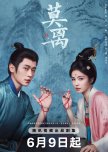
The Great Idol Drama Detox
Post-2022 idol costume dramas have gradually convinced me that ancient China was inhabited almost exclusively by three types of people:
Perfect porcelain-faced aristocrats.
Individuals who fall deeply in love after approximately two meaningful glances and one accidental rescue.
Political masterminds whose greatest strategic weapon is refusing to explain anything until Episode 36.
The First Jasmine is still very much an idol drama. It simply declines all three invitations.
First of all...
The pores.
Ladies and gentlemen, the pores have returned.
I cannot believe one of my biggest compliments of 2026 is simply this:
The actors look like people.
Skin texture. Tiny imperfections. Faces that have apparently encountered weather instead of being digitally moisturized into another dimension. After years of idol dramas resembling luxury skincare campaigns with occasional palace conspiracies, this felt absurdly refreshing.
Even the muted colour grading deserves applause. The world finally feels lived in instead of permanently illuminated. Oddly enough, realism became the most luxurious production value of all.
That same philosophy extends to the writing.
Recent idol dramas sometimes confuse complicated plotting with complicated people. The First Jasmine remembers that the second one matters more. Characters make decisions shaped by trauma, loyalty, responsibility, and political reality rather than conveniently forgetting their intelligence whenever the plot needs another misunderstanding. Ye Li's psychological trauma and Mo Xiuyao's condition aren't decorative tragedies waiting to be healed by love. They fundamentally shape who these people are.
On paper, Ye Li should have triggered my internal "this is getting ridiculous" alarm. She never did. The difference is that The First Jasmine never mistakes competence for character. It doesn't ask us to admire an impossibly capable woman. It asks us to understand the cost of becoming one.
Did I believe everything the plot asked Ye Li to survive and accomplish? No. But I believed enough of the emotional logic behind her choices that she never felt artificial to me.
The drama never seemed particularly interested in impressing me with Ye Li's competence. Instead, it kept asking a much more uncomfortable question:
What kind of life produces a woman who needs this much self-control just to survive?
That question follows Ye Li through almost every scene, which is precisely why her restraint never felt like emotional emptiness to me. It felt learned.
Which brings me to the most divisive part of the drama: The romance.
If you're expecting explosive chemistry, endless longing stares, enough slow motion to qualify as a weather event, and romantic tension capable of overheating your screen...
...this probably isn't your drama.
Because this isn't really about falling in love. It's about learning to trust. Those are not the same thing.
Their relationship grows through reliability, mutual respect, shared burdens, and slowly earned trust. Watching two emotionally exhausted people become each other's safest place may not produce fireworks every episode. It does produce something rarer. A marriage that actually feels earned.
Personally, I never found the chemistry lacking. Its idea of intimacy feels quietly old-fashioned in the best possible way. Trust matters more than butterflies. Reliability matters more than grand declarations.
Rather than constantly explaining every emotion or spelling out every revelation the moment it happens, it trusts subtext, quiet observations, and conversations that often reveal more than they explicitly say. The writing quietly trusts the audience to connect the dots instead of drawing the entire picture for them.
This is one of the rare dramas where conversations build relationships more often than kisses do.
Ironically, the very restraint that makes those relationships so believable also becomes the drama's biggest weakness.
The First Jasmine consistently chooses psychological continuity over immediate emotional gratification. Most of the time, I appreciated that decision. Occasionally, I wished it trusted emotion just a little more. Not because it takes its time, but because a few scenes remain longer than they need to after they've already said what they came to say.
More than once, I found myself admiring what a scene was trying to do rather than being swept away by it. I understood exactly what a character was feeling. I just didn't always feel it alongside them. That distinction ultimately keeps this from becoming truly exceptional.
The political storyline follows the same philosophy.
It rewards attention more than adrenaline.
Names matter.
Family histories matter.
Your attention span matters too.
I appreciated that.
Still, patience alone doesn't automatically create momentum. More than once I admired the architecture of the story while wishing the rooms felt a little more lived in.
Performance-wise Bai Lu won me over.
She understood that Ye Li's silence isn't the absence of emotion. It's how she has learned to survive. Trauma doesn't always announce itself through dramatic breakdowns. Sometimes it simply becomes the way a person speaks, hesitates and carries themselves.
Bai Lu never overplays that.
Neither does Cheng Lei.
The First Jasmine won't work for everyone.
It whispers where many dramas shout. It values emotional accumulation over emotional spectacle. Some viewers will call that boring. Others will call it refreshing.
I somehow landed comfortably between those two camps.
I never completely fell in love with this drama.
But I found myself appreciating almost every creative decision it made. In an era increasingly convinced that louder automatically means better, The First Jasmine quietly argues the opposite.
Real faces.
Believable motivations.
A marriage built on trust instead of spectacle.
It doesn't always reach the emotional heights it aims for. But it reminded me that the most refreshing thing this drama brought back wasn't the pores. It was people who behaved like people.
Best suited for viewers who enjoy psychologically grounded characters, mature relationships, restrained cinematography, and dramas that reward patience more than adrenaline.
Less suited for viewers looking for fast pacing, explosive chemistry, constant twists, or highly melodramatic romance.
Perfect porcelain-faced aristocrats.
Individuals who fall deeply in love after approximately two meaningful glances and one accidental rescue.
Political masterminds whose greatest strategic weapon is refusing to explain anything until Episode 36.
The First Jasmine is still very much an idol drama. It simply declines all three invitations.
First of all...
The pores.
Ladies and gentlemen, the pores have returned.
I cannot believe one of my biggest compliments of 2026 is simply this:
The actors look like people.
Skin texture. Tiny imperfections. Faces that have apparently encountered weather instead of being digitally moisturized into another dimension. After years of idol dramas resembling luxury skincare campaigns with occasional palace conspiracies, this felt absurdly refreshing.
Even the muted colour grading deserves applause. The world finally feels lived in instead of permanently illuminated. Oddly enough, realism became the most luxurious production value of all.
That same philosophy extends to the writing.
Recent idol dramas sometimes confuse complicated plotting with complicated people. The First Jasmine remembers that the second one matters more. Characters make decisions shaped by trauma, loyalty, responsibility, and political reality rather than conveniently forgetting their intelligence whenever the plot needs another misunderstanding. Ye Li's psychological trauma and Mo Xiuyao's condition aren't decorative tragedies waiting to be healed by love. They fundamentally shape who these people are.
On paper, Ye Li should have triggered my internal "this is getting ridiculous" alarm. She never did. The difference is that The First Jasmine never mistakes competence for character. It doesn't ask us to admire an impossibly capable woman. It asks us to understand the cost of becoming one.
Did I believe everything the plot asked Ye Li to survive and accomplish? No. But I believed enough of the emotional logic behind her choices that she never felt artificial to me.
The drama never seemed particularly interested in impressing me with Ye Li's competence. Instead, it kept asking a much more uncomfortable question:
What kind of life produces a woman who needs this much self-control just to survive?
That question follows Ye Li through almost every scene, which is precisely why her restraint never felt like emotional emptiness to me. It felt learned.
Which brings me to the most divisive part of the drama: The romance.
If you're expecting explosive chemistry, endless longing stares, enough slow motion to qualify as a weather event, and romantic tension capable of overheating your screen...
...this probably isn't your drama.
Because this isn't really about falling in love. It's about learning to trust. Those are not the same thing.
Their relationship grows through reliability, mutual respect, shared burdens, and slowly earned trust. Watching two emotionally exhausted people become each other's safest place may not produce fireworks every episode. It does produce something rarer. A marriage that actually feels earned.
Personally, I never found the chemistry lacking. Its idea of intimacy feels quietly old-fashioned in the best possible way. Trust matters more than butterflies. Reliability matters more than grand declarations.
Rather than constantly explaining every emotion or spelling out every revelation the moment it happens, it trusts subtext, quiet observations, and conversations that often reveal more than they explicitly say. The writing quietly trusts the audience to connect the dots instead of drawing the entire picture for them.
This is one of the rare dramas where conversations build relationships more often than kisses do.
Ironically, the very restraint that makes those relationships so believable also becomes the drama's biggest weakness.
The First Jasmine consistently chooses psychological continuity over immediate emotional gratification. Most of the time, I appreciated that decision. Occasionally, I wished it trusted emotion just a little more. Not because it takes its time, but because a few scenes remain longer than they need to after they've already said what they came to say.
More than once, I found myself admiring what a scene was trying to do rather than being swept away by it. I understood exactly what a character was feeling. I just didn't always feel it alongside them. That distinction ultimately keeps this from becoming truly exceptional.
The political storyline follows the same philosophy.
It rewards attention more than adrenaline.
Names matter.
Family histories matter.
Your attention span matters too.
I appreciated that.
Still, patience alone doesn't automatically create momentum. More than once I admired the architecture of the story while wishing the rooms felt a little more lived in.
Performance-wise Bai Lu won me over.
She understood that Ye Li's silence isn't the absence of emotion. It's how she has learned to survive. Trauma doesn't always announce itself through dramatic breakdowns. Sometimes it simply becomes the way a person speaks, hesitates and carries themselves.
Bai Lu never overplays that.
Neither does Cheng Lei.
The First Jasmine won't work for everyone.
It whispers where many dramas shout. It values emotional accumulation over emotional spectacle. Some viewers will call that boring. Others will call it refreshing.
I somehow landed comfortably between those two camps.
I never completely fell in love with this drama.
But I found myself appreciating almost every creative decision it made. In an era increasingly convinced that louder automatically means better, The First Jasmine quietly argues the opposite.
Real faces.
Believable motivations.
A marriage built on trust instead of spectacle.
It doesn't always reach the emotional heights it aims for. But it reminded me that the most refreshing thing this drama brought back wasn't the pores. It was people who behaved like people.
Best suited for viewers who enjoy psychologically grounded characters, mature relationships, restrained cinematography, and dramas that reward patience more than adrenaline.
Less suited for viewers looking for fast pacing, explosive chemistry, constant twists, or highly melodramatic romance.
Was this review helpful to you?


