


 3
3 2
2 1
1


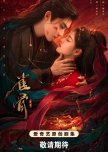
The Most Dangerous Man at Court Was the One Who Never Wanted the Throne
For a drama titled Sparrow Bone (雀骨), there were an alarming number of people determined to break their own backs carrying the realm.
Some inherited power. Some inherited disgrace. Others inherited grudges so old that nobody seemed entirely certain who had started them anymore. Xiao Wuyi inherited all three and somehow remained the least interested person in becoming emperor.
That contradiction sits at the heart of a drama where almost everyone is burdened by an inheritance, but very few get to decide what to do with it.
On the surface, this is a compact costume drama about a politically inconvenient general and a clever young woman in a contractual marriage. Underneath, it explores inherited violence, institutional power, and the difference between being capable of ruling and wanting to rule.
It packs an ambitious amount into twenty-eight episodes: concealed identities, military reform, court factions, old family crimes, mechanical inventions, succession disputes, and approximately one new political agenda every time somebody enters a room.
That ambition has its trade-offs. The pacing can be dizzying. Some supporting characters make important decisions before those moments have enough room to settle, and a few developments are explained when I would rather have watched them unfold. Another two or three episodes might have helped certain relationships and political turns breathe.
But rushed storytelling is not the same as incoherent storytelling.
Most revelations belong to the same narrative structure. Earlier choices return, alliances have identifiable motives, and the central figures rarely feel rewritten simply to serve the next twist.
Considering the sheer number of twists involved, that feels less like faint praise and more like a minor administrative miracle.
Thankfully, the politics remain politics instead of becoming decorative obstacles delaying the romance. The conflict between entrenched families and those excluded from power, the question of who may serve the state, and attempts to reform institutions all affect the characters personally. Love, loyalty, ambition, and public duty continually complicate one another.
The bond between Xiao Wuyi and Xie Jiayu grows out of that world rather than interrupting it. In a court where nearly every relationship is transactional, trust becomes the rarest form of political currency. They begin as reluctant partners cautiously assessing one another after a politically arranged marriage and gradually become the one person each can trust when almost everyone else is negotiating, concealing something, or preparing an assassination.
I normally advocate for kissing wherever dramatically appropriate. Somehow this drama convinced me to file an exception.
Apparently, hands may still be held without a camera orbiting the couple for four minutes. Good directors did not die out after all.
The drama understands that intimacy can exist long before physical consummation.
Aimi makes Jiayu easy to root for. She is intelligent and capable without being written as infallible, and her mechanical knowledge remains part of her identity rather than disappearing whenever the male lead enters the scene. The script never asks her to become less herself in order to make him look more impressive. She remains compassionate without becoming passive and determined without sacrificing her warmth.
Hou Minghao gives his strongest performance to date. Xiao Wuyi could easily have become another cold, vaguely dangerous nobleman whose personality consists mainly of excellent posture. Instead, Hou Minghao gives him exhaustion, suppressed anger, tenderness, and a kind of watchful restraint. Much of the character exists in the pause before he speaks.
The supporting cast is generally strong, although not every character receives equal depth. Li Mao should have been one of the drama's most compelling characters, yet I never felt the writing, or Riley Wang's performance, fully connected his emotional shifts. Too often, the story seemed to arrive at his next emotional state before it had fully earned it, making him feel less layered than inconsistent.
The drama also uses a few conveniences I could have done without. The amnesia section adds less than it interrupts, certain deaths arrive with suspicious narrative efficiency, and some emotional consequences pass more quickly than the events themselves deserve.
Still, the story never lost me.
Victory here is not simply defeating the villain or placing the correct man on the throne. It is refusing to reproduce the choices that created the conflict in the first place. Some characters inherit old conflicts and choose to perpetuate them. Others try to break the cycle instead. Xiao Wuyi's final triumph is not that he proves himself worthy of power, but that he remains capable of imagining a life beyond it.
The person who rules is not necessarily the one who wins.
Perhaps that is the drama's sharpest idea.
Key to the Phoenix Heart is not as airtight as its most enthusiastic admirers claim, nor nearly as illogical as its harshest reviews suggest. It is fast, occasionally overstuffed, and uneven around the edges. It is also sincere, confidently directed, emotionally persuasive, and more interested in choices and consequences than many dramas in the same genre.
For twenty-eight episodes, it gave me political intrigue that respected its own politics, a romance built on earned trust, women with ambitions unrelated to defeating one another, and a hero whose greatest victory was knowing when to walk away from power.
I will take it.
Some inherited power. Some inherited disgrace. Others inherited grudges so old that nobody seemed entirely certain who had started them anymore. Xiao Wuyi inherited all three and somehow remained the least interested person in becoming emperor.
That contradiction sits at the heart of a drama where almost everyone is burdened by an inheritance, but very few get to decide what to do with it.
On the surface, this is a compact costume drama about a politically inconvenient general and a clever young woman in a contractual marriage. Underneath, it explores inherited violence, institutional power, and the difference between being capable of ruling and wanting to rule.
It packs an ambitious amount into twenty-eight episodes: concealed identities, military reform, court factions, old family crimes, mechanical inventions, succession disputes, and approximately one new political agenda every time somebody enters a room.
That ambition has its trade-offs. The pacing can be dizzying. Some supporting characters make important decisions before those moments have enough room to settle, and a few developments are explained when I would rather have watched them unfold. Another two or three episodes might have helped certain relationships and political turns breathe.
But rushed storytelling is not the same as incoherent storytelling.
Most revelations belong to the same narrative structure. Earlier choices return, alliances have identifiable motives, and the central figures rarely feel rewritten simply to serve the next twist.
Considering the sheer number of twists involved, that feels less like faint praise and more like a minor administrative miracle.
Thankfully, the politics remain politics instead of becoming decorative obstacles delaying the romance. The conflict between entrenched families and those excluded from power, the question of who may serve the state, and attempts to reform institutions all affect the characters personally. Love, loyalty, ambition, and public duty continually complicate one another.
The bond between Xiao Wuyi and Xie Jiayu grows out of that world rather than interrupting it. In a court where nearly every relationship is transactional, trust becomes the rarest form of political currency. They begin as reluctant partners cautiously assessing one another after a politically arranged marriage and gradually become the one person each can trust when almost everyone else is negotiating, concealing something, or preparing an assassination.
I normally advocate for kissing wherever dramatically appropriate. Somehow this drama convinced me to file an exception.
Apparently, hands may still be held without a camera orbiting the couple for four minutes. Good directors did not die out after all.
The drama understands that intimacy can exist long before physical consummation.
Aimi makes Jiayu easy to root for. She is intelligent and capable without being written as infallible, and her mechanical knowledge remains part of her identity rather than disappearing whenever the male lead enters the scene. The script never asks her to become less herself in order to make him look more impressive. She remains compassionate without becoming passive and determined without sacrificing her warmth.
Hou Minghao gives his strongest performance to date. Xiao Wuyi could easily have become another cold, vaguely dangerous nobleman whose personality consists mainly of excellent posture. Instead, Hou Minghao gives him exhaustion, suppressed anger, tenderness, and a kind of watchful restraint. Much of the character exists in the pause before he speaks.
The supporting cast is generally strong, although not every character receives equal depth. Li Mao should have been one of the drama's most compelling characters, yet I never felt the writing, or Riley Wang's performance, fully connected his emotional shifts. Too often, the story seemed to arrive at his next emotional state before it had fully earned it, making him feel less layered than inconsistent.
The drama also uses a few conveniences I could have done without. The amnesia section adds less than it interrupts, certain deaths arrive with suspicious narrative efficiency, and some emotional consequences pass more quickly than the events themselves deserve.
Still, the story never lost me.
Victory here is not simply defeating the villain or placing the correct man on the throne. It is refusing to reproduce the choices that created the conflict in the first place. Some characters inherit old conflicts and choose to perpetuate them. Others try to break the cycle instead. Xiao Wuyi's final triumph is not that he proves himself worthy of power, but that he remains capable of imagining a life beyond it.
The person who rules is not necessarily the one who wins.
Perhaps that is the drama's sharpest idea.
Key to the Phoenix Heart is not as airtight as its most enthusiastic admirers claim, nor nearly as illogical as its harshest reviews suggest. It is fast, occasionally overstuffed, and uneven around the edges. It is also sincere, confidently directed, emotionally persuasive, and more interested in choices and consequences than many dramas in the same genre.
For twenty-eight episodes, it gave me political intrigue that respected its own politics, a romance built on earned trust, women with ambitions unrelated to defeating one another, and a hero whose greatest victory was knowing when to walk away from power.
I will take it.
Was this review helpful to you?


