

 2
2 2
2 1
1


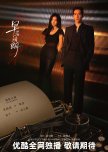
The Early Spring, or How to Turn a Workplace Complaint Into a Love Story
I wasn't actually planning to review The Early Spring.
I put it on hold once, came back, made it to episode 13 and finally accepted that my grown-up self was objecting more often than my drama-watching self was having fun.
Truthfully, judging purely by where I thought the writing was heading, I probably wouldn't have made it past episode 3.
Somehow I made it to episode 13.
This is what happens when a questionable script is surrounded by attractive people, good styling and Jing Boran looking emotionally unavailable in expensive coats.
I am not immune.
Put that man in a tasteful knit sweater, give him unresolved emotional issues and let him stare pensively through an office window, and apparently my critical judgment develops a ten-episode processing delay.
So believe me, I understand the appeal.
Unfortunately, eventually the paperwork cleared.
And underneath all the talk about how "realistic," "mature" and refreshingly adult this romance is, I kept finding something much more familiar: a fairly conventional workplace fantasy that has discovered sex, muted cinematography and better tailoring.
Which, admittedly, is excellent rebranding.
To be fair, there are things The Early Spring does well.
It looks good. The production is polished without becoming excessively glossy, and the advertising setting gives the drama a distinctive environment for the romance. There are recognizable elements of workplace ambition, exhaustion, competition and hierarchy, even if I don't always buy the situations built around them.
Sun Qian gives Shang Zhitao an appealing awkwardness early on. She feels inexperienced without being completely incapable, and I liked watching her slowly find her footing.
And Jing Boran is extremely well cast as Luan Nian.
That is actually important, because Luan Nian is a character who depends enormously on the audience wanting to keep looking at him long enough to discover what exists underneath all that arrogance.
Jing Boran makes that very easy.
Possibly too easy.
There is also chemistry between the leads. Some of their attraction develops nicely through irritation, observation, proximity and those tiny shifts where two people start paying suspiciously close attention to someone they supposedly don't care about.
I understand why people are hooked.
And yes, chemistry matters enormously in a romance. But if "the chemistry is amazing" has become the final defense of a twenty-four-episode drama, I do start wondering what exactly the other twenty-three hours are supposed to be doing.
Chemistry is the spark. Long-form storytelling is supposed to build the fire.
That's the whole advantage of the format. It has time for attraction to become intimacy, intimacy to reveal character, conflict to produce consequences and those consequences to actually change people.
If two charismatic actors looking very good while wanting each other is enough to carry the entire thing, then we've reduced long-form romance to a short drama with longer loading times.
Watchability and good storytelling aren't the same thing.
My problem is what the screenplay keeps asking me to interpret as complexity.
Take Shang Zhitao's job interview. She is invited into a supposedly elite advertising company despite lacking the experience they apparently want, only for Luan Nian to point out those deficiencies during the interview.
Presumably somebody possessed her résumé before she entered the building.
But perhaps HR was going through something.
She gets hired anyway, of course, because this isn't really recruitment.
It's destiny wearing an employee badge.
Then there is the strange recurring pattern where Luan Nian behaves unnecessarily badly and somewhere inside the behavior we are expected to discover a lesson.
He humiliates, but he's teaching.
He dismisses, but he's observing.
He wastes her time, but he's teaching her that her time is valuable.
Which is certainly one way to do it.
Another might be not wasting it.
At some point I stopped watching a manager and started watching a handsome corporate escape room.
Find the hidden lesson before your self-esteem expires.
And this is where the "realistic workplace" argument starts losing me.
Yes, parts of the environment are recognizable. Young employees get exploited. Offices have hierarchies. People work ridiculous hours. Colleagues dump work on one another. Bosses can be arrogant. Talented people can also be terrible managers.
All true.
But recognizable details don't automatically make the machinery around them realistic.
Shang Zhitao gets pushed around.
Luan Nian appears.
She works late.
Luan Nian appears.
She needs a ride home.
Somewhere, Luan Nian's car senses narrative opportunity.
The company may have several departments, but the screenplay has one:
Romance Logistics.
And this is also where The Early Spring starts feeling like part of a larger trend I've been noticing in long-form dramas lately:
the short-drama recipe has escaped containment.
Manufactured proximity, convenient coincidences, sexual tension and carefully timed emotional spikes aren't inherently bad storytelling. Short dramas practically run on them, and they're effective for a reason: they keep people watching.
But effectiveness at holding attention isn't necessarily the same thing as effectiveness at telling a story.
Long-form has something short-form doesn't: time. Time to let attraction become intimacy, conflict produce consequences and characters actually change between plot beats rather than because the next one requires it.
Borrowing short-form's immediacy isn't the problem.
Letting immediacy replace development is.
When long-form starts borrowing short-form's addiction to immediate payoff while abandoning its own patience, we end up with an interesting exchange:
short-form storytelling with long-form running times.
And considering how enthusiastically the industry seems to be experimenting with it, it will be interesting to see where that eventually takes long-form drama.
At this rate, AI may not even get the chance to ruin it.
The writers may beat it to the job.
I just wish we'd stop confusing the absence of accidental kisses and cartoon CEOs with documentary realism.
The same applies to the relationship.
I have absolutely no problem with flawed people falling in love. In costume dramas I have watched couples survive attempted murder and thought, "you know what, I see the vision."
My issue isn't that Luan Nian is difficult.
My issue is that backstory is not character development.
Learning why someone behaves the way they do can make that person understandable. It can create sympathy. It can add context.
But explanation isn't transformation.
Knowing why somebody keeps setting the kitchen on fire doesn't make the kitchen less on fire.
And "he's flawed" cannot become a universal diplomatic passport that gets a character through every checkpoint.
Of course he's flawed.
So is Shang Zhitao.
She can be insecure, avoidant and frustratingly poor at communicating. In fact, the potentially interesting story here isn't "toxic man versus innocent woman" at all. It's two people whose weaknesses fit together terribly well: one has too much pride; the other begins with too little confidence.
That's interesting.
What bothers me is the power structure underneath it.
Luan Nian begins as the established superior: professionally secure, socially confident and holding actual authority in the workplace. Shang Zhitao begins as the inexperienced subordinate trying to establish herself.
That doesn't mean they can never have an equal relationship.
It means the drama has given itself the responsibility of convincingly showing how they get there.
And maybe the remaining eleven episodes eventually do.
But thirteen episodes is a fairly generous amount of time to ask me to keep waiting for the relationship to become the relationship the drama apparently wants me to believe in.
Up to the point where I stopped, the trajectory felt less like:
they grow toward equality
and more like:
she grows until she becomes worthy of standing beside him.
Those are not quite the same story.
And then we arrive at my favorite word surrounding this drama:
realistic.
They fight?
Realistic.
They misunderstand each other?
Realistic.
They have sex without immediately discussing marriage?
Adults!
They spend years struggling to communicate?
Finally, a drama understands relationships!
By this standard, half of Reddit qualifies as cinéma vérité.
Yes, people really do stay in unhealthy relationships. People sleep with people who are bad for them. They fail to communicate. They repeat patterns. They love people who frustrate them. They waste years. They change. Sometimes they eventually make it work.
All realistic.
But something being possible in real life doesn't automatically make its depiction psychologically convincing or its storytelling realistic.
People also win lotteries.
The screenplay still has to sell me the ticket.
And if we're going to invoke realism so enthusiastically, there is another perfectly realistic ending available:
Shang Zhitao grows up, becomes professionally secure, looks back at six years of emotional exhaustion and sends Luan Nian directly to a thousand hells.
Then she chooses her career.
Or herself.
Or another man.
Or nobody.
And Luan Nian's eventual emotional awakening becomes what emotional awakenings very often are in real life:
too late.
That would be realistic too.
Instead, we know what kind of story we're watching. All this messiness is ultimately moving toward romantic permanence.
And that's fine.
It's a romance.
But then perhaps dysfunction shouldn't automatically become evidence of realism simply because the happy ending takes six years to arrive.
Which brings me back to the reason I somehow lasted ten episodes longer than expected.
Take away the styling, the chemistry and all the attractive people. Take Jing Boran out of those suits, coats and strategically deployed states of undress, and leave the writing to fend for itself.
Would I still have made it to episode 13?
Absolutely not.
I would have been gone by episode 3 with remarkable efficiency.
So while the writing never quite managed to convince me, the eye candy clearly mounted a heroic delaying action.
Ten extra episodes is no small achievement.
And I do understand why the drama works for so many people. There is chemistry. There are good performances and appealing scenes. The production has atmosphere. The characters aren't sanitized into perfect romantic leads, and if you're tired of sugary modern romances, I can see why this feels like a more interesting alternative.
Where I part ways is with the idea that messiness itself proves maturity, or that finding this relationship unconvincing means failing to understand its characters.
Sometimes two viewers understand exactly what a drama is doing and simply disagree about whether it works.
That's criticism.
And perhaps that's why I finally wrote this review.
People should be able to enjoy The Early Spring without having to defend it as a masterclass in realistic relationships.
And the rest of us should be allowed to look at the same six-year romantic journey and conclude that Luan Nian being complicated doesn't automatically make the writing around him complex.
I understood him.
I just didn't particularly want another eleven episodes with him.
So after two attempts, thirteen episodes and a heroic amount of assistance from Jing Boran's face, I finally dropped The Early Spring.
My drama brain considered continuing.
My grown-up brain filed a workplace complaint.
For once, management listened.
The coat remains excellent.
5/10. Half the points may or may not be wearing Jing Boran.
I put it on hold once, came back, made it to episode 13 and finally accepted that my grown-up self was objecting more often than my drama-watching self was having fun.
Truthfully, judging purely by where I thought the writing was heading, I probably wouldn't have made it past episode 3.
Somehow I made it to episode 13.
This is what happens when a questionable script is surrounded by attractive people, good styling and Jing Boran looking emotionally unavailable in expensive coats.
I am not immune.
Put that man in a tasteful knit sweater, give him unresolved emotional issues and let him stare pensively through an office window, and apparently my critical judgment develops a ten-episode processing delay.
So believe me, I understand the appeal.
Unfortunately, eventually the paperwork cleared.
And underneath all the talk about how "realistic," "mature" and refreshingly adult this romance is, I kept finding something much more familiar: a fairly conventional workplace fantasy that has discovered sex, muted cinematography and better tailoring.
Which, admittedly, is excellent rebranding.
To be fair, there are things The Early Spring does well.
It looks good. The production is polished without becoming excessively glossy, and the advertising setting gives the drama a distinctive environment for the romance. There are recognizable elements of workplace ambition, exhaustion, competition and hierarchy, even if I don't always buy the situations built around them.
Sun Qian gives Shang Zhitao an appealing awkwardness early on. She feels inexperienced without being completely incapable, and I liked watching her slowly find her footing.
And Jing Boran is extremely well cast as Luan Nian.
That is actually important, because Luan Nian is a character who depends enormously on the audience wanting to keep looking at him long enough to discover what exists underneath all that arrogance.
Jing Boran makes that very easy.
Possibly too easy.
There is also chemistry between the leads. Some of their attraction develops nicely through irritation, observation, proximity and those tiny shifts where two people start paying suspiciously close attention to someone they supposedly don't care about.
I understand why people are hooked.
And yes, chemistry matters enormously in a romance. But if "the chemistry is amazing" has become the final defense of a twenty-four-episode drama, I do start wondering what exactly the other twenty-three hours are supposed to be doing.
Chemistry is the spark. Long-form storytelling is supposed to build the fire.
That's the whole advantage of the format. It has time for attraction to become intimacy, intimacy to reveal character, conflict to produce consequences and those consequences to actually change people.
If two charismatic actors looking very good while wanting each other is enough to carry the entire thing, then we've reduced long-form romance to a short drama with longer loading times.
Watchability and good storytelling aren't the same thing.
My problem is what the screenplay keeps asking me to interpret as complexity.
Take Shang Zhitao's job interview. She is invited into a supposedly elite advertising company despite lacking the experience they apparently want, only for Luan Nian to point out those deficiencies during the interview.
Presumably somebody possessed her résumé before she entered the building.
But perhaps HR was going through something.
She gets hired anyway, of course, because this isn't really recruitment.
It's destiny wearing an employee badge.
Then there is the strange recurring pattern where Luan Nian behaves unnecessarily badly and somewhere inside the behavior we are expected to discover a lesson.
He humiliates, but he's teaching.
He dismisses, but he's observing.
He wastes her time, but he's teaching her that her time is valuable.
Which is certainly one way to do it.
Another might be not wasting it.
At some point I stopped watching a manager and started watching a handsome corporate escape room.
Find the hidden lesson before your self-esteem expires.
And this is where the "realistic workplace" argument starts losing me.
Yes, parts of the environment are recognizable. Young employees get exploited. Offices have hierarchies. People work ridiculous hours. Colleagues dump work on one another. Bosses can be arrogant. Talented people can also be terrible managers.
All true.
But recognizable details don't automatically make the machinery around them realistic.
Shang Zhitao gets pushed around.
Luan Nian appears.
She works late.
Luan Nian appears.
She needs a ride home.
Somewhere, Luan Nian's car senses narrative opportunity.
The company may have several departments, but the screenplay has one:
Romance Logistics.
And this is also where The Early Spring starts feeling like part of a larger trend I've been noticing in long-form dramas lately:
the short-drama recipe has escaped containment.
Manufactured proximity, convenient coincidences, sexual tension and carefully timed emotional spikes aren't inherently bad storytelling. Short dramas practically run on them, and they're effective for a reason: they keep people watching.
But effectiveness at holding attention isn't necessarily the same thing as effectiveness at telling a story.
Long-form has something short-form doesn't: time. Time to let attraction become intimacy, conflict produce consequences and characters actually change between plot beats rather than because the next one requires it.
Borrowing short-form's immediacy isn't the problem.
Letting immediacy replace development is.
When long-form starts borrowing short-form's addiction to immediate payoff while abandoning its own patience, we end up with an interesting exchange:
short-form storytelling with long-form running times.
And considering how enthusiastically the industry seems to be experimenting with it, it will be interesting to see where that eventually takes long-form drama.
At this rate, AI may not even get the chance to ruin it.
The writers may beat it to the job.
I just wish we'd stop confusing the absence of accidental kisses and cartoon CEOs with documentary realism.
The same applies to the relationship.
I have absolutely no problem with flawed people falling in love. In costume dramas I have watched couples survive attempted murder and thought, "you know what, I see the vision."
My issue isn't that Luan Nian is difficult.
My issue is that backstory is not character development.
Learning why someone behaves the way they do can make that person understandable. It can create sympathy. It can add context.
But explanation isn't transformation.
Knowing why somebody keeps setting the kitchen on fire doesn't make the kitchen less on fire.
And "he's flawed" cannot become a universal diplomatic passport that gets a character through every checkpoint.
Of course he's flawed.
So is Shang Zhitao.
She can be insecure, avoidant and frustratingly poor at communicating. In fact, the potentially interesting story here isn't "toxic man versus innocent woman" at all. It's two people whose weaknesses fit together terribly well: one has too much pride; the other begins with too little confidence.
That's interesting.
What bothers me is the power structure underneath it.
Luan Nian begins as the established superior: professionally secure, socially confident and holding actual authority in the workplace. Shang Zhitao begins as the inexperienced subordinate trying to establish herself.
That doesn't mean they can never have an equal relationship.
It means the drama has given itself the responsibility of convincingly showing how they get there.
And maybe the remaining eleven episodes eventually do.
But thirteen episodes is a fairly generous amount of time to ask me to keep waiting for the relationship to become the relationship the drama apparently wants me to believe in.
Up to the point where I stopped, the trajectory felt less like:
they grow toward equality
and more like:
she grows until she becomes worthy of standing beside him.
Those are not quite the same story.
And then we arrive at my favorite word surrounding this drama:
realistic.
They fight?
Realistic.
They misunderstand each other?
Realistic.
They have sex without immediately discussing marriage?
Adults!
They spend years struggling to communicate?
Finally, a drama understands relationships!
By this standard, half of Reddit qualifies as cinéma vérité.
Yes, people really do stay in unhealthy relationships. People sleep with people who are bad for them. They fail to communicate. They repeat patterns. They love people who frustrate them. They waste years. They change. Sometimes they eventually make it work.
All realistic.
But something being possible in real life doesn't automatically make its depiction psychologically convincing or its storytelling realistic.
People also win lotteries.
The screenplay still has to sell me the ticket.
And if we're going to invoke realism so enthusiastically, there is another perfectly realistic ending available:
Shang Zhitao grows up, becomes professionally secure, looks back at six years of emotional exhaustion and sends Luan Nian directly to a thousand hells.
Then she chooses her career.
Or herself.
Or another man.
Or nobody.
And Luan Nian's eventual emotional awakening becomes what emotional awakenings very often are in real life:
too late.
That would be realistic too.
Instead, we know what kind of story we're watching. All this messiness is ultimately moving toward romantic permanence.
And that's fine.
It's a romance.
But then perhaps dysfunction shouldn't automatically become evidence of realism simply because the happy ending takes six years to arrive.
Which brings me back to the reason I somehow lasted ten episodes longer than expected.
Take away the styling, the chemistry and all the attractive people. Take Jing Boran out of those suits, coats and strategically deployed states of undress, and leave the writing to fend for itself.
Would I still have made it to episode 13?
Absolutely not.
I would have been gone by episode 3 with remarkable efficiency.
So while the writing never quite managed to convince me, the eye candy clearly mounted a heroic delaying action.
Ten extra episodes is no small achievement.
And I do understand why the drama works for so many people. There is chemistry. There are good performances and appealing scenes. The production has atmosphere. The characters aren't sanitized into perfect romantic leads, and if you're tired of sugary modern romances, I can see why this feels like a more interesting alternative.
Where I part ways is with the idea that messiness itself proves maturity, or that finding this relationship unconvincing means failing to understand its characters.
Sometimes two viewers understand exactly what a drama is doing and simply disagree about whether it works.
That's criticism.
And perhaps that's why I finally wrote this review.
People should be able to enjoy The Early Spring without having to defend it as a masterclass in realistic relationships.
And the rest of us should be allowed to look at the same six-year romantic journey and conclude that Luan Nian being complicated doesn't automatically make the writing around him complex.
I understood him.
I just didn't particularly want another eleven episodes with him.
So after two attempts, thirteen episodes and a heroic amount of assistance from Jing Boran's face, I finally dropped The Early Spring.
My drama brain considered continuing.
My grown-up brain filed a workplace complaint.
For once, management listened.
The coat remains excellent.
5/10. Half the points may or may not be wearing Jing Boran.
Was this review helpful to you?


