
 Editorials
 1
1


This review may contain spoilers
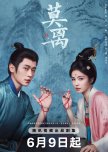
A Story That Trusted Me
I don’t write reviews immediately after finishing a drama. I need time to process what I watched. But this is one of those rare dramas that I knew I wanted to write about the moment the credits rolled.This is not a conventional romance. It is not a conventional political drama. It is not even structured in a conventional way.
The story unfolds through layers rather than a straight line. The past and present constantly weave together, asking the audience to pay attention instead of simply waiting for the next exposition dump. I was continually asking myself: Who did this? When did it happen? Is this connected to the current timeline or to the events eight years ago? Instead of frustrating me, it pulled me deeper into the story. The writers trusted the audience to assemble the puzzle, and that trust paid off beautifully.
The romance is one of the most mature I have seen in a historical drama.
Mo Xiuyao and Ye Li don’t fall in love because the plot says it’s time. They become each other’s refuge through shared grief, loyalty, respect, and healing. Their marriage begins in Episode 1, yet physical intimacy is almost irrelevant. Watching their relationship grow through quiet moments, unwavering support, and genuine understanding was far more satisfying than grand declarations ever could have been.
The political intrigue is equally impressive.
Every decision has consequences years later. Small details that seem insignificant early on become central pieces of the larger picture. By the final episodes, I realized just how carefully everything had been constructed. Nothing important felt random.
The acting deserves enormous praise.
Bai Lu delivers one of the strongest performances I’ve seen from her. Ye Li is extraordinarily competent, but underneath that competence is unimaginable grief. The gradual revelation of what she endured completely recontextualizes her behavior throughout the series. Watching those pieces fall into place was heartbreaking.
Cheng Lei gives Mo Xiuyao tremendous dignity and restraint. His performance is built on subtle changes rather than dramatic speeches. You watch a man who has spent years believing he no longer deserves happiness slowly return to life. His transformation feels earned every step of the way.
The supporting cast is equally strong. Even characters I disagreed with rarely felt one-dimensional. Prince Li, in particular, became far more tragic than I initially expected. His story is not simply about unrequited love but about a man trying to reclaim an entire life that history stole from him.
One scene near the end will stay with me for a long time. Ye Li returns to Lishan Mountain after we finally learn the truth of what happened there. The emotional weight of that revelation reframes everything that came before it. By the time the mountain opens once again to new scholars, the story has moved beyond revenge into something much deeper: healing, remembrance, and choosing to build a future without forgetting the past.
Very few dramas genuinely surprise me anymore.
This one did.
It surprised me with its structure, with its emotional restraint, with its confidence, and with its willingness to let its audience think.
This is unquestionably one of the finest historical dramas I’ve seen and it unquestionably earns a place among my highest recommendations.
Was this review helpful to you?

This review may contain spoilers
Come for the Workplace Drama, Stay for the Slowest Slow Burn
I went into Love Has Fireworks expecting a modern romance. What I got instead was a workplace drama set in the world of investment banking, IPOs, venture capital, and corporate politics—with a romance quietly growing in the background.Whether that’s a positive or a negative depends entirely on what you’re looking for.
The setup is genuinely fun. Qian Fei buys an apartment with her fiancé, only to have him leave her for a wealthy woman who offers him career advancement. Unable to afford the mortgage alone, she rents out the second bedroom, only to discover her new roommate is Li Yifei—the same man she’s already had several disastrous run-ins with. It’s an entertaining premise that naturally leads to them becoming reluctant roommates.
From there, however, the show shifts its attention almost entirely to work. Much of the story revolves around the attempted IPO of a hotel company, the increasingly messy corporate cover-ups surrounding it, the investigation into who keeps framing Qian Fei, and the politics inside the investment banking world. If you enjoy business strategy, financial intrigue, and watching complicated projects slowly unravel, there’s quite a bit here to appreciate.
The romance is exactly what people mean when they say “slow burn.” Li Yifei and Qian Fei don’t suddenly fall for each other—they slowly settle into each other’s daily lives until they function like a couple before either of them realizes it. Their domestic life together is actually one of the strongest parts of the series. They know each other’s routines, support one another naturally, and gradually become each other’s safe place.
The problem is that the burn may simply be too slow.
Li Yifei recognizes his feelings fairly early, but hesitates because he’s afraid confessing will destroy the comfortable home they’ve built together if she doesn’t feel the same. That’s a believable concern. Unfortunately, the show stretches the uncertainty much longer than necessary. Nearly everyone around them recognizes they’re in love long before they do, making the inevitable romance feel artificially delayed.
The repeated misunderstanding about Li Yifei supposedly having a girlfriend is probably the clearest example. He directly tells Qian Fei multiple times that he doesn’t have one, yet she continues insisting that he does. I understand what the writers were trying to accomplish—Qian Fei doesn’t yet understand her own jealousy or feelings—but after hearing the same misunderstanding repeated over and over, it starts feeling less like character development and more like a device to postpone the relationship.
Fortunately, the misunderstandings never completely take over the show. The workplace storyline remains the primary focus, which kept me watching even when the romance stalled.
Tan Jianci’s Li Yifei has one of the clearer character arcs in the show. At the beginning, he absolutely is arrogant, showy, and full of rich-heir confidence—so much so that Qian Fei saves him in her phone as “Pretentious Li.” What makes him worth rooting for is not that he starts out warm and grounded, but that he changes. Over time, he learns how to help without turning everything into a performance, how to pay attention to what someone else actually needs, and how to become emotionally reliable—especially for Qian Fei. His growth from spoiled, self-impressed heir to someone capable of real domestic care is one of the stronger parts of the drama.
Overall, I enjoyed the series, but mostly because I watched it between heavier dramas. It worked well as something calmer that mixed workplace intrigue with a gradually developing relationship. If you’re looking for a romance where the leads are together early or where emotional progression drives the story, this probably isn’t the drama for you.
If, however, you enjoy modern workplace dramas with competent professionals, corporate intrigue, and a romance that quietly develops alongside everything else, Love Has Fireworks may be exactly what you’re looking for.
Was this review helpful to you?
This review may contain spoilers
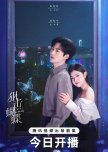
A study in relational toxicity - not healthy love
I just finished Sniper Butterfly, and I’ve been trying to understand why it’s often described as a “healing romance.” I don’t think that label fits the relationship the show actually portrays.At its core, the dynamic between Cen Jin and Li Wu is not built on mutual decision-making. Early in their story, she occupies a guardian role in his life. Once he becomes an adult, that dynamic should shift into one of equal partnership. Instead, the pattern continues: she makes decisions for him, withholds information, and justifies those choices as being “in his best interest.”
The most significant example is the 2018 timeline. She lies about her own plans and engineers a breakup in order to force him to take a path she believes is right. The issue isn’t that she wants something better for him—it’s that she removes his ability to choose for himself. That’s not sacrifice; it’s control.
What’s more concerning is how the story resolves this. There is no meaningful accountability. She acknowledges that he was hurt, but never takes responsibility in a way that recognizes the impact of her actions. Instead, the narrative reframes her behavior as ultimately correct. By the end, Li Wu is the one validating her choices, even stating that she “always did what was best” for him.
That framing carries into their later relationship as well. Even after they reunite, she continues to define the terms of their future. When he expresses that marriage is deeply important to him, she dismisses that value rather than engaging with it. The outcome is consistent: her perspective prevails, and he adapts.
For me, the problem isn’t that the characters are flawed. Flawed characters can make for compelling stories. The issue is that the show presents a one-sided dynamic—where one person decides and the other yields—as something romantic and even aspirational.
A “healing” relationship, in my view, would involve acknowledgment of harm, respect for each person’s agency, and growth toward a more balanced partnership. I didn’t see that here. Instead, I saw a relationship where one person’s will consistently overrides the other’s, without real consequence.
Was this review helpful to you?
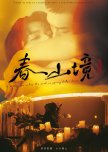
A Winter Sun Wakes the Wind in Spring Hills' Dream
5 people found this review helpful
Stunning, Immersive, and Emotionally Rich
FINAL UPDATE — 16/16The final three episodes confirmed everything I already felt about this drama.
Out of nearly 145 dramas I have completed, this is now one of only three I would place at the very top.
The finale stayed true to everything that made the series extraordinary: beautiful visual storytelling, emotional restraint, layered themes, meaningful callbacks, and characters whose choices felt earned.
The five-year wait between Qinglang and Changyang was painful, but it made their reunion — simply, “I’m back” — incredibly powerful. Their quiet wedding in the mountains was the perfect final image.
The “Moths to a Flame” sequence was also a stunning culmination of the drama’s themes around fame, public opinion, fandom, and destruction.
Beautiful. Immersive. Deeply emotional. Stunning.
One of the best dramas I have ever watched.
Original review:
I keep seeing people call A Winter Sun Wakes the Wind in Spring Hills’ Dream one of the best BL dramas they have ever watched, or one of the best Chinese BLs. For me, that is way too limiting.
This is simply one of the best dramas I have watched. Ever.
I have completed more than 140 dramas across multiple genres and countries, and only a tiny handful have ever reached what I personally consider my absolute top tier. Unless something goes terribly wrong in the final three episodes, Winter Sun is headed there.
The best word I can find for this drama is stunning. Another is immersive.
There is something almost melodic about the way it tells its story. The overall tone is gentle and atmospheric, sometimes almost peaceful, even while enormous and life-changing events are happening. It never feels as though the drama is shouting at the audience, THIS IS THE IMPORTANT PART. CRY NOW. It trusts silence, scenery, music, framing, expressions, and the audience’s ability to understand what is happening beneath the dialogue.
The cinematography is extraordinary, but not merely because the mountains, tea fields, forests, lakes, and snow-covered landscapes are beautiful. The camera itself participates in the storytelling.
A reflection in tea.
A face appearing in a small makeup mirror while another reflection blurs.
Fog swallowing someone from view.
A character framed alone in a place that was once filled with another person.
Again and again, the visual composition adds meaning rather than simply making the drama pretty.
And then there is the writing.
There are multiple couples and several major storylines, yet none of them feels like filler. The secondary relationships are not decorative romances inserted between scenes of the main couple. They have their own histories, conflicts, emotional trajectories, and consequences. An episode can spend relatively little time with Qinglang and Changyang and still be completely engrossing because the other characters are carrying equally meaningful stories.
Small conversations from much earlier episodes return later with entirely new emotional significance. Objects and ideas become motifs. A philosophical conversation about time that initially seems almost casual can later become devastating. A flower mentioned repeatedly becomes part of a character’s final story. The drama remembers what it has told us.
The acting has also impressed me tremendously. There are quiet performances here that could easily be overlooked because nobody is screaming or dramatically collapsing every five minutes. Characters communicate through hesitation, eye movement, posture, silence, restraint, and physical distance. When the emotional explosions finally come, they feel earned because the emotion has been accumulating underneath the surface for so long.
And yes, the chemistry between the couples — especially Qinglang and Changyang — is exceptional.
This drama contains a surprisingly high level of physical intimacy, including some very intense kissing scenes and additional “Small Theater” scenes. But that is not why I love it. In fact, if the same level of intimacy existed without this story underneath it, I would probably lose interest.
The physical intimacy works because it belongs to the relationships being portrayed. It grows naturally from the characters, their emotional closeness, their longing, their reconciliation, their fear of losing one another. It never feels as though the plot has stopped so the production can insert a scene designed only to create a viral clip.
That distinction matters.
I have loved other BL dramas with far fewer intimate scenes because fewer scenes were appropriate for those particular stories. Here, the physicality fits. It enhances relationships that were already compelling without it.
What I perhaps admire most about Winter Sun is its atmosphere. This is one of the rare dramas I actively choose not to binge.
Not because I am bored.
Not because I have to convince myself to continue.
Quite the opposite.
I desperately want the next episode, but I often watch only one and then wait a day or two because each episode requires so much emotional engagement. There is too much to absorb — the plot, performances, scenery, visual motifs, music, relationships, and the things characters do not say aloud.
I need time to come back out of its world before I enter it again.
That is an extraordinarily rare experience for me.
I originally began watching this as a BL. Somewhere along the way, the genre label stopped being remotely sufficient to describe what I was watching.
A Winter Sun Wakes the Wind in Spring Hills’ Dream is romantic, painful, intimate, beautifully acted, visually breathtaking, layered, emotionally intelligent, and profoundly atmospheric.
Three episodes remain.
If it lands the ending, this will not be one of my favorite BL dramas.
It will be one of my favorite dramas ever.
Was this review helpful to you?
This review may contain spoilers
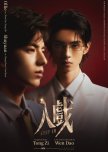
Deep In (入戏) Review: More Than a BL—A Story About Performance, Identity, and Emotional Truth
There is a moment in Deep In when one character asks the other:“Why do you avoid me, but you never avoid my kisses?”
That single line captures what this drama does so well. It isn’t interested in grand declarations as much as it is in the contradictions that reveal what people cannot yet admit—even to themselves.
On the surface, Deep In is a BL about two actors who fall in love while filming a romance together. But that description barely scratches the surface. What makes the series special is its layered structure. We follow both the actors, Zhang Zhun and Zhen Xin, and the characters they portray, Gao Zhun and Dr. Fang Chi. Rather than feeling confusing, the two stories strengthen one another. The parallels between the fictional romance and the real one create some of the most emotionally satisfying moments in the series.
One of the drama’s greatest strengths is that it understands the difference between plot and emotion. Because it only has twelve episodes, it cannot show every rehearsal, every day of filming, or every step in the production process. Instead, it chooses carefully which moments deserve the audience’s time. It compresses events without compressing emotional consequences.
The result is a story where small moments carry enormous weight: quietly leaving medicine outside a hotel room, instinctively protecting someone from danger, remembering an umbrella years later, counting 472 steps, or simply using the wrong name at exactly the right moment. These scenes are not there to move the plot forward. They reveal the characters long before those characters fully understand themselves.
The performances deserve enormous credit. This is the first drama for both Ollie and Shu Yuan, and while their inexperience occasionally shows—particularly in some of Shu Yuan’s repeated facial expressions—the emotional sincerity of both performances is undeniable. Ollie delivers an especially confident performance for a first leading role, balancing confidence, vulnerability, humor, longing, and heartbreak without ever feeling artificial. More importantly, the chemistry between the two leads is exceptional. Not because of the physical intimacy itself, but because every touch, every hesitation, and every glance feels emotionally motivated.
The supporting cast is equally strong. No one exists simply to create artificial obstacles. Even characters who complicate the relationship are given understandable motivations, making the world feel inhabited by real people rather than plot devices.
Perhaps the biggest surprise is the direction. Despite being led by a relatively inexperienced director, the series consistently trusts silence, restraint, and visual storytelling instead of overexplaining emotions. The recurring visual callbacks and carefully placed motifs reward attentive viewers and make the emotional payoffs feel earned.
What impressed me most, however, was that Deep In refuses to rush through difficult emotional territory. Love does not magically solve every problem, and painful choices are allowed to have lasting consequences. The characters are given time to struggle, make mistakes, hurt one another, and slowly find their way forward. That emotional honesty is what elevates the series above many romances.
Even the drama-within-the-drama reaches a satisfying conclusion, proving that both storylines matter. Rather than feeling like a gimmick, the dual narrative becomes the foundation upon which the entire series is built.
The soundtrack, cinematography, pacing, and writing all work together remarkably well. By the finale, it feels less like watching actors perform and more like watching fully realized people navigate impossible emotions.
Deep In is one of those rare series where the whole is even greater than the sum of its parts. It is romantic without relying solely on romance, emotional without becoming melodramatic, and thoughtful without ever losing momentum.
For me, it stands not only as my favorite BL drama to date, but as one of the strongest short-form dramas I’ve watched in any genre.
Was this review helpful to you?
This review may contain spoilers
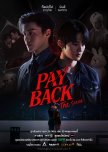
Revenge, Grief, Corruption, and Chemistry That Earns Its Place
Payback was my first Thai drama of any genre, and it was a very strong introduction.What impressed me most is that this is not a romance carrying a weak plot. The story would still work without the romance. At its core, Payback is about grief, revenge, corruption, exploitation, guilt, and the way power can distort an entertainment industry from the inside.
Sun enters Dream Entertainment specifically to get revenge on Bank/Sunny, the ex-boyfriend who stole the money Sun had saved for his mother’s cancer treatment and disappeared after Sun’s brother was killed. What Sunny does not realize at first is that Sun also overheard him admitting that he had encouraged the man who killed Sun’s brother. That makes Sun’s revenge much deeper than simple betrayal or theft.
I really liked Sun as a character. He is physically strong, blunt, observant, emotionally closed off, and almost completely uninterested in celebrity status or hierarchy. He doesn’t even recognize the most important people in the industry. Minlee Thanakorn also completely transformed for the role. I had already seen him off-screen being sweet, playful, and extremely huggable, so I genuinely did not recognize him immediately as this tough former debt collector.
Jay is equally interesting. At first he seems like the polished, powerful, slightly frightening man who controls every room he enters. Then we discover that “Director Arthur” is actually the son of Dream Entertainment’s founder, whose company was taken from her through manipulation and corruption before her death. Jay has quietly returned to dismantle the people who destroyed her company and helped destroy her.
That is why one of my favorite moments comes at the end. For most of the drama, the title Payback seems obviously connected to Sun’s revenge. But when Jay walks into the board meeting, reveals that he legally controls 61% of Dream Entertainment, destroys the corrupt takeover plan, and is asked what exactly he thinks he is doing, his answer is:
“It’s payback.”
That line reframes the whole title. This was never only Sun’s revenge. It was Jay’s too.
The relationship between Sun and Jay worked for me because it developed slowly inside the larger story. Sun is attracted to Jay much earlier than he wants to admit, but he spends a long time pushing him away because he has convinced himself that happiness is something he no longer deserves. Jay recognizes that before Sun does and repeatedly confronts him with the fact that he is still alive and allowed to want a life.
One of the most emotional moments for me was when Sun nearly dies and dreams of his dead brother and mother. His brother tells him to stop living for them and simply live his own life. That scene absolutely destroyed me.
The supporting characters were also unusually strong. Kajorn became one of my favorites because he genuinely cares about the actors he manages and repeatedly tries to protect them from an industry where young performers are treated like commodities. Sky’s camera trauma was painful but handled with real care, and I loved Pakin’s role in helping him begin reclaiming something that had once terrified him. Sia Jo was one of the best surprises of the show: intimidating appearance, huge heart, and some desperately needed comic relief.
The entertainment-industry corruption plot got extremely dark. SP, Kongkiat, and the people around them are not just shady businessmen. They exploit young actors, use sexual access as currency, manipulate casting and scripts, destroy careers, and eventually reveal themselves to be capable of far worse. The series is very clear about what happens when money and influence are allowed to operate without accountability.
The uncut intimate scenes were far more explicit than I had seen in a drama before. The chemistry was excellent, and the intimacy had emotional meaning. I generally watch C-dramas, and most of the BLs I’ve watched have been Chinese or Chinese-adjacent, so this being my first Thai drama made that difference especially noticeable.
Still, Minlee and Toptap are excellent together. Their off-screen chemistry is playful and adorable, while Sun and Jay feel completely different onscreen. I especially loved the little callback to their first meeting when Jay tells Sun that he is Sun’s now, and Sun is confused until Jay reminds him:
“You bought me for two baht, remember?”
That ridiculous half-smoked cigarette transaction somehow became one of the sweetest running jokes in the entire drama.
Overall, Payback gave me exactly what I want from a BL: a strong story that does not depend on the romance to survive, layered characters, meaningful supporting roles, real thematic substance, and chemistry that feels earned rather than inserted.
A very good drama, and a very intense first introduction to Thai television.
Was this review helpful to you?
This review may contain spoilers
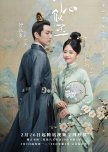
A Slow Burn That Forgot When to Burn
I finished The Sword and the Brocade with mixed feelings, which honestly may be the most appropriate response to a drama that is both genuinely thoughtful and frustratingly overextended at the same time.At its best, this drama is not really about romance or even the mystery plot. It is about systems: the emotional damage created by aristocratic households, concubinage, filial duty, inheritance pressure, and the quiet loneliness that exists inside “proper” family structures. The strongest part of the drama is the way it shows how every woman in the Xu household survives differently under that pressure.
Qiao Lianfang becomes obsessive and unstable. Concubine Wen becomes resentful and desperate. Concubine Qin becomes hollowed out by grief and neglect. Tong collapses under the emotional violence of the household. Even Shiyi develops hypervigilance and emotional avoidance as survival mechanisms. The drama is actually surprisingly critical of the concubine system itself by the end, and I appreciated that a lot.
Wallace Chung was excellent as Xu Ling Yi. I never viewed him as a “cold male lead.” To me, he played Ling Yi as resigned: a man who emotionally detached himself from obligations he never truly wanted. His gradual emotional awakening felt believable, restrained, and mature. Some of the strongest scenes in the drama are simply him quietly realizing how much damage emotional neglect can cause even when no cruelty is intended.
Tan Songyun also did a very good job making Shiyi intelligent, capable, and emotionally layered. Their chemistry worked for me. Tang Xiaotian as Ou Yanxing brought a gentleness and dignity to the role that kept the second male lead from becoming irritating or one-dimensional.
The production itself is consistently strong. The household atmosphere, costumes, and domestic details all feel lived-in and immersive.
My biggest issue is pacing.
This drama mistakes prolonged delay for emotional tension. Early on, the slow burn works beautifully because the emotional progression is evolving naturally. But eventually the show crosses a line where the emotional reality between Ling Yi and Shiyi has clearly advanced, while the physical and romantic progression is artificially frozen in place for many, many episodes afterward.
That disconnect became increasingly frustrating for me.
By the time Shiyi openly acknowledges that Ling Yi has given her his whole heart and she wants to return those feelings, the continued fear of basic intimacy no longer feels emotionally truthful. It starts to feel like the drama is simply trying to preserve “slow burn” status until a designated episode number. Episode 35 is extremely late for the relationship payoff in a 45-episode drama, especially considering how emotionally bonded they already were long before that point.
The other issue is that the final third becomes repetitive. The embroidery house repeatedly becomes a target for schemes, misunderstandings, framing attempts, and political manipulation to the point where I started feeling more exhausted than tense. The drama absolutely could have told the same story in fewer episodes with tighter emotional impact.
That said, the ending itself fits the story. It resolves the emotional themes well, particularly Ling Yi and his younger brother openly rejecting the concubine system that damaged nearly everyone around them. The final episodes also give satisfying closure to most of the major arcs without feeling forced into artificial tragedy or artificial happiness.
Overall, I think this is a good drama that could have been a great one with stronger pacing discipline and more trust in its own emotional progression.
Was this review helpful to you?
This review may contain spoilers
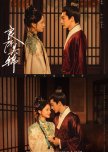
When the Loose Threads Become the Sweater
When the Loose Threads Become the SweaterI almost underestimated this drama.
For a bit of it, I kept feeling like the political plots resolved too quickly. A corruption case would appear and be solved within an episode or two. A scheme would surface, then seemingly disappear. Compared to stronger layered political dramas where tension quietly accumulates over long stretches, this initially felt too neat and too episodic for me to fully sink into.
But somewhere around the halfway point, everything changed.
The political scheming and maneuvering slowly revealed itself to be interconnected threads leading back to the same source. The drama retroactively transformed many of its earlier conflicts into part of a much larger structure involving corruption, factional manipulation, ideological betrayal, and the slow unraveling of trust within the court itself. Looking back, the writing was more deliberate than I initially gave it credit for — though I still think the series could have benefited from leaving more of those early conflicts visibly unresolved so viewers could better feel the long game developing underneath.
The emotional core of the story ultimately became far stronger than the romance.
Yan Yun and Jin Chao make intellectual sense together from very early on. They respect each other’s intelligence, capability, and judgment. Their partnership works best when they are solving problems together, navigating court danger together, or quietly protecting each other in practical ways. While I personally did not feel strong romantic chemistry between them, their relationship gained strength as the drama shifted its focus away from romance and into political loyalty, betrayal, survival, and shared responsibility.
And honestly, that shift saved the drama for me.
The true heart of the series ended up being Yan Yun’s relationship with Master Fu. What begins as mentor and student slowly transforms into one of the most devastating ideological betrayals I’ve seen in a historical drama in a long time. Yan Yun sincerely believed in the principles Master Fu taught him: that the people should come first, that power should serve the country, that morality mattered more than ambition. Watching him gradually realize that Master Fu himself no longer lived by those principles was heartbreaking in a very adult, layered way.
The drama’s strongest theme ultimately became this:
sometimes the student becomes more faithful to the ideals than the teacher who taught them.
That revelation elevated the entire second half.
The supporting cast was excellent overall, but Ye Xian completely stole the show for me by the end.
He starts off rough, sarcastic, emotionally reactive, jealous, and impulsive. He has been emotionally damaged his entire life by a father who viewed him as weak and useless because of his congenital heart condition. Yet underneath all of that anger is one of the most morally upright characters in the entire drama. Unlike many polished court officials, Ye Xian consistently protects people, investigates honestly, and places duty above personal desire. His relationship with the young emperor becomes one of the strongest dynamics in the series.
And speaking of the emperor: this is my absolute favorite child emperor portrayal I have seen in a C-drama.
He is not naive. He is not simply manipulated by adults. He understands the court frighteningly well for his age and often uses others underestimating him as a weapon. His scenes with Yan Yun and Ye Xian were some of the smartest political scenes in the drama because they felt like genuine strategic conversations rather than adults babysitting a child ruler.
Chen Xuan Qing’s downward spiral was also painful to watch in the best way. His obsession, resentment, inferiority complex, and eventual collapse never felt cartoonish to me because the drama carefully built his psychological dependence on Yan Yun over time. His tragedy was not simply romantic jealousy — it was the destruction of someone who spent his entire life trying and failing to become the man he admired most.
By the final stretch, the drama became genuinely gripping. The northern barbarian conflict, the hidden remnant faction, the exposure of Master Fu’s corruption, the emotional fallout between mentor and student, Ye Xian’s final arc, and the growing sense that the entire court system was rotting underneath its polished surface all came together beautifully.
Ye Xian’s death was especially devastating. His final letters — practical, gentle, accepting, and still focused on protecting others even at the end — perfectly captured who he was as a character. He never became softer, but he became deeply humane.
And the ending itself was unexpectedly strong.
Master Fu was not reduced to a cartoon villain screaming as he lost power. Instead, the drama allowed him to remain tragically human until the end: a brilliant man who truly loved his wife, yet allowed that love, his ambition, and his need for control to destroy the very ideals he once taught. Watching Yan Yun publicly sever ties with him before the final confrontation was one of the most powerful moments in the entire series.
This is not a flawless drama. The middle portion occasionally disguises its larger ambitions too well, which risks making viewers think conflicts are disposable when they are actually cumulative. The romance, while emotionally coherent, may not work for viewers looking for intense chemistry or longing-heavy passion.
But the final fifteen episodes elevated the entire series for me.
What began as a good political historical drama ultimately became a layered story about loyalty, ideology, corruption, mentorship, grief, responsibility, and the painful realization that institutions often survive only because a few good people inside them refuse to stop believing in what they were supposed to stand for.
Was this review helpful to you?
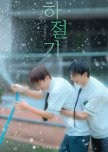
Come for the Heat, Stay for the Heart
Summertime announces itself very quickly as a Korean BL that is not interested in playing it safe. The sexual content is unusually explicit for a KBL, particularly given that the characters are 19-year-old high school seniors, and anyone uncomfortable with that should know it before starting. But reducing this drama to its provocative scenes would be a mistake. What surprised me most was how emotionally intelligent and genuinely moving it became.Cha Do Hyeon and Yeo Eun Ho have known each other their entire lives. Their fathers were friends, their families are intertwined, and neither boy really remembers a life without the other in it. Do Hyeon has long understood that Eun Ho occupies a place in his life no one else does. Eun Ho, however, has never had much reason to examine their relationship at all. Do Hyeon is simply Do Hyeon—the person who has always been there.
That changes when romantic and sexual feelings begin forcing their way into a relationship that has existed comfortably for 19 years.
What Summertime does exceptionally well is take that disruption seriously. This isn’t simply a story about someone realizing he is attracted to another boy. Eun Ho has to confront what it means to suddenly see his lifelong best friend differently, what changing their relationship might cost them, and what these feelings mean for his understanding of himself. Even in a heterosexual romance, realizing you have fallen for a lifelong friend could destabilize a relationship you value enormously. Add an unexpected same-sex attraction, adolescence, graduation, and the uncertainty of approaching adulthood, and Eun Ho’s confusion feels remarkably believable.
Some of the strongest stretches of the drama are surprisingly quiet. Characters wander, think, avoid each other, remember, make terrible decisions, and try to understand emotions for which they don’t yet have the vocabulary. There is humor, but it arises naturally from the characters rather than turning the story into a comedy. One particularly funny sequence involving Eun Ho attempting to let chance determine his feelings manages to be adorable while also revealing exactly how desperately he wants a different answer from the one he already knows.
Kwon I Hyeon, a gay transfer student who initially seems positioned primarily as a romantic rival, becomes something more useful to the story. His presence forces some uncomfortable feelings into the open, but he also provides Eun Ho with a perspective he doesn’t have elsewhere. Importantly, he doesn’t hand Eun Ho an answer about his sexuality or tell him what he should do. Eun Ho still has to figure that out for himself.
The central relationship works because the drama establishes intimacy long before romance. Do Hyeon and Eun Ho know one another’s habits, families, weaknesses, and routines. They take care of each other almost automatically. That history gives even ordinary interactions emotional weight and makes the prospect of changing—or losing—the relationship feel consequential.
The chemistry between Seong In Ho (Do Hyeon) and Kim Do Min (Eun Ho) is excellent. It is certainly physical, and the drama does not leave much doubt about that, but the more impressive chemistry is in the quieter moments. Their comfort together feels lived-in. As Eun Ho’s understanding of Do Hyeon changes, the way he looks at him changes too, and that gradual shift is far more convincing than simply having the script announce that he has fallen in love.
The drama also understands that first love doesn’t happen in isolation. These boys are standing at the end of high school, when the lives they have always known are about to change. Questions about university, work, family expectations, self-worth, and who they want to become gradually become as important as the question of whether they want each other. For such short episodes, Summertime manages to explore a surprising amount without feeling like a checklist of coming-of-age issues.
It isn’t flawless. Some secondary characters remain fairly thin, and a few adults offer advice so spectacularly questionable that I wanted to climb through the screen and intervene. The short runtime also means certain transitions happen quickly. But the central relationship receives the attention it needs, and the writing repeatedly trusts small moments and behavior to communicate things that could easily have been overexplained.
And yes, the NC content is explicit—occasionally startlingly so. What ultimately impressed me, though, is that the physicality isn’t the drama’s substitute for emotional development. If anything, some of its most powerful episodes contain very little physical intimacy at all. Desire creates the crisis; the emotional consequences are where the story becomes compelling.
At only ten short episodes, Summertime accomplishes more character development than many BLs manage with twice the runtime. I started it thinking, “What on earth am I watching?” I finished it thinking about identity, friendship, first love, growing up, and how frightening it can be to discover that the person who has always been part of your past may also be the person you want in your future.
A surprisingly thoughtful, emotionally intense coming-of-age BL hiding underneath one very provocative first impression.
Was this review helpful to you?
This review may contain spoilers
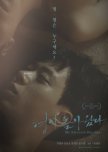
Twenty-One Minutes. That’s All It Needed.
How does a movie tell this much story, create characters this psychologically complex, and leave me with this much to think about in only 21 minutes?Sungwoo’s family has been broken since the loss of his older brother, Sungkyu. His parents no longer even live together, and in the years since Sungkyu disappeared, they have repeatedly adopted boys to fill the space he left behind. Each boy is given the same name: An Sungkyu.
When Sungwoo encounters the newest arrival carrying his suitcase into the house, he asks, “Who are you?”
“I’m Sungkyu.”
Sungwoo’s response tells us almost everything we need to know about this family:
“Lie to my mom. Don’t lie to me.”
This is Number Eleven.
He was Lim Jihoon. Now, according to Sungwoo’s father, he is An Sungkyu. His father even has hope that this one might finally work because Joseph was Jacob’s eleventh son in the Bible. Sungwoo has a much more important question: if this Sungkyu succeeds, will his father finally come home?
The dinner scene that follows is one of the most oppressive family dinners I’ve watched despite almost nothing overtly terrible happening. Sungwoo and the new Sungkyu sit together in matching clothes. Their mother cuts Sungkyu’s steak while studying him as though searching for something that isn’t there. Their father repeatedly redirects her attention and gives her medication. Sungwoo, normally gloomy and withdrawn, brightly announces that the food is delicious.
He knows his role too.
Then the new Sungkyu says the food is delicious.
“Mom.”
And everyone relaxes.
He found the magic word.
This family is built around grief, but it is also built around performance. Sungwoo performs happiness to protect his mother. His father manages his wife while remaining physically outside the family. And Lim Jihoon can have a home as long as he successfully performs someone else’s missing son.
Meanwhile, Sungwoo is terrified of letting his boyfriend, Jaemin, actually know him. When Jaemin asks Sungwoo to tell him about himself and his life, Sungwoo resists until finally asking, “Promise me you won’t leave me no matter who I am.”
Jaemin promises.
But Sungwoo still can’t tell him.
Instead he tries to kiss him, and Jaemin becomes angry and leaves. The next morning, Sungwoo discovers that Jaemin has already replaced him with someone else.
And that word—replaced—matters enormously in this story.
Sungwoo goes home and finds the new Sungkyu on the floor playing LEGO with his mother, pretending that a mother and son are flying together in the airplane he built. But Sungkyu notices Sungwoo’s distress immediately and follows him.
Then he gives Sungwoo the promise he desperately wanted from Jaemin:
He isn’t leaving.
This is the last house he will live in. This is the last family he will have.
Sungwoo gets angry.
Why aren’t you running away?
After watching ten “brothers” come and go, another person promising permanence isn’t necessarily comforting. Believing him means accepting the possibility of losing someone again.
Later, after an oddly intimate shower scene, the boys lie on the floor in only towels, their heads beside one another while their bodies extend in opposite directions. It’s beautiful visual storytelling: two people occupying completely different positions in this deeply damaged family, meeting at the same emotional wound.
And Sungwoo asks him the question again.
“Who are you?”
This time there is no performance.
“Me? I’m nobody.”
That line broke my heart.
Because it’s true.
Lim Jihoon has been erased. An Sungkyu is someone else. This boy has been given a home only by surrendering his own identity and becoming the replacement for a missing son he never knew.
The next morning, Sungwoo’s mother calls, “Sungkyu, say goodbye to your brother.”
Sungwoo walks over and kisses him on the lips.
Then he practically floats toward the door. He looks back at Sungkyu with a happiness and lightness we have never seen from him before.
But Sungkyu isn’t smiling.
He is frozen at the table, spoon suspended halfway to his mouth. His previous smile disappears. His eyes go vacant.
And the movie ends.
That final contrast is what elevates this beyond a simple story of two damaged boys finding one another. Sungwoo has finally found someone who knows his family, knows his darkness, and has promised not to leave him. After ten brothers disappeared and Jaemin abandoned him when Sungwoo couldn’t make himself vulnerable, Number Eleven represents permanence.
But what does Sungwoo represent to Number Eleven?
His mother needs him to be her missing son.
His father needs him to stabilize his wife.
And now Sungwoo may need him to become the person who will never leave.
Everyone needs something from him.
But who gets to need Lim Jihoon?
Maybe Sungwoo and Sungkyu have genuinely found something in each other that neither could find anywhere else. Maybe Sungwoo is simply placing another emotional burden on a boy who has already surrendered his identity to meet other people’s needs.
I think the answer may deliberately be both.
My Eleventh Brother is labeled a BL, and there is a romantic element, but romance is almost beside the point. This is a story about grief, abandonment, replacement, identity, and what happens when love becomes conditional upon becoming what someone else needs you to be.
It doesn’t explain itself. It doesn’t need to. Ten previous adopted brothers don’t require ten flashbacks. A matching outfit, a bottle of medication, a mother’s stare, a deliberately cheerful “It’s delicious,” a LEGO airplane, two bodies lying in opposite directions, a spoon frozen halfway to someone’s mouth—these things tell the story.
And perhaps the most extraordinary thing about My Eleventh Brother is that it knows exactly when to stop.
No explanation.
No reassurance.
No happily-ever-after.
Just:
“Who are you?”
“I’m nobody.”
Twenty-one minutes.
That’s all it needed.
Was this review helpful to you?
This review may contain spoilers
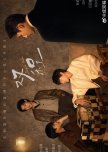
Mentally checked out after episode 8
I really wanted to love this drama.The opening episodes hooked me immediately. Lu Feng is warm, devoted, protective, and emotionally consistent. Qin Lang and the younger brother’s relationship is genuinely sweet, and the overall tone at the beginning feels warm despite the heartbreak. The actors also have excellent chemistry, which is what drew me to the drama in the first place.
Unfortunately, the storytelling gradually lost me.
My biggest issue isn’t the plot itself—it’s the pacing.
This drama is adapted from a seven-volume novel series into just twelve episodes, and it feels like the adaptation is trying to preserve every major plot point while sacrificing the emotional journey between them. The result is that characters often jump from one emotional state to another before the audience has time to understand how they got there.
The biggest casualty of that pacing is Cheng Yichen.
I could tell the drama wanted me to see him as a deeply conflicted man torn between love, family obligation, guilt, and social expectations. Instead, I mostly watched him repeatedly push Lu Feng away, hide their relationship, break up with him, and make decisions that hurt nearly everyone around him. Every now and then the drama would slow down long enough to show a quiet, reflective moment, and suddenly I could see the deeper character that was probably intended. Those moments were beautiful but far too rare.
Ironically, Lu Feng ended up feeling like the more fully developed character.
I know many viewers consider Lu Feng to be the toxic one. Through the first eight episodes, I didn’t see it that way. I certainly don’t think he handled every situation well, and there were moments where he should have stepped back instead of pushing forward. But I also think many viewers assign him sole responsibility for situations that were much more complicated than that. Cheng Yichen’s mother’s illness, for example, had been established long before the confrontation that ultimately sent her to the hospital. Lu Feng made the situation worse, but I don’t think the drama supports the idea that he alone caused everything that followed.
What frustrated me much more was the repeated cycle of misunderstandings and breakups. One misunderstanding can create compelling drama. Five or six variations of the same cycle begin to feel repetitive. Rather than watching the relationship grow through conflict, I felt like I was watching it repeatedly reset.
I also felt genuinely sorry for Zhuo Lan. She wasn’t portrayed as a villain. She was another person caught in the consequences of everyone else’s decisions, and the brief glimpses we get of their marriage were among the more emotionally effective moments in the series.
Ultimately, I was mentally over the drama after episode eight because I no longer trusted the storytelling. The drama still had moments of warmth and sweetness, but the emotional transitions never felt earned often enough for me to stay invested.
I suspect the original novels provide much more of the emotional context that the adaptation only hints at. Based on the strength of the premise and the chemistry between the actors, I would absolutely read the novels if they were officially available in English.
Was this review helpful to you?
A Clever Premise, a Lovely Slow-Burn Romance, and a Slightly Flat Finish
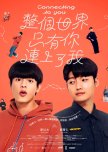
Updated review:I really loved Connecting to You for most of its run. It has a genuinely interesting supernatural premise, a sweet and very natural romance, enough story outside the romance to keep things moving, and two leads whose relationship develops so gradually that at some point I realized they had basically become a couple before either of them had actually said so.
Lin Chia Kai has been able to see colored threads connecting people for most of his life. Different colors represent different relationships—love, friendship, family, hostility—but although he can see everyone else’s connections, he has never had a thread of his own. Then he meets police officer Wu Dawei and suddenly, for the first time, there is one.
What I especially liked is that the thread concept is much more than a cute romantic gimmick. Chia Kai’s ability becomes useful in the different situations he encounters through Dawei’s police work, but it also has limitations. Seeing a connection between people does not mean Chia Kai understands everything about them, and his tendency to jump in and help people sometimes gets him into trouble. The series keeps adding new dimensions to the supernatural element without letting it overwhelm the human stories.
The romance was easily my favorite part. Chia Kai and Dawei start out on very bad footing, then gradually become friends, coworkers, roommates, and something much more intimate long before either one is prepared to name it. Their relationship grows through ordinary things: cooking, watching movies, waiting for one another after work, going out together, worrying about each other, arguing about things couples argue about, and quietly becoming part of one another’s daily lives. It never felt like the drama was screaming, “LOOK! ROMANCE!” at me. It just happened.
I also thought the acting and characterization were very good, particularly the physical characterization of Chia Kai. His awkward posture, strange little walk, unfortunate bangs, and tendency to make himself physically smaller all fit someone who has spent his life feeling disconnected from everyone around him. That made his gradual sense of belonging with Dawei feel even more meaningful.
Where the drama lost some momentum for me was in the final two episodes. The material itself was important, especially as we finally learned much more about Dawei and his family history, and I appreciated that the series gave him the opportunity to confront something that had affected him since childhood. But trying to introduce and resolve so much of his history in roughly forty minutes made the ending feel rushed and oddly flat. I actually found myself pausing episode 11 to do something else, which had not happened once during the earlier episodes.
There is nothing wrong with the ending. It is emotionally positive, the major relationship questions are resolved, and I was happy with where Chia Kai and Dawei ended up. It simply did not have quite the same energy, charm, or emotional pull that the earlier episodes had for me.
Even with that weaker finish, I really enjoyed this drama. It is warm, funny, sweet, occasionally touching, and built around a supernatural idea that actually contributes something to the story. Most importantly, Chia Kai and Dawei’s relationship felt earned.
Rating: 8/10, possibly 8.5 depending on what the special episode gives us.
Review after episode 8:
After eight episodes, Connecting to You has become one of my favorite currently airing dramas.
The premise is immediately interesting: Lin Chia Kai can see colored threads connecting people, with each color representing a different kind of relationship—love, friendship, family, hostility. The one thing he has never been able to understand is why everyone around him has these connections while he has none of his own. Then he meets police officer Wu Dawei, and for the first time in his life, a thread appears.
What makes the series work so well for me, though, is that the supernatural premise is not simply a gimmick used to create a romance. Chia Kai’s ability becomes part of a larger story involving police cases, people in difficult situations, questions about trust and motive, and the consequences of getting involved in other people’s lives. His ability gives him information, but it does not make him all-knowing, and some of the most interesting moments come when what he sees and what he assumes are not quite the same thing.
The romance develops just as naturally. Chia Kai and Dawei go from mutual irritation to working together, living together, and gradually settling into an unexpectedly domestic relationship. There is no sudden declaration that they are in love. Instead, the intimacy accumulates almost quietly—shared meals, waiting for each other after work, watching movies, worrying about one another, small acts of care—until you realize they are behaving very much like a couple even though neither has named it yet.
That slow progression is probably my favorite part. Dawei seems to understand his feelings earlier, while Chia Kai takes longer to recognize what is happening, and the supernatural thread between them evolves alongside the relationship rather than simply dictating it.
The show is lighter than some of the dramas I usually rate most highly, but “lighter” does not mean empty. It is funny, warm, occasionally touching, and has enough story beyond the romance to keep me genuinely interested in what happens next.
Eight episodes in, I absolutely love it—and now I have the unfortunate problem of having binged every available episode and having to wait for more.
Was this review helpful to you?
This review may contain spoilers
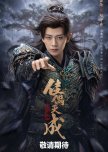
Some truly amazing arcs and some disappointing ones
Fate Chooses You surprised me because for a large portion of the drama, I genuinely thought it had the potential to rank among my favorites. The first half in particular is extremely strong: layered ideological conflict, meaningful questions about the value of human life, class hierarchy between immortals and mortals, exploitation disguised as benevolence, and the downstream consequences of power. The show is at its best when it focuses on morality, sacrifice, institutional corruption, and the cost of “ascension.”The strongest arc in the drama by far is Bai Zong Ying (Tianyun Sect, Heavenly Talent). From the very beginning, he listens, questions, processes, and grows. His development never feels forced or performative; it is slow, painful, believable character growth. Even after losing his immortal perception, his moral center remains intact. The payoff to the September 9 prophecy was one of the best parts of the entire series and emotionally devastating in the best possible way. Bai Zong Ying became the emotional heart of the show for me.
I also appreciated that the drama did not try to pair every character romantically. Some of the strongest relationships were platonic: Bai Zong Ying and Jiang Ji, Rust Iron Sword and Lin Muhan, Chu Ying’s loyalty to Lu, etc. Rust Iron Sword especially added levity without being reduced to comic relief. He remained emotionally relevant throughout the story and as a mortal martial artist among immortals, that’s huge.
The ideological side of the drama remained compelling almost all the way through. The Society, the immortality tax, the exploitation of mortals, the refinement of immortal perception into medicine, the rebuilding of the heavenly ladder, and the eventual rejection of immortality supremacy were all genuinely interesting concepts. The world-building and thematic structure carried this drama hard.
Unfortunately, the romance was the weakest part of the show for me by a very large margin.
I never believed Mei and Lu as a romantic couple. As allies and fighters, they worked. As a romance, they felt emotionally flat and strangely immature compared to the rest of the drama. The writing repeatedly shifted into “cute” romance beats that felt completely disconnected from the heavier philosophical material surrounding them. The performances did not help. The emotional intimacy never developed naturally, so when the show suddenly tried to present romantic payoff moments, they felt unearned.
The infamous shadow kiss scene perfectly represents the problem. The scene itself was confusing because nothing in the interaction leading up to it suggested emotional or romantic escalation. Then suddenly the camera cuts outside to silhouettes. Instead of emotional payoff, the moment pulled me completely out of the drama. The issue was not “lack of kissing.” Some of my favorite dramas barely have physical intimacy at all. The issue was lack of believable emotional build-up and lack of physical ease or relational intimacy between the leads throughout the series.
Ironically, the romance worked best in the final episodes once Lu lost his memories because the emotional weight shifted away from “look how cute they are together” and toward grief, loss, memory, and continuation after irreversible change.
Episodes 39 and 40 also suffered from excessive flashbacks. I honestly think the final two episodes could have been condensed into one. Episode 38 felt like the true climax and would have worked as a bold ending on its own.
That said, I respect the finale for not undoing the consequences of the story. The drama did NOT magically restore memories, resurrect everyone, or erase the cost of what happened. Bai Zong Ying’s sacrifice remained meaningful. Lu’s memory loss remained permanent. The world moved forward changed but scarred. I appreciated that restraint.
Overall, this is a drama with genuinely excellent themes, a fantastic Bai Zong Ying arc, strong moral and ideological writing, and several memorable supporting relationships but also a central romance that never emotionally landed for me despite being framed as the core emotional thread.
I still think it is worth watching, especially for viewers who enjoy xianxia with philosophical and institutional themes rather than purely romance-driven storytelling.
Was this review helpful to you?

This review may contain spoilers
The Rare BL That Made Me Question Whether the Couple SHOULD End Up Together
To My Shore is the kind of BL that made me repeatedly ask two completely different questions: How far is this man going to go? and eventually, Do I even want these two to end up together?This is a dark psychological romance built around obsession, manipulation, trauma, betrayal, control, and a very difficult redemption arc. It is intense, disturbing, sometimes emotionally exhausting, and I still binged all 15 episodes because I needed to know where the story was going.
The story begins when Fan Xiao, the youngest son of a wealthy Chinese businessman, meets You Shu Lang, a pharmaceutical executive working in Thailand. Shu Lang is already in a relationship, but Fan Xiao quickly becomes fascinated with him. At first, it is not even clear why. What begins as curiosity turns into an increasingly disturbing fixation, and Fan Xiao starts inserting himself into every part of Shu Lang’s life.
And when I say disturbing, I mean it.
Fan Xiao crosses serious lines involving manipulation, surveillance, drugs, sexual consent, career interference, and Shu Lang’s personal relationships. There were multiple points where I genuinely thought, There is no believable way these two can come back from this.
One of the strongest parts of the drama is Shu Lang himself. He is a genuinely good person, but the writers never confuse goodness with weakness. He protects people, helps strangers, takes care of those around him, and has an enormous capacity for compassion. He will also tell someone exactly what he thinks, refuse to be intimidated by money or status, investigate when something feels wrong, and physically fight back when necessary. He is kind, but he is absolutely not a pushover.
The chemistry between the leads is excellent. It is intense, physical, playful when the relationship is good, and painful when it falls apart. More importantly, I believed that these two people deeply affected each other. Their relationship changes how both men understand themselves.
The acting also has to carry some very difficult material. There are panic attacks, childhood trauma, betrayal, grief, rage, emotional shutdown, and long stretches where very little is being said but everything is happening in the actors’ faces. Shu Lang’s gradual emotional collapse was especially hard to watch because he begins the story as someone so competent, contained, and self-reliant, and there are points where he looks almost hollowed out.
The drama also surprised me more than once. Details that initially seemed strange or insignificant eventually mattered. Things connected to childhood trauma, old relationships, family dynamics, and seemingly random conversations later become important in ways I did not expect.
One of the things I appreciated most is that the drama does not use Fan Xiao’s traumatic childhood to excuse his behavior. His past explains him. It does not absolve him.
And that distinction matters because Fan Xiao does terrible things to someone he eventually genuinely loves.
That is probably the most interesting part of To My Shore: Fan Xiao’s love becomes real long before his way of loving becomes healthy.
For much of the drama, he cannot separate loving Shu Lang from possessing him. If Shu Lang tries to leave, Fan Xiao manipulates circumstances to pull him back. If someone else matters to Shu Lang, Fan Xiao sees that person as competition. He repeatedly understands exactly what Shu Lang needs and then ruins it by trying to control the outcome.
The middle stretch is especially heavy. It is not boring—I never found the drama boring—but there is a long period where one betrayal, revelation, or manipulation follows another. If you binge it, Fan Xiao’s toxicity can become exhausting.
There are also some very melodramatic plot mechanisms: elaborate schemes, corporate conspiracies, family revenge, conveniently interconnected people, and characters who sometimes seem able to investigate or manipulate situations with remarkable efficiency. If you need strict realism, some of that may stretch credibility.
But emotionally, the story mostly holds together because the character arcs do.
Eventually, Fan Xiao is forced to confront the consequences of what he has done. What worked for me is that his redemption is not based simply on suffering, apologizing, or saying “I love you” enough times.
The meaningful change comes when he starts respecting Shu Lang’s choices even when those choices hurt him, doing things for Shu Lang without expecting credit, giving him space, accepting consequences, and finally understanding that loving someone does not give you ownership of their life.
By that point, I genuinely was not sure whether I wanted them to end up together.
A happy ending is nice, but I always want the ending that makes the most sense for the characters and fits the story. Here, I wasn’t sure being together would mean “happy ending.” Fan Xiao changing did not automatically mean Shu Lang owed him another romantic chance. Redemption and reconciliation are not the same thing.
For anyone who needs to know before starting: yes, this does have a happy ending.
More importantly, I thought the drama did enough work in the final episodes to make that ending believable. I also would have accepted an ending where they never reconciled, because after everything that happened, Shu Lang would have been completely justified in walking away permanently.
What ultimately made the ending work for me was that Fan Xiao finally stopped trying to force Shu Lang to stay with him and gave him the space to decide on his own.
Only then could Shu Lang actually choose.
I finished To My Shore emotionally exhausted, frequently horrified by Fan Xiao, deeply attached to Shu Lang, and impressed that a drama that made me repeatedly think There is no coming back from this somehow found a path back that did not feel completely dishonest.
If you want a sweet, comforting BL, this is not it.
If you want a dark psychological BL with strong chemistry, complicated characters, trauma, obsession, betrayal, genuine surprises, and a difficult redemption arc, To My Shore is absolutely worth trying.
Was this review helpful to you?

This review may contain spoilers
Revenge Was the Hook. Love, Loyalty, and Chosen Family Were the Story.
Revenged Love starts with a premise that sounds almost ridiculous: after being dumped by his girlfriend for being poor and letting himself go, Wu Suowei reinvents himself and decides to seduce her wealthy boyfriend, Chi Cheng, as revenge.That setup could easily have produced a silly revenge-romance. Instead, the drama gradually becomes something much richer: a story about obsession, betrayal, friendship, grief, family, sacrifice, and the difference between possessing someone and actually loving them.
What impressed me most was the character development. Suowei begins with an ulterior motive, but his feelings for Chi Cheng become real long before he is willing to admit how deeply he has fallen. Chi Cheng, meanwhile, initially presents himself as someone who only wants casual relationships, but his actions repeatedly reveal the opposite. He is patient, protective, emotionally invested, and deeply loyal. Some of the strongest demonstrations of love in this drama have nothing to do with physical intimacy at all.
One of the most moving storylines involves Suowei’s mother. Chi Cheng quietly takes responsibility for her care during her illness, spending nights at the hospital, making sure she eats, takes her medication, and receives the best care he can provide. His funeral wreath later reads “From son, Chi Cheng,” which says more about how fully he had joined Suowei’s family than any romantic declaration could have.
I do wish the drama had given that storyline a stronger payoff. Suowei never really has the moment of fully acknowledging that all those nights he thought Chi Cheng might be with someone else, Chi Cheng was actually caring for his dying mother. That was such an important source of misunderstanding between them that it deserved a direct conversation.
The late-series breakup also relied more heavily than I would have liked on the kind of misunderstanding that could have been resolved with one honest conversation. That is probably my biggest frustration with the drama.
But the strengths outweigh those weaknesses by a lot.
Gu Chengyu became one of my favorite characters. Early on, he seems potentially dangerous because he knows so much about everyone and is difficult to read. Over time, however, it becomes clear that one of his defining qualities is that he does not weaponize the information he holds. He helps people quietly, protects them without demanding credit, supports Chi Cheng through heartbreak, helps Xiao Shuai confront an old trauma, and ultimately expands Xiao Shuai’s clinic as a betrothal gift.
His line to Xiao Shuai near the end was one of my favorites:
“Shuaishuai, you can be responsible for loving the world, and I’ll be responsible for loving you.”
That encapsulates their relationship beautifully. Xiao Shuai is someone who instinctively cares for everyone around him; Chengyu does not ask him to become less compassionate. He simply promises that someone will care for him too.
Wang Shuo is another standout character, though for completely different reasons. His obsession with Chi Cheng is unsettling because the drama understands that love and possession are not the same thing. One of the best explanations of his character comes through an old childhood story: even as a child, if he could not have something entirely for himself, he would rather destroy it than share it. That same psychology drives much of his adult behavior.
His relationship with Wang Zhen is also fascinating, especially after the late reveal that they are not biologically related. The show never fully spells out where that relationship ultimately goes, but it gives more than enough material to make the subtext very interesting.
The final episodes bring the family themes full circle. Suowei’s mother accepts Chi Cheng before she dies. Later, Chi Cheng’s mother apologizes to Suowei for blaming him and tells her husband that their son loves a man and that reality is not going to change. Her argument is wonderfully simple: he can either lose his son or gain another one.
And Suowei meeting Chi Cheng’s father after being kidnapped by him produced one of the funniest moments in the entire drama.
“Do you know who I am?”
“Yes. You’re my father-in-law.”
Perfect. 😂
The ending itself is gentle and satisfying. After Suowei sells his mother’s house and gives up virtually everything he owns to help free Chi Cheng from a false tax-evasion charge, Chi Cheng later buys the house back for him. When he discovers that the buyers removed an important tree despite promising not to, he even tracks down the original tree and has it replanted.
That gesture feels like Chi Cheng in its purest form. He does not simply replace what Suowei lost. He restores his home.
The drama contains relatively little physical intimacy for a BL, but I never felt it needed more. The relationships were established through actions, sacrifice, loyalty, jealousy, grief, humor, and everyday tenderness. The story carried the romance rather than relying on intimacy to carry the story.
Revenged Love is not a life-changing masterpiece, and it has a few frustrating plotting choices, but it is an engaging, emotionally layered drama with memorable characters and a genuinely satisfying ending.
Was this review helpful to you?


