
 Editorials




This review may contain spoilers
Contract Marriage, Chaos, and a Demon Who Should Not Be This Attractive
📝 Review
(WARNING: Potential Spoilers — I’m Not Saving You from Any Emotional Damage)
My Demon is one of those dramas that knows exactly what it is: glossy, dramatic, funny, emotionally heightened, and unapologetically committed to its premise.
Do Do Hee is written and played with precision—controlled, strategic, and emotionally guarded without tipping into monotony. She isn’t softened too quickly, which makes her gradual emotional thaw feel earned rather than rushed.
Song Kang as Gu Won is pure controlled chaos. A demon who begins as detached and superior, only to steadily unravel as he experiences human attachment, emotional dependency, and the absolute inconvenience of caring about someone. The shift from predator to protector is where the show really finds its rhythm.
The contract marriage setup is handled with enough self-awareness that it avoids feeling repetitive. Instead of dragging the trope, the show uses it as a framework for forced proximity, identity unraveling, and emotional recalibration.
But the real surprise strength of the drama is its comedic timing.
The supporting duo—Park Bok Kyu and Shin Da Jeong—are quietly one of the best comedic anchors in the entire series. The repeated name sabotage alone should be studied in controlled environments. It’s simple, stupid, and completely effective every single time.
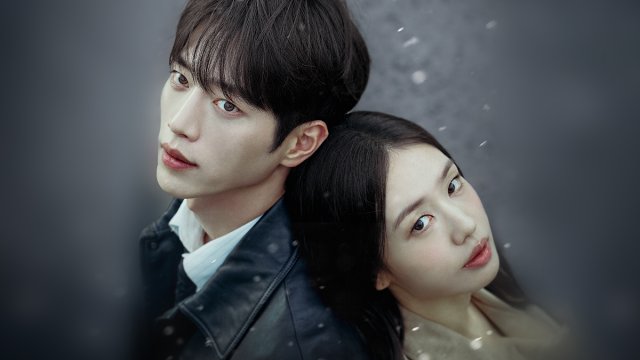
The romance itself is glossy and stylized rather than grounded. It leans into chemistry, visual framing, and emotional intensity rather than slow realism. And it works because both leads fully commit to the tone.
Lee Sang Yi’s Seok Hoon adds stability without overpowering the central dynamic, which is exactly what that role needed to do.
Where the drama shines most is in its balance: comedy doesn’t undercut emotion, and emotion doesn’t suffocate comedy. It walks a tight line and mostly sticks the landing.
And then there’s the OST.
“True” by Yoari does a lot of heavy lifting. Possibly emotional fraud levels of lifting. It becomes one of those tracks that permanently attaches itself to certain scenes and refuses to leave.
By the end, the story doesn’t reinvent the genre—it refines it into something stylish, watchable, and emotionally satisfying.
It’s not subtle.
It’s not trying to be.
And that’s exactly why it works.
(WARNING: Potential Spoilers — I’m Not Saving You from Any Emotional Damage)
My Demon is one of those dramas that knows exactly what it is: glossy, dramatic, funny, emotionally heightened, and unapologetically committed to its premise.
Do Do Hee is written and played with precision—controlled, strategic, and emotionally guarded without tipping into monotony. She isn’t softened too quickly, which makes her gradual emotional thaw feel earned rather than rushed.
Song Kang as Gu Won is pure controlled chaos. A demon who begins as detached and superior, only to steadily unravel as he experiences human attachment, emotional dependency, and the absolute inconvenience of caring about someone. The shift from predator to protector is where the show really finds its rhythm.
The contract marriage setup is handled with enough self-awareness that it avoids feeling repetitive. Instead of dragging the trope, the show uses it as a framework for forced proximity, identity unraveling, and emotional recalibration.
But the real surprise strength of the drama is its comedic timing.
The supporting duo—Park Bok Kyu and Shin Da Jeong—are quietly one of the best comedic anchors in the entire series. The repeated name sabotage alone should be studied in controlled environments. It’s simple, stupid, and completely effective every single time.
The romance itself is glossy and stylized rather than grounded. It leans into chemistry, visual framing, and emotional intensity rather than slow realism. And it works because both leads fully commit to the tone.
Lee Sang Yi’s Seok Hoon adds stability without overpowering the central dynamic, which is exactly what that role needed to do.
Where the drama shines most is in its balance: comedy doesn’t undercut emotion, and emotion doesn’t suffocate comedy. It walks a tight line and mostly sticks the landing.
And then there’s the OST.
“True” by Yoari does a lot of heavy lifting. Possibly emotional fraud levels of lifting. It becomes one of those tracks that permanently attaches itself to certain scenes and refuses to leave.
By the end, the story doesn’t reinvent the genre—it refines it into something stylish, watchable, and emotionally satisfying.
It’s not subtle.
It’s not trying to be.
And that’s exactly why it works.
Was this review helpful to you?


