




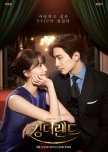
Junho in a Suit Is a Public Safety Concern
📝 Review(WARNING: Potential Spoilers — I’m Not Saving You from Any Emotional Damage)
This drama is very aware of what it is: a glossy, aesthetic, comfort romance wrapped in chaebol inheritance tension and hotel employee chaos.
The story follows Gu Won, an heir who despises fake smiles, and Sa Rang, a hotel employee whose entire job requires one. Naturally, they collide in the most predictable way possible: constant proximity and emotional friction.
The FL’s smile is a central theme—sometimes inspiring, sometimes bordering on exhausting, depending on your tolerance for “customer service voice turned romance lead.”
The ML, on the other hand, is exactly what you expect from a 2023 chaebol rom-com: emotionally repressed, visually expensive, and slowly melted by sincerity.
Their dynamic works best when it leans into contrast: sincerity vs cynicism, effort vs detachment, warmth vs corporate ice.
The supporting cast adds decent balance. Da Eul especially grounds the show in something more human, while the workplace friendships give the hotel setting more personality than the main plot sometimes manages.
Now, let’s be honest: the story itself is not groundbreaking. It’s familiar territory. You’ve seen this structure before. You know where it’s going. It doesn’t try to reinvent the wheel.
But it does sell the aesthetic.
And it sells the chemistry.
And it sells the comfort.
Also: yes, the OST is doing a concerning amount of heavy lifting. Some scenes feel emotionally engineered just to trigger the soundtrack, and honestly… it works.
By the end, I wasn’t stunned. I wasn’t devastated.
I was just… content.
And sometimes that’s exactly what a drama is supposed to do.

The Gateway Drug to My Drama Addiction
📝 Review(WARNING: Potential Spoilers — I’m Not Saving You from Any Emotional Damage)
This drama holds a special place for me because it was my very first Asian drama.
The gateway drug.
The beginning of the rabbit hole.
At the time, I watched it dubbed because subtitles and I weren't friends yet. Fast forward to now, and I can't even watch English-language shows without subtitles, which feels like a full-circle character arc.
The story follows Day as she enters a televised competition designed to pair women with some of the rarest men in society, but quickly evolves into something larger than simple romance.
The premise is undeniably goofy.
Men are treated like national treasures.
The dating competition is basically a national event.
The entire world operates on logic that makes you stop and go, "Wait... what?"
And yet somehow it works.
The satire underneath the comedy gives the story more substance than I expected, and the conspiracy elements help keep things moving whenever the romance slows down.
The cast does a solid job balancing the show's quirky tone. Nobody takes the material too seriously, which is exactly the right approach for a concept like this.
What surprised me most was how entertaining it remained throughout its short run. Six episodes feels just right. The story doesn't overstay its welcome and moves at a brisk pace.
Looking back now, after watching countless dramas from Thailand, South Korea, China, Taiwan, and Japan, I can see some of the show's flaws more clearly.
The acting isn't groundbreaking.
The soundtrack didn't leave much of an impression.
The world-building occasionally asks you to just roll with it.
But as a first drama?
It was a fantastic introduction.
It opened the door to an entire genre of storytelling I probably would've ignored otherwise.
And for that alone, it'll always earn a little extra affection from me.
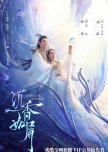
Forbidden Love, Emotional Suppression, and a Man Who Fell First
📝 Review(WARNING: Potential Spoilers — I’m Not Saving You from Any Emotional Damage)
Season 1 is where the emotional foundation is built—and where most of the enjoyment lies.
We begin, as many xianxia do, in the Heavenly Realm, where love is forbidden because apparently divinity requires emotional repression. (Every time a drama insists enlightenment equals heartlessness, I sigh. But without it, we wouldn’t have the story.)
This is very much a he fell first romance. The problem? He also knew the consequences.
So instead of confessing, he does what every Heavenly official with trauma and responsibility does—he buries it. He acts cold. Detached. Unfeeling. Which, of course, only makes everything worse.
Watching her misread his restraint as indifference is where the emotional frustration begins—but it’s also where the tragedy gains weight. When she ultimately leaps from the Bridge of Forgetfulness, setting off the chain of events that leads to her becoming a demon, the story shifts from quiet longing to full-blown fate-driven heartbreak.
In the mortal realm, she lives freely without her memories, while he later undergoes his own mortal trial and becomes a demon hunter. Their reunion carries the same dynamic: he loves her first, again—but this time she pushes him away relentlessly.
The romance here is compelling—but undeniably frustrating. For every pull from him, there’s a push from her. When he finally grows a backbone and chooses love regardless of consequence, it feels earned. Painfully earned.
Despite the emotional chaos, Season 1 works. The world-building, the slow unraveling of truth, and the mythology surrounding duty versus desire give the romance real stakes.
💭 Final Mood
“Beautiful, angsty, and powered by a man who should have confessed sooner.”
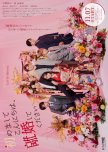
A Strong Premise, Rushed Feelings, and a Divorce That Never Quite Lands
📝 Review(WARNING: Potential Spoilers — I’m Not Saving You from Any Emotional Damage)
This drama has an interesting premise, but it never quite figures out what it wants to do with it.
An arranged marriage, ten years of no contact, and a sudden request for divorce should have been emotionally loaded—but instead, Hello, Nice to Meet You. Let’s Get Divorced. plays out in a strangely uneven, rushed way.
The setup is compelling on paper. The female lead reappears out of nowhere asking for a divorce, and the male lead is understandably blindsided. Unfortunately, once the story gets moving, it settles into a repetitive loop: he falls fast and tries desperately not to get divorced, while she focuses on finding herself and asserting independence. That dynamic could have worked—but it never deepens.
The emotional pacing is off. The male lead’s feelings escalate too quickly to feel earned, and the female lead’s journey, while understandable, isn’t given enough nuance to really resonate. Instead of growth, we get a lot of circling.
Then there’s the randomly placed second male lead, who feels less like a meaningful complication and more like a narrative afterthought. His presence doesn’t add much tension or clarity—it just exists.
The saving grace here is the runtime. Because the series is short, it never overstays its welcome. Had this been longer, I probably wouldn’t have finished it. As it stands, it’s watchable, mildly frustrating, and ultimately forgettable.
💭 Final Mood
“Interesting idea, odd execution, glad it was short.”
Familiar Chemistry, Faster Pacing, and a Remake That Mostly Works
📝 Review(WARNING: Potential Spoilers — I’m Not Saving You from Any Emotional Damage)
This remake works because it knows exactly what it’s trying to do—and what it doesn’t have time for.
The Japanese version of Suspicious Partner stays surprisingly faithful to the spirit of the original while embracing a much shorter runtime. It’s condensed, streamlined, and clearly designed to fit the typical 8–10 episode format.
Yes, that means a lot is missing. Character depth, slower emotional buildup, and some story threads from the Korean version are inevitably trimmed. At times, you can feel where more episodes would have helped the narrative breathe. That said, the upside is that the pacing stays tight, and some of the more drawn-out elements from the original are cut entirely—parts that arguably didn’t need to linger as long as they did.
The result is a remake that feels familiar without being tedious. If you’ve seen the Korean version, you’ll recognize the beats immediately, but the faster pace keeps things moving and prevents the story from dragging. If anything, it plays like a greatest-hits version rather than a full emotional deep dive.
Overall, it’s an enjoyable watch—lighter, quicker, and less emotionally demanding than its predecessor. It doesn’t replace the original, but it doesn’t embarrass itself either, which is more than can be said for some remakes.
💭 Final Mood
“Comfortably familiar, slightly rushed, but still fun.”

Contract Marriage Chaos, Family Shenanigans, and 80+ Episodes That Mostly Earned It
📝 Review(WARNING: Potential Spoilers — I’m Not Saving You from Any Emotional Damage)
This drama pretends it’s about the main couple—but it’s really about the entire family.
Inborn Pair uses a contract marriage as its hook, then quietly shifts focus to generational dynamics, sibling fallout, parental interference, and the long-term consequences of everyone’s choices. That’s why it’s so long—and why it mostly works.
Yes, it’s an 80+ episode commitment, but surprisingly, it stays engaging. There are slower stretches (of course there are), but not enough to make me rage-quit or question my life choices. For a drama of this length, that’s genuinely impressive.
At its core, the story starts with an arranged marriage decided before the leads were even born—which is wild, but very much Taiwanese drama logic. What follows is an enemies-to-friends-to-lovers arc that unfolds gradually and often takes a backseat to the larger family narrative. The romance matters—but it’s not the sole point.
And honestly? The family is where most of the entertainment lives.
The grandfather is an absolute hoot and easily one of the highlights of the show. The grandmother… less so. I’ve enjoyed this actress in other roles, but here the character was mostly grating. The mothers, however, were entertaining in their own meddlesome, overbearing ways and added a lot to the overall chaos.
The siblings are a mixed bag. The older sister’s storyline felt less like tragedy and more like karma collecting with interest. The youngest brother, on the other hand, became increasingly enjoyable—especially in the later episodes, where he finally got room to shine.
And then there’s the mafia-adjacent chaos attached to the youngest brother. The “mafia princess” storyline is… a lot. I love this actress in other roles, but here they pushed the trope to an overbearing, slightly grating extreme. It stopped being fun and crossed into exhausting more than once.
That said—the mob boss dad? Perfectly done. Over the top, fully committed, and somehow still entertaining without tipping into parody. He understood the assignment and delivered exactly the heightened energy this subplot needed. The contrast between the two made the storyline memorable, even when it tested my patience.
As for the extended mess:
The ex-boyfriend? Did all of that really need to happen? Debatable.
The “best friend” who’d been in love with the male lead for years? Catty, catty, catty. I was over her long before the drama was over her.
The female lead is where things get complicated. I like the actress, but her character is borderline unbearable for a significant portion of the show. I appreciate female leads with a backbone—but there’s a difference between strong and exhausting, and this drama doesn’t always find the balance.
And yes—the kid. I’ve seen comments saying he wasn’t necessary, but honestly? I thought he was cute. He added warmth and fit naturally into the family-centered story the drama was actually telling.
In the end, Inborn Pair isn’t really a romance-first drama—it’s a family drama that happens to use marriage as the framework. If you go in expecting that, it’s a much more satisfying experience.
💭 Final Mood
“Long, messy, occasionally frustrating—but rewarding once you realize it’s about everyone, not just the couple.”

Divorced, Bitter, Still in Love, and Actually Communicating
📝 Review(WARNING: Potential Spoilers — I’m Not Saving You from Any Emotional Damage)
This drama works because it treats divorce as a communication failure, not a moral one.
Instead of manufacturing angst through endless misunderstandings, it lets two adults actually face how they broke each other—and themselves.
No personality transplants. No amnesia. No late-game tonal meltdown.
The result is emotionally mature chaos that’s genuinely funny and oddly comforting.
What really makes this drama tick is how deeply it cares about its characters—shockingly so for a genre that usually throws logic off a cliff by episode eight.
The leads are fully locked into who they are from start to finish. No random personality transplants. No sudden “who is this man and why is he crying on a rooftop?” nonsense. They grow, yes—but quietly, organically, and in a way that doesn’t scream LOOK, CHARACTER DEVELOPMENT. Their breakup and eventual reunion feel earned, not because of grand rain-soaked confessions, but because the show actually does the work of showing how they both messed up—and then handled it like functioning adults.
When they get back together, it’s not a plot twist. It’s just two people choosing each other again, this time with brain cells.
The comedy? Elite. Top-tier. The kind that stays funny on purpose all the way to the end. Most of the laughs come courtesy of the male lead, who manages to be adorably petty without tipping into “sir, please seek professional help” territory. That balance should be studied.
And miracle of miracles—this drama holds its tone. In a genre that loves to swan-dive into melodrama halfway through (usually leaving me whispering “who greenlit this tonal disaster?”), Cunning Single Lady stays emotionally coherent all the way through.
Now, second leads.
The second female lead tries. Bless her. But he never even blinks. She has eternal friend-zone written into her arc, and the drama respects that boundary. No forced delusions. No dragged-out nonsense.
The second male lead, however? Absolute chaos gremlin. Exists solely to stir jealousy, miscommunication, and mild irritation. Was he ever a real threat? Please. Endgame never even flinched.
In short: this drama gets it. It respects its characters, respects me, and understands that adult relationships require accountability, not amnesia. I laughed. I yelled. I whispered “just TALK to each other” into the void.
This is one I’ll absolutely revisit when I want to emotionally spiral in a controlled environment.
💭 Final Mood
“Emotionally mature chaos, but make it funny.”
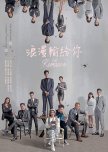
I Fell Into a Novel, Became the Villain, and Still Got the Guy
📝 Review(WARNING: Potential Spoilers — I’m Not Saving You from Any Emotional Damage)
This drama works because it fully commits to its premise and then gleefully makes it everyone’s problem.
Instead of treating the “trapped in a novel” setup as a gimmick, Lost Romance weaponizes tropes, self-awareness, and narrative cruelty in equal measure.
Clichés are not bugs here—they’re the point.
The result is chaotic, emotionally aggressive fun that somehow still sticks the landing.
I started Lost Romance on a whim. Full boredom mode. One of those “let me just put something on” decisions that spirals into emotional involvement against my will.
First off: the synopsis lied to me a little. The way it’s written makes it sound like the FL and ML are romantically aware of each other from across a hallway or something. No. They are across and down the street, and she is out here using a drone. A drone. I was confused. Concerned. Mildly impressed. That whole opening stretch had me squinting until—oh. Novel world. Got it.
Once we enter the novel, things click. Yes, it’s cliché. That’s literally the point. Xiao En spends her real life complaining about how lazy romance novels are, only to get shoved into one that hits every trope she hates. Irony doing backflips.
The twist? She’s not the heroine. She’s the villain.
And when she meets the ML, she’s convinced he’s the same guy she loves in real life (he is—she just doesn’t know it yet). Cue confusion, hostility, and aggressively committed misunderstandings. Because in this world, he’s programmed to love that girl. You know the type. Soft-spoken. Apologetic. Always looks like she’s about to cry over soup.
She annoyed me. Deeply. But that’s a genre issue, not a personal one.
Watching Xiao En actively fight the narrative—trying to brute-force her way into a happy ending while the story resists her—was honestly delightful. Enemies-to-lovers done with self-awareness and spite? Yes, please.
And then—because this drama enjoys pain—she disappears back into the real world on their wedding day. Of course she does.
Let’s talk about the second male lead for a second because WOW. Absolute emotional war crime. He doesn’t even belong in this story. He’s from an unfinished novel. His world literally vanished, so he ran into another one to survive. Sir. That is devastating. He deserved his own completed book and a soft ending. Justice for him.
Back in the real world, both leads wake up. Except—plot twist—the ML remembers nothing. No novel. No love. No shared history. Just vibes and narrative cruelty. So yes, we get a full reset romance while dodging actual villains (which, not gonna lie, took me a bit to identify correctly).
The structure is chaotic: real world → novel world → real world again. If you blink, you’ll miss something. I rewound more than once. But somehow, it still works. It’s a whirlwind, but an intentional one.
By the end, I was satisfied. Tired. Emotionally jostled. But satisfied.
💭 Final Mood
“Confused, entertained, slightly drained, but absolutely not mad about it.”
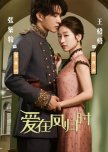
Love Lost, Secrets Hidden, and Chaos Unleashed
📝 Review(WARNING: Potential Spoilers — I’m Not Saving You from Any Emotional Damage)
This drama works because it fully embraces short-drama chaos and never pretends to be anything more refined than it is.
Instead of aiming for subtlety, Ai Zai Feng Gui Shi leans into melodrama, hidden identities, and emotionally unhinged pacing—and honestly, that’s its strength.
Secret lineage, catty rivals, public punishments, and dramatic reveals are not accidents here.
The result is period-drama madness that’s messy, entertaining, and surprisingly addictive.
In a previous review, I commented on Wang Ge Ge’s serious, morose expressions—well, she does a complete 180 here. Her personality truly shines in this drama, and paired with Zhang Ji Jun—whose smile is positively wicked—you’ve got a genuinely delightful watch.
Wang Ge Ge plays the adopted daughter of a poor, sick man, going to extreme lengths to help him survive. Enter Zhang Ji Jun’s character, who steps in to help her, and of course, the reluctant-but-inevitable romance begins.
And let’s talk about the second female lead—because she is chef’s kiss catty. These short dramas do not hold back when it comes to green tea antics, and this one commits fully. Hidden lineage reveals, public whippings, same-outfit drama, social humiliation—period piece chaos at its finest.
The female lead remains hesitant almost until the very end, while the male lead falls harder with every episode. The emotional imbalance is intentional, the stakes stay high, and yet everything is wrapped in humor and dramatic exaggeration that keeps the tone from tipping into misery.
This is very much a short-drama experience: fast pacing, heightened emotions, and plot developments that come at you whether you’re ready or not. And somehow, it works. You don’t watch this for realism—you watch it for momentum.
Overall, it’s an enjoyable, messy ride powered by strong chemistry, expressive performances, and that irresistible short-drama energy that makes “just one more episode” a lie you keep telling yourself.
💭 Final Mood
“Chaotic, dramatic, and way more fun than it has any right to be.”
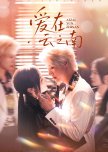
Love Lost, Secrets Hidden, and Chaos Unleashed
📝 Review(WARNING: Potential Spoilers — I’m Not Saving You from Any Emotional Damage)
This drama works, but it feels like a compressed version of something that deserved more space.
Instead of fully stretching its suspense and character arcs, Ai Zai Yun Zhi Nan rushes through ideas that would have landed harder in a longer format.
As a short drama, it’s competent and entertaining.
As a concept, it feels slightly undercooked.
Zhao Zhen Dong is one of my favorite short-drama actors. Seriously, I can watch him do literally anything and I’m sold. Blonde hair? Intrigued immediately. The man could read a grocery list and I’d probably still be invested.
The frustration here isn’t the performances—it’s the format. This drama could have benefited immensely from being a full-length series instead of a short drama. Some of these actors and actresses are criminally underrated, and you can feel the story straining against the episode limit. They deserved more time to stretch, develop, and actually sit in their emotional beats.
That said, as a short drama, it works fine. You get the suspense, the action, the undercover shenanigans, and just enough melodrama to keep things moving. The pacing is quick, sometimes too quick, but never outright boring.
Still, my heart kept wishing for another 20 episodes to let everything breathe. More tension. More character work. More payoff.
In the end, it’s a solid watch—especially if you’re already a Zhao Zhen Dong fan. And honestly? His voice alone does a lot of the heavy lifting. Can a man’s voice really be that good? Apparently, yes.
💭 Final Mood
“Enjoyable, slightly rushed, and carried hard by one very watchable man.”
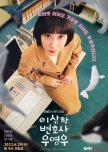
Brilliant, Heartwarming, and Full of Whales
📝 Review(WARNING: Potential Spoilers — I’m Not Saving You from Any Emotional Damage)
This drama works because it leads with empathy and never treats it as a weakness.
Instead of turning Woo Young-woo’s differences into a gimmick or an obstacle to be “fixed,” Extraordinary Attorney Woo lets them be the lens through which the world is understood.
It’s thoughtful without being preachy, emotional without being manipulative.
The result is a series that’s genuinely joyful, deeply kind, and quietly powerful.
Park Eun Bin is phenomenal. Truly. Playing Woo Young-woo could not have been easy, and she surpasses every expectation without ever slipping into caricature. I loved how Young-woo’s fascination with whales helps her solve cases—not through traditional logic, but through imagination, pattern recognition, and empathy. She confronts rigid “societal normalities” head-on and still manages to shine exactly as she is.
The supporting cast carries that same warmth. Kang Tae Oh’s smile could melt even the coldest jury, and Kang Ki Young proves—once again—that he can light up any screen whether he’s leading, supporting, or popping in for a moment. A special shout-out to Moon Sang Hoon for his heartfelt role as Kim Jeong Hun, another character on the spectrum whose presence adds depth, nuance, and resonance to the story.
And yes—the greeting scene.
“To the Woo Young-woo!”
“Dong Geu-ra-mi!”
Pure serotonin. It’s been copied everywhere, and I still smile every time—especially when San and Mingi from ATEEZ did their own version. That’s the kind of cultural joy this show creates. It doesn’t just entertain; it lingers.
I even got my mom to watch it. She loved it too. And honestly? That says everything.
💭 Final Mood
“Fell in love with the characters, laughed a ton, and now I greet people with whale facts. 10/10 would rewatch while pretending I understand Korean law.”

Comfort Drama Perfection, Shirtless Choi Si Won, and Zero Brain Cells Required
📝 Review(WARNING: Potential Spoilers — I’m Not Saving You from Any Emotional Damage)
This drama works because it knows exactly what it is and never tries to be smarter than it needs to be.
Oh! My Lady isn’t here to challenge you—it’s here to charm you, comfort you, and occasionally distract you with Choi Si Won’s face and torso.
There’s no high-stakes chaos, no unnecessary angst spirals.
Just warmth, banter, and found-family vibes done right.
First and foremost: Choi Si Won’s smile is reason enough to watch this drama.
Then his body showed up and said, “Hello. Yes. You rang?”
I genuinely loved watching Oh! My Lady. It’s cute as hell—even if I absolutely hated his hairstyle. Deeply. Passionately. That hair was a choice. A loud one.
Chae Rim, on the other hand, was solid. Grounded. Warm. And somehow rocking a haircut I also hated. Balance.
The chemistry between Choi Si Won and Chae Rim was genuinely epic—not in a melodramatic way, but in that easy, banter-filled, we accidentally became a family way. Add Kim Yoo Bin into the mix and the emotional payoff multiplies. The three of them are the heart of this drama, and they make it completely worthwhile.
But let’s not pretend it was all fluff and vibes—because here comes our favorite genre staple:
The Second Female Lead From Hell.
Hong Yu Ra is emotionally manipulative, a college-era “friend,” and a lifelong enabler of Sung Min Woo’s worst instincts. The kind of woman where if she told him to jump off a bridge, he’d do it and call it devotion. You know the type. The eye-rolling was so intense I briefly worried I’d see the back of my skull.
As for Yoo Shi Joon?
Never—not once—did I see him as a romantic option for Yoon Gae Hwa. They were kindred spirits, sure: both betrayed by cheating spouses, both emotionally exhausted. But romantically? No spark. No fire. No interest. And honestly, his character grew increasingly boring as the show went on.
This is a true comfort drama.
You don’t need your thinking cap. You just sit back and enjoy:
the smiles
the banter
the found-family vibes
and yes—the shirtless moments
No stress. No chaos. Just good feelings.
💭 Final Mood
“Relaxed, smiling, and fully aware this drama knew exactly what it was doing.”
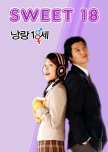
Cute Dimples, Contract Marriage Shenanigans, and a Second Lead Who Never Stood a Chance
📝 Review(WARNING: Potential Spoilers — Emotional Damage Minimal, Joy High)
This drama works because it keeps things light and never mistakes stress for substance.
Sweet 18 knows exactly what it is: a breezy contract-marriage rom-com with charm, humor, and zero interest in emotionally tormenting its audience.
No palace politics. No dragged-out love triangles.
Just cute chaos and consistent payoff.
I watched this right after Princess Hours, late at night, on a whim—and honestly? Best decision I made that week.
Sweet 18 is light, comical, and refreshingly free of emotional hostage situations. No lurking second male lead draining the life out of the plot. Just good old-fashioned contract marriage nonsense with charm to spare.
Let’s start with Han Ji-hye.
Lawd. Those dimples. That girl is cute cute—weaponized adorableness. Her performance makes Jung Sook feel lively and genuine instead of irritating, which is not easy when you’re playing rebellious-without-a-plan.
The story flows easily from start to finish. Nothing feels dragged. Nothing makes you cringe—
except the Second Female Lead.
Moon Ga-young really thought she had a shot. She tried everything. She even tried pulling the sister into her schemes, which failed spectacularly. And the best part? The drama never rewards her delusion.
Every attempt is shut down.
Cleanly.
Repeatedly.
Gloriously.
After surviving Princess Hours, this felt like therapy.
The chemistry between the leads is fantastic—but not in a steamy, intense way. It’s adorable. These two act like middle schoolers whose crush just admitted they like each other back. The intimacy scenes are shy, awkward, sweet, and honestly kind of precious.
This drama isn’t trying to be epic.
It’s not trying to ruin your mental health.
It just wants to entertain you—and it succeeds.
💭 Final Mood
“Smiling at the screen like an idiot and not mad about it.”

Attention, Love! — Soft Lessons, Flat Emotions, Mildly Worth It
⚠️ (WARNING: Potential Spoilers — I’m Not Saving You from Any Emotional Damage)I started Attention, Love! because I was deep in an older Chinese/Taiwan rom-com mood, expecting something light, breezy, and emotionally low-risk. What I got instead was… feelings. Growth. Characters learning to love themselves before loving each other. Rude.
Yes, there are comedic moments, but this drama leans harder into coming-of-age than outright romance, which threw me at first. Once I adjusted my expectations (lowered them? reframed them?), it worked better.
Now, Wang Zi. I previously saw him in They Kiss Again as adult Arnold and let me be clear: I did not enjoy that experience. The laugh. The hair. The attitude. It was a lot, and not in a good way. Here, though? Vast improvement. His voice is still doing most of the heavy lifting (sultry, unmistakable), but the restrained, emotionally reserved role suited him better… even if it made Li Zheng feel a little flat at times.
And yes, that flatness made the show harder to get through in places. Emotional repression can only carry a narrative so far before I start begging a character to blink differently.
That said—despite its faults—I did enjoy this drama. There were moments that genuinely worked, moments that didn’t, and enough sincerity holding it together that I finished it without resentment. High praise, honestly.
Will I rewatch? Probably not.
Do I regret watching it? Also no.
That’s a very specific sweet spot.
💭 Final Mood
“Quietly fond, mildly frustrated, and emotionally older than when I started.”
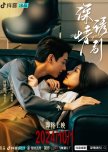
Affectionate Seduction — Can Love Survive Missteps and Miscommunication?
📝 Review (WARNING: Potential Spoilers — I’m Not Saving You from Emotional Damage)Okay, let’s get real. This wasn’t terrible—far from it. The estranged-but-still-sparky dynamic works, and the misunderstandings are classic mini-drama fuel. He’s petty, she’s closed-off, and together they make a beautifully frustrating mess. Love that for us.
Wang Ge Ge is absolutely stunning, but she keeps the emotional window shutters closed at all times. Morose, stoic, deadpan—girl, blink twice if you’re still into him. My forehead got sore from how often I facepalmed.
He Jian Qi, on the other hand, nails the cold-to-soft transition. Sure, he starts off as a beautifully sculpted jerk, but he pulls off the thaw with charm. I laughed, sighed, and occasionally wanted to throw a pillow at him. Ideal mini-drama energy.
Quick sidenote: there’s a sequel, Summer Rose, following his brother and an arranged-fiancée situation. If you like family drama and socially awkward pairings, consider that your next snack.
As with all micro-dramas, don’t expect graceful fades or polished pacing. These stories cut to the next scene like they’re late for a train. But if you want concentrated chaos with love, angst, and enough chemistry to keep clicking “next”… this does the job.
💭 Final Mood
“Cute, frustrating, exasperating… and I kind of loved the chaos anyway.”


