



Rushed, Random, and Somehow Still Watchable (Thanks, Sung Hoon).
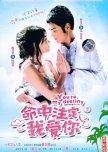
I watched this because I enjoy watching shows with Sung Hoon, especially his older ones.And… while this wasn’t a bad show, it was definitely not a favorite.
First: 20 episodes at 15 minutes each. Basically ten 30-minute episodes. So yeah… rushed. Everything happens at lightning speed. The FL? Her screaming got on my last nerve. But at least she had backbone and fight (mostly).
The cat. Oh, the cat. Cute. Thank you, cat.
Now the CEO plotline. If they had leaned into the whole “dangerous life CEO gets helped by a vet” premise, this could’ve been amazing. Instead, he’s attacked for… no reason? Saved by the vet? Compensates by buying her hospital? Then suddenly decides she should be his girlfriend?! I’m just… confused. Were episodes missing? Did I blink and skip some character development?
Party scene: supposed friend says, “You’re a poor country bumpkin, what qualifications do you have to be here?” And then… next scene: terrace kiss. Sure, makes sense… if you squint and ignore logic.
Overall? Finished it. Liked it… kind of. Cute, rushed, random, with moments of absurdity that make me laugh and sigh simultaneously.
💭 Final Mood:
“Cute cat. Screaming FL. Sung Hoon being Sung Hoon. Random romance chaos. Would I watch again? Maybe, if I want 15-minute snacks of chaos. 3/5 for drama, 4/5 for cast, 5/5 for cat.”
Was this review helpful to you?
This review may contain spoilers
A Pretty Disappointment in Divine Packaging
I went into Bride of Habaek expecting fantasy, romance, and a divine love story worthy of the title. What I got was… a confusing mess of hot people acting like moody preteens with commitment issues. And let’s talk about that title for a second—where exactly is the “Bride” in Bride of Habaek? There’s no wedding, no divine union, not even a real payoff. Just a lot of push and pull that leads nowhere satisfying.Yoon So Ah, the female lead, was honestly exhausting. She starts off incredibly narcissistic and constantly plays the victim, and not in a "she'll grow on me" kind of way. Even by the end, I still didn’t care for her. She had a few redeeming moments, but they were like finding water in the desert—too little, too late.
Habaek? Sure, he’s hot. The man knows how to wear a suit. But beyond that? Not much going on. His character arc is flatter than a god’s heartbeat in the human world. I wanted a powerful, conflicted deity torn between duty and love. Instead, I got a divine himbo who disappears every few episodes for dramatic effect.
Moo-ra is another one of those jealous-female tropes that K-dramas love to throw in, but with zero depth. Bi-ryum at least brought a little personality and sass to the table—probably the only god in the show who felt like he had actual emotions beyond stoic boredom or vague angst.
Now CEO Shin (Hoo-ye)? There was potential. SO much potential. His character had emotional depth, tragic history, and a serious identity crisis… but the show does absolutely nothing with him. They dangle a compelling backstory in front of us and then walk away like we won’t notice. I’m still not even sure what his actual connection to Habaek’s past is supposed to be. Son? Reincarnation? Plot tease? We'll never know.
The shaman friend? Another letdown. She had visions that should’ve been critical, mysterious, exciting—but they amounted to nothing. Just cryptic warnings and dramatic fainting spells.
World-building? Basically nonexistent. We’re told these gods have responsibilities, kingdoms, histories, even wars—but you’d never know it from the show. They mostly just bicker, flirt, and lounge around on Earth like they’re waiting for a group chat update from heaven. It feels like they bought the fantasy furniture but never moved into the house.
There were a few standout moments. A scene here or there would hit emotionally—especially the bit with So Ah’s dad—that actually made me pause what I was doing. But they were few and far between. Most of the show felt like filler wrapped in pretty cinematography and slow-motion angst.
In the end, Bride of Habaek had a decent premise, but the execution fell flat. With more world-building, clearer plot arcs, and actual character depth, it could’ve been something magical. Instead, it’s a forgettable ride with a frustrating finish. I’m honestly shocked I didn’t drop it.
Would I watch it again? No.
Do I still have questions? Absolutely.
Would I recommend it? Only if you’re watching for the pretty faces and have a high tolerance for unfulfilled potential.
Was this review helpful to you?
Very enjoyable
This was a fun quick watch, kind of show. I like how they had them like each other, but it was not the basis of the show. I think the show was more about finding your own self love and confidence. Because every single one of them needed one or the other or both. The could’ve however ended the show a bit differently than what they did, or even added another episode something, so it wasn’t just left like it was.Was this review helpful to you?
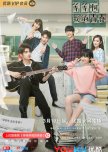
A Quiet Love Letter to Growing Up
📝 Review(WARNING: Potential Spoilers — I’m Not Saving You from Any Emotional Damage)
This started as a “this looks cute, let’s see” situation and ended as a full emotional residency program.
The story follows Su Can Can and her friend group through adolescence into adulthood, and quickly spirals into memory, longing, and the kind of emotional reflection you only do when you’ve outgrown something you still love.
The FL is gentle, observant, and emotionally open in a way that makes her feel very human, while the ML carries that slightly distant-but-devoted presence that keeps things quietly unresolved in all the right ways, creating soft, lingering dynamics throughout.
The supporting cast and side relationships add warmth and realism, building a world that feels lived-in rather than constructed for plot convenience.
These types of dramas tend to lean heavily into nostalgia and emotional continuity, and this one is no exception.
By the middle/end, I was completely invested in people I genuinely felt like I had known for years.
Then time jumps, emotional distance, and quiet life changes happened, and everything hit that bittersweet realism button very effectively.
My brain: sentimental.
My emotions: gently wrecked.
My snacks: mysteriously gone (as usual).
In the end, I finished feeling warm, nostalgic, and slightly emotionally suspended in adolescence.
And somehow… it worked.
Was this review helpful to you?
Honestly the best part of this show was the OST
especially Jemma’s SHRINE, and Corona Holler Time (episode intro song).However, all in all it wasn't horrible. but it was also not good at the same time. Since it was only 7 episodes there was a lot missing, and plot holes.
I’m glad I watched it though, because I can say I watched it and give my opinion. But won’t be on my rewatch list.
Plus side to this series is that I’ve got more music added to my playlist, silver lining and all that. I always love getting. we music to add to my playlist.
Was this review helpful to you?

This review may contain spoilers
Not a Sequel... and Honestly Better Than I Expected
📝 Review(WARNING: Potential Spoilers — I'm Not Saving You from Any Emotional Damage)
Going into this, I honestly expected more of the original Full House. Instead, what I got was a sequel in name only. Sure, there are little nods here and there, but this is its own story with its own characters, and honestly... I think I ended up liking it more than the original.
Now don't get me wrong, the original Full House is iconic for a reason. It's loud, chaotic, and about as toxic as early-2000s K-dramas could get while still somehow making you root for the leads. Full House: Take 2 still has plenty of yelling, because apparently that's just part of the Full House brand, but it tones the toxicity way down and focuses more on developing the characters instead of throwing constant chaos at them. By the time I finished, I found myself more invested in these characters than I ever expected to be.
One thing I really appreciated was that the drama wasn't afraid to show little glimpses into the less glamorous side of the K-pop industry. It never becomes some dark exposé or anything like that, but between the insane schedules, the pressure put on idols, and the absolutely unhinged behavior of some fans... let's just say there were moments where I was sitting there thinking, "Yeah... some fandoms really do be like that." That's all I'm saying on that subject before I accidentally start a war, so I'm just going to zip my lips and move right along.
Speaking of first impressions though... can we please talk about Jang Man Ok's hair? Because I swear I thought I accidentally skipped an episode. She comes out of the bathroom looking absolutely adorable with these soft curls, and then the next time she's on screen she's suddenly wearing these huge Shirley Temple ringlets, all perfectly coiled together, with giant granny earrings. I literally sat there going, "Wait... what?" It didn't ruin the drama or anything—I was just incredibly confused by whoever thought that hairstyle was the move. Thankfully it doesn't stick around because after a while they stop torturing her hair, and I could finally focus on the actual story again.
The casting across the board was fantastic. Not once did I feel like someone had been miscast or was struggling to fit their role. Everyone felt believable, and that made the relationships work that much better.
Noh Min Woo especially deserves some credit because he did a phenomenal job as Tae Ik. He didn't have to overact to sell what his character was feeling. Half the time all you had to do was look at his face and you knew exactly what was going through his head. Whether Tae Ik was irritated, jealous, confused, embarrassed, softening toward Man Ok, or trying to pretend he wasn't affected by something, the expressions alone told the story. Those little moments ended up becoming some of my favorite parts of the drama because they made him feel surprisingly genuine underneath his cold exterior.
And then there's Gang Hwi. You know those second male leads that make you understand exactly why people get Second Lead Syndrome? Yeah... he's one of those. He's charming, genuinely kind, and constantly makes you question whether you're rooting for the right person, even though deep down you already know how the story is going to end. Park Ki Woong made him incredibly easy to like, and I found myself looking forward to his scenes just as much as Tae Ik's.
The storyline itself kept me interested the entire way through. It balances romance, comedy, music, fashion, and celebrity life without feeling like it's trying to juggle too many different ideas at once. The pacing stayed consistently enjoyable, the chemistry between the leads felt natural, and I never hit that point where I was watching episodes simply because I'd already invested too much time.
The soundtrack deserves every bit of the score I gave it. Considering the story revolves around idols, it would've been disappointing if the music hadn't delivered, but thankfully it absolutely did. It's one of those OSTs that keeps showing up on my playlist long after I finished the drama, and that's always a good sign.
At the end of the day, I came into this expecting a follow-up to Full House and instead found a completely separate drama that I honestly enjoyed even more. It has better character development, a more grounded romance, some genuinely fun insight into idol life, and a cast that feels perfectly assembled from beginning to end.
My brain: "This deserves way more attention than it gets."
My emotions: Completely invested.
My playlist: Immediately gained more songs.
If you've been avoiding Full House: Take 2 because you thought it was just a continuation of the original, don't. Treat it like its own drama, because that's exactly what it is. And if you're anything like me, you might end up liking it even more than the one that started it all.
Was this review helpful to you?
This review may contain spoilers
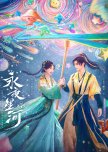
One More Episode Turned Into Four Rewatches
📝 Review(WARNING: Potential Spoilers — I’m Not Saving You from Any Emotional Damage)
I've always been a sucker for transmigration dramas, so this one already had my attention before I even pressed play. A girl getting pulled into a novel and forced to complete missions to survive? That's basically catnip for me.
What I wasn't expecting was how quickly I would become attached to the characters.
The story follows Ling Miao Miao as she finds herself trapped inside a novel as the villainous supporting character. To return home, she must complete a series of increasingly difficult missions, including winning over the mysterious Mu Sheng. What starts as a game-like survival story quickly evolves into something much deeper, blending fantasy, adventure, romance, comedy, and surprisingly emotional character growth.
The FL is witty, resourceful, and endlessly entertaining, while the ML starts off as a walking red flag wrapped in mystery before slowly revealing the layers underneath, creating one of the most enjoyable relationship progressions I've watched in recent years.
The supporting cast never feels like background decoration. Mu Yao and Liu Fu Yi contribute just as much to the emotional weight of the story as the main couple, helping the group dynamic feel natural and complete.
These types of dramas tend to rely heavily on their gimmick, and this one could have easily coasted on the transmigration concept alone.
Instead, it built characters I genuinely cared about.
The chemistry between Esther Yu and Ding Yu Xi is phenomenal. Whether they're making me laugh, making me frustrated, or making me smile like an idiot at my screen, they simply work together.
Visually, this drama is gorgeous. The costumes, creatures, fantasy landscapes, and special effects showcase just how far Chinese fantasy productions have evolved. There were multiple scenes where I caught myself admiring the visuals before remembering I was supposed to be reading subtitles.
And then there's the soundtrack.
The OST is absolutely incredible.
I've added most of the songs to my regular playlist, which is probably one of the highest compliments I can give a drama soundtrack. Long after finishing the series, the music stayed with me.
By the middle/end, I was fully emotionally invested in these characters and their journey.
Then the finale happened.
And here's where my one complaint lives.
Not because the ending was bad.
Because it stopped one scene too soon.
After everything these characters went through, I wanted the payoff of actually seeing them reunite in the real world. I wanted that final moment where all the waiting, growth, and emotional investment came full circle.
Instead, we get the implication.
The possibility.
The hope.
Mu Sheng calls her name.
She turns.
And then the drama ends.
I understand what they were going for.
I still wanted one more scene.
One actual reunion.
One chance to watch these two finally get their happy ending outside the novel.
My brain: "Just give me five more minutes."
My emotions: "We deserved that reunion."
My snacks: long gone several episodes ago.
In the end, I finished feeling happy, emotional, and slightly robbed of the closure I wanted.
And somehow… it worked.
Because even now, after multiple rewatches, I'm still thinking about these characters.
Still listening to the music.
Still wishing for that one final scene.
Was this review helpful to you?
This review may contain spoilers
Where Logic Shows Up Late But Still Tries Its Best
📝 Review(WARNING: Potential Spoilers, I’m Not Saving You from Any Emotional Damage)
This was my entry point into the entire experiment, and it definitely set the emotional temperature for everything that followed.
The Korean adaptation feels the most narratively “alive” in terms of character justification. Not necessarily more correct, but more internally structured. The ML’s condition, the inherited illness affecting his family line, adds a consistent undercurrent of urgency and inevitability that shapes how his choices land, especially during the first love return arc.
What makes this version stand out isn’t that the ML is less messy, it’s that his mess has reasoning attached to it earlier. His breakup explanation with the FL is still selfish, but it’s framed in a way that feels like he genuinely believes he’s making a responsible sacrifice rather than just reacting emotionally in the moment.
That same pattern carries into one of the most emotionally loaded turning points: the abortion consent storyline. The FL’s reaction to the ML signing the consent form is intense and central to their split, and while it clearly exists to create emotional rupture and drive separation, it also feels like one of those narrative choices where the drama prioritizes conflict over nuance. The ML’s intention is framed as protection, but the emotional fallout lands much heavier than the logic behind it.
The FL here also sits in a very specific emotional space: awkward, overlooked, and used to being underestimated, but not completely passive. There’s a quiet resilience under her insecurity that becomes more visible as the story progresses.
Where this version really lands is tone control. It leans heavily into emotional escalation, but still keeps enough grounding that the drama feels intentional rather than purely chaotic. Even when things spiral, it rarely feels like it’s happening just to move the plot forward, it feels like it’s happening because these specific people would make those specific choices.
It’s still dramatic. Still frustrating. But structurally, it’s the most emotionally “legible” version of the three.
Was this review helpful to you?
This review may contain spoilers
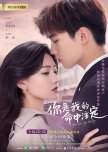
The Original Emotional Disaster Blueprint
📝 Review(WARNING: Potential Spoilers, I’m Not Saving You from Any Emotional Damage)
This is the blueprint, and it behaves exactly like one.
Everything in this version is unfiltered. Emotional reactions are immediate, consequences are loud, and character decisions feel like they were made in the moment without much concern for long term emotional stability.
The ML here is the most extreme version across all adaptations. When the first love returns, there is no emotional moderation at all. His behavior shifts sharply and stays there until the narrative forces resolution. It’s not subtle, and it’s not trying to be. It creates a very direct cause and effect emotional chain that makes him harder to rationalize but very easy to read.
That same intensity bleeds into the abortion consent storyline as well. The FL’s reaction to the ML signing the form becomes one of the primary rupture points in their relationship, but the way it’s handled here feels especially heightened, almost designed to push emotional separation first and question ethical nuance second. The intention is clear: create a clean emotional break. But it also leaves a lingering frustration, because the situation itself feels like it could have been handled with more complexity rather than being used mainly as a narrative device to justify detachment.
Even as a mother, that whole setup hits differently now, not just as drama, but as a questionable emotional shortcut.
The FL in this version is also the most exaggerated version of the “sticky note girl” concept. Her early arc is defined by survival mode people pleasing and emotional overwhelm, but unlike later adaptations, there’s less smoothing of her emotional reactions. Everything feels more reactive, more immediate, and more visibly distressed.
What this version does differently, and arguably best, is embrace melodrama as a structure rather than a flaw. The misunderstandings, timing issues, and emotional collapses aren’t treated as things to streamline, they’re treated as the engine of the story.
That makes it messier, but also more memorable.
It’s not trying to be realistic or restrained. It’s trying to be emotionally absolute.
And it succeeds at that completely.
Was this review helpful to you?
This review may contain spoilers
The Polished Version That Pretends It Has Everything Under Control
📝 Review(WARNING: Potential Spoilers, I’m Not Saving You from Any Emotional Damage)
This version feels like a modernization pass over the entire story (not a rewrite, but a refinement).
The most noticeable shift is emotional control. Everything is visually cleaner, narratively smoother, and paced in a way that leans more into modern C-drama storytelling. It doesn’t rely on shock or exaggerated reaction beats as much as earlier versions. Instead, it lets consequences sit longer before escalating them, like it’s giving the audience time to sit with the discomfort instead of immediately throwing another emotional chair across the room.
The ML here is significantly more conflicted internally rather than externally reactive. During the first love return arc, his struggle isn’t expressed through impulsive decisions as much as hesitation and delayed emotional processing. That same emotional restraint carries into the abortion consent storyline as well, it’s less about confrontation and more about distance, consequence, and emotional withdrawal. The result is still painful, just less explosive in execution compared to the Korean version. More slow burn damage, less public meltdown.
The FL also feels more self-contained. She still goes through the same emotional trajectory, abandonment, pregnancy, separation, reinvention, but she carries slightly more narrative independence. Her reaction to the ML’s decisions, including the consent issue, feels less like a single breaking point and more like part of a longer emotional unraveling. It softens the sharp edge of that moment, even if the outcome lands in the same place.
The biggest tonal difference overall is restraint. Even when the plot hits the same major emotional milestones, it does so with less noise. Less exaggeration. More emotional spacing.
That makes it easier to binge, but also slightly less volatile in impact compared to the Korean and Taiwanese versions.
It’s the most polished interpretation, but also the most emotionally moderated.
Was this review helpful to you?

This review may contain spoilers
My Comfort Drama Has a Gaming Addiction
📝 Review(WARNING: Potential Spoilers — I’m Not Saving You from Any Emotional Damage)
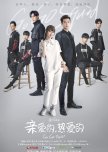
Going into this, I already knew I enjoyed e-sports dramas. What I didn't expect was how quickly this one would become one of my favorites.
The story follows Tong Yao as she becomes the first female player on a top professional team and quickly spirals into tournament pressure, online criticism, team drama, and romance.
The FL is skilled, determined, and easy to root for, while the ML balances cold professionalism with surprisingly sweet moments, creating one of the better romance dynamics in gaming dramas.
The supporting cast and side chaos carry a huge portion of the show's charm, adding humor, friendship, and found-family energy to the story.
These types of dramas tend to live or die based on team chemistry, and this one absolutely succeeds.
By the middle of the series, I was fully invested in every tournament, every rivalry, and every ridiculous team interaction.
The way they incorporate viewers into the gameplay sequences was surprisingly effective. Instead of simply watching matches, it often feels like you're inside the game alongside the players, which makes the competition much more engaging.
The romance progression is also paced well. It doesn't drag endlessly, but it doesn't rush either. The relationship develops naturally through trust, teamwork, and shared experiences.
That said, I do have two complaints.
First: Tong Yao's hairstyle.
For thirty-one episodes, somebody apparently declared war on variety. She's a professional woman in her twenties, and yet the styling often leaned heavily into the childlike aesthetic Chinese dramas love giving female leads.
Second: there isn't a Season 2.
My brain: wanted more tournaments.
My emotions: wanted more ZGDX.
My snacks: disappeared sometime around the championship matches.
In the end, I finished feeling completely satisfied and still wanting more.
And somehow… it worked.
Was this review helpful to you?
This review may contain spoilers
A Comfort Drama I’ve Rewatched Too Many Times to Admit
📝 Review(WARNING: Potential Spoilers — I’m Not Saving You from Any Emotional Damage)
I picked this up because I enjoy esports-themed dramas, and I’d seen the female lead in another series and thought she was charming. Add Li Xian to the mix, and it was an easy decision.
At its core, Go Go Squid! follows Han Shang Yan, a former esports legend in the CTF cybersecurity scene who has withdrawn from competition and now runs a professional team. His world shifts when Tong Nian, a socially awkward but talented computer science student and online singer, unexpectedly falls for him and slowly becomes part of his life—and his team’s world.
What I enjoyed most was not just the esports setting, but how much the story focuses on relationships, growth, and emotional walls rather than the game itself. The competition serves more as a backdrop for character dynamics, which I actually think works in its favor.
The drama also shifts between past and present, which adds depth to the characters and explains their motivations in a way that feels emotionally grounded rather than purely expositional. The chemistry across the cast is consistently strong, and even supporting characters feel like they have weight in the story.
That said, the first breakup arc really threw me off. It felt unnecessary and a bit frustrating in context. I also wasn’t a fan of Tong Nian’s mother’s attitude toward Han Shang Yan—it felt overly harsh for the situation.
Even with those moments, the overall experience was incredibly enjoyable. It’s a comfort drama for me, the kind I can rewatch without hesitation. In fact, I’ve lost count of how many times I already have.
Overall, it’s a strong blend of romance, esports, and emotional storytelling, and it remains one of my personal favorites in this genre.
💭 Final Mood
Emotionally invested in people I don’t personally know.
Still mildly annoyed at the first breakup.
Still rewatching anyway.
Would absolutely do it again.
Was this review helpful to you?
This review may contain spoilers
Wrong Brides, Right Fates, and a Love Story Written in the Stars
📝 Review(WARNING: Potential Spoilers — I’m Not Saving You from Any Emotional Damage)
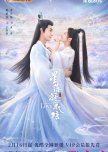
The Starry Love is one of those rare dramas that feels entertaining from the start but quietly becomes something deeper.
On the surface, it’s a switched-bride story: two sisters sent to the wrong realms—one to the Heavenly Realm, the other to the Void. There’s even an alternate title floating around, “Wrong Bride, Right Groom,” and honestly? It fits perfectly.
Liguang Ye Tan always believed she was meant for darkness—she even dreamed of becoming the Devil of the Void. Yet somehow, she finds her truest match in the rigid, duty-bound Empyrean Xuan Shang. Meanwhile, Liguang Qing Kui—raised to be the perfect, refined Empyrean Consort—ends up thriving beside Chao Feng in the Void. (And yes, he is pretty hot. We’re not ignoring that.)
Watching the sisters adapt to unfamiliar realms is part of what makes this drama shine. They aren’t instantly transformed—they learn, adjust, and grow. Their journeys quietly reinforce the idea that identity isn’t dictated by where you’re placed, but by how you respond to it.
Now, Chen Xing Xu.
The man had to carry five distinct versions of the same character—and made each one feel fully realized.
Empyrean Xuan Shang / Shaodian Youqin — the original immortal prince: cold, disciplined, emotionally suppressed, raised to sacrifice everything for order.
La Mu (Fire Demon) — temperamental, passionate, rough-edged but surprisingly kind beneath the heat.
Mei Youqing (Heartless) — detached, precise, hardened; quieter but emotionally complex.
Wenren — playful, flirtatious, seemingly carefree, yet capable of genuine devotion.
Reintegrated Youqin — the culmination of every shard, calmer and more emotionally whole than the original.
It would’ve been easy for these versions to blur together. They didn’t. Each felt intentional, distinct, and necessary. That range alone deserves recognition.
Wu Dai also deserves a mention. He starts off as brute strength and battlefield energy—but over time, his growth softens him into something unexpectedly endearing. His development felt earned, not decorative.
Visually, this drama was stunning. The Void Realm in particular—with its purples, blacks, and gothic undertones—was immaculate. Every realm had its own identity, but the Void had style.
And as with many xianxia dramas, the Heavenly Realm continues its long-standing tradition of arrogance, elitism, and weaponized righteousness. At this point, it’s practically a genre requirement. It also consistently reinforces the idea that moral superiority does not equal moral correctness.
In the end, The Starry Love balances humor, emotion, mythology, and character growth in a way that feels complete. It entertains—but it also evolves.
💭 Final Mood
“Fate misplaced them—but destiny corrected it.”
Was this review helpful to you?
This review may contain spoilers
Brotherhood, Loyalty, and a Story That Stays With You
📝 Review(WARNING: Potential Spoilers — I’m Not Saving You from Any Emotional Damage)
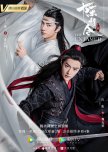
The Untamed broke me—but in the best possible way.
This wasn’t just a drama; it was an experience. Every arc had purpose. Every storyline fed into the larger narrative. Nothing felt wasted. The structure—moving between timelines, revealing truths piece by piece—kept the mystery unfolding without ever losing momentum.
And no, there isn’t traditional romance. It doesn’t need it.
The bond between Wei Wu Xian and Lan Wang Ji—the loyalty, the restraint, the silent understanding—was more powerful than any overt love story could have been. The camaraderie within the cultivation world, the brotherhood, the shifting alliances… that emotional weight carried everything.
Xiao Zhan as Wei Wu Xian was magnetic. He brought humor, warmth, mischief, and heartbreak into the same character without it ever feeling inconsistent. He made you smile, then hurt you five minutes later, and somehow you thanked him for it.
And Wang Yi Bo as Lan Wang Ji? The control. The restraint. The sheer discipline in that performance. Maintaining that stoic exterior while communicating entire emotional monologues through the smallest shifts in expression is not easy. It’s subtle acting at its finest. I genuinely don’t know how many takes it took to keep a straight face opposite some of Wei Wu Xian’s chaos—but the composure alone deserves respect.
I figured out the master villain early on, but it didn’t matter. Watching the story unfold, seeing the motivations unravel, and witnessing how everything connected was satisfying regardless. The mystery wasn’t diminished by knowing—it was enhanced by seeing how it all came together.
Honestly, I can’t think of a single element that pulled me out of the experience. The world-building, the characters, the emotional arcs—it all worked.
💭 Final Mood
“Devastating, beautiful, unforgettable.”
Was this review helpful to you?
This review may contain spoilers
Divine Contracts, High-Stakes Power Games, and a Mini Drama That Deserved a Full Series
📝 Review(WARNING: Potential Spoilers — I’m Not Saving You from Any Emotional Damage)
This mini drama had no business being as entertaining as it was—and yet, here we are.
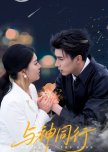
Bound to the God is one of those short-form dramas you start casually and then suddenly realize you’ve watched twenty episodes without blinking. Yes, the premise will remind you of My Demon, and no, that didn’t bother me in the slightest. If anything, it made me wish even more that this had been given a full-length treatment.
Li Bo Yan absolutely carries this drama. He’s charismatic, visually striking, and leans fully into that “supernatural protector with questionable morals” energy. At times he gave me serious Jackson Wang vibes, which… helped. A lot. I would not have complained if this had been a Chinese full-series counterpart to My Demon—the bones are there, and the appeal absolutely is too.
What also stood out was the central opposing force—not mystical, not supernatural, but operating on pure influence and control. The conflict leans heavily into tech, money, and far-reaching resources, giving the story a modern, grounded edge. It’s less magic-versus-magic and more power-versus-power, which actually works well within the short-drama format.
Because this was watched through user-uploaded YouTube clips, the music was often muted or cut entirely, making it difficult to judge. Thankfully, the pacing, performances, and concept were engaging enough that the lack of audible OST didn’t detract from the experience.
Ultimately, Bound to the God is fast, entertaining, and frustrating only in the sense that it clearly could have been more. If this concept were ever expanded into a full series, I’d watch it without hesitation.
💭 Final Mood
“Entertained, mildly feral, and wishing this had been 16 full episodes instead of two-minute crumbs.”
Was this review helpful to you?


