

 1
1


This review may contain spoilers
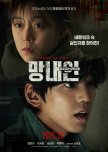
For once, a Korean take on school bullying that makes sense.
Second Sister is not a great artistic achievement by any means, but it gets extra points from me for its thoughtful and humane exploration of a theme Korean entertainment is perennially fixated on but so rarely gets right: school bullying.For the first half of the movie, I thought it would hit all the obligatory story beats of a typical Korean revenge drama; a bullying victim's bereaved family member investigates her past, figures out how her evil classmates tormented her, and torments them back from the shadows, thus restoring a sense of justice and order to other powerless bullying victims who might be watching. The problem with this kind of story is that it doesn't denounce bullying, much less analyse or critique its societal causes, but merely marshals its violence against more deserving victims. The underlying message of so many recent classics of Korean TV and cinema on this topic is that it's okay for good people to do bad things to bad people (who are bad because they do bad things—and if that's too confusing for you, you should stop overthinking and just enjoy the show).
Well, Second Sister doesn't go there. It makes you think it's going to go there, but nope. Just as the protagonist, Soeun, is about to carry out her revenge, she has a moment of moral clarity and realizes that her younger sister's bully was a victim too; that her younger sister, Jieun, was a bit of a bully herself; that she should have paid more attention to Jieun's emotional needs while the latter was alive and her thirst for revenge now is a belated attempt to make up for her own shortcomings as her sister's guardian; and that Jieun was immersed in a voyeuristic culture of surveillance and judgment in which teenagers bond and gain status through participation in cyber lynchings, which makes it almost impossible to remain innocent without becoming a victim yourself. As these truth nukes hit Soeun one after another, the movie is no longer just about Jieun; it paints a picture of Korean adolescence in the 21st century, and perhaps of Korean society itself. Most impressively, it calls out the cultural preoccupation with revenge explicitly through the tech-savvy private investigator Jungyeong, who points out to Soeun that she never asked him to help her find out what actually happened to her sister because she was too busy looking for someone to blame.
Again, I love and appreciate this perspective because it is almost entirely absent from the school bullying genre. I believe it's a necessary corrective on the reactionary, even fascistic premises of mindless power fantasies like Teach You a Lesson, Weak Hero, Brave Citizen, etc. (although I enjoyed Weak Hero and Brave Citizen).
BUT... it's just too explicit, man. The movie's position, however smart and correct it may be, is spelled out so directly that the final 30 minutes feel like a lecture from one character (Jungyeong) to another (Soeun). The didactic purpose of the movie ends up taking over the world of the story, which was already feeling bland and unreal to begin with. The tight plotting and editing others have praised leave no room for scene-setting or characterization, so when Jungyeong starts explaining Soeun's own feelings to her in the climactic scene of the movie, it completely destroys any lingering impression I might have had of them as people embedded in a story I'm following and turns them into, like, podcast co-hosts or something.
Jungyeong's character is especially untethered from reality as an all-powerful and all-knowing judge-therapist-hacker moonlighting as a shady thrill-seeking private investigator who is also a rich tech company CEO. This kind of absurd character might work as the protagonist of a 400-episode webtoon about underground MMA fights (or House MD?), but not in a fast-paced 90-minute thriller that doesn't spare even a second to justify his existence. (That said, Kim Mingue and Kang Seoha do as much as they can with what they're given and I would say they even elevate the script a little, which is the mark of an above-average acting performance in my book.)
Overall, this is a mediocre movie in terms of emotional impact and artistry, but it does exactly what it sets out to do and I commend it for its strong and mature moral message.
Was this review helpful to you?
This review may contain spoilers
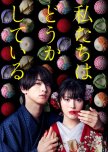
A wild ride from start to finish.
Words cannot describe how over the top this drama is, in the most entertaining way possible. Every time you think the plot could not possibly get more insane, Watashitachi wa Douka Shiteiru blows past your expectations. This is not a drama that likes to milk its pivotal moments; instead of dragging out conflicts or straining your patience with filler love triangles, it strings events together in such a way that every shocking revelation serves to set up the next one.The drama throws the viewer into its dark, unapologetically manga-esque universe from the start, when Tsubaki first tastes Nao's confections and proposes marriage to her on the spot in a dual bid to recruit her to his side in the war of succession at Kougetsu An (the traditional Japanese sweets shop at the heart of the drama) and to thwart the marriage his mother has arranged for him. All you can do from that point onward is hold on to your hat.
Nao is, of course, the daughter of the woman Tsubaki's testimony condemned as the murderer of Tsubaki's father many years ago, and she has decided to infiltrate Kougetsu An for her own purposes, i.e. to unmask the real murderer and destroy the sweets shop that ruined her mother's life. Obviously. But several shocking developments complicate this simple plan...
Birth secrets, hidden identities, forbidden love, cold-blooded seductions, childhood trauma, fires, pregnancy, jealousy, secrets, revenge plots, deathbed confessions, organ transplantations, tragically mistaken identities, etc.: WwDS has it all! I'm not kidding. And you'll love every second of it, or at least I did.
Amidst all this extremely entertaining nonsense, the dark romance between Tsubaki and Nao develops quickly yet without compromising on emotional and psychological complexity. The two waste no time in getting physical, but the real drama only begins once they've acknowledged their feelings and have to confront the impossibility of turning the twisted pretence between them into a real relationship. I actually found the romance between them to be very fun and sexy, and delightfully free of cliches (except where the drama leans into them in the campiest way possible, e.g. angry kabedons galore--and, well, fine, I can't lie; there is a time skip in the last episodes and it sucks as usual).
The strong character work is part of what makes the romance so good. Nao in particular, as a strong-willed, talented woman who hides painful secrets and is hell-bent on revenge, makes for a charismatic female lead and is easy to root for in both love and her quest for the truth. Tsubaki, too, falls in love with her in front of our eyes and we sympathise with him over his emotional turmoil, his sense of duty and loyalty to the oppressive Kougetsu An, his complicated relationships with his mother and grandfather, and the impossible situation he finds himself in.
The secondary characters are also well drawn and while some of them, like Yusuke and Shiori, at first appear to be stereotypical love rivals/spanner-in-the-wheel obstacles to Nao and Tsubaki's relationship development, their arcs are not drawn out, their character development is done well and we (or at least I) come to root for them as characters in their own right, which isn't something I often say about secondary love interests in jdramas. Tsubaki's mother is a solid villain too: cartoonishly vamp but entertaining and vulnerable... and even sympathetic in defeat.
The soundtrack greatly contributed to my enjoyment of the drama as it always matched the craziness that was taking place on screen. The director was not shy about using moody and dramatic instrumentals to highlight ridiculous scenes, of which there were many. Every time the angsty rock opera music kicked in while the camera panned to an innocent-looking flower-shaped dessert, I couldn't help but cackle at the nonsense the drama managed to get me to care about.
I was prepared to give WwDS a perfect 10/10 purely based on my level of enjoyment up to around episode 6, when things slowed down a little bit and the drama entered a slightly more conventional final act. I wish there had been a few more interactions between Nao and Tsubaki in the final 2-3 episodes, but [SPOILERS] worry not: their love remains strong throughout and they make several very good love confessions to clear the air in the end. And yes, of course there is a happy ending! I just wish we had been given a few more minutes to bask in it, but I'm still very satisfied with how the drama ended. [/SPOILERS]
Overall, WwDS is a masterpiece for carrying off its wacky manga premise with panache and conviction for 8 episodes of live-action TV and building a very satisfying romance around a solid revenge plot set in the dark world of... well... traditional Japanese sweets. It delivered everything I never knew I needed from a romantic jdrama.
Was this review helpful to you?


