




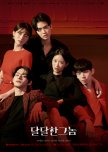
Sinking Your Teeth Into " The Sweet Blood"; Too “Sickly” For Its Own Good?...
Undeniably an intriguing concept, “ The Sweet Blood” did have the potential to be a fairly well-rounded web series with original characters and storyline. However, this series simply becomes its own worst enemy with poor-production value in screenwriting, sets and acting .
The acting quality in " The Sweet Blood" is questionable to say the least. It was not unwatchable per say, however , there were certainly dire line deliverances worryingly throughout the series by the main cast consisting of Chae Yun, Eo Jun and Ji Woong. ( As well as the ridiculous amount of makeup plastered onto Ji Woong’s face in scenes.)
By default, Yeon Seo as a character should have been a well-written female lead. She could have had a profound backstory, a likeable personality as well as having conflicted beliefs as someone stuck between human and supernatural societies. Instead, " The Sweet Blood" reduced Yeon Seo to nothing more than an angst-ridden teenager (rather than a seeming immortal), self-inserted into a formulaic love triangle ( square if you wish to include Do Hyun Je) with lacking character development. Even a potentially intriguing side-storyline (regarding Yeon Seo’s relationship with her mother), was disregarded nearly entirely from the series.
Then there’s our main lead Meo Ru; the foundation of Yeon Seo’s love triangle. Throughout the series, Meo Ru rarely seems to ineffably be unfazed by the supernatural, he is absent-minded enough to put himself in danger countless times for the sake of "plot" (despite Yeon Seo’s warnings ) and seems unable to develop emotionally as a consequence. Even more intriguing elements to his character such as his visions and his actual involvement as " The One" were often half- heartedly thrown in near the ending of the series . (And even then, rarely had an active role.)
Following on from Meo Ru, was Yoon Chi Woo; the second male lead of the series. Yeon Seo’s old flame and a dangerous vampire who seemingly poses both a threat to Meo Ru as well as being "unpredictable", Chi Woo was undeniably an intriguing character. However, his greatest flaw came through his half-baked romance with Yeon Seo.
Despite the constant references towards Yeon Seo and Chi Woo’s " days together", there was no sense of actual significance of this relationship either through flashbacks, memories or accounts by either character. This also contributed to the lackadaisical vampire lore of the web series by the adequate detail with both characters’ backstories also.
Sadly, not even the side characters could make up for this with many side characters being thrown in as " quick fixes "for tension, rather than being entirely necessary for the plot.Do Hyun Je ( Cho Eun Ho), the Vatican’s werewolf ( not even kidding with this one) who ( for reasons unknown to most characters and viewers)seemed to like Yeon Seo. ( Admittedly, there was an arguable reason, but the revelation felt more like a rushed solution to erase the " fourth component for a love square", than actually an intriguing part of his character.) Then there’s Yeon Seo’s best-friend Kim Su Jeong ( Yoon Da Young) who is oblivious for a major part of the series to the supernatural, is dragged ineffably into supernatural scenarios for plot development and her later reactions are just lazily-written .
Adding to this, the seeming " threat" of Yeon Seo’s father as a "big bad" near the end of the series, should have been a decisive story moment , but instead, was anticlimactic and lacked development. ( Despite his intriguing paternal bond by blood *no pun intended* with Yeon Seo.) The ending wasn’t bad per say, but it was obviously a quick and thrown-in solution without any sense of completion or at least a cliffhanger to finally wrap up the web series .
So, what’s the best way to describe this web series and is it actually worth watching ? This entirely depends what you’re looking for in a web series. A quick binge-watch for something which is trope-filled and a time saver from a 16-hour drama? Then, yes. A well-written, original web series with good acting and casting decisions alongside an engaging OST? Then, it is advisable to look elsewhere because " The Sweet Blood" isn’t it.
Was this review helpful to you?
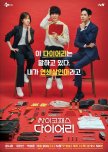
Psychopath Diary; Where A Loser Can Mistake Himself For A Psychopath...
It’s fair to say that Psychopath Diary is perhaps one of the few Korean dramas out there which actually dares to tackle a genre not often seen in South-Korea called “ Dark Comedy”. Naturally this isn’t a theme which interests everyone out there, however, Psychopath Diary is outrageously funny and equally morbid within its tackling of our Male lead Yook Dong-Sik ( Yoon Shi Yoon ) believing he is a psychopath over the course of the drama.
When viewers are first introduced to Dong- Sik, he is an unlikely male lead. Although respectfully Shi Yoon has taken on some quite suave roles as the “leading”man in dramas such as Hit The Top and My Cute Guys, his drab outfits and curly perm help him to blend into the role as the “ everyday” and “ meek” office worker by appearing in his role as Yook Dong-Sik.
To put it into simple words, Dong- Sik is the embodiment of a “ scapegoat” and a “ loser” ( at least in the beginning of the series); a “ nuisance” to his colleagues and family ( particularly his austere father), depressed and someone who certainly wouldn’t even say boo to a ghost. Ironically his fate changes when a failed suicide attempt leads to him developing retrograde amnesia in the same sight when a serial killer ( Park Sung hoon) left behind his own diary after a murder around the same time . By being given the diary which is mistakingly believed to “ belong” to Dong- Sik, he is ironically led into believing he is a ruthless psychopath.
As you can imagine, this leads to a series of many misunderstandings and dark humour within scenes from Dong- Sik trying to “ remember” his talents by watching a bunch of serial killer movies ( such as American Psycho) to miserably failing at remembering how to lie out some coverings to cover up blood when he attempts to carry out one of his plans. However, as the series progresses, there’s also an added level of surprising progression around some of our characters in particular with our female lead and Police Officer Shim Bo- Kung ( Jung In- Sun) not as a romantic interest, but an intelligent cop in her own right with quite a heartbreaking revelation about her family life , as well of course , Dong- Sik revealing his intelligence when he begins to pursue a cat and mouse game with our charming killer Seo In- Woo ( Park Sung-Hoo).
Yet there’s no denying that whilst Psychopath Diary was a morbidly enjoyable watch, it isn’t a flawless show. The pacing of episodes in addition to the progression of storyline sometimes felt disjointed and a little dragging in addition to the comedic element ( sometimes pushed a little too far in scenes ). In addition to this the cinematography could have been more progressive and intriguing ( specifically lighting) as well as perhaps some more depth into our brushed antagonist Seo In- Woo and what made him actually tick as well.
On the other hand, Psychopath Diary was an undeniably satirical, witty and a social commentary upon many elements of Korean society ( e.g. work , drama cliches and lifestyle). Although not flawless, it is certainly enjoyable for those who are looking for something with edgy comedy, an intriguing plot and of course characters as well.
Was this review helpful to you?
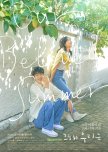
Our Beloved Summer; The “ Break Up” Story With A Twist…
The “ break up” story is a trope in rom-coms which is timeless. Main lead meets main lead, a love story ensues only for the characters to end their relationship through an acrimonious breakup. However whilst Lee Na Eun’s screenplay alongside the directing reigns of Kim Yoon Jin offered viewers a fairly heartwarming coming-of-age tale with an element of mystique , it is important to establish that the drama rarely touched upon new subject areas or topics either.In the past Choi Woong ( Choi Woo-shik) and Kook Yeon-Su(Kim Da-Mi) were high school classmates and polar opposites. Whilst Yeon-Su was an intelligent, hardworking and top-achieving student, Choi Woong was a laidback teen during his high school days; caring little about being a low-ranking student and being focused upon his artistic abilities instead. By a whim of fate, Yeon-Su and Woong discovered that they were chosen as the main subjects (,out of wide selection of candidates,) for an indie-style filmed-documentary.
Even after the documentary finished filming , Woong and Yeong-Su’s mutuality for one another soon grew into sincere feelings as the duo began to date during their college years. However, shortly after finishing their respected diplomas, the former sweethearts went their separate ways with the intention of never meeting one another again,but, fate has an odd way of bringing people back together . Several years into the future , the documentary has become gained a viral cult -following and consequently both main leads find themselves reunited once more.
‘ Our Beloved Summer’ is a fairly lighthearted watch for the most part. Whilst the series does run highly upon certain elements of angst and melodrama surrounding certain relationship dynamics and unrequited feelings , Lee Na Eun’s focal drive of the series surrounded mainly the relationship dynamic between its main leads.
Of course, it’s wrong to say that ‘ Our Beloved Summer’ wasn’t entirely
absent from its more droning “lovey-dovey exchanges” and tedious romantic setups, but, in a series where the focal point surrounds a niche break-up story and potential love story ( which could either irk or appease audiences), satire is sometimes quintessential to helping break the ice. Director Kim Yoon Jin presented the series as a self-conscious reflection of popular culture influences and references. The insertion of evident allegorical homages to different genre films such as; I Know What You Did Last Summer’, 10 Things I Hate About You’, ‘ Pride And Prejudice’, ‘ Catch Me If You Can’ ‘ Love Actually’ helped to present the different emotional stages of the main leads’ relationship in an obvious yet admittedly intuitive manner.
Yet whilst Kim Yoon Jin’s clever usage of titles and filming will certainly not go amiss amongst viewers, there is admittedly one elephant in the room which should be addressed openly surrounding the series; , the pacing. For the most part, ‘ Our Beloved Summer’ is slow-burn. Whilst the average episode could last around an hour and did take time to focus upon certain elements of relationship and character building, the series could feel somewhat dragged out by the latter-half also.
Naturally it isn’t always necessary for a series to have a specific antagonistic force or evident end goal. However for a series to keep viewers engaged characters can often be presented with motives, drives and personal goals in-between the main storyline to give flare or help to flesh-out character building. Whilst we did see some opportunities for this to happen with certain characters, the main leads were rarely given a more dynamic or personal raison d’être as characters. ( Aside from the potential impositions of their relationship or character drive for the “sake of plot”. ) As a consequence, ‘ Our Beloved Summer’ could sometimes feel as though it was slightly conflicted and dragged down by its pacing. Instead of either compacting the series into twelve episodes or attempting to add a more decisive plot-motivation, cliche misunderstandings, misconceptions and niche setups began to arise as the storyline entered its final part.
Nevertheless, the main cast were fairly dynamic as our main leads. Choi Woo-Shik versatility as an actor is proven again within his charismatic performance as main lead Choi Woong; a formerly deadbeat student and a successful artist and illustrator in adulthood who has shared complicated feelings for female lead Kook Yeon-Su.
Admittedly, Choi Woong could often feel shoehorned into “ plot” moments and tension in order to keep the storyline “ intriguing” . ( Incliding through several main subplots .) Yet rather than allowing the main lead to become the reimbursed “ vengeful lover” or “ cold and aloof” trope, screenwriter Lee Na Eun adds an air of subtlety within his equilibrated character strengths and flaws. He has an endearing relationship with his father ( Park Won-Sang) and mother ( Seo Jeong-Yeon) as well as with his best friend Kim Ji Woong ( Kim Sung Chul).
Costarring alongside Choi Woo-Shik is Kim-Da Mi. The actress likewise presented her persona as main female lead Kook Yeon-Su with a dynamic ambience onscreen. At times, Yeon-Su initially could often feel like a carte blanche female lead; enforced to become the “ polar opposite” to Yeon-Su. However , ‘ Our Beloved Summer’ rarely shied away from giving golden opportunities for viewers to understand more about her as a character . Her misconceptions and labels placed upon her from others, a surprisingly heartwarming relationship with her quick-witted grandmother Kang Ja Kyung ( Cha Mi Kyung), as well as most notably coming to terms with her mundane office job , did allow some intuitive insights into Yeon-Su’s persona.
From being at one another’s throats in ‘ The Witch; Part 1’ to former-lovers in ‘Our Beloved Summer’, Kim Da-Mi and Choi Woo-Shik’s onscreen chemistry was undeniably one of the driving strengths of the series. However whilst Da-Mi and Woo Shik’s chemistry was sweet and heartfelt, their characters’ onscreen relationship could admittedly a feel a little shoehorned at times through plot and did place slight strain upon the written relationship feeling natural.
Kim Sung Chul’s role as Kim Ji-woong played a pivotal role within kicking off certain events of the series. Admittedly Ji Woong’s presence during initial events and revelations of the series could admittedly feel a little staid at the best of times but his involvement in later events of the drama is provided as necessary for plot-drive.
Then there’s also second female lead NJ ( Roh Jong Eui) ; a popular K-pop idol who becomes enamoured by main male lead Choi Woong after he doesn’t fall for her charms. Unsurprisingly, NJ’s role in the series was evident from the beginning to present an “ obstacle” within the battlefield of affections for the main leads. However , rather than reimbursing NJ as the “ jealous second female lead” archetype, the series does provide some golden-opportunities to explore some more depth behind NJ’s feelings as well as her personal-growth.
Director Kim Yoon Jin seemed to have a fairly tactful eye behind the camera also. Professional long distant shots and close-ups were cleanly cut , unobstructed and slick in order to delve into the characters’ mindsets and daily lives. In particular, Yoon Jin’s presentation of vivid palettes and tones stood out through the frequent usage of mellow-yellows, tonal whites and blues in order to bring about a hazy tone of nostalgia throughout the entirety of the narrative.
The OST was mainly subtle and predominantly composed of gentle instrumentals - sweet and helping for viewers to focus on dialogue ( instead of lyrics), but admittedly certain tracks delivering a more emotional and memorable impact also.
It was evident to see from the outset that ‘ Our Beloved Summer’ would attract a lot of intrigue and interest from its main cast; particularly A-listers Choi Woo Shik and Kim Da Mi’s dynamic onscreen reunion and performances. However despite the series offering a different take on old tropes and diverging from expected character archetypes with a touch of depth , ‘ Our Beloved Summer’ could sometimes feel weighed down by its predictable setups and inconsistent pacing in parts. Nevertheless, whilst ‘ Our Beloved Summer’ did not possess an original setup, the series was a surprisingly heartwarming watch also.
Was this review helpful to you?
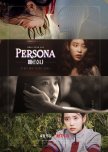
Surreal Food For Thought, Though Some Storylines Were More Striking Than Others...
Netflix’s Persona is a collection of four South Korean short films, all starring Lee Ji-Eun ( IU). Directed by acclaimed Korean filmmakers Lee Kyoung Mi, Yim Pil Sung, Jeon Go Woon and Kim Jong Kwan and partially produced by record- producer Yoon Jong Shin, each episode was inspired from elements of IU’s own personal life and career.Although there is the initial thought of a vanity project for IU being the main star in each episode, there’s no denying that IU is a talented and versatile actress. Even in storylines which may deliver impactful plot revelations for viewers, IU seemed to add a necessary fair and uniqueness to stepping into the roles of her varied and different ‘’personas’’ in each storyline. Yet due to each episode being vividly different with a new director, story and theme, it is probably easier to assess each episode as a standalone piece before moving on to the overall interpretations of the ensemble.
‘’ Love Set”- Starting off the collection begins with director Lee Kyoung Mi’s strange and surreal storyline on a tennis court. In this fictionalised world, actress Bae Doona is ready to marry IU’s father. Naturally, IU is contemptuous about the matrimony and decides to issue a tennis battle with Bae Doona on the tennis court.
Using minimal dialogue, filmmaker Lee Kyoung Mi turns 19 minutes, into an eccentric , humorous and over-the-top battle of grunts and tennis balls being smacked back and forth in an odd competition of love, rivalry and hormones with a strangely sexual undertone . It is one of the most peculiar shorts in the series with an oddly anticlimactic and abrupt ending. Rather than viewers understanding the reason behind IU’s disagreement, passion and drive to stopping this rivalry, the undeniable relief of not having watch IU’s and Bae Doona’s unexplained and peculiar tennis match instead overcomes the watcher’s mind with just one thought. “ That was weird.”
“ Collector” - Yim Pil Sung‘s film and the second piece of the “ Persona” collection transitions into notably darker territory, with its focus upon an older man named Baek Jeong-u on a date with a notably younger woman, played by IU. As the date goes on, Baek becomes increasingly irked as the younger woman teases him and appears disconnected from their conversion. Pil Sung’s scenes then present the evident discomfort of Baek in a lonely, empty room as he attempts to prepare himself either to relax or to literally be killed by a woman’s subtle emotional jabs. Notably having a more prominent overarching storyline than “ Love Set”, “ Collector” initialises the reminiscent traits of the promiscuous Kumiho ( a nine- tailed fox in Korean mythology) as well as an intriguing critique upon stereotypes of women in South-Korean society. ( Which naturally IU herself has also been subject to in the wider media.) IU’s character is undeniably playful and manipulative with Baek, however, she never goes out of her way to seduce him as Baek practically throws himself at her feet. This subversion reversal of gender dynamics offered both the literal and metaphorical stereotype of the coquette’s ways of playing with a man’s heart. Still oddly surreal and taking time to interpret , the storyline was certainly subversive in this short piece .
“ Kiss Burn”-A clear critique to the oppressive natural of youths in rural Korea, the third entry of “ Persona” brings Jeon Go Woon’s focus on arguably the most ‘’lighthearted’’ short of the ensemble. IU plays a conniving schoolgirl named Han-na, who visits the rural house of her friend Hye-bok. Hye-bok’s father, a forest fire lookout, is strict with Hye-bok and greatly dislikes Han-na under the impression she’s a bad influence. Out of anger and revenge, Han-na helps Hye-bok pull various pranks, but naively ignites other unintended consequences. Go Woon’s filming- style is notably the most basic and simplistic out of his counterpart directors, yet the usage of screenwriting through approachable storytelling, pacing and jokes makes the story easier to follow than the last two predecessors of the collection. The one flaw of this piece is that whilst the storyline was easier to follow behind the reasoning of Ha-na and Hye-Bok’s vengeance, it is harder to truly define what made their characters original or intriguing.
“ Walking at Night”- Persona concludes with Kim Jong Kwan’s monochrome-filmed short tackling the most poignant segment of the entire ensemble. IU plays a deceased woman who appears in her former boyfriend’s dream. In that dream, the couple takes a walk at night, reminiscing about bygones and musing about the nature of love, life, and death.The scenery is kept simplistic with a simple interaction of walking and a succinct soundtrack . The only true uncertainty which may strike viewers as harrowing can be seen through the mysterious figure as the two characters walk into the night- something symbolising the unknown just behind them. Out of all the shorts, this final piece tackle arguably the most heartfelt and profound themes of the series with focuses upon existentialism as well as the social issue of suicide in South-Korean society, giving the piece a sense of deeper meaning and reflection for viewers.
Ultimately, IU is the main star of each storyline and plays each one of her roles with diverse brilliance and talent. Whilst each episode has its own flair, there’s no doubt that some shorts were a lot better than others. “Walking At Night” offered arguably the most touching, harrowing and profound themes of the shorts in literal black and white , closely followed by the surreal, yet social critique of women’s roles in ‘ Collector’. ‘ Kiss Burn’ pointed out an undeniably ironic and twisted ending, but lacked intrinsic character depth, whilst arguably the weakest of the series was ‘ Love Set’. Attempting to weave in too many sociocultural metaphors and messages into one short, the storyline was weakened by its lacking sense of purpose, context and ending.
Overall, the ‘ Persona’ collection was fairly entertaining- IU is a talented actress and the artistic licensing by different directors gave us a fresh feel to each episode. On the other hand, as a collection, the weaker storylines of the piece ultimately complicated episodes and character depth - ultimately not a bad show to binge watch out of boredom, but probably not worth committing time towards if you’re expecting to watch an ensemble of well-written and profound collection of shorts.
Was this review helpful to you?
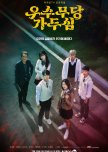
Teen Spirit With A Shaman Twist…
Let’s be honest. The Great Shaman Ga Doo Shim’ is a verbatim title. ( As there’s not a lot left to the imagination to work out what this drama is about.) Admittedly Park Ho Jin’s drama doesn’t try to brand itself as “ the next Goblin ” or a “ new fantasy phenomenon”. It is a teen “ cutesy” fantasy tale about the supernatural, but often leans more into the realm of “teen angst” with main leads Ga Doo Shim ( Kim Sae Ron) and fellow classmate Na Woo Soo( Nam Da Reum) ‘s journey through high school also. (At the time of writing director Park’s wish for a sequel season to explore more about the characters was confirmed also .)
As a consequence the drama featured an array of intriguing characters. However their ultimate contribution to the storyline and depth admittedly does vary dependent on screen time and the screenwriting also. Kim Sae Ron was fairly dynamic as quiet and mysterious high-schooler Ga Doo Shim. The former child actress carried an ambience of perfect angst, suaveness and longing which was perfectly matched for her role . As a character it was evident that Doo Shim could’ve gone down two possible routes; one-dimensional and unlikeable by being egotistical , or a more well-rounded heroine who has a likeable charm by struggling with her emotions and carrying empathy. ( Fortunately with our female lead it was the former case. )
Doo Shim’s character development was arguably the most pivotal from begrudgingly accepting that she can see ghosts and trying to be “ normal” , to opening up to new friends ( particularly Na Woo Soo) , feelings and understanding that she can use her powers for the greater good. Yet whilst her setbacks do help to make her feel realistically flawed, there are moments surrounding Doo Shim which felt like more of an excuse to “ heighten dramatic tension ” rather develop her character gradually or focus more time upon making Doo Shim feel realistic.
For example whilst Doo Shim’s relationship with her mother Hyo Shim( Bae Hae Seon) did see the typical rocky road between a parent and a daughter, there was a lot of missed opportunities to explore more about their complex bond . It was evident how much Hyo Shim genuinely cared for her daughter, however, Doo Shim and Hyo Shim rarely had opportunities outside of necessary plot to talk about their shared bereavement , feelings or emotions without queuing into comic relief or angst. Perhaps with a sequel season it is wrong to condemn a final verdict over this relationship as “ poorly-written” overall, however, hopefully season two will give more chances to covering this relationship rather than putting it on the back burner.
Then of course there’s our main male lead Na Woo Soo. Nam Da Reum did a great job as the plucky prodigy with a heart of gold . Initially starting off as a plot device in order to awaken Doo Shim’s “ character growth and feelings”, it was refreshing to see Woo Soo leave the realm as the prosaic potential “love interest” and the “ sidekick who is new to this world” to having more complex depth . One particular focal point to exploring Da Reum’s greater sense of altruism as a character came through his unusual friendship with underdog and best friend Kim Il Nam ( Yoon Jung Hoon). However this is also where we hit a major rut with Woo Soo as a character; he displays emotions, but he rarely acts out upon them unless they’re necessary to the storyline.
There was brimming potential to explore a lot more about Woo Soo’s darker side which he did display at points in the drama such as his silent threat to Jo Soo Jung ( Lee Ji Won) after her potential blackmail, as well as his anger at Kim II Nam during the main events of the storyline. When the story covered the major events surrounding Kim II Nam it seemed odd the drama switched Woo Soo’s personality towards being “ mopey yet calm” rather than using this as a golden opportunity to explore more about Woo Soo’s own negative feelings or hero complex, as well as heal the wound between Woo Soo and Doo Shim helping one another through these events.
Yoo Sun Ho’s performance as witty dead high schooler Hyun Soo was pretty delightful. As a character Hyun Soo serves both as an example of surprising comical foil as well as wasted potential also. On one side whilst Hyun Soo does have his more brief yet bittersweet moments surrounding his death and his search for his mother, he did often cool down more heavy scenes with deadpan expressions or annoying Doo Shim. However there was a lot of unexplored ground with Hyun Soo’s sentience in the series such as being a ghost, never being able to physically age( unlike Doo Shim or Woo Soo), his search for his mother as well as a lack of deep connection between himself and Doo Shim ( who she seems to have grown up with pretty much ) which were never explored and left anticlimactic with the way the drama abruptly ended l his character arc early on .
This moves us onto the antagonistic force of the drama. Now officially there are two antagonists in the drama; the malevolent sprit, and of course an “ unforeseen” antagonist ( until they were revealed after a major incident). Positively this did present more multi-layered complexity than the entity merely being the “ big bad”, as well as pointing out a clear sociocultural criticism towards the cruel “ dog eat dog” hierarchy in the South-Korean education system . On the other whilst their motive was clear and had the potential to be realistically intriguing , their actual reason covered textbook moustache-villainy rather than being given more intrinsic depth. The ending was ( unsurprisingly) fairly anti climatic- not bad per say and certainly helping to add a more conclusive ending for our antagonists, as well as a. interpretative finale for our main leads but nevertheless slightly rushed with the climax coming to a halt early on, rather than being built up or allowing time for rising tension.
So is ‘ The Great Shaman Ga Doo Shim’ actually worth watching? Park Ho Jin does a good job at building up our main characters as endearing and likeable leads which are further sold by dynamic performances with Kim Sae Ron and of course Hyun Soo, as well as the mystical and supernatural lore of the drama. On the other hand whilst Ho Jin’s potential sequel season could give room for tying up loose ends and problems ( including exploring character depth and relationships which sometimes felt disregarded), there were several inconclusive screenwriting moments which often felt rushed, cliche, one-dimensional or anticlimactic . Overall ‘ The Great Shaman Ga Doo Shim’ certainly remains one of the stronger fantasy drama contenders for 2021 - it is not flawless from a screenwriting perspective and there’s a lot of ground that Ho Jin needs to cover going on forward, but a fairly easygoing watch.
Was this review helpful to you?
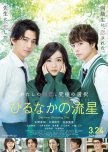
A Lesson About Love In Tokyo...
It’s a romance formula that has been seen and done countless times before ; the naive and eccentric country girl arrives in the “ big city” ( in this case Tokyo), develops a crush on someone older than her / out of her league, makes a frenemy and is totally oblivious to the second male lead’s evident feelings for her in every way possible.
Taken frown the eponymous and popular Japanese manga series,Daytime Shooting Star is the epitome of the typical high school romance formula - binding cliches , romantic triangles and a fairly good cast together in hope of making a profitable production . Yet it will probably come to your attention both through the synopsis and previous comments, where the more ethical issue issue lies within the plot and certainly if it will ruin your experience of the overall movie.
Before coming to that point, it’s important to say that our main cast did bring the movie to life through a mixture of comedy and angst on the big screen; Mei Nagano was brilliant as our main female lead, Suzume Yasano- a country girl with a big heart desperate to make friends in the city, whilst costars Alan Shirahama ( playing taciturn high schooler Mimura) , Shohei Miura ( as teacher and Suzume’s crush Satsuki Shishio) and Maika Yamamoto ( who plays Suzume’s frenemy - turned best friend Yuyuka Nekota) were all fairly good within their performances.
What still remains prominent in terms of storyline for viewers, however, is Suzume’s relationship with her teacher Satsuki. Teacher- Student / older lead and younger lead have long been a popular trope in romance dramas ( note Chugakusei Nikki and Hello My Teacher for examples) , however, determining if they’re “ right” for a piece or not should really depend on several significant factors; the age difference between the characters, the purpose of this relationship and what the intended message by the director or screenwriter is for this relationship. ( For example, in Taisetsu na Koto wa Subete Kimi ga Oshiete Kureta, this isn’t sugarcoated and is used to deliver a lesson about life.)
As far as Daytime Shooting Star is concerned, the age difference between Suzume and Satsuki is officially never brought up, however, the implications are strong that he is a lot older . The way the storyline goes, Suzume’s crush on Satsuki and Satsuki’s actions are both questionable and interesting, as Suzume. begins to understand more about Mimura’s feelings - the ending is perhaps not the one many viewers saw at the beginning, however, Suzume’s ending is fittingly sweet and happy.
Overall, not an original concept but certainly sugary sweet and a guilty watch - the element of Suzume’s growth as an individual is quite inspiring, however, there are some issues which are nonetheless raised by parings.
Was this review helpful to you?

Will You Become “ Mad” At This Drama?
It has been said countless times before in the reviews, however, novice screenwriter Ah Kyung’s ‘ Mad For Each Other’ did surprisingly start on a fairly high note. The storyline incorporated the more avant-grade archetype of the ‘ unconventional lovers’ where both leads suffer from mental health issues. ( A tone reminiscent of Rain’s movie ‘ I’m a Cyborg, But That’s Ok’ [2006] .)
‘ Mad For Each Other’ focuses upon Lee Min Kyung( Oh Yeon Seo), a woman suffering from repressed trauma, social anxiety and paranoia as well as her matched “ potential love interest” Noh Hwi Oh( Jung Woo), a suspended cop who suffered from anger management issues. In between the more questionable faeces jokes of the first episode, ‘ Mad For Each Other’ did seem to have a lot of potential towards being an intriguing love story. However the drama slowly began on a downwards slope as a consequence of cataclysmic screenwriting and certain acting performances in later episodes.
This problem became particularly prominent with Min-Kyung. Oh Yeon Seo isn’t entirely a terrible actress, however, her over-the-top expressions and reactions as her onscreen persona can quickly grow tiresome for some viewers.As a character it is understandable that Min-Kyung suffered from low self-esteem and so her journey to developing an “affectionate relationship “ with Hwi Oh was always going to be a rocky road.
However, it was an ineffable screenwriting decision that one minute Min Kyung seemed to be presented as an unfortunate young woman suffering from social anxiety who is trying to get over her trauma , and then later in the same storyline she is dumping Hwi Oh,getting triggered at Hwi Oh trying to help her, running away and then yearning over Hwi Oh once more.
It is understandable that Min-Kyung is supposed to be a flawed character and struggles throughout the drama to make her own moral judgements, however, rather than using previous exposition ( such as Min-Kyung learning self-defence lessons from Hwi Oh) in order to allow this character to develop as an individual or defend herself, the show enforces the stereotype of the “ fickle female lead” into the mixture in order to allow Hwi Oh to become the “ dashing hero”. ( In a montage during the finale which was an unintentional laughable parody of an 80s car chase scene.) There’s an evident difference between low self-esteem, and a lacking of self-respect; something that screenwriter Ah Kyung seemed unable to distinguish between with Min-Kyung as a character.
Oh Yeon Seo’s costar Jung Woo seemed to carry a fairly “ down-to-earth” ambience as his onscreen persona Hwi Oh. However similar to Min-Kyung’s more “turbulent” moments in the drama , Hwi Oh was the epitome of “ writing gone bad”. As it happens it wasn’t necessarily that this character had a” dire” creative setup in the beginning . Hwi Oh ( similar to Min Kyung) showed a gentler side to his cantankerous personality ( such as promising to help Min Kyung with her self-defence lessons)throughout the majority of the drama.‘ Mad For Each Other’ seemed to particularly struggle, however, with Hwi Oh’s intended character development across the show.
Hwi Oh just seemed to raise one question above all; “ how on earth did he pass police academy exams and become a police officer in the first place, when he often allowed dilemmas ( especially the incident with the ex-boyfriend and Min Kyung entering the abandoned building)to boil over?” It’s easy to put together that Hwi Oh is supposed to fit the “ disgraced and renounced cop” archetype because of his short-temper. However it was hardly to truly comprehend what even motivated Hwi Oh to becoming an officer, or even truly understanding why we should feel pity for Hwi Oh over his role in the first place when he often was pretty dumb with his strategies ( case and point with the car chase with the ex-boyfriend) , acting aggressively ( at times) towards Min Kyung and then not thinking to even try putting together concussive evidence and case reports towards Min Kyung’s- ex’s records. This isn’t stating that Hwi Oh should have been the “ police prodigy” archetype, however, even if the show had perhaps delved into something that Hwi Oh had flourished with his job as an officer ( such as fighting or capturing criminals), and then something he struggled with or was mocked by his peers ( his strategies or even just struggling with a desk job), Hwi Oh would have felt been more sympathetic for viewers as the “ flawed cop” trope that the show seemed to struggle to concisely execute.
As far as their relationship is concerned, the best way to describe the pairing between Min Kyung and Hwi Oh is “ flawed for all of the wrong reasons”. Relationships are naturally messy in real life and it did present
a potentially interesting setup to see two unconventional characters, helping to support one another but whilst there were undeniably elements of Hwi Oh and Min Kyung learning to lean upon one another over the course of the drama, their pairing was undeniably oppressive for both parties. Hwi Oh could often been controlling and inflict aggressive conduct ( anger issues or not) towards Min Kyung, whilst Min Kyung often lashed out before neglecting Hwi Oh and then loving him again because it was “ necessary to the plot”. It wouldn’t have been too bad perhaps if the drama had allowed these characters to recognise their mistakes, show remorse or at least acknowledge their wrongdoings, however, the fact that both characters were quick to bury their problems under the sand in order to “ be together”, made this toxic relationship hard to watch for the most part.
Oh boy, then there’s the incomprehensible side characters. On a more positive note ( and against all odds), the occasional appearances of the irksome gossipy residents and Hwi Oh’s police officer peers were arguably more entertaining at times than our main characters. However, then there’s Soo Hyun ( Lee Soo Hyun); the definition of the “ prosaic filler character”. It isn’t inherently that her scenes were “ bad” or “ terrible” and the setup of her character trying to work multiple jobs and aspiring for higher goals , was an intriguing setup. However the show didn’t really give Soo Hyun enough time to really be “ fleshed out” or understand her motivations as a character aside from being the “ girl who pops up on the screen and starts randomly singing just to promote that the actress is an idol singer”.
Also on the sideline of prosaic side characters was the therapist ( who quickly became elusive to the majority of the events of the storyline apart from arguably having the potential to play the most important role), a psycho and then “ Samantha” ( Ahn Woo Yeon). Now, there’s two decisive arguments with “ Samantha” as a character; the positive by an attempted representation of diversity within South-Korean society, the second being distasteful for some viewers through the comedic scenes . Despite covering over more hard-hitting issues such as mental health issues, cyber bullying and transphobia, it seemed as though the drama often struggled to truly convey these messages more profoundly. This isn’t due to the nature of the drama as a “ comedy” but rather the styling it took as a “ lighthearted” show, rather than allowing or pertaining more “ bittersweet” elements to enter the storyline. The ending wasn’t bad per say, just more “ questionable” considering the storyline arc.
It’s establish that this isn’t to concisely rule that “ Mad For Each Other” is a “ terrible” show as some watchers may enjoy the comedic scenes and setups, however, “ Mad For Each Other” is arguably more of a “throwaway” drama - easy to binge-watch and certainly with a fairly catchy OST, but leaving a bitter taste for certain watchers by sporadic plot logic and one-dimensional characters.
Was this review helpful to you?
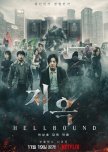
Is This A ‘Hellbound’ Experience?
With director and screenwriter Yeon Sang-ho (Train to Busan) and co-writer Choi Kyu-Seok basing the series upon their own webcomic and original production, this does leave viewers with one ultimate question; “ is ‘ Hellbound’ actually worth watching ?”
For jaded and cynical detective Jin Kyeong-hoon (Yang Ik-june) humanity has offered him nothing but pain and sorrow. Still trying to come to grips with his wife’s brutal murder and having a fractious relationship with teenage daughter Hee-jeong (Lee Re), Jin’s research into the cases leads him face to face with leader of the mysterious cult ‘ New Truth’, Chairman Jeong Jin- Soo ( Yoo Ah-in). The cult has pledged salvation for “ sinners” by spreading gospels of the angels and encourage them to “ repent”. However as episodes progress it soon becomes slowly apparent towards Jin-Soo’s true nature and the brutal goals of the group, with attorney Min Hye-jin (Kim Hyun-joo) pledging representation for the alleged “ sinners”.
The biggest thing to address about ‘ Hellbound’ is that it isn’t a show for the lighthearted. Whilst devoted fans of the webcomic may notice some subtle storyline changes ,the show is violent and not afraid to present brutal murders alongside people being combusted like human torches throughout the series.
Intertwined amongst the shoddy CGI monsters of ‘ Hellbound’ as well as alongside the spine-tingling OST by Kim Dong-wook, ‘ Hellbound ‘ expertly paces its descent into chaos, knowing when to slow down on abominable killings and when to present its moral deadlocks . From the rising corruption of religion and the cultural phenomenon in South Korea of hysterical puritanism, hypocrisy as well as the rise of extreme conservative views paradoxical to the insatiable appetite of society for violence through popular culture, ‘ Hellbound’ addresses a lot of issues without shame or embarrassment and with the entire purpose to expose current issues and realities in South-Korean society. However this is also where the series began to hit a rut after the midway point; it never really carried through these messages with regards to the medium of the series . Whilst some characters are used with a purpose, some seemingly quintessential main characters have rushed arcs or suddenly disappear without rhyme or reason, whilst the climax and rising tension of the drama often went on a downwards slope after the halfway point.
The acting front is admittedly a mixed-bag ( especially with some line deliverances by the supporting characters.) Of course whilst the main cast shone throughout, one of the most dynamic performances throughout the show was surprisingly Yoo Ah-In’s performance as fanatic cult leader Chairman Jin Soo .
Whilst main lead Jin Kyeong-hoon is admittedly a complex character type as the “ cynical cop” and female lead Hye-Jin as the “ attorney”, they often felt tightly crammed into their roles as stock characters tropes . This isn’t necessarily a bad approach per say and did give director and screenwriter Sang-Ho opportunities to reimburse old character tropes for his own gain, but it did little to really diverge these main leads from their expected decisions and actions, often leading them to be shoehorned into the plot ( as well as lacking more profound depth) rather than allowing the characters to move coherently within the contents of the storyline. For example a major subplot surrounding the series for Kyeong-Hoon is the murder of his wife. Whilst later revelations play briefly upon this subplot, the profound details surrounding Hoon’s reactions as well as his relationship with daughter as a consequence were left underexposed, and therefore lacked more sound emotional-depth also.
Of course getting back to our mysterious chairman it isn’t necessarily the case that he was executed as an entirely “ original villain” as after all Sang-Ho does enjoy playing upon Jin Soo as the “ calm and quiet” archetype. However where Sang-Ho creates mystery surrounding Jin-Soo is that he isn’t a “ redeemable antagonist with a painful past” or “twirling his moustache planning world domination”, but just a regular person with a megalomaniacal desire to deliver his warped sense of “ justice”. However whilst Jin Soo helped us to bring together our main characters and kept the storyline moving, his anticlimactic character arc and exit from the series raided more questions than answers afterwards.
This was often a major problem with ‘ Hellbound’- plot points which could’ve been meticulously executed onscreen or poignant for audiences to reflect upon, felt missed out completely by Sang-Ho’s imbalance of subtext against plot. For example even through the cinematography and as the director Sang-Ho never seemed entirely sure how he wanted to capture the world of the characters. Seemingly ordinary or gritty early episode scenes hinting at the unexpected, turned into moody and drab aesthetic shots of Seoul straight out of a noir crime series. This isn’t necessarily unheard of a director playing with mood or lighting to convey messages or by transcending genres. However , directors or cinematographers usually have a vision in mind when invoking these scenes for viewers. Sang-Ho seemed often uncertain even through the objective lens of the director with how this truly captured or presented the emotional mind-frame of his characters . . Adding to this Yeon and Choi weigh down each dramatic scene straight out of a jump-scare movie; the monsters’ attacks feel animalistic and playfully sadistic, but never truly added a more profound and impactful tone for audiences.
The ending of the series attempt to crank up the shock value to the maximum with the delivered revelations of the finale. However whilst the series does leave a more open ending through a cliffhanger major characters arcs, subplots and storyline moments were rarely tied together or felt more complete as a consequence.
So what is left to take from ‘ Hellbound’? ‘ Hellbound’ is a pacy supernatural thriller with an intriguing plot wrapped into six episodes. Aside from some dodgy acting by our side characters, the main cast were decent enough and the standalone performance by Yoo Ah-In did give the drama some undeniably charisma. However one of the major problems with the Netflix series is that it becomes lost in a maze of its own doing; subtext themes and plot were often lacking in depth and more profound deliverance, whilst even some of our main characters lost their gravitation to audiences by abrupt exploration and coverage alongside an incomplete ending. The series attempts to deliver a “ terrifying” experience through the CGI “ monsters” of the series whose design and presence onscreen felt insipid. Overall ‘ Hellbound’ is not a bad per say during a binge-watch session with an intriguing enough plot to keep you engaged, but certainly lacking within delivering a more sound impact for viewers also.
Was this review helpful to you?
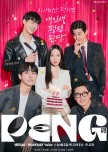
Sweet Enough To Give You A Tooth Cavity…
If there’s one thing South-Korean mini dramas absolutely love with romantic-setups it is the “reverse-harem” trope. Unsurprisingly ‘ Peng’( 팽) is no exception and offers viewers the typical cutesy sweet “ potential love interests” for the seemingly “ average” and “ older noona” ( who in reality is only supposed to be thirty) female lead.
Of course it is wrong to entirely critique ‘ Peng’ as “ unwatchable”. Go Sa Ri ( Yoon So Hee) is a 30 year old woman who finds herself rethinking her life decisions after she parted ways with her former boyfriend.Soon she finds herself in a sticky situation as she finds several potential love interests entering her life with complicated feelings evidently growing for them.
The acting is a mixed-bag admittedly. It is hardly Oscar-winning and there are certainly moments where you might question certain line deliverances, but it is certainly passable to watch . Main actress Yoon So Hee has starred in many guest roles over the years but likely is more recognised by K-pop fans for her starring roles in music videos for boyband EXO, an uncredited role in a music video for SHINEE and in one of Super Junior’s concert tours. The actress certainly was decent enough as our female lead and did add her own sweet charm to her role. However the biggest problem with the casting choice for So Hee as Go Sa Ri was that it was hard to truly believe she was the authentic age of her character.
Of course this isn’t to critique the actress or her character Sa Ri entirely. She’s a fairly hardworking heroine. However to explain this point about age further it is important to establish that a younger actor/ actress being cast to play an older (or even vid verse ) isn’t always necessarily a bad move by the casting crew. Often it can work to a drama/ storyline’s advantage by interpolating both with the necessity of their character’s looks, personality or context within the storyline . On the other hand what makes us feel as though a character is truly the age that the writer has mind doesn’t just come down to physical appearance but very subtle touches such as emotions, maturity, popular culture references, generation gaps or social interactions. In ‘Peng ‘ whilst we did see Sa Ri mope about her age at times and show a more mature side also, these key plot touches rarely had more of a quintessential role within shaping Sa Ri’s identity or authenticity as our female lead .
In fact when it boils down to it Sa Ri rarely felt as though she had a more of a realistic edge. She rarely felt flawed or would be allowed to repent for her actions, by often taking central state as the “ victim” or “ pitiful” and even when we did get glances into her life sans romantic relationships, her “ friends” would rarely interact upon a basis which didn’t involve relationships or romance. Even more in-depth glances into her past as well as her familial environment we’re fairly in- existent throughout the drama rarely giving Sa Ri to feel like a well-written female lead.
Naturally the major driving factor of the cutesy pastel-infused romantic setup of ‘ Peng’ boils down to Sa Ri’s “ potential love interests”. ( Unsubtly hinted by one of Sa Ri’s male colleagues that Sa Ri should get married as “she’s getting older”.)Typical of this genre the male leads are mostly used as the “ shiny boy toy” trope with being either fairly good looking, fashionable or a trope archetype in themselves but are mainly used as plot devices to keep the plot moving rather than to have more evident character depth and growth.
Sa Ri’s first “ potential love interest” is Pi Jung Won ( Choi Won Myung). Pi Jung Won is the classic “ childhood friend” trope. Knowing Sa Ri the longest , Jung Won arguably knew the most about Sa Ri out of all the other suitors. The biggest problem with Jung Won as the “ childhood friend” is that whilst he unsurprisingly has “ liked Sa Ri since forever” he never really addresses what initially attracted him to her, his own complicated feelings with Sa Ri viewing him as a fraternal figure as well as meekly remaining in the corner with his hidden feelings until “ necessary plot” drives him out.
Sa Ri’s next potential romantic partner is Yeon Ha Rim ( Kim Hyun Jin). The biggest thing to address about actor Kim Hyun Jin is that in real life he is closer in age to So Hee than his younger onscreen counterpart. His onscreen persona being the embodiment of the “ younger guy”, there’s undeniably mixed feelings for viewers towards this onscreen potential chemistry between their characters ( especially as he does begin to dominate a lot of screen time by the halfway mark). Whilst undeniably Sa Ri does not hide her initial awkward feelings and there are some evident “age appearance” issue addressed , it may raise more questions for viewers by the more sugarcoated approach to realistic factors such as cultural norms, controversy and perceptions towards age gap relationships in South Korea.
Then there’s Sa Ri’s potential suitor through Ki Sun Jae ( Joo Woo Jae)- . Sun Jae embodies the classic “ he’s my boss” and the “ CEO” trope. His potential chemistry with Sa Ri has its strengths and weaknesses. On one side he’s arguably the most mature, decisive and affluent out of the other love interests. On the other hand Sa Ri’s evident discomfort towards pursuing a romantic relationship with her boss does put some strain on their relationship as employer and employee.
Then finally there’s Jeon Woo Sang ( Lee Seung II). Sa Ri’s ex, Jeon Woo spends his time pining over Sa Ri. Whilst some viewers may see this as “sweet”, others will likely see Jeon Woo’s actions as verging upon being a stalker and megalomaniacal from wanting to know about Sa Ri’s love life following her and waiting outside of her house on several occasions.
The final decision by Sa Ri was beyond anti climatic. It was not necessarily bad per say that Sa Ri made this choice as it was upon her own grounds, however, rather than providing this choice with more explanation or build-up, Sa Ri’s decision truly gave the series a poorly-inserted deus ex machina ending; added for the “ unexpected”, yet lacking in more coherent character direction or growth in the process.
So what is left to say about ‘ Peng’? As a miniseries ‘ Peng’ is pretty much what it said it would be on the tin; a romantic show reverse- harem about an older woman choosing her potential romantic love interests. Whilst the show was lighthearted, it often seemed to struggle with conveying more depth to the characters, plot drive ( aside from romantic misunderstandings and lacklustre tropes) and a decisive ending with many profound themes often feeling sugarcoated. Whilst not unwatchable per say ‘ Peng’ lacked that specific zest of being an engaging , memorable or well-written storyline with an ending that will make even the most patient of viewers towards what on earth you just wasted your time upon.
Was this review helpful to you?

Certainly Not A Good Drama To “ Start-Up”...
‘Start Up’ had great potential to be a good drama from its opening episode. Aside from having the well-known talents of Bae Suzy, Nam Joo Hyuk and Kim Seon Ho as our main leads , the characters undeniably had the potential to be realistic and a “breath of fresh air” from the stereotypical cliches of romance dramas. Yet, story progression and cliches truly provided to be ‘Start-Up’ ’s own worst enemy, as Park Hye Run’s screenwriting began to tackle oddly immature themes in a show tackling adult characters , plot inconsistencies, dire characterisation and straying away nearly entirely from the main focal point of making one’s own way in the world in favour of lacklustre and poorly-written romance pairings.Perhaps the two characters who were subject to the most injustice of characterisation and story writing in the drama are strikingly the female lead Dal Mi ( Bae Suzy) and Kim Seon Ho’s character Ji Pyeong. ( Although Nam Joo Hyuk’s character Nam Do San must certainly be addressed later on as the elephant in the room.)
In the beginning of the series, Dal Mi was an intriguing main character; a headstrong businesswoman with an intriguing backstory , stuck in a rival relationship with her sister and having a driving passion to succeed in the business world . Then, not even several episodes later, Dal Mi’s characterisation from an independent businesswoman with actual depth, is subverted in order to allow her to become the staid, obsequious and often emotionally insecure “ love interest” of Do San and Ji Pyeong’s affections.
It is important to stress that isn’t the case that Dal Mi shouldn’t have had a love interest or a relationship at all within the series. A “ strong” female lead can still be well-written as an individual(regardless of her relationship status). Instead, it is rather how this drama portrayed the baffling and incoherent relationship between Dal Mi and Do San; a pairing which was to be expected and certainly wasn’t entirely “bad” between the characters as individuals ( despite notable “ biased” feelings of some fans). Instead, it was rather how this pairing was built upon lies, deceit, insecurity, and emotional manipulation, which was often “glossed over” in favour of “ cutesy couple” moments between Dal Mi and Do San as the storyline progressed. Dal-Mi became the typical trope of the “ golden prize” for the male lead, rather than an individual with her own thoughts and feelings; a sad destruction of an otherwise intriguing character.
This naturally moves us onto the second male lead of the series , Ji Pyeong, the “ preferred love interest ” of Dal Mi amongst watchers of the series. As an individual , however, it was not entirely the case that Ji-Pyeong was a “ badly-written” character, but rather his scenarios seemed both unjustified and questionable over the duration of the drama.
Initially appearing as a solipsistic, yet successful businessman, the series brings a lot to light about Ji-Pyeong as someone who is inwardly altruistic ; hardworking in order to have escaped the poverty of his childhood, a genuine supporter who sees the “ potential” of Do San’s visions and who has constantly admired Dal Mi since childhood ( a major driving force of the series, which is sadly never explored or touched upon after its initial use). Naturally, however, Ji-Pyeong’s “ selflessness” often leads to his downfall and consequently because he undeniably puts up a deceitful guise in front of Dal-Mi , he naturally comes out with the short end of the stick by not “ getting the girl”. Nearly from episode one, it will remain apparent for viewers that Dal Mi and Ji-Pyeong have many striking similarities both within their pasts, careers, obstacles and even personality types. Yet despite the obvious pairing which would ultimately arise between Dal-Mi and Do San, these similarities between both characters were neither explored or developed within ‘ Start-Up’.
Yet relationships aside (and despite the obvious flaw of his “ selflessness” at times), Ji-Pyeong’s altruism also plays to his advantage within arguably allowing him to become the most emotionally-stable character of ‘ Start-Up’ . He never truly takes out his feelings upon the SST boys ( despite their sarcastic comments ), Dal Mi and maintains professionalism in the workplace, by helping Do San ( even after Do San manipulates and physically punches him) against all odds, possibly making him the one true mature, and unspoken hero of the entire drama .
Next it is important to address the biggest elephant in the room, the main lead of ‘ Start-Up’, Do San. Against all odds, Do-San is a surprisingly interesting character , but a terribly-written individual upon all grounds. He is initially introduced under the archetype of the “ loveable and lively dork”- a profound genius, lacking in social skills, with a sanguine ambiance. Naturally, this allows people to gravitate towards Do-San such as Dal-Mi as a love interest, and Ji Pyeong as a mentor . By default, Do-San should have been someone for viewers to root for; the underdog who becomes successful, goes through a life-changing journey and revels at the end of the series with his important life-lessons in business, morality and love .
Instead the irony becomes apparent within Do-San’s “friendly” nature becoming a facade for his insecure and often fractious personality over the course of the drama . If Ji-Pyeong is the kind-hearted and selfless soul of the series, then Do-San is the egocentric opportunist who plays “Devil’s Advocate” in the beginning of the series, before taking advantage of Ji-Pyeong’s kindness through various methods of emotional and aggressive manipulation , even punching him once because Dal-Mi was “ upset”.
Upon this side note of Dal-Mi, it is crucial to bring up what is exactly problematic about Do -san’s interactions and behaviour around the female lead. The main lead’s personality sometimes verged upon what is commonly known in psychology as “ covert narcissism”. Many of the notable traits of covert narcissism include imposter syndrome, subtle emotional manipulation, introversion and egocentric beliefs and wild fantasies over one’s own success or goals - nearly all traits present within Do -San’s character . In addition to his obvious desire towards succeeding in the business sector , Do- San’s greatest fantasy soon manifests through his obsession with being Dal-Mi ‘s “ protector”. This is not out of selflessness or as a consequence of helping Ji-Pyeong to look after Dal-Mi, but a dangerous daydream which soon grows into an unhealthy obsession to “ protect” her through emotional vanity and manipulation .
Rather than being a symbiotic process of both characters coming to grasps with their flaws and learning to heal their emotional wounds, the relationship between Dal-Mi and Do -San was simply uncomfortable and emotionally draining for viewers.
In addition to this the second female lead Seo In Jae/Won In Jae(played by Kang Han Na),felt like a character limited only to an extended background character . In Jae could have easily supported the pacing and depth of the storyline , giving viewers a break from the prolonged and cliche love triangle dominating the show . She had a surprisingly decent backstory and certainly potentially interesting character depth, that could have been explored in episodes focusing on her rekindled relationship with Dal Mi. Ultimately, however, In Jae was pushed out of the way in favour of the lacklustre paring between Do San and Dal Min; a crying shame, for a character with wasted potential .
Overall, “Start-Up” does tackle some intriguing dynamics of the business world, family and a “ dramatic ” love triangle. However, writer Park Hye Ryun did not do justice with this series- characters were often poorly-written or lacked intrinsic depth, the second-half became overly reliant upon immature cliches , tropes and plot holes to “ prop-up” the sloping storyline, and the main pairing was unhealthily built upon emotional gaslighting and insecurity, rather than sincere feelings and learning to overcome these problems symbiotically . Certainly not worth investing time within if you’re looking for a well-written drama .
Was this review helpful to you?

Will You ‘ Cha Cha Cha’ into watching this drama?
Aside from its questionable title ‘ Hometown Cha Cha Cha’ is a remake of the rom-com’ Mr. Hong’ (2004) updated and directed by Yoo Je-won, the same director behind dramas such as ‘Oh My Ghostess’ and ‘Tomorrow With You’. The storyline isn’t labyrinthine . Cha-Cha-Cha is a straightforward rom-com ( taken from the original movie) of “ city girl moves back to the sticks and falls in love”. However this boils down to the ultimate question for newcomers thinking of picking the series up; “is ‘ Hometown Cha Cha Cha’ actually worth watching? “
Arguably the drama does a really good job at subverting certain cliches and stereotypes beyond the expectations of viewers . Whilst the villagers are sometimes used for stock comedy , they are often more than just filler characters also. Many of them have their own problems which are revealed as the series progresses. For example Oh Cheon-jae (Jo Han-chul) is a cafe owner and a washed-up one hit wonder who despite often ending up as the butt end of the joke, has a more sensitive side by desperately yearning to return back to his brief glory days. There was something oddly heartfelt about each episode taking a moment away in order to focus upon side characters such as the village grandmas who main heroine Hye Jin (Shin Min Ah ) encounters in this small seaside town.
On the other hand this brings us onto one of the biggest elephants in the room surrounding our main female lead Hye Jin. Actress Shin Min Ah is decent enough here. On the other hand her onscreen persona Hye Jin is trickier to address. Hye-Jin is the epitome of the “ carte blanche female lead”; a character who has some necessary plot-driven angst, sweetness and backstory, but rarely has more definitive depth, emotions and realistic flaws.
Adding to the issue of Hye-Jin’s character arc is that whilst she does have “flaws” they’re never really pointed out by director Je-Won more directly . This is because Je-Won tries too hard to present Hye-Jin as a “ loveable and perfect” female heroine without considering that perfection can often be flawed . Of course our MC does have her sob story and angst-ridden moments later on in the series but these scenes rarely enforced more powerful emotions onto viewers as there was little to make Hye-Jin grow or learn from her past mistakes . This was case and point when others such as male lead and main love interest Du Sik( Kim Seon Ho) pointed out Hye-Jin’s mistakes at times as arrogant or rude, the drama rarely gave her the chance to grow or explain herself without either turning the blame on Du Sik for interfering, making Hye-Jin burst into tears or failing to accept her own mistakes sincerely . The problem with Hye Jin is that her character arc runs on pure plot device steam than actual character writing- we never find out what really drives Hye Jin either through her current flaws addressed, her career and future goals ( rather than mere romance) or for the sake of plot.
This moves us onto main lead Du Sik. Similar to costar Shin Min Ah, Kim Seon Ho was delightful as dexterous “all-round-ace” Du Sik- adding his own sweet charm to a character with a surprising amount of profoundness . He’s an extrovert, incredibly talented at everything and good-natured but also shares his own personal troubles as well. On the other hand whilst later episode scenes relished in tackling Du Sik’s past, this did feel slightly rushed than well-paced. We do see Du Sik’s problems build-up in early scenes and it was surprisingly refreshing to see vulnerability against a seemingly “ strong” character such as Du Sik.
Consequently it felt as though the drama could’ve done more to have built-up dramatic tension around Du Sik’s past and character arc. Whilst it is used to present drama and a spanner in the works with his relationship with Hye Jin, it was evidently used to add some tension and dramatic dilemmas rather than feeling gradually built up or allowing to present the profound connection between our leads more sincerely.
This of course leads us to discussing about the romantic setup between our leads which is (unsurprisingly)a rocky road. On a positive note it was heartwarming to see their feelings blossom . Even from the first episode the route of potential romance between our main characters was obvious. Bland chemistry in early episodes was ignited by more cutesy interactions as episodes progressed as well as fire added to the flames with dramatic tension keeping the ball game going between the two characters.
Similar to his previous works, Yoo Je-Won adds his own personal touch of oozy sweetness to the overall production. Pohang City in the province of North Gyeongsang in South Korea sets the perfect location for the fictional Gongjin village. The blue horizons of clear skies and crystal waters, provided an idealistic escape throughout the series.Vivid cinematography accentuates scenes alongside bright lighting, whilst more slapstick comedy from the original movie is replaced by a few farce scenes in order to focus upon more meaningful scenes between its main characters. The ending offers a more bittersweet note for viewers with an ending that was sweet but admittedly expected.
‘ Hometown Cha Cha Cha’ is the epitome of a rudimentary sweet sugary ice cream treat- cutesy fluff and with its own bittersweet edge at times, but it could easily melt under the pressure of its own plot build-up and dramatic tension. Overall it is really dependent on what you’re looking for in a drama- a quick, easy and back-burner romance setup ( which you’ve probably seen a million times already) in order to pass the time? Then definitely.
Was this review helpful to you?

A Tale Which Tries To Warm Your Soul…
‘ Coffee Ikaga Deshou’ ( alternatively translated as ‘ How About A Coffee?’) is one of those dramas which will likely remain under the radar for most drama watchers. Based upon the manga of the same name and Adapted to the small screen by screenwriter and director Ogigami Naoko alongside co-director Mori Yoshitaka, ‘ Coffee Ikaga Deshou’ ‘s plot isn’t complex.
Admittedly ‘ Coffee Ikaga Denshou’ isn’t an overly original concept. Main lead and arcane barista and coffee van owner Hajime Aoyama ( played brilliantly by Tomoya Nakamura) comes across in a similar suave and mysterious manner as the “ mysterious flaneur figure” Izakaya owner from ‘ Midnight Diner’.
However on a virtuous note Coffee Ikaga Denshou’ ‘s plot was fairly driven by its prominent messages during most of the series. From dealing with issues such as struggling to fit in the status quo, disillusionment, popularity and grief, most episodes had something fairly
poignant to address about Japanese society and everyday life.
Yet unlike the reoccurring characters of ‘ Midnight Diner’ who were left only to piece together parts of the owner’s past, Aoyama’s link to his backstory as well as his reasons for becoming a coffee connoisseur, played a more “ pivotal role” within the events of the series. The main driving force behind the " tension" of the plot evidently occurred within the interwoven backdrop of each episode focusing upon surrounding the reoccurring onscreen appearance of the mysterious gangster ( Isomura Hayato) who was hunting down Aoyama for unknown reasons .
There’s a lot to discuss about how the series dealt with Aoyama’s character arc. On a positive note playing upon the storyline of Aoyama’s " secrecy being hidden in plain sight" made him an enticing character to learn more about and when his past was revealed it did present a lot of surprising revelations about our main lead. However Aoyama’s transition between his past persona and his current-self rarely felt more subtle or blurred, whilst his journey and struggles to kick past habits ( unless it was necessary for " dramatic tension") often felt disengaged from the storyline.
Due to the change and swap-up of characters during episodes it’s hard to pick out a multitude of characters to analyse in more depth. However due to their reoccurring appearances it is important to discuss ( without spoilers) about how the series dealt with the mysterious gangster Pei and his character arc alongside Shima Kakine ( Kaho)-the first customer to be shown to be served by Aoyama onscreen- and our " final major antagonist”.
Speaking about the latter character Pei’s initial raison d’être is acting as an antagonistic force within the drama by hunting down Aoyama for unspecified goals. However whilst it was undeniably sweet to see Pei have his moment of redemption through his later actions and decisions, the build-up of Pei’s actual character redemption arc often felt sporadic. Of course whilst the drama did drop hints towards Pei’s own personal connections, this rarely felt more built up or more widely interwoven with with Aoyama’s own character arc also.
Then of course there’s Kakine. Kakine is an odd character to discuss as
after her initial appearance in the first episode, her character doesn’t appear again until the last few episodes when the final storyline kicks in. Whilst Kakine is undeniably kindhearted by acting as the stereotypical " moral cheerleader" figure during the later storyline, she’s a character who felt the most paradoxical due to how the series approached her character. To explain this further it is important to point out that Pei initially commented during one of his first interactions with Kakine that she was annoying as she was " boring and dull". However during the first episode one of her major problems throughout the storyline of this episode was her inability to truly fit in at work. It seems an evidently nuanced point and whilst it is correct to assume perhaps from Pei’s perspective, Kakine is boring as she isn’t cut from the same cloth, it seemed an odd point not to expand upon Kakine’s own feelings and thoughts after this initial interaction. Whilst it is evident that perhaps the series didn’t have enough time to focus upon Kakine’s expanded feelings during this episode, it felt a wasted opportunity not to have used more the to have explored Kakine’s feelings, her previous struggled as well as her desire to make a good cup of coffee after her initial meeting with Aoyama.
Last but not least is evidently our " major antagonist" of the series. Now without giving too much away about the plot, our antagonist has their own personal reasons for standing in Aoyama’s way as well as their own screen time to explore their moments of humanity also. On the other hand their character introduction and build-up felt rushed and lacklustre . Whilst it is understandable that the series wanted to keep us in the dark for as long as possible about their identity, it felt slightly odd that the series didn’t try to foreshadow their character introduction or at least their presence in the series as opposed to a quick " climatic turn of events". As a consequence whilst the first half of the series thrived with strong plot messages and mystery, the second- half( whilst presenting more revelations) did seem to struggle with conveying the same ambience of charisma and strong screenwriting .
So is ‘ Coffee Ikaga Denshou’ actually worth watching? Whilst the acting front is fairly decent ( sans from a few awkward line deliverances) and the drama offers an interesting array of characters, main lead Aoyama undeniably has his own peculiar charm over audiences to keep them watching. Each episode offers the formulaic tale of a new issue or message during the first-half of the series and a melodramatic plot climax and revelation during the final part. The end result of eight episodes stringing out a lacklustre climatic buildup will undeniably leave viewers with mixed feelings.
Was this review helpful to you?
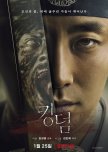
Whilst Joseon period drama have attempted to tackle crossovers of popular genres such as romance and action before with different results ( either for better or for worse), the more surreal take of horror/ fantasy in Joseon period dramas ( notably Scholar Who Walks The Night, Arang And The Magistrate and in flashbacks from the hit series Goblin), have very rarely depicted levels with historical realism or a grounded depiction ( I.e. in terms of cleanliness, monarchs or violence) of actual life during this period.
Screenwriter Kim Eun Hee ( Ghost, Signal) and director Kim Sung Hoon ( Tunnel-2016, Kidnapped- TBC) were paramount from the get-go to revolutionise this in their horror -period drama Kingdom . This creates a surprisingly brilliant fusion between the surrealism of violent zombies into a political and social critique of the bloodthirsty and ruthless Joseon period and hierarchy .( Although labelled as a “ zombie show”, realistically , the word “ zombie” isn’t used once by any of the characters, due to the concept itself coming from Haitian folklore and not even entering the English language until the 1800s.)
Set in the 1500s , Kingdom revolves around the estranged and traitorous Prince Lee Chang ( Ju Ji Hoon) , whose fate as the successor to the throne looks grim with the recent announcement of his stepmother and the young Queen Cho ( Kim Hye Joon) ‘s pregnancy. Chang, however, becomes suspicious when his father is suddenly ailing from a mysterious illness which nobody will elaborate about outside of the palace. After stumbling upon the truth that his father is a flesh -eating creature, he travels to the South in search of questions with his trusted guardsman Moo Young ( Kim Sang Ho). Naturally, however, they are not the first to stumble upon this truth as assistant physical Seo Bi ( Bae Doo Na) and the mysterious Young Shin ( Kim Sun Gyu) also come across this startling discovery, which will truly test alliances and friendships as a political bloodbath simultaneously corrupts even the heart of Hanyang ( now present- day Seoul)...
It is undeniable that the “ violent zombie” cliche isn’t anything new , nor exciting to television programmes . On the other hand, Kingdom’s strength lies in its focal point ( unlike many zombie programmes) not being on the undead, but the complexity and intricacy of humans.
From Lee Chang’s strong sense of morality towards his allies ( of all classes), Cho Beom-pal ( Jeon Seok- ho)’s gradual transition from one of the selfish members of the ruling-class to someone with a good heart , and the Queen’s ulterior motives against her father’s knowledge , it is notable that the majority of the characters in the show are fairly three-dimensional. Arguably, antagonist Cho Hak-Ju ( Ryu Seung Ryong) can often be written off as your typical moustache-twirling villain, however, there is still a notable level of depth to his character- a bereaving father who has lost his son and is out for revenge against Lee Chang , desperate to protect his family’s lineage and has many more secrets than first meet the eye.
Undeniably, the pacing of the show can be a little slow in the beginning, however, once the events of the show kick off, it is fair to say that time flies out of the window when watching Kingdom- the plot is engaging, the historical elements are surprisingly realistic, the characters are actually intriguing and the horror premises ( zombies, cannibalism and bloodshed etc.) are certainly not for the faint-hearted. Nevertheless, perhaps the one thing which should honestly be said about the show is that whilst the acting certainly wasn’t unwatchable and the actors undeniably had their moments of genuinely good performances , some acting in the show was often a little wooden and lacklustre.
Overall whilst Kingdom was undeniably slightly flawed by quality of acting and pacing at times, it was certainly a good show with an intriguing balance between history and horror as well as a deeper conceit towards a social critique contemporary of Korean society. Certainly worth a watch, if you’re looking for something to invest time and effort towards.
Was this review helpful to you?
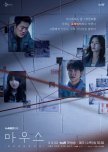
Mouse; A Masterpiece or A Mess?
The best way to describe screenwriter Choi Ran’s "Mouse" is somewhere between a masterpiece and a slightly disjointed mess in certain parts.
It’s wrong to entirely slander that " Mouse" wasn’t a good series. Without a doubt, the main cast were absolutely brilliant. ( Especially Lee Seung Gi’s hauntingly profound portrayal as Ba Reum, truly defining his talents as an actor.) Additionally , " Mouse" arguably had some of the best character development seen in a mystery- crime series in a long time. The portrayal of psychopaths felt haunting for the most part, whilst main characters Ba Reum ( Lee Seung Gi) and Mo-Chi ( Lee Hee Joon) had some shockingly profound character developments and twists. Even seemingly superficial side characters in the beginning such as Oh Bong-yi ( Park Ju Hyun) and the suave Choi Hong-ju, or " Sherlock Hong-Ju" ( Kyung Soo-Jin), had a lot more to their characters than first meets the eye.
However whilst it would be easy to give this drama a decisive ” 10/10” and write it off as flawless , it is undeniable that it isn’t without its faults either.
" Mouse" is undeniably a collection of surprising twists and turns which soon become a little disorientating. Whilst rooted in real—life depictions of a serial killers with a slight "fantasy twist" intriguing plot points soon become slightly predictable and mundane in the latter part. It was almost as though screenwriter Choi was running low on ideas ( despite the endless supply of unanswered questions left open for viewers) and decided to group together a cluster of feverish flashbacks, dismiss more intriguing characters peppered throughout the storyline and manoeuvre deux ex machina solutions for the resulted ending.
So, is " Mouse" actually worth watching from all the hype? This depends a lot on personal preferences. Whilst not flawless and a little clunky in the second-half, "Mouse” was undeniably filled with good acting, intriguing plot, characters and profound themes.
Was this review helpful to you?
Kang Daniel And Chae Soo-Bin Are Reporting For Duty In ‘ Rookie Cops’…
‘ Rookie Cops’ is a sixteen-episode streaming series which has earned intrigue and controversy amongst watchers and drama enthusiasts alike; dispute as a consequence of its limited availability on streaming service Disney Plus, as well as fascination due to its casting choices, setups and characters.
Main female lead Eun-Gang( Chae Soo-bin- ‘ Love In The Moonlight’, ‘ I’m Not A Robot’ and ‘ Where Stars Land’) is a bubbly, optimistic and outspoken individual. Often having felt left out by her parents due to their seeming preferential treatment of her sister Go Mi Gang ( Son So Mang- ‘ Queen Of Mystery 2’, ‘ Mr. Queen’), Eun-Gang has often felt pressured to take up a career which will gain her parents’ respect.
Eun-Gang’s prayers are finally answered when she discovers that her first-love has enrolled in the academy in order to become a police officer. Determined to enter the academy in order to get close to him as well as earn the respect of her parents, Eun Gang seems to be living the dream. However, reality, as Eun-Gang soon discovers, can often be harsh.
Meanwhile the narrative introduces viewers to main male lead and Eun-Gang’s polar opposite, Wi Seung Hyun( Kang Daniel). The level-headed and reserved son of top-ranking officer Wi Ki Yong (Son Chang Min- ‘ My Fair Lady’, ‘ Pride and Prejudice’ and ‘ No Matter What’), Seung-Hyun has felt the need to uphold the reputation of his father, ex officio.
However Seung-Hyun and Eun-Gang’s worlds collide even prior to entering the academy. After an awkward first encounter, Seung-Hyun and Eun-Gang are shocked to bump into one another again at the Korean National Police University.
However as the polar opposite main leads become involved with one another on a gradually frequent basis at the cadet academy, Seung-Hyun, Eun-Gang and their peers soon find themselves facing dilemmas, chasing dreams, and struggling to comprehend feelings on the front line of duty…
‘ Rookie Cops’ is the creation of screenwriter Lee Ha Na. The same writer behind predominantly melodramatic productions such as ‘ Cunning Single Lady’ and ‘ The Time We Were Not In Love’, ‘ Rookie Cops’ attempted to offer viewers the best of both worlds; a lighthearted youth series through Ha Na’s signature vivid tone, as well as a moody cop drama revolving around crime and emotional dilemmas for the main characters.
Admittedly this was necessary to a certain extent for viewers. Despite a noir-style opening, ‘ Rookie Cops’ was heavily invested with giving an introduction to its main leads Eun-Gang and Seung-Hyun, as well as introduce the other key players to the scene.
In particular these reoccurring characters and fellow students of the academy included apathetic as well as studious Ki Ha Na ( Park Yoo Na- ‘ My ID Is Gangnam Beauty’, ‘ SKY Castle’ and ‘ True Beauty’), athletic judo prodigy Kim Tak ( Lee Shin Young- ‘ Crash Landing On You’, ‘ Bite Sisters’ and ‘ How To Buy A Friend’), eccentric yet passionate Woo Joo Young ( Min Do Hee- ‘ Reply 1994’, ‘ My ID Is Gangnam Beauty’ and ‘ Clean With Passion For Now’), sprightly social butterfly Yoo DaeIl ( Park Sung Joon- ‘ Sweet Munchies’ and ‘ Run-On’) as well as amiable student Shin Ah Ri ( Cheon Young Min- ‘ Foolish Mom’, ‘ What’s Up With These Kids!?’ ) and principled youth Seo Beom Joo ( ‘ Voice 2’, ‘ A Piece Of Your Mind’ and ‘ Military Prosecutor Doberman’).
In addition to the students, Professor Cha Yoo Gon ( Kim Sang Ho- ‘ City Hunter’, ‘ Kingdom’ and ‘ Sweet Home’), Professor Bang Hee Sun ( Choi Woo Ri- ‘ Queen In Hyun’s Man’, ‘ Matrimonial Chaos’ and ‘ The Bride Of Habaek’) as well as Dean Kim Soon Young( Seo Yi Sook- ‘ You’re All Surrounded’, ‘ Mother’ and ‘ Hotel Del Luna’) played active roles as the reoccurring members of staff at the University.
Nevertheless it was noticeable that the second-half of ‘ Rookie Cops’ shifted in tone in comparison to the first half ; angst-ridden and with a several surprising plot twists, though admittedly a little inconsistent at times due to quick-paced events.
As mentioned previously, Chae-Soo Bin and Kang Daniel star as the main leads of the series and deliver fairly consistent performances throughout. ( It is admittedly praiseworthy to point out that despite Kang Daniel’s good reputation as a celebrity talent host and soloist, ‘ Rookie Cops’ marked the idol’s first acting debut onscreen.)
As for the main leads’ onscreen romance , Daniel and Soo-Bin’s potential chemistry is admittedly stunted at different stages of the narrative. In the first-half of ‘ Rookie Cops’, shoehorned embarrassing scenarios and encounters were purposefully placed to enforce tension and awkwardness between the main leads onscreen. Yet it’s hard to deny that as plot progress, Daniel and Soo Bin’s onscreen chemistry is admittedly a lot more natural also.
Then there’s the supporting cast. Although there were admittedly several moments of overblown dialogue, the supporting cast delivered fairly solid performances. In particular, Lee Shin Young, Park Yoo Na and venerable actor Kim Sang Ho particularly stood out due to their charisma onscreen.
As mentioned previously, ‘ Rookie Cops’ is divided almost into two-halves by its tonal shift; a fairly easygoing introduction ( aside from its initial opening), gives ways to a darker second-half with several unexpected twists and revelations for viewers.
The first-half of ‘ Rookie Cops’ admittedly downplays a lot of initial tension from the opening, as well as future events to come. Instead, ‘ Rookie Cops’ fixated upon character introductions, early dilemmas for the characters and potential setups, before plunging into the deep-end with a pacy and angst-ridden second-half with varying results .
The tonal shift did help to keep viewers intrigued and intensify the climatic events of the second-half. However, this also caused some drawbacks for ‘ Rookie Cops’ also.
Although some of the intriguing counterplots of the series such as the rocky friendship between Kim Tak and Seung-Hyun, Eun-Gang’s gradual maturation as well as emotive themes such as anger, loss and love as well as focusing upon other subject areas such as corruption, peer pressure and corporal punishment, there were several subplots which were admittedly poorly fleshed-out. For example, Seung-Hyun’s estranged relationship with his father and the escapades of other side characters such as Shin Ah Ri were often disregarded during key moments.
Through the directing lens of ‘ Kim Byung Soo’ ( ‘ Queen In Hyun’s Man’, ‘ A Korean Odyssey’ and ‘ He Is Psychometric’), ‘ Rookie Cops’ is a fairly slick and glossy production.
Admittedly early episodes of the series seemed to place a heavy- budget emphasis upon frequent cut scenes of the academy; with little variance in tone or schemes. However as the second-half dawned upon the series, ‘ Rookie Cops’ took a different approach to filming by helping to captivate through Byung Soo’s leadership, the emotional tones through gradients and palettes of the characters at different times in the series . ( In particular off-whites, golden hues and blues were frequently shown onscreen during key scenes and interactions.)
The OST of ‘ Rookie Cops’ is predominantly composed of a compilation of schmaltzy ballads and pop tracks. Admittedly with some tracks more memorable than others, LUCY’s contemplative and guitar pop track ‘ Police Class’ from OST Part 2, ‘TIME’, an upbeat song performed by singer Kwon Eun Bi from OST Part 4, as well as Kang Daniel’s adrenal-infused tempo song ‘Hush Hush’ featured on the Special OST were surprisingly ear-catching tracks .
The finale of ‘ Rookie Cops’ was admittedly dependent on expectations. Although there was a shocking twist for the audience, the execution of the sudden plot-twist felt admittedly last minute; quickly thrown in to the storyline narrative in order to add edge and surprise , though failing to help impact the characters or the falling action.
Lighthearted, angst-ridden and surprisingly profound at times, ‘ Rookie Cops’ is a series which offered viewers with a lighthearted and sugary coming of age tale, as well as moody crime-drama in parts also. Nevertheless despite some brilliant acting performances and an intriguing setup, ‘ Rookie Cops’ did admittedly suffer slightly under the weight of execution by underdeveloped subplots and several overindulgent tropes. However for those looking for the best of both worlds through both sweet and darker themes, ‘ Rookie Cops’ is a fairly entertaining binge-watch also.
Was this review helpful to you?


