


 9
9 20
20 7
7 1
1 1
1 3
3 1
1 1
1 1
1 1
1 1
1 1
1


“The sorrow endured is treated as if it never occurred.”
In the comments, @ TheRealDeal refers to "Fence" as a revolutionary show and it is nothing short of that. This is not about geopolitical crises, war, rape, crimes against women and children, racism and social inequality– atleast it not just about these, “Fence” is the story of a people. It's strongest suit is it's humanity as it goes about these topics in a span of five powerful episodes that will grip your attention till the end.
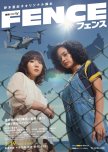
In Okinawa, Japan there is a fence. Even after more than 80 years after the second world war which lead to countless loss of lives in Japan and particularly in Okinawa, there is military occupation by American here, guarded by this fence. And while it appears to be a flimsy fence, it is formidable because it fiercely protects its American inhabitants, including criminals, from prosecution. And like an open wound that festers and bleeds, it affects the safety of Okinawans even today, inspiring massive protests.
In the backdrop of this fractured history, Kie, a magazine writer reaches Okinawa to investigate Omine Sakura's claim of being raped by three men, all American soldiers. But they can neither be investigated nor punished in Japan because according to the treaty signed after the war, only the American established NCIS is allowed to investigate crimes committed by Americans. You see the irony in that.
"Even if I wanted to resist, I couldn't move.” With officials who are dismissive, insensitive and blame the victim, and whose hands are now tied because of the Japanese -American treaty, how do we even begin to talk about the paralysis of a rape victim in that moment.
As Kie tackles a man a head taller than her, putting her self defence to work, she is still beaten and laments the fact that she is a woman, the one weakness that she cannot change. Misogyny, assault, gender based violence, groping, rape, ipv/dv is so deep rooted in our lives so as to be a part of it, with every other woman having a horror story to tell. But “Fence” takes this weakness and changes it into strength because it demonstrates women being kind, strong, brave and healing to others and themselves.
Okinawa depicts a curious mix of culture as the lives of both Americans and Okinawans intersect and mingle. And their biracial children feel a very different form of racism and social disconnect as experienced by our second lead, Omine Sakura. There's the routine racism that Sakura, because she externally resembles the Americans at the base, where her identity is questioned or worse irredeemably slotted based on her appearance. Then there's the will meaning presumptive racism demonstrated by Kie herself when she attempts to speak english to Sakura who doesn't speak a word of it.
And there's racism rooted in misogyny too demonstrated in the word Amejo, used as a derogatory term to refer to the women who want to have sex with American men. Not only does it demonstrate racism, but the misogynist outlook where the men own the women and can therefore comment on their change of ownership thus.
But again, this is not just a show “merely” about this. Like all humans, there is are no neat boxes in which you can slot anything really. Our beauty and the most curious parts of us lie in that vast grey area in which each of us and our humanity is challenged by crime, greed, malice and hatred and where we give in to the bad or triumph over it and heal. 9/10
In episode 5, the opening has images of the past, the tragic past recorded in grey scale but towards the end of the same episode we are introduced to "Bingatas", colourful stencilled patterns on cloth that are traditional to Okinawa. And as the individuals undergo therapy and find peace in sketching these vibrant patterns we are left the beautiful message of healing. The final words in Fence are the lyrics from the theme song TSUBASA by Okinawan rapper Awich who says, "You got this."
In the comments, @ TheRealDeal refers to "Fence" as a revolutionary show and it is nothing short of that. This is not about geopolitical crises, war, rape, crimes against women and children, racism and social inequality– atleast it not just about these, “Fence” is the story of a people. It's strongest suit is it's humanity as it goes about these topics in a span of five powerful episodes that will grip your attention till the end.
In Okinawa, Japan there is a fence. Even after more than 80 years after the second world war which lead to countless loss of lives in Japan and particularly in Okinawa, there is military occupation by American here, guarded by this fence. And while it appears to be a flimsy fence, it is formidable because it fiercely protects its American inhabitants, including criminals, from prosecution. And like an open wound that festers and bleeds, it affects the safety of Okinawans even today, inspiring massive protests.
In the backdrop of this fractured history, Kie, a magazine writer reaches Okinawa to investigate Omine Sakura's claim of being raped by three men, all American soldiers. But they can neither be investigated nor punished in Japan because according to the treaty signed after the war, only the American established NCIS is allowed to investigate crimes committed by Americans. You see the irony in that.
"Even if I wanted to resist, I couldn't move.” With officials who are dismissive, insensitive and blame the victim, and whose hands are now tied because of the Japanese -American treaty, how do we even begin to talk about the paralysis of a rape victim in that moment.
As Kie tackles a man a head taller than her, putting her self defence to work, she is still beaten and laments the fact that she is a woman, the one weakness that she cannot change. Misogyny, assault, gender based violence, groping, rape, ipv/dv is so deep rooted in our lives so as to be a part of it, with every other woman having a horror story to tell. But “Fence” takes this weakness and changes it into strength because it demonstrates women being kind, strong, brave and healing to others and themselves.
Okinawa depicts a curious mix of culture as the lives of both Americans and Okinawans intersect and mingle. And their biracial children feel a very different form of racism and social disconnect as experienced by our second lead, Omine Sakura. There's the routine racism that Sakura, because she externally resembles the Americans at the base, where her identity is questioned or worse irredeemably slotted based on her appearance. Then there's the will meaning presumptive racism demonstrated by Kie herself when she attempts to speak english to Sakura who doesn't speak a word of it.
And there's racism rooted in misogyny too demonstrated in the word Amejo, used as a derogatory term to refer to the women who want to have sex with American men. Not only does it demonstrate racism, but the misogynist outlook where the men own the women and can therefore comment on their change of ownership thus.
But again, this is not just a show “merely” about this. Like all humans, there is are no neat boxes in which you can slot anything really. Our beauty and the most curious parts of us lie in that vast grey area in which each of us and our humanity is challenged by crime, greed, malice and hatred and where we give in to the bad or triumph over it and heal. 9/10
In episode 5, the opening has images of the past, the tragic past recorded in grey scale but towards the end of the same episode we are introduced to "Bingatas", colourful stencilled patterns on cloth that are traditional to Okinawa. And as the individuals undergo therapy and find peace in sketching these vibrant patterns we are left the beautiful message of healing. The final words in Fence are the lyrics from the theme song TSUBASA by Okinawan rapper Awich who says, "You got this."
Was this review helpful to you?


