


My review to this film
I have just finished this masterpiece and Oh, I'm so in love with it. It has been a long time since I've watched such a good movie, which is almost flawless from every aspect, the plot, the character, the story line, the actors and the acting too. It's all very good and well-developed, which makes me wonder why this masterpiece is not that widely regconized and popular, compared to other overrated BL series. The main the reason that I can probably think of is the strict censorship from Chinese film industry, which has hindered the widespreadness of this film. But this movie is totally underrated, and I would say I highly reccommend this series.Was this review helpful to you?
An exceptional artistic work with well-crafted storylines, excellent acting, meaningful messages
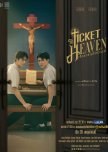
I finally finished watching Ticket to Heaven, a series that I have been following for over a year, from its very first pilot and trailer all the way to its official release.After such a long wait, I can confidently say that Ticket to Heaven is an exceptional drama. Simply calling it “good,” however, hardly does it justice. If I had to choose a single word to describe what makes this series so remarkable, it would be “subtle.”
Its brilliance lies in its subtlety in the carefully crafted symbolism woven into even the smallest details, and in the way the director seamlessly incorporates religious values and reflections on life into every frame. Although Ticket to Heaven is fundamentally a love story, it reaches far beyond romance. It thoughtfully explores themes such as domestic abuse, maternal love, religious extremism, and, most importantly, the relationship between faith and personal freedom.
What impressed me the most was the way the series offers a deeply compassionate answer to questions surrounding religion, particularly the meaning of faith itself. At the heart of the story are Barth and Tanrak, two people with completely different backgrounds and personalities, who nevertheless find solace in one another and gradually heal the wounds they have carried for years.
Tanrak is an orphan who has spent his entire life growing up in a seminary. Raised with unwavering faith in God, he dreams of one day reaching Heaven so he can reunite with his parents. His life has always revolved around discipline, obedience, and devotion. Everything changes, however, when Barth enters his world.
Unlike Tanrak, Barth is quiet, rebellious, and deeply scarred by his past - a past that has caused him to lose his faith in God. His presence slowly unlocks the emotions that Tanrak has spent his entire life suppressing. For the first time, Tanrak is forced to confront the most profound aspects of being human: love, desire, and the longing both to love and to be loved.
One of the things I admire most about Ticket to Heaven is that it never frames Tanrak’s emotional struggle as a betrayal of his faith. His faith in God is never what truly wavers. Instead, it is the way he sees himself that begins to crumble. Convinced that his feelings are shameful and sinful, Tanrak is consumed by guilt. Yet through his own experiences - and through Lek’s story - he gradually realizes that he is, above all else, simply human, and that he deserves to love and be loved just like everyone else.
Perhaps my favorite line in the entire series is:
“If God teaches us how to love, yet we are forbidden from loving one another, then what is the purpose of God in this world?”
To me, this sentence captures the very heart of Ticket to Heaven. Love itself is never the sin. What should be condemned are the harmful actions born from uncontrolled desire or love taken to destructive extremes. Barth and Tanrak’s relationship, however, is neither selfish nor corrupt. It is passionate, sincere, and profoundly pure. Their desire is not portrayed as something that destroys them, but as something that draws two wounded souls closer together.
For that reason, Ticket to Heaven is far more than a beautiful romance. It is a story about redemption, forgiveness, and learning to embrace who we truly are. Personally, I have yet to watch another Thai BL series that balances compelling storytelling, emotional depth, and meaningful themes as successfully as Ticket to Heaven.
Beyond its screenplay, Ticket to Heaven is meticulously crafted in both its visual storytelling and sound design. I have always been drawn to films that use cinematic language to tell their stories rather than relying solely on dialogue, and Ticket to Heaven excels in this regard.
Every shot feels purposeful, carrying layers of meaning beneath its surface. Many seemingly ordinary images invite multiple interpretations, allowing different viewers to discover their own understanding of the characters and themes. This subtle use of symbolism is one of the reasons the series continues to linger in my mind long after it ends.
The soundtrack deserves special recognition as well. Every piece of music is thoughtfully placed, perfectly complementing the emotional atmosphere of each scene. I was especially impressed by the director’s decision to include “Korn” by Moderndog. Not only does the song fit the story’s 1990s setting, but its lyrics also mirror Barth and Tanrak’s relationship - a love that ultimately becomes a source of healing and salvation for them both.
Another aspect that genuinely surprised me was the cast’s performance. The supporting actors all delivered convincing portrayals, while Gemini and Fourth exceeded every expectation I had. Fourth, in particular, deserves immense praise for taking on such a demanding role. He doesn’t simply portray Tanrak- he completely inhabits the character, capturing every layer of his inner conflict, vulnerability, and emotional turmoil with remarkable authenticity.
The chemistry between Gemini and Fourth is equally extraordinary. Through nothing more than lingering glances, subtle gestures, and moments of silence, they make the audience believe in Barth and Tanrak’s love. Their connection never feels forced or exaggerated; instead, it unfolds naturally, allowing their emotions to speak louder than words ever could.
If I had to point out one aspect that is both the series’ greatest limitation and, paradoxically, one of its greatest strengths, it would be its runtime. With only six episodes of roughly eighty minutes each, Ticket to Heaven has relatively little time to explore a story filled with multiple characters and complex themes. As a result, some viewers may wonder exactly when Barth and Tanrak fell in love, or wish that certain emotional developments had been explored more extensively.
Yet this limitation also highlights the extraordinary craftsmanship of both the director and the cast. Hardly a single scene feels unnecessary. A single glance, a brief silence, or a carefully composed visual metaphor can reveal an entire emotional journey without requiring lengthy exposition. That is precisely why I believe Ticket to Heaven is a series that becomes even more rewarding upon rewatch. The more closely you pay attention, the more layers you uncover.
If I were to compare Ticket to Heaven with another BL film that also explores the intersection of love and religion, the first title that comes to mind is Your Name Engraved Herein. From the moment I learned about Ticket to Heaven, I was reminded of Jia-Han and Birdy’s passionate yet ultimately heartbreaking love story.
What sets Ticket to Heaven apart, however, is the compassion with which it approaches religion. Rather than presenting faith as something that must be abandoned in order to embrace love, the series suggests that the two can coexist.
In Your Name Engraved Herein, Jia-Han directs his anger toward his faith, toward God, and toward a society that suffocates a love that is both innocent and sincere. Tanrak’s conflict, on the other hand, is entirely internal. He never resents God. Instead, he fears rejection, he fears that his feelings make him fundamentally wrong.
His journey, therefore, is not about losing his faith but about reconciling it with his true self.
That is perhaps the most beautiful message Ticket to Heaven offers: faith and love are not inherently opposed to one another. The challenge is not choosing between them, but finding the courage to embrace who you are while remaining faithful to what you believe. Barth’s love never pulls Tanrak away from God; rather, it gives him the strength to finally accept himself.
For that reason, I believe Ticket to Heaven concludes with an ending that is not only satisfying for Barth and Tanrak, but also deeply meaningful for every viewer who has ever wrestled with the same questions of identity, faith, and belonging.
Was this review helpful to you?


