
 Editorials
v6.7
- TV ShowsTop Shows Most Popular Shows Variety Shows Newest Upcoming Reviews Recommendations Recommended For You Add New Title Editorials
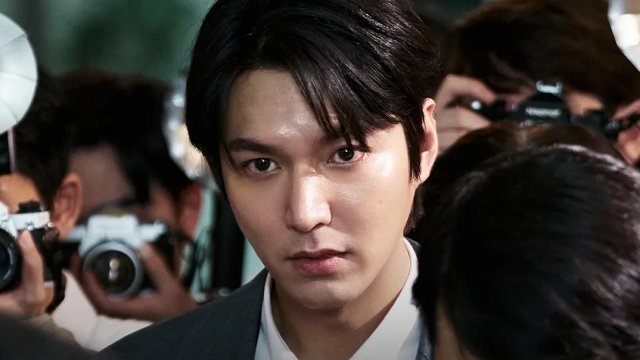



I would like to see 'Mama' show up in Korea to see her 'step' grandchild. Her presence along with her son, essentially Yoo Bo Na's stepbrother, could set in motion turmoil in the local criminal community endangering Yoo Bo Na's family once again.
Now that the husband is in the know about her true occupation, the next one to make the transition might be the police detective, Lee Dong Jin, and or her sister in law, Kwon Se A.
A Bona Fide Killer's Bo Na is only the latest in a long line of vigilante killers. The one that came to mind watching Bo Na is the character Dexter.
The Dexter TV (and book) series is about a forensics expert embedded in the Miami, Florida police department who uses his position and access to data to hunt down and torture to death other serial killers before the police can catch them. That series lasted eight seasons although the last few were of declining quality. And then there are at least three spin off series. So A Bona Fide Killer series has plenty of room for more seasons.
Bo Na and Dexter share characteristics but differ in other ways. Both had traumatic childhoods which left them with mental scars and their social skills deficient. Both became proficient at killing and lacking any guilt about it. They both focus on criminals who are guilty of crimes. In Dexter's case he only kills other murderers who have killed more than one person. Bo Na and her colleagues as she explains in an early episode only kill those who have escaped the full measure of justice from the system.
In the book series version of Dexter (departed significantly from the version we see in the TV series) he has what he calls a dark passenger in his head. In the TV series the writers/producers portrayed this as mental illness, but in the books it's an actual demon like essence that entered him when he suffered his childhood trauma and struck an unusual bargain - as long as Dexter delivered up victims to be tortured it would allow Dexter to more or less live normally. When Dexter's father, a police officer, realized the dark path his son was on he taught him a code - how not to get caught and to only kill other serial killers.
Bo Na by comparison kills from a distance, sniping her victims - a quick clean death.
Dexter reminds me of Portia spiders, a genus of jumping spiders known for their unusually intelligent hunting behaviors. An average serial killer focuses on the weak and unwary, but Dexter went after other killers including gangsters. He gave his victims a painful exit from this life (e.g. Judge From Hell).
Both Bo Na and Dexter had families. Both displayed murderous tendencies when anyone threatened children and in particular their own.
Both are superheroes with superpowers. Dexter's derive from his dark passenger which will help him capture his victims, and we don't know where Bo Na's come from but she displays some pretty extreme skills.
In any case if you liked this series the original Dexter books and early seasons of the Dexter series are a good bet.
I doubt Ha Young knew the details of her family's connection to the Japanese during the occupation. If she had known she would have kept quiet during that interview.
The argument that people alive today have benefitted from what their collaborator ancestors did during the occupation is weak at best for several reasons.
Ha Young is four generations removed so any benefit is extremely weak and cannot justify any legal recourse to her or her family, and certainly should not justify retaliation against her for a few prideful comments during an interview. I'm guessing that like all families her parents and grandparents neglected to mention the negative associations of her great grand father and emphasized only his positive accomplishments.
I suspect among Koreans alive and about it is the exceptional person who does NOT have any ancestors who collaborated with the Japanese during their 50 year occupation.
And along more provocative lines, I also suspect that the horrible 50 year Japanese occupation by Japan on net benefitted Korea as a whole. The Japanese at that time were the most successful Asian culture at the cutting edge of Westernization and it is undoubted they brought painful but important improvements into Korea. Sorting out blame for what happened more than 80 years ago is something attractive to the narrow minded self righteous types. In fact it cannot be done by even the most dedicated person who in any case cannot because of the knowledge problem: no one alive today can know all the relevant facts.
I hesitate to point out that as far as occupations go, both Korea and Japan have 'occupation' forces in place since the end of WWII.
I do not mean to take anything away from the very real struggles by Koreans to bring real democracy to Korea, but I suspect most are not aware of the role President Reagan had in bringing that about. When in the fight against the 2nd world totalitarian regimes the 1st world US (democracy) supported many dictators in the 3rd world there was a saying post WWII to the effect that so and so dictator may be a son-of-a-bitch, but he's our son-of-a-bitch. President Reagan decided to resolve this contradiction. He quietly sent high level emissaries to several of these 3rd world dictators and directed them to transition to democracies and then retire. I remember the short list included Panama, the Philippines, and also South Korea.
“We must all turn our backs upon the horrors of the past. We must look to the future. We cannot afford to drag forward across the years that are to come the hatreds and revenges which have sprung from the injuries of the past.” Quote from Winston Churchill, who also said, “If we open a quarrel between the past and the present, we shall find that we have lost the future.”
Today we should leave righting past wrongs to God to sort out and leave Ha Young to live her life.
A Bona Fide Killer is my best so far in 2026, very entertaining with surprising twists. It blends comedy, action, and drama, sometimes emphasizing one or the other and making the whole work.
I just finished episodes 5 & 6 and this just gets better and better with an enjoyable collision of new subplots, new characters, and more backstory reveals.
My best find of 2026.
I in particular appreciated the background history on how K dramas evolved. However his title is a bit of clickbait overstatement and this is true for several reasons.
Early on he reviews how K dramas had limited distribution outside Korea and compensation was limited and delayed or never achieved. Later they realized they were underpricing their distribution deals into China, Japan and SE Asia and began to charge more - a market adjustment in pricing to reflect a higher market determined value.
All the production companies rejected the script idea for The Squid Game repeatedly over years and then Netflix stepped in and financed it, which started a major shift as Netflix started accessing more Korean product both licensing older shows and initiating new productions. The value of these products both new and old was suddenly higher which led to more money flowing in not only from Netflix but also other foreign streamers eager to get in on the deals. Is this ‘hyperinflation’ as the Asian Boss terms it or simply a market adjustment. Netflix immediately distributes Korean product into over 190 countries. Disney+, Hulu, AppleTV also all have major extensive distribution networks that generate greater income and therefore profit which in turn means that as the global markets discover the higher value of Korean product they of course are going to pay more to obtain access to new productions (or license older stuff now having higher value). This is not hyperinflation. Inflation generally means paying more in nominal currency for the same value, but these Korean productions are worth more and therefore that higher demand generates higher income for the makers. How that income is distributed down the production chain may have problems but those existed before Netflix and continue now but due to no fault of Netflix.
Is there any ‘trap’ at all? Yes, the makers of Korean product are incentivized to pursue bigger budget productions but are the incentives any different regarding creativity and safety? Under the older system of much smaller budgets and profits, weren’t they also just as motivated to pursue ’safe’, known and sure productions? The Squid Game could have been made years before Netflix picked it up but wasn’t, because it was too different, and therefore unsafe? Netflix took the risk and benefited. So there is no trap. All that’s happened is that the global market has discovered hidden value in Korean storytelling and is paying up to gain access. More money floods into the Korean system and of course this destabilizes - temporarily - the system but have the creative incentives changed? I doubt it. Imbalances may have been created but this is not a collapse nor are K dramas ruined forever.
Whether the Korean audience reaction has any impact depends in part on what percentage of total revenues that audience generates compared to the total revenues from the international audiences. I've read in past articles here that some Korean series were considered failures in Korea but big hits abroad (e.g. It's Okay to Not Be Okay?). Are we going to see Korean productions that are made to appeal to the international crowd and deliberately ignoring Korean sensibilities?