



REAL MEANING OF "MO LI" (THE FIRST JASMINE)
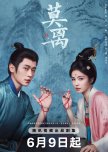
The title means 'never part' and perfectly captures the profound devotion and unshakable bond between two highly traumatized, fiercely intelligent leads who start with separate revenge agendas but become each other's sole anchors. On the surface, Bai Lu plays the traditional role of a noble daughter seeking vengeance for the destruction of her clan's legendary Lishan Academy. But she portrays Ye Li with many hidden layers. Ye Li is plagued by nightmares and trauma from her eight-year exile on Mount Li. She talks to people who aren't there and masks her deep fear with modern, quirky resilience. Her dialogue is a brilliant study in subtext; she rarely says exactly what she means, and her language is always like chess, thinking ten moves ahead. On the other hand, Cheng Lei leaves behind the 'cold but secretly OP' male lead trope. Mo Xiuyao is a heavily traumatized, disabled commander confined to a wheelchair, riddled with survivor's guilt after the massacre of his brother and his army. Cheng Lei delivers a powerhouse performance. He beautifully portrays the raw frustration of physical limitation, bitter self-loathing, and the agonizing restraint required to bow to the Empress Dowager, the very woman responsible for his family's ruin, to maintain national stability.
Furthermore, the romance of The First Jasmine is arguably one of the most rewarding slow-burns in recent C-drama history, as it relies on earned intimacy rather than forced tropes. Ye Li's love language is fundamentally food, a trauma response to her starving years at Lishan. In the early episodes, her way of chipping away at Mu Xiuyao's defensive walls is simply bringing him honey cakes, millet porridge, and lotus cakes. The visual transformation of the Ding Manor from a dark, isolated 'man-cave' to a place of warmth, laughter, and soaring kites is a beautiful representation of their mutual healing. They don't just fight side by side; they quietly piece each other back together. The production doesn't rely on cartoonish, one-dimensional villains. Characters like the Empress Dowager and even the scheming Prince Mo Jingli are driven by understandable, deeply human motivations of self-preservation and fear. The drama asks heavy moral questions: 'When your family has been framed and slaughtered, do you accept the status quo for the sake of the country's peace, or do you burn everything down for justice?" It beautifully anchors this dilemma in traditional philosophy, emphasizing that true justice and state governance must begin with cultivating one's internal character and harmonizing the family first.
However, this drama has a few flaws. Around the midpoint (specifically the Cangbei arc involving Princess Ling Yun and Su Zhi Die), the pacing hits a few speed bumps. The drama occasionally introduces new subplots before entirely wrapping up previous ones, which can cause minor narrative whiplash. Viewers looking for explosive, melodramatic confrontations might find some of the political resolutions a bit flat or quietly intellectual. It is a show that rewards patience and favors tight dialogue over chaotic action.
In conclusion, The First Jasmine is a beautifully directed, cinematic, and thought-provoking masterpiece. With an exceptional, film-like musical score, stunningly restrained acting, and a script that treats its audience with intellectual respect, it is a must-watch for anyone who loves high-stakes political intrigue and deeply mature romance.
Furthermore, the romance of The First Jasmine is arguably one of the most rewarding slow-burns in recent C-drama history, as it relies on earned intimacy rather than forced tropes. Ye Li's love language is fundamentally food, a trauma response to her starving years at Lishan. In the early episodes, her way of chipping away at Mu Xiuyao's defensive walls is simply bringing him honey cakes, millet porridge, and lotus cakes. The visual transformation of the Ding Manor from a dark, isolated 'man-cave' to a place of warmth, laughter, and soaring kites is a beautiful representation of their mutual healing. They don't just fight side by side; they quietly piece each other back together. The production doesn't rely on cartoonish, one-dimensional villains. Characters like the Empress Dowager and even the scheming Prince Mo Jingli are driven by understandable, deeply human motivations of self-preservation and fear. The drama asks heavy moral questions: 'When your family has been framed and slaughtered, do you accept the status quo for the sake of the country's peace, or do you burn everything down for justice?" It beautifully anchors this dilemma in traditional philosophy, emphasizing that true justice and state governance must begin with cultivating one's internal character and harmonizing the family first.
However, this drama has a few flaws. Around the midpoint (specifically the Cangbei arc involving Princess Ling Yun and Su Zhi Die), the pacing hits a few speed bumps. The drama occasionally introduces new subplots before entirely wrapping up previous ones, which can cause minor narrative whiplash. Viewers looking for explosive, melodramatic confrontations might find some of the political resolutions a bit flat or quietly intellectual. It is a show that rewards patience and favors tight dialogue over chaotic action.
In conclusion, The First Jasmine is a beautifully directed, cinematic, and thought-provoking masterpiece. With an exceptional, film-like musical score, stunningly restrained acting, and a script that treats its audience with intellectual respect, it is a must-watch for anyone who loves high-stakes political intrigue and deeply mature romance.
Was this review helpful to you?


