



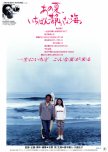
A Scene at the Sea is imbued with love, tenderness and beauty
A modest smile at the corners of a deaf young man's lips, a solitary tear of hurt glimmering beneath the lowered lashes of a sweet, endearing girl, the daily walk to the sea—Takeshi Kitano not only has the ability to recognize the beauty in such moments, but also the rare gift of conveying it to the audience. With every frame, he quietly declares his love for ordinary people, whether they are sweeping the streets, playing pickup soccer in a neighborhood lot, or selling surfing equipment.To many, Shigeru's life may seem monotonous, unremarkable, filled with naïve and seemingly pointless aspirations. Yet that does not make it any less precious to him. It is the only life he has, and he adorns it with dreams, filling it with moments of joy for as long as he possibly can. Takeshi Kitano is an observer—but not the detached, indifferent kind who abandons the audience to the characters' fate. Rather, he is a creator, surrounding them with a quiet, compassionate gaze. He cannot alter the course of events, yet his presence is felt from the opening scene to the final frame.
A Scene at the Sea is imbued with love, tenderness, and beauty, whose delicate fragility finds its perfect reflection in Joe Hisaishi's exquisite score. Deeply attuned to the film's gentle spirit, Hisaishi discovers exactly the right emotional register. And once again, the timeless truth comes to mind: happiness always walks hand in hand with inner peace, and it can never be found in material prosperity alone.
Was this review helpful to you?
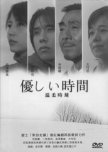
In terms of pacing, this series is pure chillout
In terms of pacing, this series is pure chillout—slow, contemplative, and mesmerizing in its rhythm. Its gentle tempo soothes and comforts, drawing you in with quiet confidence. Without exaggeration, it feels like wrapping yourself in a warm wool blanket, easing away every emotional chill and every frostbitten corner of the soul.At its heart, this is the story of a father and son finding their way back to each other after a long and difficult journey. It explores pain, hardship, and the deeply human realities of life—where there is no room for fairy tales.
I would recommend this series to mature viewers, to those who have lived enough to carry the weight of experience and their fair share of mistakes. To people who truly understand the cost of an error, the bitterness of guilt, and the burden of remorse. To those who know that sometimes all it takes to forgive is one warm, loving glance from someone who loves you in return—a glance capable of sweeping away even the darkest shadows of the past.
And to anyone living with profound loss, for whom there is nothing strange about talking to loved ones who are no longer here. If that is you, this series may become something genuinely kind, comforting, and healing.
Was this review helpful to you?

This review may contain spoilers
Love letter to haute cuisine and to the emotions that truly exceptional food can evoke.
The main story follows the rise of a new, ambitious restaurant, exploring how the team comes together and the challenges they have to overcome along the way.The restaurant business is portrayed with a certain amount of glamour and romanticism, but at its core it feels remarkably authentic. What makes this drama especially refreshing is that, unlike most stories about fine dining, it doesn't place the head chef at the center of everything. Instead, it highlights the importance of service, the art of wine pairing, and even offers a glimpse into the business side of the industry, building its conflicts around securing funding, cutting costs, and maintaining relationships with suppliers.
This drama is, above all, a love letter to haute cuisine and to the emotions that truly exceptional food can evoke.
I'm genuinely impressed by how skillfully the creators held my attention, making me binge one episode after another without relying on manipulation, excessive melodrama, elaborate plot twists, or any of the usual devices used to keep viewers hooked.
The storytelling is refreshingly straightforward. There's almost no ruthless rivalry with competitors, hardly any betrayals, and even a tender romance is notably absent.
Instead, you simply watch the characters learn, search for suppliers, build healthier relationships, and discover new sides of themselves.
The central conflict—the one that sets countless problems in motion—stems from an allergic reaction suffered by a customer at the protagonist's former restaurant. In my opinion, the industry's response is exaggerated and somewhat contrived. Still, I accepted it as part of the premise. It doesn't dominate the narrative throughout, but it does serve as the catalyst for the team's growth and growing sense of unity.
It's honestly difficult to single out what this drama does well, because nearly everything about it works. And all of those strengths are amplified by the simplicity of its story, the clarity of its message, and the depth with which it explores its subject.
Was this review helpful to you?
This review may contain spoilers
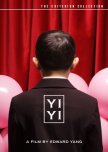
Yi Yi is a film you can watch once, or twice—or five times
At the heart of the film is NJ, the father of a typical Taiwanese family, who finds himself overwhelmed by a cascade of problems familiar to many men in their forties. His wife is struggling emotionally, his mother-in-law has fallen into a coma, his teenage daughter is experiencing first love, and his young son, Yang-Yang, continually invites those around him to see life from unexpected perspectives. It is no coincidence that Yang-Yang appears on most of the film’s posters. Through the boy’s words and actions, Edward Yang conveys the film’s deepest wisdom and central ideas. In Yang-Yang’s relationship with the world—and the world’s relationship with him—we find a profound vision of an existence that is sincere, open, and free from prejudice.Edward Yang constructs his narrative from every thread that contributes to the protagonist’s crisis, creating a film in which virtually every character could be considered the main character. At times, this makes the film feel demanding, even overwhelming, as its ensemble cast can seem almost too expansive. But this complexity is precisely what gives the film its extraordinary realism.
Yi Yi is a film you can watch once, or twice—or five times. With each viewing, you are likely to discover something new: a memory of first love, an encounter with a long-buried past, a difficult teacher from your school days, or one of those moments when moving forward seemed impossible. Or perhaps you will simply be touched by the film’s quiet melancholy, as gentle as a cool October breeze brushing against your face, stirring memories of something deeply cherished.
Was this review helpful to you?
This review may contain spoilers
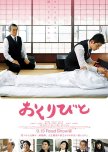
The film quietly suggests that death is not an ending, but the beginning of something new
With the gentle, lyrical sound of the cello as its backdrop, Yōjirō Takita's Departures tells the story of Daigo, a Japanese cellist left without work or a means of supporting himself after the dissolution of his orchestra, which had failed to attract audiences largely indifferent to classical music.Then, in one of life's unexpected twists, fate leads the unsuspecting Daigo to a funeral home. Its wise and compassionate owner has transformed the ritual of preparing the deceased for burial into a refined art form, and he hires the timid former musician—who has never even seen a dead body—as his assistant almost on the spot.
The film quietly suggests that death is not an ending, but the beginning of something new. This idea is conveyed through scenes in which Daigo gently washes the bodies of the deceased, carefully wraps them, delicately applies makeup to their closed eyes, and dresses them in beautiful garments. He prepares them not simply for burial, but for a graceful passage into another existence—as though they were brides entering a new chapter of life in magnificent wedding gowns.
Apart from its subject matter, the film's style of storytelling deserves special praise. First, its pacing is remarkably calm and unhurried. Long, meticulously composed shots allow the audience to absorb every detail of the encoffining ritual: every movement of the hands, every careful stroke of the brush carries meaning. Watching these scenes, one feels less like a distant observer behind a television or computer screen and more like a silent participant standing among the grieving relatives, witnessing the final preparation of their loved ones for the infinite journey beyond.
Was this review helpful to you?

This review may contain spoilers
Recommend to those who enjoy the mystical and supernatural genres
I haven’t read the manga or watched the anime, but the theme of yokai really interests me. And this drama is exactly my kind of thing. I liked absolutely everything about it: the plot, the meaning, the cinematography, the costumes, beautiful scenery, special effects, well-executed stunts, music, acting, and of course the actors themselves.A 14-year-old delinquent dies while saving a child, and he is met by a grim reaper who offers him a job as a ghost detective. That’s where it all begins. The eternal struggle between good and evil… And it’s shown well here that even evil can feel compassion and not be purely evil, but only partly so in form. The drama does a great job revealing the story of each character and showing their relationships. Overall, the film is very easy to watch. There are no meaningless dialogues; everything is to the point, and there’s even humor in some of them. I liked that people and yokai unite to achieve a common goal. Thanks to films like this or “Youkai Sharehouse,” you can get acquainted with yokai culture and learn more about Japanese mythology. The on-screen portrayal of some yokai is truly impressive and astonishing. Just think of the little fox with poisonous flowers or the boy with a dragon arm. There’s also an interesting character in the heavenly office — a guy with a pacifier.
I definitely recommend it not only to fans of anime and manga, but also to those who enjoy the mystical and supernatural genres.
Was this review helpful to you?

"Beach Boys" is very cozy and heartfelt drama.
"Beach Boys" is a good old Japanese retro from before modern technological wonders and all those smartphones—very cozy and heartfelt drama.It’s like a life-affirming ode to youth: summer, sun, ocean, beach, the sound of the surf, as well as complete freedom and open roads—a real healing cocktail for melancholy, light and pleasant in taste, warming but with a slight bitterness, garnished for the mood with an umbrella of humor. Recommended for any time of year!
Are we happy? Are we satisfied with life, and how do we find our path, our place, our “own ocean” in this world?
The question of self-determination can be pressing not only at 17–18. At any age, people can rethink and change their lives, if only they have enough strength and courage—and the support of understanding, close people is very important.
But even if you yourself can only timidly dream of turning off the comfortable, well-trodden path, just watching it on screen is incredibly inspiring.
Young, wonderful Sorimachi Takashi and Takenouchi Yutaka form a magnificent male duo in this drama. The characters have completely different personalities and life experiences, but between them we see a true bromance, chemistry without any hint of ambiguity. By a twist of fate, finding themselves neighbors in a cramped little room, they gradually get used to each other—irritation gives way to patience, then comes understanding and genuine, sincere friendship.
Was this review helpful to you?

Quite short but pleasant drama about how a modern girl ends up three hundred years in the past
“The Girl Ashigaru” is quite a short but pleasant Japanese drama about how a modern girl ends up three hundred years in the past. If I had to describe the drama in just one word, the first thing that comes to mind is “purity.” That’s the impression it left on me. And above all, it’s the purity of feelings from the main heroine, Yui. According to the plot, she’s an ordinary high school girl who doesn’t shine intellectually, studies poorly, but is cheerful and open with everyone. That’s exactly why almost all the characters in the film respond to her sincerity, and some even become “infected” by her purity and become better themselves. At the same time, there’s no direct moralizing or pushy “let’s all live in harmony” message anywhere. Yui simply becomes that ray of sunshine and a kind of guidepost in a dark world. Even though the time period is shown as harsh—dirt, hunger, battles, etc.—it’s easy to watch. Maybe because the episodes are short, and the director didn’t overload us with gloom and political games… Thanks to him for that. So the pacing isn’t dragged out—that’s a big plus. There’s romance, intrigue, and also comedic moments.Another plus is the lack of excessive introspection in the characters; they don’t get distracted by secondary matters, but once they set a goal, they stubbornly strive to achieve it. As for the acting—I liked both the main and supporting characters.
Overall, I recommend this drama for watching.
Was this review helpful to you?


