
 News
News 


Song Chen is the best character, while young Lu Zhi (the adult Lu Zhi almost has nothing to do with the young one, just to keep the suspense) is the most interesting one. It's funny how young Lu Zhi is only listed as the 7th character in this drama, considering how important he is to the plot.
The director is definitely talented, and the production quality is top-notch. The cinematography is also outstanding. It truly captures the feel of the ancient Ming Dynasty, which was one of the most prosperous periods in Chinese history but also the one of the most autocratic of all Chinese dynasties, emphasizing Neo-Confucian values, rigid social controls, and female chastity. The lighting in this drama is used brightly, portraying both the prosperity and the suffocating atmosphere of that era.
Was this review helpful to you?
If you want romance, the first half is for you.
If you want a female career focus, the second half is what you should watch.
Acting: All the actors did justice to their roles. There are a few scenes where I think the acting could have been better, but those are just small details. Overall, the chemistry between the main leads is very good, especially in the first half. It has a very classic feel to it.
Plot: A bit lacking toward the end, but overall, I think the writer knows how to write heart-fluttering moments.
Directing and music: This is the strongest point of the drama. We really need more female directors to convey the subtle details of romance. The classic atmosphere and the beauty of ancient China can truly be felt through the camera work and music direction. The scenes in episodes 8 and 9 are especially beautiful, thanks to the director's skill.
The true score should be around 8.5–9, but this pairing is special to me, so I gave it a 9.5 in my review and rated it a 10
Was this review helpful to you?
Acting: I love the James/Taew pairing, so it's not hard to feel their chemistry even with the limited sweet/intimate scenes. The biggest gift this lakorn gave me was an open-mouth kiss from James and Taew (the first and only one from both of them). The other cast members also did a good job in their respective roles.
CGI: Much better than in other lakorns.
OST: Not outstanding, but still has some memorable tracks.
Overall: If I set aside the high expectations I had from reading the novel, it's still a nice lakorn.
Was this review helpful to you?
But Game Sanaeha is my first favorite Thai lakorn. There's still some unnecessary angst, but overall, it doesn't let the characters fall deep into the hateful category, and there are fewer stupid conflicts.
The acting is good. I'm not a fan of James Jirayu. I actually had a not-so-good impression of him before but I love his acting here; it feels natural. His performance as Nai makes me love his character without feeling attracted to him, since I can see them as two different people. Taew is also good; she makes it believable that she is younger than Nai. The chemistry between the leads is phenomenal. It gives this lakorn high rewatch value, especially for their sweet scenes.
As for the characters: Nai is such a gentle, smart, witty, and nice male lead. It's easy to fall in love with his character. Vi (Nok's mother) is a refreshing character too. Nok has some annoying personality traits, but she's kind, strong, and cute enough for me to accept her character. There are still some annoying characters as usual, though.
The weakest link of this lakorn is the stepmother and her relationship with Nok's dad—it drags on for too long.
P.S. After a long time, I've reduced my score by 0.5, but by slap-kiss lakorn standards, this drama is still a good one. It even got adapted into a short Chinese series
Was this review helpful to you?
The original story and characters are already rich, so the drama's main challenge is adapting them to a Chinese setting. It's a blessing that Go is also deeply rooted in Chinese culture, and the screenwriting did an excellent job with that transition. The only minor drawback is Chu Ying's outfit, which feels a bit out of place. But it's understandable, as they needed to preserve Sai's iconic look from the original.
As a coming-of-age youth sports drama (with the main characters in middle to high school), the directing, music, and acting are all solid. The bromance, friendship, and teamwork that fans love in sports anime like Hikaru no Go, Slam Dunk, or Chihayafuru are all present here. This is very much an ensemble drama, though Shi Guang is the central figure and Hu Xianxu delivers the strongest performance. Every character experiences a growth arc, as expected from a coming-of-age story. You can feel the passion for Go in characters from all backgrounds, ages, and genders. The professional Go player path is niche and bittersweet; only a rare few geniuses like Shi Guang and Yu Liang achieve successful careers, but the love for Go transcends professional status. The bromance is strong across generations, from teenagers to young adults to the elderly.
The director even makes a cameo, and his character is quite interesting too.
That said, the drama does have a few flaws. There is a hint of overly patriotic sentiment toward the ending, which, while understandable, feels a bit typical. Additionally, the portrayal of the young Korean Go prodigy leans into racist stereotypes. He is loud and arrogant, and the actor can't even speak natural Korean, which feels off, especially when many real-life famous Korean Go pro-players are known for their calm and introverted demeanors
Was this review helpful to you?
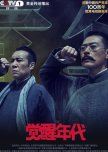
The overall plot revolves around China's cultural movements leading to the establishment of the Chinese Communist Party. It's not a theme I would typically enjoy (I don't even like my own country's dramas on this subject), but this one is genuinely entertaining. The cinematography, music direction, and storytelling are all top-notch. The cast consists of seasoned veterans and talented young actors, so the acting is nothing to worry about.
This period is dark and frustrating, yet the way the drama portrays it always offers a sense of hope. I think that's because it focuses more on cultural movements than on politics, which makes it feel lighter.
One thing to note: the characters are all real historical figures, so some rose-tinted idealism may have been applied to certain portrayals. For a more accurate evaluation of those figures, I recommend doing your own research.
Was this review helpful to you?


