
 Editorials
 2
2 2
2 1
1 2
2 1
1 1
1 1
1 1
1 1
1 1
1 1
1 1
1 1
1 1
1 1
1 1
1


This review may contain spoilers
Sparrow Bones, Phoenix Hearts
Key to the Phoenix Heart does not owe its strength to novelty. Its ingredients are familiar: a feared general with a ruined reputation, a politically arranged marriage, an old military injustice, concealed loyalties and a court already measuring its possible heirs. But familiarity of material is not the same as mediocrity of execution. What makes the drama memorable is the care with which those familiar pieces are presented and allowed to gather meaning.
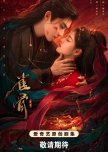
At its centre are two people whose lives have already been claimed by other people’s designs. Xiao Wuyi, heir to Jing’an and the feared “Demon General,” carries the disgrace of a military disaster that sent thirty thousand soldiers to their deaths and begins tracing the corruption beneath it. Xie Jiayu, the mechanically gifted adopted daughter of Grand Tutor Xie Huaigui, is sent into his household as both bride and bargaining piece. Their contractual marriage begins as another move on someone else’s board, but draws them into the same struggle over military power, succession and grievances inherited from an older generation. What grows between them is not an escape from politics, but a private allegiance within it.
This is best approached as a political drama with a strong ensemble and a romance running through it like a steady current. It offers little physical intimacy, but gives considerable attention to the way trust becomes attachment: through shared danger, mutual respect and the repeated choice to stand beside one another. For viewers who find that kind of intimacy at least as compelling as kisses, the relationship can be unexpectedly rewarding.
The Chinese title, 雀骨, literally means “Sparrow Bone”: something seemingly fragile, yet held together by a structure stronger than it appears. The image belongs to both leads. Jiayu enters Jing’an as a pawn but never remains one, while beneath Wuyi’s fearsome reputation lies a failing body sustained by an unyielding sense of duty. Neither is quite what the court assumes, and neither bends easily to the future others have chosen for them.
Jiayu’s knowledge of mechanisms, forging and military equipment gives her a real place in the political narrative. She understands not only that weapons decide wars, but how they are made, compromised and turned into profit at the expense of soldiers’ lives. Ai Mi brings an appealing directness to the role that sits naturally beside Wuyi’s reserve. The writing occasionally makes Jiayu less perceptive than her established intelligence suggests, but she never feels like a heroine whose importance begins and ends with being loved by Wuyi. Her abilities continue to shape her future beyond the court.
Wuyi remains the character around whom the drama gathers most naturally. The reputation of the “Demon General” is neither false nor the whole truth: he can be ruthless, calculating and frighteningly decisive, yet his severity is inseparable from grief. He refuses to let the human cost of that corruption become an abstraction, even while recognising that those within his reach are merely the exposed roots of something buried much deeper.
Hou Minghao preserves these contradictions particularly well. His strongest moments often arrive between words: affection surfacing before Wuyi remembers to conceal it, relief softening him when the people he cares about are safe, or weariness briefly escaping the composure on which his survival depends.
The same tension gives the political struggle its shape. Wuyi is capable enough to rule and burdened enough to accept responsibility, which the court repeatedly mistakes for ambition. Around him, military reform becomes inseparable from succession, loyalty sometimes has to disguise itself as betrayal, and inherited grievances begin directing the future of the state. The throne matters, but the more interesting question is what power demands from those considered fit to hold it, and how much of themselves they must surrender in return.
His relationship with Jiayu offers a quieter counterweight. They become close by learning how the other moves through danger: he respects her choices even when they hurt him, while she tends his wounds without demanding that vulnerability become confession. Their intimacy lies in accumulated acts of trust, in the freedom to leave and the hope of being chosen again.
The drum becomes the loveliest expression of that bond. Jiayu first uses its rhythm to guide Wuyi when his sight fails; after war, separation and lost memory, he sends that same rhythm through the crowd to find her. A battlefield signal becomes their private language, preserving what they mean to one another even before memory can give it a name.
The women give the drama much of its warmth. Wuyi’s supposed “harem” initially appears to confirm the image of a powerful womaniser, only to reveal a chosen household whose women are not arranged as rivals competing for his attention. The older actresses are particularly good, lending the wider story a warmth and history that feel lived rather than merely explained.
Li Lejun represents the darker face of devotion. She understands the harm she causes and continues because she has placed Li Mao’s future above her own moral survival. Ma Qiuyuan keeps the frightened, loyal sister visible beneath the political operative, allowing the character to remain tragic without making her innocent.
Merxat Yalkun gives the Eagle King enough force to make Northern Qin feel like a real threat. Riley Wang fares less well as Li Mao. His apparent estrangement from Wuyi, concealed loyalty and shifting political position require layers that neither the compressed writing nor the performance fully brings into focus. Some of his most important turns consequently feel more abrupt than emotionally revealing.
Peter Ho’s performance as the Grand Tutor also frustrated me, particularly because I have seen stronger work from him in the past. Yet the character’s political project leads to one of the drama’s most bitter ironies. He arranges marriages, identities and other people’s lives around his faith in bloodline and succession, only for a late revelation to reframe the foundation beneath those calculations. It makes his ruthlessness look smaller, sadder and more futile in retrospect.
For twenty-eight episodes, Key to the Phoenix Heart carries an ambitious amount of story. The political plot remains largely coherent, most revelations grow from information already planted, and the antagonists have motives that extend beyond obstructing the leads. The drama rarely requires everyone to become foolish merely to reach its next reversal.
Its shorter length nevertheless works against it at times. Some supporting arcs move from one decisive moment to the next without allowing much aftermath, while occasionally uneven editing makes the transitions feel more abrupt than they should. The memory-loss plot is the clearest concession to convenience, although it passes quickly and leads to a reunion that feels emotionally earned. A little more patience near the end would have given the losses, betrayals and political realignments greater weight.
What elevated the drama for me was not any single revelation, but the confidence with which it told its story. Key to the Phoenix Heart has something of an older long-form drama’s patience—not because it feels dated, but because it trusts story, performance and emotional accumulation. The camera knows when to remain still. Scenes are not broken into endless reaction shots, and emotion is not underlined until the audience has no room left to experience it independently. The drama does not raise its voice merely to ensure that it has been heard.
Even the relatively light filtering contributes to that confidence. Faces retain pores, stubble and fatigue. The actors do not appear sealed away from dust, illness or time; they look as though events have passed over them and left traces behind.
That confidence does not make the drama flawless. Its premise is familiar, its pacing is sometimes too compressed, and not every performance is equally convincing. Some of the makeup sits awkwardly against the otherwise natural visual treatment, but I would still take visible artifice over faces smoothed into featurelessness by aggressive filtering. A few lapses in logic and narrative shortcuts leave certain developments less persuasive than they should be. On construction alone, I would probably place it somewhere around an 8.
Yet I find it impossible to leave it there. Somewhere between the battlefield drum and the sunlit stillness of that final courtyard, these characters stopped feeling like pieces in a political story and became people whose happiness I needed to see protected. The drama did not force that attachment through spectacle or manipulation. It trusted its characters, lowered its voice and allowed me to arrive there on my own.
Lately, very few dramas in this corner of the genre have reached me this deeply. Its shortcomings are real, but they are not the whole of what it achieved. What lingers is the rare feeling of having cared without reservation. For me, that is worth a 9.
At its centre are two people whose lives have already been claimed by other people’s designs. Xiao Wuyi, heir to Jing’an and the feared “Demon General,” carries the disgrace of a military disaster that sent thirty thousand soldiers to their deaths and begins tracing the corruption beneath it. Xie Jiayu, the mechanically gifted adopted daughter of Grand Tutor Xie Huaigui, is sent into his household as both bride and bargaining piece. Their contractual marriage begins as another move on someone else’s board, but draws them into the same struggle over military power, succession and grievances inherited from an older generation. What grows between them is not an escape from politics, but a private allegiance within it.
This is best approached as a political drama with a strong ensemble and a romance running through it like a steady current. It offers little physical intimacy, but gives considerable attention to the way trust becomes attachment: through shared danger, mutual respect and the repeated choice to stand beside one another. For viewers who find that kind of intimacy at least as compelling as kisses, the relationship can be unexpectedly rewarding.
The Chinese title, 雀骨, literally means “Sparrow Bone”: something seemingly fragile, yet held together by a structure stronger than it appears. The image belongs to both leads. Jiayu enters Jing’an as a pawn but never remains one, while beneath Wuyi’s fearsome reputation lies a failing body sustained by an unyielding sense of duty. Neither is quite what the court assumes, and neither bends easily to the future others have chosen for them.
Jiayu’s knowledge of mechanisms, forging and military equipment gives her a real place in the political narrative. She understands not only that weapons decide wars, but how they are made, compromised and turned into profit at the expense of soldiers’ lives. Ai Mi brings an appealing directness to the role that sits naturally beside Wuyi’s reserve. The writing occasionally makes Jiayu less perceptive than her established intelligence suggests, but she never feels like a heroine whose importance begins and ends with being loved by Wuyi. Her abilities continue to shape her future beyond the court.
Wuyi remains the character around whom the drama gathers most naturally. The reputation of the “Demon General” is neither false nor the whole truth: he can be ruthless, calculating and frighteningly decisive, yet his severity is inseparable from grief. He refuses to let the human cost of that corruption become an abstraction, even while recognising that those within his reach are merely the exposed roots of something buried much deeper.
Hou Minghao preserves these contradictions particularly well. His strongest moments often arrive between words: affection surfacing before Wuyi remembers to conceal it, relief softening him when the people he cares about are safe, or weariness briefly escaping the composure on which his survival depends.
The same tension gives the political struggle its shape. Wuyi is capable enough to rule and burdened enough to accept responsibility, which the court repeatedly mistakes for ambition. Around him, military reform becomes inseparable from succession, loyalty sometimes has to disguise itself as betrayal, and inherited grievances begin directing the future of the state. The throne matters, but the more interesting question is what power demands from those considered fit to hold it, and how much of themselves they must surrender in return.
His relationship with Jiayu offers a quieter counterweight. They become close by learning how the other moves through danger: he respects her choices even when they hurt him, while she tends his wounds without demanding that vulnerability become confession. Their intimacy lies in accumulated acts of trust, in the freedom to leave and the hope of being chosen again.
The drum becomes the loveliest expression of that bond. Jiayu first uses its rhythm to guide Wuyi when his sight fails; after war, separation and lost memory, he sends that same rhythm through the crowd to find her. A battlefield signal becomes their private language, preserving what they mean to one another even before memory can give it a name.
The women give the drama much of its warmth. Wuyi’s supposed “harem” initially appears to confirm the image of a powerful womaniser, only to reveal a chosen household whose women are not arranged as rivals competing for his attention. The older actresses are particularly good, lending the wider story a warmth and history that feel lived rather than merely explained.
Li Lejun represents the darker face of devotion. She understands the harm she causes and continues because she has placed Li Mao’s future above her own moral survival. Ma Qiuyuan keeps the frightened, loyal sister visible beneath the political operative, allowing the character to remain tragic without making her innocent.
Merxat Yalkun gives the Eagle King enough force to make Northern Qin feel like a real threat. Riley Wang fares less well as Li Mao. His apparent estrangement from Wuyi, concealed loyalty and shifting political position require layers that neither the compressed writing nor the performance fully brings into focus. Some of his most important turns consequently feel more abrupt than emotionally revealing.
Peter Ho’s performance as the Grand Tutor also frustrated me, particularly because I have seen stronger work from him in the past. Yet the character’s political project leads to one of the drama’s most bitter ironies. He arranges marriages, identities and other people’s lives around his faith in bloodline and succession, only for a late revelation to reframe the foundation beneath those calculations. It makes his ruthlessness look smaller, sadder and more futile in retrospect.
For twenty-eight episodes, Key to the Phoenix Heart carries an ambitious amount of story. The political plot remains largely coherent, most revelations grow from information already planted, and the antagonists have motives that extend beyond obstructing the leads. The drama rarely requires everyone to become foolish merely to reach its next reversal.
Its shorter length nevertheless works against it at times. Some supporting arcs move from one decisive moment to the next without allowing much aftermath, while occasionally uneven editing makes the transitions feel more abrupt than they should. The memory-loss plot is the clearest concession to convenience, although it passes quickly and leads to a reunion that feels emotionally earned. A little more patience near the end would have given the losses, betrayals and political realignments greater weight.
What elevated the drama for me was not any single revelation, but the confidence with which it told its story. Key to the Phoenix Heart has something of an older long-form drama’s patience—not because it feels dated, but because it trusts story, performance and emotional accumulation. The camera knows when to remain still. Scenes are not broken into endless reaction shots, and emotion is not underlined until the audience has no room left to experience it independently. The drama does not raise its voice merely to ensure that it has been heard.
Even the relatively light filtering contributes to that confidence. Faces retain pores, stubble and fatigue. The actors do not appear sealed away from dust, illness or time; they look as though events have passed over them and left traces behind.
That confidence does not make the drama flawless. Its premise is familiar, its pacing is sometimes too compressed, and not every performance is equally convincing. Some of the makeup sits awkwardly against the otherwise natural visual treatment, but I would still take visible artifice over faces smoothed into featurelessness by aggressive filtering. A few lapses in logic and narrative shortcuts leave certain developments less persuasive than they should be. On construction alone, I would probably place it somewhere around an 8.
Yet I find it impossible to leave it there. Somewhere between the battlefield drum and the sunlit stillness of that final courtyard, these characters stopped feeling like pieces in a political story and became people whose happiness I needed to see protected. The drama did not force that attachment through spectacle or manipulation. It trusted its characters, lowered its voice and allowed me to arrive there on my own.
Lately, very few dramas in this corner of the genre have reached me this deeply. Its shortcomings are real, but they are not the whole of what it achieved. What lingers is the rare feeling of having cared without reservation. For me, that is worth a 9.
Was this review helpful to you?


