
 K-Drama
 2
2 1
1


This review may contain spoilers
Xu Kai’s Shen Run Deserved a Better Story
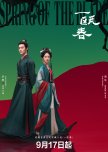
Spring of the Blade is a 30-episode, female-centric revenge story following Xie Qingyuan as she schemes her way back home to clear her mother’s name. Along the way, she reunites with her childhood playmate, Shen Run.
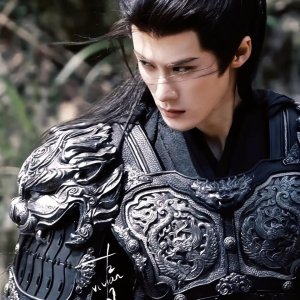
Shen Run is probably one of my favorite characters Xu Kai has portrayed. He’s such a stark contrast to Xu Kai himself—the guy who grabs cart noodles when he’s home and is known for his infectious laughter.
For a while, it felt like Xu Kai was stuck playing either the cold, emotionless male lead, the aloof and silly jealous guy, or being diminished to almost eye candy in female-centric stories. Then he surprised me with his portrayal of Chen Huai in Eight Hundred. And now, with Shen Run, he continues to show me that he has always been capable of portraying complex, nuanced characters—you just have to give him the chance.
Suddenly, all those silly, arrogant expressions from Gu Yanzhen feel darker and scarier. The cold stare of Bai Jue feels more deadly. And the longing expressions of Mei Zhuyu now feel more heartbreaking.
Despite this amazing display of Xu Kai’s acting range, Shen Run is unfortunately stuck in a story that seems determined to wallow in its own “woe is me, I’m a low-budget drama” mentality.
And anyone can argue with me that the budget is the problem, but I think that’s an easy cop-out. I’ve seen lower-budget dramas do much more with stronger writing and more thoughtful filmmaking.
The technical presentation of Spring of the Blade itself leaves much to be desired. What is actually holding this production back from using its locations to their fullest? There is beautiful architecture all around them. Where is the creative use of natural lighting? The intentional framing? The camera movement? A limited budget may restrict what you can build, but it doesn’t prevent you from being creative with what you already have.
And that is especially frustrating because Spring of the Blade gave us so many promises in its character-establishment episodes: two revenge stories, two parallel character arcs, and the promise that their paths would eventually collide in a way that would leave us breathless and filled with longing.
Instead, somewhere along the way, we’ve found ourselves wondering what is even the point of watching this.
The twists aren’t twisting, and the thriller isn’t thrilling.
I feel like what happened to Shen Run has, by now, become something of a norm in C-dramas trying to cater to an overwhelmingly female audience. And, to me, it’s also a representation of what can happen when numbers and analytics begin dictating storytelling—when audience demographics, investor interests, and celebrity followings carry more weight than the story itself.
Female-centric storytelling isn’t the problem. The problem is when creating a “female-centric” story is interpreted as requiring everyone and everything around the female lead to be diminished rather than allowing multiple characters to be fully realized.
Because a great female character doesn’t need the characters around her to become smaller for her to become bigger. If anything, putting her opposite equally complicated, compelling characters gives her more to fight against, more to love, more to lose—and ultimately, more room to become unforgettable herself.
And that may be my biggest disappointment with Spring of the Blade.
What I’ve ended up looking forward to most is Xu Kai’s portrayal of Shen Run—a man I desperately wish had been placed in a better story about love, revenge, and loss.
Shen Run is probably one of my favorite characters Xu Kai has portrayed. He’s such a stark contrast to Xu Kai himself—the guy who grabs cart noodles when he’s home and is known for his infectious laughter.
For a while, it felt like Xu Kai was stuck playing either the cold, emotionless male lead, the aloof and silly jealous guy, or being diminished to almost eye candy in female-centric stories. Then he surprised me with his portrayal of Chen Huai in Eight Hundred. And now, with Shen Run, he continues to show me that he has always been capable of portraying complex, nuanced characters—you just have to give him the chance.
Suddenly, all those silly, arrogant expressions from Gu Yanzhen feel darker and scarier. The cold stare of Bai Jue feels more deadly. And the longing expressions of Mei Zhuyu now feel more heartbreaking.
Despite this amazing display of Xu Kai’s acting range, Shen Run is unfortunately stuck in a story that seems determined to wallow in its own “woe is me, I’m a low-budget drama” mentality.
And anyone can argue with me that the budget is the problem, but I think that’s an easy cop-out. I’ve seen lower-budget dramas do much more with stronger writing and more thoughtful filmmaking.
The technical presentation of Spring of the Blade itself leaves much to be desired. What is actually holding this production back from using its locations to their fullest? There is beautiful architecture all around them. Where is the creative use of natural lighting? The intentional framing? The camera movement? A limited budget may restrict what you can build, but it doesn’t prevent you from being creative with what you already have.
And that is especially frustrating because Spring of the Blade gave us so many promises in its character-establishment episodes: two revenge stories, two parallel character arcs, and the promise that their paths would eventually collide in a way that would leave us breathless and filled with longing.
Instead, somewhere along the way, we’ve found ourselves wondering what is even the point of watching this.
The twists aren’t twisting, and the thriller isn’t thrilling.
I feel like what happened to Shen Run has, by now, become something of a norm in C-dramas trying to cater to an overwhelmingly female audience. And, to me, it’s also a representation of what can happen when numbers and analytics begin dictating storytelling—when audience demographics, investor interests, and celebrity followings carry more weight than the story itself.
Female-centric storytelling isn’t the problem. The problem is when creating a “female-centric” story is interpreted as requiring everyone and everything around the female lead to be diminished rather than allowing multiple characters to be fully realized.
Because a great female character doesn’t need the characters around her to become smaller for her to become bigger. If anything, putting her opposite equally complicated, compelling characters gives her more to fight against, more to love, more to lose—and ultimately, more room to become unforgettable herself.
And that may be my biggest disappointment with Spring of the Blade.
What I’ve ended up looking forward to most is Xu Kai’s portrayal of Shen Run—a man I desperately wish had been placed in a better story about love, revenge, and loss.
Was this review helpful to you?


