



This review may contain spoilers
A Mix of Missed Potential and Mesmerising Talent
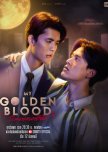
Look, I’ll be honest—I wasn’t exactly jumping out of my seat when I first heard about My Golden Blood. I didn’t have high hopes. But I gave it a go because the cast looked promising—and let’s be real, with Joss and Gawin headlining, it was hard not to at least be curious.My Golden Blood (Thai: เลือดนายลมหายใจฉัน) is a 2025 fantasy-romance BL series produced by GMMTV and Matching Max Solutions. Directed by Saroj Kunatanad and written by Bee Pongsate Lucksameepong and Piangpaitoon Satrawaha, the series stars Way-Ar Sangngern (Joss) as the 200-year-old vampire Mark and Gawin Caskey (Fluke) as the sweet but stubborn human Tong. The series airs on GMM25 and streams on GagaOOLala, iQIYI, and GMMTV’s YouTube channel.
1. The Plot
Mark is a broody, immortal vampire who’s spent centuries wandering through existence with little purpose—until he meets Tong, a 20-year-old uni student with an ultra-rare blood type: "Golden Blood". This blood is every vampire’s kryptonite and obsession, making Tong both precious and a target. Mark’s job? Protect him at all costs, even from himself.
The show kicks off with promise. A vampire-human love story with heavy BL tones? Yes, please. Tong is cheerful and clueless; Mark is stoic and seductive. There are some spicy, almost homoerotic moments—classic BL meets Gothic romance. Think brooding vampire emerging shirtless from a pool while the human gazes on, confused and intrigued. It's giving Twilight with a homoerotic twist.
But then… things kind of unravel.
2. The Good Stuff
Joss (Mark): Perfectly cast. He’s got the body, the presence, and the intensity to make a convincing vampire. He brought elegance and sex appeal to a role that could have easily turned cheesy. Even when the writing faltered, he held his ground.
Gawin (Tong): While this is the first time I found Gawin’s character not all that likeable (Tong made some head-scratching decisions), I’ve got to hand it to him—he plays a convincing 20-year-old. From Not Me to Enchanté to Dark Blue Kiss, he’s proven time and again he’s got serious range. Even when I found Tong’s choices frustrating, Gawin made him real.
Um Apasiri as Miss Thara: Just… wow. Regal, commanding, and drop-dead gorgeous. Every scene she was in had gravitas. She’s an absolute queen and brought that veteran magic to the screen.
Mond Tanutchai (Nakan): Always sexy, always mysterious. If anyone was born to play a vampire with moral ambiguity, it’s Mond.
3. The Not-So-Good
Plot & Pacing: The show struggles with momentum. There's a lot of build-up, but not enough payoff. For a vampire show, it seriously lacked any bite—literally. There was more action in a slow yoga class than in the vampire fights here.
Mythology & World-Building: The vampire lore felt underdeveloped. We got hints of a deeper mythos, but it never fully took shape. The only supernatural power Mark seemed to flex was taking off his shirt.
Chemistry: For a romance, especially BL, chemistry is everything. But Mark and Tong? You needed a telescope to spot the sparks. Even the sex lacked intensity. They felt more obligatory than passionate.
4. Final Thoughts
The series flirts with so many interesting themes—immortality, forbidden love, the sensuality of vampirism, existential dread—but never fully commits to any of them. The writing feels safe, sometimes flat, and misses the emotional punch that this kind of story should deliver.
Still, it’s worth watching for the cast alone. Gawin’s emotional nuance, Joss’s charisma, and Um’s queenly presence keep the show afloat. If you’re a BL fan or love vampire fiction, you’ll probably find something to enjoy—just go in with tempered expectations.
Is My Golden Blood groundbreaking? Not really. Is it campy, visually pleasing, and mildly entertaining? Absolutely. Just don’t expect fangs that dig too deep.
Was this review helpful to you?

This review may contain spoilers
A Heartfelt Dive into the Realities of Idols and Love
At first glance, ThamePo: Heart That Skips a Beat seemed like just another predictable BL drama, with a well-worn storyline about idol life and hidden romance. Even after watching the teaser at GMMTV’s expo, I wasn’t convinced this would be worth my time. The chemistry between the leads, Est Supha and William Jakrapatr, wasn’t apparent in the trailers, and the premise felt all too familiar. But I couldn’t have been more wrong.First off, Est and the LYKN members can act—so well. Est doesn’t just have chemistry with William, but with every single member of the band. Their performances bring depth to a story that, on the surface, might seem typical but actually offers a fresh take on the idol industry. Unlike most GMMTV dramas, ThamePo doesn’t shy away from portraying the harsh realities of being an idol—the constant scrutiny, the manufactured images, and the relentless pressure to maintain a facade.
One of the show’s strengths is how it tackles favouritism in idol groups, where one member is pushed into the spotlight while others are left behind. It also highlights the unrealistic expectations fans place on their idols, especially when it comes to relationships. This has been explored in other dramas (like Lovely Writer, which tackled actors in the industry), but ThamePo shifts the focus to boybands, showing how idols are often stripped of their autonomy. It was striking to see how even the smallest rumour—like dating—could jeopardise a career.
1. A Romance Built on Patience and Understanding
While the industry commentary was engaging, the romance between Thame and Po was truly the heart of the series. Their relationship was refreshing—built on patience, trust, and genuine care. Thame’s attentiveness toward Po, his gentle approach, and the way he ensured Po always felt safe was a joy to watch. It’s the kind of romance that makes you feel like you’re experiencing a first crush all over again.
The breakup episode was a gut punch. It didn’t feel forced or unnecessary—it was an inevitable consequence of their reality. The pressure from management, the expectations of fans, and the unspoken rule that idols must remain "available" to their audience made their love feel almost impossible. Gam and Pepper’s storyline echoed this struggle, reinforcing the idea that these artists are expected to prioritise their careers over their happiness.
That being said, while I understood why the breakup happened, it was frustrating. Their romance was already a slow burn, and just when they finally had a moment of happiness, it was snatched away. The pacing of their relationship sometimes felt rushed in some places and painfully slow in others, creating a bit of emotional whiplash.
2. Sappy, Sweet, and a Little Over-the-Top—But It Works
Now, let’s talk about Thame. His perception of what a boyfriend should be was both endearing and hilarious. From the constant selfies and detailed explanations of his daily routine to the iconic scene where he watches the TV reflection in Po’s eyes—it was peak romance drama cheesiness. But somehow, it worked. Thame’s little moments of jealousy and cluelessness were balanced by Po’s patience and understanding, making their relationship feel authentic.
The chemistry between Est and William was undeniable. Their soft, subtle interactions were more powerful than any grand declaration of love. Thame’s lingering looks, the way Po softened around him—it all felt natural and sincere. It was a relationship built on mutual support, and that made it all the more compelling.
3. Beyond the Romance: Brotherhood and the Toxicity of Idol Culture
Beyond the love story, the dynamic within the band, MARS, was another standout aspect of the series. The tensions, the rivalries, the unspoken resentments—everything felt real. It was satisfying to see these friendships evolve, from cold indifference to genuine support. The camaraderie among the members was a highlight, proving that the show wasn’t just about romance but also about the importance of found family.
The drama also addressed the toxicity of parasocial relationships—particularly with Pepper’s storyline. The way fans reacted to the rumour of him dating was disturbingly accurate, highlighting how idols are often seen as public property rather than real people. While this arc was a great addition, I do wish it had been fleshed out more to fully explore the emotional toll on the character.
4. Production, Acting, and Music—A Surprise Standout
Visually, ThamePo is stunning. The cinematography, the soft lighting, and the warm colour palette make it a feast for the eyes. The production quality is impressive for a BL drama, elevating the storytelling even further. And let’s not forget the music—because William can sing. His voice added so much emotion to the soundtrack, making every performance scene feel raw and real.
Acting-wise, William as Thame was the biggest surprise. For his first acting project, he absolutely delivered. Est, on the other hand, was incredibly expressive—his emotional scenes hit hard. The chemistry between them was a winning formula, and whoever cast them together deserves all the credit. The LYKN members also held their own, bringing their characters to life in a way that made the group feel authentic.
5. Final Thoughts: A Must-Watch for BL and Idol Drama Fans
For 13 weeks, ThamePo delivered a mix of heartwarming romance, industry drama, and emotional depth. While the story was predictable at times, the strong performances, chemistry, and thoughtful storytelling made it a worthwhile watch. If you’re looking for a drama with slow-burn romance, meaningful friendships, and a deep dive into the idol industry, ThamePo is definitely worth your time.
A well-crafted and emotional journey into love, friendship, and the struggles of being an idol.
Was this review helpful to you?

I dig it
In this captivating film, Win Metawin's performance is a revelation, showcasing a depth of emotion that I had not previously seen from him. His portrayal is both raw and nuanced, drawing the audience into the character's inner turmoil with remarkable skill.One of the most impressive aspects of the film is the seamless way in which both Janella and Win switch between languages. From English to Thai, Filipino, and even some Cantonese, their linguistic dexterity adds a layer of authenticity to their characters, making them feel all the more real and relatable.
Moreover, the film offers a fresh perspective on Hong Kong, showcasing lesser-known spots that highlight the city's unique charm and beauty. As someone who thought they knew Hong Kong well, I was pleasantly surprised by the new discoveries the film had to offer.
The dialogue in the film is another standout element, with well-crafted lines that are both metaphoric and deeply reflective. These moments of contemplation add a profound depth to the film, elevating it beyond a mere narrative and into the realm of existential exploration.
Overall, this film is a triumph on multiple levels. From Win Metawin's captivating performance to the film's rich tapestry of languages and its thoughtful dialogue, every aspect of the film comes together to create a truly unforgettable cinematic experience.
Was this review helpful to you?
This review may contain spoilers
A Revenge Story That Almost Forgot to Deliver the Revenge
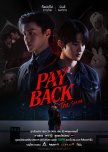
I went into Payback with genuinely high expectations. A darker Thai BL centred around revenge, corruption and the entertainment industry sounded right up my alley. It's adapted from the popular Korean webtoon Payback by Fujoking and Samk, and everything about the premise suggested this would be more than just another romance. It promised a gritty revenge thriller with emotional stakes, morally grey characters and plenty of twists. On paper, it had all the ingredients to become one of my favourite Thai BLs of the year.I wasn't familiar with Min Thanakorn or Toptap Jarukit before this, but I was already sold after seeing Fuaiz Thanawat in the trailer. His supporting role in 4 Minutes proved he could act, so I had confidence he'd deliver here too. He absolutely did. Fuaiz brings a lot of complexity to Sunny, making him difficult to read throughout the series. Min is excellent as Sun, carrying the emotional weight of the story with quiet restraint, while Toptap does a solid job as Jay despite the script not always giving his character the strongest material. I also have to mention Boss Chaikamon and Shogun, whose scenes together were surprisingly effective. Their chemistry was strong enough that I honestly wanted to see more of them.
The opening episodes hooked me immediately. Sun's motivation is heartbreaking and easy to understand. After losing his younger brother Sky and eventually his mother because of the betrayal of his former lover Bank, now living as the successful actor Sunny, he dedicates himself to revenge. Watching him infiltrate the entertainment industry to destroy the people responsible was exactly the kind of story I signed up for. The added layer of corruption inside Dream Entertainment made the series even more intriguing because it suggested the revenge would be much bigger than simply settling old scores with an ex.
Unfortunately, that's where my excitement slowly started to fade.
For a series built around revenge, Payback spends surprisingly little time actually executing that revenge. Instead, most of the story follows Sun trying to establish himself as an actor. By around Episode 7, it genuinely felt like the series was still setting up the plot rather than moving it forward. The pacing becomes incredibly uneven, and the first six episodes easily could have been condensed into two or three. It constantly feels like the story is delaying the inevitable instead of building towards it.
I kept watching because I wanted to see Sun and Jay systematically dismantle everyone responsible for destroying their lives. I expected each episode to reveal another calculated move in Sun's revenge plan. Instead, almost everything is saved for the finale, where years of build-up are resolved far too quickly. Most of the major confrontations happen inside one lengthy boardroom sequence, and after ten episodes of waiting, the payoff simply isn't satisfying.
I haven't read the original manhwa, so I don't know whether this slower pacing is faithful to the source material or a result of the adaptation. Either way, the television series never finds a good balance between building suspense and delivering meaningful progress.
The romance is another mixed bag. Min and Toptap work well together as actors, but I never fully bought into Sun and Jay falling in love. The emotional progression simply isn't there. I kept asking myself when those feelings actually developed. Was it because of genuine emotional connection? Physical attraction? Or did Jay simply become attached after their one-night stand? The script never convincingly answers those questions, making the relationship feel underdeveloped despite the chemistry between the actors.
Jay also raises another issue. While he's clearly written as a morally grey character, some of his actions cross the line into behaviour that feels manipulative and coercive. Considering Sun is emotionally broken and consumed by guilt, several of Jay's advances become uncomfortable to watch rather than romantic. The series never properly addresses those moments or allows Jay to reflect on them, making the relationship harder to root for than it should have been.
The revenge storyline, however, does succeed in establishing why Sun and Director Arthur become allies. Their motivations are clearly defined, and the series does a great job explaining why their goals align. In fact, I found their shared pursuit of justice far more compelling than the romance itself. At times, it almost feels like the romantic subplot exists simply because the genre expects it, rather than because the story naturally builds towards it.
The finale left me with mixed feelings. While I appreciated finally seeing the villains face consequences, several resolutions felt rushed or overly convenient. The legal aspects surrounding the transfer of company shares are handled far too simply, major antagonists receive endings that feel almost random, and one character's punishment relies more on shock value than meaningful storytelling. Instead of feeling clever or cathartic, the conclusion feels like the writers suddenly realised they had to wrap everything up within one episode.
Ironically, this is one of the few Thai BLs where I genuinely believe twelve episodes would've been better than ten. Usually, series overstay their welcome, but Payback has the opposite problem. It introduces enough plotlines to justify a longer runtime but doesn't give them enough space to breathe. Two additional episodes dedicated to the revenge plot and relationship development would've dramatically improved the overall experience.
Where Payback never disappoints is the acting. Every major cast member commits fully to their roles. Min perfectly captures Sun's emotional emptiness and determination, Fuaiz remains one of the biggest highlights of the entire series, and Toptap does the best he can with a character that often feels inconsistently written. The production quality is equally impressive. The cinematography looks polished, the soundtrack fits the darker tone beautifully, and the overall presentation feels far more expensive than many Thai BL productions.
I also appreciated that the series never became boring. Even when I found myself frustrated by the pacing, I still wanted to know how everything would end. That's a credit to both the performances and the premise. The story is engaging enough to keep you watching, even if it doesn't always reward your patience.
Overall, Payback is a series full of unrealised potential. It has an excellent premise, a talented cast, impressive production values and enough emotional depth to become something special. Unfortunately, slow pacing, uneven storytelling, an underdeveloped romance and a rushed finale stop it from reaching the heights it constantly promises.
If you're looking for an intense revenge thriller, adjust your expectations. The revenge is there, but it often takes a back seat to Sun's journey through the entertainment industry and his personal healing. As a drama, it's entertaining. As a BL, it's solid. But as a revenge story, it never quite lands the knockout blow I was waiting for.
Was this review helpful to you?
This review may contain spoilers
Great Premise, Weak Execution, Yet Somehow Impossible to Quit
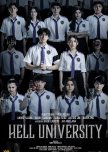
Hell University had everything I should have loved: a dark-academia setting, survival-game horror, gang warfare, mystery, and a premise that feels like The Purge trapped inside a university campus. Unfortunately, the execution rarely lives up to the concept.The writing is messy, the pacing drags, and the story spends far too much time hiding behind mystery without providing enough substance to keep those mysteries compelling. Plot holes pile up, relationships feel underdeveloped, and many characters remain frustratingly vague even after several episodes.
The acting is equally inconsistent. Zeke Polina does the heavy lifting as Ace Craige, delivering the strongest and most convincing performance among the leads. Andre Yllana is dependable, while Heart Ryan struggles to fully settle into her character. Among the supporting cast, Keagan de Jesus and especially Jemima Rivera stand out, while Lance Carr and Aubrey Caraan make the most of their limited screen time.
The production feels rushed from top to bottom. The costumes, props, dialogue, and overall presentation often lack polish. Direction is another weak point, with many scenes feeling awkward or poorly coordinated. Even veteran actress Andrea Del Rosario disappoints, particularly in scenes requiring strong English dialogue delivery.
What makes the experience even more frustrating is the unnecessarily long episode count. The first half spends so much time introducing mysteries that very little actually happens. At times it feels like the story is deliberately withholding information rather than naturally building suspense.
That said, Hell University does deserve credit for delivering a strong message in its final episode. Beneath all the violence, conspiracies, and mysteries, the series reminds viewers to be wary of people who present themselves as friends, because they are not always who they claim to be. It is one of the more effective themes the show explores and adds an extra layer to the story's conclusion.
Yet despite all that, I couldn't stop watching.
There is something oddly addictive about Hell University. The questions surrounding Ace Craige, Raze Silvenia, the Serum, and the laboratory kept me invested. I wanted answers. I wanted to see where everything was heading. Even when I was rolling my eyes at certain scenes, I was still tuning in for the next episode.
That's what makes this series so difficult to rate. Objectively, it has plenty of flaws. Subjectively, it still managed to hook me. It's a messy, frustrating, occasionally cringe-worthy watch, but it's also strangely compelling.
I wouldn't recommend it to everyone, but fans of the original novel should definitely give it a look. And if a sequel series like Chasing Hell eventually arrives, I'll be there to watch it.
Was this review helpful to you?

A Simple Story That Gently Breaks Your Heart
I started 18th Rose on Netflix out of boredom, honestly expecting a light and forgettable teen romance. But this film surprised me in the best way—it has more depth and emotional weight than it initially lets on.Set around a Filipino debut, the story follows Rose, played by Xyriel Manabat, a bright and determined teenager preparing for her 18th birthday. She meets Jordan, portrayed by Kyle Echarri, an American-Filipino struggling to adjust to life in the province. Their journey starts off light and playful, but as their bond deepens, the story reveals more emotional layers.
Xyriel delivers a graceful and heartfelt performance, portraying Rose with strength, warmth, and quiet resilience. Kyle Echarri, however, is the standout here. His portrayal of Jordan shows growth, depth, and emotional intensity—it’s easily his most impressive role to date.
The film starts with a soft, giddy vibe, but gradually becomes heavier, tackling themes of identity, self-worth, and the bittersweet transition into adulthood. It also touches on how young people navigate expectations versus reality, especially in a simpler, early-2000s setting.
What makes this film special is its sincerity. There’s no forced drama between the leads, and their relationship feels natural and supportive, which makes the emotional moments even more impactful.
While the story itself isn’t entirely new, the execution is polished and heartfelt. It’s the kind of film that quietly grows on you—and stays with you.
Definitely worth watching, especially if you enjoy emotional coming-of-age stories.
Was this review helpful to you?

This review may contain spoilers
A Soft Slow Burn That Gets It Right
Duang With You is the kind of BL that keeps things simple—and that’s exactly why it works. It follows Duang, a cheerful and determined design student, who falls in love at first sight with Qin, a reserved and emotionally distant music major. Instead of forcing instant romance, the series takes its time, turning a one-sided crush into something mutual, earned, and deeply comforting.The highlight of the show is the chemistry between Duang and Qin. Their dynamic is built on contrast—Duang is warm, open, and persistent, while Qin is quiet, guarded, and slow to trust. But what makes this pairing click is consistency. Duang doesn’t just chase—he listens, adjusts, and respects boundaries. Qin, on the other hand, doesn’t suddenly change; his emotional growth unfolds gradually, making every shift feel real.
The push-and-pull between them creates a gentle tension without ever becoming toxic. Qin allows Duang to try, which reframes the “persistent pursuer” trope into something more consensual and healthy. It becomes less about chasing and more about earning space in someone’s life.
The slow burn is handled well. Their connection develops through shared moments, especially during a performance project that brings them closer. The intimacy is subtle—quiet glances, shared silences, and small gestures—making their eventual closeness feel natural and rewarding.
The supporting cast deserves a mention too. Their friends are refreshingly normal, supportive, and genuinely invested in both Duang and Qin. The series also does a good job showing how their family backgrounds shaped who they are, adding emotional context to their actions.
Overall, Duang With You doesn’t reinvent the genre, but it executes familiar tropes with care and sincerity. It’s light, fluffy, and emotionally grounded—a comfort watch that quietly stays with you.
Was this review helpful to you?
This review may contain spoilers
Total Standout
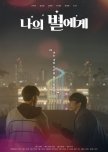
To My Star is a rare gem in the world of BL dramas. It’s a series that manages to be both heartwarming and heartbreaking, all wrapped up in a visually stunning package.Season one is a delightful rom-com that introduces us to the charming and complicated world of Kang Seo Joon and Han Ji Woo. Their chemistry is off the charts, and the supporting cast is a perfect complement to the main story. The show's simplicity is its strength; it focuses on character development and relationships rather than convoluted plotlines.
The cinematography is absolutely gorgeous, and the soundtrack is a perfect match. It’s rare to find a drama that looks this good and sounds this great.
Season two takes a darker turn, exploring the complexities of relationships and the challenges of maintaining a long-term partnership. It’s a bold move that pays off, delivering a raw and emotional story that will stay with you long after the credits roll. The performances in this season are even more impressive, with the actors showcasing their range and depth.
While there are a few minor issues, like some slightly awkward English lines, they don't detract from the overall enjoyment of the series.
To My Star is a must-watch for fans of BL dramas, romantic comedies, and well-crafted storytelling. It’s a series that will make you laugh, cry, and everything in between.
If you’re looking for a show that will stay with you long after the final episode, look no further. To My Star is a true standout.
Was this review helpful to you?
This review may contain spoilers
still chaotic, still in love
Sequels often struggle to justify their existence, but Peach and Me never feels unnecessary. This four-episode follow-up to Me and Thee doesn't try to recreate the magic of the original—it builds on it. While the first series was about falling in love, this special explores the harder and arguably more rewarding part: staying in love. It reminds us that marriage isn't the ending of a romance but the start of an entirely new chapter.Thee and Peach remain every bit as lovable as before. Thee is still hilariously dramatic and wonderfully over-the-top, but he's also noticeably more mature. One of my favourite moments is when he keeps the promise he made long before they were married by encouraging Peach to return to work. His quiet reassurance that he never wanted Peach to lose himself because he chose love says everything about how much he's grown as a husband. Peach, meanwhile, continues balancing his dreams with married life, creating conflicts that feel authentic without resorting to frustrating misunderstandings.
What impressed me most is that Peach and Me never feels like fan service for the sake of fan service. It absolutely delivers the moments longtime fans wanted, but the screenplay by VANGVELA and the direction of Nattapong Mongkolsawat never sacrifice storytelling to get there. The emotional beats still land, the comedy still works, and the characters continue to evolve in meaningful ways. Despite its short runtime, the series manages to add genuine depth and substance to its world.
The sequel also keeps everything that made Me and Thee so entertaining. It's every bit as outrageous, exaggerated and delightfully over-the-top as the original, and I honestly found myself laughing just as hard—if not harder. The humour remains wonderfully absurd without losing sight of the heart underneath it all.
I also appreciated the attention to detail. Small touches speak volumes about the characters' growth, from Thee updating his iconic wolf tattoo into one featuring a peach in its mouth, to Mok switching from shooting with his right hand to his left to better complement Rome. Even Rome's gradually completed tattoo quietly reflects his own personal journey. These little visual details reward longtime viewers and make the world feel lived in.
Despite lasting only four episodes, the series gives nearly everyone meaningful development. Peach and Plub's childhood trauma receives welcome context, Rome's rise as Arseni's new leader finally makes complete sense, and Aran and Tawan's relationship gets the closure it deserved. I wasn't originally convinced they should end up together, but the series earns it by showing that healthy relationships take time and growth. Tawan no longer being jealous by the finale was one of the sweetest signs of that progress.
Rome and Mok finally getting their happy ending felt incredibly satisfying, made even better by Mok and Thee's quiet promise to always remain friends, even in secret. Moments like these prove that the emotional core of the series extends well beyond its central couple.
The scene that affected me most was Peach's photography exhibition. As he reflects on their journey, he tells Thee that every promise he ever made was kept. There's nothing flashy about the scene, but that's exactly why it works. It's sincere, understated and genuinely moving.
Then there's the finale's hilarious recreation of Me and Thee, directed by Thee himself and featuring real GMMTV pairings. It was chaotic, self-aware and one of the funniest sequences in the entire franchise. As an added bonus, I honestly think Tay Tawan and Newwie Thitipoom could have pulled off older versions of Thee and Peach brilliantly.
Most importantly, Peach and Me never breaks or contradicts what came before. It honours the original series while giving its characters richer emotional closure and showing that their lives continue beyond the wedding. It may only be four episodes long, but it adds far more heart, depth and satisfaction than many full-length sequels ever manage.
Was this review helpful to you?
To My Star Season 2: Our Untold Stories
5 people found this review helpful
This review may contain spoilers
Stellar!
“To My Star” is a standout in the world of South Korean BL (Boys' Love) series, and it has certainly earned its place as my favorite. Spanning two seasons, this show delivers a captivating mix of romance, drama, and personal growth that kept me thoroughly engaged. What's fascinating is how each season offers a distinctly different theme, mood, and feel, making it impossible not to get hooked.The first season, which premiered in 2021, introduces us to Kang Seo Joon, a once-famous actor whose star has dimmed. His career may be on the decline, but his life takes an unexpected turn when he meets Han Ji Woo, a young and talented chef. Despite their polar opposite personalities—Seo Joon being free-spirited and Ji Woo more conservative—their attraction to each other is undeniable, leading them into a relationship. However, the differences in their outlooks on life and love soon pose a significant challenge to their budding romance.
Season 1 of “To My Star” is everything I want from a romantic comedy short story. The plot is simple yet deeply connected to the characters, and the chemistry between the leads is nothing short of electric. The acting is top-notch, the soundtrack is a bop, and the cinematography is aesthetically pleasing. What really stands out is how well-crafted the show is—there's no unnecessary drama or convoluted subplots. Everything ties together beautifully, with no loose ends left hanging by the finale. The supporting cast also deserves a mention for adding depth and fun to the story without ever feeling redundant.
Visually, the show is a feast for the eyes. The still shots allow you to fully appreciate the scenes without the distraction of excessive cuts and changes in angles. It’s a refreshing change from the shaky camera work that’s become so common. The soundtrack, too, deserves high praise—every song enhances the emotional depth of the scenes, and I found myself Googling the tracks afterward, which is rare for me.
However, as much as I loved Season 1, it’s not without its minor flaws. There were a few poorly delivered English lines that took me out of the moment, but these are small issues that most viewers might not even notice. Despite this, “To My Star” remains one of my favorite BL series and rom-coms. Its simple, chill vibe, wholesome feels, and high production value make it a joy to watch.
Season 2, titled “To My Star Season 2: Our Untold Stories,” takes a more dramatic turn. After a note and a disappearance threaten the happiness that Seo Joon and Ji Woo found in Season 1, we’re left wondering whether their fairy tale romance will survive. This season is like revisiting a restaurant only to find that the chef has leveled up—the flavors are stronger, the presentation is even more beautiful, and the emotional depth is more profound.
Unlike the feel-good vibes of the first season, Season 2 takes you on an emotional rollercoaster. It’s a painful but beautiful story about love, regret, growth, and loss, perfectly balanced with well-timed flashbacks, music, and lighting. The show does an excellent job of showing the reality of “happily ever after” and how relationships require hard work and sacrifice. The new characters introduced in this season add a bit of sweetness to soften the emotional blows.
The leads have grown, both as characters and as a couple. They’re still lovable and slightly broken, but their struggles feel more real and relatable. If you’re looking for feel-good fluff, this season isn’t for you—it’s more like “Our Beloved Summer” meets “Touch Your Heart,” but with shorter episodes. It’s easy to binge, easy to fall in love with, and it leaves you with a lump in your throat by the end.
Overall, “To My Star” is a must-watch for fans of BL and romantic dramas alike. Both seasons offer something unique, and the series as a whole is a testament to the power of simple, well-executed storytelling. Whether you’re in it for the romance, the drama, or the stunning visuals, you won’t be disappointed.
Was this review helpful to you?

This review may contain spoilers
My Love Mix-Up Thailand - A Mixed Bag of Expectations
GMMTV’s adaptation of Kieta Hatsukoi—a Japanese Yaoi manga by Hinekure Wataru—is a curious endeavor. The original series, which was also adapted into a Japanese BL drama in 2021, brought a fresh and charming story to life. So, when I heard GMMTV was creating a Thai version, I’ll admit I had my reservations. The Japanese series had its quirks, and I wondered how this would translate into the world of Thai BL. As a fan of both the manga and the original show, I went in with cautious optimism.The premise of My Love Mix-Up! Thailand remains true to its source material. We have Atom, played by Fourth Nattawat, who is a timid and somewhat clumsy high schooler with a crush on his classmate Mudmee (Pahn Pathitta). His world is turned upside down when a simple mix-up leads Kongthap (Gemini Norawit) to believe Atom has a crush on him, setting off a series of misunderstandings and comedic moments.
Right from the start, the series felt like it was missing something. There’s a certain magic in storytelling that pulls you in, makes you root for the characters, and keeps you invested. Unfortunately, My Love Mix-Up! Thailand struggled to find its footing. For a series with such a light-hearted and fun premise, it often felt like it was dragging its feet.
Fourth Nattawat’s portrayal of Atom was lackluster at best. He’s a talented actor, and I’ve seen him shine in other roles, but here it felt like he was holding back. Perhaps it was the character itself or maybe the direction, but whatever it was, it didn’t quite hit the mark. Gemini Norawit as Kongthap had moments of brilliance, particularly in scenes where his stoicism came into play, but overall, it felt like both actors were coasting rather than fully embodying their roles.
One of the biggest downfalls of the series is the excessive product placement. Now, I understand that sponsorship is a necessary evil in today’s media landscape, but there’s a fine line between subtle integration and blatant advertising. Unfortunately, My Love Mix-Up! Thailand crossed that line repeatedly. The product placements were so jarring that they often pulled me out of the story entirely. It’s a real shame because it distracted from the chemistry that could have developed between the characters.
Speaking of chemistry, Gemini and Fourth have it in spades. We’ve seen it before in Moonlight Chicken and My School President, where their interactions felt natural and heartfelt. However, in My Love Mix-Up! Thailand, that chemistry was left to languish in the background. There were a few standout moments—Kongthap and Atom bonding over their parents’ relationships, Atom sharing his dream of opening a café—but these were few and far between. The series never fully allowed their relationship to flourish, instead opting for contrived conflicts and rushed resolutions.
The romance arc, which should have been the heart of the show, felt forced and unconvincing. Atom’s crush on Mudmee is brushed aside almost immediately, leaving little room for emotional depth. The transition from friendship to romance between Atom and Kongthap lacked the gradual build-up that makes these stories compelling. By the time they became a couple, it felt more like a box had been ticked than a natural progression of their relationship.
Another issue was the pacing. The show tried to cram too much into too little time, resulting in rushed story arcs and unsatisfying conclusions. This is especially evident in Atom’s struggle with his sexuality and his eventual decision to pursue his dream of becoming a chef. Both of these storylines could have been explored in greater depth, but instead, they were wrapped up in a matter of minutes.
Now, it’s not all bad. There were some genuine moments of charm, particularly in the way the series handled the friendship between Atom and Mudmee. Their dynamic was one of the few bright spots in an otherwise uneven show. Additionally, the soundtrack was a highlight—catchy and well-suited to the tone of the series, even if it was a bit overused.
In the end, My Love Mix-Up! Thailand feels like a missed opportunity. With the talent of Gemini and Fourth at their disposal, GMMTV could have created something truly special. Instead, we’re left with a series that, while not without its merits, falls short of the standard set by other Thai BL dramas. For fans of the original manga or the Japanese series, this adaptation might be a bit of a letdown.
As much as it pains me to say it, I can’t rate this any higher than a 5 out of 10. It’s a middling effort that doesn’t quite capture the heart or humor of its source material. Here’s hoping GMMTV takes this as a learning experience and gives these talented actors the scripts they deserve in future projects.
Was this review helpful to you?
This review may contain spoilers
Comfort Food, Comfort People, Comfort Drama
This wasn't even on my watchlist.A rainy weekend ruined all my outdoor plans, so I found myself browsing HBO Max looking for something short to binge. I clicked on The Legend of the Kitchen Soldier because I genuinely thought the thumbnail featured a cute female lead. It wasn't until a few minutes into the first episode that I suddenly realised, "Wait... that's Park Ji-hoon from Weak Hero!" I honestly didn't recognise him at first, and now I can't imagine anyone else playing Kang Seong-jae.
If someone had told me I'd become emotionally invested in a military fantasy where the protagonist levels up his cooking through a mysterious RPG-style "System," I would've laughed. Yet here I am, completely attached to this wonderfully bizarre little drama.
What initially feels like a silly cooking comedy slowly reveals itself to be a story about grief, trauma, healing and learning how to live again after losing everything. The "System" isn't simply a fun fantasy gimmick. It's almost symbolic of Seong-jae's desperate attempt to keep moving forward after his father's death. Watching him rely less and less on it as he gains confidence in himself becomes one of the most satisfying parts of the series.
I was rooting for Seong-jae from the very beginning. Every cooking challenge felt like a personal victory, and every new dish became another step towards healing. The biggest payoff comes in the finale when he no longer needs the System to tell him what to do. Instead of depending on magical quests, he cooks because he genuinely wants to make people happy. That moment perfectly completes his character arc. The System may have guided him, but it never truly made him the cook he became.
As someone who loves cooking and trying different dishes, this drama was incredibly satisfying to watch. Every meal looked amazing, but it wasn't just food for the sake of making viewers hungry. Each dish carried emotional weight. The final episodes especially drove that home. The explanation of what a home-cooked meal represents genuinely got to me. Food isn't just nourishment. It's family. It's comfort. It's the people waiting for you at home.
The friendships completely stole the show.
Watching Seong-jae slowly earn the trust of Dong-hyeon, Ha-kyung and the rest of the soldiers was far more rewarding than solving the mystery itself. I loved how the drama gradually peeled back everyone's layers. The soldiers who initially came across as rude, cold or difficult all had understandable reasons for behaving the way they did. Their backstories completely changed my first impressions, making the enemies-to-friends progression feel earned instead of forced. By the end, I felt like I was stationed at Gangrim Post alongside them.
I also couldn't get enough of Seong-jae and Jung Min-a. They barely get any romantic development compared to other K-dramas, but every single scene between them radiated warmth and comfort. Sometimes less really is more. Their chemistry quietly worked without needing dramatic love confessions or unnecessary relationship angst.
One thing I didn't expect was just how hilarious this series would be. The soldiers reacting to Seong-jae's cooking as though they'd ascended into another dimension never stopped being funny. Every tasting scene became more ridiculous than the last, and I found myself constantly asking, "What am I even watching?" The drama fully commits to its absurd humour, and that's exactly why it works.
I also have to applaud the production team for going above and beyond. Creating an original K-pop idol group, producing an actual song and having it performed on Mnet wasn't something they needed to do, but it made the world feel even richer.
The final mystery surrounding Seong-jae's father isn't particularly groundbreaking, and the last two episodes are mostly about connecting the remaining pieces together. Honestly, though, I didn't mind. By that point I wasn't watching for the conspiracy anymore. I was watching for these characters. I wanted to see Seong-jae succeed, I wanted to see everyone share another meal together, and I wanted this little military family to get their happy ending.
Every single character became lovable. Every goodbye felt bittersweet. By the time the credits rolled, I realised I'd become just as attached to Gangrim Post as Seong-jae had.
This isn't a drama that demands intense analysis or endless theory crafting. It's simple, heartfelt and incredibly sincere. It knows exactly what kind of story it wants to tell, and it tells it with warmth, humour and honesty.
I started this series because I was bored.
I finished it feeling comforted, unexpectedly emotional, and craving a home-cooked meal.
Sometimes the simplest stories leave the biggest impression.
One of my favourite comfort dramas of the year.
Was this review helpful to you?
This review may contain spoilers
When Faith and Love Refuse to Be Opposites
When Ticket to Heaven was first announced during the GMMTV Showcase, it instantly became one of the company's most talked-about projects. The premise alone generated enormous curiosity. A Thai BL set inside a Catholic seminary was a bold concept, especially in a country where Christianity is a minority religion. My biggest question wasn't whether the idea sounded interesting, but whether director P'Aof Noppharnach Chaiwimol could successfully bring such a sensitive and ambitious story to life.Unlike many viewers, I wasn't immediately swept away by the announcement. I wasn't particularly enthusiastic after Gemini and Fourth's previous project, but I felt this series had the potential to redefine what they could do as actors. Looking back now, I'm glad I gave it that chance.
Ticket to Heaven isn't simply another BL romance. It's a deeply reflective coming-of-age drama that explores faith, grief, identity, guilt, sexuality, acceptance and the difficult process of reconciling who you are with what you've been taught to believe. Set in a Catholic seminary in 1996, the story follows Tanrak, a devout seminarian who believes becoming a priest is his path towards seeing his late parents again in heaven. His world is turned upside down when he meets Barth, a rebellious but emotionally vulnerable transfer student carrying wounds of his own. As their friendship gradually grows into love, both young men are forced to confront the painful reality that the institution shaping their lives also condemns the feelings growing between them.
One of the series' greatest achievements is its willingness to tackle themes rarely explored in Thai BL. Religion is never treated as a simple backdrop or convenient obstacle. Instead, faith becomes the emotional heart of the narrative. Rather than presenting easy answers, the series thoughtfully examines religious legalism, institutional expectations, sexuality, forgiveness and whether genuine faith can coexist with romantic love. It trusts its audience to wrestle with these questions instead of simplifying them.
The opening scene immediately caught my attention. Beginning with marriage equality before transporting viewers back to 1996 cleverly frames the entire story as something bigger than romance. It becomes a story about hope, justice and the long road towards acceptance. That opening also creates an underlying mystery that lingers throughout the series. The thirty-year jump had me constantly wondering whether Tanrak would eventually become a priest, lose Barth forever or meet a tragic fate. I was emotionally preparing myself for heartbreak from the very beginning.
P'Aof once again proves why he's one of GMMTV's strongest storytellers. Personally, I think his work is at its best when he has fewer episodes to work with, much like Moonlight Chicken. With only six episodes, Ticket to Heaven remains tightly focused without sacrificing emotional depth. Every frame feels intentional. Symbolism is woven naturally into the cinematography, visual composition and production design, rewarding viewers who pay close attention instead of spelling everything out through dialogue.
The symbolism extends far beyond the visuals. I especially appreciated the hidden meanings behind the protagonists' names. Tanrak can be interpreted as "the representative of love," while Barth references Saint Bartholomew, one of Jesus' apostles. These choices reinforce the central themes of devotion, sacrifice and forbidden love. Even the painting "Ticket to Heaven" carries multiple layers of meaning. It isn't merely an image of someone ascending towards heaven; it becomes a visual metaphor for suffering, longing, sacrifice and the emotional journey both characters must endure.
The writing is remarkably polished throughout. The emotional progression between Barth and Tanrak unfolds naturally, allowing every conversation, glance and quiet moment to deepen their connection. Both characters carry immense emotional pain. Tanrak clings desperately to his faith because it represents the hope of reuniting with his parents, while Barth has lost much of his trust in God after enduring years of trauma and rejection. Watching them slowly become each other's refuge forms the emotional backbone of the entire series.
The line, "I realised that God never helped me at all," hit especially hard. It perfectly captures how grief and trauma can completely shatter a person's faith. Later, when Tanrak questions whether every kind of love brings us closer to God, the series reaches one of its most emotionally powerful moments. These conversations elevate Ticket to Heaven beyond a conventional romance and transform it into an honest exploration of spirituality and identity.
Gemini and Fourth deliver career-best performances. Fourth is extraordinary as Tanrak. This is an incredibly demanding role because Tanrak isn't only wrestling with his sexuality. He's trapped between his faith, his future, his identity and the terrifying belief that loving another man could cost him heaven itself. Fourth conveys all of that with remarkable restraint. His eyes, facial expressions and subtle body language communicate emotions that words never could. He doesn't simply portray Tanrak—he becomes him.
Gemini is equally impressive. Barth could easily have been reduced to the confident, teasing love interest, but Gemini gives him warmth, vulnerability and emotional complexity. Despite everything life has taken from Barth, he remains the character with the greatest capacity to love. His performance feels sincere, grounded and completely believable. He also undergoes an impressive physical transformation for the role, bringing an effortless confidence and charisma that perfectly suits Barth.
Their chemistry is exceptional. Every stolen glance, every playful tease and every lingering silence makes it easy to believe these are two young men slowly falling in love despite desperately trying not to. Even scenes with very little dialogue are filled with emotional tension. The famous bathing sequence is a perfect example. What makes it unforgettable isn't simply the physical intimacy but everything that leads up to it. The silent eye contact, the nervous hesitation and the emotional vulnerability make the eventual kiss feel earned rather than sensational. For me, it's one of the finest and most emotionally satisfying kiss scenes I've seen on television because it represents the release of everything both characters had been suppressing.
Tanrak's internal conflict is beautifully portrayed throughout the series. His growing attraction to Barth isn't presented as simple desire but as something that completely unravels the foundation of his identity. The way he looks at Barth, fixates on him and struggles to suppress his emotions says everything before a single word is spoken. The devastation on his face when he finally accepts that he loves Barth is heartbreaking because he genuinely believes his love is incompatible with salvation. His jealousy, guilt, fear and longing all exist simultaneously, and Fourth conveys every layer with extraordinary nuance.
I also appreciated how honestly the series portrays Barth's unwavering affection. Whether teasing Tanrak, quietly watching him from afar or encouraging him to embrace his true self, Barth remains the emotional anchor of their relationship. His confession becomes the catalyst that finally allows Tanrak to stop running from himself. Rather than leading Tanrak away from faith, Barth ultimately helps him rediscover it in a healthier and more compassionate way.
Technically, the production is excellent. The cinematography is stunning, the Catholic seminary setting feels authentic and refreshingly different, and the soundtrack deserves special praise. Gemini and Fourth are talented musicians in their own right, and the music adds another emotional layer to nearly every major scene. Combined with P'Aof's confident direction, every episode leaves a lasting emotional impression.
I do have a few criticisms. As someone familiar with Catholic liturgy, I noticed a few inconsistencies in the Mass responses, particularly the use of the modern Roman Missal despite the story being set in 1996. That said, these may simply stem from subtitle localisation and are relatively minor.
The English subtitles present a more noticeable issue. Several translations miss important nuances from the original Thai dialogue. During the bathing scene, for example, Barth's teasing about Tanrak's obvious physical reaction is replaced with a random Scooby-Doo joke, which completely changes the intention of the exchange. Likewise, "I am not God's favourite son" would have been more accurately translated as "I am not one of God's beloved sons," a subtle but meaningful difference given the themes of the series. These moments don't ruin the experience, but they do lessen some of the emotional and theological depth for international audiences.
One of the aspects I appreciated most was the ending. Too often, queer stories centred around religion conclude with punishment, separation or tragedy. Ticket to Heaven chooses something far more hopeful. It reminds us that faith and queerness do not have to exist in opposition. Tanrak spends much of the series believing he must choose between God and the person he loves, only to discover that genuine faith was never about denying himself. Barth becomes the bridge that helps him reconcile his spirituality with his identity rather than forcing him to abandon either.
The final reunion with Tanrak's childhood friend beautifully reinforces that message. I appreciated that the series openly shows queer people continuing to pray, believe in God and live lives of faith. That kind of representation matters because it offers hope to viewers who may have been taught that they don't belong in religious spaces.
I also found myself thinking about how much Tanrak changed over the course of the story. At the beginning, he was living almost exclusively for the promise of death and heaven, believing sacrifice was the only path towards God. By the end, he finally understands that love itself can also be sacred. Barth never asked him to abandon his beliefs; he simply showed him that there was never any need to choose between faith and love.
Is Ticket to Heaven a masterpiece? Personally, I wouldn't go that far. The occasional subtitle issues and a few minor historical inconsistencies keep it from being flawless. It also took me a couple of episodes before I was completely invested. However, once the emotional foundation was established, the series became increasingly rewarding with every episode.
Ticket to Heaven is beautifully directed, intelligently written and exceptionally performed. It trusts its audience, embraces complexity and delivers one of the most mature explorations of religion, identity and queer love that Thai BL has offered to date. More importantly, it reminds us that stories about queer people don't always have to end in suffering. They can also end with hope, healing and the quiet reassurance that love and faith are capable of existing side by side.
I sincerely thank P'Aof, Gemini, Fourth and the entire creative team for crafting something so thoughtful, emotionally resonant and genuinely courageous. They didn't simply make another BL series. They created a story that will comfort many people, challenge others and stay with viewers long after the credits roll.
Was this review helpful to you?

Malaya but Bound: The Illusion of Freedom in The Kingdom
I recently learned that The Kingdom, produced by MQuest Ventures in collaboration with APT Entertainment and MZet Television Productions, is set to continue as a series. That news prompted me to revisit the film on Netflix—and I realised I’d never actually written a proper review. So, here we are. Watching it again only reinforced how compelling its core idea is. The Kingdom is an alternate-history action drama set in a Philippines that was never colonised, instead emerging as a sovereign monarchy known as the Kingdom of Kalayaan. It’s a question many of us have quietly wondered about—what might the country look like had history taken a different turn—and the film leans fully into that speculative space.In this reimagined timeline, Lakan Makisig Nandula, a widowed king, faces a looming crisis of succession. With three very different children—Dayang Matimyas, Magat Bagwis, and Dayang Lualhati—he must decide who is worthy to inherit the throne, even as political alliances, forbidden love, and betrayal threaten to tear the kingdom apart. Into this fragile balance steps Sulo, a social outcast whose involvement with the royal family sets off a chain of events that will shape Kalayaan’s future. Directed by Michael “Mike” Tuviera, who won Best Director at the 50th MMFF, and written by Michelle Ngu-Nario (from a story she co-wrote with Tuviera), the film boasts an impressive ensemble: Vic Sotto as the weary and burdened Makisig; Piolo Pascual as the vengeful yet principled Sulo; Cristine Reyes as the ambitious and politically astute Matimyas; Sue Ramirez as the initially sheltered Lualhati; Sid Lucero as the volatile Bagwis; and Ruby Ruiz in a commanding role as the Punong Babaylan, the kingdom’s spiritual and moral anchor. Notable special appearances from Eula Valdez, Iza Calzado, and Cedrick Juan further enrich the world. (For context: Lakan means king, Dayang princess, and Magat prince.)
What stands out immediately is the care and conviction behind the film’s vision. Tuviera and Ngu-Nario’s world-building is confident, imaginative, and deeply considered. Even if the execution had faltered—which it doesn’t—I’d still admire the sheer ambition of reimagining the Philippines on its own terms. Thankfully, The Kingdom is far from a misfire. It’s a gripping political thriller, layered with compelling characters and ideas that resonate beyond its fictional setting. At its best, it functions as thoughtful speculative fiction: by imagining what the country could have been, it offers sharp commentary on what it is today.
Vic Sotto’s casting as Makisig initially raises eyebrows, given his long association with comedy, but his performance is one of the film’s quiet triumphs. This may be the least “smiling” role of his career, and it works. He portrays a man exhausted by power, constrained by ancestral laws and divine expectations, and slowly worn down by the weight of rule. Close-ups linger on the sorrow and fatigue in his eyes, revealing a king who doesn’t crave authority but feels trapped by it. It’s a refreshingly restrained performance—one that allows space for his co-stars and presents a ruler who is, quite unusually, tired of staying in power.
The film’s strength also lies in its texture. Visually, it blends the familiar with the imagined: drone shots of recognisable Metro Manila landmarks recontextualised by monarchist imagery; interiors that resemble ancestral homes; production details like floor patterns, textiles, and a redesigned flag that feel organic rather than gimmicky. The use of indigenous fabrics and designs is especially striking, suggesting a fashion and identity shaped entirely outside colonial influence. Language, too, is carefully considered—the dialogue leans into deeper, less Hispanised Tagalog, subtly reinforcing the film’s alternate history. Spirituality permeates governance, with babaylans guiding the royal family and ancient laws such as the Batas ng Tugmaan (Law of Retribution) shaping justice. These choices invite reflection on which cultural elements may have been diminished or lost through colonisation, making the film’s Gatpuno Antonio J. Villegas Cultural Award feel well earned.
Performance-wise, the ensemble largely delivers. Cristine Reyes gives Dayang Matimyas a commanding presence balanced by vulnerability, particularly in her fraught relationship with her father, and she easily owns the film’s most convincing fight scenes. Sue Ramirez brings nuance to Lualhati, even when the character’s naïveté grates—as it should. Sid Lucero is reliably intense as Bagwis, while Ruby Ruiz exudes authority and moral complexity as the head babaylan. Piolo Pascual, unsurprisingly, excels in the quieter moments as Sulo, conveying restrained rage and grief with precision, even if that intensity doesn’t always fully translate into the action beats. A standout sequence—the one-on-one confrontation between Makisig and Sulo under ancestral law—is genuinely gripping, elevated by the emotional stakes carried by the supporting cast. Iza Calzado, in a brief role, is particularly memorable, suggesting an entire unseen backstory through subtle gestures alone.
If the film falters, it’s mostly in pacing and clarity. Some action scenes could be cleaner, and a few narrative threads feel underdeveloped. Ironically, my biggest complaint is that I wanted more time in this world—the film could easily have been 20 minutes longer. Still, Jessie Lasaten’s score lends the story an epic sweep, and the overall experience remains engrossing. The Kingdom reminds us of cinema’s power to reimagine reality, to pose uncomfortable questions about governance, class, tribalism, and freedom. Kalayaan may mean “freedom,” and its people may be called Malaya, but the film makes it clear that corruption, inequality, and betrayal can flourish even without foreign rule. In the end, The Kingdom leaves us unsettled in the best way—asking whether freedom is simply the absence of colonisers, or something far more difficult to achieve. As a foundation for future stories, it’s rich with possibility, and as a film, it lands with a seriousness and ambition that lingers long after the credits roll.
Was this review helpful to you?

This review may contain spoilers
High Notes, Heartbreak, and Heavy Fan Service
I watched Love You So Bad at the Wolfgang Premiere Lounge in Gateway 2, and from early on it struck me as a romance that feels very much like a Wattpad adaptation — engaging, emotional, but somewhat episodic. At times, the film plays like a collection of moments rather than a tightly woven narrative, which made me think it might have worked better as a short digital series. Still, the story is coherent, the emotions land, and the direction keeps things visually and emotionally polished. As a 2025 MMFF entry directed by Mae Cruz-Alviar and written by Crystal Hazel S. San Miguel, the film clearly knows its audience and leans into that intentionally.Set in a contemporary school environment, the story centres on Savannah “Vanna” Aquino (Bianca de Vera), a young woman learning how to define love on her own terms. She’s torn between Vic (Will Ashley), whose lighthearted and dependable nature brings comfort, and LA (Dustin Yu), a charismatic figure carrying deeper emotional scars. Bianca de Vera carries the film with ease. She makes Savannah feel lived-in and relatable, capturing the vulnerability of someone who mistakes attention for love and settles for less than she deserves. Her performance gives the film its emotional spine, balancing humour, pain, and romantic longing with sincerity. Her scenes with LA, in particular, surprised me — their chemistry is strong and undeniably effective, delivering genuine kilig.
Dustin Yu brings welcome depth to LA, steering the character away from cliché. His performance is restrained but expressive, especially in emotionally heavy moments where his eyes do most of the work. Several scenes clearly moved the audience, and his portrayal carries much of the film’s dramatic weight. Will Ashley, meanwhile, brings charm and warmth to Vic, especially in the lighter moments. While his dramatic beats are more understated, he fits the role well and adds balance to the central triangle. The supporting cast, including Dimples Romana, Agot Isidro, and Xyriel Manabat, rounds out Savannah’s world without distracting from the core story.
Described as a modern take on Dahil Mahal na Mahal Kita, Love You So Bad feels more fan-focused than story-driven. It prioritises emotional beats and romantic moments over narrative depth, which may leave some viewers wanting more. I’m not usually drawn to rom-coms or straightforward love stories, but I found this an easy and pleasant watch. It’s cute, accessible, and clearly designed to please its fans. If you’re here for the kilig and the love teams, it delivers. If you’re after a richer, more layered romance, it may feel a little light — though it does leave you wishing there was more, especially a deeper look into Savannah and LA’s backstory.
Was this review helpful to you?


