




This review may contain spoilers
They Didn't Fail. They Just Didn't Succeed.
Disclaimer: I cried SO MUCH watching this that I don’t even know why myself. Please keep in mind that I just finished the series, so I’m feeling a little emotional. With that in mind, let’s get started.
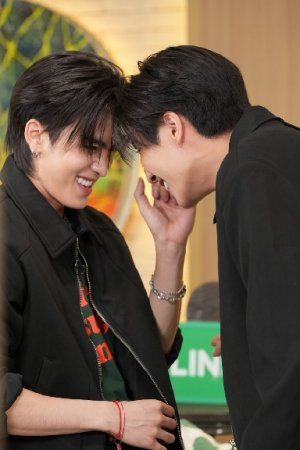
Kasuga Yuma (Ito Kentaro) and Hasegawa Itsuki (Sato Kanichiro) are a gay couple who recently went viral in an interview about co-parenting. With the popularity the couple achieved, a proposal came up to make a documentary about their dynamic as a couple. The problem? They had actually broken up a while ago.
My goodness, what an important series! At its core, it’s a slice-of-life show, filmed to some extent like a sitcom (like *The Office*), because it mimics a documentary, I personally thought that was a brilliant idea. Setting aside technical aspects and performances, which, by the way, were flawless, I have no negative criticism, not only for the protagonists Kentaro and Kanichiro, who made me rethink the nature of all the relationships around me, but also for Narumi Yui and Nomura Masumi, who played Shiho and Naomi, respectively. They didn’t just act; they did so with excellence, highlighting how patriarchy affects women in the workplace in a unique way.
IN SHORT
The protagonists’ relationship which, by the way, initially seemed to suggest they would indeed end up together proved to be something so complex and delicate in and of itself, culminating in a line Itsuki said in the final episode:
“The people who will shape the world are those who yearn to live in the light.”
And that alone defines the series; their dialogues when they’re alone lead us to understand that there’s no right or wrong in this story, they just didn’t work out. In the end, when they both talk about the relationship they had, and as shown in the scenes that unfolded there was indeed affection between them. Itsuki was built to live one day at a time, while Yuma lived several days ahead; he wanted his place in the sun as a “””””””””normal””””””””” person, so to speak; he wanted to get married and start a family. In the end, it becomes clear that Itsuki isn’t the kind of person who worries about what he’ll have for dinner the next day, but even so, he sacrificed a lot in terms of his lifestyle. Over the course of six episodes, we got to see what their relationship was like before all this happened; we could see the difference in their approaches to life. Everything became very clear, and I think that really impacted me, because it wasn’t the kind of thing I expected to see.
From what I’ve said, you can tell that I really liked Itsuki’s character, because as he himself said, Yuma is an ordinary person even if he doesn’t want to believe it. But Itsuki isn’t like that, he’s afraid of being forgotten, even if he hasn’t admitted it in those exact words; he lives one day at a time. And he doesn’t feel the need to fight for a collective; he just wants to live his little life, he’s minding his own business. Personally speaking, I appreciate people like that in real life and, eventually, the characters who represent them.
I think the line “We’d never work out. Because the things I want to throw away are the things he wants to carry” suggests that they tried, and in the end, it’s okay that it didn’t work out. The series almost seemed to convey the message that, just because we share the same letter in the LGBT acronym doesn’t mean we’ll work out. Shared suffering is also part of who we are.
10/10
Kasuga Yuma (Ito Kentaro) and Hasegawa Itsuki (Sato Kanichiro) are a gay couple who recently went viral in an interview about co-parenting. With the popularity the couple achieved, a proposal came up to make a documentary about their dynamic as a couple. The problem? They had actually broken up a while ago.
My goodness, what an important series! At its core, it’s a slice-of-life show, filmed to some extent like a sitcom (like *The Office*), because it mimics a documentary, I personally thought that was a brilliant idea. Setting aside technical aspects and performances, which, by the way, were flawless, I have no negative criticism, not only for the protagonists Kentaro and Kanichiro, who made me rethink the nature of all the relationships around me, but also for Narumi Yui and Nomura Masumi, who played Shiho and Naomi, respectively. They didn’t just act; they did so with excellence, highlighting how patriarchy affects women in the workplace in a unique way.
IN SHORT
The protagonists’ relationship which, by the way, initially seemed to suggest they would indeed end up together proved to be something so complex and delicate in and of itself, culminating in a line Itsuki said in the final episode:
“The people who will shape the world are those who yearn to live in the light.”
And that alone defines the series; their dialogues when they’re alone lead us to understand that there’s no right or wrong in this story, they just didn’t work out. In the end, when they both talk about the relationship they had, and as shown in the scenes that unfolded there was indeed affection between them. Itsuki was built to live one day at a time, while Yuma lived several days ahead; he wanted his place in the sun as a “””””””””normal””””””””” person, so to speak; he wanted to get married and start a family. In the end, it becomes clear that Itsuki isn’t the kind of person who worries about what he’ll have for dinner the next day, but even so, he sacrificed a lot in terms of his lifestyle. Over the course of six episodes, we got to see what their relationship was like before all this happened; we could see the difference in their approaches to life. Everything became very clear, and I think that really impacted me, because it wasn’t the kind of thing I expected to see.
From what I’ve said, you can tell that I really liked Itsuki’s character, because as he himself said, Yuma is an ordinary person even if he doesn’t want to believe it. But Itsuki isn’t like that, he’s afraid of being forgotten, even if he hasn’t admitted it in those exact words; he lives one day at a time. And he doesn’t feel the need to fight for a collective; he just wants to live his little life, he’s minding his own business. Personally speaking, I appreciate people like that in real life and, eventually, the characters who represent them.
I think the line “We’d never work out. Because the things I want to throw away are the things he wants to carry” suggests that they tried, and in the end, it’s okay that it didn’t work out. The series almost seemed to convey the message that, just because we share the same letter in the LGBT acronym doesn’t mean we’ll work out. Shared suffering is also part of who we are.
10/10
Was this review helpful to you?


