

 3
3 2
2


A Drama About Silence, Not Murder
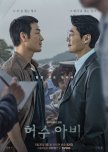
The Scarecrow crept up on me. I didn’t even know it had been released until I browsed MyDramaList one day and came across it, and, of course, I was immediately intrigued. I mean, who wouldn’t be with a cast that includes Park Hae Soo and Lee Hee Joon in a drama that initially feels like a story about a serial killer but is, in reality, about the quiet things that ruin people long before a killer ever touches them: silence, shame, institutional pride, and the kind of guilt that doesn’t fade but ferments. What makes this drama different is that while most thrillers chase the killer, The Scarecrow chases the moment a society decides to stop looking. The show’s most interesting choice is to treat the murders as background noise. The real story is the ecosystem around the case, the police who needed a quick win, the prosecutors who needed a headline, and the townspeople who needed someone to blame so they could sleep at night. The killer and the victims are almost incidental. The system is the antagonist. This is why the drama feels heavier than most crime thrillers. It is not about catching a monster. It is about realizing the monster was never the point.
Aside from the storyline, the character who cut the deepest is Kang Tae Ju, played by Park Hae Soo. Most dramas give you a tortured detective. This one gives you a man who isn’t tortured; he is rotting from the inside. Park Hae Soo has proved himself time and time again, whether in Karma, The Price of Confession, Squid Game, Money Heist, Chimera, or even Racket Boys. But the way he plays Tae Ju is like someone who has spent decades rehearsing how to appear functional. His performance is full of micro expressions: the half-second delay before answering, the way he avoids eye contact when someone mentions the old case, the stiffness in his shoulders when he enters the town again. It is not melodrama. It is erosion. It is brilliance. Lee Hee Joon, as Cha Si Young, on the other hand, is unsettling because he is not corrupt. On the contrary, he is reasonable, which makes him so very real. He is the kind of man who can justify anything if it keeps the machine running. He is not evil; he is efficient. And that is what makes him frightening. Again, the talent in this drama is unmatched.
Most crime dramas use darkness as a visual cue. The Scarecrow uses emptiness. Empty fields. Empty hallways. Empty chairs in interrogation rooms. The cinematography is remarkable. It is clear that the director understood the script and translated it with precision, especially in the way he showcased that emptiness is more frightening than darkness, because emptiness implies abandonment, which is the emotional core of the show. The camera lingers on spaces long after characters leave them, as if the room itself is remembering what happened there. I think the most original thing about The Scarecrow is its thesis: the worst injustices are not committed out of malice; they are committed out of convenience. The original investigation was not a conspiracy. It was a shortcut. And the drama forces every character to confront the fact that shortcuts have victims.
I have read plenty of reviews where others complained about the slow pacing, but I saw it differently. For me, the slowness was intentional. The show wanted us to feel the weight of time, the years lost, the evidence ignored, the lives paused. It was not slow because nothing was happening. It was slow because everything that mattered had already happened, and the characters were only at that moment brave enough to look at it. What The Scarecrow got right, in my opinion, is that it refuses to glamorize the killer. He is a narrative tool, not a spectacle. It shows how institutions create villains because they need them. It treats trauma as something that does not explode; it seeps. And it understands that justice delayed is not just justice denied; it is justice distorted.
The genius of this show is that it never gives you the emotional release you expect. There is no big confession scene, no cleansing breakdown, no triumphant moment of closure. Because the point is not solving it. The point is owning it. And this is what makes The Scarecrow linger with me long after the final episode. It is not a mystery you solve; it is a wound you sit with. As far as I am concerned, The Scarecrow is one of the rare Korean thrillers that understands the difference between crime and damage. Crime is an event. Damage is a legacy. And this is exactly what this drama is about: legacy. So if you want a thriller that entertains, this is not it. If you want a thriller that haunts, this is one of the best of the decade.
Aside from the storyline, the character who cut the deepest is Kang Tae Ju, played by Park Hae Soo. Most dramas give you a tortured detective. This one gives you a man who isn’t tortured; he is rotting from the inside. Park Hae Soo has proved himself time and time again, whether in Karma, The Price of Confession, Squid Game, Money Heist, Chimera, or even Racket Boys. But the way he plays Tae Ju is like someone who has spent decades rehearsing how to appear functional. His performance is full of micro expressions: the half-second delay before answering, the way he avoids eye contact when someone mentions the old case, the stiffness in his shoulders when he enters the town again. It is not melodrama. It is erosion. It is brilliance. Lee Hee Joon, as Cha Si Young, on the other hand, is unsettling because he is not corrupt. On the contrary, he is reasonable, which makes him so very real. He is the kind of man who can justify anything if it keeps the machine running. He is not evil; he is efficient. And that is what makes him frightening. Again, the talent in this drama is unmatched.
Most crime dramas use darkness as a visual cue. The Scarecrow uses emptiness. Empty fields. Empty hallways. Empty chairs in interrogation rooms. The cinematography is remarkable. It is clear that the director understood the script and translated it with precision, especially in the way he showcased that emptiness is more frightening than darkness, because emptiness implies abandonment, which is the emotional core of the show. The camera lingers on spaces long after characters leave them, as if the room itself is remembering what happened there. I think the most original thing about The Scarecrow is its thesis: the worst injustices are not committed out of malice; they are committed out of convenience. The original investigation was not a conspiracy. It was a shortcut. And the drama forces every character to confront the fact that shortcuts have victims.
I have read plenty of reviews where others complained about the slow pacing, but I saw it differently. For me, the slowness was intentional. The show wanted us to feel the weight of time, the years lost, the evidence ignored, the lives paused. It was not slow because nothing was happening. It was slow because everything that mattered had already happened, and the characters were only at that moment brave enough to look at it. What The Scarecrow got right, in my opinion, is that it refuses to glamorize the killer. He is a narrative tool, not a spectacle. It shows how institutions create villains because they need them. It treats trauma as something that does not explode; it seeps. And it understands that justice delayed is not just justice denied; it is justice distorted.
The genius of this show is that it never gives you the emotional release you expect. There is no big confession scene, no cleansing breakdown, no triumphant moment of closure. Because the point is not solving it. The point is owning it. And this is what makes The Scarecrow linger with me long after the final episode. It is not a mystery you solve; it is a wound you sit with. As far as I am concerned, The Scarecrow is one of the rare Korean thrillers that understands the difference between crime and damage. Crime is an event. Damage is a legacy. And this is exactly what this drama is about: legacy. So if you want a thriller that entertains, this is not it. If you want a thriller that haunts, this is one of the best of the decade.
Was this review helpful to you?


